HR's Essential Guide: Employee Handbook Review Checklist Template
Published: 10/16/2025 Updated: 07/02/2026
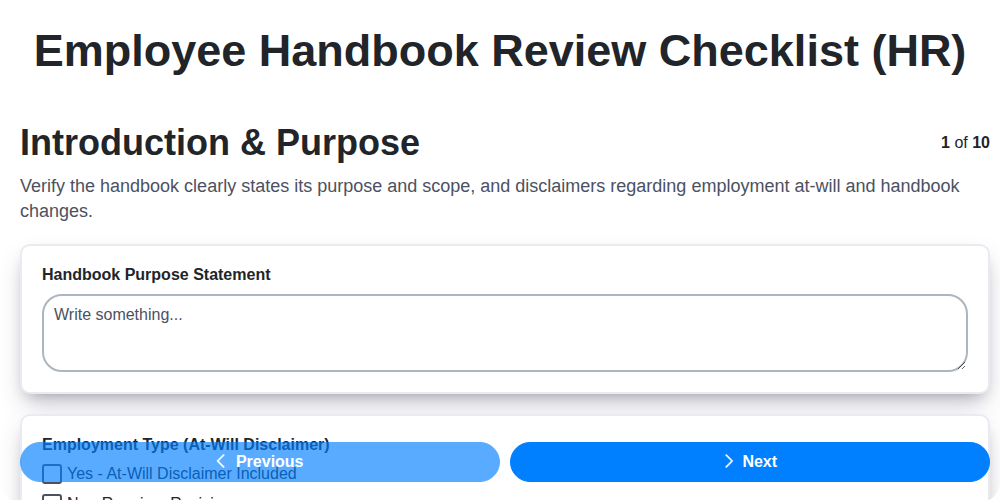
Table of Contents
- Why Employee Handbook Reviews Matter
- HR's Essential Checklist Template: A Step-by-Step Guide
- 1. Introduction & Purpose: Setting the Foundation
- 2. Legal Compliance: Navigating the Legal Landscape
- 3. Company Policies: Ensuring Consistency and Clarity
- 4. Compensation & Benefits: Accuracy and Transparency
- 5. Employee Conduct & Discipline: Maintaining a Respectful Workplace
- 6. Technology & Security: Protecting Company Assets
- 7. Confidentiality & Intellectual Property: Safeguarding Innovation
- 8. Remote Work & Telecommuting: Adapting to the Modern Workplace
- 9. Accessibility & Inclusivity: Fostering a Diverse Environment
- 10. Acknowledgement & Distribution: Ensuring Understanding
- Beyond the Checklist: Ongoing Maintenance & Best Practices
- Resources & Links
TLDR: Need to ensure your employee handbook is legally sound & reflects current company practices? This checklist template (downloadable!) guides HR through a comprehensive review covering everything from legal compliance to remote work policies. It's a simple way to avoid costly errors and maintain a compliant and informative resource for your employees.
Why Employee Handbook Reviews Matter
Beyond simply outlining company policies, your employee handbook serves as a foundational document for your organization's culture and legal protection. Skipping regular reviews isn't just a missed opportunity for improvement; it's a potential liability. Outdated handbooks can lead to misinterpretations of policies, inconsistent application of rules, and ultimately, legal disputes. Imagine a situation where an employee claims they were unaware of a specific policy, or that a disciplinary action was unfair because it wasn't consistently applied - a well-maintained, regularly reviewed handbook significantly reduces your risk. Moreover, a stagnant handbook signals a lack of attention to detail and adaptability - qualities employees value. Regularly updating it demonstrates a commitment to fairness, transparency, and a modern workplace, boosting morale and attracting top talent. In essence, an employee handbook review isn't just about compliance; it's an investment in your company's success and a demonstration of your commitment to your employees.
HR's Essential Checklist Template: A Step-by-Step Guide
Creating a truly useful employee handbook review checklist goes beyond simply ticking boxes. It's about ensuring alignment with current legal requirements, company policies, and employee expectations. Here's a step-by-step guide to building your own comprehensive checklist template:
Step 1: Define Scope & Objectives
Before you even start listing items, determine the scope of your review. Are you updating the entire handbook, or focusing on specific sections? What are your primary objectives - compliance, clarity, culture? Document these to maintain focus.
Step 2: Core Categories & Sub-Items
Build your checklist around the key areas we outlined earlier (Introduction & Purpose, Legal Compliance, etc.). Under each category, brainstorm specific, actionable items. For example, under Legal Compliance, list out relevant laws (FLSA, ADA, state-specific wage laws) that need verification. Use a spreadsheet or document to organize these.
Step 3: Assign Responsibility & Deadlines
Don't let tasks fall through the cracks. Assign responsibility for each checklist item to a specific individual or team (e.g., HR generalist, legal counsel, department manager). Set realistic deadlines for completion.
Step 4: Utilize a Standardized Format
A consistent format makes tracking progress easier. Consider columns for: Item Description, Responsible Party, Deadline, Status (Not Started, In Progress, Completed), Comments/Notes. This allows for clear communication and accountability.
Step 5: Incorporate Version Control
Implement a system for tracking changes to the checklist itself. This allows you to revert to previous versions if needed and provides an audit trail. Simply add a Version column and date of last update.
Step 6: Regular Review & Refinement
This isn't a "set it and forget it" process. Schedule regular reviews of your checklist template to ensure it remains relevant and effective. Solicit feedback from stakeholders and make adjustments accordingly. Legal landscapes change, company practices evolve - your checklist should too!
1. Introduction & Purpose: Setting the Foundation
Your employee handbook isn't just a document; it's the cornerstone of your company culture and a critical communication tool. It should clearly articulate your organization's values, expectations, and guiding principles. The introduction and purpose section serves as the first impression, setting the tone for the entire handbook. This is your chance to welcome employees and explain why this handbook exists - not as a contract (where applicable, of course - clarify this!), but as a resource to help them understand their roles, responsibilities, and the company's commitment to a positive and productive work environment. A well-crafted introduction instills a sense of transparency, builds trust, and demonstrates that your company values clear communication and employee understanding. Be welcoming, concise, and emphasize that this handbook is a living document, subject to change as the company evolves.
2. Legal Compliance: Navigating the Legal Landscape
Staying legally compliant is paramount. An outdated or inaccurate handbook can leave your organization vulnerable to costly lawsuits and regulatory fines. Here's a breakdown of key areas to consider:
- Federal Laws: Ensure compliance with the Fair Labor Standards Act (FLSA) regarding minimum wage, overtime, and child labor laws. Address requirements under the Americans with Disabilities Act (ADA) and Family and Medical Leave Act (FMLA). The Equal Employment Opportunity Commission (EEOC) guidelines on discrimination and harassment must also be clearly reflected.
- State & Local Laws: Labor laws vary significantly by state and locality. Research and incorporate state-specific wage and hour laws, paid sick leave mandates, and any applicable local ordinances. California, for example, has particularly stringent regulations.
- Regular Updates: Laws are constantly evolving. Subscribe to legal updates from reputable sources (SHRM, legal newsletters) and schedule regular handbook reviews - at least annually - to reflect these changes.
- Consult with Legal Counsel: This is non-negotiable. A qualified employment attorney can provide tailored advice based on your company's location, industry, and specific circumstances. They can also review your handbook for potential legal risks.
- Record Keeping: Maintain thorough records of handbook distribution, employee acknowledgement, and any modifications made over time. This demonstrates due diligence in case of a legal challenge.
3. Company Policies: Ensuring Consistency and Clarity
Company policies form the backbone of your workplace culture, outlining how things are done and setting clear expectations for employee behavior. A well-defined policy manual isn't just a list of rules; it's a commitment to consistency, fairness, and a productive work environment.
Here's what to keep in mind when reviewing your company policies:
- Accuracy and Currency: Policies should reflect current practices. If a policy hasn't been updated in a while, it likely isn't accurate and may even be creating confusion.
- Clarity and Accessibility: Use plain language. Avoid legal jargon that employees won't understand. Make policies readily accessible, ideally online in an easily searchable format.
- Consistent Application: A policy is only as good as its implementation. Ensure policies are applied consistently across all departments and levels of the organization. Document any exceptions and the rationale behind them.
- Employee Input: Consider soliciting feedback from employees during the policy review process. This fosters a sense of ownership and ensures policies are practical and relevant.
- Key Policy Areas: Common policies to review include attendance, time off, dress code, performance management, expense reimbursement, internet and email usage, and social media guidelines.
- Regular Review Cycle: Establish a regular review cycle (e.g., annually) to ensure policies remain relevant and compliant with changing legal requirements and business needs.
4. Compensation & Benefits: Accuracy and Transparency
Accurate and transparent compensation and benefits information builds trust and reduces employee confusion - a win-win for everyone. This section of your handbook shouldn't just list what's offered; it should clearly explain how it works.
Consider including details on:
- Salary Ranges: While not always legally required, providing salary ranges for different roles can promote fairness and internal equity.
- Paid Time Off (PTO): Clearly define accrual rates, carryover policies, and usage guidelines.
- Health Insurance: Outline coverage details, premium contributions, and enrollment processes. Provide links to plan documents.
- Retirement Plans: Explain eligibility, contribution matching, and vesting schedules.
- Other Perks & Benefits: Don't forget to highlight any unique benefits you offer, such as wellness programs, tuition reimbursement, or employee discounts.
- Eligibility Requirements: Explicitly state who is eligible for each benefit.
- Contact Information: Provide a dedicated contact person or department for employees with questions about their compensation and benefits.
Remember to cross-reference this information with your payroll and benefits providers to ensure consistency and accuracy. Regularly review and update this section to reflect any changes in your compensation and benefits packages.
5. Employee Conduct & Discipline: Maintaining a Respectful Workplace
A well-defined employee conduct policy isn't just about avoiding legal trouble; it's about fostering a positive and respectful workplace where everyone feels valued and safe. This section of your employee handbook should clearly outline expected behaviors, encompassing everything from professional communication to ethical decision-making.
What Should Be Covered?
- Professionalism: Detail expectations for punctuality, dress code (if applicable), and respectful communication with colleagues, clients, and vendors.
- Harassment & Discrimination: This is paramount. Clearly state a zero-tolerance policy for harassment and discrimination of any kind (based on race, religion, gender, sexual orientation, disability, etc.). Include reporting procedures and emphasize confidentiality.
- Substance Abuse: Address policies related to alcohol and drug use, both on and off company premises, if applicable.
- Social Media: Provide guidelines on responsible social media use, particularly when representing the company.
- Conflict of Interest: Outline what constitutes a conflict of interest and how employees should handle such situations.
Disciplinary Procedures: Fairness and Consistency
Your handbook must also clearly detail the disciplinary process. This includes:
- Progressive Discipline: Explain the steps typically involved (e.g., verbal warning, written warning, suspension, termination).
- Investigation Process: Describe how employee misconduct will be investigated, ensuring due process and confidentiality.
- Consistency: Emphasize the importance of applying disciplinary actions fairly and consistently across all employees. Explain that exceptions may be made, but they must be well-documented and justifiable.
Beyond the Words: Training and Enforcement
A written policy is only effective if it's understood and enforced. Invest in regular training for all employees, especially managers, to reinforce the importance of ethical conduct and proper disciplinary procedures. Regularly review and update this section of your handbook to reflect changes in legislation, company practices, and evolving workplace norms.
6. Technology & Security: Protecting Company Assets
The modern workplace relies heavily on technology, making robust security protocols essential. Your employee handbook should clearly outline acceptable use policies for company-provided devices, networks, and software. This goes beyond simply prohibiting illegal activities-it's about establishing clear expectations for responsible online behavior.
Specifically, your handbook should address:
- Personal Device Usage (BYOD): If employees are allowed to use personal devices for work, define security requirements (passwords, antivirus software, data encryption).
- Social Media: Outline guidelines regarding representing the company online and protecting confidential information.
- Email Security: Emphasize the importance of phishing awareness and safe email practices.
- Data Encryption: Explain how sensitive data is protected and employee responsibilities in that regard.
- Password Management: Promote strong password creation and safe storage practices.
- Internet Usage: Define acceptable websites and online activities.
- Software Installation: Specify procedures for installing and updating software, preventing malware threats.
Regular training and reminders about these policies are vital to fostering a security-conscious culture and minimizing risk. A proactive approach to technology security is a critical component of safeguarding company assets and maintaining a secure work environment.
7. Confidentiality & Intellectual Property: Safeguarding Innovation
Confidentiality and intellectual property (IP) are often a company's most valuable assets - the trade secrets, customer lists, product designs, and innovative ideas that give you a competitive edge. A robust confidentiality and IP policy isn't just about legal protection; it's about fostering a culture of trust and innovation within your organization.
What Needs to be Covered?
Your employee handbook should clearly define what constitutes confidential information. This might include:
- Financial data: Revenue, profit margins, pricing strategies.
- Customer information: Contact details, purchase history, contracts.
- Product development plans: Future product designs, prototypes, research.
- Marketing strategies: Upcoming campaigns, pricing promotions.
- Business processes: Unique operational methodologies.
It'm also essential to establish clear ownership of intellectual property created by employees during their employment. Typically, this ownership belongs to the company, but the specific terms should be explicitly stated in the handbook. This prevents disputes and protects the company's right to benefit from employee innovation.
Key Considerations:
- Non-Disclosure Agreements (NDAs): Consider requiring employees to sign NDAs, particularly those with access to highly sensitive information.
- Exit Procedures: Outline procedures for employees leaving the company to ensure they return all confidential materials and understand their ongoing obligations regarding IP.
- Social Media Policies: Remind employees of the importance of protecting confidential information when using social media.
8. Remote Work & Telecommuting: Adapting to the Modern Workplace
The shift to remote work has fundamentally altered the modern workplace, and your employee handbook needs to reflect this reality. Gone are the days of a one-size-fits-all approach. A clear, comprehensive remote work policy isn't just a nice-to-have - it's a necessity for clarity, productivity, and legal protection.
Here's what your remote work policy should address:
- Eligibility: Who is eligible for remote work, and what are the criteria?
- Equipment & Technology: Define responsibilities for providing and maintaining equipment (laptops, software, internet access). Consider a stipend or allowance.
- Security Protocols: Outline specific security measures remote employees must follow, including VPN usage, data encryption, and password management. Emphasize the importance of securing home networks.
- Work Hours & Availability: Clarify expectations for work hours, availability, and communication response times.
- Performance Management: How will remote employee performance be evaluated, and what metrics will be used?
- Expense Reimbursement: Clearly define what expenses, if any, will be reimbursed for remote work.
- Home Office Ergonomics: Consider providing resources or guidance on setting up an ergonomic home workspace to prevent injuries.
- Tax Implications: Briefly address potential state tax implications for both the employee and the company. (Recommend consulting with a tax professional.)
By addressing these key areas, you can create a remote work policy that supports your employees, protects your company, and fosters a productive and engaging remote work experience.
9. Accessibility & Inclusivity: Fostering a Diverse Environment
Creating a truly inclusive workplace goes beyond simply stating you value diversity; it's about actively fostering an environment where every employee feels respected, valued, and empowered to contribute their best. Your employee handbook plays a vital role in communicating this commitment.
Beyond outlining legal requirements regarding discrimination and harassment (which are, of course, essential), your handbook should clearly articulate your company's dedication to accessibility and inclusivity. This includes using inclusive language - avoiding gendered pronouns and stereotypes - and describing reporting procedures for discriminatory behavior, ensuring they are clear, confidential, and accessible to all.
Consider adding a statement affirming your company's commitment to reasonable accommodations for individuals with disabilities, outlining how employees can request them. Highlight employee resource groups (ERGs) or affinity groups if your company supports them. Most importantly, emphasize that a diverse and inclusive workplace is everyone's responsibility, encouraging active allyship and bystander intervention. Regularly review your language and policies to ensure they reflect evolving understanding of inclusivity and promote a culture of belonging.
10. Acknowledgement & Distribution: Ensuring Understanding
Simply stating that employees have access to the handbook isn't enough. True understanding requires a formal acknowledgement process. This isn't just about ticking a box; it's about demonstrating that each employee has read, understood, and agrees to abide by the policies outlined within.
Here's what a robust acknowledgement and distribution system should include:
- Formal Acknowledgement Form: A signed (or electronically signed) form confirming receipt and understanding. This creates a record and provides a layer of legal protection.
- New Hire Onboarding: The handbook review and acknowledgement should be a mandatory part of the onboarding process for all new employees.
- Annual Review & Re-Acknowledgement: Policies change, laws evolve. Require employees to re-acknowledge the handbook annually (or more frequently if significant changes occur).
- Accessibility: Provide easy access to the handbook - both online (preferred) and in a physical copy if requested. Ensure the online version is easily searchable and printable.
- Training and Discussion: Consider supplementing the handbook with brief training sessions to clarify key policies and answer employee questions.
- Record Keeping: Maintain meticulous records of all acknowledgements, including dates and signatures.
Implementing these steps ensures not only that your employees have the handbook but that they genuinely understand its contents.
Beyond the Checklist: Ongoing Maintenance & Best Practices
Regular reviews aren't just about catching up with legal changes; they're about ensuring your handbook remains a useful resource for your employees. Think of it as a living document, not a static one. Here's how to keep it that way:
- Schedule Regular Reviews: Aim for at least an annual review, but consider more frequent check-ins (quarterly or bi-annually) especially in rapidly changing industries or if your company is experiencing significant growth.
- Employee Feedback is Gold: Don't just rely on HR and Legal. Actively solicit feedback from employees about the handbook's clarity, relevance, and overall usefulness. Surveys, suggestion boxes, or even informal conversations can provide invaluable insights.
- Keep it Accessible and Understandable: A beautifully written handbook is useless if no one reads it. Use plain language, avoid legal jargon whenever possible, and consider visual aids like flowcharts or infographics. Ensure it's easily accessible online, and provide physical copies if needed.
- Reflect Company Evolution: As your company grows and evolves, so too should your handbook. New policies may be needed to address emerging technologies, changes in work arrangements, or shifts in company culture.
- Track Changes: Implement a system for tracking changes made to the handbook, including the date, author, and reason for the modification. This helps maintain transparency and accountability.
- Communicate Updates: Don't just update the handbook and expect everyone to notice. Proactively communicate changes to employees through email, team meetings, or intranet announcements. Highlight key revisions and explain their impact.
Resources & Links
- Society for Human Resource Management (SHRM): SHRM is a leading HR professional organization. Their website offers extensive resources on employee handbooks, compliance, best practices, legal updates, and templates, providing valuable insights for comprehensive reviews and updates. Specifically search for 'employee handbook' within their site.
- Employment Policies & Laws: This website provides comprehensive legal information on employment laws and regulations at both the federal and state levels. Essential for ensuring handbook compliance with relevant legal requirements.
- HR Compliance Pro: HR Compliance Pro is a resource that offers checklists, legal updates, and guidance on staying compliant with employment laws. Useful for keeping handbooks updated and addressing current legal challenges.
- Fisher & Phillips LLP: A national law firm specializing in labor and employment law. Their website provides legal insights, articles, and resources to help HR professionals navigate complex legal issues related to employee handbooks.
- Kirkland & Ellis LLP: Another reputable law firm providing insights and articles about employment law and HR best practices. They often publish analyses of legal developments impacting employee handbooks.
- Employment Law Handbook: This site provides a comprehensive guide to employment law topics, including sections dedicated to employee handbooks, with sample clauses and explanations of legal requirements.
- U.S. Department of Labor (DOL): The DOL website is a primary source for federal employment laws and regulations. Crucial for ensuring handbook compliance with laws like the Fair Labor Standards Act (FLSA) and the Americans with Disabilities Act (ADA).
- U.S. Equal Employment Opportunity Commission (EEOC): The EEOC website provides information and guidance on preventing and combating discrimination in the workplace. Vital for ensuring handbook policies promote a fair and inclusive environment.
- ADA National Network: Resources and information related to the Americans with Disabilities Act, ensuring handbook policies are accessible and inclusive for employees with disabilities.
- Privacy Rights Clearinghouse: Focuses on data privacy. Important for reviewing sections of the handbook concerning employee data, confidentiality, and security, ensuring compliance with relevant privacy laws (e.g., CCPA, GDPR if applicable).
- Remote.com: With the rise of remote work, this site has excellent guides for policies, particularly around remote work, telecommuting, and communication protocols. It covers legal considerations and best practices for managing a remote workforce.
- Diversity Best Practices: This site offers resources and guidance on diversity, equity, and inclusion (DE&I) initiatives. Helpful for reviewing handbook policies to ensure they foster a respectful and inclusive workplace.
Frequently Asked Questions
What is an employee handbook review checklist and why do I need one?
An employee handbook review checklist is a structured guide to ensure your employee handbook is legally compliant, up-to-date, and effectively communicates company policies and expectations. You need one to minimize legal risks, ensure consistency in policy application, and improve employee understanding of their rights and responsibilities.
Who should be involved in reviewing the employee handbook?
Ideally, a team including HR professionals, legal counsel, and representatives from different departments should participate in the review. Consider including employees for feedback to gauge clarity and employee perspective.
How often should I review my employee handbook?
At a minimum, review your handbook annually. More frequent reviews (quarterly or bi-annually) are recommended if your company experiences significant changes, such as new legislation, acquisitions, or policy updates.
What are the key areas covered in a typical employee handbook review checklist?
Key areas usually include legal compliance (federal, state, and local laws), policy accuracy and clarity, consistency with company practices, compensation and benefits, conduct and discipline, and termination procedures. Our template covers these and more.
What are some common legal compliance issues to look for during the review?
Look for compliance with laws regarding discrimination, harassment, wage and hour regulations, leave policies (FMLA, sick leave), data privacy, and accessibility (ADA). State and local laws will vary, so specific research is crucial.
What does 'legal counsel' mean in the context of handbook reviews?
'Legal counsel' refers to an attorney specializing in employment law. Their expertise ensures your handbook aligns with current legal requirements and minimizes potential liability.
My handbook is quite long. Can I use the checklist to prioritize review areas?
Absolutely. The checklist is designed to help you focus on the most critical areas first, streamlining the review process and ensuring you cover all essential points.
The template mentions 'consistency with company practices.' What does that mean?
It means ensuring the policies in your handbook accurately reflect how things are *actually* done in your company. Discrepancies between policy and practice can lead to legal challenges and employee distrust.
Can I customize the checklist template provided?
Yes, our template is designed to be a starting point. Feel free to add, remove, or modify items to specifically address your company's unique needs and industry regulations.
What happens if I find inconsistencies or legal non-compliance during the review?
Address these issues immediately. Revise the handbook to reflect accurate policies and legal requirements. Document the changes and communicate them clearly to employees.
Comments
There are no comments yet. Be the first to add one!
HRM - Human Resources Management Solution Demo
Simplify HR processes & empower your team! ChecklistGuro's HRM solution streamlines onboarding, performance management, & compliance. Improve employee engagement, reduce admin burden, & drive organizational growth. Manage it all with our Work OS.
Related Articles
Independent Contractor Compliance Checklist Template for HR

HR's Guide to Workplace Safety: Your Compliance Checklist Template
The Ultimate Employee Exit Interview Checklist (HR Edition)
EEO Compliance Checklist Template for HR
The Ultimate HR Audit Checklist Template: Your Guide to Compliance

Paper vs ChecklistGuro in Human Resources Management

Your Guide to Employee Training Compliance: A Free Checklist for HR
Your Ultimate Employee Onboarding Checklist Template
We can do it Together
Need help with
Human Resources Management (HRM)?
Have a question? We're here to help. Please submit your inquiry, and we'll respond promptly.