Unlock Savings: Your Complete Energy Efficiency Audit Checklist
Published: 11/25/2025 Updated: 07/02/2026
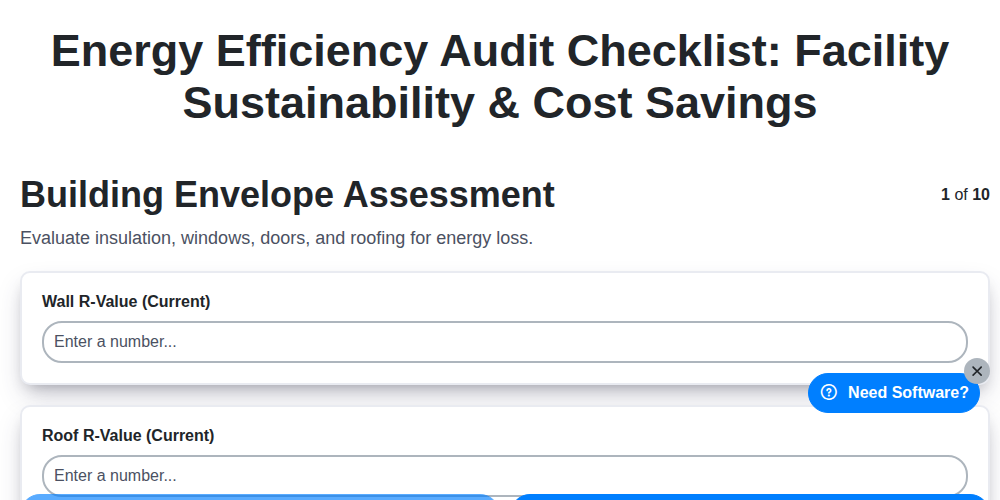
Table of Contents
- Introduction: Why an Energy Efficiency Audit Matters
- 1. Building Envelope Assessment: Sealing the Deal on Energy Savings
- 2. HVAC System Evaluation: Optimizing Heating, Ventilation, and Air Conditioning
- 3. Lighting & Electrical Systems: Shedding Light on Efficiency
- 4. Water Usage & Conservation: Reducing Consumption, Lowering Bills
- 5. Equipment & Appliances: Identifying Energy Hogs
- 6. Building Management System (BMS): Harnessing Data for Control
- 7. Employee Awareness & Behavior: Engaging Your Team for Sustainability
- 8. Renewable Energy Potential: Exploring Clean Power Options
- 9. Measurement & Verification: Tracking Your Progress
- 10. Cost Savings & ROI Analysis: Quantifying the Benefits
- Resources & Links
TLDR: Want to lower your facility's energy bills and boost sustainability? This checklist walks you through a comprehensive energy efficiency audit, covering everything from your building's insulation to potential renewable energy sources. It's your roadmap to identifying savings, maximizing ROI, and creating a greener, more efficient facility.
Introduction: Why an Energy Efficiency Audit Matters
Rising energy costs and increasing environmental concerns are driving businesses to prioritize sustainability. An energy efficiency audit isn't just about reducing your utility bills; it's a critical step towards operational resilience, enhanced brand reputation, and a commitment to a greener future.
This isn't a one-size-fits-all process. Every facility operates differently, with unique energy demands and opportunities for improvement. A comprehensive energy audit provides a clear, data-driven roadmap to identify areas of energy waste, pinpoint cost-saving opportunities, and prioritize upgrades. Beyond the immediate financial benefits, it fosters a culture of sustainability within your organization, empowering employees and demonstrating a commitment to corporate social responsibility. Investing in an energy efficiency audit is an investment in a more sustainable, cost-effective, and competitive future for your business.
1. Building Envelope Assessment: Sealing the Deal on Energy Savings
The building envelope - your walls, roof, windows, and doors - is the first line of defense against energy loss. A thorough assessment here can yield significant savings. Start with a visual inspection for cracks, gaps, and signs of deterioration. Pay close attention to:
- Windows & Doors: Look for drafts, damaged weatherstripping, and inefficient glazing. Consider thermal imaging to identify heat loss areas.
- Walls: Check for cracks, gaps around pipes and wiring, and signs of moisture intrusion, which can degrade insulation.
- Roof: Inspect for leaks, damaged roofing materials, and inadequate insulation. Consider a roof reflectivity assessment (albedo) to reduce cooling loads.
- Foundation: Examine for cracks and gaps, especially where the foundation meets the walls.
- Insulation: Verify the type and condition of insulation in walls, ceilings, and floors. Is it adequate for the climate? Is it compressed or damaged?
Simple fixes like caulking, weatherstripping, and adding insulation can significantly reduce energy consumption and improve comfort. More substantial upgrades might involve window replacements or exterior wall insulation. Prioritize areas with the greatest potential for energy loss.
2. HVAC System Evaluation: Optimizing Heating, Ventilation, and Air Conditioning
Your HVAC system is often the biggest energy consumer in a facility. A thorough evaluation is crucial for identifying inefficiencies and implementing improvements. This isn't just about ensuring comfort; it's about significantly reducing operational costs and environmental impact.
Here's what a detailed HVAC system evaluation should include:
- System Performance Review: Analyze historical energy consumption data. Look for trends and anomalies. Compare current performance against design specifications and past performance.
- Equipment Inspection: Visually inspect all HVAC equipment (chillers, boilers, air handling units, rooftop units, etc.) for signs of wear and tear, corrosion, leaks, and proper insulation.
- Refrigerant Leak Detection: Conduct leak tests using appropriate methods and equipment. Refrigerant leaks not only reduce efficiency but also contribute to greenhouse gas emissions.
- Filter Maintenance: Verify the cleanliness and condition of air filters. Clogged filters restrict airflow, forcing the system to work harder. Establish a preventative filter replacement schedule.
- Ductwork Inspection: Inspect ductwork for leaks, damage, and proper insulation. Seal leaks and improve insulation where necessary to prevent energy loss.
- Control System Assessment: Evaluate the accuracy and calibration of thermostats and other control devices. Optimize scheduling to align with occupancy patterns.
- Economizer Operation: Confirm the proper functioning of economizers (if equipped) to utilize outside air for cooling when conditions are favorable.
- Temperature and Humidity Balance: Ensure the system is maintaining appropriate temperature and humidity levels for the building's purpose and occupant comfort.
- Belt and Pulley Condition: Check the condition and tension of belts and pulleys on driven equipment.
- Motor Efficiency: Assess the efficiency of motors driving HVAC equipment. Consider upgrading to high-efficiency motors when replacements are needed.
By addressing these areas, you can optimize HVAC performance, lower energy bills, and create a more comfortable and sustainable facility.
3. Lighting & Electrical Systems: Shedding Light on Efficiency
Lighting and electrical systems are often significant energy consumers in facilities. A thorough audit here can reveal surprising opportunities for savings. Let's break down what to look for:
1. Lighting Assessment:
- Type of Lighting: Document all lighting types (incandescent, fluorescent, LED, etc.) throughout the facility. LEDs offer drastically improved efficiency and longer lifespans - a compelling upgrade.
- Lighting Levels: Evaluate if lighting levels are appropriate for each area. Overlighting is a common waste. Consider task lighting where needed instead of uniformly bright spaces. Use a light meter to measure foot-candles and compare to recommended levels for different activities.
- Lighting Controls: Assess the presence and functionality of lighting controls like occupancy sensors, daylight harvesting systems (dimming lights based on natural light), and timers. Ensure these controls are working properly and are appropriately programmed.
- Exterior Lighting: Review outdoor lighting for efficiency and security needs. Consider shielded fixtures to reduce light pollution and timers/sensors to minimize unnecessary operation.
2. Electrical Systems:
- Power Factor: A low power factor increases energy costs. Check the power factor and identify opportunities to improve it (often through power factor correction capacitors).
- Transformer Efficiency: Assess the efficiency of transformers, especially older models. Upgrading to high-efficiency transformers can provide noticeable savings.
- Wiring and Distribution: Inspect wiring for damage or inefficient connections. Look for opportunities to optimize power distribution.
- Uninterruptible Power Supplies (UPS): Evaluate the efficiency and functionality of UPS systems.
- Phantom Loads: Identify and address phantom loads - energy consumed by devices when they're turned off but still plugged in (e.g., chargers, computers).
By focusing on these areas, you can significantly reduce your facility's lighting and electrical energy consumption, leading to both cost savings and a reduced environmental footprint.
4. Water Usage & Conservation: Reducing Consumption, Lowering Bills
Water is a precious resource, and in many facilities, it represents a significant operating expense. A thorough assessment of water usage is a crucial component of any energy efficiency audit. Here's what to look for:
Identify Water-Intensive Areas: Begin by mapping out all water-consuming points in the facility. This includes restrooms, kitchens, landscaping/irrigation, cooling towers, process water usage (if applicable), and laundry facilities.
Fixture Assessment: Examine all water fixtures - faucets, toilets, urinals, and showerheads - for efficiency. Look for signs of leaks (even small drips add up!). Consider replacing older, inefficient fixtures with WaterSense-certified models. These fixtures use significantly less water without sacrificing performance.
Irrigation System Evaluation: Irrigation is often a major water user. Check for leaks in sprinkler heads, excessive watering schedules, and inefficient irrigation methods. Implementing strategies like drip irrigation, smart controllers (that adjust watering based on weather conditions), and xeriscaping (using drought-tolerant plants) can yield substantial savings.
Cooling Tower Optimization: Cooling towers are notorious water consumers, especially in industrial settings. Assess water loss through evaporation and drift. Regularly check for leaks and ensure proper maintenance of cooling tower components. Consider implementing water treatment programs to minimize scaling and corrosion.
Process Water Audit: If your facility uses water in its operational processes (e.g., manufacturing, cleaning), conduct a detailed audit to identify areas for reduction or recycling.
Leak Detection & Repair: Implement a proactive leak detection program. Regularly inspect pipes, valves, and fixtures. Even seemingly small leaks can waste a surprising amount of water over time.
Employee Awareness: Educate employees about water conservation practices. Simple changes, like turning off faucets completely and reporting leaks, can collectively make a big difference.
By addressing these areas, you can dramatically reduce your facility's water consumption, lower your utility bills, and contribute to a more sustainable operation.
5. Equipment & Appliances: Identifying Energy Hogs
Beyond the big systems, your facility's smaller equipment and appliances can collectively contribute significantly to energy consumption - and often represent low-hanging fruit for efficiency improvements. This section focuses on identifying those "energy hogs."
What to Look For:
- Inventory: Begin with a comprehensive inventory of all equipment and appliances, including refrigerators, freezers, dishwashers, computers, printers, vending machines, and any specialized machinery. Note their age, model number, and wattage rating (usually found on a label).
- Standby Power (Phantom Load): Many appliances draw power even when seemingly "off." Test appliances by unplugging them and noting any reduction in power usage. Focus on eliminating or reducing phantom loads.
- Efficiency Ratings: Check Energy Star ratings and other efficiency certifications. Older equipment is often significantly less efficient than newer models. Consider replacement programs, especially for equipment nearing the end of its lifespan.
- Usage Patterns: Observe how frequently equipment is used. Can usage be reduced? Can equipment be scheduled to run only when needed? Are there opportunities for consolidation - combining tasks or using more efficient alternatives?
- Maintenance: Poorly maintained equipment consumes more energy. Ensure regular maintenance, including cleaning coils, replacing filters, and checking seals.
- Retrofits: Can existing equipment be retrofitted with more efficient components, like LED lighting in refrigerators or variable speed motors?
Action Items:
- Create a prioritized list of equipment for replacement or retrofitting based on energy consumption and potential savings.
- Implement a "power down" policy for equipment not in use.
- Explore energy-efficient purchasing policies for new equipment.
6. Building Management System (BMS): Harnessing Data for Control
A Building Management System (BMS) is more than just a collection of sensors and controls; it's the central nervous system of your facility. A thorough energy efficiency audit must delve into its functionality and effectiveness.
Here's what we'll assess:
- System Integration: Is the BMS properly integrated with all key building systems - HVAC, lighting, security, and more? Fragmented systems limit overall efficiency gains.
- Data Accessibility & Visualization: Can you easily access and interpret the data the BMS collects? Clear dashboards and reporting are crucial for identifying trends and problem areas.
- Scheduling Optimization: Are schedules optimized for occupancy patterns and operational needs? Overrunning systems during unoccupied hours significantly impacts energy consumption. We'll review HVAC, lighting, and equipment schedules.
- Setpoint Management: Are temperature, humidity, and lighting setpoints aligned with comfort requirements and energy efficiency targets? We'll examine these settings and suggest adjustments where possible.
- Fault Detection & Diagnostics (FDD): Does the BMS incorporate FDD capabilities? This proactive approach identifies and alerts to system malfunctions before they lead to significant energy waste.
- Control Logic Effectiveness: We'll review the programming and logic behind the BMS's automated controls to ensure they are functioning as intended and maximizing efficiency.
- Maintenance & Updates: When was the BMS last updated? Regular maintenance and software updates are essential to keep the system operating at peak performance.
7. Employee Awareness & Behavior: Engaging Your Team for Sustainability
Your facility's energy efficiency isn't solely reliant on technology and infrastructure; it's significantly impacted by the habits and awareness of your employees. A technically superior system can be undermined by behaviors like leaving lights on in unoccupied rooms or neglecting to properly shut down equipment.
Why Employee Engagement Matters:
- Significant Impact: Employee actions can account for a surprising percentage (sometimes up to 20-30%) of your overall energy consumption.
- Behavioral Changes are Sustainable: Unlike equipment upgrades, changes in behavior are lasting.
- Creates a Culture of Sustainability: Fosters a sense of ownership and responsibility, extending beyond energy efficiency to broader environmental consciousness.
Actionable Steps for Employee Engagement:
- Training Programs: Conduct regular training sessions on energy-saving practices, tailored to different roles and departments.
- Communication is Key: Utilize newsletters, posters, and digital signage to share energy-saving tips and highlight successes.
- Incentive Programs: Consider offering rewards or recognition for employees who contribute to energy-saving initiatives. This could be individual or team-based.
- Champions Program: Identify and train Energy Champions within each department to act as advocates and provide support.
- Feedback Mechanisms: Create channels for employees to report energy waste or suggest improvements.
- Regular Reminders: Keep energy-saving reminders top-of-mind with ongoing communication and visual cues.
- Lead by Example: Management and leadership should visibly demonstrate commitment to sustainability.
By investing in employee awareness and behavior modification, you can unlock significant cost savings and create a more sustainable facility.
8. Renewable Energy Potential: Exploring Clean Power Options
Beyond reducing energy consumption, exploring renewable energy sources can significantly lower your facility's carbon footprint and operating costs. This section focuses on identifying potential opportunities for incorporating clean power generation on-site or through power purchase agreements (PPAs).
Initial Assessment:
- Solar Potential: Evaluate roof space (both existing and potential for installation), ground space, and shading factors. A solar feasibility study can determine the optimal system size and potential energy production. Consider both photovoltaic (PV) panels for electricity generation and solar thermal systems for water heating.
- Wind Potential: Assess wind speeds and resources. While typically requiring larger areas, smaller-scale wind turbines may be viable for certain facilities.
- Geothermal Potential: Evaluate the potential for utilizing ground-source heat pumps to provide heating and cooling. This is heavily dependent on local geological conditions.
- Biomass Potential: Consider the availability of sustainable biomass resources for heating or electricity generation if applicable to your operations and the surrounding area. Carefully evaluate environmental impact and regulatory requirements.
- Power Purchase Agreements (PPAs): If on-site generation isn't feasible, investigate PPAs with renewable energy providers. This allows you to benefit from clean energy without the upfront investment and maintenance responsibilities.
Considerations:
- Local Incentives & Rebates: Research available incentives and rebates to help offset the initial investment costs.
- Interconnection Requirements: Understand the utility's interconnection requirements and associated costs for connecting renewable energy systems to the grid.
- Regulatory Landscape: Stay informed about evolving regulations and policies related to renewable energy generation.
9. Measurement & Verification: Tracking Your Progress
An energy efficiency audit isn't a one-and-done deal. It's the start of a journey towards a more sustainable and cost-effective facility. To ensure your efforts are truly making a difference, a robust Measurement & Verification (M&V) plan is absolutely crucial.
M&V involves systematically collecting and analyzing data to confirm and quantify the energy and cost savings achieved through your implemented improvements. It's about proving the value of your investment.
Here's what a solid M&V plan should include:
- Baseline Data: Accurate historical data (typically 12-36 months) of energy consumption (electricity, gas, water) before any changes were made. This is your benchmark.
- Post-Implementation Data: Continuous monitoring of energy consumption after implementing changes.
- Performance Indicators: Define specific metrics to track, such as kWh/sq ft, therms/employee, or gallons/fixture.
- Data Collection Methods: Determine how you'll gather data - manual readings, automated meters, BMS data exports, utility bills, etc.
- Analysis Techniques: Choose appropriate methods to compare baseline and post-implementation data, accounting for factors like weather and operational changes. (Common approaches include IPMVP - International Performance Measurement and Verification Protocol).
- Regular Reporting: Establish a schedule (monthly, quarterly, annually) for analyzing data and reporting findings.
- Adaptive Management: Use M&V results to refine your energy efficiency strategies. Are your expectations being met? Do you need to adjust your approach?
Don't underestimate the power of M&V. It provides accountability, demonstrates the financial benefits of your efforts, and provides valuable insights for continuous improvement. It's the key to long-term sustainability success.
10. Cost Savings & ROI Analysis: Quantifying the Benefits
An energy efficiency audit isn't just about identifying opportunities - it's about proving their value. This final step, the Cost Savings & ROI Analysis, is critical for securing buy-in from stakeholders and demonstrating the long-term benefits of your sustainability initiatives.
Here's what this analysis should cover:
- Detailed Savings Projections: Translate each recommended energy efficiency measure (EEM) into concrete savings estimates. This includes projected reductions in energy consumption (kWh, therms, gallons) and associated cost savings based on current utility rates. Be sure to account for potential rate increases over time.
- Implementation Costs: Accurately estimate the initial investment required for each EEM. This includes equipment costs, labor costs (installation, retrofitting), and any associated permitting or design fees.
- Calculating ROI: Utilize the savings projections and implementation costs to calculate the Return on Investment (ROI) for each EEM, as well as for the overall audit findings. A standard ROI formula is:
(Net Profit / Cost of Investment) x 100. A high ROI demonstrates a compelling financial justification for the improvements. - Payback Period: Determine the payback period for each measure-the time it takes for the cumulative savings to equal the initial investment. A shorter payback period is generally more attractive.
- Lifecycle Cost Analysis: Consider the long-term costs and benefits beyond the initial investment. This includes maintenance costs, potential equipment replacements, and continued energy savings.
- Sensitivity Analysis: Assess how changes in key assumptions (like utility rates or equipment lifespan) would affect the ROI. This helps manage risk and build confidence in the projections.
- Presenting the Findings: Create a clear and concise report summarizing the cost savings potential, ROI, and payback periods for each measure. Use visualizations (graphs, charts) to communicate the data effectively to decision-makers.
By rigorously analyzing the financial benefits, you transform an energy efficiency audit from a suggestion box into a strategic investment that drives both sustainability and profitability.
Resources & Links
- Energy Star: U.S. EPA program offering comprehensive information, resources, and certification for energy-efficient appliances, buildings, and homes. A crucial starting point for understanding efficiency standards and finding certified products.
- U.S. Department of Energy (DOE): Provides a wealth of information on energy efficiency technologies, building science, and financial incentives. Includes resources on building codes, appliance standards, and renewable energy.
- Building Science Corporation: A leading resource for building science education and consulting. Offers detailed articles, courses, and resources related to building envelope performance, moisture control, and energy efficiency.
- RESNET: Provides certifications for energy raters, home energy audits, and energy performance labeling. Offers resources for understanding building energy performance and quality.
- International Code Council (ICC): Develops building codes and standards, including energy codes like the IECC. Provides information on current code requirements and best practices.
- ASHRAE (American Society of Heating, Refrigerating and Air-Conditioning Engineers): Develops standards and guidelines for HVAC systems and building energy performance. Offers technical resources and training for professionals.
- Efficient Lighting: Provides in-depth information about lighting technologies, efficiency, and design. Helps to navigate the world of LEDs, controls, and lighting design for energy savings.
- Water Calculator: A helpful tool to estimate water usage and identify areas for conservation. Can be used to benchmark water consumption and track progress.
- Energy Manager Today: A trade publication covering energy management topics, including energy audits, renewable energy, and sustainability. Offers news, articles, and case studies.
- Building Management Systems Institute: Provides training, certification, and resources related to building management systems (BMS). Helps understand how to optimize building controls and data analysis.
- Sustainable Brands: A platform for businesses focused on sustainability. Provides articles, events, and resources related to employee engagement and behavior change.
- IRENA (International Renewable Energy Agency): Promotes the widespread adoption of renewable energy. Provides information on various renewable energy technologies and their potential.
- Simply Energy: A useful website providing ROI calculators and guides for energy efficiency projects, helping to demonstrate the financial benefit of improvements.
- ANSI (American National Standards Institute): ANSI doesn't develop standards directly but coordinates the standards development process and promotes standardization in various industries, including energy efficiency.
Frequently Asked Questions
What is an energy efficiency audit and why should I get one?
An energy efficiency audit assesses your home's energy usage, identifies areas of energy waste, and recommends improvements to reduce energy consumption and lower your bills. It's a proactive step toward saving money, reducing your environmental impact, and improving your home's comfort.
Who should get an energy audit?
Almost anyone! Homeowners and renters alike can benefit. It's especially valuable for older homes, homes with high energy bills, or those considering renovations.
How much does an energy audit cost?
Costs vary depending on the size and complexity of your home. DIY audits are free or low-cost. Professional audits typically range from $100-$500. Many utility companies offer subsidized or free audits.
What's the difference between a DIY audit and a professional audit?
A DIY audit uses a checklist and your own observations to identify issues. A professional audit involves specialized equipment like blower doors and infrared cameras for a more detailed analysis, performed by a trained professional.
What kind of equipment do professional auditors use?
Professional auditors may use equipment such as blower doors (to measure air leakage), infrared cameras (to detect temperature differences indicating insulation gaps), and combustion analyzers (to assess furnace efficiency).
What does the checklist in the article cover?
The checklist covers areas like insulation, air leakage, heating & cooling systems, lighting, appliances, and water heating. It's designed to provide a comprehensive look at your home's energy performance.
I'm renting. Can I still conduct an audit?
Yes! While you may not be able to make significant structural changes, you can still identify ways to improve energy efficiency, such as using energy-efficient light bulbs, sealing drafty windows, and adjusting thermostat settings. Discuss any proposed changes with your landlord first.
What are some common findings in an energy audit?
Common findings include inadequate insulation, air leaks around windows and doors, inefficient heating and cooling systems, and outdated appliances.
How long does it take to complete an audit?
A DIY audit can take a few hours. A professional audit typically takes 1-3 hours.
What happens after the audit is complete?
You'll receive a report outlining the audit findings and recommendations for improvement. For professional audits, this often includes estimated costs and potential savings.
Comments
There are no comments yet. Be the first to add one!
Facility Management Solution Demo
Keep your facilities running smoothly! ChecklistGuro streamlines maintenance, inspections, and vendor management. Reduce downtime, optimize efficiency, & improve safety. Manage it all with our Work OS.
Related Articles
Industrial Floor Cleaning & Safety Checklist Template
Display Case Temperature Monitoring Checklist Template
The Ultimate Refrigeration Maintenance Checklist: Keeping Your Food Safe
Escalator & Moving Walkway Inspection Checklist Template
The Ultimate Guest Room Cleaning & Inspection Checklist Template
The Ultimate Security Camera Review Checklist Template
Forklift Inspection & Maintenance Checklist Template
Emergency Generator Load Testing Checklist Template
Need help with
Facility Management?
Have a question? We're here to help. Please submit your inquiry, and we'll respond promptly.