Putting Your Farm Conservation Plan into Action: A Checklist for Success
Published: 11/22/2025 Updated: 07/02/2026
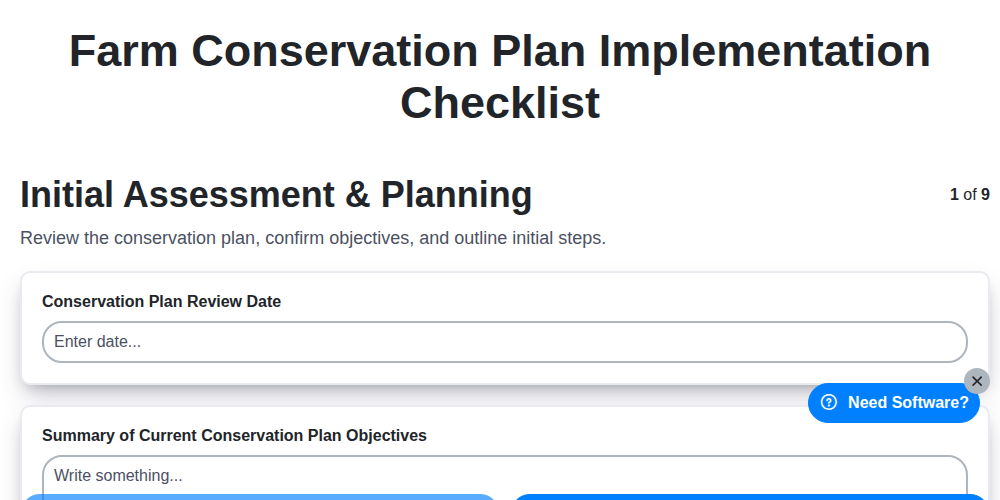
Table of Contents
- Introduction: Why a Conservation Plan Matters
- 1. Initial Assessment & Planning: Laying the Foundation
- 2. Soil Health Practices: Building a Living Soil
- 3. Water Management: Conserving a Precious Resource
- 4. Nutrient Management: Optimizing for Efficiency
- 5. Integrated Pest Management (IPM): A Holistic Approach
- 6. Erosion Control Measures: Protecting Your Land
- 7. Wildlife Habitat Enhancement: Creating a Thriving Ecosystem
- 8. Record Keeping & Documentation: Tracking Your Progress
- 9. Plan Adjustment & Review: Adapting to Change
- 10. Common Challenges and Solutions
- 11. Seeking Expert Assistance
- Conclusion: Sustaining a Conservation-Minded Farm
- Resources & Links
TLDR: Got a farm conservation plan but feeling overwhelmed? This checklist breaks down implementation into manageable steps - from soil health and water management to pest control and wildlife habitat - so you can confidently put your plan into action, track progress, and ensure long-term sustainability.
Introduction: Why a Conservation Plan Matters
A Farm Conservation Plan isn't just a document; it's a roadmap to a healthier, more resilient farm. It's about safeguarding our natural resources - the soil, water, and wildlife - while ensuring the long-term productivity of your land. Implementing a conservation plan isn't always easy, but it's an investment that pays dividends. It protects your farm from the impacts of erosion, drought, and pests, reduces input costs, and often enhances your farm's reputation with consumers and potential buyers. This checklist is designed to guide you through the critical steps of bringing your conservation plan to life, ensuring you're taking proactive measures to protect your land for generations to come.
1. Initial Assessment & Planning: Laying the Foundation
Before any conservation practice can be implemented, a thorough initial assessment and planning phase is absolutely crucial. This isn't just about identifying potential problems; it's about building a roadmap for success. This stage involves a detailed evaluation of your farm's current state, considering both its strengths and areas needing improvement.
Key steps in this phase include:
- Farm Mapping: Create or update a comprehensive map of your farm, including field boundaries, waterways, existing infrastructure, and areas of concern (e.g., eroded slopes, compacted soils).
- Resource Inventory: Document existing resources - soil types, water sources, wildlife habitats, and current land use.
- Goal Setting: Clearly define your conservation goals. What do you hope to achieve through this Farm Conservation Plan? (e.g., improved water quality, enhanced wildlife habitat, increased soil fertility). These goals should be SMART - Specific, Measurable, Achievable, Relevant, and Time-bound.
- Regulatory Compliance: Identify any applicable environmental regulations or permits required for your operations.
- Stakeholder Engagement: Consider involving family members, employees, local conservation districts, and other relevant stakeholders in the planning process. Their input can be invaluable.
- Baseline Data Collection: Collect initial data on key indicators, like soil organic matter, water infiltration rates, or pest populations. This baseline will be essential for measuring the effectiveness of your conservation practices later on.
Without a solid foundation built through this initial assessment and planning, your Farm Conservation Plan risks being ineffective or even counterproductive.
2. Soil Health Practices: Building a Living Soil
Healthy soil is the foundation of a thriving farm. It's more than just dirt; it's a complex ecosystem teeming with life, impacting everything from crop yields to water quality. Implementing soil health practices isn't just good for the land, it's a smart investment in your farm's long-term sustainability.
Here's what your Farm Conservation Plan's soil health section likely focuses on, and practical steps you can take:
Key Practices to Consider:
- Cover Cropping: Planting cover crops between cash crops helps build organic matter, suppress weeds, fix nitrogen, and prevent erosion. Experiment with different mixes - legumes (like clover and vetch) for nitrogen fixation, grasses for biomass, and brassicas for weed suppression.
- No-Till or Reduced Tillage: Minimizing soil disturbance protects soil structure, promotes beneficial microbes, and reduces erosion. Transitioning to no-till can require adjustments to your equipment and management practices, so start with a small area and gradually expand.
- Compost Application: Compost is a powerhouse for soil health, adding organic matter, improving water-holding capacity, and providing essential nutrients. Source high-quality compost and apply it strategically.
- Crop Rotation: Rotating crops helps break pest and disease cycles, improve soil nutrient balance, and enhance soil structure. Plan rotations that incorporate diverse plant families.
- Manure Management: Properly managed manure is a valuable nutrient source and soil amendment. Ensure it's handled responsibly to minimize nutrient runoff and odor issues.
- Mulching: Applying organic mulches (straw, wood chips, leaves) conserves moisture, suppresses weeds, and gradually adds organic matter to the soil.
Monitoring & Evaluation:
Regularly assess your soil health. Consider these indicators:
- Soil Organic Matter (SOM): A key measure of soil health.
- Water Infiltration Rate: How quickly water soaks into the soil.
- Soil Aggregate Stability: The ability of soil particles to clump together.
- Earthworm Population: A good indicator of a healthy soil ecosystem.
Implementing these practices requires careful planning and observation. Your Farm Conservation Plan provides a roadmap, but adaptability is key. Continuously monitor your soil, adjust your strategies, and celebrate the positive changes you see!
3. Water Management: Conserving a Precious Resource
Water is the lifeblood of any farm, crucial for crop growth and livestock health. A well-structured water management plan is a cornerstone of any successful farm conservation plan. This section focuses on practices that minimize water waste, protect water quality, and ensure sustainable use of this vital resource.
Key Practices & Considerations:
- Irrigation Efficiency: Evaluate your current irrigation system. Consider switching to more efficient methods like drip irrigation or micro-sprinklers, which deliver water directly to plant roots, minimizing evaporation and runoff. Regular audits of irrigation systems are essential to identify and repair leaks and inefficiencies.
- Water Harvesting: Explore opportunities for rainwater harvesting. This can involve collecting runoff from roofs or other impermeable surfaces for irrigation purposes. Even small-scale harvesting can significantly reduce reliance on traditional water sources.
- Riparian Buffers: Maintaining and enhancing riparian buffers - the vegetated areas along streams, rivers, and wetlands - is critical. These buffers filter pollutants, stabilize streambanks, and reduce erosion.
- Wetland Conservation: Protect and restore wetlands on your property. They act as natural sponges, absorbing excess water during heavy rainfall and releasing it slowly during drier periods.
- Drainage Management: Properly manage drainage systems to prevent nutrient and sediment runoff into waterways. Consider constructing or maintaining drainage ditches, swales, or retention ponds.
- Water Source Protection: Protect your water sources (wells, springs, surface water) from contamination by implementing best management practices, such as fencing livestock away from water bodies and minimizing the use of chemicals near water sources.
- Monitoring & Measurement: Regularly monitor water usage and assess the effectiveness of your water management practices. This data will help you identify areas for improvement and ensure efficient water utilization.
Checklist Items to Address:
- Irrigation system efficiency audit completed.
- Exploration of water harvesting opportunities assessed.
- Riparian buffer integrity assessed and plans for enhancement, if needed, are in place.
- Wetland protection/restoration needs identified.
- Drainage management practices evaluated.
- Water source protection measures implemented.
- Water usage monitored and recorded.
4. Nutrient Management: Optimizing for Efficiency
Effective nutrient management is crucial for both environmental protection and farm profitability. This section of your conservation plan focuses on ensuring you're applying the right nutrients, at the right time, in the right place, and at the right rate. Let's break down the key steps:
1. Soil Testing & Analysis: Regular soil testing (every 2-3 years, or more frequently if needed) is the foundation. This provides a baseline understanding of your soil's nutrient levels (phosphorus, potassium, nitrogen, etc.) and pH. Accurate and timely testing is essential to avoid over- or under-application.
2. Crop Nutrient Needs Assessment: Different crops have different nutrient requirements. Consult with your agronomist or extension specialist to determine the specific needs of each crop you're growing. Consider factors like yield goals, growth stage, and soil type.
3. Fertilizer Source Selection: Explore various fertilizer options, including synthetic, organic, and biological fertilizers. Evaluate their nutrient content, cost-effectiveness, and environmental impact. Consider slow-release options to minimize nutrient loss.
4. Application Timing & Method: Timing is everything. Apply fertilizers when crops can most effectively utilize them, minimizing losses through leaching or volatilization. Methods like split applications (applying smaller amounts multiple times) and banding (placing fertilizer near roots) can improve efficiency.
5. Manure Management (If Applicable): If you use manure, proper storage and application are vital. This includes understanding manure nutrient content, complying with regulations regarding application rates and setbacks from waterways, and ensuring proper incorporation into the soil to prevent nutrient runoff.
6. Cover Cropping for Nutrient Scavenging: Utilizing cover crops can help capture unused nutrients left in the soil after harvest, preventing them from leaving the farm. They essentially act as nutrient scavengers, reducing the need for synthetic fertilizers.
7. Variable Rate Application (VRA): Utilizing precision agriculture techniques like VRA allows you to apply different nutrient rates to different areas of your field based on soil variability, crop needs, and yield potential.
Documentation: Keep detailed records of all nutrient applications, including fertilizer type, application rate, timing, and method. This information is essential for tracking progress, making adjustments, and demonstrating compliance with your conservation plan.
5. Integrated Pest Management (IPM): A Holistic Approach
Traditional pest control often relies heavily on broad-spectrum pesticides, which can harm beneficial insects, disrupt ecosystems, and lead to pest resistance. Integrated Pest Management (IPM) offers a smarter, more sustainable alternative. It's not about eliminating pests; it's about managing them responsibly, minimizing risks, and preserving the health of your farm.
Here's what IPM on your farm involves:
- Monitoring & Identification: Regularly scout your crops and fields to identify pests before they become a significant problem. Accurate identification is crucial - knowing exactly what you're dealing with informs the best course of action.
- Prevention: Start with proactive measures. This includes selecting pest-resistant crop varieties, rotating crops, maintaining healthy soil (which promotes plant vigor and resilience), and managing weeds.
- Cultural Practices: Utilize farming techniques like proper planting density, irrigation timing, and sanitation (removing crop debris) to create an environment less favorable to pests.
- Biological Control: Encourage and utilize natural enemies of pests, such as beneficial insects, birds, and microorganisms. This can involve planting insectary strips with flowering plants or introducing beneficial organisms.
- Least-Toxic Chemical Controls: When necessary, use pesticides as a last resort and select the least-toxic option available, targeting the specific pest while minimizing harm to beneficials. Always follow label instructions carefully.
- Record Keeping: Document pest sightings, control measures taken, and their effectiveness. This data helps refine your IPM strategy over time.
Implementing IPM isn't a one-time fix; it's an ongoing process of observation, adaptation, and improvement. By embracing this holistic approach, you're not only protecting your crops but also contributing to a healthier ecosystem and a more resilient farm.
6. Erosion Control Measures: Protecting Your Land
Erosion is a silent thief, slowly stripping away valuable topsoil and impacting the long-term productivity of your farm. Implementing effective erosion control measures isn't just about aesthetics; it's crucial for maintaining soil fertility, protecting water quality, and safeguarding your investment in the land.
Your Farm Conservation Plan likely outlines specific erosion control strategies tailored to your farm's unique topography, soil types, and cropping practices. Here's a breakdown of common approaches and how to ensure their proper implementation:
- Contour Farming & Terracing: If your land has slopes, contour farming (planting crops along the contour lines) and terracing (creating level platforms) are incredibly effective. Regularly inspect these features for signs of breakdown or slumping. Re-establish contour rows as needed and ensure terraces are properly maintained with stable risers.
- Cover Cropping: Utilizing cover crops during fallow periods is a fantastic way to bind the soil, reduce raindrop impact, and add organic matter. Ensure cover crop selection aligns with your plan's recommendations considering factors like soil type and the following cash crop. Monitor cover crop establishment and density.
- No-Till or Reduced-Till Practices: Minimizing soil disturbance significantly reduces erosion potential. Check your tillage equipment's settings to ensure you are adhering to the plan's recommended tillage intensity. Regularly assess soil structure - healthy soil with good aggregation is less prone to erosion.
- Streambank Stabilization: If your farm borders a stream or waterway, stabilizing the banks is essential. This may involve bioengineering techniques like planting riparian vegetation, using rock riprap, or installing erosion control blankets. Regularly inspect streambanks for signs of undermining or sloughing.
- Grassed Waterways: Ensure waterways are properly sized and grassed to handle runoff without erosion. Maintain healthy grass cover, addressing any bare spots promptly.
- Sediment Control Structures: Check the functionality of any sediment traps, basins, or other structures designed to capture eroded soil. Clear out accumulated sediment as needed.
Regular monitoring and proactive maintenance are key to the long-term success of your erosion control measures. Remember to document all activities and observations related to erosion control as part of your record-keeping.
7. Wildlife Habitat Enhancement: Creating a Thriving Ecosystem
A successful farm conservation plan isn't just about protecting resources; it's about fostering a vibrant, thriving ecosystem. Wildlife habitat enhancement is a crucial component, benefitting not only local biodiversity but also contributing to natural pest control, pollination, and overall farm resilience.
Here's what implementing this aspect of your conservation plan might involve:
- Identify Key Species & Their Needs: Research the native wildlife in your area - what birds, mammals, reptiles, amphibians, and insects are present? Understanding their habitat requirements (food, water, shelter, nesting sites) is the first step. Local wildlife agencies and conservation organizations can be invaluable resources.
- Create Diverse Habitats: Monoculture farming can be a wildlife desert. Consider incorporating hedgerows, riparian buffers (vegetated areas along waterways), pollinator strips, and diverse grasslands into your farm layout. These provide varied food sources and shelter.
- Provide Water Sources: Clean water is essential. Consider adding bird baths, small ponds, or ensuring consistent access to water sources.
- Safe Nesting & Den Sites: Leave standing dead trees (if safe) for nesting cavities, create brush piles for small mammals and reptiles, and consider installing bat houses.
- Reduce Chemical Use: Pesticides and herbicides can harm beneficial insects and other wildlife. Integrated Pest Management (IPM) practices (addressed earlier in this checklist) are key to minimizing these impacts.
- Manage Invasive Species: Invasive plants often outcompete native vegetation, reducing habitat quality. Develop a plan to control or eradicate them.
- Consider Connectivity: Habitat fragmentation isolates wildlife populations. Work with neighboring landowners, where possible, to create corridors of habitat that connect larger areas.
By prioritizing wildlife habitat enhancement, you're not just improving your farm's environmental performance, you're actively contributing to the health and beauty of your local landscape.
8. Record Keeping & Documentation: Tracking Your Progress
Implementing a Farm Conservation Plan is a journey, not a destination. Consistent record keeping and documentation are absolutely critical to ensuring your plan's success, demonstrating compliance, and informing future adjustments. Think of it as your roadmap's navigation system - without it, you're driving blind.
What should you be tracking? Here's a breakdown:
- Practice Implementation Dates: Document when each conservation practice was implemented (e.g., cover crop seeding date, buffer strip installation date).
- Input Usage: Meticulously record the quantities of fertilizers, pesticides, and other inputs applied. Include dates, application rates, and methods.
- Field Conditions: Note observations about soil moisture, crop health, and any environmental factors affecting the plan's effectiveness. Photos are invaluable here!
- Wildlife Observations: If your plan includes wildlife habitat enhancements, document species observed and any changes in wildlife activity.
- Water Quality Data: Maintain records of any water quality testing performed (if applicable), including dates, locations, and results.
- Equipment and Maintenance: Keep track of equipment used for conservation practices and any maintenance performed.
- Financial Records: Document all expenses related to implementing the conservation plan.
- Communication: Record communication with technical advisors, NRCS personnel, or other relevant parties.
Why is this so important?
- Demonstrates Compliance: Accurate records are essential for demonstrating compliance with program requirements and regulations.
- Identifies Trends: Data allows you to identify trends and assess the effectiveness of your practices over time.
- Informs Adjustments: Records provide valuable information for making informed adjustments to your conservation plan.
- Facilitates Communication: Clear documentation simplifies communication with technical advisors and stakeholders.
Consider utilizing a simple spreadsheet, a dedicated farm management software, or even a notebook to keep track of your progress. The key is consistency and accessibility.
9. Plan Adjustment & Review: Adapting to Change
A Farm Conservation Plan isn't a set-it-and-forget-it document. It's a living, breathing guide that needs periodic adjustments to remain effective. Factors like changing weather patterns, evolving regulations, new technologies, and even shifts in market demands can impact the plan's relevance.
Why Regular Review is Crucial:
- Assess Effectiveness: Has the plan achieved its intended goals? Are you seeing the improvements in soil health, water quality, and wildlife habitat that you expected?
- Identify Unforeseen Challenges: Did unexpected issues arise during implementation? Perhaps a new pest emerged, or a particular practice wasn't working as anticipated.
- Embrace Innovation: New conservation practices and technologies are constantly being developed. A review allows you to evaluate and potentially incorporate these advancements.
- Maintain Compliance: Regulations change. Ensuring your plan remains compliant with current guidelines is vital.
The Review Process:
- Frequency: Aim for a comprehensive review at least every 3-5 years, with shorter, more focused assessments annually.
- Data Analysis: Use your record-keeping data (from step 8) to objectively analyze the plan's performance.
- Stakeholder Input: Engage with your conservation planner, other farmers, and relevant agency representatives to gain valuable perspectives.
- Document Changes: Clearly document any adjustments made to the plan, including the rationale behind them.
- Communicate Updates: Share plan revisions with everyone involved in implementation.
10. Common Challenges and Solutions
Implementing a Farm Conservation Plan is a journey, and like any journey, you're likely to encounter bumps in the road. Here are some common hurdles and practical solutions to help you stay on track:
Challenge 1: Limited Resources (Time & Money) - Many farms operate on tight margins. Implementing conservation practices can seem expensive and time-consuming. Solution: Prioritize practices with the highest return on investment (ROI) initially. Explore cost-share programs and grants offered by government agencies and conservation organizations. Start small and gradually expand your efforts.
Challenge 2: Lack of Expertise or Knowledge - Conservation practices can be complex. Farmers may feel overwhelmed by the technical aspects. Solution: Leverage local Extension offices, NRCS (Natural Resources Conservation Service), and conservation districts for technical assistance and training. Connect with experienced farmers in your area who have successfully implemented similar practices.
Challenge 3: Weather Variability & Extreme Events - Droughts, floods, and storms can impact the effectiveness of conservation efforts and make implementation difficult. Solution: Incorporate climate resilience into your plan. Select drought-tolerant cover crops, design drainage systems to handle excessive rainfall, and consider soil health practices that increase water infiltration and retention.
Challenge 4: Conflicting Priorities & Farm Operations - Conservation goals may sometimes clash with immediate production needs. Solution: Communicate clearly with all farm personnel and involve them in the planning process. Demonstrate how conservation practices can ultimately benefit the farm's long-term profitability and sustainability.
Challenge 5: Maintaining Momentum & Consistency - Conservation practices require ongoing effort and can be easy to neglect over time. Solution: Establish clear responsibilities for implementing and maintaining practices. Regularly review the plan and make adjustments as needed. Celebrate successes and recognize the value of conservation efforts.
Challenge 6: Soil Testing & Interpretation - Understanding soil test results and applying the right amendments can be tricky. Solution: Work closely with a certified agronomist or soil scientist to interpret test results and develop a customized nutrient management plan.
Challenge 7: Cover Crop Establishment Failure - Getting a good stand of cover crops can be tough due to weed pressure, planting timing, or seedbed conditions. Solution: Carefully select cover crop species suited to your climate and soil type. Utilize appropriate planting methods (drilling, broadcasting) and consider pre-emergent weed control.
Challenge 8: Equipment Limitations - Implementing certain practices (like no-till or contour farming) may require specialized equipment that isn't readily available or affordable. Solution: Explore no-till drilling services offered by local farmers or custom applicators. Consider the long-term economic benefits of investing in specialized equipment.
Challenge 9: Resistance to Change - Some farm personnel may be hesitant to adopt new practices. Solution: Clearly communicate the benefits of conservation practices and address any concerns through open discussion and demonstration plots.
Challenge 10: Difficulty Tracking and Documenting Efforts - Accurate record-keeping is crucial for demonstrating compliance and adapting your plan. Solution: Implement a simple, consistent record-keeping system (digital or paper). Utilize templates provided by conservation agencies and track key metrics like soil health indicators, water quality data, and pest populations.
11. Seeking Expert Assistance
Implementing a Farm Conservation Plan can be complex, and tackling it alone isn't always the best approach. Don't hesitate to reach out to professionals! Local NRCS (Natural Resources Conservation Service) offices are invaluable resources, offering technical guidance and sometimes financial assistance. Your state's Department of Agriculture, conservation districts, university extension services, and private consultants specializing in agricultural conservation can also provide specialized knowledge. They can help with everything from initial assessment and soil testing to developing tailored IPM strategies and ensuring your plan remains compliant with evolving regulations. Sometimes a fresh perspective and expert insights can unlock solutions you hadn't considered and ensure your conservation efforts are truly impactful and sustainable.
Conclusion: Sustaining a Conservation-Minded Farm
Implementing a Farm Conservation Plan isn't a one-and-done task; it's an ongoing journey of stewardship. As you work through this checklist - from initial assessments to regular plan reviews - remember that each step contributes to a more resilient, productive, and environmentally responsible farm. The benefits extend far beyond regulatory compliance, impacting everything from soil health and water quality to wildlife habitat and long-term profitability. Embrace the iterative process, acknowledging that adjustments and refinements are inevitable. By consistently applying these practices and diligently maintaining your records, you're not just protecting our natural resources-you're investing in the future of your farm and the well-being of the land you cultivate. This commitment to conservation is a legacy worth building.
Resources & Links
- USDA Natural Resources Conservation Service (NRCS): The NRCS is the primary federal agency providing technical assistance and financial resources for conservation planning. Their website offers a wealth of information, including conservation practice descriptions, planning guides, and contact information for local offices. Essential for understanding and implementing many of the practices outlined in the blog post.
- USDA Sustainable Agriculture Research & Education (SARE): SARE provides information and resources on sustainable agricultural practices, many of which align with conservation plan implementation. Look for publications and webinars covering soil health, water management, IPM, and more.
- U.S. Environmental Protection Agency (EPA): The EPA provides information and regulations related to water quality, pesticide use (relevant for IPM), and overall environmental protection. Provides context for legal compliance and best practices.
- National Association of Conservation Districts (NACD): NACD represents local conservation districts across the country. These districts are vital for providing local technical assistance and often have grant programs or workshops related to conservation planning and implementation. Helpful for finding local support.
- Purdue Extension: Many land-grant universities (like Purdue) have Extension services offering practical, research-based information on agricultural practices. Search their sites for resources related to soil health, water conservation, IPM, and other topics. Substitute with your local land-grant university.
- Soil Health Institute: Dedicated to promoting soil health, this institute provides research, resources, and tools for farmers to improve soil function. Crucial for the 'Soil Health Practices' section of the post.
- ATTRA - National Sustainable Agriculture Information Service: ATRA provides information and resources on sustainable agriculture, including conservation practices. Their website contains practical guides and case studies for farmers seeking to implement conservation plans.
- The Xerces Society for Invertebrate Conservation: Provides information and resources for enhancing wildlife habitat, particularly focusing on pollinator and beneficial insect habitat. Valuable for the 'Wildlife Habitat Enhancement' section.
- Crop Data Management Systems (CDMS): While primarily known for pesticide labels, CDMS provides access to critical information regarding pesticide application rates and restrictions, important for IPM implementation and legal compliance. A resource for the 'Integrated Pest Management' section.
- acresusa.com: A website dedicated to ecological farming practices. It provides detailed information on conservation tillage, cover cropping, and other soil-building methods. Can provide inspiration and examples for soil health practices.
- Your Local Extension Office: Replace 'yourlocalextension.org' with the URL for your specific local extension office (e.g., 'extension.umn.edu' for Minnesota). Local Extension offices are invaluable resources for tailored advice and often offer workshops and technical assistance.
- Agri-Cape: A website with extensive resources for sustainable farming practices, including information on cover cropping, no-till farming, and water conservation techniques. Serves as a supplementary reference for several areas of conservation planning
Frequently Asked Questions
What is a Farm Conservation Plan and why do I need one?
A Farm Conservation Plan is a tailored roadmap that outlines specific practices to protect natural resources on your farm, like soil, water, and wildlife habitat. It's important because it helps you comply with regulations, improve farm sustainability, and potentially access financial assistance.
This article mentions a 'checklist'. What kind of checklist is this?
The checklist provided is a practical guide to help you implement the actions outlined in your Farm Conservation Plan. It breaks down the plan into manageable steps and helps you track your progress. It's designed to ensure you're consistently working towards your conservation goals.
I already have a Farm Conservation Plan. Is this checklist still relevant?
Absolutely! Even if you have a plan, this checklist provides a valuable framework for turning those plans into action. It helps ensure you don't miss key implementation steps and allows for regular monitoring of your progress.
The checklist seems long. Do I need to do everything on it immediately?
No. The checklist is comprehensive. Prioritize the actions based on your farm's specific needs, risks, and available resources. Start with the most critical and high-priority items, and then gradually work through the rest.
What if I'm unsure how to perform some of the practices listed in the checklist?
Your local Natural Resources Conservation Service (NRCS) office or a certified conservation planner can provide technical assistance and guidance. They can help you understand the best practices for your specific situation and connect you with resources and potentially financial assistance.
Who should be involved in implementing this checklist?
Ideally, involve everyone who plays a role in farm management decisions. This includes family members, hired labor, and any consultants you work with. Collaboration ensures everyone understands the plan and is committed to its implementation.
How often should I review the checklist and update my progress?
Regular reviews are crucial. We recommend reviewing the checklist at least annually, or more frequently if significant changes occur on your farm (e.g., changes in crop rotation, livestock numbers, or weather patterns).
Where can I find resources or funding to help me implement these conservation practices?
Your local NRCS office is a great starting point. They can help you identify potential funding opportunities, such as Environmental Quality Incentives Program (EQIP) and Conservation Stewardship Program (CSP). Additionally, state and local government agencies and private organizations may offer assistance.
What if I encounter obstacles or challenges while implementing the checklist?
Don't be afraid to reach out for help. Contact your conservation planner, NRCS office, or other agricultural advisors for support and problem-solving assistance. They can help you adapt your plan or explore alternative approaches.
Does this checklist apply to all types of farms?
While the principles are generally applicable, the specific actions and priorities will vary depending on the farm type (e.g., livestock, row crops, orchards). Customize the checklist to reflect your farm's unique characteristics and conservation needs.
Comments
There are no comments yet. Be the first to add one!
Farm Management Solution Demo
Grow your farm smarter & more efficiently! ChecklistGuro streamlines crop planning, task management, & resource tracking. Maximize yields, reduce waste, & improve profitability. Manage it all with our Work OS.
Related Articles
Unlock Higher Yields: Your Precision Agriculture Checklist Template
The Ultimate Farm Safety Inspection Report Checklist Template
Irrigation System Checklist: Farm Water Management & Crop Yield Optimization

Livestock Health & Welfare Checklist: Your Farm Animal Care & Biosecurity Template
Crop Insurance Policy Review Checklist: A Farmer's Guide
Water Discharge Permit Compliance Checklist Template
The Ultimate GPS & Precision Farming Calibration Checklist Template
Mapping the Threat: A Checklist for Proactive Pest & Disease Pressure Management
Need help with
Farm Management?
Have a question? We're here to help. Please submit your inquiry, and we'll respond promptly.