Mastering Farm Financial Budgeting and Cost Tracking Workflow
Published: 06/18/2026 9:00 PM Updated: 06/19/2026 12:30 PM
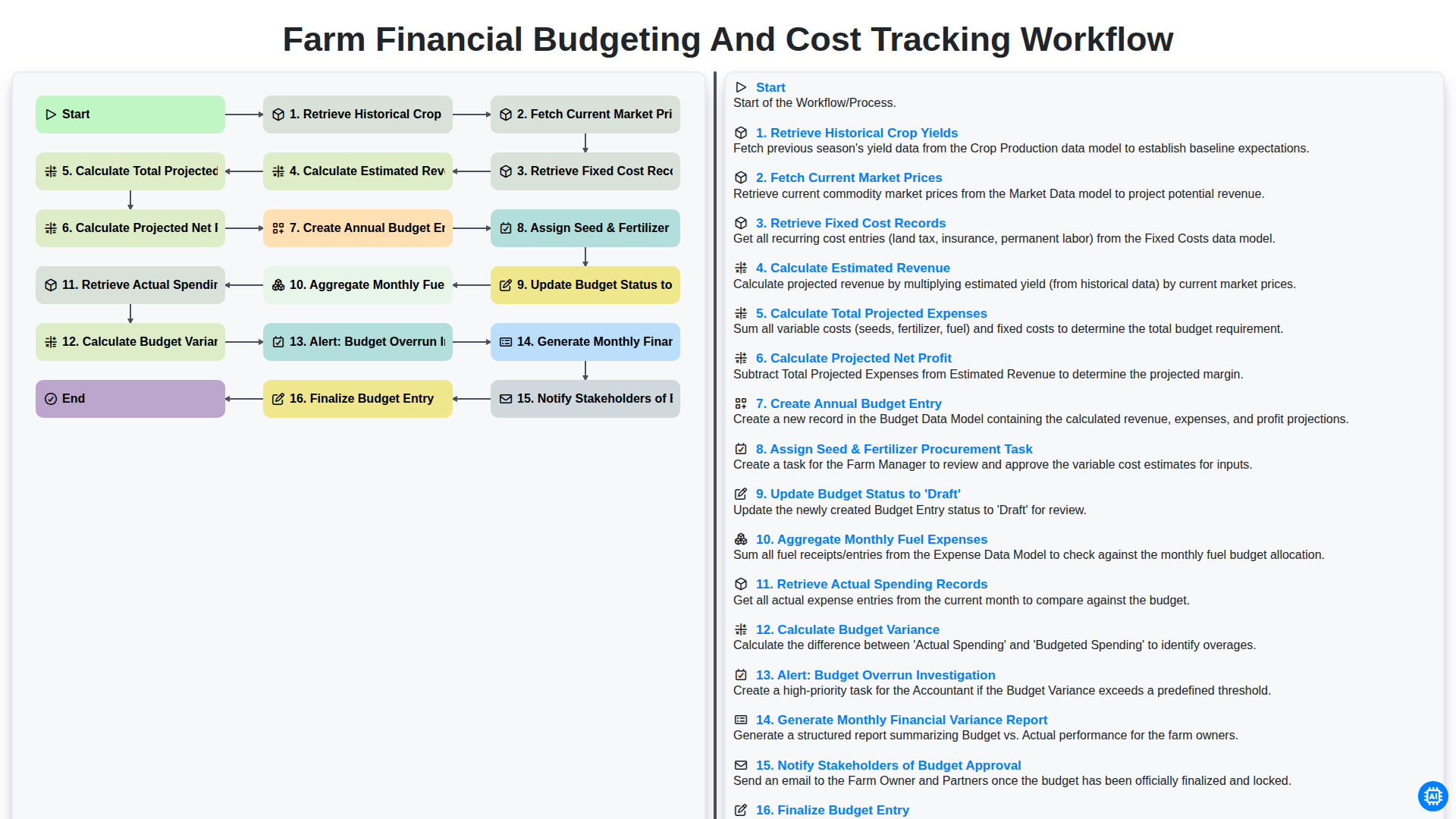
Table of Contents
- Introduction: The Importance of Structured Farm Financial Management
- Phase 1: Building the Foundation with Historical and Market Data
- Analyzing Historical Crop Yields and Current Market Prices
- Phase 2: Forecasting Revenue and Estimating Expenses
- Calculating Projected Revenue and Total Expenses
- Determining Projected Net Profit for the Season
- Phase 3: Budget Initialization and Resource Planning
- Creating Annual Budget Entries and Procurement Tasking
- Phase 4: Real-Time Cost Tracking and Operational Monitoring
- Aggregating Monthly Expenses and Recording Actual Spending
- Phase 5: Variance Analysis and Risk Mitigation
- Calculating Budget Variance and Identifying Overruns
- Phase 6: Reporting, Approval, and Finalization
- Generating Financial Reports and Stakeholder Communication
- Resources & Links
TLDR: Learn how to streamline your farm's profitability using an automated budgeting and cost-tracking workflow. This guide explains how to transition from manual data collection to a structured system that integrates historical yields, market prices, and real-time expense tracking to predict net profits, manage budget variances, and automate financial reporting for smarter agricultural decision-making.
Introduction: The Importance of Structured Farm Financial Management
In the unpredictable world of agriculture, success is defined as much by what happens in the spreadsheet as what happens in the field. While soil health, weather patterns, and pest management are critical, the financial health of a farm depends on a disciplined approach to managing resources. Without a structured workflow for budgeting and cost tracking, even the most bountiful harvests can result in unexpected losses due to unforeseen overheads or market volatility.
Effective farm financial management is not merely about recording expenses after they occur; it is about creating a proactive roadmap that allows for informed decision-making. By implementing a systematic process-ranging from retrieving historical yield data to performing real-time variance analysis-farmers can transition from reactive troubleshooting to strategic planning. A well-defined workflow ensures that every dollar spent on seeds, fertilizer, and fuel is accounted for, and more importantly, it provides the foresight needed to adjust operations before a budget overrun becomes a crisis. In this article, we will explore a comprehensive workflow designed to bring precision, transparency, and stability to your farm's financial operations.
Phase 1: Building the Foundation with Historical and Market Data
The first stage of a robust farm financial workflow lies in establishing an accurate baseline through data-driven insights. Before a single dollar is allocated, you must look backward to look forward. This begins by retrieving historical crop yields, which provides a realistic benchmark of your land's productivity and helps mitigate the risks of over-optimistic projections.
However, historical performance does not exist in a vacuum. To create a functional budget, this baseline must be paired with real-time economic indicators. By fetching current market prices for your primary commodities, you can transition from simple historical averages to a dynamic forecast that reflects the current volatility of the agricultural market. This integration of past productivity and present market value ensures that your financial roadmap is grounded in the reality of both your soil and the global economy.
Analyzing Historical Crop Yields and Current Market Prices
The foundation of a robust farm budget lies in data-driven forecasting rather than guesswork. The first critical step in our workflow involves retrieving historical crop yields to establish a baseline for productivity. By analyzing performance data from previous growing seasons-accounting for variables such as soil health, weather patterns, and pest cycles-you can create a realistic expectation of what your land is capable of producing. This historical context acts as a stabilizer, preventing overly optimistic projections that could lead to financial instability.
However, past performance does not exist in a vacuum. To transform yield data into actionable financial intelligence, we must simultaneously fetch current market prices. Commodity markets are notoriously volatile, influenced by global supply chains, seasonal shifts, and geopolitical events. By integrating real-time or recent market trends into your workflow, you can move beyond simple volume estimates and begin to model potential revenue streams. This dual-layered approach-combining your farm's biological potential with external economic realities-ensures that your subsequent budget calculations are grounded in both agricultural reality and market opportunity.
Phase 2: Forecasting Revenue and Estimating Expenses
Once your historical data and market trends are gathered, the focus shifts from retrospective analysis to forward-looking projections. This phase is the core of the budgeting process, where you transform raw data into actionable financial forecasts.
The first step in this phase is to calculate your estimated revenue. By combining your retrieved historical crop yields with the fetched current market prices, you can create a realistic expectation of the income your farm is likely to generate in the upcoming season. This provides a necessary ceiling for your spending limits.
With your revenue potential established, you can then calculate total projected expenses. This involves aggregating your retrieved fixed cost records-such as land leases, insurance, and permanent labor-and layering in variable costs like seeds, fertilizers, and fuel. By reconciling these figures, you can calculate your projected net profit. This figure is the most critical metric in the workflow, as it determines whether your operational plan is sustainable or if your spending needs to be scaled back.
The goal of this phase is to move from uncertainty to a structured mathematical model that dictates how much capital you can safely commit to your farming operations.
Calculating Projected Revenue and Total Expenses
The foundation of a robust farm budget lies in moving from guesswork to data-driven forecasting. This phase of the workflow transforms raw historical data and real-time market intelligence into actionable financial projections.
The process begins by retrieving historical crop yields, which provides a baseline of what the land is capable of producing under standard conditions. However, because the market is never static, the next critical step is to fetch current market prices. By layering current commodity trends over your historical productivity, you can accurately calculate estimated revenue, giving you a realistic view of the top-line income expected for the upcoming season.
Once the potential revenue is mapped out, the focus shifts to the outflow of capital. The workflow requires you to retrieve fixed cost records-such as land rent, insurance, and permanent labor-to ensure these non-negotiable obligations are accounted for. From there, you can calculate total projected expenses by aggregating variable costs like seed, fertilizer, and fuel.
The ultimate goal of this calculation stage is to calculate projected net profit. This figure serves as the most vital metric in your budget, determining whether your operational plan is sustainable or if adjustments must be made to your planting strategy before the season begins.
Determining Projected Net Profit for the Season
After calculating your estimated revenue and total projected expenses, the final step in the projection phase is to Calculate Projected Net Profit. This critical calculation serves as the ultimate litmus test for your seasonal viability. By subtracting your total projected expenses-which encompass everything from seeds and fertilizer to fuel and labor-from your estimated gross revenue, you arrive at a figure that represents your expected bottom line.
This figure is more than just a number; it is the primary indicator of whether your current farming plan is sustainable or if it requires immediate adjustment. A positive projected net profit provides the confidence to proceed with procurement and planting, while a projected deficit serves as an early warning signal to revisit your cost-control measures or re-evaluate your crop selection before the season begins. This stage is the bridge between theoretical planning and actionable financial decision-making.
Phase 3: Budget Initialization and Resource Planning
Once the initial projections are calculated, the workflow transitions from pure data analysis into active operational planning. This phase is where the theoretical numbers are converted into actionable farm management tasks.
The process begins by formalizing the financial plan through the creation of an Annual Budget Entry. This serves as the single source of truth for the upcoming season, providing a baseline against which all future spending will be measured. To ensure the budget is more than just a static document, the workflow automatically triggers the Assignment of Seed & Fertilizer Procurement Tasks. By linking the budget directly to procurement, the system ensures that the purchasing department or farm manager is immediately aware of the necessary inputs required to meet the projected yields.
At this stage, the budget status is set to 'Draft'. This status is a critical safeguard, allowing for a period of review and adjustment before any funds are officially committed. It provides a window to verify that the procurement tasks align with the projected expenses and that the projected net profit remains within acceptable margins. This controlled transition from calculation to execution ensures that the farm remains fiscally disciplined before the first seed is even planted.
Creating Annual Budget Entries and Procurement Tasking
Once the initial projections and cost assessments are complete, the workflow moves into the operational phase of formalizing your financial roadmap. The process begins by creating a formal Annual Budget Entry within your management system, transforming abstract calculations into a structured financial baseline for the upcoming season.
With the budget framework in place, the system automatically triggers the next critical operational step: Assigning Seed & Fertilizer Procurement Tasks. Because crop success depends heavily on the timely acquisition of inputs, this automated task ensures that your procurement team or farm manager is alerted to purchase essential supplies based on the finalized budget allocations. To maintain oversight during this transition, the system automatically updates the Budget Status to 'Draft'. This allows for a period of review and fine-tuning, ensuring that all resource allocations align with your strategic goals before the budget is officially committed for the season.
Phase 4: Real-Time Cost Tracking and Operational Monitoring
Once the annual budget is finalized, the focus shifts from planning to active execution. The true value of a robust financial workflow lies in its ability to monitor real-time data against your projections, ensuring that small discrepancies do not escalate into year-end deficits.
During this phase, the system moves into an automated monitoring loop. This begins with the aggregation of monthly fuel expenses and the continuous retrieval of actual spending records across all farm inputs. By constantly comparing these real-time figures against the established budget, the workflow performs a critical calculation of budget variance. This allows the farm manager to see exactly where the operation is trending-whether you are under budget or overspending on specific categories like irrigation or labor.
To prevent financial drift, the workflow includes an automated Alert: Budget Overrun Investigation trigger. If spending in a specific category exceeds a predefined threshold, the system prompts an immediate audit to identify the cause, such as unexpected equipment repairs or rising fertilizer costs.
To ensure transparency and data-driven decision-making, the process concludes each month by generating a Monthly Financial Variance Report. This report provides a clear, high-level view of your financial health, allowing for rapid adjustments to the upcoming month's procurement strategy. This continuous feedback loop transforms the budget from a static document into a dynamic tool for operational excellence.
Aggregating Monthly Expenses and Recording Actual Spending
To maintain a precise grip on your farm's profitability, the workflow must transition from theoretical projections to real-world monitoring. This stage of the process involves the continuous aggregation of monthly fuel expenses and the systematic retrieval of all actual spending records.
By consolidating every invoice, receipt, and transaction-ranging from diesel consumption to utility bills-you bridge the gap between your initial budget and your actual cash outflow. This rigorous tracking ensures that every dollar spent is accounted for, preventing the hidden leaks in your operational budget that often go unnoticed until the end of the season. This granular level of data collection serves as the foundation for calculating your budget variance and identifying the exact moments when operational costs begin to deviate from your financial plan.
Phase 5: Variance Analysis and Risk Mitigation
Once the initial budget is set, the workflow transitions from planning to active monitoring. This phase is critical for maintaining the financial health of the farm, as it focuses on comparing real-world performance against your projections. The process begins with the aggregation of monthly fuel expenses and the retrieval of actual spending records across all operational categories. By comparing these real-time figures against your initial estimates, the system automatically calculates the budget variance.
A key feature of this stage is the automated Budget Overrun Investigation alert. If actual costs exceed the allocated thresholds, an immediate alert is triggered, allowing management to identify leaks or price surges before they jeopardize the season's profitability. To ensure complete transparency, the workflow then generates a Monthly Financial Variance Report, providing a detailed breakdown of where the farm is overperforming or underperforming. This data-driven insight allows for rapid course correction, turning reactive troubleshooting into proactive financial management.
Calculating Budget Variance and Identifying Overruns
Once the initial budget is set, the true value of a structured workflow lies in the transition from planning to real-time monitoring. The process moves into the critical phase of Aggregating Monthly Fuel Expenses and Retrieving Actual Spending Records to compare real-world expenditures against your projections.
By overlaying actual costs against your initial estimates, the system automatically performs a Calculate Budget Variance operation. This step is vital for pinpointing exactly where your farm's spending is deviating from the plan-whether it is an unexpected spike in fertilizer costs or an unforeseen rise in diesel prices.
If the variance exceeds predefined thresholds, the workflow triggers an automated Alert: Budget Overrun Investigation. This proactive measure ensures that financial discrepancies are flagged immediately, allowing you to investigate the root cause-such as supply chain inflation or inefficient resource use-before a small leak turns into a significant deficit. To wrap up this monitoring cycle, the system will Generate a Monthly Financial Variance Report, providing a clear, data-driven snapshot of your farm's fiscal health, ensuring you remain in control of your margins throughout the growing season.
Phase 6: Reporting, Approval, and Finalization
Once the core calculations and task assignments are complete, the workflow moves into its final, critical stage: turning raw data into actionable intelligence. This phase ensures that the budget is not just a static document, but a live tool for accountability and strategic decision-making.
The process begins with automated oversight through Budget Overrun Investigations. By comparing actual spending against your projections, the system triggers immediate alerts if expenses exceed predefined limits, allowing you to address leaks in real-time rather than at the end of the season. To maintain high-level visibility, the workflow then Generates Monthly Financial Variance Reports, providing a clear breakdown of where the farm is performing well and where adjustments are needed.
With the data validated, the workflow handles the formal governance of your finances. It automatically Notifies Stakeholders of Budget Approval, ensuring that farm managers, investors, or partners are aligned on the financial roadmap. Once all parties are in agreement, the system performs the final step to Finalize the Budget Entry, locking the figures to prevent unauthorized changes and transforming the draft into the official financial blueprint for the upcoming production cycle.
Generating Financial Reports and Stakeholder Communication
Once the budgeting and tracking phases are complete, the workflow transitions into the critical stage of oversight and communication. This phase is where raw data is transformed into actionable intelligence through the automated generation of monthly financial variance reports. By systematically aggregating actual spending records against the established budget, the system identifies discrepancies, allowing for a clear view of where the farm is performing well and where costs are spiraling.
A key feature of this stage is the automated Budget Overrun Investigation alert. When the system detects that expenses have exceeded the projected thresholds, it triggers an immediate investigation task, ensuring that potential financial leaks are addressed before they impact the entire season's profitability.
The final stage of the workflow ensures organizational alignment. Once the budget analysis is reviewed, the system automatically notifies all relevant stakeholders of the budget approval, providing them with a unified financial roadmap. This culminates in the finalization of the budget entry, locking the figures and establishing a single, authoritative source of truth for the upcoming production cycle.
Resources & Links
- USDA Economic Research Service: Official source for agricultural economic data, commodity prices, and historical production statistics to assist in yield and market price forecasting.
- Investopedia: Financial Ratio Guide: A comprehensive resource for understanding financial formulas, variance analysis, and the fundamentals of budgeting and profit calculation.
- Forbes Business Financial Management: Insights into strategic business management, cost control, and effective resource allocation for small to large-scale enterprises.
- AccountingCoach: Budgetary Control: Educational resources focused on tracking actual vs. budgeted expenses, managing budget variances, and financial reporting workflows.
- AgWeb: Agribusiness Intelligence: Industry-leading news and data on market trends, commodity prices, and operational costs essential for farm budgeting and procurement planning.
Found this Article helpful?
Comments
There are no comments yet. Be the first to add one!
Farm Management Solution Demo
Grow your farm smarter & more efficiently! ChecklistGuro streamlines crop planning, task management, & resource tracking. Maximize yields, reduce waste, & improve profitability. Manage it all with our Work OS.
Related Articles
Unlock Higher Yields: Your Precision Agriculture Checklist Template
The Ultimate Farm Safety Inspection Report Checklist Template
Irrigation System Checklist: Farm Water Management & Crop Yield Optimization

Livestock Health & Welfare Checklist: Your Farm Animal Care & Biosecurity Template
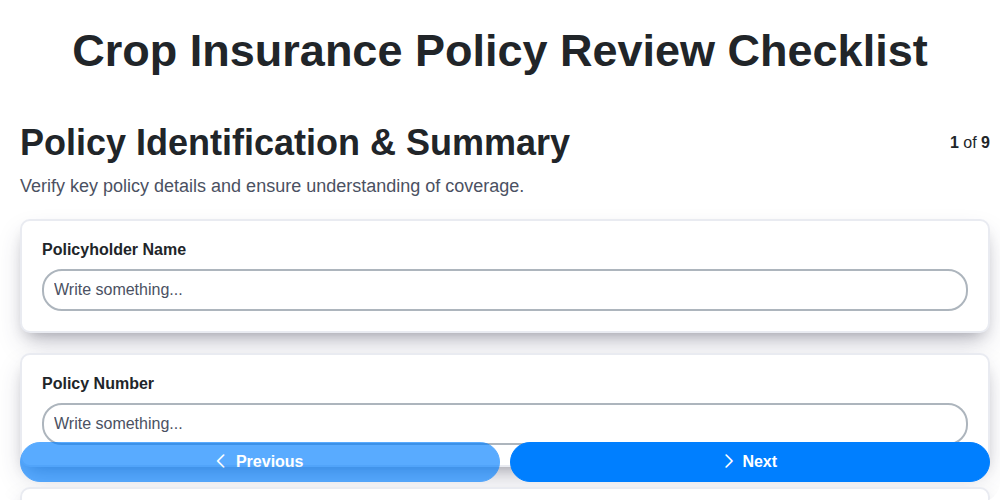
Crop Insurance Policy Review Checklist: A Farmer's Guide
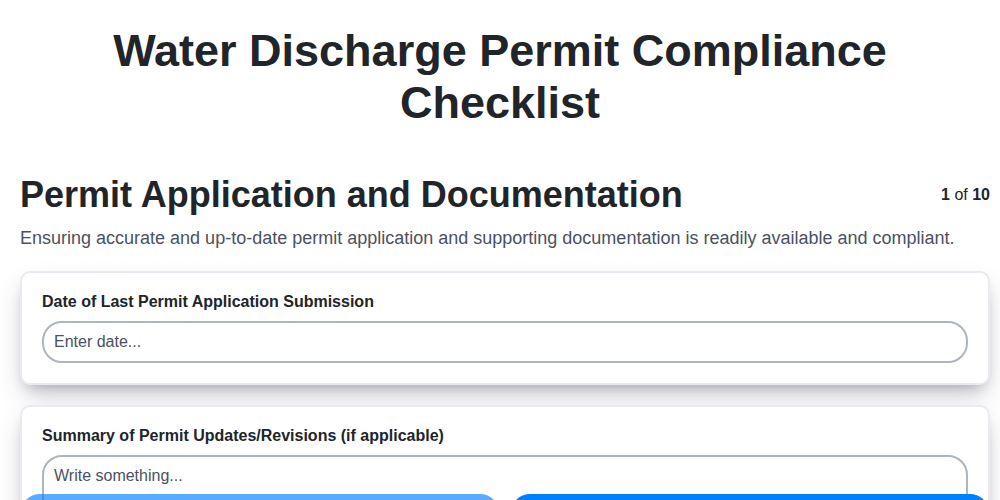
Water Discharge Permit Compliance Checklist Template
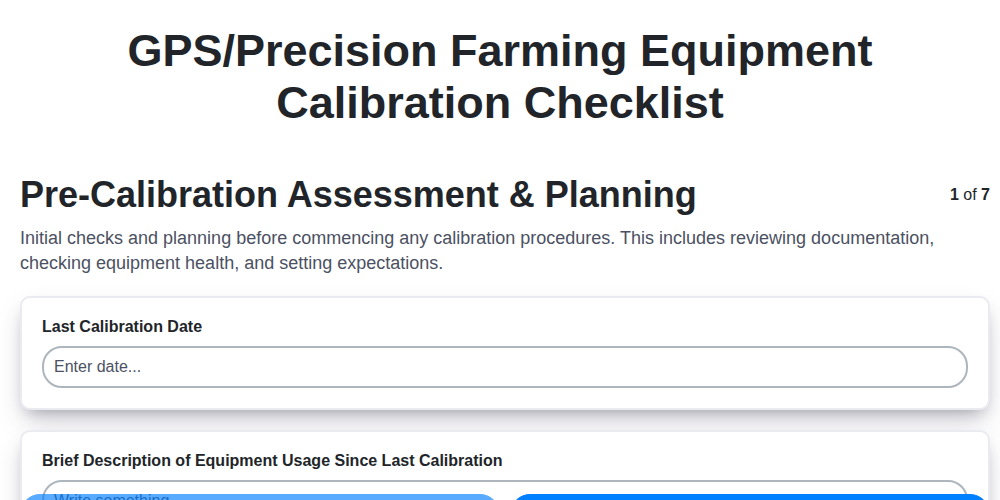
The Ultimate GPS & Precision Farming Calibration Checklist Template
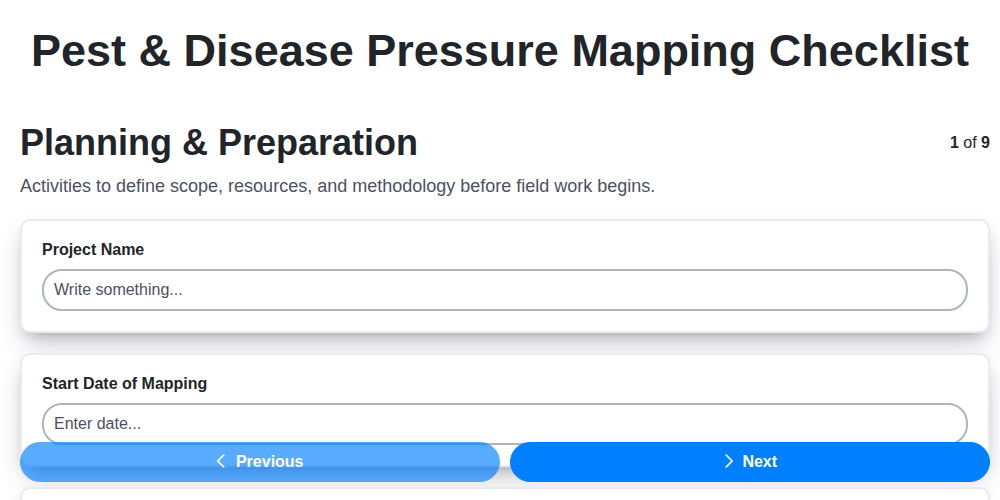
Mapping the Threat: A Checklist for Proactive Pest & Disease Pressure Management
We can do it Together
Need help with
Checklists?
Have a question? We're here to help. Please submit your inquiry, and we'll respond promptly.