Farm Succession Planning Checklist: Your Roadmap to the Future
Published: 11/22/2025 Updated: 07/02/2026
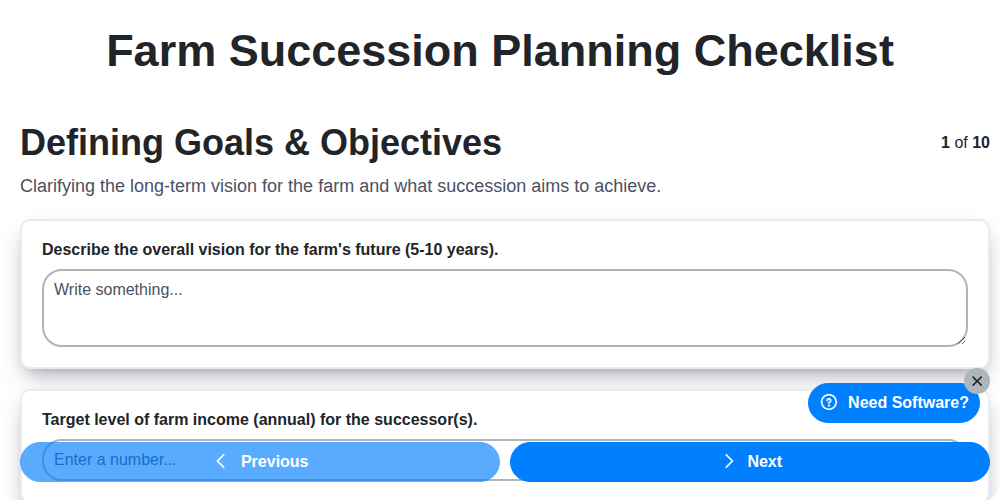
Table of Contents
- Introduction: Why Farm Succession Planning Matters
- 1. Defining Goals & Objectives: Envisioning the Future
- 2. Identifying Potential Successors: Who Will Carry the Torch?
- 3. Financial Assessment & Valuation: Understanding Your Farm's Worth
- 4. Legal & Estate Planning: Protecting Your Assets and Legacy
- 5. Operational Transition Plan: Mapping Out the Handover
- 6. Communication & Family Dynamics: Navigating Difficult Conversations
- 7. Training & Mentorship: Preparing the Next Generation
- 8. Business Structure Review: Ensuring Alignment for the Future
- 9. Risk Mitigation & Contingency Planning: Addressing Potential Challenges
- 10. Timeline Development: Setting Realistic Deadlines
- 11. Documenting the Plan: Creating a Living Document
- 12. Seeking Professional Guidance: When to Bring in Experts
- Conclusion: Securing Your Farm's Legacy
- Resources & Links
TLDR: Worried about the future of your farm? This checklist breaks down farm succession planning into 10 manageable steps - from defining your goals and finding successors to legal planning and ongoing adjustments. It's your essential guide to ensuring a smooth transition and safeguarding your legacy.
Introduction: Why Farm Succession Planning Matters
Few decisions are as significant - and potentially fraught with emotion - as planning for the future of your farm. For generations, family farms have been the backbone of our communities, but the reality is that the current generation of farmers is aging, and the future of these vital businesses hinges on careful and proactive planning. Farm succession isn't just about transferring ownership; it's about preserving a legacy, ensuring financial stability, and maintaining the farm's viability for years to come. Without a well-defined plan, farms risk financial hardship, family conflict, and ultimately, loss of the business. This process isn't something to be put off; it's an investment in the future - a commitment to the land, the family, and the community that depends on it. Starting the conversation now, even if it feels overwhelming, is the most important step you can take.
1. Defining Goals & Objectives: Envisioning the Future
Succession planning isn't just about passing on a farm; it's about ensuring its continued success and aligning that with your personal and family goals. This first, crucial step is about defining what you want to achieve.
Start by individually reflecting on your vision for the farm. What does success look like in 5, 10, or 20 years? Consider factors beyond just production - think about community impact, environmental sustainability, family legacy, and personal well-being.
Then, gather the key stakeholders - your spouse, children, other family members involved in the operation - for open and honest discussions. These conversations should explore:
- Your Personal Goals: Retirement plans, desired lifestyle, and overall aspirations.
- Farm Goals: Maintaining profitability, expanding operations, adopting new technologies, preserving land.
- Family Values: The importance of the farm as a legacy, the role of tradition, and the commitment to future generations.
- Desired Farm Culture: What kind of work environment and values do you want to see continued?
Document these goals and objectives clearly. This written foundation provides a roadmap for subsequent steps and ensures everyone understands the overarching purpose of the succession plan. It's okay if these goals evolve, but having a starting point is essential.
2. Identifying Potential Successors: Who Will Carry the Torch?
Identifying potential successors isn't just about finding someone willing to take over - it's about finding the right person for the job. This is often the most emotionally charged and complex stage of farm succession planning. Don't limit your thinking to just your children. Consider:
- Family Members: Start with your children, nieces, nephews, or other relatives who have expressed interest and possess some aptitude for farming. Don't assume interest - have open and honest conversations.
- Non-Family Employees: Long-term, dedicated employees with a strong work ethic and knowledge of your operation are valuable candidates. They may not inherit the farm in the traditional sense, but could be involved in management or ownership through alternative structures like employee stock ownership plans (ESOPs).
- Neighbors/Community Members: Consider individuals within your local community who have a demonstrated passion for agriculture and possess relevant skills. This is a less common route but can be a viable option, especially if no family members are suitable.
Beyond Willingness: Assessing Suitability
Once you have a pool of potential successors, evaluate them based on several factors:
- Passion for Farming: Does the individual genuinely enjoy farming and understand the lifestyle?
- Skills and Experience: Do they possess the necessary skills (business management, marketing, production, etc.) or a willingness to learn?
- Work Ethic & Commitment: Farming demands long hours and dedication. Can they handle the demands?
- Business Acumen: Understanding finances, marketing, and general business principles is crucial.
- Leadership Qualities: Can they lead and motivate a team?
- Adaptability & Problem-Solving: Agriculture is constantly evolving. Can they adapt to change and solve problems?
Don't be afraid to have tough conversations. Be upfront about expectations and required skills. Remember, the future of your farm depends on selecting the best candidate, even if it's not who you initially envisioned.
3. Financial Assessment & Valuation: Understanding Your Farm's Worth
Before any succession plan can truly take shape, you need a crystal-clear understanding of your farm's financial health and its overall value. This isn't just about what you're worth; it's about ensuring a sustainable transition for the next generation or chosen successor. This assessment is often the most complex and potentially contentious part of the process, so engaging qualified professionals is highly recommended.
Here's what's involved:
- Balance Sheet Review: A thorough examination of assets (land, buildings, equipment, livestock, crops, inventory) and liabilities (loans, mortgages, accounts payable) provides a snapshot of your farm's net worth.
- Income Statement Analysis: Reviewing income and expenses over several years identifies trends, profitability, and potential areas for improvement.
- Cash Flow Projections: Estimating future cash flow is critical for determining the farm's ability to meet obligations and provide income for the successor.
- Asset Valuation: This goes beyond book value. Consider appraisals for land (taking into account zoning, development potential, and soil quality), machinery (depreciation, market value), and livestock (market prices, breeding potential).
- Debt Assessment: A detailed breakdown of outstanding debts, interest rates, and repayment schedules is essential for determining the farm's financial burden.
- Tax Implications: Understanding the tax consequences of transferring assets, including capital gains taxes and inheritance taxes, is crucial for minimizing financial strain on both the current owner and the successor.
- Business Valuation Methods: Exploring different valuation approaches (e.g., asset-based, income-based, market-based) with a professional helps establish a fair and defendable value for the farm.
Why it's Critical: This assessment informs everything from the successor's financial security to the structure of the transition itself. A realistic valuation prevents disappointment and potential conflict later on. It also helps define the terms of the transfer, whether through a sale, gift, or installment agreement.
4. Legal & Estate Planning: Protecting Your Assets and Legacy
Farm succession isn't just about who takes over; it's about ensuring your hard-earned assets and legacy are protected and transferred according to your wishes. This crucial step involves navigating a complex legal landscape and requires professional guidance.
Here's what needs to be addressed:
- Will Updates: Your existing will might not adequately reflect your succession plan. It needs to clearly outline how your farm assets will be distributed, considering any trusts or special provisions for successors.
- Trust Creation (Optional): Trusts can offer significant advantages for asset protection, minimizing estate taxes, and providing for beneficiaries with specific needs. Discuss the potential benefits of various trust structures (e.g., revocable, irrevocable, farmland trusts) with an estate planning attorney.
- Power of Attorney: Establish both a financial and medical power of attorney. This designates someone you trust to act on your behalf if you become incapacitated.
- Advance Healthcare Directives: Outline your wishes regarding medical care.
- Business Ownership Transfers: The legal transfer of ownership - be it through gifting, sales, or other mechanisms - requires careful documentation and compliance with applicable laws.
- Tax Implications: Estate, gift, and inheritance taxes can significantly impact the transfer of assets. A tax professional specializing in agricultural estates is essential for planning strategies to minimize these burdens.
- Mediation and Dispute Resolution: Consider including provisions for mediation or arbitration to address potential disagreements among family members regarding the succession plan.
Important Note: Legal and estate planning should always be handled with the assistance of qualified legal professionals specializing in agricultural law and estate planning. This is a critical component to ensure the plan is legally sound and aligns with your overall objectives.
5. Operational Transition Plan: Mapping Out the Handover
The succession plan isn't just about who takes over, it's about how. A well-defined operational transition plan details the practical steps of transferring day-to-day responsibilities and farm operations. This goes far beyond simply saying you're in charge.
Here's what your operational transition plan should cover:
- Task Inventory: Create a comprehensive list of every task required to run the farm. This includes everything from crop planning and livestock management to equipment maintenance, record-keeping, and marketing.
- Prioritization: Not all tasks are created equal. Identify the critical, time-sensitive operations that absolutely must be transferred first.
- Phased Approach: A sudden shift can be disruptive. Break the transition down into manageable phases with specific timelines. Consider a gradual handover where the successor shadows the current operator, slowly taking on more responsibility.
- Documentation is Key: Document everything. Standard operating procedures (SOPs) for key processes are invaluable. Include detailed instructions, diagrams, and troubleshooting tips. Don't assume anything is obvious - what's second nature to you may be completely new to the successor.
- Technology Transfer: Farms are increasingly reliant on technology. Ensure the successor understands and is proficient in using all relevant software, GPS systems, precision agriculture tools, and online platforms.
- Supplier & Customer Relationships: Introduce the successor to key suppliers, vendors, and customers. Facilitate introductions and explain the importance of maintaining these relationships.
- Contingency Planning within the Plan: What happens if the successor struggles with a specific area? What if there's a mechanical breakdown or unexpected weather event during the transition? Build in backup plans and support systems.
- Feedback & Refinement: This plan isn't set in stone. Regularly check in with the successor and adjust the plan based on their feedback and the evolving needs of the farm.
A well-executed operational transition plan minimizes disruption, ensures continuity, and sets the successor up for success.
6. Communication & Family Dynamics: Navigating Difficult Conversations
Succession planning isn't just about the farm; it's about the family. Often, the most challenging aspects revolve around communication and family dynamics. Years of established roles, deeply held beliefs about the farm's legacy, and potential feelings of disappointment or resentment can easily surface. Ignoring these emotional layers can derail even the most meticulously crafted plan.
Here's why addressing communication and family dynamics is paramount:
- Unexpressed Expectations: Assumptions about who should take over or what the future holds are incredibly common. These unstated expectations can breed conflict and disappointment later.
- Sibling Rivalry & Generational Differences: Differing views on the farm's direction, management styles, and work ethic between siblings or generations are natural but require careful handling.
- Emotional Attachment: The farm is often more than just a business; it's a source of identity, tradition, and emotional connection. These attachments can make objective decision-making difficult.
- Fear of Disappointment: Family members might be afraid to express concerns or disagree with the senior generation, fearing disappointment or damaging relationships.
What can be done?
- Facilitated Discussions: Consider using a neutral third party - a farm succession consultant or mediator - to lead family meetings. This can create a safer space for open and honest conversation.
- Active Listening: Encourage everyone to actively listen to each other's perspectives, even if they disagree. Validate feelings and acknowledge concerns.
- Clear Expectations & Boundaries: Clearly define roles, responsibilities, and expectations for each family member involved.
- Addressing Concerns Openly: Don't shy away from difficult conversations. Encourage family members to express their concerns and work towards solutions collaboratively.
- Respecting Individual Aspirations: Recognize that not everyone wants to, or is suited to, take over the farm. Support their individual career and life goals.
Remember, building consensus and maintaining positive family relationships is just as important as the business transition itself.
7. Training & Mentorship: Preparing the Next Generation
Succession isn't just about handing over the reins; it's about equipping the next generation to effectively take them. This requires a focused, deliberate training and mentorship program. Don't underestimate the value of pairing potential successors with experienced mentors - either within the farm or from outside sources - who can share knowledge, skills, and industry insights.
Here's what a robust training and mentorship program should include:
- Practical Hands-On Experience: Successors need to get their hands dirty. This means participating in every aspect of the farm operation, from fieldwork and livestock care to equipment maintenance and financial record-keeping. Rotate them through different roles to build a broad understanding.
- Formal Education: Encourage and support opportunities for formal agricultural education, whether it's short courses, workshops, or even a degree program. This provides a foundation of theoretical knowledge to complement their practical experience.
- Financial Literacy: Many farm successors are surprisingly lacking in financial acumen. They need to understand budgeting, cash flow management, financing options, and interpreting financial statements.
- Leadership Development: Successors need to develop leadership skills, including delegation, problem-solving, decision-making, and conflict resolution.
- Technology Adoption: Modern farming relies heavily on technology. Ensure the successor is comfortable with precision agriculture, data analysis, and farm management software.
- Gradual Responsibility: Don't overwhelm the successor. Gradually increase their responsibilities and decision-making authority, allowing them to learn from mistakes in a controlled environment.
- Regular Feedback: Provide consistent, constructive feedback to identify strengths and areas for improvement. Open communication is key.
A well-structured training and mentorship program isn't just about transferring knowledge; it's about fostering confidence, resilience, and a deep understanding of the farm's values and legacy.
8. Business Structure Review: Ensuring Alignment for the Future
Farm succession isn't just about who takes over; it's about how the farm operates. Your current business structure - be it a sole proprietorship, partnership, LLC, or corporation - might not be ideal for long-term succession. It's crucial to critically examine whether your structure supports your goals and facilitates a smooth transfer of ownership and management.
Consider these key questions during your review:
- Liability Protection: Does your current structure adequately shield your family and assets from potential liabilities?
- Tax Implications: How does your structure impact estate taxes, income taxes, and other relevant levies? Different structures offer varying tax advantages, and it's wise to explore options.
- Ease of Transfer: How easily can ownership be transferred under your current structure? Some structures can complicate or even restrict the transfer process, creating unnecessary hurdles.
- Flexibility & Growth: Can your structure accommodate future growth and changes in the farm's operations? Is it adaptable to new technologies, market demands, or evolving family dynamics?
- Investor/Lender Perception: How does your business structure view to potential investors or lenders, should you need external funding at any point?
A thorough review, ideally with the guidance of a legal and financial advisor, can identify opportunities to optimize your business structure for succession. This might involve changing your entity type, revising operating agreements, or implementing other adjustments to position the farm for continued success under new leadership. Don't assume your current structure is good enough - proactive assessment is key.
9. Risk Mitigation & Contingency Planning: Addressing Potential Challenges
Farm succession isn't just about passing the reins; it's about ensuring the farm's survival through potential storms. A robust Risk Mitigation & Contingency Planning section of your succession plan is vital for weathering unexpected events and safeguarding the farm's future.
What are the risks? Think beyond simple market fluctuations. Consider:
- Health Issues: What happens if the current owner or a potential successor faces unexpected illness or injury? Do you have key person insurance? Does someone else know how to handle essential tasks?
- Market Volatility: How would a significant drop in commodity prices or an increase in input costs impact the farm's viability? Diversification, forward contracting, and conservative budgeting are your allies here.
- Natural Disasters: Extreme weather events are increasingly common. Do you have adequate crop insurance? What's your plan for livestock recovery or rebuilding infrastructure?
- Relationship Breakdown: Succession plans often involve complex family dynamics. What if disagreements escalate and jeopardize the transition? Having a neutral third party (mediator or advisor) identified upfront can be invaluable.
- Loss of Key Employees: What happens if critical, non-family employees leave unexpectedly? Documentation of processes and cross-training can help.
- Legal/Regulatory Changes: Farm policy can shift. Staying informed and adaptable is important.
Developing your Contingency Plan:
- Identify Critical Functions: List every essential task and the person(s) currently responsible.
- Develop Backup Plans: For each critical function, identify alternative solutions and assign responsibility.
- Insurance Review: Ensure you have adequate insurance coverage (life, disability, property, liability).
- Document Everything: Key processes, procedures, and contact information should be readily accessible.
- Regular Review: This isn't a one-and-done task. Review and update your contingency plans annually or as circumstances change.
By proactively addressing potential challenges, you're not just planning for succession; you're building a resilient farm ready to thrive for generations to come.
10. Timeline Development: Setting Realistic Deadlines
Succession planning isn't a sprint; it's a marathon. A realistic timeline is absolutely critical for keeping the process on track and avoiding overwhelming anyone involved. Forget aiming for overnight transitions - thoughtful succession takes time, and rushing it can lead to mistakes and fractured relationships.
Start Broad, Then Get Specific: Initially, create a high-level timeline encompassing the entire succession process, from initiating discussions to final transfer. This might span 5-10 years, depending on the complexity of your farm and the readiness of potential successors.
Break it Down: Next, divide the overall timeline into phases corresponding to the checklist items we've covered: defining goals, financial assessment, legal planning, operational transition, etc. Assign estimated durations to each phase. Be honest about how much time each step realistically requires.
Consider External Factors: Factor in agricultural seasons, regulatory deadlines (if applicable), and personal availability. Don't try to cram everything into a busy harvest period!
Milestones & Checkpoints: Establish key milestones within each phase. These are tangible goals that mark progress. For example: Financial assessment completed by [date], or Successor training plan drafted by [date]. Regular checkpoints - monthly or quarterly reviews - allow you to monitor progress, identify roadblocks, and adjust the timeline as needed.
Flexibility is Key: The timeline isn't set in stone. Life happens. Be prepared to adapt to unexpected events or changes in circumstances. Built-in buffers can help cushion against delays.
Communicate Regularly: Keep everyone involved informed of the timeline's progress. This transparency minimizes anxiety and ensures everyone understands the expectations.
Remember, a well-defined and realistic timeline transforms succession planning from a daunting task into a manageable, achievable goal.
11. Documenting the Plan: Creating a Living Document
A farm succession plan isn't a static document; it's a living document. That means it needs regular updates and revisions to remain relevant and effective. Think of it as a roadmap - roads change, construction happens, and your route needs adjusting accordingly.
Here's why documentation is crucial and what it entails:
- Beyond the Checklist: The checklist is a guide, but the actual documented plan needs to flesh out each point with specifics. This includes detailed explanations of decisions made, chosen strategies, and responsibilities assigned.
- Centralized Repository: Establish a designated location (physical or digital) where all succession planning materials are stored and accessible to key stakeholders. This prevents information silos and ensures everyone is on the same page.
- Regular Updates: Schedule annual reviews (or more frequent ones during the transition period) to assess the plan's effectiveness. Market changes, regulatory updates, and family dynamics all necessitate adjustments.
- Version Control: Implement a clear version control system. Date each revision and note the changes made. This helps track the plan's evolution and understand the reasoning behind past decisions.
- Accessibility & Confidentiality: Balance accessibility with confidentiality. Determine who needs access to the plan and establish safeguards to protect sensitive information.
- Living Document Philosophy: Emphasize that the plan is meant to be a working document, not an immutable decree. Encourage open communication and feedback to ensure it remains responsive to changing circumstances.
By treating your farm succession plan as a living document, you significantly increase the likelihood of a smooth, successful transition for generations to come.
12. Seeking Professional Guidance: When to Bring in Experts
Navigating farm succession planning can be incredibly complex, even with a robust checklist guiding you. There will likely be points where specialized expertise is invaluable. Here's when bringing in professionals is highly recommended:
- Financial Valuation & Tax Implications: Agricultural businesses often have unique assets and complex tax structures. A qualified agricultural accountant or business appraiser can accurately value the farm and advise on minimizing tax liabilities during the transfer.
- Legal and Estate Planning intricacies: Estate laws vary significantly, and agricultural assets often require specialized consideration (e.g., conservation easements, inheritance of farmland). An experienced agricultural attorney can ensure legal compliance and create a succession plan that protects the farm's future.
- Complex Family Dynamics: When family disagreements arise or relationships are strained, a mediator or family business consultant can facilitate communication and help find solutions that keep the farm intact.
- Business Structure Optimization: A business advisor or consultant specializing in agriculture can help determine if the current business structure (sole proprietorship, partnership, LLC, etc.) is optimal for succession and long-term viability.
- Risk Management: A risk management specialist can identify and assess potential risks (market fluctuations, weather events, regulatory changes) and help develop strategies to mitigate them.
Don't view professional guidance as an unnecessary expense; consider it an investment in the long-term health and stability of your farm.
Conclusion: Securing Your Farm's Legacy
Succession planning isn't a one-and-done task; it's an ongoing journey. This checklist provides a robust framework, but remember that every farm is unique. Regularly revisiting each step, adjusting to changing circumstances, and fostering open communication will be crucial for long-term success. Don't view this as a burden, but as an investment - an investment in your family, your business, and the enduring legacy of your farm. By proactively addressing these areas, you're not just transferring ownership; you're ensuring the farm's continued prosperity and preserving the values and traditions that have made it a vital part of your community. The work may be complex, but the rewards - a thriving farm and a secure future for generations to come - are immeasurable.
Resources & Links
- Purdue Extension Farm Succession Planning: Comprehensive resources and information on farm succession planning from Purdue University Extension, covering many of the checklist items.
- Cornell Farm Business Management - Farm Succession: Cornell University's resources on farm succession planning, including articles, webinars, and guides. Covers topics from goal setting to legal considerations.
- NC Farm Manager - Farm Succession Planning: North Carolina Farm Manager provides practical advice and resources for farm succession, including checklists and guides.
- USDA Farm Service Agency (FSA): While not solely focused on succession, the FSA offers resources on farm ownership, loans, and risk management, relevant to succession planning.
- AcreValue: AcreValue provides farmland valuation data and tools that can be helpful in the Financial Assessment & Valuation section. Provides county-level farmland values.
- Land Fili: Another farmland valuation resource. Can be used to estimate the worth of your land and its impact on the succession plan.
- EstatePlanning.com: A broad resource for all aspects of estate planning, relevant to the Legal & Estate Planning header. Find articles and a directory of estate planning attorneys.
- American Bar Association: Provides information and resources on legal issues, including estate planning and business law. Important for the Legal & Estate Planning section.
- Internal Revenue Service (IRS): Important for understanding tax implications of different succession strategies, especially in the Financial Assessment & Valuation & Legal & Estate Planning sections.
- University of Nebraska-Lincoln Extension: Provides resources on farm management and succession planning, similar to Purdue and Cornell. Find publications and webinars.
- Small Business Administration (SBA): Provides resources and potential funding options if the succession plan involves a business sale or transfer.
- Farm Credit: Farm Credit offers financial services and resources for farmers and ranchers, potentially helpful in the Financial Assessment & Valuation and Operational Transition Plan sections. May offer succession planning advice as well.
- National Association of FarmAdvocates: The National Association of FarmAdvocates can offer guidance and support in navigating complex family dynamics and succession planning challenges.
- AgMRC (Agricultural Marketing Resource Center): Provides practical information and analysis on farm business management, including succession planning. Can be helpful across several sections.
Frequently Asked Questions
What is farm succession planning?
Farm succession planning is the process of transferring ownership and management responsibilities of a farm from one generation to the next, or to an outside party. It's more than just a will; it's a comprehensive plan covering business, legal, financial, and family considerations.
Why is farm succession planning important?
Without a plan, your farm could face instability, loss of value, and potential legal complications. Succession planning ensures the continuation of your farm's legacy, protects family relationships, and allows for a smooth transition of knowledge and expertise.
Who should be involved in the succession planning process?
Ideally, everyone involved in the farm's future should participate - the current owner(s), potential successors, key family members, and professional advisors like lawyers, accountants, and financial planners.
What are the different types of farm succession plans?
Common approaches include transferring the farm to a family member, selling to an outside buyer, creating a worker-owned cooperative, or establishing a land trust. The best option depends on your specific circumstances and goals.
What are the key steps in creating a farm succession plan?
The checklist outlines steps including assessing the farm's value, identifying potential successors, developing a timeline, addressing financial and legal considerations, and communicating the plan to all stakeholders.
How long does the farm succession planning process typically take?
It's a marathon, not a sprint! The process can take anywhere from 1 to 5 years, depending on the complexity of the farm and the number of stakeholders involved. Starting early is always recommended.
What are some common challenges in farm succession planning?
Challenges often involve differing opinions among family members, emotional attachments to the farm, concerns about fairness, and navigating complex legal and financial considerations. Open communication and professional guidance are crucial.
What is a shadow board, and how does it fit into farm succession planning?
A shadow board involves the potential successor(s) observing and participating in the farm's management alongside the current owner(s). This allows for gradual knowledge transfer and builds the successor's skills and confidence.
What should I do if family members disagree about the succession plan?
Mediation and facilitated discussions with a neutral third party can help bridge the gap and find common ground. It's important to prioritize the farm's long-term success and family harmony.
Where can I find legal and financial professionals to help with farm succession planning?
Consult with agricultural lawyers, farm accountants, financial planners specializing in succession planning, and farm management consultants. Your local Farm Service Agency (FSA) or agricultural extension office can often provide referrals.
Comments
There are no comments yet. Be the first to add one!
Farm Management Solution Demo
Grow your farm smarter & more efficiently! ChecklistGuro streamlines crop planning, task management, & resource tracking. Maximize yields, reduce waste, & improve profitability. Manage it all with our Work OS.
Related Articles
Unlock Higher Yields: Your Precision Agriculture Checklist Template
The Ultimate Farm Safety Inspection Report Checklist Template
Irrigation System Checklist: Farm Water Management & Crop Yield Optimization

Livestock Health & Welfare Checklist: Your Farm Animal Care & Biosecurity Template
Crop Insurance Policy Review Checklist: A Farmer's Guide
Water Discharge Permit Compliance Checklist Template
The Ultimate GPS & Precision Farming Calibration Checklist Template
Mapping the Threat: A Checklist for Proactive Pest & Disease Pressure Management
Need help with
Farm Management?
Have a question? We're here to help. Please submit your inquiry, and we'll respond promptly.