The Ultimate Fashion Show Planning Checklist Template 2026: From Model Casting to Backstage Management
Published: 10/28/2026 Updated: 10/29/2026
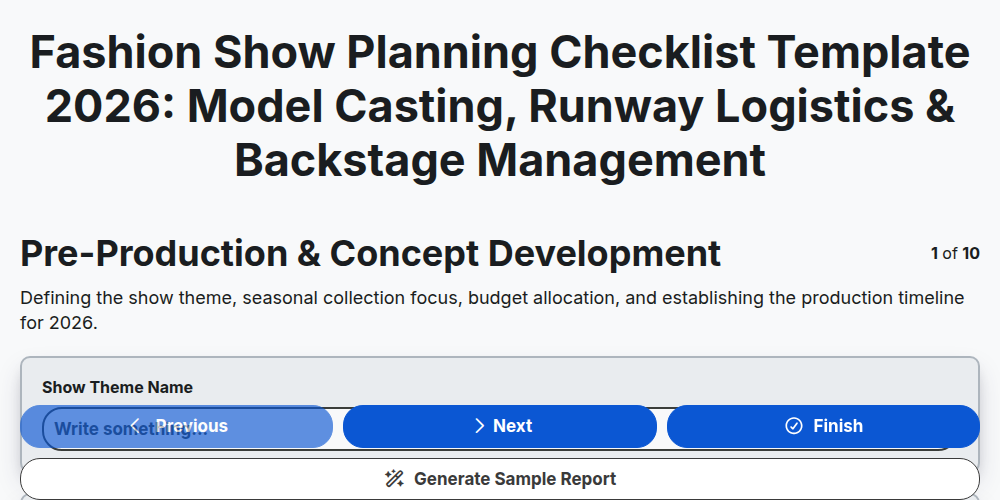
Table of Contents
- Introduction: Navigating the 2026 Fashion Week Landscape
- Phase 1: Pre-Production & Concept Development
- Phase 2: Model Casting & Talent Management
- Phase 3: Venue Selection & Runway Logistics
- Phase 4: Designer & Collection Coordination
- Phase 5: Technical Production & AV Excellence
- Phase 6: Hair, Makeup & Styling Execution
- Phase 7: Backstage & Dressing Room Management
- Phase 8: Marketing, PR & Media Relations
- Phase 9: Front of House & Guest Experience
- Phase 10: Post-Show Wrap-up & Evaluation
- Conclusion: Ensuring a Flawless Runway Debut
- Resources & Links
TLDR: Master your 2026 runway event with our comprehensive planning guide. This all-in-one checklist covers every critical stage of production, including concept development, model casting, venue logistics, backstage management, technical execution, and post-show evaluation to ensure a seamless, high-impact fashion showcase.
Introduction: Navigating the 2026 Fashion Week Landscape
The Evolution of the Runway: Why Precision Planning is Your Greatest Asset
The fashion industry in 2026 is no longer just about the clothes; it is about the seamless integration of immersive storytelling, technological innovation, and flawless execution. As we approach the upcoming season, the stakes for organizers have never been higher. With the rise of hybrid runway experiences-where physical shows meet augmented reality and real-time global streaming-the margin for error has vanished.
A single lapse in logistics, a delay in model arrivals, or a technical glitch in the lighting cues can ripple through your entire brand narrative, affecting everything from social media engagement to investor perception.
Beyond the Aesthetic: The Complexity of Modern Production
Planning a fashion show in 2026 requires a dual mindset: the vision of a creative director and the precision of a project manager. You are not just managing a runway; you are orchestrating a high-pressure ecosystem of talent, technology, and logistics.
Whether you are organizing an intimate designer showcase or a large-scale seasonal presentation, the complexity lies in the invisible elements. While the audience focuses on the movement of the garments, your success is determined by the unseen symphony of backstage management, technical AV synchronization, and precise talent coordination.
Your Roadmap to a Flawless Execution
This comprehensive checklist is designed to serve as your definitive blueprint. We have broken down the chaos of production into actionable, strategic phases-ranging from the initial conceptual spark of pre-production to the critical data-driven evaluations of the post-show wrap-up.
By following this template, you ensure that every moving part-from the first model casting call to the final guest departure-is aligned with your creative vision, ensuring your 2026 showcase is not just an event, but an unforgettable industry milestone.
Phase 1: Pre-Production & Concept Development
Laying the Foundation: Setting the Vision
Before the first model walks the runway or the first garment is pinned, the success of your 2026 showcase depends on a rock-solid strategic foundation. Pre-production is the most critical phase; it is where your creative vision meets operational reality. Without a clear roadmap, even the most stunning collection can be overshadowed by logistical chaos.
Defining the Creative Identity
The first step is to establish the Why and the How of your show. In 2026, fashion shows are increasingly about immersive storytelling rather than just displaying clothes.
- Concept Articulation: Define your theme, mood, and narrative. Are you aiming for hyper-digital futurism, sustainable minimalism, or avant-garde maximalism?
- Mood Board Creation: Develop visual references for lighting, set design, and atmosphere to ensure all stakeholders are aligned.
- Budget Allocation: Establish a realistic budget that accounts for every moving part, from venue rental to talent fees and post-show marketing.
Setting the Timeline and Milestones
A fashion show is a complex machine with many moving parts. You need a master production calendar that works backward from your show date.
- Key Deadlines: Identify critical dates for designer submissions, model casting calls, and venue walkthroughs.
- Resource Planning: Determine your core production team, including creative directors, production managers, and PR specialists.
Establishing the Project Scope
Determine the scale of your event. Will this be an intimate, invite-only presentation for press, or a large-scale, ticketed spectacle?
- The Guest List Strategy: Decide on the capacity and the demographic of your target audience.
- Sponsorship Integration: Identify opportunities for brand partnerships that align with your concept, ensuring that sponsors are integrated seamlessly into the production plan rather than feeling like an afterthought.
Phase 2: Model Casting & Talent Management
Selecting the Faces of Your Collection
Once your concept is solidified, the focus shifts from abstract ideas to the tangible elements that bring your vision to life. Model casting is more than just finding beautiful faces; it is about finding the specific energy, movement, and vibe that personifies your 2026 collection.
The Casting Process
To ensure a cohesive runway presentation, your casting process should be methodical and organized:
- Defining the Aesthetic: Create a detailed casting brief for your casting director. This includes specific physical requirements, age ranges, and-most importantly-the persona or attitude required to represent the collection.
- The Audition/Casting Call: Decide between an open call or a private casting. For high-end collections, private castings with top-tier agencies are preferred to ensure professional standards and consistency.
- The Walk Test: It is crucial to observe how models move in person. A model may look stunning in photos, but their gait, rhythm, and ability to handle the specific fabrications of your garments (e.g., heavy outerwear vs. light silk) are what truly matter on the runway.
Talent Management & Logistics
Managing talent goes beyond the runway walk. A seamless show requires meticulous administrative oversight:
- Contracting & Usage Rights: Ensure every model and performer has signed clear agreements regarding their usage rights (photography, social media, and videography) for both the live event and post-show promotional materials.
- The Talent Rider: Prepare a Talent Kit that includes call times, venue location, dressing room assignments, and specific instructions regarding hair and makeup requirements.
- Scheduling the Lineup: Create a Runway Order sheet. This document dictates the sequence of models, which is vital for both the models and the backstage crew to ensure the show flows without gaps or confusion.
- Diversity & Inclusion Standards: In 2026, authenticity is paramount. Ensure your talent roster reflects a diverse range of identities, body types, and backgrounds to ensure your brand remains relevant and socially conscious.
Phase 3: Venue Selection & Runway Logistics
Mapping the Runway: Venue & Logistics Essentials
Once your concept is solidified and your talent is scouted, the focus shifts from the creative vision to the physical reality of the event. The venue is more than just a backdrop; it is the stage uponft which your collection's story is told. For 2026, the trend is moving toward immersive, multi-sensory environments, meaning your logistics must account for both aesthetics and technical precision.
Venue Scouting & Site Selection
Your choice of venue must align with your brand identity. Whether you are opting for a high-tech industrial warehouse, a historic grand hall, or an outdoor architectural marvel, consider the following:
- Capacity & Flow: Can the space accommodate your guest list while allowing for a clear, unobstructed view of the runway?
- Accessibility: Ensure the venue meets modern inclusivity standards, providing easy access for models, staff, and guests with mobility needs.
- Power & Infrastructure: Does the site have the electrical load capacity required for high-intensity lighting and AV setups?
Runway Design & Floor Plan
The runway is the heartbeat of the show. Its layout dictates the rhythm of the entire production.
- Runway Geometry: Decide between a classic straight catwalk, a T-shape, or a 360-degree perimeter walk to maximize visibility.
- Surface & Safety: The runway material must be non-slip and compatible with the footwear featured in your collection.
- Sightlines: Map out the front row carefully to ensure VIPs, press, and influencers have the best possible vantage point for photography.
Load-in & Site Management
The logistics of transforming an empty space into a high-fashion arena are intense.
- The Load-in Schedule: Create a minute-by-minute timeline for vendors (lighting, sound, decor) to avoid congestion during setup.
- Permits & Insurance: Ensure all necessary local permits for noise, street closures, or large gatherings are secured well in advance.
- Security & Perimeter Control: Design a plan to manage backstage access, VIP cordoning, and the separation of the production area from the public.
Phase 4: Designer & Collection Coordination
Orchestrating the Artistry: Designer & Collection Coordination
The fashion show is the stage where a designer's vision meets the physical world. This phase is about much more than just having clothes available; it is about managing the delicate synergy between the creative vision and the logistical reality of the runway. To ensure the collection is presented exactly as intended, you must bridge the gap between the designer's studio and your production timeline.
Collection Readiness & Inventory Management
The foundation of a successful show is knowing exactly what is being presented. You cannot manage a runway if you don't know the volume of looks.
- Final Look List: Create a master document containing every complete look, including accessories, footwear, and jewelry.
- Sample Tracking: Implement a rigorous check-in/check-out system for all garments to prevent loss or damage.
- Alterations Deadline: Set a strict final fitting date. Any garment that is not runway-ready by this date must be flagged for the production team immediately.
The Runway Order Strategy
The sequence of the show is a narrative. The order in which models walk determines the rhythm and impact of the collection.
- The Sequence Map: Work closely with the designer to finalize the walking order. This should consider color transitions, fabric weight, and the grand finale impact.
- Look-to-Model Mapping: Once casting is complete, assign specific looks to specific models. This prevents confusion during the high-pressure backstage minutes.
- The Hero Moment: Identify key pieces that require specific lighting or positioning to ensure they receive the spotlight they deserve.
Fitting & Technical Rehearsals
The transition from the atelier to the runway requires a physical rehearsal of the garments in motion.
- Pre-Show Fittings: Schedule mandatory fittings for all models. This allows stylists to finalize how garments drape and ensures that accessories (like heavy belts or intricate headpieces) are secure.
- The Dress Rehearsal: A full walkthrough with the models, the lighting designer, and the music cues. This is where you identify if a long train is a tripping hazard or if a specific fabric disappears under certain light temperatures.
- Emergency Repair Kit Coordination: Ensure the seamstresses and tailors are briefed on which looks are most at-risk and have the necessary supplies (safety pins, fabric tape, specialized needles) ready for the quick-fix window.
Phase 5: Technical Production & AV Excellence
Orchestrating the Sensory Experience
As the spotlight hits the runway, the technical production becomes the heartbeat of your fashion show. In 2026, the standard for runway shows has shifted from simple visibility to total sensory immersion. It is no longer enough to just have lights; you must curate an atmosphere where lighting, sound, and visual effects work in perfect harmony with the collection's narrative.
Lighting Design & Runway Illumination
The lighting designer is your most critical technical partner. The goal is to ensure every fabric texture, color nuance, and silhouette is captured perfectly by both the live audience and high-definition cameras.
- Key Lighting Elements:
- Key Lighting: High-intensity spots to ensure models are clearly visible.
- Ambient Lighting: Setting the mood (moody/dim vs. bright/industrial).
- Backlighting: Creating depth to separate the models from the backdrop.
- Follow Spots: Essential for directing the audience's eye during key moments.
- The Camera-Ready Check: Ensure there is no flicker in the LED lighting that might interfere with digital recording or live streaming.
Sound Engineering & Audio Landscapes
The soundtrack dictates the rhythm of the walk. A sudden drop in audio or a poorly balanced mix can instantly break the magic of the presentation.
- Soundscape Curation: Coordinating the playlist with the designer's vision (e.g., rhythmic beats for streetwear vs. ambient textures for couture).
- Audio Distribution: Ensuring even sound coverage across the entire venue so the front row and the back of the room experience the same impact.
- Microphone Integration: If the show includes live commentary, music transitions, or runway interviews, seamless audio switching is vital.
Visual Effects & Digital Integration
In 2026, the integration of Augmented Reality (AR) and dynamic LED backdrops is a game-changer for digital-first fashion shows.
- LED Wall Programming: Synchronizing motion graphics on backdrops with the timing of the models' walk.
- Projection Mapping: Using light to transform the runway surface or architectural elements of the venue.
- Live Stream Synchronization: Coordinating the technical cut between the physical event and the digital broadcast to ensure zero latency.
Technical Rehearsals: The Final Countdown
Never underestimate the importance of a full dress rehearsal for the tech crew.
- The Cue-to-Cue: A meticulous walkthrough where lighting, sound, and music cues are triggered in real-time alongside a practice walk.
- Power Redundancy: Ensuring your AV setup has backup power sources to prevent a catastrophic blackout mid-show.
- Communication Loops: Establishing clear headset communication (Comms) between the Stage Manager, Lighting Designer, and Sound Engineer.
Phase 6: Hair, Makeup & Styling Execution
The Creative Vision Come to Life
Once your logistics, venue, and talent are secured, the focus shifts from structural planning to the aesthetic soul of the show. The Hair, Makeup, and Styling phase is where the designer's collection meets its visual identity. This stage is where the look is finalized, ensuring that every model's presentation aligns perfectly with the season's theme and the collection's narrative.
Defining the Beauty Concept
Before a single brush touches a model, you must establish a cohesive beauty direction. This begins with a detailed Beauty Mood Board that translates the collection's textures, colors, and moods into hair and makeup instructions.
- Collaborate with Key Creatives: Host creative meetings with your Lead Makeup Artist and Lead Hairstylist to ensure their vision complements the garments.
- Trend Alignment for 2026: Ensure the aesthetics reflect the projected trends of the 2026 season-whether that involves hyper-natural skin-first looks or avant-garde, structural artistry.
- The Look Book: Create a finalized reference guide for the backstage team, including close-up photography of eye details, hair texture, and lip shades.
Staffing and Kit Preparation
A high-pressure runway environment requires a professional, well-equipped team. Your checklist must include:
- Recruiting the Dream Team: Hiring experienced artists who can work at high speed without sacrificing precision.
- Kit Audits: Ensuring all artists have access to professional-grade, long-wear products that can withstand heavy runway lighting and long hours.
- Assistant Allocation: Assigning hair/makeup assistants specifically to handle touch-ups during the show to maintain look consistency.
The Styling & Wardrobe Integration
Styling is more than just putting clothes on models; it is the art of accessorizing and final garment presentation.
- Accessory Coordination: Finalizing the selection of jewelry, eyewear, and footwear to ensure they enhance, rather than distract from, the collection.
- The Fitting Schedule: Organizing pre-show fittings to ensure every piece fits the selected models perfectly and to identify any last-minute tailoring needs.
- Garment Integrity: Establishing a protocol for steaming, pinning, and adjusting garments right before the models hit the runway.
On-Site Execution & The Touch-Up Protocol
The minutes leading up to the first walk are the most critical. Your management plan should include:
- The Beauty Station Setup: Organizing ergonomic stations with high-quality lighting (ring lights or daylight lamps) so artists can see true colors.
- The Continuity Check: Implementing a system where a dedicated stylist or dresser checks each model for stray hairs, smudged eyeliner, or unzipped zippers seconds before they exit the backstage area.
- Emergency Kit Readiness: Maintaining a rescue kit containing safety pins, double-sided tape, hairspray, and blotting papers to handle any runway emergencies instantly.
Phase 7: Backstage & Dressing Room Management
Mastering the Chaos: Backstage & Dressing Room Management
If the runway is the stage where the magic happens, the backstage area is the engine room that powers it. Managing the backstage environment is often the most high-pressure element of a fashion show. Success depends on your ability to maintain strict organization amidst the inevitable whirlwind of hairspray, garment changes, and last-minute adjustments.
Creating the Command Center
To prevent chaos, you must establish a clear hierarchy and a structured layout. Your backstage area needs to be divided into functional zones to ensure that movement remains fluid and traffic jams are avoided.
- The Dressing Stations: Dedicated areas for each model, equipped with mirrors, seating, and-most importantly-the correct garment hangers.
- The Garment Rack Organization: A systematic way to hang the collection (e.g., by look number or designer) so that the dressing team can find pieces instantly.
- The Quick-Change Zone: A specific area near the runway entrance for models undergoing rapid transitions between looks.
- The Accessory Station: A centralized hub for shoes, jewelry, bags, and headpieces, organized by look number to prevent loss or mismatching.
The Backstage Personnel Checklist
A successful backstage operation requires a specialized team working in synchronized rhythm. You aren't just managing clothes; you are managing people.
- Backstage Manager (The Conductor): The single point of contact who oversees the timeline and communicates directly with the Stage Manager.
- Dressers & Assistants: The frontline crew responsible for assisting models with garments, ensuring every zipper is closed and every button is secure.
- Garment Technicians/Seamstresses: On-site experts prepared to handle emergency repairs, fallen hems, or broken closures in seconds.
- The Runner Team: Dedicated individuals tasked with fetching missing items, managing steaming needs, or communicating with the Front of House.
Critical Backstage Essentials
Never head into production without a Backstage Survival Kit. Beyond the clothes, your team will need access to:
- Emergency Sewing Kit: Safety pins, heavy-duty needles, various thread colors, and fabric tape.
- Steamers & Ironing Stations: Multiple high-powered steamers to ensure every fabric hangs perfectly.
- The Look Book & Run Order: Printed, laminated copies of the final show order, including model names and corresponding look numbers.
- Hydration & Quick Energy: Small, non-messy snacks and water for models and crew to maintain stamina during long prep hours.
Maintaining the Flow
The ultimate goal of backstage management is to ensure that when a model steps onto the runway, they look exactly as the designer intended, without a single wrinkle or misplaced accessory. By implementing a rigorous system of labeling, organized racks, and clear communication channels, you turn potential backstage mayhem into a seamless, professional production.
Phase 8: Marketing, PR & Media Relations
Building the Buzz: Marketing, PR & Media Relations
A fashion show is only as successful as the audience it attracts. Even the most breathtaking collection will struggle to gain momentum if the right eyes aren't on the runway. For 2026, the landscape of fashion promotion is more integrated than ever, requiring a seamless blend of traditional press relations and hyper-targeted digital storytelling.
Strategic Press Outreach
The foundation of your PR strategy lies in securing high-tier media coverage. To ensure your show is a headline event, your checklist must include:
- Media List Curation: Identify and categorize journalists, fashion editors, and influential bloggers who cover your specific niche.
- The Digital Press Kit: Prepare a comprehensive kit containing high-resolution designer bios, collection lookbooks, high-quality campaign imagery, and official show details.
- Press Invitations & RSVP Management: Implement a rigorous tracking system to manage invites, follow-ups, and last-minute seating changes.
Influencer & Creator Partnerships
In 2026, the line between guest and promoter has blurred. Your marketing plan should prioritize a strategic mix of micro and macro influencers.
- The Front Row Strategy: Identify creators whose aesthetic aligns with your brand and secure their presence to drive real-time engagement.
- Content Collaboration: Move beyond simple tags. Work with creators to develop pre-show teasers and get ready with me (GRWM) content that builds anticipation.
Digital Presence & Social Media Countdown
Your social media channels are your virtual runway. Your checklist should feature a tiered content calendar:
- The Teaser Phase: Utilize short-form video (Reels/TikTok) to showcase fabric textures, mood boards, and behind-the-scenes studio snippets.
- Live Coverage Plan: Coordinate a technical plan for live-streaming the runway. Ensure your social media team is briefed on real-time engagement, such as managing live comments and posting instant look highlights.
- Hashtag & Community Management: Establish a unique, branded show hashtag to aggregate all user-generated content and facilitate easy discovery by the global fashion community.
Phase 9: Front of House & Guest Experience
Creating a Seamless Guest Journey
The Front of House (FOH) is where the magic of your collection meets the reality of hospitality. While the runway is the centerpiece, the guest experience begins the moment your invitees arrive at the venue. For a 2026 production, where high-tech integration and luxury personalization are expected, your FOH strategy must be flawless to ensure the prestige of your brand remains intact.
Guest List Management & Invitations
- Digital & Physical RSVP Tracking: Implement a real-time digital system to manage RSVSSPs, ensuring you have an accurate count for seating and catering.
- VIP & Press Protocol: Identify key influencers, editors, and VIP clients who require specialized handling or specific seating arrangements.
- Seating Chart Finalization: Develop a detailed floor plan that balances visibility for press with the social hierarchy of your VIP guests.
Arrival & Entry Logistics
- Check-in & Accreditation: Deploy a streamlined digital check-in process (QR code scanning) to prevent bottlenecks at the entrance.
- Security & Access Control: Coordinate with security personnel to manage guest entry, VIP arrival, and backstage perimeter protection.
- The Red Carpet Moment: Design an entry experience-whether it's a photo wall, a branded installation, or a curated lighting path-that encourages social media sharing.
Hospitality & Amenities
- Guest Seating Comfort: Ensure all seating is arranged according to the approved floor plan, with clear sightlines to the runway.
- Catering & Refreshments: Manage the flow of pre-show drinks and post-show hors d'oeuvres, ensuring service is unobtrusive yet attentive.
- Information Hub: Provide clear signage or digital kiosks for directions to the lounge, restrooms, and media pits.
The Post-Show Transition
- Departure Flow: Plan for a smooth exit that prevents crowding at the exits and provides a final branded moment for guests as they leave.
- Gift Bags & Press Kits: Organize the efficient distribution of post-show tokens or digital press kits to departing influencers and media.
Phase 10: Post-Show Wrap-up & Evaluation
The Final Mile: Closing the Loop on Your 2026 Runway Event
The lights have dimmed, the music has faded, and the last model has exited the runway. While it is tempting to immediately move on to your next project, the period immediately following the show is the most critical for measuring success and securing your brand's future. The Post-Show Wrap-up phase is where you transform a single moment of glamour into long-term brand equity.
1. Immediate Logistics & Venue Strike
Before the adrenaline wears off, ensure the physical aspects of the event are settled:
- Venue Restoration: Conduct a final walk-through with the venue manager to ensure no damage occurred and that the space has been returned to its original state.
- Inventory & Asset Recovery: Reclaim all garments, accessories, and samples from the backstage area. Ensure every piece from every designer is accounted for and safely packed.
- Vendor Settlements: Review and finalize outstanding payments for lighting technicians, security, catering, and rental companies.
2. Data Collection & Media Auditing
In the digital age, a fashion show's impact is measured in impressions and engagement.
- Press Clipping Report: Compile all media mentions, blog features, and magazine placements. Track the Earned Media Value (EMV) to quantify the show's reach.
- Social Media Analytics: Analyze the performance of your official event hashtags, Reels, and live streams. Which looks went viral? Which influencers drove the most engagement?
- Attendee Feedback: Send out brief, high-level surveys to VIP guests, buyers, and press. Their feedback on the venue, timing, and presentation is gold for your 2027 planning.
3. Financial Reconciliation
Compare your actual spend against your initial budget. Identify where overages occurred-whether in last-minute talent fees or unexpected technical requirements-to ensure your 2026 budget remains a precise roadmap for future seasons.
4. The Post-Mortem Meeting
Gather your core production team for a formal debrief. This is the time for honest, constructive critique:
- What worked? Celebrate the wins (e.g., The backstage flow was seamless).
- What failed? Address the friction points (e.g., The lighting cue was delayed by three seconds).
- The Talent Review: Evaluate the performance of models, makeup artists, and crew to decide who should be invited back to your inner circle for the next season.
5. Content Repurposing
Don't let your high-quality assets expire. Your post-show work involves turning runway footage into:
- Behind the Scenes (BTS) Content: Long-form video for YouTube or documentary-style snippets for TikTok.
- Lookbooks: High-resolution runway shots converted into digital lookbooks for buyers and press.
- Thank You Campaign: A curated series of posts thanking sponsors, designers, and models, which reinforces professional relationships and builds community.
Conclusion: Ensuring a Flawless Runway Debut
The Roadmap to Runway Success
Planning a fashion show is an intricate dance of creativity, logistics, and high-stakes timing. As we look toward the 2026 fashion season, the complexity of production is only increasing with the integration of new technologies and heightened expectations for immersive guest experiences. By utilizing this comprehensive checklist, you are doing more than just organizing a list of tasks; you are building a blueprint for professional excellence.
Turning Vision into Reality
A successful runway show is rarely the result of a single moment of inspiration; it is the culmination of months of meticulous preparation across every department. Whether you are managing the high energy of Backstage Management, the technical precision of AV Production, or the strategic nuances of PR and Media Relations, the key lies in the details.
Remember that while the front-of-house glamour captures the world's attention, the true success of your event is determined by the seamless coordination happening behind the scenes.
Final Tips for 2026 Organizers
- Stay Ahead of the Curve: Use your Pre-Production phase to anticipate potential bottlenecks in Venue Logistics well in advance.
- Prioritize Communication: Ensure your Designer and Talent Management teams are synced through a single source of truth to avoid last-minute discrepancies.
- Evaluate and Evolve: Never skip the Post-Show Wrap-up. The insights gained from your post-show evaluation are the most valuable tools you have for making your 2027 production even more spectacular.
With this template in hand, you have the foundation necessary to transform a creative concept into an unforgettable fashion phenomenon. Now, it's time to execute.
Resources & Links
- Vogue Business: Essential for staying updated on the evolving landscape of the global fashion industry and 2026 market trends.
- The Business of Fashion (BoF): Deep-dive analysis into fashion industry intelligence, professional networking, and global production shifts.
- FashionUnited: A global fashion news platform providing insights into fashion retail, manufacturing, and industry updates.
- Behance: A premier platform for discovering visual inspiration for show concepts, set design, and creative direction.
- Pinterest: The ultimate tool for creating mood boards during the concept development and styling phases.
- Instagram: Crucial for talent scouting, model casting research, and real-time social media marketing during the show.
- Trello: An excellent project management tool for organizing checklists, timelines, and task assignments for production teams.
- Asana: Advanced workflow management to handle complex dependencies between designers, technical crews, and logistics.
- Canva: Useful for creating digital invitations, press kits, and promotional social media graphics.
- Eventbrite: A reliable platform for managing guest lists, RSVP tracking, and front-of-house ticketing.
- Models.com: The industry standard for professional model databases, casting agencies, and talent management research.
- WGSN: The leading trend forecasting service to help align your show's concept with future consumer's aesthetic shifts.
- Skift: While focused on travel, it provides vital insights into the logistics of global event hosting and luxury guest experiences.
- Dropbox: Essential for centralized storage of high-resolution lookbooks, technical riders, and press assets.
- HubSpot: Great for managing PR outreach, media contact databases, and email marketing campaigns for your show.
- AES (Audio Engineering Society): Technical resources for ensuring AV excellence, sound engineering, and lighting precision for runway production.
- Adhoc: A resource for understanding high-level creative agency production and large-scale event execution.
- Shopify: A vital resource for designers to integrate their runway collections with e-commerce for post-show sales.
Comments
There are no comments yet. Be the first to add one!
Event Planning Management Solution Demo
Plan flawless events with ease! ChecklistGuro streamlines event planning - from vendor management to budget tracking & guest communication. Stay organized, reduce stress, & deliver unforgettable experiences. Manage it all with our Work OS.
Related Articles
Event Safety Sorted: Your Free Mitigation Checklist Template
The Ultimate Product Launch Checklist Template: Your Guide to Marketing, Demos & Sales Success

The Ultimate Fundraising Event Checklist: Donations, Promotion & Volunteer Management
The Ultimate Seminar Planning Checklist: From Topic to Attendees
The Ultimate Promotional Event Checklist Template: Your Guide to Brand Activation & Social Buzz
Anniversary Party Checklist: Plan Your Perfect Celebration
Grand Opening Checklist Template: Your Guide to a Successful Launch
The Ultimate Virtual Event Planning Checklist Template
Need help with
Event Planning Management?
Have a question? We're here to help. Please submit your inquiry, and we'll respond promptly.