Mastering Timber Harvesting: Your Forestry Support Checklist Template
Published: 11/25/2025 Updated: 12/14/2025
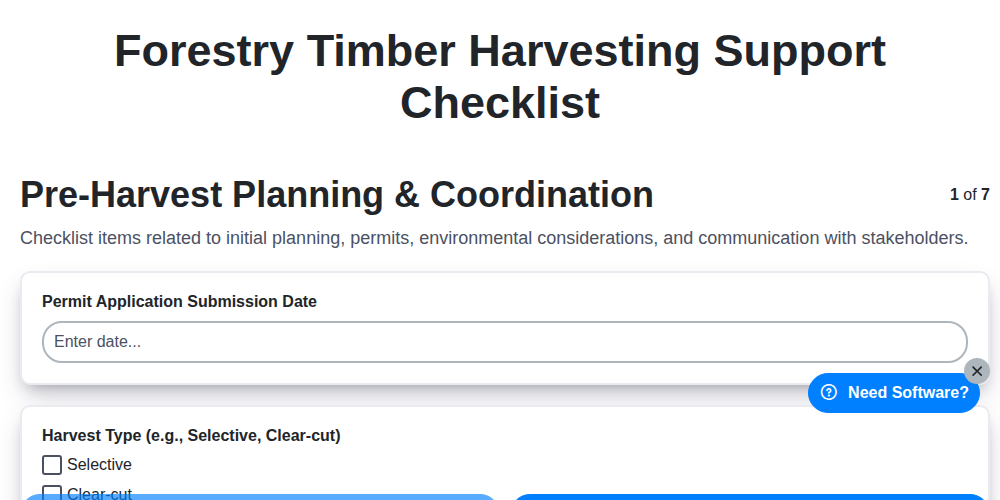
Table of Contents
- Introduction: Why a Timber Harvesting Checklist is Essential
- 1. Pre-Harvest Planning & Coordination: Laying the Foundation
- 2. Equipment Readiness & Maintenance: Ensuring Operational Efficiency
- 3. Harvest Execution & Monitoring: Staying on Track
- 4. Logistics & Transportation: Streamlining the Flow
- 5. Environmental Compliance & Mitigation: Protecting Our Resources
- 6. Post-Harvest Site Restoration: Reclaiming the Land
- 7. Documentation & Reporting: Maintaining a Clear Record
- Resources & Links
TLDR: Overwhelmed by timber harvesting? This checklist template breaks down the entire process - from pre-harvest planning to site restoration - into manageable steps. It ensures you cover all your bases, stay compliant, minimize environmental impact, and keep everything properly documented for a successful and sustainable operation. Download it and simplify your forestry workflow!
Introduction: Why a Timber Harvesting Checklist is Essential
Timber harvesting is a complex operation, demanding precision, safety, and a commitment to responsible forestry practices. A single missed step can lead to costly delays, environmental damage, safety incidents, or even legal repercussions. That's why a comprehensive timber harvesting checklist isn't just a good idea-it's essential. This checklist acts as a roadmap, ensuring that every stage of the harvesting process, from initial planning to final site restoration, is carefully considered and executed. It minimizes risk, promotes efficiency, and safeguards the long-term health of the forest. Think of it as your safety net, your quality control, and your guide to sustainable timber harvesting, all rolled into one accessible document.
1. Pre-Harvest Planning & Coordination: Laying the Foundation
Successful timber harvesting hinges on meticulous pre-harvest planning and coordination. This isn't just about marking trees; it's about orchestrating a complex operation safely and efficiently. Begin with a thorough site assessment, identifying potential hazards like unstable ground, steep slopes, and sensitive areas. This assessment should inform the development of a detailed harvest plan, clearly outlining the felling sequence, access routes, and buffer zones.
Crucially, stakeholder engagement is vital. Communicate with landowners, neighboring properties, local authorities, and potentially Indigenous communities to address concerns, secure permissions, and foster collaborative relationships. This proactive approach minimizes disputes and ensures a smooth operation. Review and update the harvest plan regularly, considering factors like weather forecasts and regulatory changes. Finally, define clear roles and responsibilities for all team members involved - from fallers and equipment operators to safety personnel - ensuring everyone understands their contribution to the overall success and safety of the project.
2. Equipment Readiness & Maintenance: Ensuring Operational Efficiency
Successful timber harvesting hinges on reliable equipment. A breakdown in the middle of a harvest operation isn't just inconvenient; it's costly, delays progress, and can even compromise safety. This section details the crucial steps for ensuring your machinery is ready for the job.
Before the Harvest Begins:
- Comprehensive Inspection: Conduct a thorough inspection of all equipment - felling machines, skidders, loaders, trucks, chainsaws, and supporting tools. This includes visual checks for leaks, wear and tear, and functional tests of all systems (hydraulic, electrical, engine).
- Preventative Maintenance: Implement a robust preventative maintenance schedule based on manufacturer recommendations. This includes oil changes, filter replacements, lubrication, and adjustments. Don't skip scheduled maintenance; it's a proactive investment.
- Sharpening & Repairs: Ensure all cutting tools (chainsaw chains, loader teeth) are properly sharpened and maintained. Replace damaged components before they fail. A dull chain increases risk and reduces efficiency.
- Operator Checks: Equip operators with pre-operation checklists they must complete before each shift. These should include fluid level checks, tire pressure, and safety device functionality.
- Spare Parts Inventory: Maintain an adequate supply of critical spare parts on-site or readily accessible. Common items like chains, belts, hoses, and filters should be stocked.
- Fuel Management: Ensure fuel tanks are full and fuel quality is appropriate for the equipment being used. Consider fuel stabilizers for long-term storage.
During Harvest Operations:
- Daily Walk-Arounds: Operators should perform brief daily walk-around checks to identify any emerging issues.
- Fluid Level Monitoring: Regularly check fluid levels (oil, coolant, hydraulic fluid) during operation.
- Operator Reporting: Encourage operators to immediately report any unusual noises, vibrations, or performance issues.
Documentation:
- Maintain detailed records of all maintenance activities, repairs, and inspections. This data is invaluable for tracking equipment performance and identifying recurring issues.
3. Harvest Execution & Monitoring: Staying on Track
This phase is where the rubber meets the road, and meticulous monitoring is crucial for ensuring efficiency, safety, and adherence to the harvest plan. It's not enough to simply start cutting; consistent oversight is key.
Daily Checks & Adjustments: Each workday should begin with a brief team meeting to review the day's objectives, potential hazards, and any modifications to the plan based on previous day's observations. Regularly assess progress against the pre-harvest plan - are you meeting production targets? Are felling operations proceeding as anticipated? Deviations, no matter how small, should be documented and addressed immediately.
Operator Performance & Safety: Closely monitor felling and processing operator performance. This isn't about blame, but about identifying opportunities for training or adjustments to techniques. Constant vigilance regarding safety protocols is paramount. Regularly check equipment operation for any signs of stress or malfunction. Look for signs of fatigue in the crew and ensure adequate breaks are being taken.
Quality Control: Timber quality is a primary goal. Implement a system for spot-checking felled trees to ensure they meet grade specifications and contractual requirements. This includes checking for defects, rot, or other issues that could impact value.
Environmental Monitoring (Real-Time): The pre-harvest plan outlines environmental safeguards. During execution, actively monitor these protections. Are buffer zones being respected? Is slash being managed appropriately? Are watercourses clear of sediment? Address any deviations immediately.
Communication is Key: Maintain open and frequent communication between the ground crew, supervisors, and any relevant stakeholders. Real-time updates on progress and any challenges are essential for proactive problem-solving and maintaining overall harvest efficiency. A designated point of contact should be available for quick decision-making on the ground.
4. Logistics & Transportation: Streamlining the Flow
Efficient timber harvesting hinges on a robust and well-coordinated logistics and transportation plan. This isn't just about getting logs from the forest to the mill; it's about minimizing downtime, maximizing efficiency, and ensuring safety throughout the process. Here's what needs careful consideration:
- Road Condition Assessment: Prior to the harvest, thoroughly assess all access roads. Identify areas requiring repair or upgrades to accommodate heavy timber trucks. This includes evaluating load-bearing capacity, drainage, and potential hazards.
- Route Optimization: Plan the most efficient and safest routes, taking into account factors like distance, road gradients, weight restrictions, and potential traffic bottlenecks. Consider alternative routes for contingencies.
- Truck Scheduling & Coordination: Establish a clear truck scheduling system to avoid congestion at loading sites and the mill. Coordinate arrival times to prevent bottlenecks and ensure timely processing. This often involves communication with the trucking company and the mill.
- Loading Site Management: Optimize loading site layouts for speed and safety. Ensure adequate space for maneuvering, proper chokers and loading equipment, and clear communication between loaders and drivers.
- Scales & Weighing: Integrate scales and weighing systems at strategic points to accurately track timber volume and weight, crucial for inventory and payment processes.
- Contingency Planning: Develop contingency plans for road closures, equipment breakdowns, or unexpected delays. This might include alternate routes or backup equipment.
- Driver Safety: Prioritize driver safety through training, regular vehicle inspections, and adherence to speed limits and traffic regulations.
- Fuel Management: Implement strategies for efficient fuel management, including fuel storage and delivery to remote harvesting sites.
5. Environmental Compliance & Mitigation: Protecting Our Resources
Timber harvesting, while vital for sustainable wood supply, inherently carries environmental responsibilities. This section outlines crucial steps to minimize our impact and ensure long-term ecosystem health.
Pre-Harvest Assessment & Planning: Before any felling begins, a thorough environmental assessment is paramount. This includes identifying sensitive areas like wetlands, riparian zones, and habitats for threatened or endangered species. Buffer zones must be established and adhered to, preventing logging activities near these critical areas. Erosion and Sediment Control Plans (ESCPs) are developed and integrated into the harvest plan.
Best Management Practices (BMPs): Implementing BMPs is non-negotiable. This involves strategies like minimizing road construction, using designated skid trails, and strategically placing log landings to prevent soil disturbance and water contamination. Waterbars and silt fences are deployed to capture sediment runoff.
Wildlife Protection: We proactively identify and protect wildlife habitats. Seasonal restrictions on harvesting activities may be implemented to avoid critical breeding or migration periods. Nest surveys are conducted prior to felling, and trees containing active nests are left standing until young have fledged.
Chemical Use Minimization: We prioritize mechanical methods over chemical controls whenever possible. If herbicides are necessary, they are applied by certified applicators according to strict guidelines, minimizing impact on non-target vegetation and water quality.
Post-Harvest Monitoring: Following harvest, we regularly monitor the site for signs of erosion or water quality degradation. Corrective actions are implemented promptly to address any issues that arise. We are committed to continuous improvement and adapting our practices based on monitoring results and evolving best practices.
6. Post-Harvest Site Restoration: Reclaiming the Land
Timber harvesting, while essential for sustainable forestry practices, leaves a mark on the land. Responsible forestry doesn't end when the last tree is felled; it continues with diligent post-harvest site restoration. This crucial step aims to return the land to a healthy, productive state, often exceeding its pre-harvest condition.
Our checklist emphasizes a proactive approach, starting with planning integrated into the initial harvest plan. This includes identifying potential restoration needs based on soil type, slope, and existing vegetation. Common restoration practices we ensure are addressed include:
- Erosion Control: Implementing techniques like contour felling, slash mulching, and seeding with erosion-control cover crops is paramount to prevent soil loss. We assess the need for and installation of temporary erosion control structures like silt fences or coir logs on steeper slopes.
- Regeneration: Encouraging natural regeneration is often the preferred method. This involves retaining seed trees, protecting areas from browsing animals, and managing competing vegetation. When natural regeneration is insufficient, we address the option for assisted regeneration through planting appropriate native species.
- Soil Health Improvement: Understanding the impact of harvesting on soil structure and nutrients is key. We may recommend practices like adding organic matter through compost or wood chips to improve soil fertility and water retention.
- Habitat Restoration: We prioritize restoring habitat for wildlife. This can involve creating snags (standing dead trees) for cavity-nesting birds, protecting riparian areas, and promoting diverse plant communities.
- Invasive Species Control: Post-harvest disturbance often creates opportunities for invasive species. We implement control measures to prevent their establishment and spread, focusing on early detection and targeted removal.
Regular monitoring of restoration progress is crucial. Our checklist incorporates scheduled inspections to assess vegetation cover, erosion rates, and overall site health, allowing for adaptive management strategies to ensure long-term success. The goal is not just to return the land to its original state, but to create a thriving ecosystem that provides benefits for generations to come.
7. Documentation & Reporting: Maintaining a Clear Record
Comprehensive documentation and reporting are the unsung heroes of a successful timber harvesting operation. They're not just about ticking boxes; they's about demonstrating compliance, ensuring accountability, facilitating learning, and providing a valuable historical record for future management.
Here's what needs to be meticulously recorded throughout the entire process:
- Pre-Harvest Planning: Keep detailed records of the harvest plan itself, including stakeholder consultations, risk assessments, and any agreed-upon modifications.
- Equipment Logs: Maintain records for all equipment used, detailing maintenance schedules, repairs, and operational performance. This assists in identifying trends and preventing future breakdowns.
- Harvest Execution Data: Log daily progress, volumes harvested, any deviations from the plan, weather conditions, and issues encountered. GPS coordinates for harvested areas are increasingly valuable.
- Environmental Compliance: Document environmental monitoring results, mitigation measures implemented, and any incidents impacting water quality, soil erosion, or wildlife habitat. Photographic evidence is highly recommended.
- Transportation Records: Track timber movement from the harvest site to the processing facility, including load quantities and delivery times.
- Post-Harvest Restoration Activities: Document the restoration methods used, timelines, and any monitoring data related to regeneration and soil stabilization.
- Incident Reports: Any incidents - accidents, equipment malfunctions, environmental spills - must be thoroughly documented with details, corrective actions, and follow-up.
Why is this important?
- Legal Compliance: Provides evidence of adherence to regulations and permits.
- Auditing: Simplifies internal and external audits.
- Continuous Improvement: Enables analysis of past performance to identify areas for optimization.
- Liability Protection: Acts as a valuable defense in case of disputes or legal claims.
- Knowledge Transfer: Provides a readily available resource for future crews and management decisions.
Finally, establish a clear system for archiving these records - both physical and digital - ensuring they are accessible for future reference.
Resources & Links
- USDA Farm Service Agency: Provides resources, programs, and information related to forestry, conservation, and farm management practices. Valuable for understanding government regulations and support programs.
- USDA Natural Resources Conservation Service (NRCS): Offers technical and financial assistance to private landowners for conservation practices, including sustainable forestry and timber harvesting. Includes valuable publications and planning tools.
- University of Florida, School of Forest Resources and Conservation: A leading institution for forestry research and education. Provides extensive information on sustainable forestry practices, silviculture, and forest management.
- US Forest Service: Provides information on forest management, timber harvesting regulations, best management practices, and research related to forest resources.
- National Association of Forest Owners (NAFO): Represents family forest landowners and provides resources for responsible forest management, including timber harvesting and sustainable practices.
- Wood Products - American Wood Council: Provides technical information and guidelines related to wood production, including timber harvesting and processing. Useful for understanding industry standards.
- Tree Farm Cooperative: Offers resources and support for tree farm owners, covering all aspects of forest management, from planning to harvesting.
- Responsible Timber Harvesting: Provides resources and information on best practices for environmentally responsible timber harvesting.
- Society of American Foresters: A professional organization for foresters providing continuing education, certification, and resources for sustainable forest management.
- Wood Education and Research Center: Dedicated to promoting the use of wood through research, education, and training. Includes data and resources on wood properties and grading.
- Oregon Department of Environmental Quality: (Example State Agency - replace with your relevant state agency) Provides information on environmental regulations and permitting related to timber harvesting - crucial for compliance.
- USDA Forest Service - Timber: Specific section of the Forest Service website dedicated to timber harvesting related resources and guidance.
- Conservation Design: Offers consulting services and resources related to environmental permitting, mitigation, and restoration in forestry and timber harvesting.
- Land Fanning: A portal of resources for landowners, including a significant focus on forestry, timber management, and related best practices.
Frequently Asked Questions
What is the purpose of this Forestry Support Checklist Template?
This template is designed to provide a structured approach to timber harvesting, ensuring best practices, regulatory compliance, and minimizing environmental impact. It's a support tool for forestry professionals and landowners planning and executing timber harvests.
Who is this checklist template for?
It's primarily for forestry professionals (foresters, timber cruisers, log buyers) and landowners involved in timber harvesting operations. It can also be valuable for contractors and anyone involved in the planning or execution of a timber sale.
What types of information should I include in the checklist template?
The template covers a wide range of areas, including pre-harvest planning (site assessment, permit applications), operational planning (harvest methods, road construction), harvest execution (felling, skidding, loading), and post-harvest considerations (regeneration, erosion control). The specifics will depend on the particular operation and local regulations.
Is this template customizable?
Yes! The template is intended as a starting point. You should customize it to reflect the specific requirements of your timber harvesting operation, your local regulations, and any unique environmental considerations of the site.
What are some key sections within the checklist template?
Key sections typically include: Site Assessment & Planning, Regulatory Compliance (permits, notifications), Road Construction & Maintenance, Felling & Bucking, Skidding & Loading, Environmental Protection (water quality, wildlife habitat), and Post-Harvest Regeneration.
How can I ensure I'm meeting all regulatory requirements using this checklist?
The checklist includes prompts to verify permits and notifications. However, it's your responsibility to research and understand all applicable federal, state, and local regulations. Consult with relevant agencies to confirm compliance.
What should I do if I identify a potential environmental hazard during the harvesting process?
The checklist includes a section for noting potential hazards. Immediately stop work, assess the situation, and consult with a qualified professional (forester, environmental specialist) to determine the appropriate mitigation measures. Document all actions taken.
Can this checklist be used for different types of timber harvests (e.g., thinning vs. clearcut)?
Yes, although you'll need to adjust the checklist based on the specific harvest method. The core principles of responsible forestry apply regardless of the method used, so the template's prompts can be adapted.
How do I document my checklist findings?
The template includes space for notes and observations. Keep detailed records of all checklist items, including dates, responsible parties, and any corrective actions taken. This documentation is crucial for demonstrating compliance and for future reference.
Where can I find more information about best forestry practices?
Your state forestry agency is a primary resource. The Society of American Foresters and the National Association of State Foresters also provide valuable information and resources.
Comments
There are no comments yet. Be the first to add one!
Support Management Solution Demo
Struggling to keep up with support requests? ChecklistGuro provides a centralized system for managing tickets, tracking progress, & ensuring customer satisfaction. Improve efficiency & reduce resolution times.
Related Articles
Legal Case Management Support Checklist: Your Guide to Seamless Implementation
Mastering Aircraft Maintenance: Your Aerospace Support Checklist Template
Ensuring Excellence: Your Zoo Animal Welfare Support Checklist Guide
Keeping Your Fish Farm Running Smoothly: The Aquaculture Support Checklist
Mastering Citizen Service: Your Government Helpdesk Checklist Template
Streamlining Support: The Financial Services Help Desk Escalation Checklist You Need
Navigating Shipping & Fulfillment Mishaps: Your Resolution Checklist
Mastering Guest Service Recovery: Your Hospitality Issue Checklist Template
We can do it Together
Need help with
Support Management?
Have a question? We're here to help. Please submit your inquiry, and we'll respond promptly.