Ace Your Healthcare Audit: A Readiness & Documentation Checklist
Published: 11/28/2025 Updated: 07/02/2026
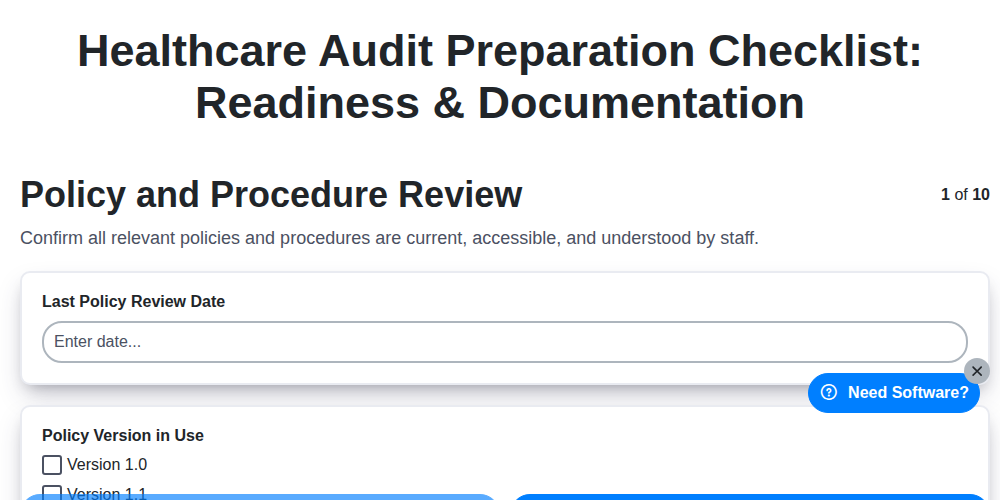
Table of Contents
- Introduction: Why Audit Readiness Matters
- 1. Policy and Procedure Review: Foundation of Compliance
- 2. Documentation Deep Dive: Evidence of Adherence
- 3. Access Controls: Who Sees What?
- 4. Training Records: Demonstrating Competency
- 5. Business Associate Agreements (BAA): Vendor Accountability
- 6. Physical Security: Protecting Patient Data and Assets
- 7. IT Security: Safeguarding Electronic Health Records (EHRs)
- 8. Emergency Preparedness: Handling Disruptions
- 9. Corrective Action Plans (CAPs): Addressing Identified Risks
- 10. Audit Trail Review: Tracking System Activity
- Conclusion: Staying Audit-Ready
- Resources & Links
TLDR: Feeling overwhelmed by an upcoming healthcare audit? This checklist is your shortcut to readiness! It covers everything from policies & training to IT security & disaster plans, ensuring you're organized, compliant, and confident facing the review. Download it and conquer your audit!
Introduction: Why Audit Readiness Matters
Healthcare organizations face a complex web of regulations - HIPAA, HITECH, state laws - all demanding stringent protection of patient data. Failing to meet these requirements isn't just a compliance issue; it can result in hefty fines, reputational damage, and, most importantly, a breach of patient trust. Preparing for a healthcare audit isn't a once-a-year scramble; it's an ongoing process of building and maintaining a robust compliance program. This proactive approach demonstrates a commitment to patient privacy and security, significantly reducing the risk of penalties and bolstering confidence among patients, providers, and payers. This checklist is designed to guide you through the essential areas of focus, helping you demonstrate due diligence and readiness when an auditor arrives.
1. Policy and Procedure Review: Foundation of Compliance
Your policies and procedures are the bedrock of your healthcare compliance program. Before an audit, meticulously review every relevant document. Don't just glance - truly understand each policy's purpose, scope, and expected adherence.
Here's what to look for:
- Accuracy: Ensure policies reflect current regulations (HIPAA, state laws, etc.) and best practices. Outdated policies create vulnerabilities.
- Clarity & Accessibility: Are your policies easily understood by all employees? Are they readily available in a centralized, accessible location?
- Completeness: Does each policy cover all necessary aspects of the process it governs? Are there any gaps?
- Alignment with Practices: Verify that your actual practices align with documented policies. Discrepancies are a major red flag during audits.
- Regular Updates: Document the review date and any changes made. A history of policy updates demonstrates a commitment to ongoing compliance.
Consider involving key personnel (compliance officer, IT, clinical staff) in this review process to ensure a comprehensive assessment.
2. Documentation Deep Dive: Evidence of Adherence
A healthcare audit isn't just about having policies and procedures; it's about demonstrating consistent adherence to them. This is where robust documentation becomes your strongest ally. Auditors will scrutinize your records to ensure your practices align with your stated policies. Here's what you need to focus on:
Beyond the Basics: Simply having documents isn't enough. The documentation must be current, readily accessible, and demonstrably reflect actual practice.
- Patient Records: Ensure all patient records are complete, accurate, and legible. Verify proper authorization and consent forms are in place and updated. Pay close attention to documentation related to protected health information (PHI) access and disclosures.
- Policy Acknowledgment Forms: Employees should sign and date acknowledgements indicating they've read and understand relevant policies. These forms should be easily retrievable.
- Incident Reports: Thorough incident reports, even for minor events, are critical. They demonstrate a commitment to identifying and addressing potential risks. Ensure investigations are documented and corrective actions are implemented and tracked.
- Workflow Records: Demonstrate how policies are integrated into daily workflows. Consider having process flowcharts or standard operating procedures (SOPs) with corresponding documentation showing their execution.
- Vendor Management Records: Keep records of vendor assessments, security reviews, and ongoing compliance monitoring.
- System Access Logs: Although covered more extensively under IT Security and Audit Trail Review, consistent logging and review of system access logs is vital to demonstrate accountability.
Pro Tip: Develop a standardized documentation format and retention policy to ensure consistency and compliance with regulatory requirements. Regularly review and update your documentation to reflect changes in regulations or organizational practices. Think of your documentation as a story - it needs to tell a clear and compelling narrative of your commitment to patient privacy and data security.
3. Access Controls: Who Sees What?
One of the most critical aspects of a healthcare audit is verifying robust access controls. It's not enough to simply have access controls; they must be actively enforced and demonstrably limiting access to patient data and systems based on job role and need-to-know principles.
During an audit, expect to be asked to provide evidence of:
- Role-Based Access: Does access align directly with employee roles? Can you provide a matrix showing roles and the specific systems/data they are permitted to access?
- Least Privilege Principle: Are users granted only the minimum level of access necessary to perform their job functions? Overly broad access is a major red flag.
- Access Reviews: How often are user access rights reviewed and updated? Are terminated employees' access promptly revoked?
- Authentication Methods: What authentication methods are in place (e.g., passwords, multi-factor authentication)? Are password policies strong and enforced?
- Remote Access Security: How is remote access secured? VPN usage, remote desktop protocols, and other remote access methods should have documented security protocols.
- Audit Trails for Access: Are access attempts logged, and are these logs regularly reviewed for suspicious activity?
Demonstrating a proactive and well-managed access control system is crucial for demonstrating compliance and minimizing risk.
4. Training Records: Demonstrating Competency
Robust training records are critical for demonstrating HIPAA compliance and overall operational competency within your healthcare organization. An audit will scrutinize these records to ensure all personnel, including employees, contractors, and volunteers, receive adequate training on relevant policies, procedures, and regulations.
What auditors will look for:
- Comprehensive Coverage: Do your training records cover all mandated areas like HIPAA Privacy & Security Rules, incident response, phishing awareness, and role-specific procedures?
- Frequency and Updates: Are training sessions conducted at the required intervals (initial training, annual updates, and as needed for policy changes)? Documentation should reflect this.
- Verification of Completion: Simply providing a list of training topics isn't enough. Records must clearly indicate who completed which training, with dates and signatures (or equivalent electronic confirmation) serving as proof.
- Accessibility & Organization: Can you easily retrieve training records for specific individuals or departments? A disorganized system raises red flags.
- New Hire Onboarding: Do you have a documented training plan for all new hires, ensuring they receive essential knowledge before handling protected health information (PHI)?
Lack of thorough training records suggests a potential breakdown in understanding and adherence to crucial protocols, which can be a significant audit finding. Ensure your training program is documented, tracked, and readily available for review.
5. Business Associate Agreements (BAA): Vendor Accountability
Healthcare organizations increasingly rely on third-party vendors to handle sensitive patient data. These vendors, known as Business Associates (BAs), become subject to HIPAA regulations when they access or transmit Protected Health Information (PHI). A robust BAA is essential for demonstrating due diligence and mitigating risk.
Your BAA checklist should verify that all BAAs are current and actively managed. Key elements to examine include:
- Scope of Services: Clearly define the specific services the BA provides and the PHI they will access, use, or transmit. Vague language leaves room for misinterpretation and potential compliance gaps.
- Permitted Uses and Disclosures: Detail exactly what the BA is allowed to do with PHI, ensuring it aligns with HIPAA requirements and your organization's policies.
- Security Safeguards: Confirm the BA has implemented adequate security measures, as outlined in the BAA and adhering to industry best practices. Request and review their security documentation.
- Subcontractor Agreements: Ensure the BA has agreements in place with their own subcontractors who may also handle PHI, extending your compliance oversight.
- Termination Provisions: Clearly define the process for terminating the BAA and returning/destroying PHI upon contract termination.
- Annual Review: Regularly review BAAs to ensure continued compliance and relevance, especially as services or vendor practices evolve.
Failure to adequately manage BAAs can result in significant financial penalties and reputational damage. Treat these agreements as critical components of your overall HIPAA compliance program.
6. Physical Security: Protecting Patient Data and Assets
Physical security is often overlooked in the rush to secure digital systems, but it's a critical component of a robust healthcare audit preparation strategy. A breach doesn't always come in the form of a cyberattack; unauthorized physical access can compromise patient data and valuable equipment.
During an audit, expect to be assessed on the measures in place to restrict access to areas containing Protected Health Information (PHI) and sensitive infrastructure. This includes:
- Access Control Systems: Are doors locked? Are access badges required? Are access logs maintained and regularly reviewed? Ensure badge access is granted only to authorized personnel, and that temporary access procedures are strictly followed.
- Visitor Management: Do you have a documented and enforced visitor management system? Auditors will look for sign-in/out logs, escort requirements, and procedures for verifying visitor identities.
- Equipment Security: Laptops, servers, and mobile devices containing PHI should be secured when not in use - consider locking cabinets, cable locks, and designated secure storage areas.
- Environmental Controls: Assess the security of server rooms and data storage facilities, including environmental controls (temperature, humidity) and fire suppression systems.
- Perimeter Security: Evaluate the security of building perimeters - locks, alarms, security cameras, and lighting - to prevent unauthorized entry.
- Waste Disposal: Securely shred or dispose of documents containing PHI according to HIPAA guidelines. Verify compliance with documented procedures.
Demonstrate that your physical security measures are regularly reviewed and updated to address emerging threats.
7. IT Security: Safeguarding Electronic Health Records (EHRs)
In today's digital landscape, robust IT security isn't just a best practice; it's a critical necessity for healthcare organizations. A successful audit will delve deep into how you protect electronic health records (EHRs) from unauthorized access, breaches, and cyber threats.
Here's what auditors will likely examine:
- Network Security: Are your networks segmented and firewalls properly configured? Do you have intrusion detection/prevention systems in place? Evidence of regular vulnerability scanning and penetration testing is key.
- Data Encryption: Is data at rest and in transit encrypted? This includes EHRs stored on servers, laptops, and mobile devices.
- Malware Protection: Antivirus and anti-malware software must be current and actively monitored across all systems.
- Data Backup and Recovery: Demonstrate a comprehensive backup and disaster recovery plan, including regular testing to ensure data can be restored in a timely manner. Documented procedures and recovery time objectives (RTOs) are vital.
- Software Updates & Patch Management: A documented process for applying security patches and updates to all software, including operating systems and EHR applications.
- Endpoint Security: Security measures implemented on devices like laptops and mobile devices used to access EHRs.
- Wireless Security: Secure configuration of Wi-Fi networks, including strong passwords, encryption (WPA2/WPA3), and access controls.
8. Emergency Preparedness: Handling Disruptions
Healthcare organizations face a wide range of potential emergencies, from natural disasters and power outages to cyberattacks and active shooter situations. A robust emergency preparedness plan isn't just about compliance; it's about patient safety and business continuity.
Your checklist should verify that your plan addresses several key areas:
- Risk Assessment: Have you identified potential emergencies specific to your location and operations? This goes beyond generic scenarios.
- Communication Plan: Is there a clear, tested communication strategy for staff, patients, families, and external agencies during an emergency? Include multiple communication channels.
- Backup Systems: Do you have backup power, data storage, and critical system redundancies in place? Regularly test these backups.
- Evacuation Plans: Are evacuation routes clearly marked and practiced? Do staff know their roles in assisting patients and visitors?
- Continuity of Care: How will patient care continue during and after an emergency? Consider medication availability, staffing, and alternative care locations.
- Emergency Contact Information: Ensure readily available and updated contact lists for key personnel, emergency services, and vendors.
- Plan Review & Updates: Emergency preparedness isn't a set it and forget it activity. Review and update your plan at least annually, or more frequently after incidents or significant changes.
- Drills & Exercises: Regularly conduct drills and exercises to test the plan's effectiveness and identify areas for improvement. Document these exercises and any corrective actions taken.
9. Corrective Action Plans (CAPs): Addressing Identified Risks
A robust healthcare audit isn't just about identifying weaknesses; it's about demonstrating how you're actively resolving them. Corrective Action Plans (CAPs) are the cornerstone of that process. Auditors will scrutinize these to assess your commitment to continuous improvement and compliance.
Your CAPs should be more than just a list of actions. They need to be comprehensive and clearly linked to specific audit findings. Here's what auditors will be looking for:
- Root Cause Analysis: Don't just address the symptom. CAPs must demonstrate an understanding of why the issue occurred. What process breakdown led to the finding?
- Specific Actions: Vague statements like "improve training" won't cut it. Detail exactly what actions will be taken, who is responsible, and a realistic timeline for completion.
- Responsible Parties: Clearly assign ownership of each corrective action. This ensures accountability and follow-through.
- Completion Dates & Timelines: Provide realistic deadlines. Consider the complexity of the corrective action.
- Verification of Effectiveness: How will you prove the corrective action worked? Define metrics or methods for verification. This might involve follow-up audits, data analysis, or internal reviews.
- Documentation: Keep meticulous records of the CAP process, including the initial finding, the root cause analysis, the proposed actions, implementation dates, verification results, and any modifications made along the way.
Lack of well-documented and effectively implemented CAPs can signal a lack of commitment to compliance, potentially leading to significant penalties and reputational damage. Proactive management of corrective actions is a crucial element of any successful healthcare compliance program.
10. Audit Trail Review: Tracking System Activity
The audit trail is your organization's record of who did what, when, and why within your systems. A robust review of these logs is crucial for demonstrating compliance and identifying potential security breaches. During an audit, expect to be asked to provide and explain audit trails covering critical areas like access modifications, data access, system changes, and report generation.
What to Look For:
- Completeness: Are all relevant actions logged? Missing entries are a major red flag.
- Accuracy: Do the entries accurately reflect the actions taken? Discrepancies raise concerns about data integrity.
- Timeliness: Are logs reviewed regularly? Scheduled reviews demonstrate a commitment to monitoring activity.
- User Identification: Are all actions clearly linked to specific user accounts? Anonymous or poorly identified actions are problematic.
- Explanation of Unusual Activity: Can you explain any unusual or unexpected entries in the audit trail? A good explanation, even for seemingly minor events, showcases proactive monitoring.
Preparation Steps:
- Identify Audit Trail Sources: Know where your organization's audit trails are stored (e.g., electronic health record systems, network devices, servers).
- Review Audit Trail Policies: Ensure your organization has policies in place regarding audit trail retention, review, and response to anomalies.
- Practice Retrieving and Interpreting Logs: Familiarize yourself with the tools and processes used to extract and understand audit trail data.
- Prepare Explanations: Anticipate potential questions about specific entries and develop clear, concise explanations.
Conclusion: Staying Audit-Ready
Preparing for a healthcare audit can feel overwhelming, but remember, proactive readiness is the key to a successful review. This checklist isn't just a box-ticking exercise; it's a roadmap for continuous improvement within your organization. By consistently reviewing your policies, documentation, and security measures, you're not only demonstrating compliance, but also bolstering patient safety and data integrity. Don't wait for the audit notice - build a culture of vigilance and accountability. Embrace this checklist as an ongoing process, and you'll be well-positioned to navigate any audit with confidence and demonstrate your commitment to providing quality care and safeguarding sensitive information.
Resources & Links
- Centers for Medicare & Medicaid Services (CMS): The primary source for HIPAA and Medicare/Medicaid regulations, guidelines, and updates. Essential for understanding the legal framework of healthcare compliance. Includes guidance on audits and enforcement.
- U.S. Department of Health and Human Services (HHS) - HIPAA: Official HHS website dedicated to HIPAA. Provides the HIPAA rules, FAQs, and information about the Office for Civil Rights (OCR), which enforces HIPAA.
- National Institute of Standards and Technology (NIST): While not exclusively healthcare focused, NIST provides valuable cybersecurity frameworks (like the Cybersecurity Framework) that are frequently adopted by healthcare organizations to improve security posture and demonstrate compliance, particularly relevant to IT Security (Section 2.7).
- HITRUST Alliance: HITRUST provides a comprehensive cybersecurity and privacy framework specifically tailored for the healthcare industry. Their CSF (Common Security Framework) simplifies compliance and provides a structured approach to audit readiness. Very helpful for Section 2.7. Can be an expensive option, but offers in depth support.
- American Hospital Association (AHA): The AHA provides resources, advocacy, and education for healthcare organizations. They often publish insights and best practices related to compliance and risk management, especially in the context of audits.
- National Association of Health Care Attorneys (NAHCA): Provides legal resources and educational opportunities for healthcare attorneys and compliance professionals. Valuable for understanding the legal implications of healthcare audits and compliance. Supports the Policy and Procedure Review (Section 2.1) and BAA (Section 2.5) areas.
- Health Information Management Systems Society (HIMSS): HIMSS provides resources and education related to healthcare IT, data security, and compliance. Helpful for understanding EHRs, access controls, and training (Sections 2.7 & 2.4).
- The Office of the National Coordinator for Health Information Technology (ONC): ONC focuses on the adoption and meaningful use of health IT. While not a direct audit resource, their website offers guidance on EHR security and data sharing, helpful for Section 2.7.
- Privacy Rights Clearinghouse: Provides consumer-focused information about privacy issues, including HIPAA. Offers insights into patient rights and expectations, influencing documentation and training strategies.
- Prophix - Healthcare Audit Checklist: A more detailed and comprehensive checklist for a healthcare audit, covering topics such as policies and procedures, IT security, and physical security. Provides a good starting point for assessing audit readiness.
- DLA Piper - Preparing for a HIPAA Audit: A Checklist: A legal firm's take on preparing for a HIPAA audit. Provides a detailed checklist and discussion of key compliance areas.
Frequently Asked Questions
What is a healthcare audit and why is it important?
A healthcare audit is a systematic evaluation of a healthcare organization's processes, records, and financial activities. It's important because it ensures compliance with regulations (like HIPAA, Medicare, Medicaid), identifies areas for improvement, protects patient data, and minimizes financial risk. Failure to pass an audit can result in penalties, sanctions, and reputational damage.
What types of audits are covered in this checklist?
This checklist primarily focuses on compliance audits related to patient privacy (HIPAA), billing and coding accuracy, and overall operational efficiency. It's not exhaustive for every possible audit, but provides a good starting point for common assessments.
Who should use this checklist?
This checklist is beneficial for anyone involved in healthcare operations, including practice managers, billing staff, compliance officers, IT personnel, and anyone responsible for maintaining records and ensuring adherence to regulations.
What does 'readiness' mean in the context of this checklist?
'Readiness' refers to being prepared for an audit. This includes having the necessary policies and procedures in place, training staff, and maintaining organized documentation readily available for review by auditors.
What kind of documentation is considered essential for a healthcare audit?
Essential documentation includes patient consent forms, privacy policies, breach notification documentation, training records, billing and coding guidelines, contracts with business associates, risk assessments, and internal audit reports. The checklist provides a more detailed list.
What is a Business Associate Agreement (BAA) and why is it important?
A Business Associate Agreement (BAA) is a contract between a healthcare organization and a third-party vendor who handles protected health information (PHI). It outlines the vendor's responsibilities for safeguarding PHI and ensuring HIPAA compliance. It's crucial to have BAAs in place with all relevant vendors.
What does 'risk assessment' mean in relation to HIPAA compliance?
A risk assessment is a process of identifying potential threats and vulnerabilities to protected health information (PHI). It helps healthcare organizations understand their risks and implement appropriate safeguards to protect data.
Where should I store my audit documentation?
Audit documentation should be stored securely, both electronically and in hard copy, with restricted access. Consider a centralized, organized system with clear retention policies. Ensure backups are performed regularly.
How often should I review and update my policies and procedures?
Policies and procedures should be reviewed and updated at least annually, or more frequently if there are changes in regulations, technology, or internal processes. Regular updates are vital for maintaining compliance.
What should I do if I discover a breach of patient data?
Immediately follow your organization's breach notification procedures. This typically involves containing the breach, assessing the risk of harm to affected individuals, notifying affected individuals and relevant authorities (like HHS), and documenting the entire process.
Is this checklist a substitute for legal or professional advice?
No. This checklist is intended as a guide and should not be considered a substitute for legal or professional advice. Consult with legal counsel and compliance experts to ensure your organization meets all applicable requirements.
How can I ensure my staff are adequately trained on HIPAA and other relevant regulations?
Implement a comprehensive training program that covers relevant regulations, policies, and procedures. Provide training upon hire and on an ongoing basis. Document all training activities and track employee completion.
Comments
There are no comments yet. Be the first to add one!
Healthcare Management Solution Demo
Streamlining healthcare operations and improving patient care? ChecklistGuro's Work OS platform simplifies everything from patient scheduling and billing to compliance and staff management. Enhance efficiency, reduce administrative burden, and focus on what matters most: your patients. Learn how ChecklistGuro can transform your healthcare organization!
Related Articles
The Ultimate Healthcare Patient Satisfaction Survey Checklist Template
Mastering Healthcare Inventory: Your Par Level Checklist Template
Mastering Hand Hygiene: Your Compliance Checklist Template
Protecting Patients: Your Fire Safety Checklist for Patient Areas
Your Ultimate Healthcare Construction Checklist Template
Mastering Hand Hygiene: Your Compliance Checklist Template
Your Radiology Equipment Maintenance Checklist Template

Your Ultimate Guide to Healthcare Waste Management: A Checklist Template
Need help with
Healthcare?
Have a question? We're here to help. Please submit your inquiry, and we'll respond promptly.