Healthcare Data Breach Response Checklist: Notification & Remediation
Published: 11/28/2025 Updated: 07/02/2026
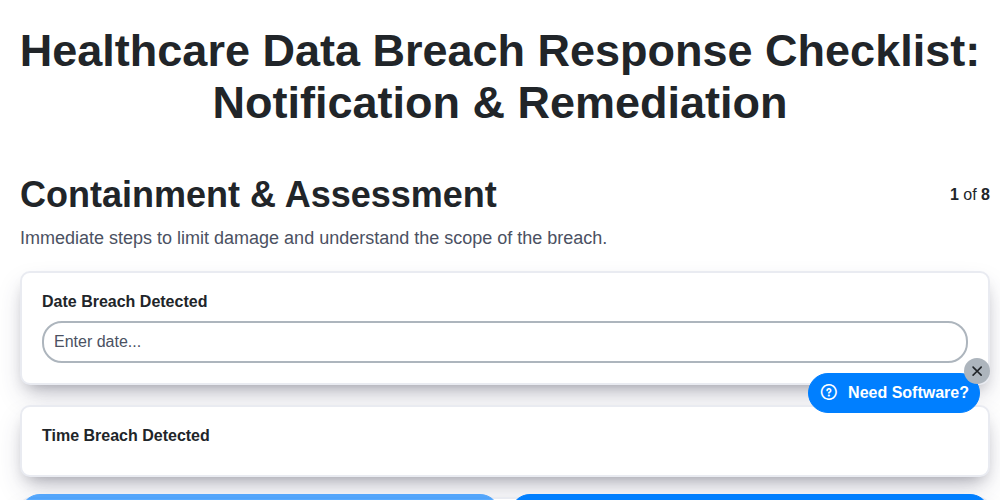
Table of Contents
- Introduction: Why a Data Breach Response Checklist is Crucial
- Phase 1: Containment & Assessment - Stopping the Bleeding
- Phase 2: Legal & Regulatory Notification - Navigating Compliance
- Phase 3: Patient Notification & Communication - Maintaining Trust
- Phase 4: Vendor Notification & Management - Addressing Third-Party Risk
- Phase 5: Forensic Investigation - Uncovering the Root Cause
- Phase 6: Remediation & Security Enhancements - Building a Stronger Defense
- Phase 7: Documentation, Reporting & Post-Breach Review - Learning and Improving
- Resources & Links
TLDR: Data breach? Don't panic! This checklist is your roadmap for legally sound and effective response. It walks you through containing the breach, notifying patients, regulators, and vendors, investigating what happened, fixing vulnerabilities, and documenting everything. Think of it as your crisis control guide - essential for protecting your patients, your reputation, and your bottom line.
Introduction: Why a Data Breach Response Checklist is Crucial
Healthcare data breaches are a grim reality. The sensitive nature of patient information - medical records, insurance details, social security numbers - makes healthcare organizations prime targets for cybercriminals. A single breach can result in devastating consequences: significant financial losses, reputational damage, legal penalties, and, most importantly, erosion of patient trust.
Simply having a security plan isn't enough. When a breach does occur, speed and precision are paramount. A well-defined, actionable data breach response checklist isn't just a 'nice-to-have'; it's a critical lifeline. It provides a structured, step-by-step approach to contain the damage, meet regulatory requirements, and ultimately, improve your organization's resilience. This checklist ensures you don't miss crucial steps in the chaos and confusion that inevitably follow a security incident. It's about minimizing harm and getting back on track as swiftly as possible.
Phase 1: Containment & Assessment - Stopping the Bleeding
A healthcare data breach isn't just a legal and financial issue; it's a patient trust crisis. Immediate and decisive action is paramount. The first phase, Containment & Assessment, focuses on stopping the breach from spreading and understanding its scope. This isn't about blame; it's about damage control.
Here's what you need to do:
- Isolate Affected Systems: Immediately disconnect compromised servers, databases, and endpoints from the network. Prioritize speed - a temporary disruption is far less damaging than ongoing data exfiltration.
- Identify the Attack Vector: How did the breach occur? Was it a phishing attack, malware infection, or a vulnerability exploit? While a full forensic investigation will follow, initial triage is crucial for immediate containment.
- Determine Data Affected: Which systems were accessed? What types of data were potentially compromised (patient records, billing information, insurance details)? This requires a preliminary assessment. Don't guess - even an imperfect understanding is better than none.
- Preserve Evidence: Do not alter or delete any data on compromised systems. This includes logs, system images, and email correspondence. This evidence is critical for the forensic investigation.
- Activate Incident Response Team: Assemble your designated incident response team, including IT, legal, compliance, public relations, and executive leadership. Clear communication and defined roles are essential.
- Establish a Command Center: A dedicated space (physical or virtual) facilitates coordination and information sharing.
- Secure Backups: Verify the integrity and security of your backup systems. These are vital for potential data restoration.
Remember: The speed and accuracy of your containment efforts directly impact the potential harm to patients and the overall impact on your organization.
Phase 2: Legal & Regulatory Notification - Navigating Compliance
A healthcare data breach isn't just a privacy concern; it's a legal imperative. Prompt and accurate notification to relevant authorities is critical for mitigating penalties and demonstrating good faith. This phase is often triggered immediately after the Containment & Assessment phase, as initial findings will inform who needs to be notified.
Key Actions:
- Identify Applicable Laws: The first step is to understand which federal, state, and international regulations apply. This includes HIPAA (Health Insurance Portability and Accountability Act), state breach notification laws (which vary significantly), and potentially GDPR (General Data Protection Regulation) if you handle data of EU citizens.
- Determine Notification Deadlines: Each regulation has specific timelines for notification. HIPAA, for instance, has different deadlines depending on the size of the breach and whether notification involves the Media. Missed deadlines can result in significant fines.
- Notify OCR (Office for Civil Rights): For HIPAA breaches affecting 500 or more individuals, notification to OCR is mandatory. Prepare to provide detailed information about the breach, affected individuals, and the steps taken to address it.
- State Attorneys General: Many states require notification to their Attorney General's office, particularly for larger breaches. Familiarize yourself with the specific requirements of each state where affected individuals reside.
- Business Associates: If a Business Associate (BA) caused or contributed to the breach, they also have notification obligations. Ensure they are fulfilling their responsibilities.
- Legal Counsel Consultation: Engage legal counsel specializing in healthcare privacy and security. They can provide guidance on legal obligations, draft notification letters, and represent you in any regulatory inquiries.
- Maintain a Record: Document every communication and notification made to regulatory bodies. This demonstrates compliance and provides a clear audit trail.
Phase 3: Patient Notification & Communication - Maintaining Trust
A data breach involving patient information is a deeply unsettling event, and the way you communicate with affected individuals is critical to preserving trust and mitigating reputational damage. Transparency and empathy are paramount.
Immediate Actions:
- Develop a Communication Plan: Before any notification, finalize a detailed plan outlining key messages, communication channels (mail, email, website, press release), and designated spokespersons.
- Prepare Talking Points: Craft clear, concise, and non-technical language to explain the breach, the types of data potentially compromised, and the steps you're taking to address it. Anticipate and prepare answers to potential patient questions.
- Offer Support: Provide resources like a dedicated hotline, FAQ document on your website, and potentially credit monitoring services to assist patients.
- Be Proactive, Not Reactive: Delaying notification can escalate patient anxiety and legal repercussions. Adhere to relevant notification timelines dictated by HIPAA and state laws.
Key Communication Elements:
- Honesty & Transparency: Acknowledge the breach and its potential impact. Don't downplay the severity.
- Empathy: Recognize the anxiety and concern patients will experience. Express genuine regret for the incident.
- Actionable Information: Clearly outline what patients can do to protect themselves, such as monitoring credit reports and changing passwords.
- Ongoing Updates: Provide regular updates on the progress of the investigation and remediation efforts. Silence breeds suspicion.
- Designated Contact: Provide a clear point of contact for patients with questions or concerns.
Beyond the Immediate Notification:
- Monitor Social Media & Online Forums: Address any misinformation and respond to patient concerns promptly.
- Training for Staff: Ensure all staff members who interact with patients understand the communication plan and are equipped to handle inquiries sensitively.
- Legal Review: Have legal counsel review all patient-facing communications for accuracy and compliance.
Failing to communicate effectively - or communicating poorly - can be as damaging as the breach itself. Prioritize empathy, honesty, and proactive engagement to maintain trust and safeguard your organization's reputation.
Phase 4: Vendor Notification & Management - Addressing Third-Party Risk
A healthcare data breach rarely occurs in a vacuum. Your organization likely shares data with various vendors, business associates, and third-party service providers. These relationships introduce third-party risk, and a breach impacting a vendor can directly impact your organization's data.
Immediate Notification is Key: As soon as you suspect a breach impacting vendor data, immediate notification is critical. Review your Business Associate Agreements (BAAs) carefully - they outline specific notification requirements and timelines. Failure to do so can lead to significant legal and financial repercussions.
What to Include in Vendor Notifications: Your notification should be clear, concise, and include:
- Date of Discovery: When you became aware of the potential breach.
- Description of the Incident: Detail what happened, including systems potentially affected.
- Data Potentially Compromised: Specify the types of data involved (e.g., PHI, PII).
- Impacted Vendor(s): Clearly identify the vendor(s) affected.
- Current Response Actions: Outline the steps your organization is taking to contain the incident.
- Contact Information: Provide a designated point of contact within your organization for ongoing communication.
Collaborative Remediation: Don't just notify vendors - work with them. Collaborate on assessing the scope of their breach response, verifying their remediation steps, and ensuring they implement appropriate security enhancements to prevent future incidents. This includes:
- Reviewing Vendor Security Practices: Assess their security controls and incident response plans.
- Joint Remediation Planning: Develop a coordinated plan to address vulnerabilities.
- Ongoing Monitoring: Implement mechanisms to monitor vendor security posture going forward.
BAA Updates & Risk Assessments: Use this incident as a trigger for a comprehensive review of all Business Associate Agreements and vendor risk assessments. Strengthen contractual language to better align with current security standards and clearly define roles and responsibilities in the event of a breach.
Phase 5: Forensic Investigation - Uncovering the Root Cause
Once containment and initial assessment are complete, a thorough forensic investigation is crucial. This isn't just about identifying what happened, but how and why. A skilled forensic investigation team, either internal or external, should meticulously analyze system logs, network traffic, affected devices, and other relevant data.
The goals of this phase are multifaceted:
- Identify the Attack Vector: Determine how the breach occurred - phishing, malware, vulnerability exploitation, insider threat, etc.
- Determine the Scope: Precisely identify all systems, data, and individuals impacted. This goes beyond the initial assessment and may reveal previously unknown compromises.
- Timeline Reconstruction: Build a detailed timeline of events, from initial intrusion to detection and containment. This helps understand the attacker's actions and methods.
- Malware Analysis (if applicable): If malware was involved, analyze its capabilities, origin, and propagation methods.
- Identify Vulnerabilities: Pinpoint the specific vulnerabilities exploited, whether they were technical flaws, process failures, or human errors.
This phase requires specialized expertise and tools. The findings from the forensic investigation will directly inform remediation efforts and security enhancements, ensuring that the root cause is addressed and future breaches are less likely. Maintaining a chain of custody for evidence is paramount throughout this process to ensure its admissibility should legal action be required.
Phase 6: Remediation & Security Enhancements - Building a Stronger Defense
The immediate aftermath of a data breach is critical, but the remediation phase is where you truly solidify your defenses and prevent future incidents. This isn't just about fixing the immediate vulnerability; it's about a holistic review and enhancement of your security posture.
Here's what this phase entails:
- Vulnerability Patching & System Hardening: Identify the root cause(s) of the breach and implement necessary patches and updates. This goes beyond just addressing the exploited vulnerability; it's about hardening all systems and applications.
- Security Control Enhancement: Evaluate and strengthen existing security controls. Consider implementing multi-factor authentication (MFA) across all systems, improving access controls, and bolstering network segmentation.
- Data Encryption Enhancement: Review and enhance data encryption practices - both at rest and in transit. Ensure sensitive data is adequately protected, even if accessed without authorization.
- Security Awareness Training Refresh: Reiterate the importance of security awareness among all staff. Targeted training focused on the specific vulnerabilities exploited in the breach can be particularly effective.
- Implement or Strengthen Intrusion Detection & Prevention Systems (IDS/IPS): Enhance your ability to detect and prevent future attacks by improving your monitoring and alert systems.
- Review and Update Incident Response Plan: The breach undoubtedly exposed weaknesses in your existing plan. Revise and update it based on lessons learned. Conduct tabletop exercises to test the revised plan's effectiveness.
- Consider Cyber Insurance Review: Re-evaluate your cyber insurance coverage to ensure it's adequate for the evolving threat landscape.
This phase requires a commitment to continuous improvement and a proactive approach to security - moving beyond reactive measures to build a truly resilient healthcare data protection strategy.
Phase 7: Documentation, Reporting & Post-Breach Review - Learning and Improving
The immediate crisis of a data breach response is critical, but neglecting the vital steps of meticulous documentation, thorough reporting, and a comprehensive post-breach review can leave your organization vulnerable to future incidents and legal repercussions. This phase isn't about looking back with blame; it's about extracting valuable lessons and proactively strengthening your defenses.
Documentation is Paramount: Throughout the entire breach response process, maintain a detailed, chronological record of everything. This includes:
- Timeline of Events: Precisely when the breach was detected, actions taken, and key decisions made.
- Communication Records: All internal and external communications, including emails, phone logs, and meeting minutes.
- System Logs & Evidence: Preservation of all relevant system logs, forensic images, and any digital evidence collected.
- Notification Records: Dates, methods, and content of all notifications to patients, vendors, and regulatory bodies.
- Remediation Actions: Detailed records of corrective actions taken, including dates, personnel involved, and verification of effectiveness.
Reporting Obligations: This phase involves formally reporting the breach to required entities. This includes:
- Regulatory Agencies: Adhere strictly to reporting deadlines mandated by HIPAA, state breach notification laws, and any applicable federal regulations. Confirm reporting requirements are specific to the type of data breached and patient residency.
- Credit Reporting Agencies: If sensitive personal information like Social Security numbers or financial data was compromised, reporting to credit reporting agencies might be necessary.
- Internal Reporting: A comprehensive report should be provided to leadership, the board of directors, and relevant internal stakeholders outlining the breach, response efforts, and findings.
Post-Breach Review & Evaluation: The Key to Prevention
This is the most crucial part of the long-term recovery. Conduct a thorough post-breach review, examining:
- Breach Root Cause: Identify the underlying vulnerabilities that allowed the breach to occur. Was it a phishing attack, a system vulnerability, or a human error?
- Response Effectiveness: Evaluate the effectiveness of the incident response plan. Did it work as intended? Were there gaps or inefficiencies?
- Process Improvement: Based on the review, identify areas for improvement in your security posture, incident response plan, and employee training.
- Security Enhancement Implementation: Prioritize and implement necessary security enhancements. This might include stronger access controls, multi-factor authentication, enhanced vulnerability scanning, and employee security awareness training.
- Plan Updates: Revise your incident response plan to incorporate lessons learned and ensure it remains current and effective. This isn's a one and done exercise - regular updates are essential.
Regular, scheduled reviews of this post-breach process (at least annually) are vital for ensuring continuous improvement and minimizing the risk of future incidents.
Resources & Links
- U.S. Department of Health & Human Services - HIPAA: The official website for HIPAA resources, including breach notification rules, guidance, and enforcement information. Essential for understanding legal requirements following a data breach.
- National Institute of Standards and Technology (NIST): NIST provides frameworks and guidelines, particularly the Cybersecurity Framework, which are invaluable for containment, assessment, and remediation. Their guides on incident response are also relevant.
- Center for Democracy & Technology (CDT): CDT offers insights and analysis on privacy and data security, including commentary on breach notification laws and best practices.
- International Association of Privacy Professionals (IAPP): The IAPP is a leading resource for privacy professionals. They offer training, certifications, and publications related to data breach response and notification requirements. Can be helpful for understanding complex legal nuances.
- Federal Trade Commission (FTC): The FTC enforces consumer protection laws and investigates data security failures. Understanding their guidelines on data security is important for avoiding legal action and ensuring compliance.
- Internal Revenue Service (IRS): Important if the breach potentially involved patient financial information. Review IRS guidelines on data security and reporting breaches involving sensitive financial data.
- National Association of Healthcare Access Management (NAHAM): NAHAM provides resources and guidance specifically for healthcare access management professionals, which is often crucial during a breach, particularly regarding patient communication and coordination.
- American Health Information Management Association (AHIMA): AHIMA is a professional organization for health information management professionals. They provide resources and guidance on data governance, security, and compliance - all relevant to data breach response.
- Cybersecurity and Infrastructure Security Agency (CISA): CISA provides resources, alerts, and best practices for cybersecurity, including incident response and threat intelligence. Useful for understanding the broader threat landscape.
- Privacy Rights Clearinghouse: The Privacy Rights Clearinghouse offers information and analysis related to data breaches, consumer privacy, and legal rights. Their data breach chronology provides context and examples.
- SecurityScorecard: SecurityScorecard helps monitor vendor risk. Important for Phase 4: Vendor Notification & Management, to proactively assess vendor security posture and respond quickly to breaches involving third parties.
- Encompass Corporation: Provides solutions and resources for data breach notification and compliance. Useful for automating and streamlining the notification process, especially with complex, multi-state requirements.
Frequently Asked Questions
What is the purpose of this Healthcare Data Breach Response Checklist?
This checklist provides a structured guide to help healthcare organizations respond to a data breach involving protected health information (PHI). It focuses specifically on notification requirements and remediation steps following a breach.
Why is it important to respond quickly to a healthcare data breach?
Prompt response is crucial to minimize damage, reduce notification costs, protect patient privacy, and demonstrate compliance with regulations like HIPAA and state breach notification laws. A swift response can also help limit the breach's scope and prevent further data loss.
What is the 'notification' aspect of the checklist addressing?
The notification section outlines the steps required to inform affected individuals, HHS, and potentially state attorneys general, as mandated by HIPAA and applicable state laws. It covers identifying affected individuals, preparing notification letters, and distributing them according to legal timelines.
What is 'remediation' in the context of this checklist?
Remediation refers to the steps taken to contain the breach, prevent future incidents, and address vulnerabilities that contributed to the breach. This includes things like system upgrades, enhanced security controls, and staff training.
Who is required to receive notification following a healthcare data breach?
Notification requirements vary, but generally include: (1) Affected individuals whose PHI was compromised; (2) The Department of Health and Human Services (HHS); and (3) Potentially, state attorneys general, particularly if a certain number of individuals are affected or state laws require it.
What is the timeline for notification under HIPAA?
HIPAA generally requires notification to affected individuals within 60 days of discovery of the breach. However, state laws often have stricter timelines, so it's vital to comply with the most stringent requirement.
What should be included in a notification letter to affected individuals?
A notification letter must include: a description of the breach, the types of PHI involved, steps affected individuals can take to protect themselves, contact information for further assistance, and a brief explanation of what the organization is doing to investigate and prevent future breaches.
What types of remediation steps are listed in the checklist?
Remediation steps may include: containing the breach (isolating affected systems), investigating the cause, implementing security upgrades (patches, encryption), reviewing and updating security policies and procedures, conducting employee training, and engaging third-party cybersecurity experts.
What is a Business Associate Agreement (BAA) and how does it relate to this checklist?
A BAA is a contract between a covered entity (like a hospital) and a Business Associate (a vendor providing healthcare services). The checklist reminds organizations to review BAAs to ensure Business Associates are fulfilling their security obligations and to coordinate remediation efforts.
What should I do if I am unsure about any part of this checklist?
This checklist is a guide. It's essential to consult with legal counsel and a cybersecurity expert to ensure your organization's response is compliant and effectively addresses the specific details of the breach. Do not rely solely on this checklist.
Comments
There are no comments yet. Be the first to add one!
Healthcare Management Solution Demo
Streamlining healthcare operations and improving patient care? ChecklistGuro's Work OS platform simplifies everything from patient scheduling and billing to compliance and staff management. Enhance efficiency, reduce administrative burden, and focus on what matters most: your patients. Learn how ChecklistGuro can transform your healthcare organization!
Related Articles
The Ultimate Healthcare Patient Satisfaction Survey Checklist Template
Mastering Healthcare Inventory: Your Par Level Checklist Template
Mastering Hand Hygiene: Your Compliance Checklist Template
Protecting Patients: Your Fire Safety Checklist for Patient Areas
Your Ultimate Healthcare Construction Checklist Template
Mastering Hand Hygiene: Your Compliance Checklist Template
Your Radiology Equipment Maintenance Checklist Template

Your Ultimate Guide to Healthcare Waste Management: A Checklist Template
Need help with
Healthcare?
Have a question? We're here to help. Please submit your inquiry, and we'll respond promptly.