Navigating Healthcare Incidents: A Comprehensive Reporting & Resolution Checklist
Published: 11/28/2025 Updated: 07/02/2026
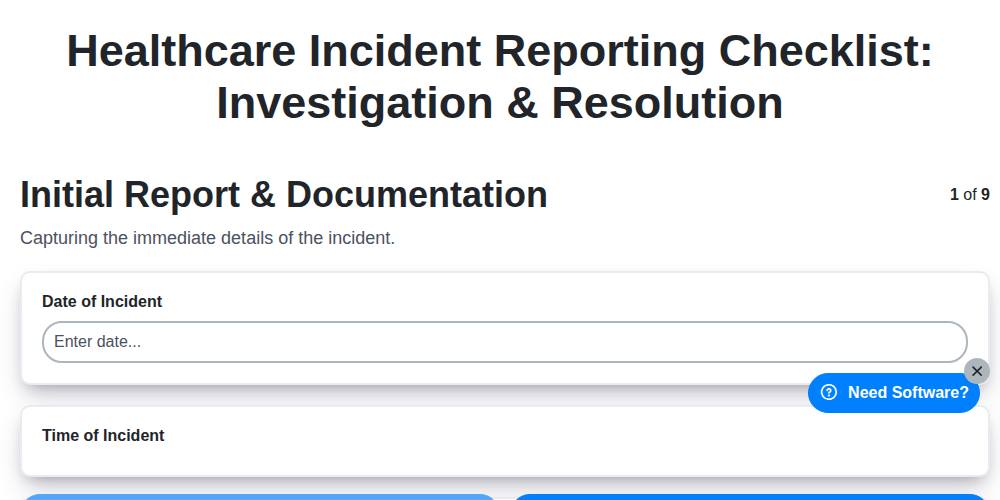
Table of Contents
- Introduction: Why Incident Reporting Matters
- 1. Initial Report & Documentation: The Foundation of Resolution
- 2. Incident Categorization & Severity Assessment: Prioritizing Response
- 3. Investigation Team Formation & Assignment: Building the Right Team
- 4. Data Gathering & Evidence Collection: Uncovering the Facts
- 5. Root Cause Analysis: Beyond the Surface
- 6. Corrective Actions & Implementation: Designing Solutions
- 7. Verification of Corrective Actions: Ensuring Effectiveness
- 8. Reporting & Communication: Transparency and Accountability
- 9. Trend Analysis: Identifying Recurring Patterns
- 10. Continuous Improvement: Learning from Every Incident
- 11. The Role of Technology in Incident Reporting
- 12. Legal and Regulatory Considerations
- Conclusion: Fostering a Culture of Safety
- Resources & Links
TLDR: Healthcare incidents happen. This checklist guides you through a structured process - from initial reporting and categorization to root cause analysis, corrective actions, and ongoing improvement - to ensure incidents are thoroughly investigated, resolved effectively, and prevent future occurrences. It's your roadmap for patient safety and quality care!
Introduction: Why Incident Reporting Matters
In healthcare, safety isn't just a priority; it's a fundamental right for every patient and a crucial responsibility for every provider. Healthcare incident reporting serves as a cornerstone of this commitment, moving beyond blame and focusing on learning and improvement. These incidents, ranging from near misses to serious adverse events, offer invaluable opportunities to identify vulnerabilities in our systems, processes, and protocols. Ignoring them means repeating mistakes and potentially endangering lives. A robust incident reporting system, coupled with thorough investigation and resolution, fosters a culture of transparency, accountability, and continuous quality improvement - ultimately leading to a safer and more effective healthcare environment for all.
1. Initial Report & Documentation: The Foundation of Resolution
The first, and arguably most crucial, step in any healthcare incident reporting process is the thorough and accurate initial report and documentation. This isn't just about recording what happened, but how and when. A complete initial report lays the foundation for a robust investigation and effective resolution.
Here's what a strong initial report should include:
- Who: Identify all individuals involved - patients, staff, visitors, and anyone else present.
- What: A clear and concise description of the incident. Avoid jargon and subjective language; stick to observable facts.
- When: Precise date and time of the incident.
- Where: Specific location where the incident occurred.
- How: A detailed account of the sequence of events leading up to, during, and immediately following the incident.
- Initial Observations: Any immediate observations made by the reporter, including the patient's condition and any initial actions taken.
- Witness Statements: If possible, gather brief statements from any witnesses immediately.
- Documentation: Include any relevant documents, such as medication administration records, charting notes, or equipment logs.
Remember, the reporter's role at this stage is to provide a factual account, not to assign blame or speculate on causes. Accuracy and completeness are paramount, as this report serves as the starting point for all subsequent actions. Ensure the reporting process is easily accessible and encourages open reporting without fear of reprisal.
2. Incident Categorization & Severity Assessment: Prioritizing Response
Not all incidents are created equal. A minor medication error requires a different response than a serious patient injury. Effective incident reporting hinges on accurately categorizing and assessing the severity of each reported event. This ensures resources are allocated appropriately and the right level of urgency is applied.
Categorization: This initial sorting helps group incidents based on the type of event. Common categories might include:
- Medication Errors: Incorrect dosage, wrong medication, missed doses.
- Falls: Patient falls with or without injury.
- Infection Control Breaches: Exposure to infectious agents or compromised protocols.
- Communication Breakdown: Misunderstandings or failures in communication impacting patient care.
- Equipment Malfunction: Failures in medical equipment.
- Near Misses: Events that did not result in harm, but have the potential to do so. (Treating near misses as seriously as actual incidents is critical for prevention.)
Severity Assessment: Following categorization, a severity assessment determines the potential or actual harm caused. This is often based on a standardized scale - examples include:
- Negligible: No harm, minimal risk.
- Minor: Temporary discomfort, minor inconvenience.
- Moderate: Requires intervention, potential for longer-term impact.
- Serious: Significant harm, potential for permanent damage or life-threatening complications.
- Critical: Immediate threat to life or limb.
Why is this crucial? Correct categorization and severity assessment directly impact:
- Investigation Urgency: Critical incidents demand immediate investigation.
- Resource Allocation: Assigning appropriate personnel and expertise.
- Reporting Requirements: Determining what must be reported internally and externally.
- Patient Safety Focus: Directing efforts to prevent recurrence based on the nature and magnitude of the incident.
Clear and consistently applied guidelines for categorization and severity assessment are essential for reliable incident reporting and effective patient safety management.
3. Investigation Team Formation & Assignment: Building the Right Team
A thorough incident investigation requires more than just a form; it demands a skilled and collaborative team. Building the right team is crucial for objectivity, expertise, and ultimately, effective resolution. Here's what to consider:
Defining Roles & Responsibilities: Don't assume everyone knows what's expected. Clearly define roles like Team Lead (responsible for overall coordination and reporting), Investigator (collecting and analyzing data), Subject Matter Expert (providing specialized knowledge related to the incident), and Observer (ensuring process adherence and objectivity).
Selecting Team Members: Prioritize individuals with diverse skillsets and perspectives. Consider including representatives from affected departments, patient safety specialists, risk management, and potentially legal counsel, depending on the incident's complexity and potential legal ramifications. Avoid selecting individuals with direct personal involvement in the incident to ensure impartiality.
Ensuring Training & Authority: Team members should be trained in investigation techniques, root cause analysis methodologies (like 5 Whys or Fishbone diagrams), and be empowered to access necessary information and interview relevant personnel. Lack of authority can hinder the investigation and compromise its effectiveness.
Promoting Collaboration: Foster an environment of open communication and psychological safety. Encourage team members to share observations and concerns freely, even if they challenge existing assumptions. Remember, the goal is to uncover the truth, not assign blame.
4. Data Gathering & Evidence Collection: Uncovering the Facts
Once the investigation team is assembled, the crucial phase of data gathering and evidence collection begins. This isn't just about collecting information; it's about gathering relevant and reliable information that will paint a clear picture of what happened and why. A robust data gathering process minimizes bias and strengthens the validity of your findings.
Here's what this stage entails:
- Interviewing Involved Parties: Speak with everyone directly involved - patients, families, nurses, doctors, technicians, and support staff. Document their accounts thoroughly, noting not just what they say, but how they say it (e.g., hesitation, emotional state). Be sure to maintain confidentiality and explain the purpose of the interview.
- Reviewing Medical Records: Meticulously examine patient charts, lab results, medication administration records, and other pertinent medical documentation. Look for patterns, anomalies, or deviations from standard procedures.
- Examining Equipment & Environment: If the incident involved equipment failure or environmental factors, inspect the equipment involved (following proper safety protocols). Document the condition and any relevant settings. Photograph or video record the scene as it was.
- Collecting Physical Evidence: Secure any physical evidence related to the incident - medication packaging, broken equipment parts, written notes, etc. Maintain a clear chain of custody to ensure its admissibility if needed.
- Reviewing Policies & Procedures: Compare the actions taken against established policies and procedures. Identify any gaps or areas where the policy might have contributed to the incident.
- Documenting Everything: Maintain a comprehensive log of all data collected, including dates, times, individuals involved, and a summary of findings. This documentation is essential for transparency and accountability.
Remember, the goal is to build a factual account of the incident, free from assumptions or speculation. The accuracy and thoroughness of this data gathering phase directly impact the effectiveness of the root cause analysis and the appropriateness of corrective actions.
5. Root Cause Analysis: Beyond the Surface
Often, incident investigations stop at identifying what happened. While understanding the immediate chain of events is crucial, a true Root Cause Analysis (RCA) digs deeper to uncover why it happened. Simply blaming an individual isn't an RCA - it's a reaction. A robust RCA seeks to identify the systemic factors, process breakdowns, or latent conditions that allowed the incident to occur.
This involves moving beyond superficial explanations. Ask Why? repeatedly - the Five Whys technique is a popular method for this. For example, if a medication error occurred, don't just stop at "the nurse administered the wrong dose." Ask: Why did the nurse select the wrong dose? Was the label clear? Was there a similar-sounding medication? Was the nurse rushed or distracted? Was training adequate? Were there system safeguards in place to prevent such errors? Each Why? unveils another layer of potential contributing factors.
Look beyond human error; consider equipment failures, inadequate training, flawed protocols, communication breakdowns, environmental factors, and even organizational culture. RCA shouldn't be a blame game, but a learning opportunity to identify and address the fundamental causes of incidents, preventing recurrence and fostering a culture of safety. The goal is not to punish, but to improve.
6. Corrective Actions & Implementation: Designing Solutions
The root cause analysis provides the critical insights - now it's time to translate those findings into tangible corrective actions. This phase isn't just about fixing the immediate problem; it's about preventing recurrence and bolstering overall patient safety.
Prioritizing Actions: Not all corrective actions are created equal. Based on the severity assessment and root cause findings, prioritize actions based on potential impact and feasibility. High-impact, easily implementable actions should be tackled first.
Actionable and Specific: Generic solutions like improve communication are insufficient. Define specific, measurable, achievable, relevant, and time-bound (SMART) actions. For example, instead of improve communication, specify Implement a daily shift briefing checklist to ensure all team members are aware of patient concerns and care plans, to be completed by [Specific Role] by [Date].
Action Ownership & Deadlines: Assign clear ownership for each corrective action. Who is responsible for implementing the action? What is the deadline for completion? Document these assignments meticulously.
Training & Education: Often, incidents highlight gaps in knowledge or skills. Targeted training and education programs should be designed and delivered to address these deficiencies. This could include refresher courses, new procedures, or simulations.
Policy & Procedure Updates: Root causes frequently reveal flaws in existing policies and procedures. Update these documents to reflect the corrective actions and ensure they are clear, accessible, and regularly reviewed.
Resource Allocation: Implementing corrective actions often requires resources - time, personnel, equipment, or budget. Secure necessary funding and support from leadership to ensure successful implementation.
Pilot Programs & Phased Rollout: Before widespread implementation, consider pilot programs to test corrective actions in a controlled environment. This allows for refinement and identification of any unforeseen consequences. A phased rollout allows for adjustments based on feedback.
Remember, the success of corrective actions hinges on a culture of accountability, collaboration, and a commitment to continuous improvement.
7. Verification of Corrective Actions: Ensuring Effectiveness
Implementing corrective actions is only half the battle. To truly prevent recurrence and demonstrate the effectiveness of your incident reporting and resolution process, a robust verification phase is absolutely crucial. This isn't a simple 'check the box' exercise; it's about rigorous assessment and ongoing monitoring.
Here's what verification should encompass:
- Defined Metrics: Establish clear, measurable criteria to evaluate the success of each corrective action. This could include metrics like reduced error rates, improved adherence to protocols, or enhanced staff satisfaction.
- Timeline-Based Checks: Schedule regular follow-up assessments - short-term (e.g., 30 days), mid-term (e.g., 90 days), and long-term (e.g., 6 months) - to ensure the actions remain effective over time.
- Auditing and Observation: Conduct audits to confirm that implemented procedures are being followed correctly. Direct observation of staff performing tasks can also reveal valuable insights and potential gaps.
- Feedback Collection: Actively solicit feedback from those affected by the corrective actions - this includes frontline staff, patients (where applicable), and other stakeholders. Their perspective is invaluable.
- Data Analysis: Review incident data after corrective actions are in place. Are incident rates decreasing in the areas targeted by the actions? Analyze trends to see if the changes are having the desired impact.
- Documentation: Maintain detailed records of the verification process, including assessment findings, feedback received, and any adjustments made.
- Re-evaluation & Adjustment: If verification reveals the corrective actions are not achieving the desired outcome, be prepared to re-evaluate, adjust, and implement further actions. This is an iterative process, not a one-time event.
8. Reporting & Communication: Transparency and Accountability
Effective incident reporting isn't just about documenting what happened; it's about fostering a culture of transparency and accountability within your healthcare organization. This stage focuses on disseminating information appropriately to relevant stakeholders - patients, families, staff, leadership, and potentially external agencies - while maintaining patient confidentiality and adhering to legal requirements.
Key Considerations:
- Patient & Family Communication: While respecting patient privacy (HIPAA in the US), proactive communication with the affected patient and their family (with consent) can be crucial. This demonstrates empathy and a commitment to resolving the issue. Explain the incident, the investigation process, and the steps being taken to prevent recurrence.
- Internal Communication: Keep staff informed about incidents, investigations, and corrective actions. This promotes learning and reinforces the importance of reporting. Ensure staff understand their role in contributing to solutions.
- Leadership Reporting: Regularly update leadership on incident trends, ongoing investigations, and the effectiveness of corrective actions. This facilitates informed decision-making and resource allocation.
- Regulatory Reporting: Determine and adhere to reporting requirements for specific incidents to relevant regulatory bodies (e.g., The Joint Commission, state licensing boards). Ensure timely and accurate submissions.
- Confidentiality & Sensitivity: All communication must be handled with the utmost sensitivity, protecting patient identities and avoiding speculation or blame. Establish clear protocols for handling media inquiries.
- Documentation: Meticulously document all communication related to the incident, including dates, recipients, and key messages conveyed. This creates an audit trail and ensures accountability.
Transparency in reporting builds trust and encourages open dialogue, ultimately contributing to a safer and more reliable healthcare environment.
9. Trend Analysis: Identifying Recurring Patterns
Once corrective actions are implemented and verified, the work doesn't stop. Trend analysis is crucial for proactive risk management and continuous improvement in healthcare incident reporting. Regularly reviewing incident reports over time - ideally quarterly or annually - allows us to identify recurring patterns and systemic issues that individual investigations might not reveal.
What are we looking for? Common error types, frequently involved departments or roles, predictable triggers for incidents, and vulnerabilities in processes. For example, a consistent cluster of medication errors related to a specific shift or a recurring issue with equipment maintenance can signal a deeper problem.
Data visualization tools and statistical analysis can be invaluable here. Simple charts showing incident frequency by category, location, or time period can quickly highlight concerning trends. Don't just look at the numbers; consider why these trends exist. Are training gaps contributing? Are workflows cumbersome and prone to error? Are there systemic issues with communication or resource allocation?
The insights gleaned from trend analysis should inform future preventative measures, resource allocation, and policy revisions. It closes the loop, demonstrating a commitment to not just addressing individual incidents but proactively preventing them from happening again. This ongoing cycle of analysis and adjustment is the cornerstone of a truly robust healthcare incident reporting and improvement program.
10. Continuous Improvement: Learning from Every Incident
Incident reporting isn't just about fixing what went wrong - it's a vital pathway to preventing future occurrences and strengthening your healthcare system. The final step in our incident reporting checklist, trend analysis and continuous improvement, isn't an endpoint, but a starting point for ongoing learning.
Regularly analyze aggregated incident data to identify patterns and recurring themes. Are certain types of incidents happening repeatedly? Are specific departments or roles consistently implicated? This isn't about assigning blame, but about uncovering systemic weaknesses.
Leverage this data to:
- Refine Reporting Procedures: Is the current reporting form clear and comprehensive? Do staff feel comfortable reporting incidents, even near misses?
- Enhance Training: Identify gaps in knowledge or skills that contribute to incidents and develop targeted training programs.
- Improve Processes & Policies: Use insights to revise protocols and workflows, addressing underlying causes rather than just surface-level symptoms.
- Foster a Culture of Safety: Encourage open communication and learning from mistakes, reinforcing that reporting is a tool for progress, not punishment.
- Monitor Effectiveness: Track the impact of implemented corrective actions and adjust strategies as needed.
By embracing a proactive, data-driven approach to incident reporting, you transform isolated events into opportunities for profound, lasting improvements in patient safety and overall organizational performance. This cycle of reporting, investigation, correction, and analysis ensures a continually evolving and safer healthcare environment.
11. The Role of Technology in Incident Reporting
Traditionally, healthcare incident reporting relied on paper forms and manual processes, often leading to delays, inconsistencies, and difficulties in analysis. Thankfully, technology has revolutionized this vital process. Today, digital incident reporting systems are increasingly common, offering a wealth of benefits.
These systems streamline the initial reporting process, allowing staff to quickly and easily document incidents using tablets, computers, or even smartphones. Automated workflows can route reports to the appropriate personnel instantly, significantly reducing reporting delays. Built-in templates ensure consistent data capture, minimizing ambiguity and improving data quality.
Beyond simple reporting, technology facilitates robust investigation and analysis. Features like secure document sharing, centralized evidence storage, and automated reporting tools drastically improve efficiency. Data analytics dashboards can visualize trends, identify systemic issues, and measure the effectiveness of corrective actions. Furthermore, integration with Electronic Health Records (EHRs) can provide valuable context surrounding an incident.
Looking ahead, advancements in AI and machine learning promise to further enhance incident reporting. These technologies could assist with root cause analysis, predict potential risks, and even automate certain aspects of the investigation process, ultimately leading to a safer healthcare environment for everyone.
12. Legal and Regulatory Considerations
Healthcare incident reporting isn't just about improving patient safety; it's also heavily influenced by legal and regulatory frameworks. Failing to adhere to these can result in significant penalties and legal repercussions. Here's a breakdown of key considerations:
- HIPAA Compliance: All incident reporting processes must rigorously adhere to the Health Insurance Portability and Accountability Act (HIPAA) privacy and security rules. Protecting patient Protected Health Information (PHI) during reporting, investigation, and subsequent actions is paramount. This includes ensuring data access is limited to authorized personnel and implementing appropriate security measures.
- State Reporting Laws: Many states have their own mandatory incident reporting laws, often covering specific types of incidents (e.g., medication errors, sentinel events, patient harm). Familiarize yourself with the requirements in your jurisdiction and ensure your checklist and process align.
- Accreditation Standards: Organizations accredited by bodies like The Joint Commission require robust incident reporting and investigation processes. Non-compliance with these standards can impact accreditation status.
- Reporting to External Agencies: Depending on the nature and severity of the incident, reporting to external agencies such as state health departments or the Centers for Medicare & Medicaid Services (CMS) may be mandatory.
- Legal Hold Considerations: In cases involving potential litigation, a legal hold may be necessary. This restricts deletion or modification of incident-related data, preserving it for potential discovery.
- Documentation as Evidence: Thorough and accurate documentation of the incident, investigation, and corrective actions serves as crucial evidence in case of legal challenges. Maintain a clear audit trail.
- Transparency and Disclosure: While patient privacy is vital, transparency with affected patients and their families (where appropriate and legally permissible) can be crucial for maintaining trust and mitigating potential legal action. Consult with legal counsel regarding disclosure protocols.
It is essential to consult with legal counsel and compliance experts to ensure your incident reporting checklist and procedures are fully compliant with all applicable laws and regulations.
Conclusion: Fostering a Culture of Safety
Ultimately, a robust healthcare incident reporting checklist, and the diligent execution of its steps, isn't just about fixing problems - it's about cultivating a culture of safety. By consistently utilizing this checklist, healthcare organizations can move beyond reactive responses and embrace proactive risk management. This fosters an environment where staff feel empowered to report concerns without fear of reprisal, where learning from mistakes is prioritized over blame, and where patient safety is relentlessly pursued. It's a journey, not a destination, requiring ongoing commitment and adaptation to evolving healthcare landscapes. Embrace the checklist as a tool to champion patient safety and build a truly resilient and trustworthy healthcare system.
Resources & Links
- Centers for Medicare & Medicaid Services (CMS): Provides information on healthcare quality reporting requirements, including incident reporting related to Medicare and Medicaid programs. Look for sections on Patient Safety & Quality.
- The Joint Commission: An accreditation body for healthcare organizations. They offer resources, standards, and guidance on patient safety, including incident reporting and event management. Their Sentinel Event Alert series is particularly valuable.
- Agency for Healthcare Research and Quality (AHRQ): Provides research and information on improving healthcare quality and patient safety. Search for resources on incident reporting, root cause analysis, and patient safety initiatives.
- Patient Safety Network (PSN): A comprehensive resource on patient safety, compiled by AHRQ. Offers tools, checklists, and publications on incident reporting and prevention.
- American Hospital Association (AHA): Offers insights and resources for hospitals and health systems, including best practices for safety and quality improvement, which often involves incident reporting.
- Centers for Disease Control and Prevention (CDC): While primarily known for disease prevention, the CDC has relevant information on healthcare-associated infections and other adverse events that should be reported and investigated.
- Institute for Healthcare Improvement (IHI): IHI promotes quality improvement and patient safety through various models and tools. Their resources on safety culture and error prevention are highly relevant.
- National Patient Safety Association (NPSA): Dedicated to advancing patient safety and promoting a culture of safety. Their website offers resources, events, and publications related to incident reporting and prevention.
- LexisNexis: Provides legal information and analysis related to healthcare regulations and potential legal implications of incident reporting (Note: Subscription may be required for full access).
- Healthcare Information and Management Systems Society (HIMSS): Focuses on the role of technology in healthcare. Provides insights and resources on incident reporting systems and electronic health record integration.
- Healthcare Safety and Accountability & Research (HSAR): Advocates for patient safety and quality. Their website provides data and resources on safety events and incident reporting.
- SafetyCulture: Provides software solutions and resources for workplace safety, including incident reporting and investigation.
- Qualio: Provides quality management software, including incident reporting and corrective action tracking capabilities. Good for understanding technological solutions.
- Zenput: Offers software solutions for healthcare quality and compliance, including incident management. Provides insights on digital incident reporting workflows.
Frequently Asked Questions
What is a healthcare incident?
A healthcare incident is any unplanned event that results in harm, near miss, or could have resulted in harm to a patient, staff member, visitor, or damage to property. This includes errors in medication administration, surgical complications, falls, equipment malfunctions, and more.
Why is reporting healthcare incidents important?
Reporting incidents is crucial for patient safety, quality improvement, and legal compliance. It allows healthcare organizations to identify root causes, implement corrective actions, prevent future occurrences, and demonstrate a commitment to continuous improvement.
Who is responsible for reporting healthcare incidents?
While anyone who witnesses or is involved in an incident should report it, specific reporting responsibilities often fall to clinicians, nurses, physicians, risk managers, patient safety officers, and administrative staff. Organizations should have clearly defined roles and responsibilities outlined in their policies.
What information should be included in an incident report?
A comprehensive incident report should include details such as the date, time, and location of the incident; a description of what happened; the individuals involved; contributing factors; potential causes; any immediate actions taken; and recommendations for improvement. Specific forms often dictate required information.
What's the difference between an incident, near miss, and adverse event?
An **incident** is any unplanned event. A **near miss** is an incident that *didn't* result in harm but had the potential to. An **adverse event** is an incident that resulted in harm. Reporting all three is vital.
What's the difference between reporting internally and externally?
**Internal reporting** is done within the healthcare organization, usually through a dedicated incident reporting system. **External reporting** might be required by regulatory bodies (like The Joint Commission or state health departments) for specific types of incidents, or when legal requirements mandate it.
How long do I have to report an incident?
Reporting timelines vary by organization and regulatory requirements. Organizations should outline their specific timelines in their policies. It's best to report incidents as soon as possible to ensure timely investigation and corrective action.
What happens after an incident is reported?
After reporting, the incident typically undergoes investigation by a designated team or individual. This investigation aims to identify root causes and contributing factors. Corrective actions are then developed and implemented to prevent recurrence. Follow-up is essential to ensure effectiveness.
Will reporting an incident affect my job?
Most healthcare organizations have a non-punitive reporting culture. The focus is on learning and improvement, not assigning blame. Open reporting is encouraged. However, willful negligence or intentional misconduct may have consequences.
Where can I find my organization's incident reporting policy?
Your organization's incident reporting policy should be readily available through internal resources such as the employee handbook, intranet, or by contacting your supervisor, risk management department, or patient safety officer.
Comments
There are no comments yet. Be the first to add one!
Healthcare Management Solution Demo
Streamlining healthcare operations and improving patient care? ChecklistGuro's Work OS platform simplifies everything from patient scheduling and billing to compliance and staff management. Enhance efficiency, reduce administrative burden, and focus on what matters most: your patients. Learn how ChecklistGuro can transform your healthcare organization!
Related Articles
The Ultimate Healthcare Patient Satisfaction Survey Checklist Template
Mastering Healthcare Inventory: Your Par Level Checklist Template
Mastering Hand Hygiene: Your Compliance Checklist Template
Protecting Patients: Your Fire Safety Checklist for Patient Areas
Your Ultimate Healthcare Construction Checklist Template
Mastering Hand Hygiene: Your Compliance Checklist Template
Your Radiology Equipment Maintenance Checklist Template

Your Ultimate Guide to Healthcare Waste Management: A Checklist Template
Need help with
Healthcare?
Have a question? We're here to help. Please submit your inquiry, and we'll respond promptly.