The Ultimate Healthcare Joint Commission Compliance Checklist: A Template for Success
Published: 11/28/2025 Updated: 07/02/2026
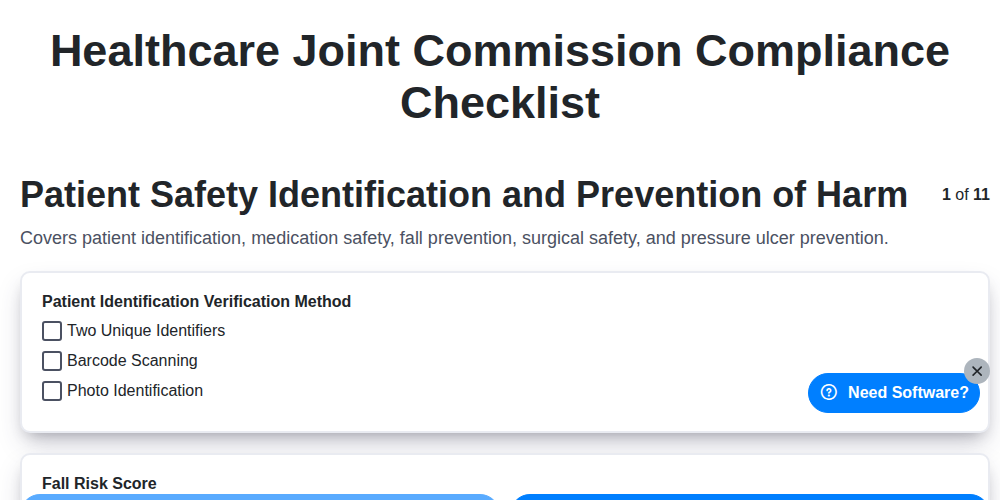
Table of Contents
- Introduction: Why Joint Commission Compliance Matters
- 1. Patient Safety: Identification and Prevention of Harm
- 2. Emergency Management: Preparedness is Paramount
- 3. Environment of Care: Ensuring a Safe Physical Space
- 4. Leadership Commitment: Driving a Culture of Compliance
- 5. Human Resources: Staffing and Training Essentials
- 6. Medical Staff Services: Credentialing and Privileging
- 7. Clinical Performance Improvement: Continuous Quality Enhancement
- 8. Information Management: Data Security and Integrity
- 9. Key Supporting Areas: Medication, Infection Control, Communication & Teamwork
- Resources & Links
TLDR: Overwhelmed by Joint Commission compliance? This checklist template breaks down essential areas - Patient Safety, Emergency Management, HR, Medication Management, and more - into actionable steps. Use it to streamline your preparation, identify gaps, and confidently navigate your survey for a successful outcome.
Introduction: Why Joint Commission Compliance Matters
For healthcare organizations, achieving and maintaining Joint Commission accreditation isn't just about a badge of honor - it's a commitment to quality, safety, and continuous improvement. The Joint Commission, a nationally recognized accreditation organization, sets rigorous standards that guide healthcare facilities to deliver exceptional patient care. Compliance with these standards demonstrates a dedication to patient safety and a proactive approach to risk management.
In today's healthcare landscape, facing increasing scrutiny and a heightened focus on outcomes, Joint Commission accreditation serves as a vital differentiator. It fosters trust with patients, payers, and the community, and can significantly impact reimbursement and legal defensibility. More importantly, it's about embedding best practices into your organization's culture, ensuring a safer and more effective environment for both patients and staff. This checklist provides a framework to help you navigate this complex process and demonstrates a pathway to excellence in healthcare delivery.
1. Patient Safety: Identification and Prevention of Harm
Patient safety is paramount, and a robust system for identifying and preventing harm is the cornerstone of any successful healthcare organization. This section of your Joint Commission compliance checklist shouldn't be viewed as a box to tick, but as an ongoing commitment to minimizing risks and ensuring the well-being of every patient.
Key Areas to Review:
- Incident Reporting System: Is your incident reporting system readily accessible, user-friendly, and non-punitive? Encourage staff at all levels to report near misses and actual events - these are invaluable learning opportunities. Analyze reported incidents to identify trends and root causes.
- Root Cause Analysis (RCA): Ensure a thorough RCA process is in place to investigate serious events. Don't just identify the immediate cause; delve deeper to understand systemic issues.
- Failure Mode and Effects Analysis (FMEA): Implement proactive FMEA to identify potential hazards and implement preventive measures before harm occurs. This demonstrates a commitment to prevention rather than reaction.
- High-Alert Medication Protocols: Strictly adhere to protocols for high-alert medications, including double checks and standardized procedures.
- Patient Identification: Verify patient identification using at least two identifiers before any intervention, medication administration, or procedure.
- Fall Prevention: Implement and rigorously follow a fall risk assessment and prevention plan. This should include environmental modifications and patient education.
- Surgical Safety Checklist: Meticulously follow the surgical safety checklist, ensuring proper patient identification, site verification, and equipment availability.
- Hand Hygiene Compliance: Regularly monitor and improve hand hygiene practices, as it's a fundamental element of infection prevention.
- Patient and Family Engagement: Actively involve patients and families in safety discussions, encouraging them to voice concerns and ask questions.
Regular review and updates to these practices are critical to maintaining a culture of safety and minimizing the risk of preventable harm.
2. Emergency Management: Preparedness is Paramount
Healthcare facilities face a wide range of potential emergencies, from natural disasters and power outages to active shooter situations and chemical spills. A robust Emergency Management program isn't just about reacting to events; it's about proactively minimizing risks and ensuring patient and staff safety. The Joint Commission emphasizes a comprehensive approach, demanding meticulous planning and consistent drills.
Key Elements for Joint Commission Compliance:
- Hazard Vulnerability Assessment (HVA): Regularly identifying potential hazards and vulnerabilities within the facility is the bedrock of your Emergency Management plan. This includes assessing structural integrity, potential for utility failures, and proximity to external risks.
- Emergency Plan Development: A detailed, written plan that outlines procedures for various emergencies. This plan should cover evacuation routes, communication protocols, roles and responsibilities, and resource allocation.
- Communication Plan: A clear and reliable communication system for internal and external stakeholders, including patients, staff, emergency responders, and the public. This must include backup systems for failures.
- Emergency Drills & Exercises: Regular drills, including fire drills, evacuation drills, and more complex scenario-based exercises, are critical for validating the plan's effectiveness and identifying areas for improvement. Documentation of these drills, including lessons learned, is essential.
- Staff Training: Ensure all staff members, regardless of role, receive appropriate training on emergency procedures. This includes understanding their roles, location of emergency equipment, and reporting protocols.
- Resource Management: Maintaining adequate supplies, equipment, and personnel to respond to emergencies. This includes backup generators, oxygen supplies, and readily available personal protective equipment (PPE).
- Plan Review & Update: Regularly reviewing and updating the Emergency Management plan (at least annually) to reflect changes in facility operations, regulations, and identified vulnerabilities.
Joint Commission Focus Areas: Ensure your documentation clearly demonstrates adherence to these areas, including HVA reports, drill evaluation forms, training records, and plan revision dates. Neglecting any of these components can lead to significant deficiencies during a Joint Commission survey.
3. Environment of Care: Ensuring a Safe Physical Space
The Environment of Care (EOC) encompasses far more than just aesthetics; it's a critical component of patient safety and overall organizational performance. The Joint Commission's standards in this area focus on creating a physical, psychological, and social environment that minimizes risks and supports healing. This checklist item requires ongoing assessment and diligent upkeep.
Here's what your organization should be evaluating:
- Safety & Security: Regular inspections of building infrastructure (fire safety systems, electrical systems, plumbing) are essential. This includes smoke detector functionality, emergency lighting, and secured access points. Risk assessments should identify vulnerabilities and proactively address potential threats, including active shooter preparedness and security personnel training.
- Hazard Management: This goes beyond obvious hazards. Consider noise levels, lighting adequacy, and the prevention of slips, trips, and falls. Implement a robust hazard reporting system and ensure timely corrective actions.
- Utilities Management: Reliable power, water, and HVAC systems are vital. Have contingency plans for outages and scheduled maintenance.
- Waste Management: Ensure proper segregation, storage, and disposal of medical and general waste, adhering to all relevant regulations.
- Interior Design and Aesthetics: While often overlooked, the physical environment impacts patient and staff well-being. Promote a calming, welcoming atmosphere through décor, lighting, and accessibility features. Consider patient privacy and noise reduction strategies.
- Disaster Preparedness (Beyond Emergency Management): While Emergency Management is a separate area, EOC integrates with it. Evaluate the physical resilience of your facility in the face of disasters (e.g., flood protection, earthquake bracing).
- Accessibility: Ensure compliance with ADA guidelines to provide equal access for all patients, visitors, and staff.
Regular audits, staff training, and patient feedback are key to continuous improvement in your Environment of Care.
4. Leadership Commitment: Driving a Culture of Compliance
Joint Commission compliance isn't just about ticking boxes; it's about fostering a deeply ingrained culture of safety and quality. And that culture starts at the top. Leadership's commitment isn't just a requirement - it's the engine that drives the entire program.
This means more than just signing off on a plan. Leaders must actively champion compliance initiatives, visibly participating in training, safety briefings, and review processes. They need to clearly communicate the importance of Joint Commission standards, consistently reinforcing that compliance is a core value of the organization.
Furthermore, leaders must empower staff at all levels to speak up about concerns without fear of reprisal. Open communication channels, regular feedback mechanisms, and a commitment to investigating and addressing issues promptly are crucial. Recognizing and rewarding individuals and teams who demonstrate a commitment to compliance further strengthens the culture. Ultimately, leadership's dedication serves as a powerful example, encouraging everyone within the organization to prioritize patient safety and uphold the high standards required for Joint Commission accreditation.
5. Human Resources: Staffing and Training Essentials
A robust healthcare organization hinges on a skilled, well-trained, and engaged workforce. Joint Commission compliance in Human Resources isn't just about filling positions; it's about fostering a culture of continuous learning and ensuring staff competency across all roles. Here's what you need to prioritize:
Staffing Adequacy & Qualifications:
- Needs Assessment: Regularly assess staffing needs based on patient census, acuity levels, and regulatory requirements. Don't just react to crises; proactively plan for fluctuations.
- Credentialing & Verification: Implement a thorough process for verifying credentials, licenses, and certifications of all personnel. This includes primary source verification - don't rely solely on submitted documents.
- Position Descriptions: Maintain up-to-date and accurate position descriptions that clearly outline roles, responsibilities, and required competencies.
- Orientation Programs: Provide comprehensive orientation programs for new hires, covering policies, procedures, safety protocols, and organizational culture.
- Contingency Planning: Have a plan in place to address staffing shortages due to illness, leaves, or unexpected events. This might involve cross-training, agency staffing, or other solutions.
Training & Competency:
- Mandatory Training: Implement a system for mandatory training on critical topics such as patient safety, infection control, emergency preparedness, and behavioral expectations. Track completion and maintain records.
- Competency Assessment: Regularly assess the competency of staff through direct observation, skills demonstrations, and written evaluations. Document results and identify areas for improvement.
- Specialized Training: Provide specialized training for specific roles and departments, addressing unique risks and responsibilities. This may include advanced cardiac life support (ACLS), pediatric advanced life support (PALS), or specific equipment operation.
- Performance Evaluations: Conduct regular performance evaluations that incorporate feedback on competency and identify opportunities for professional development.
- Documentation: Maintain meticulous records of all training, competency assessments, and performance evaluations. This documentation is vital for demonstrating compliance during Joint Commission surveys.
6. Medical Staff Services: Credentialing and Privileging
Medical Staff Services play a critical role in Joint Commission compliance, and at its heart lies a robust credentialing and privileging process. This isn't simply about paperwork; it's about ensuring that every member of your medical staff - physicians, surgeons, dentists, and other licensed professionals - possesses the qualifications, experience, and competence to provide safe and effective patient care.
The Joint Commission mandates a thorough, ongoing assessment of medical staff credentials. This begins with verifying primary source documentation-degrees, licenses, training records, and experience. Beyond initial verification, continuous monitoring is essential, incorporating elements like peer review, incident reporting analysis, and ongoing education tracking.
Key areas of focus within this checklist item include:
- Verification of Credentials: Rigorous verification against primary sources (not just relying on self-reporting or third-party services).
- Privilege Determination: Clear, objective criteria for granting privileges based on competence and experience. This should align with the facility's scope of services and patient population.
- Ongoing Monitoring: Regular review of performance data, incident reports, and continuing education to identify any gaps in competency.
- Documentation: Meticulous record-keeping of all credentialing activities, decisions, and monitoring data.
- Compliance with Joint Commission Standards: Adherence to all relevant Joint Commission standards regarding medical staff services and privileging.
A well-defined and consistently applied credentialing and privileging program demonstrates a commitment to patient safety and is a vital component of Joint Commission compliance.
7. Clinical Performance Improvement: Continuous Quality Enhancement
Clinical Performance Improvement (CPI) isn't a one-time project; it's a vital, ongoing process woven into the fabric of healthcare operations. The Joint Commission emphasizes a commitment to continuous quality enhancement, requiring facilities to systematically measure, analyze, and improve patient care. This section of your compliance checklist should focus on demonstrating this commitment.
Key Areas to Review for Joint Commission Compliance:
- Data Collection & Analysis: Are you collecting relevant data on patient outcomes, process performance, and patient satisfaction? Ensure you have defined metrics and understand how they are gathered and validated.
- Performance Measurement: How are you measuring performance against established goals and benchmarks? Are these benchmarks realistic and regularly reviewed?
- Root Cause Analysis (RCA): Do you have a formalized RCA process for identifying the underlying causes of adverse events and near misses? Are findings documented and shared with relevant teams?
- Corrective Action Plans (CAPs): Are CAPs developed and implemented to address identified performance gaps? Do you track the implementation and effectiveness of these plans, ensuring timely completion?
- Performance Reporting: How is performance data reported to leadership and staff? Is it understandable and actionable?
- Staff Education & Training: Are staff actively involved in CPI initiatives and provided with the training needed to understand and contribute to performance improvement?
- Evidence-Based Practice Integration: How are you incorporating evidence-based practices and current guidelines into clinical protocols and procedures?
- Patient Feedback Integration: Are you soliciting and analyzing patient feedback to inform performance improvement efforts?
Documentation is Key: Maintain thorough documentation of all CPI activities, including data collection methods, analysis results, CAPs, and outcomes. This evidence is crucial for demonstrating compliance during Joint Commission surveys. Regularly review your CPI processes and documentation to ensure ongoing effectiveness and alignment with Joint Commission standards.
8. Information Management: Data Security and Integrity
In today's healthcare environment, data is arguably your most valuable asset. Maintaining robust information management practices, particularly focusing on data security and integrity, is paramount for Joint Commission compliance and patient trust. This isn't just about avoiding data breaches; it's about ensuring the accuracy and reliability of patient information used for care decisions.
Here's a breakdown of key areas to address for Joint Commission readiness:
- Risk Assessments: Regularly conduct comprehensive risk assessments to identify vulnerabilities in your systems and processes. This includes assessing physical security, network security, and application security. Document your findings and remediation plans.
- Access Controls: Implement role-based access controls to limit access to patient information based on job function. Regularly review and update these controls. Two-factor authentication is strongly recommended for all users accessing sensitive data.
- Data Encryption: Employ robust encryption methods for data at rest and in transit. Ensure compliance with HIPAA and other relevant regulations regarding encryption standards.
- Audit Trails: Maintain detailed audit trails to track access to and modification of patient data. These logs are essential for investigating security incidents and ensuring accountability.
- Business Associate Agreements (BAAs): Ensure all third-party vendors who handle patient data have signed Business Associate Agreements outlining their responsibilities for data protection.
- Data Backup and Recovery: Implement a reliable data backup and recovery plan to protect against data loss due to system failures, natural disasters, or cyberattacks. Test these plans regularly.
- Employee Training: Provide ongoing training to all employees on data security policies, procedures, and best practices. Phishing simulations can help identify vulnerabilities and reinforce training.
- Policy and Procedures: Develop and regularly update data security policies and procedures, making them readily accessible to all staff.
Addressing these critical areas will contribute significantly to a strong Information Management program, demonstrating your commitment to patient safety and Joint Commission compliance.
9. Key Supporting Areas: Medication, Infection Control, Communication & Teamwork
These three areas - medication management, infection prevention and control, and communication & teamwork - are intrinsically linked to patient safety and overall Joint Commission compliance. Neglecting any one can significantly impact your organization's performance.
Medication Management: This extends far beyond simply dispensing medication correctly. It encompasses everything from ordering and prescribing protocols to reconciliation, administration, monitoring, and patient education. Your checklist needs to rigorously evaluate:
- Order Verification Processes: Are all orders reviewed by qualified personnel?
- Medication Reconciliation: Is this consistently performed at all transition points?
- Storage and Handling: Are medications stored and handled securely to prevent errors and diversion?
- Patient Education: Are patients adequately informed about their medications, including potential side effects?
- High-Alert Medication Protocols: Are these in place and consistently followed?
- Reporting and Analysis of Medication Errors: Are errors reported, analyzed, and corrective actions implemented?
Infection Prevention and Control: A robust infection prevention program is essential to minimize healthcare-associated infections (HAIs). Your checklist should cover:
- Hand Hygiene Compliance: Are hand hygiene practices consistently followed by all staff?
- Environmental Cleaning and Disinfection: Are surfaces regularly cleaned and disinfected according to established protocols?
- Sterilization and High-Level Disinfection: Are instruments properly sterilized and high-level disinfected?
- Isolation Precautions: Are isolation precautions followed correctly?
- Surveillance and Reporting of HAIs: Are HAIs actively surveilled and reported?
- Antimicrobial Stewardship Program: Is an antimicrobial stewardship program in place and effectively implemented?
Communication and Teamwork: Effective communication and strong teamwork are foundational for safe patient care. Your checklist should examine:
- Standardized Communication Tools (e.g., SBAR): Are these utilized for handoffs and critical information sharing?
- Team Huddles: Are team huddles conducted regularly to discuss patient care plans and potential issues?
- Conflict Resolution Processes: Are conflict resolution processes in place to address disagreements effectively?
- Open Communication Channels: Are staff encouraged to voice concerns and report potential safety issues without fear of reprisal?
- Interprofessional Collaboration: Is there effective collaboration between different healthcare disciplines?
- Patient and Family Communication: Are patients and families actively involved in care planning and decision-making?
Resources & Links
- The Joint Commission: The official website of The Joint Commission. Contains standards, accreditation process information, resources, and news. The primary source for all Joint Commission compliance requirements.
- Centers for Medicare & Medicaid Services (CMS): CMS website. While not solely focused on Joint Commission, their regulations and guidelines often overlap and impact healthcare organizations striving for compliance.
- American Hospital Association (AHA): The AHA provides resources and advocacy for hospitals and healthcare networks, including information related to accreditation and compliance.
- American Society for Quality (ASQ): ASQ offers quality improvement resources and training that are directly applicable to Joint Commission compliance, especially around Clinical Performance Improvement. Focuses on process improvement methodologies.
- Nursing.com: Provides numerous articles, continuing education, and resources relevant to nursing practices and Joint Commission requirements related to patient safety and teamwork.
- U.S. Department of Health & Human Services (HHS): HHS provides overarching guidance on healthcare regulations and patient rights, influencing Joint Commission standards.
- AHA Patient Safety: American Hospital Association's specific resources dedicated to patient safety, an essential component of Joint Commission compliance. Includes tools, articles, and best practices.
- Healthcare Information and Management Systems Society (HIMSS): HIMSS provides resources and expertise on health information technology and data security, important for Information Management aspects of Joint Commission compliance.
- ECRI: ECRI offers risk management and patient safety solutions, providing insights on hazard prevention and mitigation, essential for Environment of Care and Patient Safety compliance.
- Centers for Disease Control and Prevention (CDC): CDC provides guidelines and resources for infection control, a critical component of Joint Commission standards. Specifically relevant for Infection Control within Key Supporting Areas.
- Occupational Safety and Health Administration (OSHA): OSHA standards frequently overlap with Joint Commission Environment of Care requirements, particularly regarding workplace safety and hazard communication.
Frequently Asked Questions
What is The Joint Commission and why is compliance important?
The Joint Commission (TJC) is an independent, non-profit organization that accredits and certifies healthcare organizations and programs in the United States. Compliance with TJC standards is vital for patient safety, quality of care, and can impact reimbursement and reputation.
Who is this checklist template for?
This checklist is designed for healthcare facilities of all sizes, including hospitals, ambulatory care centers, behavioral health facilities, and home health organizations, aiming for Joint Commission accreditation or renewal.
Is this a complete list of all Joint Commission standards?
No, this checklist template covers many key areas but is not exhaustive. It's a starting point and should be supplemented with a thorough review of the official Joint Commission standards and leadership manuals. Always refer to the official documentation for complete details.
How should I use this checklist template?
This checklist is intended to be customized. Review each item, assess your organization's current status, and identify areas needing improvement. Assign responsibility for addressing each item and document progress. Regularly update the checklist to reflect changes in processes and regulations.
What does 'evidence of compliance' mean?
Evidence of compliance means having documentation and processes in place that demonstrate you are meeting the Joint Commission's standards. This could include policies, procedures, training records, audits, and patient records.
What is the difference between a policy, procedure, and protocol?
While often used interchangeably, a policy is a guiding principle, a procedure outlines how to perform a specific task, and a protocol is a formalized, step-by-step plan for managing a specific situation or condition.
How often should I review and update this checklist?
We recommend reviewing and updating this checklist at least annually, or more frequently if there are significant changes in your organization's processes, regulations, or Joint Commission standards.
Where can I find the official Joint Commission standards and resources?
You can access the official Joint Commission standards and resources on their website: https://www.jointcommission.org/.
What happens if my organization fails a Joint Commission survey?
Failure to meet Joint Commission standards can result in denial of accreditation, conditional accreditation, or a corrective action plan. This can impact reimbursement, reputation, and the ability to participate in certain programs.
Can I share this checklist template with other healthcare facilities?
This checklist is intended as a resource and can be shared for educational purposes. However, remember that each facility's specific requirements may vary, so customization is essential.
Comments
There are no comments yet. Be the first to add one!
Healthcare Management Solution Demo
Streamlining healthcare operations and improving patient care? ChecklistGuro's Work OS platform simplifies everything from patient scheduling and billing to compliance and staff management. Enhance efficiency, reduce administrative burden, and focus on what matters most: your patients. Learn how ChecklistGuro can transform your healthcare organization!
Related Articles
The Ultimate Healthcare Patient Satisfaction Survey Checklist Template
Mastering Healthcare Inventory: Your Par Level Checklist Template
Mastering Hand Hygiene: Your Compliance Checklist Template
Protecting Patients: Your Fire Safety Checklist for Patient Areas
Your Ultimate Healthcare Construction Checklist Template
Mastering Hand Hygiene: Your Compliance Checklist Template
Your Radiology Equipment Maintenance Checklist Template

Your Ultimate Guide to Healthcare Waste Management: A Checklist Template
Need help with
Healthcare?
Have a question? We're here to help. Please submit your inquiry, and we'll respond promptly.