Healthcare Staff Onboarding Checklist: Training & Compliance - A Complete Guide
Published: 11/28/2025 Updated: 07/02/2026
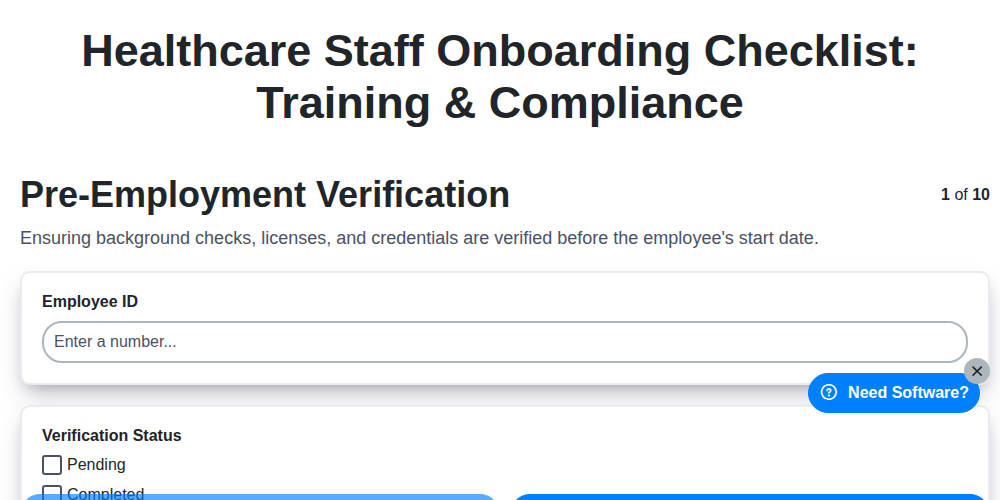
Table of Contents
- Introduction: Why a Robust Onboarding Checklist Matters
- 1. Pre-Employment Verification: Laying the Foundation
- 2. HR & Legal Documentation: Essential Paperwork
- 3. IT Access & Security: Protecting Patient Data
- 4. Department-Specific Orientation: Understanding Your Role
- 5. HIPAA & Privacy Training: A Critical Priority
- 6. Clinical Skills Training: Ensuring Competency
- 7. Safety & Emergency Procedures: Preparedness is Key
- 8. Policy & Procedure Review: Knowing the Rules
- 9. Performance Expectations & Goals: Setting the Stage for Success
- 10. Feedback & Check-in Schedule: Continuous Improvement
- 11. Compliance Verification and Documentation
- 12. Resources and Support for New Hires
- 13. Post-Onboarding Assessment and Follow-Up
- Conclusion: Building a Strong and Compliant Healthcare Team
- Resources & Links
TLDR: New healthcare hires need a rock-solid onboarding! This checklist ensures they're legally compliant, technically equipped, clinically ready (if needed), and understand safety protocols before they start patient care. It covers everything from background checks to HIPAA training and performance goals - saving you time, minimizing risk, and setting new staff up for success.
Introduction: Why a Robust Onboarding Checklist Matters
A new healthcare professional joining your team is an investment - in their skills, their commitment, and ultimately, the quality of patient care. A rushed or incomplete onboarding process can lead to frustration, errors, compliance issues, and even negatively impact patient safety. A well-structured onboarding checklist isn't just a formality; it's a crucial roadmap ensuring every new hire is fully equipped, knowledgeable, and aligned with your organization's standards. It demonstrates a commitment to their success, fosters a sense of belonging, and sets the stage for a productive and fulfilling career. This article will outline a comprehensive checklist to guide you through the onboarding journey, minimizing risks and maximizing the value of your newest team members.
1. Pre-Employment Verification: Laying the Foundation
Before a new healthcare staff member even steps foot in the facility, a thorough pre-employment verification process is critical. This isn't just a formality; it's a vital step to ensure patient safety, maintain compliance, and build a trustworthy team.
This process typically involves verifying the candidate's credentials, including:
- Professional Licenses & Certifications: Confirming active status and validating scope of practice is paramount. This includes verifying licenses with relevant state boards and ensuring certifications are current.
- Education Verification: Verifying degrees, diplomas, and relevant coursework ensures the candidate possesses the necessary education for the role.
- Background Checks: Criminal background checks, including fingerprinting, are essential for protecting patients and upholding the facility's reputation. Consider both federal and state requirements.
- Employment History Verification: Contacting previous employers to confirm dates of employment and job responsibilities provides a comprehensive view of the candidate's experience.
- Reference Checks: Speaking with professional references provides valuable insights into the candidate's work ethic, skills, and suitability for the role.
- Immunization Records: Gathering immunization records ensures the staff member is protected and helps prevent the spread of infectious diseases.
A robust pre-employment verification process minimizes risk, ensures competency, and sets the stage for a successful onboarding journey. Skipping or shortcutting this phase can have serious consequences later on.
2. HR & Legal Documentation: Essential Paperwork
Onboarding isn't just about introducing new hires to their team; it's a critical legal and administrative process. This section ensures compliance and establishes a clear understanding of their responsibilities from day one.
Here's a breakdown of the key HR & Legal Documentation you'll need to cover:
- Employment Contracts/Offer Letters: Ensure a signed copy is on file, clearly outlining the terms of employment, including salary, benefits, and job title.
- I-9 Verification (Employment Eligibility Verification): This is legally required to verify the employee's identity and authorization to work in the country. Strict adherence to guidelines is vital.
- W-4 Form (Employee's Withholding Certificate): Necessary for tax withholding purposes.
- Direct Deposit Authorization: Simplify payroll processing by obtaining direct deposit authorization.
- Background Check Consent Forms: Confirm consent for background checks, if applicable and legally permissible.
- Benefits Enrollment Forms: Provide information and forms for enrolling in health insurance, retirement plans, and other benefits.
- Confidentiality Agreements: Protect sensitive patient information and company data with legally sound confidentiality agreements.
- Non-Disclosure Agreements (NDAs): Further safeguard proprietary information.
- Acknowledgement of Receipt of Policies: Ensure employees acknowledge receiving and understanding important company policies.
Pro Tip: Implement a secure digital platform to manage documentation and track completion, improving efficiency and reducing the risk of lost paperwork.
3. IT Access & Security: Protecting Patient Data
In today's digital healthcare landscape, robust IT access and security protocols are non-negotiable. New hires need a clear understanding of their responsibilities in safeguarding sensitive patient information. This section of onboarding should cover more than just login credentials; it's about fostering a culture of security awareness.
Here's what to include:
- Account Creation & Password Management: Ensure proper account creation following established protocols. Emphasize the importance of strong, unique passwords and multi-factor authentication (MFA) where available. Provide guidance on password complexity and secure storage practices.
- System Access Levels: Clearly define the level of access each new hire requires based on their role. Least privilege access - granting only the access needed to perform job duties - is critical. Overly broad access increases the risk of data breaches.
- Acceptable Use Policy (AUP): Review the AUP, covering appropriate use of hospital systems, email, internet, and personal devices. Address topics like downloading unauthorized software, accessing inappropriate content, and personal use of hospital resources.
- Data Security Protocols: Explain specific protocols for handling Electronic Health Records (EHRs) and other sensitive data, including data encryption, secure file transfer, and proper disposal of electronic media.
- Phishing & Malware Awareness: Provide training on identifying and avoiding phishing scams and malware threats. Simulated phishing exercises can be highly effective.
- Incident Reporting: Clearly outline the procedure for reporting suspected security breaches or incidents. Encourage employees to report concerns without fear of retribution.
- Device Security (BYOD): If employees are allowed to use personal devices (BYOD), cover the security requirements for those devices, including mobile device management (MDM) and data encryption.
This section should be reinforced regularly with refresher training and updates to address evolving cyber threats.
4. Department-Specific Orientation: Understanding Your Role
Beyond the foundational onboarding steps, your department-specific orientation is where you truly begin to understand your place within the larger healthcare system. This isn't just a tour of your workspace; it's an in-depth dive into the unique workflows, team dynamics, and expectations specific to your role.
Expect to learn about:
- Team Introductions: Meet your direct colleagues, supervisors, and key personnel you'll regularly interact with. This fosters collaboration and establishes a support network.
- Workflow Processes: Understand the specific tasks, procedures, and sequencing of actions involved in your daily responsibilities. Observe experienced team members and ask clarifying questions.
- Department-Specific Equipment & Resources: Receive hands-on training and familiarization with specialized tools, equipment, and resources used within your department.
- Communication Channels: Learn how your department communicates - whether through email, internal messaging platforms, or scheduled team meetings.
- Mentorship & Shadowing: Many departments assign a mentor or offer shadowing opportunities to help new hires gain practical experience and ask questions in a supportive environment.
- Specific Performance Metrics: While overall performance expectations are covered generally, this orientation delves into the specific metrics used to evaluate your success within your department.
Don't hesitate to take detailed notes and proactively seek clarification on any aspect of your role. This stage is crucial for building competence and contributing effectively from day one.
5. HIPAA & Privacy Training: A Critical Priority
In healthcare, protecting patient information isn't just a legal obligation; it's a fundamental ethical responsibility. HIPAA (Health Insurance Portability and Accountability Act) compliance is paramount, and thorough training for every new hire is non-negotiable. This isn't a "one and done" event; it's an ongoing process that needs to be embedded in your onboarding.
Your HIPAA & Privacy training should cover a range of topics, including:
- Understanding HIPAA Rules: Explaining the core principles and requirements of HIPAA, including the Privacy Rule, Security Rule, and Breach Notification Rule.
- Patient Rights: Detailing patient rights regarding their health information, such as access, amendment, and accounting of disclosures.
- Permissible Uses and Disclosures: Clearly defining when and how protected health information (PHI) can be used and shared, and outlining exceptions.
- Security Protocols: Educating staff on security measures in place to protect PHI, both electronic and physical.
- Breach Reporting Procedures: Providing detailed instructions on how to identify, report, and respond to potential privacy breaches.
- Consequences of Non-Compliance: Emphasizing the potential legal and reputational consequences for both the organization and individual employees who violate HIPAA regulations.
Don't just present the information; make it interactive. Use real-world examples and case studies to illustrate potential violations. Regular refresher courses and updates are crucial to maintain compliance and reinforce best practices. A robust HIPAA training program demonstrates your commitment to patient privacy and builds trust within your organization.
6. Clinical Skills Training: Ensuring Competency
For many healthcare roles - nurses, therapists, medical technicians, and others - clinical skills training isn't optional; it's essential. This isn't just about demonstrating knowledge; it's about validating competency and ensuring patient safety. Your onboarding checklist must include a robust clinical skills training program tailored to the new hire's specific role.
Here's what that training should cover:
- Role-Specific Skills Assessment: Begin with a practical skills assessment to identify any gaps in existing knowledge and skill levels. This allows for personalized training plans.
- Hands-on Training: Supervised practice is paramount. This can involve simulations, observation of experienced colleagues, and eventually, supervised patient interaction.
- Competency Validation: Clearly defined benchmarks and a structured process for demonstrating and validating clinical skills. This often involves a checklist completed by the trainer and observed by a supervisor.
- Documentation: Detailed records of training completed, assessments passed, and any remedial training provided. This documentation is vital for compliance and ongoing performance reviews.
- Continuing Education: Recognize that clinical skills evolve. Integrate a plan for ongoing clinical skills updates and refresher training.
Remember to tailor the depth and breadth of the training to match the complexity of the new hire's responsibilities and the patient population they'll serve.
7. Safety & Emergency Procedures: Preparedness is Key
A healthcare environment presents unique safety and emergency challenges. New staff need to be not just aware of these risks, but also confident and capable of responding appropriately. This section isn't just about ticking a box; it's about ensuring everyone contributes to a safe environment for patients, visitors, and colleagues.
What's Covered:
- Fire Safety: Location of extinguishers, evacuation routes, assembly points, and roles in a fire emergency. Hands-on drills are crucial, not just lectures.
- Hazard Communication (HazCom): Understanding Material Safety Data Sheets (MSDS/SDS), proper handling of chemicals and hazardous materials, and reporting procedures for spills or exposures.
- Active Shooter Response: Training on recognizing potential threats, different response options (Run, Hide, Fight), and reporting protocols.
- Severe Weather Procedures: Protocols for dealing with storms, floods, or other natural disasters.
- Security Protocols: Reporting suspicious activity, visitor management, and access control procedures.
- Equipment-Specific Safety: Any specialized equipment used in the department requires specific safety training.
- Incident Reporting: Clear instructions on how and when to report accidents, near misses, or safety concerns.
Verification: Ensure new hires understand the location and purpose of safety equipment, participate in drills, and can confidently describe the steps to take in various emergency scenarios. Regular refresher training is vital to maintain competency.
8. Policy & Procedure Review: Knowing the Rules
New hires in healthcare face a complex web of regulations, protocols, and internal guidelines. A thorough policy and procedure review isn't just a formality; it's a critical component of ensuring patient safety, legal compliance, and a smooth workflow. This section should cover everything from dress code and communication protocols to infection control practices and incident reporting.
Why It's Essential:
- Risk Mitigation: Understanding and adhering to policies minimizes potential errors and legal liabilities.
- Standardization of Care: Consistent application of procedures ensures a high standard of care across the organization.
- Employee Clarity: Provides a clear understanding of expectations and responsibilities.
- Patient Safety: Many policies directly impact patient safety and well-being.
What to Cover:
- Code of Conduct: Ethical guidelines and expected professional behavior.
- Infection Control: Hand hygiene, PPE protocols, and isolation procedures.
- Medication Management: Safe handling, storage, and administration of medications.
- Documentation Standards: Accurate and complete record-keeping practices.
- Incident Reporting: Procedures for reporting errors, near misses, and adverse events.
- Confidentiality & Data Security: Reinforcement of HIPAA and other data protection policies.
- Emergency Response: Review of specific protocols for various emergencies (fire, active shooter, natural disasters).
Verification: After the review, ensure the new hire acknowledges understanding through a signed document or online quiz. Regular updates and refreshers on key policies are also vital to maintain ongoing compliance.
9. Performance Expectations & Goals: Setting the Stage for Success
Onboarding isn't just about paperwork and training; it's about setting your new healthcare staff member up for success. Clearly defining performance expectations and collaboratively establishing goals during the onboarding process dramatically impacts job satisfaction, retention, and overall team performance.
Don't assume new hires understand what's expected of them. Outline specific, measurable, achievable, relevant, and time-bound (SMART) goals. This could include metrics related to patient satisfaction, error rates, adherence to protocols, or contribution to team goals.
Go beyond simply stating expectations - discuss them. Engage the new hire in a conversation about how their skills and experience align with the role's requirements. This fosters buy-in and allows for adjustments if needed. Document these expectations and goals, and share them with the new employee for clarity and agreement. Regular check-ins (as mentioned in the feedback section) will allow for progress review and adjustments, ensuring everyone is on the same page and the employee feels supported. Remember, a motivated and goal-oriented team is a high-performing team.
10. Feedback & Check-in Schedule: Continuous Improvement
Onboarding isn't a one-and-done event; it's a journey. Establishing a structured feedback and check-in schedule is crucial for ensuring new hires feel supported, understand expectations, and continuously improve their performance. This isn't just about identifying issues; it's about fostering growth and building a strong, engaged workforce.
Here's what a robust schedule might include:
- 30-Day Check-in: A brief meeting to address immediate concerns, gather initial feedback on the onboarding process itself, and ensure the new hire feels integrated into the team.
- 60-Day Performance Review: A more formal review focused on performance against initial goals, identifying areas for development, and reinforcing expectations.
- 90-Day Comprehensive Review: A detailed discussion covering overall performance, progress towards goals, any challenges encountered, and opportunities for further training or mentorship.
- Ongoing Informal Check-ins: Encourage regular, informal conversations between the new hire and their manager (weekly or bi-weekly) to provide ongoing support, address small issues proactively, and offer constructive feedback.
Remember to document these check-ins, including goals discussed, feedback provided, and action items assigned. This creates a valuable record of progress and provides a framework for future development. By prioritizing consistent feedback and open communication, you empower new healthcare staff to thrive and contribute to exceptional patient care.
11. Compliance Verification and Documentation
Onboarding isn't complete until you're certain your new hire understands and adheres to all relevant compliance requirements. This section goes beyond initial training and focuses on ongoing verification and documentation.
Key Steps:
- Training Completion Records: Maintain meticulous records confirming completion of all required training, including HIPAA, safety, and clinical skills (if applicable). These records should include dates, training modules completed, and assessment scores (if any).
- Acknowledgment Forms: Ensure new hires formally acknowledge receipt and understanding of key policies and procedures - particularly those related to patient privacy, data security, and ethical conduct. Have these forms signed and stored securely.
- Periodic Compliance Refresher Training: Compliance requirements evolve. Schedule regular refresher training sessions (e.g., annually) to keep your staff up-to-date and reinforce best practices. Document attendance and completion.
- Incident Reporting & Review: Establish a clear process for reporting compliance concerns and incidents. Track reported issues, investigations, and corrective actions taken. This demonstrates a commitment to ongoing compliance and continuous improvement.
- Audit Trail: Maintain an audit trail of access controls, data modifications, and other relevant activities to facilitate compliance reviews and investigations.
- Documentation Storage: Implement a secure and organized system for storing all onboarding documentation, ensuring easy accessibility for audits and verification purposes.
Proper documentation serves not only as proof of compliance but also provides valuable insights for refining your onboarding program.
12. Resources and Support for New Hires
Starting a new role, especially in healthcare, can be overwhelming. Providing readily available resources and a supportive network is crucial for new hires to thrive and contribute effectively. Here's a breakdown of what you should offer:
- Dedicated Onboarding Buddy: Pair each new hire with an experienced colleague who can answer questions, provide informal guidance, and help navigate the workplace culture.
- Comprehensive Intranet Portal: Create a centralized online hub containing essential documents, policies, training materials, FAQs, and contact information. Make it easily searchable.
- Departmental Resource List: Provide a curated list of key personnel, departmental contacts, and frequently used tools within their specific area.
- Regular Check-in Meetings: Beyond the scheduled feedback sessions, encourage informal "drop-in" check-ins with supervisors and mentors.
- Employee Assistance Program (EAP): Promote the availability of your EAP, providing confidential support for personal and professional challenges.
- Training Materials Repository: Maintain a well-organized library of training modules, videos, and manuals for ongoing reference.
- Contact List for IT Support: Ensure new hires have clear instructions on how to access IT assistance for hardware, software, and system-related issues.
- Mentorship Program (Optional): Consider a formal mentorship program to pair new hires with seasoned professionals for ongoing career development and guidance.
13. Post-Onboarding Assessment and Follow-Up
Onboarding doesn't end with the final scheduled training session. It's a continuous process of support and evaluation. A robust post-onboarding assessment and follow-up system ensures new hires truly grasp the material and feel confident in their roles.
What to Include:
- 30-60-90 Day Check-ins: Schedule formal check-in meetings at these milestones. These aren't performance reviews, but opportunities to address concerns, clarify expectations, and gauge overall satisfaction.
- Knowledge Assessments: Implement brief quizzes or practical exercises to test comprehension of critical training topics, particularly those related to compliance (HIPAA, safety protocols, etc.).
- Feedback Solicitation: Actively seek feedback from the new hire. An anonymous survey or open discussion can reveal areas where onboarding could be improved.
- Manager/Mentor Check-ins: Encourage regular, informal check-ins between the new hire, their manager, and assigned mentor to foster a supportive environment and address immediate concerns.
- Documentation of Progress: Maintain records of completed training, assessments, and check-in notes for future reference and to identify trends in onboarding effectiveness.
By implementing these steps, you ensure a smoother transition for new hires and a higher quality of care for your patients.
Conclusion: Building a Strong and Compliant Healthcare Team
Onboarding healthcare staff isn't just about paperwork; it's about investing in a team that's prepared, confident, and compliant. By consistently implementing a thorough checklist like the one we've outlined - encompassing everything from pre-employment verification to ongoing performance feedback - you build a foundation for exceptional patient care and a reduced risk of legal and regulatory issues. Remember, onboarding is a continuous process, not a one-time event. Regular check-ins and refresher training ensure your team remains up-to-date with evolving standards and best practices. A well-structured and consistently followed onboarding checklist isn't just a procedural step; it's a vital investment in the strength, safety, and success of your healthcare organization.
Resources & Links
- Health Resources & Services Administration (HRSA): HRSA provides resources, data, and information related to healthcare workforce development, including training and recruitment initiatives. Useful for understanding national healthcare workforce needs and potential grant opportunities for onboarding programs.
- Centers for Medicare & Medicaid Services (CMS): CMS provides regulations and guidance related to healthcare compliance, coding, and quality measures. Relevant for understanding billing requirements and ensuring adherence to federal guidelines during onboarding.
- The Joint Commission: The Joint Commission accredits healthcare organizations and provides standards related to patient safety, quality of care, and performance improvement. Valuable for aligning onboarding procedures with recognized best practices.
- American Health Information Management Association (AHIMA): AHIMA provides resources and expertise in health information management, including documentation, coding, and privacy. Helps ensure new hires understand data management responsibilities.
- Healthcare Information and Management Systems Society (HIMSS): HIMSS focuses on healthcare IT and digital transformation. Provides resources on electronic health record (EHR) training and data security, crucial for IT access and security sections of the checklist.
- Occupational Safety and Health Administration (OSHA): OSHA provides guidelines and regulations related to workplace safety. Essential for safety and emergency procedures training and ensuring a safe working environment for new hires.
- Centers for Disease Control and Prevention (CDC): CDC provides information and guidelines on infection control, disease prevention, and public health. Relevant for clinical skills training, particularly regarding infection prevention protocols.
- Nurse Licensure Compact (NLC): Provides information about multistate nursing licensure, relevant for ensuring licensed nurses are properly credentialed and compliant with state regulations.
- American Academy of Pediatrics (AAP): If your healthcare setting includes pediatric care, AAP offers resources for pediatric-specific onboarding and competency assessment.
- American Hospital Association (AHA): The AHA provides data, advocacy, and resources for hospitals and health systems. Can be helpful for staying updated on industry trends and best practices in healthcare workforce management.
- Patient Privacy Rights: Provides comprehensive information on HIPAA and other privacy laws impacting healthcare. Useful for reinforcing HIPAA training and ensuring new hires understand their responsibilities.
- Society for Healthcare Human Resources Administration (SHHRA): SHHRA provides resources, education, and networking opportunities for healthcare HR professionals. Offers best practices for onboarding and talent management.
- National Committee for Quality Assurance (NCQA): Provides standards and resources for credentialing and privileging healthcare professionals. Useful for verifying licenses and ensuring competency.
Frequently Asked Questions
What is a healthcare staff onboarding checklist and why is it important?
A healthcare staff onboarding checklist is a structured guide outlining all the tasks, training, and compliance requirements necessary to integrate new employees into a healthcare organization effectively. It's important because it ensures new hires are properly trained, legally compliant, and ready to provide safe and competent patient care, reducing risk and improving overall performance.
What are the key areas typically covered in a healthcare onboarding checklist?
Key areas generally include essential paperwork (employment contracts, tax forms), benefits enrollment, IT access and security protocols, role-specific training (clinical or administrative), safety and infection control procedures, HIPAA compliance, organizational policies, performance expectations, and introduction to team members and workflows.
What legal and regulatory compliance aspects should be included in the onboarding process?
Compliance aspects include HIPAA training (patient privacy), OSHA requirements (workplace safety), Joint Commission standards (if applicable), state-specific healthcare regulations, background checks, drug screenings, mandatory reporting requirements, and potentially anti-discrimination policies.
What's the difference between training and compliance in healthcare onboarding?
Training focuses on developing skills and knowledge to perform job duties effectively. Compliance ensures adherence to laws, regulations, and organizational policies to mitigate risk. Both are essential and often overlap. For example, HIPAA training is both training (understanding the rules) and compliance (demonstrating adherence).
How can I ensure my onboarding checklist is compliant with HIPAA?
Your checklist should include explicit HIPAA training, documentation of acknowledgement of HIPAA policies, verification of understanding of protected health information (PHI) handling procedures, and a signed confidentiality agreement. Regularly update your checklist to reflect changes in HIPAA regulations.
What type of documentation is crucial to maintain throughout the onboarding process?
Essential documentation includes signed employment contracts, completed tax forms (W-4, I-9), benefits enrollment forms, training completion certificates, competency assessments, policy acknowledgements, background check results, and any other forms related to compliance requirements.
How frequently should a healthcare onboarding checklist be reviewed and updated?
Review and update your checklist at least annually, or more frequently if there are changes in laws, regulations, organizational policies, or technology. Regular updates ensure ongoing compliance and effectiveness.
What is the role of the HR department in the healthcare onboarding process?
The HR department typically manages the initial paperwork, benefits enrollment, background checks, and overall coordination of the onboarding process. They work closely with department managers to ensure role-specific training and compliance are completed effectively.
How can technology be used to streamline the healthcare onboarding checklist process?
Onboarding software or learning management systems (LMS) can automate tasks, track progress, deliver online training modules, collect digital signatures, and provide a centralized repository for onboarding documents, significantly improving efficiency and reducing manual workload.
What are common pitfalls to avoid during healthcare staff onboarding?
Common pitfalls include rushing the process, neglecting role-specific training, failing to document completion of tasks, not providing adequate support during the initial period, and not soliciting feedback from new hires to improve the onboarding experience.
Comments
There are no comments yet. Be the first to add one!
Healthcare Management Solution Demo
Streamlining healthcare operations and improving patient care? ChecklistGuro's Work OS platform simplifies everything from patient scheduling and billing to compliance and staff management. Enhance efficiency, reduce administrative burden, and focus on what matters most: your patients. Learn how ChecklistGuro can transform your healthcare organization!
Related Articles
The Ultimate Healthcare Patient Satisfaction Survey Checklist Template
Mastering Healthcare Inventory: Your Par Level Checklist Template
Mastering Hand Hygiene: Your Compliance Checklist Template
Protecting Patients: Your Fire Safety Checklist for Patient Areas
Your Ultimate Healthcare Construction Checklist Template
Mastering Hand Hygiene: Your Compliance Checklist Template
Your Radiology Equipment Maintenance Checklist Template

Your Ultimate Guide to Healthcare Waste Management: A Checklist Template
Need help with
Healthcare?
Have a question? We're here to help. Please submit your inquiry, and we'll respond promptly.