Healthcare Value Analysis Checklist: Your Guide to Cost Savings & Standardization
Published: 11/28/2025 Updated: 07/02/2026
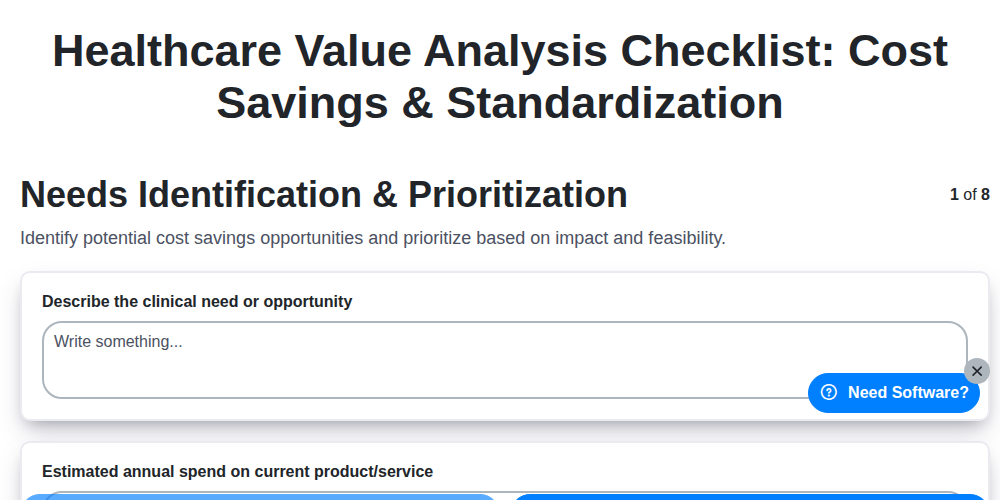
Table of Contents
- Introduction: Why Value Analysis Matters in Healthcare
- 1. Needs Identification & Prioritization: Defining Your Requirements
- 2. Supplier Evaluation & Selection: Finding the Best Partners
- 3. Contract Negotiation & Management: Securing Favorable Terms
- 4. Product Standardization & Rationalization: Reducing Complexity
- 5. Process Improvement & Workflow Optimization: Streamlining Operations
- 6. Cost Analysis & Performance Tracking: Measuring Your Success
- 7. Stakeholder Communication & Adoption: Building Consensus
- 8. Compliance & Regulatory Review: Ensuring Adherence
- 9. Leveraging Data for Continuous Improvement
- 10. Common Pitfalls to Avoid in Value Analysis
- Conclusion: A Sustainable Approach to Healthcare Value
- Resources & Links
TLDR: Want to cut healthcare costs and improve processes? This checklist guides you through the Value Analysis process - from identifying needs and picking the best suppliers to standardizing products and tracking results. It's your roadmap to better value, reduced spending, and a more efficient healthcare environment.
Introduction: Why Value Analysis Matters in Healthcare
Healthcare is facing unprecedented pressure to deliver high-quality care while managing rising costs. Value Analysis (VA) offers a structured approach to achieve this delicate balance. It's more than just finding the cheapest option; it's about maximizing the value received for every dollar spent. Value, in this context, considers not only price but also quality, safety, efficacy, and patient satisfaction. A robust Value Analysis program can identify opportunities for significant cost savings, standardize product usage, improve workflows, and ultimately, enhance patient outcomes. In today's healthcare landscape, implementing a systematic and comprehensive Value Analysis process is no longer a 'nice-to-have' - it's a necessity for sustained financial health and continued excellence in patient care. This checklist provides a roadmap to build and maintain a successful program.
1. Needs Identification & Prioritization: Defining Your Requirements
The foundation of any successful Healthcare Value Analysis (HVA) program lies in clearly identifying and prioritizing the needs of your organization. Jumping into supplier evaluations or contract negotiations without a solid understanding of what you need is a recipe for wasted time and resources.
This initial phase isn't just about recognizing that something might be better. It's a structured process involving several key steps:
- Gather Input from Key Stakeholders: Engage clinicians, nurses, procurement, finance, and other relevant departments. Conduct interviews, surveys, or focus groups to understand their challenges, unmet needs, and desired outcomes. Don't underestimate the power of frontline feedback!
- Define Clinical and Operational Requirements: Document the specific functionality, performance characteristics, and safety standards that any potential product or service must meet. Be detailed - vague descriptions lead to subjective evaluations later.
- Prioritize Based on Impact & Urgency: Not every need can be addressed simultaneously. Use a standardized prioritization matrix (e.g., impact vs. effort, risk vs. benefit) to rank needs based on clinical impact, financial benefit, risk mitigation, and alignment with organizational goals. Consider factors like patient safety, regulatory compliance, and the potential for improved workflow.
- Document Rationale: Clearly explain why each need is prioritized. This documentation is invaluable for justifying decisions and communicating the value of HVA to stakeholders.
- Regularly Review and Update: Needs evolve. Establish a process for periodically reviewing and updating the list of prioritized needs to ensure it remains relevant and reflects the changing landscape of healthcare.
By diligently focusing on this foundational step, you're setting the stage for a targeted and effective HVA program that delivers tangible value.
2. Supplier Evaluation & Selection: Finding the Best Partners
Choosing the right suppliers is critical to a successful Healthcare Value Analysis (HVA) program. It's more than just finding the lowest price; it's about establishing partnerships that deliver consistent quality, reliability, and innovation while aligning with your organization's strategic goals. This section outlines a robust supplier evaluation and selection process.
1. Defining Evaluation Criteria: Before you even begin looking at potential suppliers, clearly define your criteria. These should go beyond price and encompass factors like:
- Quality & Performance: Review product specifications, clinical performance data, and user feedback. Request samples for evaluation.
- Financial Stability: Assess the supplier's financial health to ensure long-term viability and reliability.
- Reputation & References: Check their reputation within the healthcare industry. Obtain and check references from other healthcare facilities.
- Service & Support: Evaluate responsiveness, technical support, training offerings, and availability of on-site personnel.
- Innovation & Technology: Consider their investment in research and development and their ability to offer innovative solutions.
- Security & Data Privacy: Critically important, especially with connected devices and data sharing. Verify compliance with HIPAA and other relevant regulations.
- Sustainability & Ethical Practices: Increasingly important, demonstrating alignment with organizational values.
2. Request for Proposal (RFP) Process: A well-crafted RFP is essential. It should clearly outline your needs, evaluation criteria, and required information from potential suppliers. Encourage detailed responses that showcase their capabilities and address your specific challenges.
3. Scoring & Weighting: Develop a standardized scoring system to objectively evaluate proposals. Assign weights to each criterion based on their relative importance to your organization. This ensures consistent and defensible decision-making.
4. Site Visits & Demonstrations: Where possible, conduct site visits to supplier facilities to assess their operations and quality control processes. Request product demonstrations to evaluate usability and functionality.
5. Sample Evaluation & Clinical Input: Involve clinical staff in the evaluation process. Their input is invaluable in assessing product performance and suitability for patient care.
6. Total Cost of Ownership (TCO) Analysis: Don't solely focus on the unit price. Calculate the TCO, which includes factors like installation costs, training expenses, maintenance fees, and potential complications.
7. Multiple Sourcing Considerations: Explore the benefits of multiple sourcing - having more than one supplier for critical items - to mitigate supply chain risks and promote competitive pricing.
3. Contract Negotiation & Management: Securing Favorable Terms
Effective contract negotiation and ongoing management are critical for maximizing the benefits of your Value Analysis process. It's not enough to simply select a supplier; you need to establish a robust framework for securing favorable terms and ensuring consistent adherence throughout the contract lifecycle.
Beyond the Price Tag: While price is undoubtedly important, a truly successful contract goes far beyond simply achieving the lowest cost. Consider these key areas during negotiation:
- Total Cost of Ownership (TCO): Don't just focus on the initial purchase price. Factor in installation, training, maintenance, consumables, disposal costs, and potential downtime. A slightly higher upfront cost can be more cost-effective long-term if it reduces operational burdens.
- Service Level Agreements (SLAs): Define clear expectations for product performance, response times, and support. Include penalties for non-compliance. This protects your organization from unexpected delays or substandard quality.
- Payment Terms: Negotiate favorable payment schedules that align with your cash flow needs. Consider early payment discounts.
- Volume Discounts & Rebates: Leverage your consolidated purchasing power to secure tiered pricing or performance-based rebates.
- Escalation Procedures: Establish a clear process for resolving disputes or addressing issues that may arise.
- Renewal Clauses & Price Adjustment Mechanisms: Understand how pricing will adjust over the contract's duration and include provisions to review and renegotiate terms periodically.
Ongoing Management is Key: Contract management isn't a one-and-done activity.
- Regular Reviews: Conduct periodic reviews to ensure the contract remains aligned with your evolving needs and market conditions.
- Performance Monitoring: Track supplier performance against agreed-upon SLAs and contractual obligations.
- Relationship Management: Cultivate a strong working relationship with your key suppliers. Open communication fosters collaboration and problem-solving.
- Contract Compliance: Ensure adherence to all contractual terms and conditions. Document any deviations and address them promptly.
- Expiration & Renewal Planning: Start planning for contract renewals well in advance to avoid disruptions in supply or potential price increases.
4. Product Standardization & Rationalization: Reducing Complexity
Product standardization and rationalization is more than just reducing the number of items you buy - it's a strategic approach to optimize your healthcare value analysis (HVA) process and drive significant cost savings. A sprawling, unmanaged product portfolio creates unnecessary complexity, increases purchasing costs, and complicates clinical workflows.
Why Standardize?
- Reduced Procurement Costs: Buying in bulk of standardized products leverages volume discounts and simplifies ordering.
- Improved Inventory Management: Less variety means easier tracking, reduced storage needs, and fewer stockouts.
- Enhanced Clinical Efficiency: Clinicians spend less time searching for the right product and more time focused on patient care.
- Simplified Training: Fewer products to learn equates to faster and more efficient staff training.
- Increased Visibility: A streamlined portfolio provides clearer insights into spending patterns and potential areas for further optimization.
How to Approach Rationalization:
- Identify Redundancies: Catalog all products currently used, noting overlaps in function and intended use.
- Define Clinical Needs: Collaborate with clinical stakeholders to pinpoint essential product characteristics and performance criteria.
- Establish Standardized Options: Based on clinical needs and available products, identify 2-3 standardized options that meet those requirements. Consider factors like clinical efficacy, safety, and ease of use.
- Communicate and Transition: Clearly communicate the standardization process to all stakeholders, explaining the rationale and providing training as needed. Offer a phased transition plan to minimize disruption.
- Regular Review: Standardization isn't a one-time event. Periodically review the standardized products to ensure they continue to meet clinical needs and offer optimal value. New technologies or evolving clinical practices may necessitate adjustments.
By embracing product standardization and rationalization, healthcare organizations can unlock substantial cost savings, improve operational efficiency, and ultimately, enhance patient care.
5. Process Improvement & Workflow Optimization: Streamlining Operations
Value analysis isn't just about finding cheaper products; it's about fundamentally improving how healthcare organizations acquire and utilize those products. This is where process improvement and workflow optimization become critical. Often, existing processes are riddled with inefficiencies - redundant approvals, manual ordering, inconsistent usage patterns, and a lack of clear responsibility.
To achieve truly sustainable cost savings and standardization, a thorough review and redesign of workflows is essential. Consider these strategies:
- Map Current Processes: Visually depict the entire procurement cycle, from initial need identification to product disposal. Identify bottlenecks, redundancies, and areas prone to error.
- Standardize Ordering & Approval Pathways: Implement clear, documented processes for requisitioning and approving purchases. This can involve electronic ordering systems, automated approval routing, and defined spending thresholds.
- Centralize Purchasing: Consolidating purchasing responsibilities can improve leverage, reduce variation, and enhance control. A centralized team can identify and enforce standardized practices across departments.
- Leverage Technology: Explore electronic procurement systems (e-procurement) and inventory management software to automate tasks, improve visibility, and reduce manual effort.
- Implement Just-in-Time (JIT) Inventory: Where appropriate, adopt JIT inventory practices to minimize storage costs, reduce waste, and ensure timely availability of supplies.
- Cross-Functional Collaboration: Regularly engage clinicians, supply chain professionals, finance staff, and other key stakeholders to identify and resolve workflow issues collaboratively.
By focusing on process optimization, healthcare organizations can not only reduce costs but also enhance operational efficiency, improve staff satisfaction, and ultimately, contribute to better patient care.
6. Cost Analysis & Performance Tracking: Measuring Your Success
Value analysis isn't just about initial savings; it's about sustained improvements. Robust cost analysis and performance tracking are crucial for demonstrating the program's ROI and identifying areas for further optimization. Here's how to approach it:
Establish Baseline Metrics: Before implementing any changes, establish a clear baseline. What are your current costs for the product or service category under review? What's the current utilization rate? What are the associated labor costs? Accurate baseline data is essential for measuring progress.
Key Performance Indicators (KPIs) to Monitor:
- Total Cost of Ownership (TCO): Go beyond the unit price. Include acquisition costs, maintenance, training, disposal, and any hidden expenses.
- Unit Cost Reduction: Track the percentage decrease in cost per unit or service.
- Utilization Rates: Are you using standardized products more efficiently? Monitor usage patterns.
- Labor Time Savings: Standardizing can often reduce the time clinicians and staff spend locating, ordering, and managing supplies.
- Inventory Levels: Reduced complexity and standardization should lead to lower inventory holding costs.
- Contract Compliance: Ensure adherence to negotiated pricing and terms.
- Clinician/Staff Satisfaction: While often overlooked, this is a valuable indicator of adoption and workflow acceptance.
Reporting & Review: Regularly (e.g., quarterly, annually) generate reports that compare current performance against the baseline. Present these findings to stakeholders. Identify trends, outliers, and areas where the program is underperforming. Don't be afraid to revisit decisions or adjust strategies based on data.
Tools & Technology: Consider leveraging data analytics tools to automate data collection, reporting, and trend analysis. This will streamline the process and provide more actionable insights.
7. Stakeholder Communication & Adoption: Building Consensus
Value analysis initiatives don't succeed in a vacuum. They require buy-in and active participation from a diverse range of stakeholders - clinicians, nurses, procurement, finance, IT, and leadership, to name a few. Lack of communication or resistance to change can derail even the most meticulously planned strategy.
This section isn't just about informing stakeholders; it's about building consensus and fostering a shared understanding of the value analysis process and its benefits. Here's how to approach it:
- Early and Frequent Updates: Begin communicating before the value analysis process even kicks off. Explain the goals, the timeline, and the expected outcomes. Regularly update stakeholders throughout the process with clear, concise reports - avoid jargon and focus on the "what's in it for them" angle.
- Diverse Communication Channels: Recognize that different stakeholders prefer different communication methods. Utilize a mix of methods: newsletters, departmental meetings, dedicated intranet pages, short presentations, and even one-on-one conversations.
- Address Concerns Proactively: Anticipate potential concerns and address them head-on. This might include fears about job security, impact on patient care, or perceived loss of control over product selection. Be transparent and offer solutions.
- Champion Identification: Identify and empower champions within each department to advocate for the value analysis initiative and help drive adoption.
- Feedback Mechanisms: Establish clear channels for stakeholders to provide feedback and voice concerns. Actively listen and incorporate feedback where possible. This shows that their input is valued and helps build trust.
- Celebrate Successes: Publicly acknowledge and celebrate successes along the way. Highlight the positive impact on patient care, cost savings, and operational efficiency. This reinforces the value of the initiative and motivates continued participation.
Ultimately, stakeholder communication and adoption is about creating a culture of collaboration and shared responsibility for achieving healthcare value.
8. Compliance & Regulatory Review: Ensuring Adherence
Healthcare Value Analysis (VA) isn't just about finding the best products and negotiating favorable contracts; it's also about ensuring everything aligns with relevant regulations and compliance standards. This step is critical to avoiding legal repercussions, maintaining patient safety, and upholding ethical practices.
This review goes beyond simply ticking boxes. It involves a thorough assessment of all products and processes included within the VA process. This includes:
- Federal and State Regulations: Staying abreast of changes in regulations like the Anti-Kickback Statute, Stark Law, and state-specific procurement laws is paramount.
- Accreditation Standards: Hospitals and healthcare systems often have accreditation requirements (e.g., The Joint Commission) that mandate specific procurement and standardization processes.
- Product-Specific Regulations: Certain medical devices and pharmaceuticals have unique regulatory requirements regarding usage, storage, and documentation.
- GPO Agreements: Carefully review Group Purchasing Organization (GPO) contracts to ensure they comply with all relevant laws and regulations.
- Internal Policies: Align VA decisions with the organization's internal procurement, ethics, and conflict of interest policies.
Documenting this review process - including who performed it, when, and what was assessed - is essential. Regular updates and training for the VA team are also crucial to maintaining compliance in a constantly evolving regulatory landscape. Failing to prioritize compliance can expose the healthcare organization to significant risks, making this step a non-negotiable element of a robust Value Analysis program.
9. Leveraging Data for Continuous Improvement
Value Analysis isn't a one-and-done exercise; it's a journey of ongoing optimization. The most impactful Value Analysis programs are fueled by robust data collection and analysis. We've already established baseline costs and performance metrics, but now it's time to actively monitor and refine.
This means regularly tracking key performance indicators (KPIs) tied to each element of the Value Analysis process. Examples include:
- Product Usage Rates: Are we using standardized products as intended, or are clinicians reverting to alternatives?
- Cost Savings Realized: Consistently compare actual cost savings against projected savings from contract negotiations and standardization efforts.
- Clinical Outcomes: While Value Analysis primarily focuses on cost, monitoring clinical outcomes related to specific products or processes can highlight opportunities for both cost and quality improvements.
- Contract Compliance: Track adherence to contract terms, identify potential areas of leakage, and assess the effectiveness of managed service agreements.
- Stakeholder Satisfaction: Periodically survey clinicians and other stakeholders to gauge satisfaction with standardized products and processes.
Utilize data visualization tools to easily identify trends and outliers. Regularly review these data points in Value Analysis Committee meetings. Don't be afraid to course-correct! If data reveals that a standardized product isn't meeting clinical needs, or that a contract isn't delivering the promised savings, revisit the decision-making process and make necessary adjustments. Automated dashboards and reporting can streamline this process, ensuring that the Value Analysis program remains dynamic and responsive to evolving needs. The true power of Value Analysis lies in its ability to adapt and improve over time, driven by actionable data insights.
10. Common Pitfalls to Avoid in Value Analysis
Value Analysis (VA) is a powerful tool, but it's not foolproof. Falling into common pitfalls can derail your efforts and diminish potential cost savings and standardization. Here are a few to watch out for:
- Lack of Cross-Functional Collaboration: VA thrives on diverse perspectives. Siloed departments operating independently can lead to missed opportunities and resistance to change. Ensure representation from procurement, clinical, finance, and other key areas.
- Over-Reliance on Price Alone: Focusing solely on the lowest price often ignores crucial factors like product quality, clinical performance, total cost of ownership (including training and maintenance), and supplier reliability.
- Ignoring Clinical Input: Clinical staff are the end-users. Disregarding their needs and preferences can lead to product rejection, decreased efficiency, and ultimately, wasted investment.
- Insufficient Data & Analysis: Value analysis demands robust data. Guesswork or relying on anecdotal evidence will lead to inaccurate conclusions and flawed decisions.
- Resistance to Change: Introducing new products or processes often faces resistance. Effective communication, training, and stakeholder buy-in are crucial.
- Lack of a Formalized Process: An ad-hoc approach makes it difficult to track progress, measure impact, and maintain consistency. A well-defined VA process is essential.
- Neglecting Standardization Goals: The value of standardization isn't just about cost - it's also about improved efficiency, reduced inventory, and streamlined workflows. Don't lose sight of this.
- Poor Contract Management: Negotiated savings can evaporate without diligent contract monitoring and adherence.
- Ignoring Lifecycle Costs: Failing to consider the full lifecycle costs of a product, including disposal or replacement, can lead to hidden expenses.
- Lack of Ongoing Monitoring: Value analysis isn't a one-time event. Regular monitoring and performance reviews are critical to ensure sustained value.
Conclusion: A Sustainable Approach to Healthcare Value
Implementing a robust Healthcare Value Analysis (HVA) program isn't a one-time project; it's a journey towards sustained financial health and improved patient care. By consistently applying the steps - from identifying needs and selecting suppliers to standardizing products and tracking performance - healthcare organizations cultivate a culture of value. This proactive approach moves beyond reactive cost-cutting, fostering innovation and ensuring resources are allocated where they deliver the greatest impact. Embracing a continuous improvement mindset, regularly revisiting and refining your HVA processes, will solidify its effectiveness and drive long-term, sustainable value for your organization and, most importantly, your patients. Remember, the ultimate goal isn't just about saving money; it's about delivering the highest quality care at the most appropriate cost.
Resources & Links
- American Hospital Association (AHA): The AHA provides resources, data, and advocacy for hospitals and healthcare systems. They offer insights into value-based care, cost management, and best practices which directly align with the principles of value analysis. Check their publications and reports for relevant case studies and frameworks.
- Healthcare Purchasing Leaders Association (HPLA): HPLA is a professional organization for supply chain and procurement professionals in healthcare. Their website offers educational resources, events, and networking opportunities. They frequently address value analysis topics and best practices for contract negotiation and supplier management.
- Providence Health & Services - Supply Chain Management: While a specific, comprehensive guide isn't available, examining healthcare provider supply chain models, like Providence's, can illustrate how value analysis principles are embedded within broader organizational strategies. Look for mentions of standardization and cost management.
- U.S. Government Publishing Office (GPO): GPO provides access to federal government reports and publications. Searching for keywords like 'healthcare value analysis,' 'procurement,' or 'standardization' may yield relevant reports and guidelines from agencies like CMS or HHS.
- Becker's Hospital Review: Becker's publishes articles and reports on healthcare management, including topics related to cost reduction, procurement, and supply chain optimization. Search their site for relevant content using keywords like 'value analysis,' 'procurement,' and 'cost savings.'
- Supply Chain Dive: This website offers news and analysis about supply chain trends, including those impacting healthcare. It can provide context on evolving supplier relationships, technology adoption, and data analytics in the healthcare supply chain, all of which relate to value analysis.
- The Lean Enterprise Institute: Value analysis frequently incorporates Lean principles to improve processes and eliminate waste. The Lean Enterprise Institute provides resources and training on Lean methodologies for process improvement and workflow optimization. Relates strongly to section 5.
- Centers for Medicare & Medicaid Services (CMS): CMS drives value-based care initiatives. Understanding their guidelines and regulations is critical for compliance and alignment with national healthcare goals. Research policies related to bundled payments and quality metrics, which incentivize value analysis.
- Institute for Supply Management (ISM): ISM provides training and certifications in procurement and supply management. Their resources on contract negotiation, supplier evaluation, and performance measurement are applicable to the content in sections 2 & 3.
- Association of Healthcare Media and Marketing: While primarily focused on healthcare marketing, AHMM often publishes case studies and articles relating to successful healthcare operational changes, sometimes including successful value analysis implementations. Useful for illustrating stakeholder communication (section 7).
- Healthcare Information and Management Systems Society (HIMSS): HIMSS focuses on healthcare technology and data management. They offer insights on leveraging data analytics for cost optimization and performance tracking, especially relevant to section 9.
- American Association of Medical Dosimetrists (AAMD): While specific to radiation oncology, AAMD offers resources and standards for managing medical supplies and equipment, providing a use-case illustration of how standardized processes in complex environments contribute to value and cost savings. Relevant for demonstrating a deeper look at standardization.
Frequently Asked Questions
What is Healthcare Value Analysis (HVA)?
Healthcare Value Analysis (HVA) is a systematic process for evaluating the benefit and value of healthcare products and services. It goes beyond just price to consider quality, outcomes, safety, and overall contribution to patient care and organizational goals. It aims to optimize spending and standardize practices.
Why is an HVA checklist important?
An HVA checklist provides a structured approach to HVA, ensuring consistency, preventing overlooked factors, and providing documentation for decision-making. It helps standardize the process across departments, reduces errors, and facilitates cost savings by identifying potential areas for optimization.
Who should use this checklist?
This checklist is designed for a broad range of healthcare professionals involved in procurement, supply chain management, clinical decision-making, and finance, including Value Analysis Committees, Supply Chain Managers, Clinicians (nurses, physicians, therapists), and Finance Team members.
What kind of products/services should be included in an HVA?
Almost any product or service used in healthcare can be evaluated. Common areas include medical supplies, pharmaceuticals, implants, capital equipment, contracts, and outsourced services. The checklist helps guide which items are appropriate for evaluation based on spend, impact, and potential for improvement.
What are the key categories considered in the checklist?
The checklist typically covers areas like clinical necessity, product performance, vendor capabilities, contract terms, total cost of ownership (including hidden costs like labor and waste), patient safety, and impact on quality outcomes.
What does 'Total Cost of Ownership' (TCO) mean in the context of HVA?
TCO considers all costs associated with a product or service over its lifecycle, not just the initial purchase price. This includes factors like installation, maintenance, training, disposal, waste, and potential complications that could increase costs later.
How does standardization benefit healthcare organizations through HVA?
Standardization reduces product variation, simplifies inventory management, streamlines processes, improves staff training efficiency, and can lead to volume discounts from vendors. It also enhances patient safety through consistent product usage.
How can I adapt this checklist to fit my organization's specific needs?
The checklist is a template. You can add, remove, or modify criteria to align with your organization's policies, priorities, and resource constraints. Consider specific clinical specialties or frequently used items for targeted assessments.
What's the difference between Value Analysis and Value Engineering?
While often used interchangeably, Value Engineering (VE) is a more structured methodology that involves a team of experts to functionally analyze a product or service and identify ways to improve its value. Value Analysis is a more general term focusing on overall value assessment.
How do I determine which items to prioritize for HVA?
Prioritize items based on factors like: Total Spend (high-spend items have the greatest potential impact), Clinical Significance (items critical for patient safety or outcomes), Frequency of Use, and Potential for Standardization or Cost Reduction.
Comments
There are no comments yet. Be the first to add one!
Healthcare Management Solution Demo
Streamlining healthcare operations and improving patient care? ChecklistGuro's Work OS platform simplifies everything from patient scheduling and billing to compliance and staff management. Enhance efficiency, reduce administrative burden, and focus on what matters most: your patients. Learn how ChecklistGuro can transform your healthcare organization!
Related Articles
The Ultimate Healthcare Patient Satisfaction Survey Checklist Template
Mastering Healthcare Inventory: Your Par Level Checklist Template
Mastering Hand Hygiene: Your Compliance Checklist Template
Protecting Patients: Your Fire Safety Checklist for Patient Areas
Your Ultimate Healthcare Construction Checklist Template
Mastering Hand Hygiene: Your Compliance Checklist Template
Your Radiology Equipment Maintenance Checklist Template

Your Ultimate Guide to Healthcare Waste Management: A Checklist Template
Need help with
Healthcare?
Have a question? We're here to help. Please submit your inquiry, and we'll respond promptly.