Hospital Medical Equipment Maintenance Checklist Template
Published: 10/03/2025 Updated: 08/26/2026
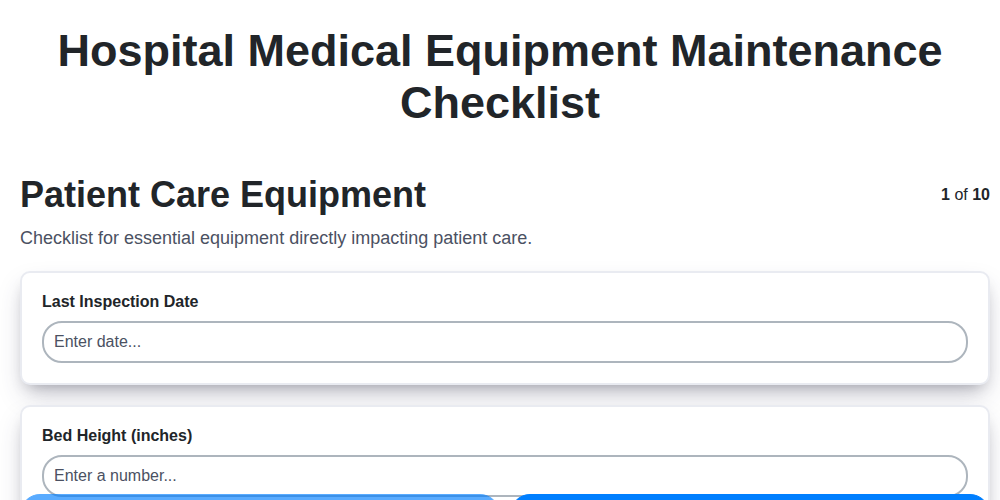
Table of Contents
- Introduction: Why a Maintenance Checklist is Essential
- Understanding Regulatory Requirements & Compliance
- Template Overview: Key Sections & Categories
- Patient Care Equipment: A Detailed Checklist
- Diagnostic Imaging: Ensuring Image Quality and Safety
- Respiratory Therapy Equipment: Maintaining Life-Saving Function
- Sterilization Equipment: Guaranteeing Infection Control
- Emergency & Life Support Systems: Critical Function Verification
- Monitoring Devices & Patient Safety
- Laboratory Equipment: Accuracy and Reliability
- HVAC & Environmental Control: Maintaining Optimal Conditions
- Resources & Links
TLDR: Get a free, customizable checklist template to ensure your hospital's medical equipment is properly maintained! This template covers everything from ventilators to diagnostic imaging, helping you stay compliant, reduce downtime, and ultimately, keep patients safe. Download it now to streamline your maintenance process!
Introduction: Why a Maintenance Checklist is Essential
Imagine a critical patient requiring immediate ventilation. What if the ventilator malfunctions? Or a diagnostic scan revealing a subtle anomaly-only to be compromised by faulty equipment? These scenarios highlight a stark reality: the reliability of medical equipment directly impacts patient safety and the quality of care delivered.
A comprehensive maintenance checklist isn't merely a procedural formality; it's a vital safety net. It's the documented process that proactively minimizes risks, extends the lifespan of expensive assets, and ultimately, ensures that clinicians can confidently rely on the tools they need to provide the best possible care. Beyond regulatory compliance (and it's crucial for that too!), a well-executed checklist fosters a culture of responsibility, improves operational efficiency, and safeguards your hospital's reputation. Neglecting this essential practice isn't just a risk; it's a disservice to your patients and your staff.
Understanding Regulatory Requirements & Compliance
Maintaining hospital medical equipment isn't just about best practices; it's a legal and ethical obligation driven by stringent regulatory requirements. Understanding these bodies and their standards is critical for ensuring patient safety and avoiding potential penalties. Here's a breakdown of the key players:
The Joint Commission (TJC): Perhaps the most widely recognized, TJC accreditation is essential for most US hospitals. Their Environment of Care standards, particularly those related to Medical Equipment Management, dictate rigorous processes for acquisition, maintenance, and disposal. Expect detailed requirements for maintenance programs, competency assessments, and documentation. Non-compliance can jeopardize accreditation.
FDA (Food and Drug Administration): The FDA regulates medical devices and establishes performance standards. Recalls are frequent and manufacturers are obligated to report incidents. Hospitals must have systems for tracking recalls and ensuring affected equipment is addressed promptly. 510(k) clearance and PMA (Premarket Approval) processes are important considerations for new equipment.
NFPA (National Fire Protection Association): NFPA standards, particularly NFPA 99 (Health Care Facilities Code), address electrical safety, medical gas systems, and other critical infrastructure components. Regular inspections and adherence to NFPA guidelines are vital for fire safety and operational integrity.
State and Local Regulations: Don't overlook state and local regulations, which can vary significantly. These often address licensing, inspection protocols, and specific equipment requirements. Researching and complying with these regional rules is a crucial step.
ISO Standards: While often voluntary, ISO 9001 (Quality Management Systems) and ISO 13485 (Medical Devices - Quality Management Systems) can demonstrate a commitment to quality and continuous improvement. These frameworks provide a structured approach to equipment management.
Staying Current: Regulations are constantly evolving. Establish a system for monitoring regulatory updates, attending industry conferences, and participating in continuing education programs to ensure ongoing compliance. Proactive engagement with regulatory bodies can also help anticipate future requirements and adapt your program accordingly.
Template Overview: Key Sections & Categories
Our comprehensive template is designed to be a living document, adaptable to your hospital's unique needs. Here's a breakdown of the key sections and categories included, providing structure and clarity for your maintenance program.
I. Equipment Identification & Record Keeping: Each piece of equipment is assigned a unique identifier, allowing for easy tracking and record-keeping. This section includes fields for equipment name, model number, serial number, location within the hospital, and responsible department.
II. Preventative Maintenance Schedule: This core section details the recommended maintenance schedule for each equipment category. Frequencies are categorized (Daily, Weekly, Monthly, Quarterly, Annually, Bi-Annually), allowing for flexible scheduling and task assignment. Manufacturer recommendations are prominently considered.
III. Detailed Maintenance Tasks: For each scheduled maintenance point, specific tasks are outlined with step-by-step instructions. These instructions are designed to be clear and actionable, facilitating consistent performance by trained personnel. Checkboxes are included for easy task completion tracking.
IV. Category-Specific Checklists: The template breaks down equipment into ten distinct categories:
- Patient Care Equipment: (Beds, Pumps, Lifts) - Focus on safety and functionality.
- Diagnostic Imaging: (X-Ray, MRI, CT) - Emphasis on QA and calibration.
- Respiratory Therapy: (Ventilators, Nebulizers) - Critical for patient safety.
- Sterilization Equipment: (Autoclaves) - Ensuring sterility and efficacy.
- Emergency Power Systems: (Generators, UPS) - Readiness for emergencies.
- Life Support Systems: (Dialysis, Heart-Lung) - Highest level of scrutiny.
- Monitoring Devices: (Patient Monitors) - Accuracy and alarm functionality.
- Mobility & Transfer: (Wheelchairs, Gurneys) - Patient safety and ease of use.
- Laboratory Equipment: (Analyzers) - Reliability of results.
- HVAC & Environmental Controls: - Maintaining a safe and stable environment.
V. Documentation & Sign-Off: A dedicated area allows for detailed recording of maintenance activities, including date, technician initials, any issues encountered, and corrective actions taken. A clear sign-off section ensures accountability.
VI. Revision History: This section tracks all updates and modifications to the template, ensuring you're always using the most current version.
Patient Care Equipment: A Detailed Checklist
Patient care equipment forms the backbone of effective and compassionate care, and its consistent functionality is paramount. This detailed checklist covers essential maintenance tasks, designed to minimize downtime and ensure patient safety. Frequency recommendations (Daily, Weekly, Monthly, Annually) are guidelines; adjust based on usage and manufacturer specifications.
1. Patient Beds:
- Daily: Visual inspection of bed frame, side rails, and mattress for damage. Verify proper operation of height adjustment, Trendelenburg/Reverse Trendelenburg, and head-of-bed articulation. Test bed exit alarms.
- Weekly: Lubricate bed frame joints (as needed). Check and tighten bed exit alarm sensors. Clean and disinfect all surfaces.
- Annually: Comprehensive mechanical inspection. Verify electrical safety and grounding. Calibrate motor functions.
2. IV Pumps:
- Daily: Visual inspection for damage or leaks. Verify proper fluid infusion rates. Check occlusion alarm functionality.
- Weekly: Calibrate infusion accuracy using a calibrated test device. Clean and disinfect pump surfaces.
- Annually: Full system performance evaluation and preventative maintenance as per manufacturer guidelines.
3. Patient Lifts:
- Daily: Inspect slings for tears or wear. Verify proper sling attachment. Test lift and lower functions.
- Weekly: Clean and disinfect lift surfaces and sling bars. Check battery charge.
- Annually: Mechanical inspection of lift mechanism. Verify safety certifications.
4. Wheelchairs & Stretchers:
- Daily: Inspect tires for proper inflation and wear. Verify brake functionality. Check upholstery for damage.
- Weekly: Lubricate wheel bearings (as needed). Clean and disinfect all surfaces.
- Annually: Mechanical inspection of frame and components. Verify safety labels.
5. Nebulizers & Suction Units:
- Daily: Clean and disinfect nebulizer chambers and suction canisters. Verify proper suction pressure.
- Weekly: Replace tubing and filters.
- Annually: Calibrate suction pressure monitoring device. Inspect and replace seals as needed.
6. Oxygen Concentrators:
- Daily: Visual inspection of unit for damage or leaks. Check oxygen output using a calibrated analyzer.
- Monthly: Replace air filters (according to manufacturer recommendations).
- Annually: Full system performance evaluation and preventative maintenance.
Documentation is Key: Meticulously document all maintenance activities, including date, technician initials, and any findings. This creates a traceable history and supports proactive maintenance planning.
Diagnostic Imaging: Ensuring Image Quality and Safety
Diagnostic imaging - encompassing modalities like X-ray, MRI, CT, and ultrasound - forms the cornerstone of modern patient care. Beyond simply generating images, these systems must deliver accurate images, consistently and safely. A robust maintenance program is paramount for achieving both.
The Critical Nature of QA & PM
Quality Assurance (QA) and Preventative Maintenance (PM) for diagnostic imaging equipment aren't merely recommended; they are essential for patient safety, diagnostic reliability, and regulatory compliance. Inadequate maintenance can lead to inaccurate diagnoses, unnecessary radiation exposure, and potential equipment failure.
Key Maintenance Areas:
- Radiation Output Monitoring: Rigorous monitoring of radiation dose is critical to minimize patient exposure while maintaining image quality. This includes beam alignment checks for X-ray systems and meticulous calibration of dose settings.
- Image Quality Validation: Regular testing to confirm image clarity, resolution, and contrast. This might involve phantom testing and comparison to established standards. Maintaining consistent image quality across different exams is crucial.
- Magnetic Field Stability (MRI): For MRI systems, monitoring the stability of the magnetic field is paramount. Any deviations can significantly impact image quality and potentially pose a safety risk.
- Cooling System Maintenance: Many modalities, particularly CT and MRI, generate significant heat. Regular inspection and maintenance of cooling systems are vital to prevent overheating and ensure optimal performance.
- Software Updates: Keep firmware and software up-to-date. Updates often include safety enhancements, performance improvements, and bug fixes.
- Detector Calibration: Regular calibration of detectors is necessary to ensure accurate signal acquisition and reliable image reconstruction.
- Leak Testing (Helium, etc.): Certain equipment relies on cryogens (like helium) - regular leak testing is vital.
- Emergency Procedures Review: Staff should be regularly trained and drilled on emergency procedures related to each modality.
The Importance of Documentation: Detailed records of all QA and PM activities are essential for tracking performance, identifying trends, and demonstrating compliance with regulatory requirements.
Respiratory Therapy Equipment: Maintaining Life-Saving Function
Respiratory therapy equipment is, quite literally, a lifeline for countless patients. From ventilators supporting failing lungs to nebulizers delivering crucial medications, the reliability of this equipment is non-negotiable. A proactive and meticulous maintenance program is essential to ensure these devices function flawlessly when needed most.
Beyond the Routine: Critical Checks
While daily visual inspections and basic cleaning are vital, the maintenance of respiratory therapy equipment demands a deeper dive. Here's a closer look at critical maintenance tasks:
- Ventilator Circuit Leak Testing: This is arguably the most important routine check. Even minor leaks can compromise ventilation and put patients at risk. Regular testing ensures consistent and accurate delivery of respiratory support. Follow manufacturer protocols, utilizing appropriate testing devices and documenting results diligently.
- Filter Replacement: Filters are the first line of defense against contaminants. Regular replacement, adhering to the manufacturer's recommended schedule, prevents the introduction of bacteria and particulate matter into the patient's airways. Document filter types and replacement dates.
- Calibration of Gas Delivery: Accurate gas delivery is paramount for patient safety and efficacy. Calibration procedures, ideally performed by qualified personnel, must be meticulously followed and documented.
- Alarm Functionality Testing: Malfunctioning alarms can delay critical interventions and have devastating consequences. Regularly test all alarm parameters-high and low pressure, apnea alarms, power failure alarms-and ensure audible and visual indicators are working properly.
- Humidification System Maintenance: Humidification is often crucial for patient comfort and airway protection. Regular cleaning and disinfection of humidification circuits are vital to prevent bacterial growth and biofilm formation.
- Nebulizer Performance Checks: Nebulizers require periodic checks to ensure they are delivering the correct dose of medication within an appropriate timeframe. This may involve measuring output rate and particle size.
- Power Supply Verification: Unexpected power failures can be catastrophic. Regularly verify the functionality of backup power systems and ensure proper connection and operation of all electrical components.
Documentation is Key:
Maintain detailed records of all maintenance activities, including dates, personnel involved, specific tasks performed, and any issues identified. This documentation serves as a valuable resource for tracking equipment performance, identifying trends, and ensuring accountability. Consistent and thorough documentation will also be invaluable during audits and inspections.
Sterilization Equipment: Guaranteeing Infection Control
Sterilization equipment forms a critical frontline defense against healthcare-associated infections (HAIs). These machines-including autoclaves, steam sterilizers, hydrogen peroxide sterilizers, and peracetic acid sterilizers-aren't simply appliances; they's vital components of a comprehensive infection prevention strategy. Maintaining their functionality and ensuring their effectiveness is paramount to patient safety.
Beyond routine cleaning, a robust sterilization equipment maintenance checklist includes several essential elements. Cycle validation is non-negotiable. This process, often involving biological indicators (BIs) or chemical indicators (CIs), verifies that the sterilization process actually achieves the intended level of microbial kill. Results must be meticulously documented. Equally important is regular temperature and pressure monitoring within autoclaves and steam sterilizers. Deviations from established parameters can compromise sterilization efficacy. Water quality is another key factor; improper water can lead to corrosion and inhibit sterilization.
Preventative maintenance isn't just about physical upkeep; it involves consistent adherence to manufacturer guidelines for filter replacement, lubrication, and cleaning. Detailed record-keeping is essential, documenting each cycle, validation results, and all maintenance performed. A well-structured program includes scheduled inspections, prompt repairs, and staff training on proper operation and troubleshooting. Remember, even minor inconsistencies can have significant consequences, reinforcing the need for a diligent and proactive sterilization equipment maintenance program.
Emergency & Life Support Systems: Critical Function Verification
Emergency and life support systems represent the last line of defense for critically ill patients. Their reliable operation isn't merely important; it's essential. Therefore, verification processes must be rigorous and frequently executed. Beyond routine maintenance, specialized checks are paramount to confirm immediate readiness in crisis situations.
This category demands a layered approach, incorporating both scheduled preventative measures and unscheduled response drills. Key areas of focus include:
- Generator Load Testing: Simulate power outages to confirm automatic transfer switch functionality and generator output capacity under load. Record amperage, voltage, and runtime.
- UPS (Uninterruptible Power Supply) Battery Health: Regularly test battery voltage, discharge time, and charging capabilities. Replace batteries nearing their end of life.
- Ventilator Circuit Integrity Testing: Conduct leak tests on ventilator circuits, ensuring accurate gas delivery and preventing patient desaturation. Verify alarm functionality for high/low pressure, apnea, and circuit disconnections.
- Heart-Lung Machine (HLM) Functional Checks: Perform simulated bypass circuits, meticulously verifying pump performance, oxygenation capacity, and safety mechanisms. Document pre-bypass and post-bypass parameters.
- Dialysis Machine Performance Validation: Assess water quality, membrane efficiency, and blood pump functionality. Conduct simulated dialysis runs to confirm accurate fluid removal and solute exchange.
- Emergency Response Drills: Conduct regular drills simulating power failures, equipment malfunctions, and patient deterioration. Evaluate staff preparedness and the effectiveness of emergency protocols.
Crucially, documentation of all verification activities, including test results, corrective actions taken, and responsible personnel, is non-negotiable. This documentation provides a clear audit trail and facilitates continuous improvement of emergency preparedness. Remember, the peace of mind derived from a system rigorously verified is invaluable to both patients and caregivers.
Monitoring Devices & Patient Safety
Patient monitoring devices are the vital eyes and ears of modern healthcare. They continuously feed clinicians with crucial data on a patient's physiological state, enabling timely intervention and potentially life-saving action. However, the reliability of this data hinges on meticulous maintenance and proper functionality. A malfunctioning monitor can provide inaccurate readings, delay critical alerts, or simply fail altogether, all of which directly impact patient safety.
Our hospital medical equipment maintenance checklist places a significant emphasis on the consistent and thorough assessment of these devices. This goes beyond a simple visual inspection. We focus on:
- Calibration Verification: Regular calibration ensures the accuracy of readings from ECG machines, pulse oximeters, blood pressure monitors, and more. Drift in calibration can introduce errors that lead to misdiagnosis or inappropriate treatment.
- Alarm Functionality Testing: Alarms are a critical safety net. We rigorously test all alarm settings and ensure they trigger appropriately in simulated scenarios. False alarms can lead to alarm fatigue, while failed alarms can mask a worsening patient condition.
- Electrode and Sensor Inspection: Damaged or worn electrodes and sensors can degrade signal quality and introduce noise into the data. We routinely inspect these components and replace them as needed.
- Software Updates: Patient monitoring systems often receive software updates that improve performance, add new features, and address potential security vulnerabilities. We ensure these updates are applied promptly.
- Lead Wire Integrity: Checking lead wires for cracks, breaks, or corrosion is essential to maintain reliable signal transmission.
By prioritizing the maintenance of patient monitoring devices, we reinforce our commitment to providing the highest quality and safest possible care for every patient. It's not just about keeping equipment running; it's about protecting lives.
Laboratory Equipment: Accuracy and Reliability
Laboratory equipment is the backbone of accurate diagnoses and effective treatments. Ensuring its accuracy and reliability isn't merely a matter of routine; it's a fundamental pillar of patient safety and quality healthcare. This section dives into the critical maintenance aspects of common lab instruments, going beyond simple cleaning to address performance verification and reagent management.
Key Maintenance Points:
- Performance Verification: Regularly run quality control samples and calibration standards to ensure instruments are producing consistent and accurate results. Document these runs meticulously, noting any deviations from expected values. Consult manufacturer-provided procedures for specific verification methods.
- Reagent Management: The Often-Overlooked Factor: Expired or improperly stored reagents can wreak havoc on lab results, even with perfectly calibrated equipment. Implement a strict reagent inventory system that includes expiration date tracking and proper storage conditions (temperature, light sensitivity). Rotate stock to use older reagents first.
- Calibration Schedules: Adhere to manufacturer-recommended calibration schedules. Frequency depends on the instrument, usage, and regulatory requirements. Keep detailed records of all calibration events.
- Preventive Maintenance Contracts: Consider service agreements with qualified technicians for complex instruments. These contracts often include scheduled maintenance, repairs, and software updates.
- Software Updates: Lab instruments often rely on complex software for data processing and analysis. Regularly check for and install software updates to ensure optimal performance and security.
- Component Inspection: Regularly inspect critical components like pumps, tubing, and sensors for wear and tear. Promptly replace worn parts to prevent errors and breakdowns.
- Record Keeping: Maintain detailed records of all maintenance activities, including repairs, calibrations, and component replacements. This documentation is essential for demonstrating compliance and troubleshooting issues.
HVAC & Environmental Control: Maintaining Optimal Conditions
Maintaining a consistently comfortable and safe environment within a hospital goes far beyond simple temperature regulation. HVAC (Heating, Ventilation, and Air Conditioning) and environmental controls are critical for patient and staff well-being, infection control, and even the proper functioning of sensitive medical equipment. Fluctuations in temperature and humidity can impact patient recovery times, trigger alarms on delicate machinery, and compromise the sterility of operating rooms.
Our comprehensive approach to HVAC and environmental control includes:
- Regular Filter Replacement: Dirty filters reduce airflow and compromise air quality, increasing the risk of airborne pathogens. We adhere to strict replacement schedules based on filter type and usage.
- Precise Temperature & Humidity Monitoring: Continuous monitoring ensures conditions remain within established parameters, preventing patient discomfort and equipment malfunctions. Data logging provides valuable insights for performance analysis and predictive maintenance.
- Airflow Balancing: Ensuring proper airflow throughout the facility minimizes stagnant air pockets and promotes consistent air exchange.
- Equipment Calibration: Periodic calibration of thermostats, humidistats, and other control devices guarantees accuracy and reliability.
- Preventative Maintenance Inspections: Our inspections cover everything from refrigerant levels and compressor efficiency to ductwork integrity and condensate drain lines.
- Specialized Environment Control: We provide specialized controls for critical areas like operating rooms, cleanrooms, and pharmacies, ensuring the highest level of environmental protection.
- Building Automation System (BAS) Optimization: We help optimize your BAS for improved efficiency, reduced energy consumption, and proactive issue detection.
Addressing these crucial environmental factors is more than just a maintenance task - it's an investment in patient safety, staff comfort, and operational efficiency.
Resources & Links
- U.S. Food and Drug Administration (FDA): The FDA regulates medical devices and provides guidance on device maintenance and safety. A crucial resource for understanding device classifications, recalls, and post-market surveillance, directly impacting maintenance responsibilities. Their website also has specific pages on medical device recalls.
- The Joint Commission: This organization accredits healthcare organizations and sets standards for quality and safety. Their standards often include requirements related to equipment maintenance and documentation - critical for compliance. Their resources provide insight into best practices for maintaining accreditation.
- ECRI (formerly the Engineering & Healthcare Technology Standards Collaborative): ECRI is a non-profit organization providing healthcare technology solutions, including risk management, evidence-based practices, and equipment maintenance expertise. They offer reports, webinars, and consulting services related to medical equipment safety and maintenance. Often considered a leading authority on medical equipment risk management.
- American Society of Anesthesiologists (ASA): While focused on anesthesia, ASA provides resources related to the maintenance and safety of anesthesia machines and related equipment. Important if your hospital uses anesthesia equipment.
- Association for the Advancement of Medical Instrumentation (AAMI): AAMI develops standards and provides education related to medical device safety and performance, offering valuable resources for understanding industry best practices and relevant standards for equipment maintenance.
- National Institute of Standards and Technology (NIST): NIST develops standards and guidelines for measurement and testing. While not directly healthcare-focused, their standards can influence the calibration and accuracy requirements for laboratory equipment and other medical devices.
- Centers for Disease Control and Prevention (CDC): The CDC provides guidance on infection control and prevention, which directly impacts the maintenance of sterilization equipment and other devices involved in patient care. Check their guidelines for cleaning and disinfection protocols.
- American Hospital Association (AHA): The AHA is a trade association representing hospitals and health systems. They offer resources and advocacy related to healthcare regulations and best practices, potentially including maintenance guidelines and policy examples.
- International Organization for Standardization (ISO): ISO develops and publishes international standards. Relevant ISO standards (e.g., ISO 13485 for quality management systems in medical device manufacturing) can inform maintenance programs.
- Biomedical Engineering Society (BMES): This is a professional society for biomedical engineers. Their website has resources, publications, and networking opportunities relevant to medical equipment maintenance.
Frequently Asked Questions
What is this checklist template for?
This checklist template is designed to help hospitals and medical facilities systematically maintain their medical equipment. It ensures equipment is functioning correctly, reducing downtime, improving patient safety, and extending the lifespan of valuable assets.
What types of equipment does this checklist cover?
The template is designed to be adaptable. While it includes common equipment categories (e.g., patient monitoring, diagnostic imaging, surgical equipment), you can customize it to include specific equipment based on your hospital's inventory.
How should I customize this checklist?
We encourage customization! Add specific equipment models, frequencies of maintenance (daily, weekly, monthly, annually), required checks, responsible personnel, and space for notes. Tailor it to your hospital's procedures and manufacturer recommendations.
Can I download this checklist for free?
Yes! The downloadable template is provided free of charge for hospital and healthcare facility use.
What information should be recorded in the 'Notes' section?
The 'Notes' section is for documenting any issues found during inspection, repairs made, actions taken, deviations from standard procedures, and any other relevant information for future reference.
How often should I update this checklist?
Review and update the checklist at least annually, or more frequently if there are changes in equipment, procedures, or regulatory requirements. Also update whenever manufacturer recommendations change.
What are the benefits of using a medical equipment maintenance checklist?
Using a checklist promotes compliance with regulations, improves patient safety, reduces equipment failures and downtime, extends equipment lifespan, optimizes maintenance costs, and provides a clear audit trail.
How do I ensure the checklist is used consistently across the hospital?
Establish clear procedures for checklist usage, assign responsibility for tracking and completing tasks, provide training to personnel, and regularly review completion rates to identify areas for improvement.
Comments
There are no comments yet. Be the first to add one!
Maintenance Management Solution Demo
Maximize equipment uptime & reduce costs! ChecklistGuro streamlines maintenance scheduling, work order management, & asset tracking. Prevent breakdowns, optimize performance, & extend equipment life. Manage it all with our Work OS.
Related Articles
Construction Equipment Maintenance Checklist Template

Paper vs ChecklistGuro in Facility Management
The Ultimate O&M Manual Checklist Template

Excel vs ChecklistGuro in Facility Management
Excel vs ChecklistGuro in Maintenance Management
Your Ultimate Guide to Critical Spares Management: A Checklist Template
Equipment Repair Log Template: Your Guide to Organized Maintenance
Paper vs ChecklistGuro in Maintenance Management
We can do it Together
Need help with
Maintenance Management?
Have a question? We're here to help. Please submit your inquiry, and we'll respond promptly.