How to Digitalize your Hospitality Management Processes
Published: 08.09.2026 Updated: 09.09.2026
Table of Contents
- The Cost of Manual Chaos: Why Paper-Based Hospitality is Fading
- Defining Digital Transformation in Hospitality Operations
- The Core Pillars of a Digital Hospitality Workflow
- Comparing the Top Hospitality Management Platforms for 2026
- ChecklistGuro: The Ultimate Work OS for Standardized Excellence
- How Traditional PMS and Task Managers Stack Up
- Key Features to Look for in a Hospitality Digitalization Tool
- Implementation Roadmap: Transitioning from Paper to Digital
- Conclusion: Building a Future-Proof Hospitality Ecosystem
- Resources & Links
TLDR: Moving from manual checklists to a digital Work OS is no longer optional for modern hospitality leaders. This guide explores how to transition your operations from paper-based chaos to streamlined digital workflows, compares the top-tier management software for 2026, and highlights why ChecklistGuro stands out as the premier solution for standardizing processes, ensuring compliance, and driving operational efficiency across your entire property.
The Cost of Manual Chaos: Why Paper-Based Hospitality is Fading
In the fast-paced world of hospitality, there was a time when a clipboard, a highlighter, and a stack of printed logs were considered the backbone of operational excellence. But as we navigate the complexities of 2026, relying on physical paperwork isn't just an inconvenience-it is a growing liability to your bottom line.
The Hidden Drain on Your Margins
When your management processes live on paper, your operational data is effectively trapped. Every handwritten checklist, maintenance log, and cleaning schedule exists in a silo, invisible to the leadership team until someone physically walks the floor to inspect it. This creates a massive visibility gap.
1. The Visibility Gap and Decision Paralysis
Without a digital trail, Project Managers and Operations Leads are forced to rely on gut feelings or delayed reports. By the time a lost cleaning log or an unrecorded maintenance issue is discovered, the damage to the guest experience-and your brand reputation-is already done. You cannot manage what you cannot measure in real-time.
2. The High Cost of Human Error
Manual processes are inherently prone to the forgetting factor. A staff member might miss a critical step in a room inspection or forget to log a kitchen temperature check. In a digital-first era, these small lapses lead to:
- Inconsistent Guest Experiences: The primary driver of negative reviews.
- Compliance Risks: Inability to provide instant, audit-ready proof of safety and hygiene standards.
- Increased Labor Costs: Managers spend more time chasing updates and verifying completed tasks than actually improving service.
3. The Labor Crisis and Training Friction
With the current volatility in hospitality staffing, high turnover is a reality. Relying on paper-based training and complex, unrecorded workflows makes onboarding new team members an agonizingly slow process. Digitalization allows for instant, standardized instruction that scales with your team, ensuring that even the newest hire adheres to your exact operational DNA from day one.
From Reactive to Proactive
The transition from paper to a digital Work OS isn't just about going paperless for the sake of sustainability-it's about moving from a reactive state of putting out fires to a proactive state of operational mastery. The era of the clipboard is ending; the era of real-time, actionable intelligence is here.
Defining Digital Transformation in Hospitality Operations
Digital transformation in the hospitality sector is often misunderstood as simply moving from paper to a tablet. While replacing clipboards with iPads is a great first step, true digital transformation goes much deeper. It is the fundamental integration of technology into every layer of your operational fabric-from housekeeping inspections and kitchen hygiene checks to front-desk handovers and maintenance workflows.
Beyond Digitization: The Shift to Digitalization
To understand how to scale your operations, it is vital to distinguish between digitization and digitalization:
- Digitization is the conversion of analog information into digital formats (e.g., scanning a paper checklist into a PDF). It reduces paper waste but doesn't change the underlying process.
- Digitalization is the use of digital technologies to change a business model and provide new revenue and value-producing opportunities. It involves automating workflows, enabling real-time data visibility, and creating a living ecosystem where every team member is connected.
The Impact on Operational Intelligence
In a digitalized environment, your processes become data-driven. Instead of waiting for end-of-week reports to realize a room cleaning standard wasn't met, a digitalized workflow provides instant, actionable insights.
When your processes are digitalized, you achieve three critical outcomes:
1. Real-Time Visibility
Operations Leads and Project Managers no longer need to walk the floor to find out if a task is complete. The status of every department-from F&B to Housekeeping-is visible on a centralized dashboard instantly.
2. Standardization at Scale
Digitalization ensures that the [Your Brand] Way is executed identically across every shift and every property. By embedding your Standard Operating Procedures (SOPs) directly into the digital workflow, you eliminate human error and training gaps.
3. Proactive vs. Reactive Management
Rather than reacting to guest complaints about a dirty lobby or a broken AC, a digitalized system uses automated triggers and smart checklists to flag issues before they ever reach the guest's radar.
In short, digital transformation is about moving from managing tasks to managing outcomes. It is the transition from reactive firefighting to a state of controlled, predictable, and scalable excellence.
The Core Pillars of a Digital Hospitality Workflow
To successfully transition from fragmented, manual workflows to a streamlined digital ecosystem, you cannot simply move your paper checklists to a PDF. True digitalization requires a structural shift in how data flows through your property.
A truly digitalized hospitality workflow is built upon four fundamental pillars:
1. Real-Time Visibility and Centralized Data
The biggest bottleneck in traditional management is the information lag-the time it takes for a task completed in a guest room to be communicated to the front desk or management. Digitalization eliminates this gap. A robust workflow ensures that when a housekeeping task is marked as complete in your system, the status is instantly reflected across all departments. This creates a single source of truth, preventing double-bookings, missed cleaning cycles, or forgotten maintenance requests.
2. Standardized Execution (The Digital SOP)
In hospitality, consistency is your brand. Digitalization allows you to transform static Standard Operating Procedures (SOPs) into interactive, dynamic workflows. Instead of staff relying on memory or outdated binders, digital workflows guide them through every step of a process-from room inspections to VIP arrivals-ensuring that every team member, regardless of experience level, delivers the same high standard of service.
3. Automated Accountability and Auditing
Digitalization replaces I thought someone did that with Here is the timestamped proof. A digital workflow captures the who, what, and when of every operational movement. This creates an automated audit trail that is invaluable for quality control, compliance, and training. When every task is logged, identifying bottlenecks becomes a data-driven decision rather than a guessing game.
4. Proactive vs. Reactive Management
The ultimate goal of a digitalized workflow is to move your leadership team from a state of firefighting to a state of orchestrating. By leveraging automated triggers and real-time alerts, your team can address issues before they impact the guest experience. Digitalization allows you to spot patterns-such as a recurring maintenance issue in a specific wing-enabling preventative action that saves both labor costs and reputation.
Comparing the Top Hospitality Management Platforms for 2026
When selecting the right software to power your digital transformation, it is important to look beyond simple task lists. In 2026, the best tool depends on whether you need a simple digital checklist, a full-scale property management system (PMS), or an all-in-one operational Work OS.
To make an informed decision, we have evaluated the leading players in the market based on scalability, ease of deployment, and operational depth.
The Market Landscape: Three Tiers of Solutions
1. The Specialized Work OS: ChecklistGuro
Best for: Operations Leads and Multi-unit Managers seeking total process control.
Unlike traditional software that only tracks what happened, ChecklistGuro focuses on the how and how well. As a specialized Hospitality Management solution within a broader Work OS, it bridges the gap between simple task management and complex enterprise resource planning.
ChecklistGuro excels in environments where standard operating procedures (SOPs) are the backbone of the brand. It allows managers to digitize complex audit trails, automate follow-up actions, and ensure that every department-from housekeeping to front-of-house-is executing tasks to a unified standard. Its true strength lies in its ability to transform static checklists into dynamic, data-driven workflows that provide real-time visibility across multiple properties.
2. The Legacy Property Management Systems (PMS)
Best for: Front-desk centric operations and basic guest data management.
Established players like Oracle Opera or Cloudbeds remain industry staples for managing reservations, check-ins, and room inventory. These platforms are indispensable for the transactional side of hospitality.
However, a common pitfall for Operations Leads is relying on a PMS to manage operational execution. While these tools are excellent at managing guest profiles, they often lack the granular, task-oriented workflows needed for back-of-house excellence. Using a PMS to manage cleaning schedules or maintenance audits often leads to data silos and a lack of accountability on the floor.
3. General Purpose Project Management Tools
Best for: Small teams with minimal operational complexity.
Tools like Monday.com or Asana are highly flexible and visually appealing. They are great for high-level project tracking, such as planning a hotel renovation or managing marketing campaigns.
The limitation here is the lack of hospitality-specific logic. These platforms require significant manual setup to mimic hospitality workflows. They lack the audit-ready features, specialized mobile interfaces for floor staff, and the specific compliance frameworks that a dedicated solution like ChecklistGuro provides out of the box.
Quick Comparison Summary
| Feature | ChecklistGuro | Legacy PMS | General Project Tools |
|---|---|---|---|
| Primary Focus | Operational Excellence & SOPs | Guest Transactions & Inventory | General Task Management |
| Audit Trail Depth | High (Photo/Timestamp/Evidence) | Low (Transaction-based) | Moderate (Log-based) |
| Mobile Ease-of-Use | Optimized for Floor Staff | Desktop/Tablet Centric | High (General Purpose) |
| Process Standardization | Built-in Workflows | Limited to Guest Data | Manual Setup Required |
| Scalability | High (Multi-unit/Global) | High (Enterprise) | Moderate (Project-based) |
ChecklistGuro: The Ultimate Work OS for Standardized Excellence
While traditional software often forces you to choose between a simple checklist app or a heavy, complex ERP, ChecklistGuro bridges the gap by providing a specialized Hospitality Management Work OS. It isn't just a digital replacement for paper; it is a complete operational engine designed to ensure that gold standards are met every single shift, without constant supervision.
Beyond Checklists: A Unified Operational Ecosystem
Most hospitality managers struggle with app fatigue-using one tool for maintenance, another for housekeeping, and a third for food safety. ChecklistGuro eliminates this fragmentation. By integrating task management, real-time audits, and automated workflows into a single source of truth, it allows Operations Leads to oversee multiple properties or departments from a single dashboard.
Precision Engineering for Hospitality Workflows
The power of ChecklistGuro lies in its ability to turn complex SOPs (Standard Operating Procedures) into actionable, intelligent workflows.
- Dynamic Intelligence: Unlike static digital lists, our platform uses conditional logic. If a temperature reading is logged outside of the safety range during a kitchen audit, the system automatically triggers an immediate corrective action task for the maintenance team.
- Real-Time Accountability: Every action is timestamped and geo-fenced. You no longer have to wonder if a room was cleaned or a kitchen prep list was completed; you have verifiable, real-time proof of execution.
- Automated Compliance & Reporting: Digitalization is only useful if it provides insights. ChecklistGuro automatically compiles audit data into high-level executive reports, making it easy to identify recurring bottlenecks or training gaps across your entire organization.
Why Operations Leads Choose ChecklistGuro
For Project Managers and Operations Leads, the goal is scalability. ChecklistGuro provides the structural framework that allows you to scale your hospitality brand without a proportional increase in management headcount. It empowers your frontline staff to work autonomously while giving headquarters the visibility needed to maintain uncompromising quality standards.
How Traditional PMS and Task Managers Stack Up
When evaluating the landscape of hospitality technology, it is easy to fall into the trap of thinking that a Property Management System (PMS) is all you need. However, digitalizing your operations requires a distinction between record-keeping and execution.
The Gap Between Data and Action
To successfully digitalize, you must understand the fundamental difference between your existing software stack and a specialized Work OS like ChecklistGuro.
1. Traditional PMS (Property Management Systems)
Most hotels and resorts already rely on a PMS to manage bookings, check-ins, and guest profiles. While these are essential for front-of-house data, they are notoriously poor at managing back-of-house operations.
- The Strength: Managing the guest journey, room inventory, and billing.
- The Weakness: They lack the granular, real-time task management needed for housekeeping, maintenance, and food safety compliance. A PMS tells you a room is occupied; it doesn't tell your cleaning crew exactly which high-touch surfaces were sanitized or if a specific linen inspection passed.
2. Generic Task Managers
On the other end of the spectrum, many operations leads attempt to use generic project management tools (like Trello or Asana) to bridge the gap.
- The Strength: Great for high-level office projects or marketing campaigns.
- The Weakness: They lack the on-the-floor mobility and specialized templates required for hospitality. These tools often feel too heavy for a housekeeper on a mobile device and lack the automated audit trails necessary for regulatory compliance and quality control.
Where ChecklistGuro Bridges the Divide
This is where the distinction becomes critical for your digital transformation. Unlike a PMS that acts as a digital ledger, or a generic task manager that acts as a digital to-do list, ChecklistGuro acts as a digital nervous system.
While a PMS stores the what (the guest data), ChecklistGuro manages the how (the operational standard). By integrating specialized hospitality workflows into a unified Work OS, you aren't just moving paper to a screen-you are creating an intelligent, automated layer of accountability that ensures the standards set in your headquarters are executed perfectly in every guest room, every single time.
Key Features to Look for in a Hospitality Digitalization Tool
When selecting a digital solution, it is easy to get overwhelmed by the sheer number of all-in-one promises. However, true digitalization isn't just about moving text from paper to a screen; it's about replacing fragmented workflows with a single source of truth.
To ensure your investment drives actual ROI and operational efficiency, focus on these non-negotiable features:
1. Real-Time Task Synchronization and Visibility
In a high-stakes hospitality environment, a delay in communication can lead to a failure in guest satisfaction. Your tool must offer real-time updates. When a housekeeping task is marked as complete, the front desk should see that change instantly. Look for platforms that eliminate information silos between departments.
2. Dynamic Checklist Automation & Templatization
The backbone of hospitality is the Standard Operating Procedure (SOP). A superior tool should allow you to build complex, recurring checklists that trigger based on specific shifts, time intervals, or even sensor-based events. The ability to duplicate, update, and scale templates across multiple properties or departments is vital for maintaining brand standards.
3. Seamless Mobile Accessibility and Offline Capability
Your team isn't sitting behind desks; they are on the move, in laundry rooms, kitchens, and guest corridors. A digital tool is useless if it is tethered to a desktop.
- Mobile-First Design: Ensure the interface is intuitive for staff wearing gloves or moving quickly.
- Offline Mode: In many hotel basements or remote resort areas, Wi-Fi can be spotty. The ability to complete tasks offline and sync once reconnected is a critical safeguard against data loss.
4. Evidence-Based Accountability (The Proof of Work Layer)
Digitalization should move beyond check-the-box mentalities. Look for features that allow staff to attach photographic evidence, timestamps, and digital signatures to completed tasks. This creates an immutable audit trail that is invaluable for quality control, food safety compliance, and training reinforcement.
5. Robust Analytics and Operational Intelligence
The true power of a Work OS lies in the data it generates. You shouldn't just be managing tasks; you should be analyzing patterns.
- Bottleneck Identification: Can the software show you which departments are consistently missing deadlines?
- Predictive Insights: Can you track how certain maintenance patterns correlate with guest complaints?
- Custom Reporting: The ability to export high-level summaries for stakeholders is essential for long-term strategic planning.
6. Integration Capabilities (The Ecosystem Approach)
Your management tool should not be an island. A high-tier solution must integrate with your existing tech stack-whether that is your Property Management System (PMS), inventory management, or communication tools. The goal is a unified ecosystem where data flows seamlessly, reducing manual data entry and human error.
Implementation Roadmap: Transitioning from Paper to Digital
Moving from manual logs and physical clipboards to a unified digital ecosystem is not an overnight event. It requires a strategic approach to ensure your team adopts the new technology rather than resisting it. To ensure a seamless transition, follow this four-stage roadmap.
Phase 1: The Audit and Gap Analysis
Before purchasing any software, you must first understand your current operational leaks.
- Map Your Current Workflows: Document every manual process, from housekeeping inspections to kitchen opening checklists and maintenance requests.
- Identify Single Points of Failure: Pinpoint where information gets lost-is it a lost paper log? A forgotten verbal instruction? This is where your ROI will be highest.
- Standardize Before You Digitalize: Never digitize a broken process. Use this phase to refine your SOPs (Standard Operating Procedures) so you aren't simply moving chaos from paper to a screen.
Phase 2: Selecting the Right Tech Stack
Digitalization isn't about replacing every tool with one single app; it's about creating a connected ecosystem.
- The Work OS Approach: Rather than fragmented apps that don't talk to each other, look for a central platform. You need a solution that acts as a Single Source of Truth for all departments.
- Integration Readiness: Ensure your chosen tool can integrate with your existing Property Management System (PMS) and Point of Sale (POS) to avoid data silos.
- Mobile-First Priority: In hospitality, your team is rarely sitting at a desk. Your digital tools must be high-performing on mobile devices for staff on the move.
Phase 3: The Pilot Program (The Soft Launch)
Do not attempt a property-wide rollout on day one. Start with a controlled environment to iron out the kinks.
- Select a Champion Department: Choose one department-usually Housekeeping or Maintenance-to pilot the new digital checklists.
- Gather Feedback Loops: Use the pilot period to identify if the interface is intuitive for frontline staff. If a task is too hard to log digitally, they will revert to paper.
- Refine the UI/UX: Adjust your digital templates based on real-world usage. If a checklist is too long, trim it. Speed is the key to adoption.
Phase 4: Full Deployment and Continuous Optimization
Once the pilot is successful, scale the technology across the entire organization.
- Comprehensive Training: Conduct hands-on training sessions. Focus not just on how to click buttons, but on how this saves you time.
- Data-Driven Iteration: Once your processes are digital, you will suddenly have access to massive amounts of data. Use these insights to monitor completion rates, identify recurring maintenance issues, and optimize labor allocation.
- The Culture of Accountability: Use the transparency of the new system to celebrate high-performing teams and provide coaching where digital logs indicate lapses in SOP adherence.
Conclusion: Building a Future-Proof Hospitality Ecosystem
Digitalizing your hospitality operations is no longer a luxury or a nice-to-have upgrade; it is a fundamental requirement for survival in an increasingly competitive landscape. As we move through 2026, the gap between properties using legacy manual processes and those utilizing a modern Work OS is widening, specifically in terms of guest satisfaction, labor efficiency, and bottom-line profitability.
The Path Forward
Building a future-proof ecosystem requires more than just buying a single piece of software. It requires a strategic shift in how your team perceives accountability and consistency. To succeed, focus on these three pillars:
- Interoperability: Ensure your chosen tool can communicate with your existing tech stack (PMS, POS, and IoT sensors).
- Scalability: Choose a platform that grows with your portfolio, whether you manage a single boutique hotel or a global chain.
- User Adoption: The best software is useless if your frontline staff finds it too complex to use during a busy shift.
Summary of Your Digital Transformation
As you evaluate your next steps, remember that the goal is to eliminate process debt-the accumulation of inefficient, manual habits that slow your team down. By migrating your checklists, audits, and maintenance logs into a centralized digital environment, you transition from reactive firefighting to proactive management.
Final Verdict
While traditional task managers might handle simple to-do lists, and heavy-duty PMS systems handle reservations, ChecklistGuro bridges the critical gap between the two. By providing a specialized Hospitality Management solution that focuses on standardized execution and real-time operational visibility, ChecklistGuro allows your team to deliver a consistent, five-star experience every single time, without the oversight of manual paperwork.
The digital era of hospitality is here. The question is no longer if you should digitalize, but how quickly you can implement a system that empowers your team to excel.
Resources & Links
- ChecklistGuro: The featured Work OS designed to standardize hospitality operations through digital checklists and task management.
- Hospitality Net: A leading global news source for the hospitality industry, providing insights on technology and trends.
- Hotel News Now: Provides essential industry news, data, and analysis regarding hotel operations and technology.
- Skift: A premier source for travel industry intelligence and digital transformation trends.
- Cloudbeds: An example of an all-in-one Property Management System (PMS) useful for comparing digital platforms.
- SiteMinder: A key player in channel management and digital distribution for hotels.
- Mews: A modern, cloud-native PMS that exemplifies the shift from traditional to digital operations.
- Revinate: A resource for understanding guest data and CRM integration within a digital workflow.
- Forbes Hospitality: High-level business insights regarding the economic impact of digital adoption in the service sector.
- Gartner: Useful for researching enterprise-level digital transformation frameworks and technology roadmaps.
- Hospitality Technology: Focused specifically on the intersection of hospitality and emerging tech trends.
- TripAdvisor: A reference for how digital operations directly impact guest reviews and online reputation management.
- Oracle Hospitality: Information on enterprise-scale PMS and the complexity of legacy hospitality systems.
- Entrepreneur: Great for finding management frameworks and scaling business processes during digital transitions.
- McKinsey & Company: Deep-dive research on the operational efficiency and ROI of automation in the service industry.
Comments
There are no comments yet. Be the first to add one!
Hospitality Management Solution Demo
Running a hotel, restaurant, or other hospitality business is demanding. ChecklistGuro's Work OS platform simplifies management, from reservations and guest services to inventory and staff scheduling. Improve efficiency, enhance guest experience, and boost profitability! See how ChecklistGuro can transform your hospitality operations.
Related Articles
The Ultimate Front Desk Operations Checklist Template
The Ultimate Guest Amenity Checklist Template
Front Desk Operations Checklist Template: Ace Guest Check-in & Service
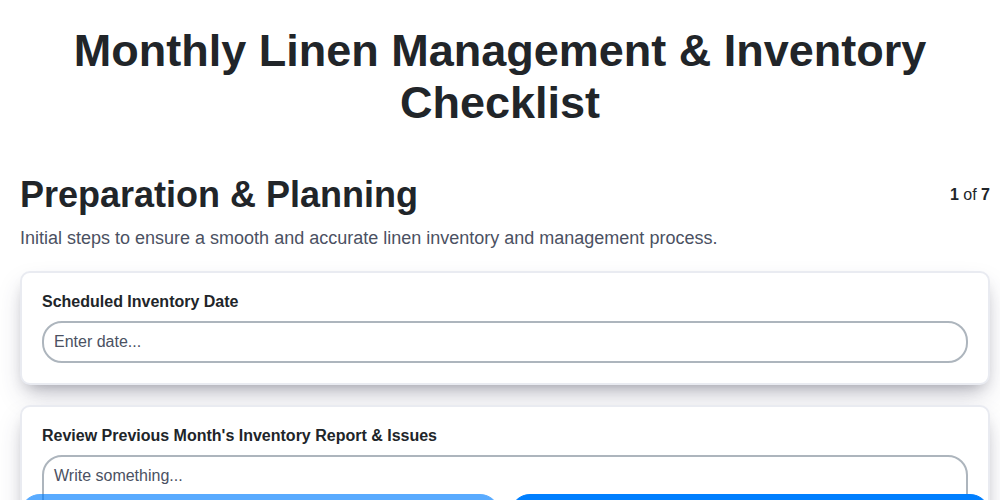
Monthly Linen Management: Your Essential Checklist Template

Hotel Guest Experience Audit Checklist Template
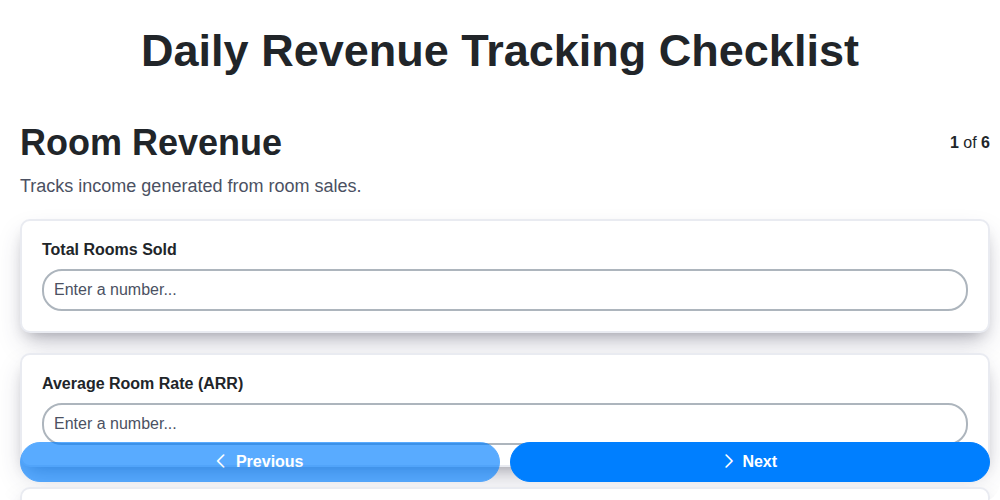
Daily Revenue Tracking: Your Essential Checklist Template
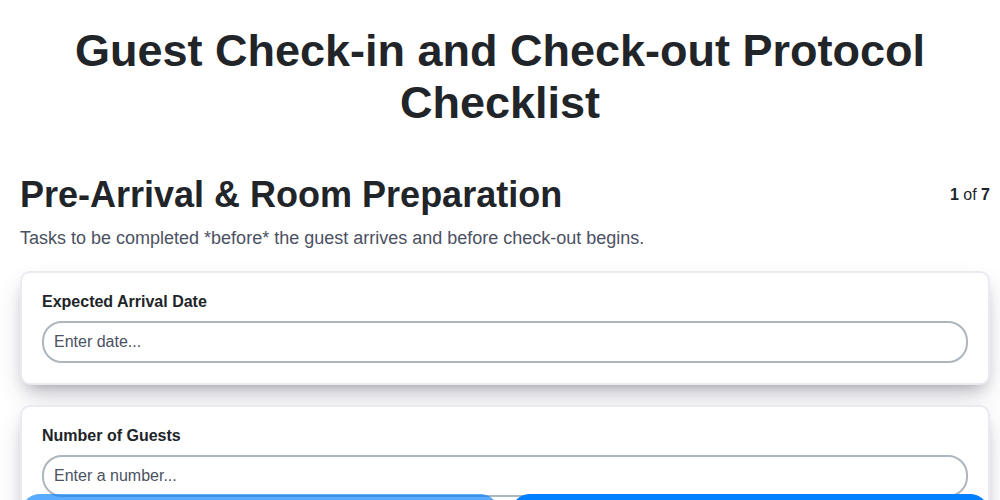
Streamline Guest Stays: Your Free Check-in & Check-out Protocol Template
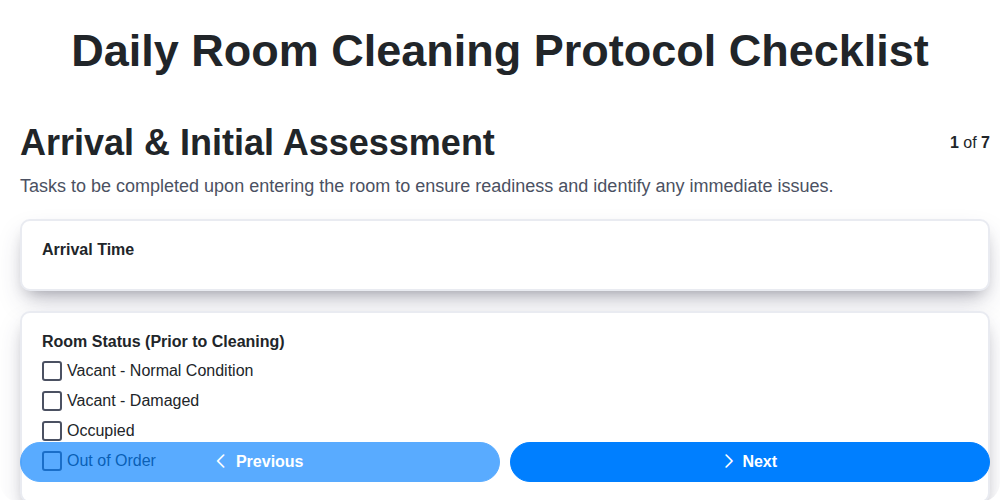
Daily Room Cleaning Protocol: Your Essential Checklist Template
Need help with
Checklists?
Have a question? We're here to help. Please submit your inquiry, and we'll respond promptly.