Your Ultimate HR Technology Audit Checklist Template
Published: 10/16/2025 Updated: 07/02/2026
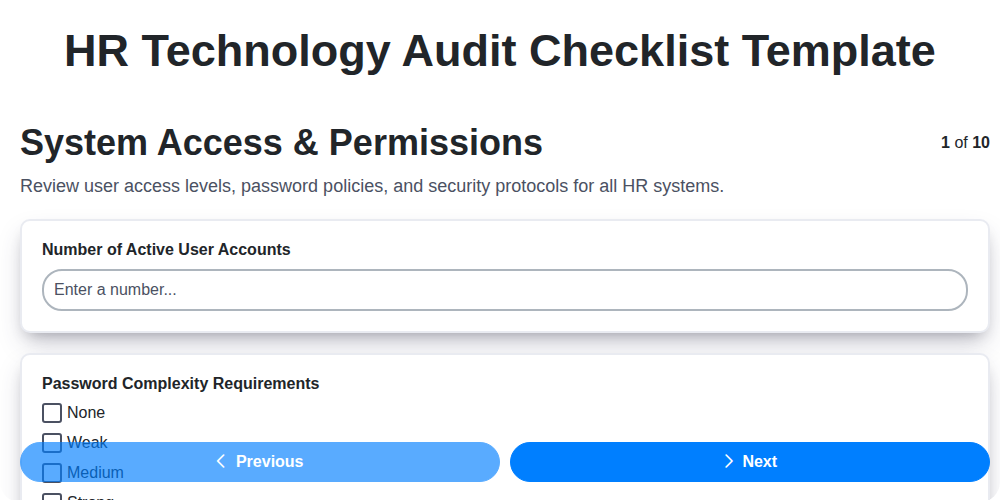
Table of Contents
- Why Conduct an HR Technology Audit?
- System Access & Permissions: Who Has Access to What?
- Data Security & Privacy: Protecting Sensitive Information
- System Integration: Ensuring Seamless Data Flow
- Data Accuracy & Integrity: Maintaining Reliable Data
- Vendor Management: Holding Vendors Accountable
- Compliance & Audit Trails: Demonstrating Accountability
- Future-Proofing Your HR Tech: Staying Ahead of the Curve
- Resources & Links
TLDR: Feeling overwhelmed by your HR tech? This checklist template guides you through a comprehensive audit, covering everything from data security and integrations to compliance and future-proofing. Use it to identify risks, improve efficiency, and ensure your HR technology is truly working for you - download your free template now!
Why Conduct an HR Technology Audit?
Beyond simply ensuring compliance or addressing immediate security concerns, a proactive HR technology audit offers a strategic advantage. It's a chance to critically examine whether your current tech stack truly supports your HR goals and empowers your team. Are you spending more time wrestling with systems than focusing on your people? Is data scattered across multiple platforms, hindering informed decision-making? An audit helps you uncover hidden inefficiencies, identify opportunities for process optimization, and ultimately, ensures your technology investments are driving tangible business value-improving employee experience, streamlining HR operations, and contributing directly to organizational success. It's not just about having the technology; it's about using it effectively.
System Access & Permissions: Who Has Access to What?
The principle of least privilege should be your guiding star here. It means granting users only the minimum level of access necessary to perform their job duties. This isn't just about security; it's about efficiency and accountability. Imagine a scenario where a recruiter has access to compensation data - unnecessary and a potential compliance risk.
Let's break down practical steps for a robust access management system:
- Role-Based Access Control (RBAC): Define clear user roles (e.g., HR Generalist, Benefits Administrator, Recruiter) and assign specific permissions to each role. This simplifies management and reduces errors. Regularly review role definitions to ensure they remain accurate.
- Regular Access Reviews: Don't let access permissions become stale. Schedule quarterly or semi-annual reviews of user access. Involve managers in this process to validate that permissions are still appropriate.
- Automated Provisioning/De-provisioning: Whenever possible, automate the process of granting and revoking access when employees join, change roles, or leave the company. This minimizes delays and reduces the risk of orphaned accounts.
- Break Glass Accounts: For critical systems requiring immediate access in emergencies, consider establishing limited-use break glass accounts with strict audit trails and approval processes.
- Two-Factor Authentication (2FA) is Non-Negotiable: For all systems containing sensitive employee data (HRIS, payroll, performance management), 2FA is no longer optional. Implement MFA universally.
- Documentation is Key: Meticulously document your access management policies, procedures, and review schedules. This provides transparency and facilitates audits.
Data Security & Privacy: Protecting Sensitive Information
Data security and privacy are paramount in HR. A breach can lead to severe legal repercussions, reputational damage, and loss of employee trust. This section outlines key measures to safeguard sensitive employee information, aligning with regulations like GDPR, CCPA, and others.
Here's what you need to assess:
- Encryption at Rest and in Transit: Is all sensitive data encrypted both when stored (at rest) and when being transmitted (in transit)? This includes employee personal details, compensation data, performance reviews, and benefit information.
- Access Controls & Least Privilege: Implement role-based access controls to ensure employees only have access to the data they need to perform their jobs. Regularly review these access rights, adhering to the principle of least privilege.
- Data Loss Prevention (DLP) Measures: DLP tools and policies help prevent accidental or malicious data leaks. Assess whether DLP is in place and effectively configured to detect and block unauthorized data transfers.
- Privacy Policy Alignment & Consent Management: Ensure your HR technology systems are configured to support your organization's privacy policy. This includes proper consent management for data collection and usage.
- Regular Vulnerability Scanning & Penetration Testing: Proactively identify and address security vulnerabilities through regular scanning and penetration testing.
- Incident Response Plan: Have a documented and tested incident response plan to effectively manage data breaches and minimize impact. This should include clear roles, responsibilities, and communication protocols.
- Third-Party Vendor Risk Management: If vendors process HR data, ensure they have robust security measures in place and conduct regular vendor risk assessments. Obtain Business Associate Agreements (BAAs) where required.
System Integration: Ensuring Seamless Data Flow
System integration is the backbone of a modern HR function. Siloed systems lead to data duplication, errors, and frustrating inefficiencies for both HR professionals and employees. A truly effective HR technology stack allows data to flow freely and securely between platforms, automating processes and providing a holistic view of the workforce.
But integration isn't just about connecting systems; it's about effective connection. A poorly designed integration can be more trouble than it's worth, leading to data inconsistencies and unreliable reporting.
Key Considerations for Robust System Integration:
- Data Mapping is Essential: Before any integration begins, meticulously map the data fields between systems. Understand how data is structured and formatted in each platform to ensure accurate translation. Document these mappings thoroughly - it will be invaluable for troubleshooting and future modifications.
- API Security and Authentication: APIs are the gatekeepers to your data. Implement robust authentication mechanisms (OAuth 2.0, API keys) and regularly review API usage to prevent unauthorized access. Secure API endpoints with appropriate encryption and access controls.
- Real-Time vs. Batch Processing: Decide whether real-time data synchronization or batch processing is more appropriate for your needs. Real-time integration provides immediate updates but can be more complex and resource-intensive. Batch processing is simpler to implement but introduces a delay in data availability.
- Error Handling and Monitoring: Implement robust error handling mechanisms to gracefully manage integration failures. Monitor integration performance and set up alerts to proactively address any issues. Don't rely solely on system logs - establish dashboards to visualize integration health.
- Consider iPaaS Solutions: Integration Platform as a Service (iPaaS) platforms can simplify complex integrations by providing pre-built connectors, data mapping tools, and monitoring capabilities. Evaluate iPaaS solutions to streamline your integration efforts, especially if you have a large number of systems to connect.
- Regular Review and Updates: Systems and APIs change frequently. Schedule regular reviews of your integrations to ensure they continue to function correctly and adapt to any changes.
Data Accuracy & Integrity: Maintaining Reliable Data
Accurate and reliable data is the bedrock of informed HR decisions. Without it, reporting is flawed, compliance efforts are weakened, and even basic tasks become problematic. This section delves into strategies to ensure your HR data is trustworthy and consistent.
The Ripple Effect of Inaccurate Data
Imagine payroll errors stemming from incorrect employee records, or performance reviews based on faulty information. The consequences extend beyond immediate frustration - they can damage employee morale, increase legal risk, and undermine your credibility.
Practical Steps for Data Accuracy & Integrity
Here's a breakdown of actionable steps you can take to bolster your data integrity:
- Implement Robust Data Validation Rules: Don't rely solely on manual entry. Configure your HRIS and other systems to enforce data validation rules at the point of entry. For example, require specific date formats, limit character counts in fields, and mandate the selection of options from predefined lists.
- Regular Data Cleansing is Essential: Think of it as a spring cleaning for your data. Schedule recurring data cleansing activities to identify and correct errors, remove duplicates, and standardize formatting. This could involve reviewing employee address details, correcting typos in job titles, or removing outdated information.
- Data Reconciliation: Bridging the Gaps: When data flows between systems (e.g., from an applicant tracking system to your HRIS), reconciliation is key. Regularly compare data between systems to identify discrepancies and resolve them promptly.
- Trace Data Origins (Data Lineage): Understanding where data originates and the transformations it undergoes provides crucial insights. Document data lineage to facilitate troubleshooting and identify potential points of error.
- Employee Self-Service: Empowering Accuracy: Encourage employees to review and update their own information through self-service portals. This shifts some of the responsibility for data accuracy to the individuals who know it best.
- Auditing Changes: A Trail of Accountability: Implement audit trails to track changes made to employee records. This allows you to identify who made changes, when they were made, and what was changed, fostering accountability and enabling easier error correction.
- Data Source Verification: Regularly verify the accuracy of external data sources, such as salary surveys or benefit plan information.
Vendor Management: Holding Vendors Accountable
Your HR technology relies heavily on third-party vendors. While these partnerships offer valuable expertise and specialized solutions, they also introduce potential risks. Robust vendor management isn's just about reviewing contracts; it's about ongoing accountability and vigilance.
Here's how to effectively manage your HR technology vendors:
- Contractual Rigor: Don't just skim the contract. Scrutinize security and compliance clauses, data ownership, and termination rights. Ensure Service Level Agreements (SLAs) clearly outline performance expectations and penalties for non-compliance.
- Risk Assessments: Conduct thorough vendor risk assessments before onboarding and periodically thereafter. These assessments should evaluate the vendor's security posture, data protection practices, and financial stability.
- Data Security Agreements (DSAs): Implement DSAs that clearly define data ownership, usage, and security responsibilities. These should explicitly address data breach notification procedures and liability.
- Regular Performance Reviews: Don't let vendor relationships become stagnant. Schedule regular performance reviews to discuss SLAs, identify areas for improvement, and address any concerns.
- Audit Rights: Secure the right to audit the vendor's systems and processes to ensure compliance with contractual obligations and security standards.
- Stay Informed: Keep abreast of any news or events related to your vendors, including data breaches or regulatory investigations.
- Termination Clauses: Understand your options for terminating the relationship if the vendor fails to meet performance expectations or compromises data security.
Compliance & Audit Trails: Demonstrating Accountability
Demonstrating accountability in HR technology isn't just about checking boxes; it's about building trust - with employees, stakeholders, and regulators. A robust compliance framework and well-maintained audit trails are essential for proving you're handling sensitive employee data responsibly and adhering to relevant legal and ethical standards.
Here's what you need to focus on:
- Mapping to Requirements: Start by meticulously mapping your HR technology functionalities and data flows to relevant legal and regulatory requirements. This includes things like GDPR, CCPA, HIPAA (if applicable), EEOC guidelines, and any industry-specific regulations. Create a clear matrix that illustrates how each system and process aligns with these requirements.
- Comprehensive Audit Trails: Ensure all critical HR processes - onboarding, performance reviews, compensation changes, terminations - are thoroughly documented through detailed audit trails. These trails should record who accessed data, what changes were made, when these actions occurred, and why. Don't just rely on automated logs; consider adding manual documentation where necessary to provide context.
- Change Management Records: Implement a formal change management process for all HR technology modifications. Document every change - updates, integrations, configurations - including the rationale, approval chain, and testing results. This is invaluable for troubleshooting, demonstrating accountability, and ensuring stability.
- Data Retention Policies & Disposal: Establish and enforce clear data retention policies. Know how long you need to retain employee data for legal and business reasons, and securely dispose of it when it's no longer needed. Document these policies and ensure they are consistently applied.
- Regular Review & Testing: Compliance isn't a one-time task. Schedule regular reviews of your compliance framework and conduct periodic testing to validate its effectiveness. This might involve simulated audits, penetration testing, or data privacy assessments.
- Documentation is Key: Maintain meticulous documentation of all compliance efforts - policies, procedures, assessments, training records. This documentation serves as your evidence should you ever face an audit or inquiry.
Future-Proofing Your HR Tech: Staying Ahead of the Curve
The pace of technological change in HR is accelerating. What worked last year might be obsolete next year. Future-proofing your HR tech isn't about predicting the future perfectly - it's about building a flexible and adaptable foundation. Here's what to consider:
- Embrace AI & Machine Learning: AI is no longer a buzzword; it's transforming talent acquisition, employee engagement, and performance management. Explore AI-powered tools for automating repetitive tasks, improving decision-making, and personalizing the employee experience. Start small with pilot programs to test and learn.
- Automation is Key: Identify processes ripe for automation, freeing up HR professionals for more strategic work. This goes beyond simple workflows; think about automating benefits enrollment, performance review summaries, and even initial candidate screening.
- Cloud-First Strategy: If you haven't already, seriously evaluate a cloud-based HR tech stack. Cloud solutions offer scalability, flexibility, and automatic updates - crucial for staying ahead of the curve.
- Focus on Data Integration & APIs: A fragmented system is a vulnerable system. Prioritize platforms that offer robust APIs and seamless integrations to ensure data flows freely and insights are readily available.
- Employee Experience (EX) is Paramount: Technology should enhance the employee experience, not hinder it. Regularly solicit feedback on your HR tech and prioritize solutions that are intuitive, user-friendly, and mobile-first.
- Skills-Based Talent Management: Future-proof your talent strategies by focusing on skills rather than just roles. Technology that can identify, track, and develop employee skills will be invaluable.
- Stay Informed: Dedicate time for ongoing learning. Attend industry conferences, subscribe to relevant publications, and engage with HR tech thought leaders.
Resources & Links
- SHRM (Society for Human Resource Management): SHRM is a leading HR professional society providing resources, research, and certifications. Useful for understanding best practices and compliance related to HR technology.
- HRCI (HR Certification Institute): HRCI offers HR certifications and provides guidance and resources relevant to HR tech implementation and management.
- G2: G2 is a software review platform where users share their experiences with various HR technology solutions. Valuable for comparing different platforms and understanding user feedback.
- Capterra: Similar to G2, Capterra provides software reviews and comparisons for HR technology, offering insights into pricing, features, and user satisfaction.
- NIST (National Institute of Standards and Technology): NIST provides cybersecurity frameworks and guidelines. Important for the 'Data Security & Privacy' section, especially relating to protecting sensitive employee data.
- IAPP (International Association of Privacy Professionals): The IAPP is a global information privacy community. Resources are invaluable for understanding privacy regulations like GDPR and CCPA, essential for 'Data Security & Privacy' and 'Compliance & Audit Trails'.
- GDPR.eu: Dedicated to GDPR (General Data Protection Regulation) information and resources, critical for understanding and implementing data privacy practices.
- CCPA (California Consumer Privacy Act): Resources for the California Consumer Privacy Act, relevant for understanding data privacy requirements in California.
- ISO (International Organization for Standardization): ISO provides internationally recognized standards, including those related to information security (ISO 27001). Useful for benchmarking data security practices.
- ITSMF (IT Service Management Forum): Focuses on IT service management best practices. Useful for system integration planning and vendor management discussions, focusing on the IT side of HR Tech.
- SITA (Service Desk Institute): Provides resources for service desk and IT support, assisting with maintaining HR systems and resolving technical issues.
- Gartner: Gartner provides research and insights on technology trends, including HR technology. Provides valuable perspectives for 'Future-Proofing Your HR Tech'.
- Forbes: Forbes offers business and technology news and analysis, often covering HR technology trends and best practices.
Frequently Asked Questions
What is an HR Technology Audit?
An HR Technology Audit is a comprehensive review of your HR systems and tools to ensure they are aligned with your business goals, efficient, secure, and compliant. It assesses functionality, integrations, data privacy, and user experience to identify areas for improvement and optimization.
Why is an HR Technology Audit important?
An audit helps optimize your HR technology investments, improves employee experience, reduces risks (data breaches, compliance issues), identifies opportunities for automation and efficiency gains, and ensures your HR tech supports strategic business initiatives.
Who should conduct the HR Technology Audit?
Ideally, a combination of internal HR professionals with technology understanding and potentially an external HR technology consultant. This ensures a balanced perspective covering both HR and technical aspects.
What is the purpose of the checklist template provided in the article?
The checklist template is a structured guide to help you systematically evaluate your HR technology landscape. It provides a standardized framework for assessing various aspects of your systems and helps ensure you don't miss any critical areas.
How often should I conduct an HR Technology Audit?
We recommend conducting an audit at least every 1-2 years. More frequent audits (e.g., annually) may be beneficial if you're experiencing rapid changes in your workforce, significant technology updates, or regulatory shifts.
Can I customize the checklist template?
Absolutely! The checklist is designed to be flexible. Add, remove, or modify items to reflect your specific HR technology stack, business needs, and industry regulations.
What does 'Integration' mean in the checklist template?
'Integration' refers to how well your various HR systems (e.g., HRIS, payroll, applicant tracking system) work together. Seamless integration avoids data silos, reduces manual data entry, and improves overall efficiency.
What's the difference between a 'functional' and 'technical' assessment in the checklist?
A 'functional' assessment focuses on how the system meets HR's needs (e.g., reporting capabilities, user-friendliness). A 'technical' assessment looks at the system's infrastructure, security, performance, and compatibility.
The checklist mentions 'Data Privacy'. What does this entail?
'Data Privacy' refers to how you protect employee data in compliance with regulations like GDPR, CCPA, and other relevant laws. This includes secure storage, access controls, and data retention policies.
Where can I download the checklist template?
The download link for the HR Technology Audit Checklist Template is provided within the article. Look for the clearly marked button or link labeled 'Download Checklist'.
Comments
There are no comments yet. Be the first to add one!
HRM - Human Resources Management Solution Demo
Simplify HR processes & empower your team! ChecklistGuro's HRM solution streamlines onboarding, performance management, & compliance. Improve employee engagement, reduce admin burden, & drive organizational growth. Manage it all with our Work OS.
Related Articles
Independent Contractor Compliance Checklist Template for HR

HR's Guide to Workplace Safety: Your Compliance Checklist Template
The Ultimate Employee Exit Interview Checklist (HR Edition)
EEO Compliance Checklist Template for HR
The Ultimate HR Audit Checklist Template: Your Guide to Compliance

Paper vs ChecklistGuro in Human Resources Management

Your Guide to Employee Training Compliance: A Free Checklist for HR
Your Ultimate Employee Onboarding Checklist Template
Need help with
Human Resources Management (HRM)?
Have a question? We're here to help. Please submit your inquiry, and we'll respond promptly.