Insurance Business Continuity Planning Checklist: Your Guide to Resilience
Published: 12/01/2025 Updated: 07/02/2026
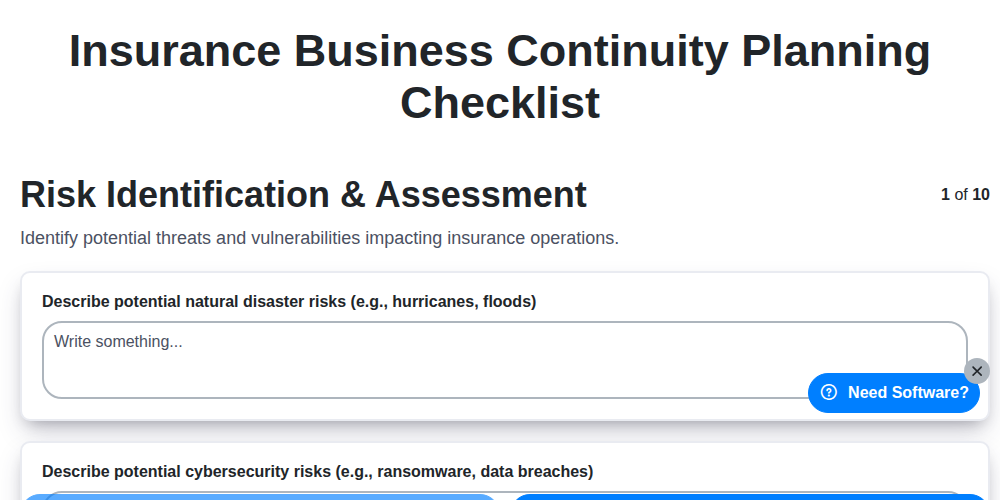
Table of Contents
- Introduction: Why Business Continuity Planning is Crucial for Insurance
- 1. Risk Identification & Assessment: Knowing Your Vulnerabilities
- 2. Defining Your BCP Strategy & Scope: Setting the Boundaries
- 3. Identifying Critical Business Functions: What Must Keep Running?
- 4. IT Disaster Recovery: Protecting Your Digital Infrastructure
- 5. Communication Plan: Keeping Stakeholders Informed
- 6. Alternate Work Locations: Ensuring Operational Continuity
- 7. Data Backup & Recovery: Safeguarding Your Most Valuable Asset
- 8. Vendor Management: Extending Your BCP to Third Parties
- 9. Training & Awareness: Empowering Your Team
- 10. Testing & Maintenance: Ensuring Your Plan Works
- 11. Regulatory Compliance Considerations for Insurance BCP
- 12. Common Pitfalls to Avoid in Insurance BCP
- Conclusion: Building a Resilient Insurance Business
- Resources & Links
TLDR: Running an insurance business means weathering unexpected storms. This checklist provides a step-by-step guide - covering risks, IT recovery, communication, data backup, and more - to ensure your insurance business can keep operating smoothly even when disaster strikes. It's your roadmap to building resilience and protecting your clients and your bottom line.
Introduction: Why Business Continuity Planning is Crucial for Insurance
The insurance industry faces a unique blend of challenges, from increasingly complex regulatory landscapes to the ever-present threat of natural disasters and cyberattacks. A disruption - whether a system failure, a pandemic, or a severe weather event - can cripple operations, erode customer trust, and lead to significant financial losses. Business Continuity Planning (BCP) isn't just a nice-to-have; it's a vital necessity for insurance businesses of all sizes.
Think about it: your clients rely on you to be there when they need you most - during a claim, a crisis, or a policy renewal. A BCP ensures your business can continue operating, even when faced with unforeseen circumstances. It's about minimizing downtime, protecting data, and maintaining service levels, ultimately demonstrating resilience and commitment to your policyholders. Ignoring business continuity planning isn't just a risk to your bottom line; it's a risk to the very foundation of your reputation and the trust your clients place in you. Let's explore a comprehensive checklist to help you build a robust BCP tailored for the insurance sector.
1. Risk Identification & Assessment: Knowing Your Vulnerabilities
Before you can build a robust Business Continuity Plan (BCP), you need to understand what you're protecting against. Risk identification and assessment is the foundational step, and skipping it is like building a house on sand. It's not just about natural disasters; it's about a wide range of potential disruptions.
What Does This Entail?
This stage involves systematically identifying potential threats to your insurance business. Think beyond the obvious. Consider:
- Natural Disasters: Hurricanes, floods, earthquakes, wildfires - are you in a high-risk area?
- Cybersecurity Threats: Ransomware attacks, data breaches, phishing scams - increasingly a significant risk for all businesses.
- Human Error: Accidental data deletion, system misconfigurations.
- Infrastructure Failures: Power outages, internet disruptions, equipment malfunctions.
- Pandemics & Health Crises: Impacts on workforce availability and operational capacity.
- Supply Chain Disruptions: Dependence on third-party vendors and their stability.
- Legal & Regulatory Changes: Impacts on compliance and operational practices.
How to Do It:
- Brainstorming Sessions: Gather key stakeholders from different departments to identify potential risks.
- Historical Data Review: Analyze past incidents and near misses.
- Business Impact Analysis (BIA): Determine the potential impact of each risk on critical business functions (which we'll discuss later).
- Risk Matrix: Prioritize risks based on their likelihood of occurrence and potential impact. (High likelihood/high impact = highest priority).
- Document Everything: Maintain a detailed risk register that's regularly reviewed and updated.
Don't Underestimate This Step: A thorough risk assessment allows you to allocate resources effectively and focus your BCP efforts on the areas that pose the greatest threat to your insurance business's continuity. Ignoring potential risks means potentially facing significantly larger recovery costs and reputational damage later.
2. Defining Your BCP Strategy & Scope: Setting the Boundaries
A robust Business Continuity Plan (BCP) isn't a one-size-fits-all solution. Defining its scope and strategy is the crucial second step, ensuring your plan addresses the right risks and aligns with your business objectives. This goes beyond simply listing potential disasters; it's about prioritizing and outlining what your BCP aims to achieve.
Consider these questions:
- What are your most critical business objectives? Your BCP should directly support these. Are you focused on maintaining customer service, regulatory compliance, or protecting revenue streams?
- What types of disruptions are within the scope of the plan? Will it cover natural disasters, cyberattacks, pandemics, or internal system failures? Be realistic about what you can practically address.
- What geographical locations are covered? Is it just your headquarters, or multiple offices?
- What timeframes are considered? How long can your business realistically operate with degraded functions before significant impact?
- What resources are allocated? Be upfront about the budget and personnel dedicated to the BCP.
Clearly documenting these boundaries prevents scope creep and ensures everyone understands the plan's limitations. A well-defined scope allows for focused effort and efficient resource allocation, leading to a more effective and manageable BCP. It's far better to do a few things really well than to attempt a broad, superficial plan that ultimately fails when a crisis hits.
3. Identifying Critical Business Functions: What Must Keep Running?
Beyond simply knowing what your business does, a robust Business Continuity Plan (BCP) requires a granular understanding of what absolutely must keep running to maintain core operations during a disruption. This isn't just about listing all departments; it's about pinpointing the specific functions within those departments that are vital.
Think beyond the obvious. While claims processing might be crucial, it depends on underlying functions like underwriting data access, policy validation, and payment processing. These supporting functions, while seemingly less visible, are equally important for claims to be handled effectively.
How to identify critical functions:
- Brainstorm with Key Stakeholders: Involve department heads, IT, operations, and customer service representatives. Diverse perspectives are crucial.
- What-If Scenario Planning: Walk through potential disruptions (fire, cyberattack, pandemic). What functions immediately cease working? Which ones become significantly hampered?
- Dependency Mapping: Visually map how different functions rely on each other. This highlights potential bottlenecks and domino effects.
- Prioritize and Rank: Categorize functions as "Critical" (must be operational within hours), "Essential" (must be operational within 24-48 hours), and "Important" (can be restored within a week). This prioritizes recovery efforts.
- Consider Regulatory Requirements: Certain functions may be mandated by law or industry regulations, making their continuity non-negotiable.
Once you've identified these critical functions, document them clearly, outlining dependencies, Recovery Time Objectives (RTOs), and Recovery Point Objectives (RPOs). This forms the backbone of your BCP and guides your recovery strategies.
4. IT Disaster Recovery: Protecting Your Digital Infrastructure
For an insurance business, your IT infrastructure is your business. From policy management to claims processing, everything relies on functioning systems. A robust IT Disaster Recovery (IT DR) plan is non-negotiable. This goes beyond simple data backup; it's about ensuring your IT systems can be restored quickly and reliably following a disruptive event.
Here's what your IT DR checklist should include:
- System Prioritization: Identify and prioritize critical systems and applications. Which ones absolutely must be operational to keep the business running? Rank them by recovery time objective (RTO) and recovery point objective (RPO).
- Redundancy & Failover: Implement redundant systems and automated failover capabilities for critical applications. Consider cloud-based solutions for increased resilience and geographic diversity.
- Infrastructure Assessment: Regularly assess your hardware, software, and network infrastructure to identify vulnerabilities and ensure compatibility.
- Disaster Recovery Site: Establish a designated disaster recovery site - this could be a physical location, a cloud environment, or a hybrid approach.
- Virtualization & Cloud Strategies: Explore virtualization and cloud-based solutions to enhance flexibility and scalability.
- Documentation: Document all IT DR procedures in detail, including step-by-step instructions and contact information. Keep this documentation up-to-date and readily accessible.
- Regular Testing & Updates: Your IT DR plan isn't a one-and-done project. Regularly test its effectiveness and update it to reflect changes in your IT environment and business needs.
5. Communication Plan: Keeping Stakeholders Informed
A robust Business Continuity Plan (BCP) is useless if no one knows what's happening during a disruption. Your communication plan is the crucial link connecting your team, clients, partners, and other stakeholders. It's not just about sending out emails; it's about a strategic and layered approach to ensure everyone receives timely, accurate information.
Here's what a strong communication plan should include:
- Identify Key Stakeholders: Map out everyone who needs to be informed - employees, clients, vendors, regulators, media (potentially), and families (for employee safety).
- Communication Channels: Define primary and secondary channels. Consider email, phone trees, SMS messaging, website updates, social media, and potentially even traditional mail. Redundancy is vital - if one channel fails, others must be ready.
- Designated Spokesperson(s): Clearly identify who is authorized to communicate on behalf of the insurance business. This prevents conflicting information and maintains control of messaging.
- Pre-Drafted Templates: Prepare templates for common scenarios - activation of the BCP, status updates, resumption of operations. This accelerates response time.
- Contact Lists: Maintain up-to-date contact lists, stored securely and accessible offline.
- Escalation Procedures: Outline the process for escalating critical information quickly.
- Regular Updates: Establish a schedule for ongoing communication, even if there are no significant changes to report. Silence can be interpreted as inaction.
- Feedback Mechanisms: Create ways for stakeholders to ask questions and provide feedback on the communication process.
A well-executed communication plan fosters trust and minimizes panic during a crisis, allowing for a smoother recovery.
6. Alternate Work Locations: Ensuring Operational Continuity
The ability to seamlessly transition to alternate work locations is a cornerstone of business continuity. A natural disaster, pandemic, or even a localized event like a building fire can render your primary office unusable. Having a well-defined plan for where your team can continue working is no longer a nice-to-have, it's a necessity.
Beyond the Basics: Simply suggesting employees work from home isn't sufficient. A robust plan considers several factors:
- Identify Options: Explore possibilities like remote work (for suitable roles), co-working spaces, secondary offices, or agreements with reciprocal business partners.
- Accessibility and Functionality: Ensure alternate locations are accessible to your employees, considering transportation and potential limitations. They must also be equipped with the necessary infrastructure - reliable internet, power, ergonomic workspaces - to maintain productivity.
- Security Considerations: Data security remains paramount. If using co-working spaces or secondary offices, verify their security protocols and ensure compliance with your company's standards. Provide secure VPN access and clear policies regarding sensitive data handling.
- Employee Needs: Consider the needs of your employees, especially those with accessibility requirements or dependent care responsibilities.
- Communication & Logistics: Communicate clear instructions to employees regarding alternate work locations, including how to access them, who to contact, and expectations for communication.
Proactive Steps: Regularly assess the suitability and readiness of your alternate work locations. Include them in your BCP testing (see our section on testing & maintenance) to identify and rectify any shortcomings.
7. Data Backup & Recovery: Safeguarding Your Most Valuable Asset
In the insurance business, data is everything. Client information, policy details, claims history - it's the lifeblood of your operations. Losing this data, even temporarily, can be catastrophic. Your Data Backup & Recovery plan needs to be robust and regularly tested, going far beyond a simple external hard drive.
Here's what your plan should cover:
- Backup Frequency: How often are you backing up your data? Daily backups are often considered the bare minimum, but consider more frequent backups for critical systems.
- Backup Types: Implement a combination of full, incremental, and differential backups to optimize both speed and storage.
- Offsite Storage: Don't store backups solely on-premise. Utilize cloud-based solutions or a geographically separate data center for protection against physical disasters affecting your primary location.
- Data Encryption: Ensure your backups are encrypted both in transit and at rest to prevent unauthorized access.
- Recovery Time Objective (RTO) & Recovery Point Objective (RPO): Clearly define your RTO (how long it takes to restore data) and RPO (the maximum acceptable data loss). These metrics will guide your backup strategy and resource allocation.
- Regular Testing: Backups are useless if you can't restore them. Regularly test your recovery procedures to verify data integrity and validate your RTO/RPO targets. Document these tests and any necessary adjustments.
- Version Control: Maintain multiple versions of your backups to allow recovery to a previous state if a corrupted file or system issue arises.
A well-defined and rigorously tested data backup and recovery plan is a cornerstone of your insurance business continuity planning.
8. Vendor Management: Extending Your BCP to Third Parties
Your insurance business relies on a network of vendors - from cloud providers and claims processors to payroll services and software solutions. A disruption impacting their operations can quickly cascade and cripple yours. Ignoring vendor risk in your Business Continuity Plan (BCP) is a significant vulnerability.
This section isn't just about having a list of vendors; it's about ensuring their BCPs align with yours and can support your recovery objectives. Here's what to consider:
- Vendor Dependency Assessment: Identify which vendors are critical to your key business functions. Rank them based on the level of impact a disruption would cause. A payroll provider is likely higher priority than a marketing agency.
- BCP Review & Verification: Request and thoroughly review your critical vendors' Business Continuity Plans. Don't just accept them; ask questions! Understand their recovery time objectives (RTOs) and recovery point objectives (RPOs). Ensure they meet your requirements.
- Contractual Obligations: Ensure your vendor contracts explicitly outline BCP expectations, including regular updates, reporting on performance, and right to audit their preparedness.
- Alternative Vendor Identification: Develop a list of alternative vendors for your most critical functions. Having options allows for a quicker transition if your primary vendor is unavailable.
- Communication with Vendors: Establish clear communication channels with your vendors, both for day-to-day operations and during a disaster. Designate points of contact and test these channels.
- Regular Updates: Vendor landscapes change. Regularly (at least annually) review vendor contracts and their BCP information. New vendors are onboarded; existing ones change their operations.
Ignoring vendor risk can leave a critical gap in your BCP. Proactive vendor management ensures resilience and minimizes disruption when the unexpected happens.
9. Training & Awareness: Empowering Your Team
Your Business Continuity Plan (BCP) is only as effective as the people who execute it. A perfectly crafted plan gathering dust on a shelf won't do you any good when disaster strikes. That's why a robust training and awareness program is absolutely critical.
This isn't just about a one-off presentation. It's about fostering a culture of preparedness within your insurance business. Here's what that entails:
- Regular Training Sessions: Schedule periodic training covering the BCP, roles and responsibilities, and specific procedures. Tailor these sessions to different departments - claims adjusters, underwriters, customer service - as their roles in a crisis will vary.
- Role-Specific Training: Ensure employees understand their individual responsibilities. Who is the designated contact for communication? Who initiates the data recovery process? Clarity here is vital.
- Simulations & Drills: Go beyond theory. Conduct mock disaster scenarios to test the plan's effectiveness and identify areas for improvement. Tabletop exercises are a great, low-cost starting point.
- Ongoing Communication: Keep the BCP top-of-mind. Share updates, reminders, and best practices through newsletters, intranet postings, and team meetings.
- New Hire Orientation: Integrate BCP awareness into the onboarding process for all new employees.
- Refresher Courses: Technology and business processes evolve. Annual refresher courses ensure everyone stays current with plan updates and best practices.
By investing in training and awareness, you're not just teaching your team what to do - you're empowering them with the confidence and knowledge to respond effectively when faced with the unexpected.
10. Testing & Maintenance: Ensuring Your Plan Works
A beautifully crafted Business Continuity Plan (BCP) is only as good as its execution. Don't let it sit on a shelf, gathering dust! Regular testing and maintenance are absolutely crucial to ensuring your plan actually works when disaster strikes.
Why Testing Matters:
- Identifies Weaknesses: Simulations and drills reveal gaps in your plan that you might not have anticipated.
- Builds Confidence: Testing provides assurance to your team and stakeholders that you're prepared.
- Refreshes Skills: Reminds your team of their roles and responsibilities, ensuring they can perform them effectively under pressure.
- Validates Assumptions: Verifies that the assumptions you made during planning - about recovery times, resource availability, and more - still hold true.
What Maintenance Looks Like:
- Annual Reviews: Conduct a comprehensive review of your BCP at least annually. This should include updating contact lists, reviewing procedures, and assessing changes in your business and environment.
- Tabletop Exercises: These are discussion-based simulations where teams walk through different disaster scenarios to identify potential roadblocks. They're relatively low-cost and can be incredibly valuable.
- Functional Exercises: These involve simulating specific parts of your plan, like activating your alternate work locations or restoring critical systems.
- Full-Scale Drills: These are the most intense, simulating a complete disaster and involving all relevant teams. They require significant planning and coordination.
- Documentation Updates: Keep meticulous records of all testing and maintenance activities, including findings and corrective actions taken.
- Stay Current: Technology, regulations, and your business operations change. Keep your plan updated to reflect these changes.
Don't wait for a disaster to discover your BCP's shortcomings. Make testing and maintenance a consistent, prioritized part of your business continuity program.
11. Regulatory Compliance Considerations for Insurance BCP
The insurance industry operates under a particularly rigorous regulatory landscape. Business Continuity Planning (BCP) isn't just about keeping the lights on; it's about demonstrating to regulators that you can continue serving policyholders and meeting legal obligations during and after a disruptive event. Failing to do so can lead to hefty fines, reputational damage, and even restrictions on your business.
Several key regulatory frameworks significantly impact your BCP. NAIC (National Association of Insurance Commissioners) guidance, for example, emphasizes the importance of resilience and risk management. State insurance departments often mandate specific BCP requirements, including periodic assessments and documentation. SOX (Sarbanes-Oxley Act), while primarily focused on financial reporting, also has implications for data integrity and security, which are crucial aspects of BCP. Additionally, GDPR (General Data Protection Regulation) if you handle data of EU citizens, necessitates robust data protection measures within your BCP.
Your BCP documentation should clearly demonstrate how you adhere to these regulations. This includes outlining your recovery time objectives (RTOs) and recovery point objectives (RPOs) in relation to regulatory timelines for claims processing or policy servicing. It's vital to regularly review your BCP and incorporate any changes in regulatory requirements. Consult with legal and compliance experts to ensure your plan is not only effective but also fully compliant with all applicable laws and regulations. Don't treat compliance as an afterthought - build it into the core of your BCP from the beginning.
12. Common Pitfalls to Avoid in Insurance BCP
Insurance businesses face unique continuity challenges, from regulatory compliance to the intricate web of client data and specialized services. A well-crafted Business Continuity Plan (BCP) is essential, but even the best plans can fail if common pitfalls aren't addressed. Here are a few to watch out for:
- Assuming IT is the Only Concern: While IT Disaster Recovery is crucial, don't overlook the human element. Employee safety, facility accessibility, and operational dependencies outside of technology are equally important.
- Lack of Executive Sponsorship: A BCP without buy-in from senior management is doomed. Secure their support early and frequently update them on progress.
- Ignoring Regulatory Requirements: Insurance is heavily regulated. Ensure your BCP addresses all relevant industry and governmental mandates. Failure to do so can result in significant penalties.
- Overly Complex Plans: Intricate plans are often abandoned during a crisis. Keep it straightforward, concise, and easy to understand.
- Insufficient Staff Training: A plan is only as effective as the people who execute it. Ensure all relevant staff are properly trained and understand their roles.
- Neglecting Third-Party Dependencies: Insurance companies rely heavily on vendors. Don't forget to assess their business continuity capabilities and incorporate them into your plan.
- Data Backup Isn's Truly 'Offsite': Simply storing backups in a different room isn't enough. True offsite storage, preferably geographically diverse, is critical for protection against large-scale disasters.
- Static Plans - Failing to Update: Business change is constant. Your BCP must be regularly reviewed and updated to reflect those changes.
- Focusing Only on the 'Big' Disaster: Consider a range of disruption scenarios, from minor power outages to large-scale events.
- Communication Breakdown: Without clear and timely communication, chaos ensues. Your communication plan needs to be robust and tested.
- Treating Testing as a 'Tick-Box' Exercise: Testing should be realistic and identify weaknesses. Don't just go through the motions - learn from the experience.
- Ignoring the Human Element - Employee Wellbeing: Disasters impact people. A BCP should include procedures to support employee safety, wellbeing, and communication during and after an event.
Conclusion: Building a Resilient Insurance Business
The insurance industry faces a constantly evolving landscape of risks - from natural disasters and cyberattacks to regulatory changes and economic downturns. A robust Business Continuity Plan (BCP) isn't just a "nice-to-have" anymore; it's a cornerstone of survival and sustained success. By diligently working through the checklist outlined in this article - encompassing everything from risk assessment and IT disaster recovery to employee training and plan maintenance - you're not just preparing for the worst; you're building a foundation for resilience.
Remember, a BCP isn't a static document. It requires ongoing evaluation, adaptation, and refinement. Regularly testing and updating your plan ensures it remains effective and relevant to the ever-changing threats your business faces. Ultimately, investing in business continuity planning demonstrates a commitment to your clients, employees, and the long-term viability of your insurance business. It's an investment in peace of mind and a future-proofed operation.
Resources & Links
- Federal Emergency Management Agency (FEMA): FEMA provides resources and guidance on disaster preparedness and business continuity, offering valuable insights applicable to insurance companies. Includes information on hazard mitigation and recovery.
- National Association of Insurance Commissioners (NAIC): The NAIC provides resources, model laws, and best practices related to insurance regulation, which often includes considerations for business continuity planning. Check for publications and guidance documents.
- Risk Management Institute, Inc. (RMI): RMI offers comprehensive risk management and insurance training materials, including courses and publications related to business continuity and disaster recovery. Useful for understanding industry best practices.
- International Organization for Standardization (ISO): ISO standards, particularly ISO 22301 (Security and resilience - Business continuity management systems), provide a framework for establishing, implementing, maintaining, and continually improving a business continuity management system. A globally recognized standard.
- British Computer Society (BCS): While UK-based, BCS offers guidance and resources on business continuity management, often featuring practical advice and frameworks that can be adapted internationally. Look for their publications and case studies.
- Ready.gov: A U.S. government website providing comprehensive preparedness information for individuals, families, and businesses. Offers checklists and guidance applicable to a broad range of disasters.
- Continuity Central: A website dedicated to business continuity, disaster recovery, and resilience. Features articles, news, and resources for professionals in the field. A good source for current trends and technologies.
- The Guardians: A leading global business continuity and resilience consultancy. Their website offers insights, whitepapers, and resources related to BCP best practices and emerging threats. Helpful for understanding complex scenarios.
- Cybersecurity and Infrastructure Security Agency (CISA): CISA (formerly DHS) focuses on cybersecurity and infrastructure resilience. Essential for the IT Disaster Recovery section and broader security considerations within insurance BCP.
- National Institute of Standards and Technology (NIST): NIST develops standards and guidelines for cybersecurity and data protection. Their resources are crucial for securing digital infrastructure and complying with regulations, highly relevant for Data Backup & Recovery and IT Disaster Recovery.
- American Institute of Certified Public Accountants (AICPA): AICPA provides resources and guidance related to risk management, internal controls, and business resilience, which are all integral components of insurance BCP. Focus on their audit and accounting standards.
- The Insurance Information Institute (III): Provides information and research related to insurance risks, regulations, and trends. Offers insights into the insurance industry and the specific challenges it faces.
Frequently Asked Questions
What is Business Continuity Planning (BCP) for insurance businesses?
Business Continuity Planning (BCP) is a proactive process that outlines how an insurance company will continue operating during and after a disruptive event. This includes natural disasters, cyberattacks, pandemics, or any situation that could interrupt normal operations. It's about minimizing downtime, protecting data, and ensuring continued service to customers and stakeholders.
Why is BCP particularly important for insurance companies?
Insurance companies handle sensitive customer data, manage significant financial transactions, and are often critical infrastructure providers. Disruptions can severely impact customer trust, regulatory compliance, and financial stability. A robust BCP helps mitigate these risks and maintain operational integrity.
What are the key areas covered in an insurance BCP checklist?
A comprehensive checklist typically includes risk assessments, data backup and recovery, communication plans, employee safety protocols, technology resilience, vendor management, regulatory compliance considerations, and testing/training procedures.
What is a risk assessment and why is it the first step in BCP?
A risk assessment identifies potential threats to your insurance business (e.g., flood, cyberattack, system failure). It analyzes the likelihood and potential impact of each risk, allowing you to prioritize mitigation strategies. It's the foundation for developing effective BCP measures.
How does data backup and recovery fit into the insurance BCP?
Data is the lifeblood of an insurance business. The BCP must include regular data backups (onsite and offsite), secure storage, and tested recovery procedures to ensure data can be restored quickly in case of loss or corruption. This includes policy data, claims history, and financial records.
What should be included in a communication plan for business continuity?
The communication plan outlines how you will communicate with employees, customers, regulators, vendors, and other stakeholders during a disruptive event. This includes multiple communication channels (email, phone, website, social media), pre-defined messaging, and designated spokespersons.
What does 'vendor management' mean in the context of insurance BCP?
Insurance companies rely on third-party vendors for various services. Vendor management ensures that these vendors have their own BCPs in place and that their resilience aligns with your insurance business's needs. This includes service level agreements (SLAs) and contingency plans for vendor disruptions.
How often should an insurance BCP be reviewed and updated?
The BCP should be reviewed and updated at least annually, or more frequently if there are significant changes to your business, technology, or the threat landscape. Regular updates ensure the plan remains relevant and effective.
What is a 'tabletop exercise' and why is it useful for BCP?
A tabletop exercise is a facilitated discussion where team members walk through a simulated disruptive event and practice their roles and responsibilities outlined in the BCP. It helps identify gaps in the plan and improve coordination without interrupting normal operations.
How does regulatory compliance factor into insurance BCP?
Insurance companies are subject to strict regulatory requirements regarding data security, privacy, and operational resilience. The BCP should address these requirements and demonstrate compliance with relevant regulations. Examples include GDPR, CCPA, and state-specific insurance regulations.
What are some common pitfalls to avoid when developing an insurance BCP?
Common pitfalls include inadequate risk assessment, insufficient testing and training, lack of executive sponsorship, focusing solely on technology, neglecting vendor management, and failing to regularly update the plan.
Comments
There are no comments yet. Be the first to add one!
Insurance Management Solution Demo
Managing policies, claims, and compliance in the insurance industry is complex. ChecklistGuro's Work OS platform streamlines your operations, from underwriting and renewals to claims processing and reporting. Improve efficiency, reduce errors, and enhance customer satisfaction. Discover how ChecklistGuro can transform your insurance business!
Related Articles
Streamline Claims: Your Insurance Claims Support Process Checklist Template
Your Insurance Policy Review Checklist: A Step-by-Step Guide
Your Property Insurance Review Checklist: A Step-by-Step Guide
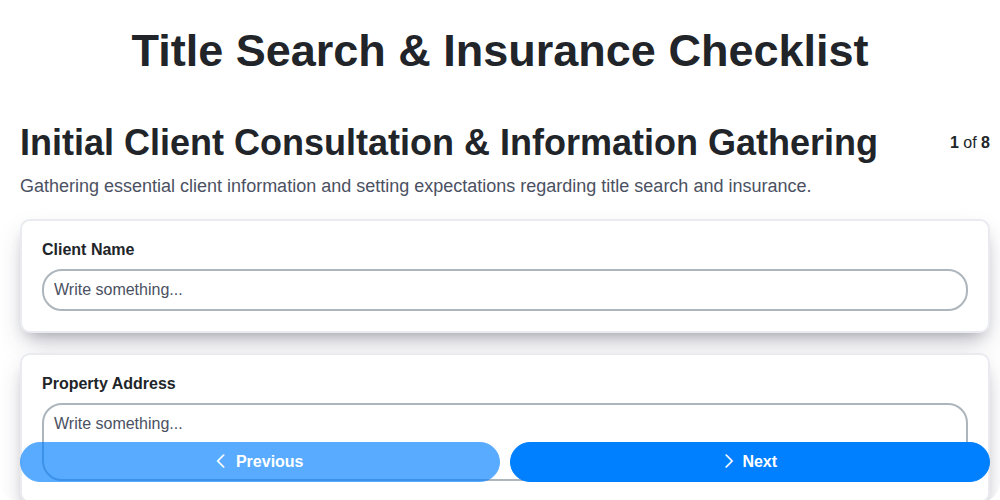
Your Title Search & Insurance Checklist Template
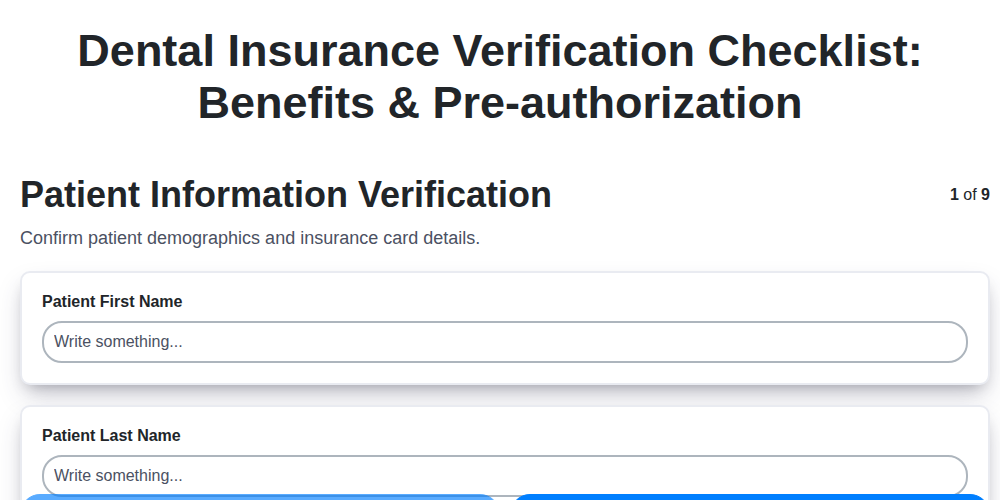
Simplify Insurance Verification: Your Free Dental Checklist Template
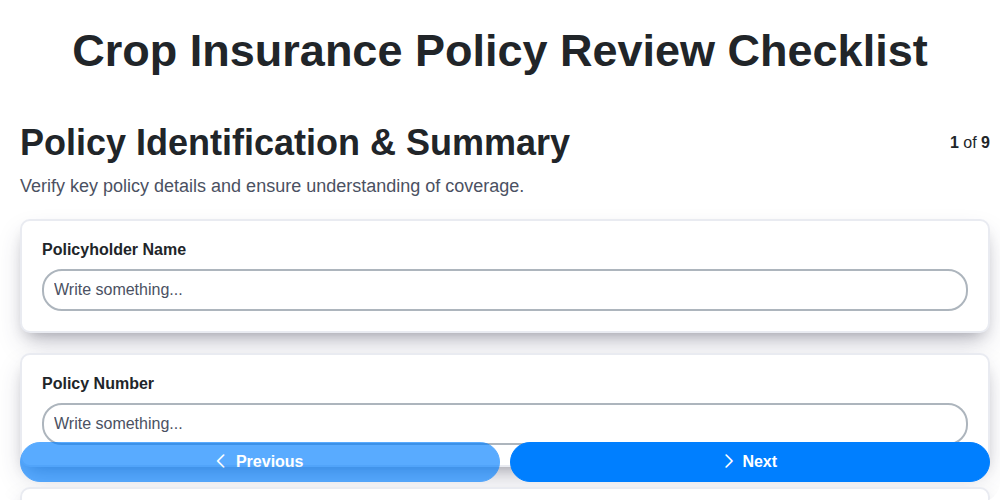
Crop Insurance Policy Review Checklist: A Farmer's Guide

The Ultimate Vehicle Registration & Insurance Validation Checklist
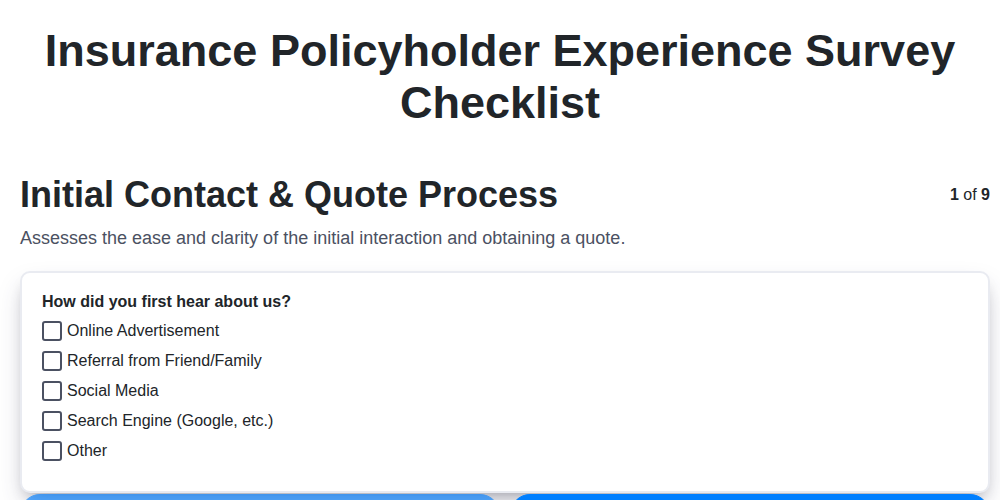
Mastering the Policyholder Journey: Your Insurance Experience Survey Checklist
Need help with
Insurance?
Have a question? We're here to help. Please submit your inquiry, and we'll respond promptly.