Insurance Cyber Risk Assessment Checklist: A Comprehensive Guide
Published: 12/01/2025 Updated: 07/02/2026
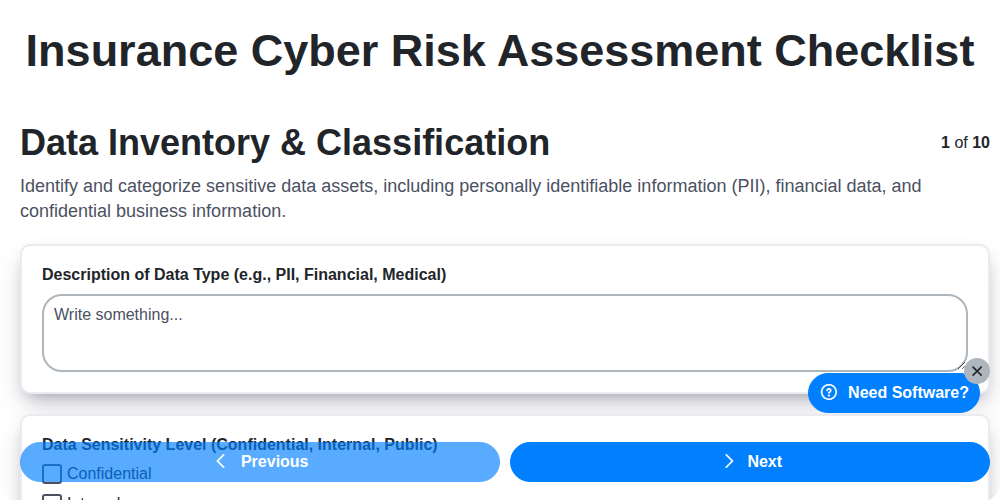
Table of Contents
- Introduction: Why Cyber Risk Assessments are Crucial for Insurance
- 1. Data Inventory & Classification: Knowing What You Protect
- 2. Network Security Controls: Fortifying Your Digital Perimeter
- 3. Endpoint Security: Securing Devices Everywhere
- 4. Application Security: Protecting Your Software Assets
- 5. Third-Party Risk Management: Addressing Vendor Vulnerabilities
- 6. Incident Response Planning: Preparing for the Inevitable
- 7. Employee Training & Awareness: Your Human Firewall
- 8. Data Backup & Recovery: Ensuring Business Continuity
- 9. Cloud Security: Managing Risks in the Cloud
- 10. Compliance & Legal Requirements: Navigating the Regulatory Landscape
- 11. Assessment Tools and Frameworks
- 12. Documenting and Reporting Your Findings
- Conclusion: Continuous Improvement in Cyber Risk Management
- Resources & Links
TLDR: Worried about cyberattacks? This checklist provides a step-by-step guide to assessing your insurance firm's cyber risk. It covers everything from understanding your data and securing your network to training employees and ensuring compliance - essentially, a roadmap to proactively identifying and mitigating vulnerabilities before they become a problem.
Introduction: Why Cyber Risk Assessments are Crucial for Insurance
The insurance industry faces a unique and escalating cyber threat landscape. As custodians of sensitive personal and financial data for millions of policyholders, insurers are prime targets for malicious actors. A single data breach can result in devastating financial losses, reputational damage, regulatory penalties, and a significant erosion of customer trust.
Traditional risk management strategies often fall short when it comes to the dynamic nature of cyber threats. A proactive approach is no longer optional; it's a business imperative. Cyber risk assessments are the cornerstone of this proactive defense. They provide a structured way to identify vulnerabilities, understand potential impact, and prioritize mitigation efforts. This isn't just about ticking boxes; it's about building a robust, layered security posture that can withstand evolving attacks and ensure the resilience of your insurance operations. Ignoring cyber risk isn't an option - a comprehensive assessment is the first vital step towards protecting your organization and your customers.
1. Data Inventory & Classification: Knowing What You Protect
Before you can effectively protect your data, you need to know what data you have, where it resides, and how sensitive it is. A robust data inventory and classification is the foundational step in any cyber risk assessment.
What's involved?
- Identify Data Assets: This goes beyond just customer data. Include financial records, intellectual property, employee information, vendor agreements - anything of value to your business.
- Data Mapping: Determine where each data asset lives - servers, laptops, cloud storage, databases, physical files, etc. Create a visual map if possible.
- Classification: Categorize data based on its sensitivity. Common classifications include:
- Public: Information freely available.
- Internal: For internal use only.
- Confidential: Restricted access; potential harm if disclosed.
- Highly Confidential/Restricted: Extremely sensitive data requiring the highest level of protection (e.g., Personally Identifiable Information (PII), financial data, trade secrets).
- Ownership: Assign data owners who are responsible for ensuring the data's security and compliance.
- Regular Review: Data landscapes change. Your inventory and classification need to be updated regularly (at least annually, and ideally more frequently) to reflect new data sources, systems, and regulations.
Why is it important?
A clear understanding of your data allows you to prioritize security efforts, allocate resources effectively, and implement appropriate controls based on the risk level of each data type. Without this foundation, you're essentially trying to protect something in the dark.
2. Network Security Controls: Fortifying Your Digital Perimeter
Your network is the frontline in defending against cyberattacks. Weaknesses here can expose your entire organization. A robust network security control framework isn't just about firewalls; it's a layered defense strategy.
Here't what needs to be considered:
- Firewall Assessment: Are your firewalls properly configured and up-to-date? Review rulesets, intrusion detection/prevention systems (IDS/IPS), and ensure they're aligned with your risk profile. Regular penetration testing can identify vulnerabilities.
- Network Segmentation: Divide your network into smaller, isolated zones. This limits the blast radius of a breach. Critical assets (like customer data servers) should be in highly restricted segments.
- VPN and Remote Access: Secure remote access with multi-factor authentication (MFA) and consistent security policies. Regularly audit VPN connections and user permissions.
- Wireless Security: Implement strong encryption (WPA3) for wireless networks. Guest networks should be completely isolated from your internal network.
- Network Monitoring & Logging: Implement robust network monitoring tools to detect suspicious activity. Centralized logging is essential for incident investigation and auditing. Review logs regularly.
- Intrusion Detection and Prevention: Consider implementing an Intrusion Detection System (IDS) or Intrusion Prevention System (IPS) to identify and block malicious traffic.
- Regular Vulnerability Scanning: Conduct regular scans of your network infrastructure to identify and remediate vulnerabilities before they can be exploited.
A proactive and continually evolving network security posture is crucial for mitigating cyber risk.
3. Endpoint Security: Securing Devices Everywhere
Your organization's endpoints - laptops, desktops, smartphones, tablets, and even IoT devices - represent a significant attack surface. These devices often leave the relative safety of your network perimeter, making them vulnerable to compromise. A robust endpoint security strategy is critical for mitigating cyber risk.
Here's what your checklist should cover:
- Device Inventory & Management: Know what devices connect to your network. Maintain an accurate inventory, including device type, operating system, and location. Implement Mobile Device Management (MDM) solutions where applicable to enforce security policies.
- Antivirus & Anti-Malware: Ensure all endpoints have up-to-date antivirus and anti-malware software. Consider Endpoint Detection and Response (EDR) solutions for advanced threat detection and response capabilities.
- Firewalls: Personal firewalls on each device offer an added layer of protection against unauthorized access.
- Patch Management: Implement a consistent patch management process to rapidly deploy security updates and address vulnerabilities. Automated patching solutions are highly recommended.
- Encryption: Encrypt hard drives and removable media to protect data at rest, even if a device is lost or stolen.
- Access Control: Enforce strong password policies and multi-factor authentication (MFA) for device access.
- Remote Access Security: Secure remote access methods (VPNs, remote desktop protocols) with MFA and robust authentication protocols.
- Data Loss Prevention (DLP): Implement DLP measures to prevent sensitive data from leaving the organization via endpoints.
4. Application Security: Protecting Your Software Assets
Your applications - whether they's custom-built, off-the-shelf, or SaaS - are often the primary entry point for cyberattacks. A compromised application can expose sensitive data, disrupt operations, and damage your reputation. This section focuses on securing those vital assets.
Key Assessment Points:
- Secure Development Lifecycle (SDLC): Do you have a documented and enforced SDLC that incorporates security considerations at every stage - from design and development to testing and deployment? Are security reviews conducted regularly?
- Static & Dynamic Application Security Testing (SAST & DAST): Are you using SAST tools to analyze code for vulnerabilities before deployment and DAST tools to assess application behavior during runtime? How frequently are these tests performed?
- Input Validation & Output Encoding: Are input fields properly validated to prevent injection attacks (SQL injection, cross-site scripting)? Is output data encoded to prevent malicious scripts from executing?
- Authentication & Authorization: Is multi-factor authentication (MFA) implemented where appropriate? Are access controls granular and based on the principle of least privilege?
- Vulnerability Management: Do you have a process for identifying, tracking, and remediating vulnerabilities in your applications and their dependencies? This includes staying current with vendor security advisories.
- API Security: If your applications utilize APIs, are those APIs secured with proper authentication, authorization, and rate limiting?
- Web Application Firewall (WAF): Is a WAF deployed to protect against common web application attacks? Is it properly configured and maintained?
- Penetration Testing: Are regular penetration tests performed by qualified professionals to identify and exploit vulnerabilities?
5. Third-Party Risk Management: Addressing Vendor Vulnerabilities
Your organization's security posture isn't solely determined by your internal defenses. Increasingly, cyberattacks target vulnerabilities within your supply chain - exploiting weaknesses in the systems of your vendors, partners, and service providers. A robust third-party risk management program is no longer optional; it's essential.
Here's what you need to be doing:
- Vendor Inventory & Mapping: Maintain a comprehensive list of all third-party vendors who access your data or systems. Map the data flows - understand what data they handle and where it resides. Don't just list vendors; understand the relationship and data access levels.
- Risk Assessments: Conduct regular risk assessments of your vendors, focusing on their security practices. This should go beyond basic questionnaires - look for evidence of their controls. Consider penetration testing reports, security audits, and compliance certifications.
- Contractual Security Requirements: Ensure contracts with vendors include specific security requirements. These should address data protection, incident reporting, access controls, and compliance with relevant regulations. Make these requirements enforceable.
- Continuous Monitoring: Don't treat vendor risk assessment as a one-time event. Implement continuous monitoring to track vendor security posture changes. Use automated tools to scan for vulnerabilities and track compliance status.
- Right to Audit Clauses: Include clauses allowing you to audit vendor security practices. This provides a direct means of verifying their adherence to agreed-upon security standards.
- Incident Response Alignment: Ensure vendor incident response plans align with your own and that you are included in their notification procedures.
6. Incident Response Planning: Preparing for the Inevitable
Let's face it: even with the strongest preventative measures, a cyber incident can happen. Incident Response Planning (IRP) isn't about if an attack will occur; it's about minimizing the damage and recovering swiftly when it does. A robust IRP is your organization's battle plan for a cyber crisis.
Here's what a solid IRP includes:
- Clearly Defined Roles & Responsibilities: Who's in charge? Who communicates with whom? Designate specific individuals for tasks like containment, eradication, recovery, and communication. Avoid confusion in the heat of the moment.
- Detailed Procedures: Outline step-by-step instructions for responding to various incident types (ransomware, data breach, malware infection, etc.). Include escalation paths and approval processes.
- Communication Plan: Establish clear communication channels both internally (to employees and leadership) and externally (to customers, regulators, and the public). Pre-drafting communication templates can save valuable time.
- Containment Strategies: Detail how to isolate affected systems and prevent the incident from spreading. This might involve disconnecting networks, shutting down servers, or implementing firewall rules.
- Recovery Procedures: Outline the steps to restore systems and data to a known good state. This should include backup restoration processes and potentially disaster recovery plans.
- Post-Incident Activities: Include steps for analyzing the incident to identify root causes, improve security controls, and update the IRP itself. This lessons learned phase is critical for continuous improvement.
- Regular Testing & Drills: An IRP is only as good as its execution. Conduct tabletop exercises and simulated attacks to test the plan's effectiveness and identify areas for improvement. This ensures everyone knows their roles and the process works as intended.
Ignoring incident response planning is like ignoring fire safety in a building. It's not a question of if you'll need it, but when, and being prepared can be the difference between a manageable setback and a catastrophic failure.
7. Employee Training & Awareness: Your Human Firewall
Your cybersecurity defenses are only as strong as your weakest link - and often, that weakest link is human error. No matter how robust your technical safeguards are, a single click on a phishing email or a lapse in judgment can compromise your entire organization. That's why employee training and awareness are absolutely critical in managing cyber risk.
This isn't about scaring employees; it's about empowering them to be your first line of defense. Effective training should be engaging, ongoing, and tailored to different roles within the organization.
Here's what your employee training should cover:
- Phishing Recognition: Teach employees to identify and report suspicious emails, including how to spot red flags like unusual sender addresses, grammatical errors, and urgent requests. Regular simulated phishing exercises are invaluable.
- Password Security: Reinforce the importance of strong, unique passwords and multi-factor authentication (MFA). Educate on avoiding password reuse and the dangers of sharing passwords.
- Safe Browsing Practices: Cover best practices for online behavior, including avoiding suspicious websites, recognizing malicious downloads, and understanding the risks associated with public Wi-Fi.
- Social Engineering Awareness: Explain how attackers manipulate people into divulging information or taking actions that compromise security.
- Data Handling Procedures: Clearly define protocols for handling sensitive data, including proper storage, transmission, and disposal methods.
- Reporting Suspicious Activity: Create a clear and easy-to-follow process for employees to report suspicious emails, incidents, or concerns.
Beyond initial training, ongoing awareness is key. Consider regular newsletters, short videos, or interactive quizzes to keep security top-of-mind. A well-trained and aware workforce transforms from a potential vulnerability into a proactive and vital asset in your cyber risk management strategy.
8. Data Backup & Recovery: Ensuring Business Continuity
Cyberattacks, natural disasters, or even human error can all lead to data loss. A robust data backup and recovery plan isn't just a good practice; it's a critical component of your cyber risk management strategy. It's your lifeline to business continuity.
Here's what your data backup & recovery checklist should address:
- Backup Frequency: How often are your backups performed? Daily, weekly, or more frequently, depending on the criticality of your data? Consider the Recovery Point Objective (RPO) - the maximum acceptable data loss.
- Backup Types: Are you utilizing full, incremental, or differential backups? Each has advantages and disadvantages regarding speed and storage requirements.
- Offsite Storage: Backups shouldn't reside solely on-site. Implement offsite storage (cloud-based or physical) to protect against localized disasters.
- Backup Testing: Regularly test your backups! There's no point in having backups if you can't restore them. Simulate recovery scenarios to ensure the process works as expected.
- Data Retention Policies: Define how long you need to retain backups to meet legal, regulatory, and business requirements.
- Recovery Time Objective (RTO): Determine how long it can take to restore data and systems before business operations are severely impacted. Your plan must align with this timeframe.
- Backup Media Management: Securely manage and rotate backup media (tapes, disks, cloud storage) to prevent data degradation and loss.
- Encryption: Encrypt both on-site and off-site backups to protect sensitive data from unauthorized access.
9. Cloud Security: Managing Risks in the Cloud
The move to the cloud offers incredible flexibility and cost savings, but it also introduces unique cybersecurity risks. Your insurance cyber risk assessment must thoroughly examine your cloud security posture. Here's what to consider:
- Shared Responsibility Model: Understand the delineation of responsibility between you and your cloud provider. They secure the infrastructure, but you are responsible for securing your data and applications within that environment.
- Configuration Management: Are your cloud resources properly configured? Misconfigured storage buckets, open ports, and overly permissive access controls are common vulnerabilities. Implement automated configuration checks and enforce policies.
- Access Control & Identity Management: Enforce strong authentication (MFA is essential!), least privilege access, and regularly review user permissions. Utilize cloud-native identity and access management (IAM) tools.
- Data Encryption: Encrypt data at rest and in transit. Verify encryption keys are properly managed and protected.
- Network Security: Segment your cloud network to isolate sensitive workloads. Use firewalls and intrusion detection/prevention systems.
- Vulnerability Scanning & Patch Management: Regularly scan your cloud instances for vulnerabilities and apply patches promptly. Automate this process where possible.
- Cloud Security Posture Management (CSPM): Consider using a CSPM tool to continuously monitor your cloud environment for misconfigurations and compliance violations.
- Visibility & Monitoring: Gain visibility into all cloud activity. Implement comprehensive logging and monitoring to detect and respond to threats quickly.
10. Compliance & Legal Requirements: Navigating the Regulatory Landscape
Cyber insurance isn't just about financial protection; it's intrinsically linked to demonstrating due diligence in complying with relevant laws and regulations. Failing to adhere to these requirements can not only invalidate your policy but also expose your organization to significant fines and legal action.
This section explores key compliance areas insurers will scrutinize. Don't assume your existing policies are sufficient - a dedicated assessment is crucial.
Here's a snapshot of what's typically expected:
- GDPR (General Data Protection Regulation): If you process data of EU citizens, GDPR compliance is mandatory. This involves data subject rights, data breach notification, and documented consent.
- CCPA/CPRA (California Consumer Privacy Act/California Privacy Rights Act): Similar to GDPR, these laws govern the handling of California resident data and mandate transparency and consumer rights.
- HIPAA (Health Insurance Portability and Accountability Act): For healthcare organizations, HIPAA dictates stringent data security and privacy controls.
- NYDFS Cybersecurity Regulation (23 NYCRR 500): Applies to financial institutions operating in New York and establishes specific cybersecurity requirements.
- PCI DSS (Payment Card Industry Data Security Standard): Required for organizations that handle credit card information.
- State Data Breach Notification Laws: Almost every US state has laws requiring notification to affected individuals and regulators in the event of a data breach.
Documentation is Key: Insurers will want to see proof of compliance - policies, procedures, audit reports, and training records. Proactively addressing these requirements demonstrates a commitment to data security, strengthening your cyber insurance posture and potentially lowering premiums. Remember to regularly review and update your compliance efforts to reflect evolving regulations and threat landscapes.
11. Assessment Tools and Frameworks
Navigating the complexities of cyber risk assessment can feel overwhelming. Thankfully, numerous tools and frameworks exist to guide your process and streamline your efforts. Choosing the right ones depends on your organization's size, industry, and risk appetite.
Here's a look at some popular options:
- NIST Cybersecurity Framework (CSF): A widely adopted framework offering a comprehensive approach to managing and reducing cyber risks. It's flexible and can be tailored to various organizations.
- ISO 27001: An internationally recognized standard for information security management systems. Achieving ISO 27001 certification demonstrates a commitment to robust security practices.
- CIS Controls (Center for Internet Security): A prioritized set of actions designed to improve an organization's security posture. They provide a practical, actionable approach to risk mitigation.
- CyberGRIT: A platform offering a customizable cyber risk assessment that helps prioritize and document vulnerabilities.
- RiskXpert: A risk assessment tool that helps businesses quickly and easily assess their cyber security risks.
- Commercial Risk Assessment Platforms: Numerous vendors offer proprietary platforms that combine risk assessment, vulnerability scanning, and reporting features (e.g., ServiceNow, RSA Archer).
Beyond these, consider leveraging vulnerability scanners and penetration testing tools to identify weaknesses in your systems. Remember to regularly review and update your assessment tools and frameworks to stay ahead of evolving threats and maintain a strong security posture.
12. Documenting and Reporting Your Findings
The assessment isn't complete until you've documented your findings and reported them effectively. This isn't just about ticking boxes; it's about creating a clear roadmap for improvement and demonstrating due diligence.
Your documentation should include a comprehensive report outlining:
- Detailed Findings: Clearly articulate each vulnerability or gap identified during the assessment, referencing the specific checklist items they relate to. Avoid jargon - explain the potential impact in business terms.
- Risk Scoring/Prioritization: Assign a risk score to each finding (e.g., high, medium, low) based on likelihood and impact. This helps prioritize remediation efforts.
- Remediation Recommendations: For each finding, provide actionable recommendations for addressing the risk. Be specific - avoid generic suggestions like improve security. Instead, suggest specific tools, processes, or policy changes.
- Responsible Parties & Timelines: Identify the individuals or teams responsible for implementing each remediation recommendation and suggest realistic timelines for completion.
- Executive Summary: A concise overview of the assessment's key findings, risks, and recommendations, designed for senior management who may not have a deep technical understanding.
Regular reporting - ideally quarterly or annually - demonstrates ongoing vigilance and allows for tracking progress on remediation efforts. This documentation serves as critical evidence for insurance providers, auditors, and regulatory bodies, reinforcing your commitment to cybersecurity best practices.
Conclusion: Continuous Improvement in Cyber Risk Management
Ultimately, a cyber risk assessment isn't a one-and-done activity. It's a living document that needs regular review and updating. The threat landscape is constantly evolving, new vulnerabilities are discovered, and your business operations will inevitably change. This checklist provides a strong foundation, but it's crucial to view it as a starting point for a continuous improvement cycle. Regularly revisit each item, assess its effectiveness, and adapt your controls accordingly. By embedding this proactive approach to cyber risk management, you can significantly bolster your insurance coverage's value and demonstrate a commitment to mitigating potential losses. Remember, a resilient cybersecurity posture is a journey, not a destination.
Resources & Links
- National Institute of Standards and Technology (NIST): NIST provides comprehensive cybersecurity frameworks, guidelines, and standards. Their Cybersecurity Framework (CSF) is a core resource for assessing and managing cyber risk, particularly relevant for the sections on frameworks, compliance, and incident response.
- International Organization for Standardization (ISO): ISO develops and publishes international standards. ISO 27001 is a globally recognized standard for information security management systems and is essential for sections on compliance and risk management.
- Cyber Insurance Institute: Provides resources and insights specifically tailored to the cyber insurance industry, covering topics related to risk assessment and underwriting. Useful for context on industry expectations.
- Center for Internet Security (CIS): CIS provides the CIS Controls, a prioritized set of actions to improve an organization's security posture. Highly relevant for sections on network security, endpoint security, and application security.
- SANS Institute: SANS offers extensive training and resources on cybersecurity, including courses and certifications related to risk assessment, incident response, and security controls. Valuable for employee training and specialized expertise.
- FBI - Cyber Investigations: Provides information on current cyber threats, investigative tactics, and best practices for mitigating risk. Useful for staying abreast of evolving threats, particularly concerning incident response.
- Cybersecurity and Infrastructure Security Agency (CISA): CISA provides resources, alerts, and guidance on cybersecurity risks, including those impacting insurance companies. Relevant for compliance and staying informed about government guidance.
- European Union Agency for Cybersecurity (ENISA): Provides cybersecurity guidance and best practices, particularly relevant if the insurance company operates within or has dealings with the EU. Important for compliance, especially concerning data protection (GDPR).
- Gartner: Gartner provides research and analysis on various technology areas, including cybersecurity. Can provide insights into emerging threats and technologies for risk assessment (subscription required for full access).
- Splunk: Splunk offers data analytics and security information event management (SIEM) solutions. Relevant for sections on documenting findings, incident response planning, and continuous improvement by facilitating log analysis and threat detection.
- Rapid7: Rapid7 provides vulnerability management and threat detection solutions. Relevant for sections on application security, third-party risk management, and identifying vulnerabilities.
- Cloud Security Alliance: Provides resources and best practices specifically related to cloud security, covering topics such as data protection, access control, and compliance. Essential for section 9 on Cloud Security.
- OWASP (Open Web Application Security Project): OWASP provides resources and guidance on web application security. Useful for application security section; specifically addressing common vulnerabilities and secure coding practices.
Frequently Asked Questions
What is cyber risk assessment?
Cyber risk assessment is the process of identifying, analyzing, and evaluating potential cyber threats and vulnerabilities within an organization. It helps determine the likelihood and potential impact of these risks to inform mitigation strategies and improve overall cybersecurity posture.
Why is a cyber risk assessment checklist important for insurance?
Insurance companies face unique cyber risks related to sensitive client data, complex systems, and potential for large-scale payouts. A checklist ensures a thorough and consistent evaluation of these risks, helping insurers understand their exposure and tailor their policies and risk management practices effectively.
Who should use this checklist?
This checklist is designed for a wide range of professionals involved in cyber risk management, including insurance underwriters, risk managers, IT security teams, and consultants advising insurance companies. It's beneficial for both small and large insurance organizations.
What types of risks are typically covered in a cyber risk assessment for insurance companies?
Common risks include data breaches, ransomware attacks, denial-of-service attacks, insider threats, third-party vendor risks, regulatory compliance failures, and business interruption due to cyber incidents.
How frequently should cyber risk assessments be conducted?
Cyber risk assessments should ideally be conducted annually, or more frequently (e.g., quarterly or semi-annually) if the organization's risk profile is rapidly changing, significant system upgrades are implemented, or new regulatory requirements emerge.
What is the difference between a vulnerability assessment and a cyber risk assessment?
A vulnerability assessment identifies weaknesses in systems and applications. A cyber risk assessment goes further by analyzing the likelihood of exploitation of those vulnerabilities and the potential impact on the business, considering business context, controls, and threats.
What is the role of third-party vendors in a cyber risk assessment?
Insurance companies often rely on third-party vendors for critical services. The checklist emphasizes assessing the cybersecurity practices of these vendors to ensure they don't introduce unacceptable risk to the insurer.
How can I prioritize risks identified in the checklist?
Prioritization should be based on a combination of likelihood and impact. Risks with high likelihood and high impact should be addressed first, followed by risks with high likelihood and moderate impact, and so on. A risk matrix is a useful tool for this.
What is the importance of employee training and awareness in a cyber risk assessment?
Employees are often the first line of defense against cyberattacks. The checklist highlights the need for ongoing training and awareness programs to educate employees about phishing scams, malware, and other cyber threats.
Where can I find additional resources for cyber risk management?
Several organizations provide resources on cyber risk management, including the National Institute of Standards and Technology (NIST), the Cybersecurity and Infrastructure Security Agency (CISA), and industry-specific cybersecurity associations. Your insurance regulatory bodies may also have guidance.
Comments
There are no comments yet. Be the first to add one!
Insurance Management Solution Demo
Managing policies, claims, and compliance in the insurance industry is complex. ChecklistGuro's Work OS platform streamlines your operations, from underwriting and renewals to claims processing and reporting. Improve efficiency, reduce errors, and enhance customer satisfaction. Discover how ChecklistGuro can transform your insurance business!
Related Articles
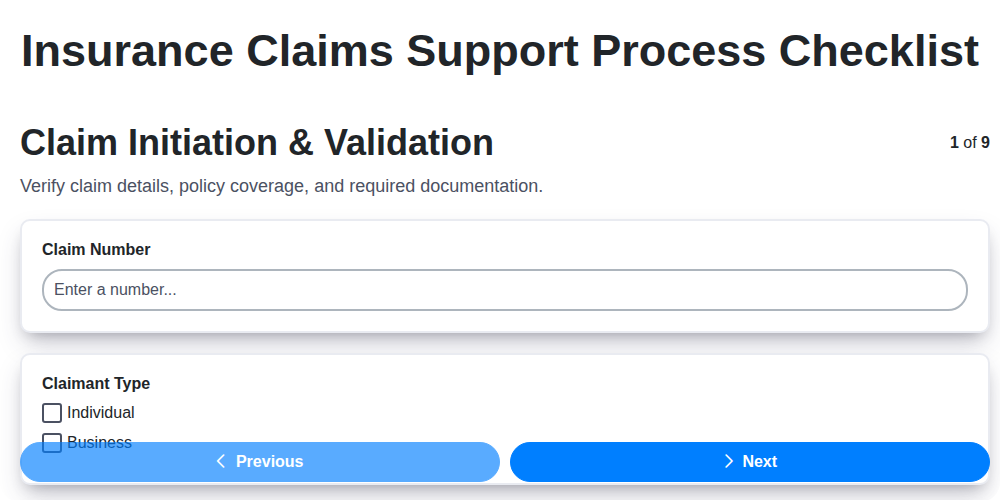
Streamline Claims: Your Insurance Claims Support Process Checklist Template
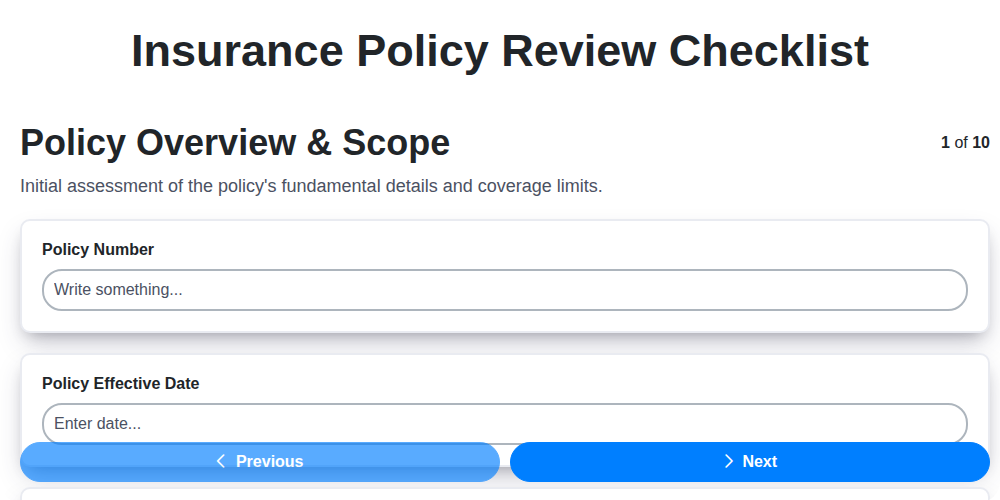
Your Insurance Policy Review Checklist: A Step-by-Step Guide
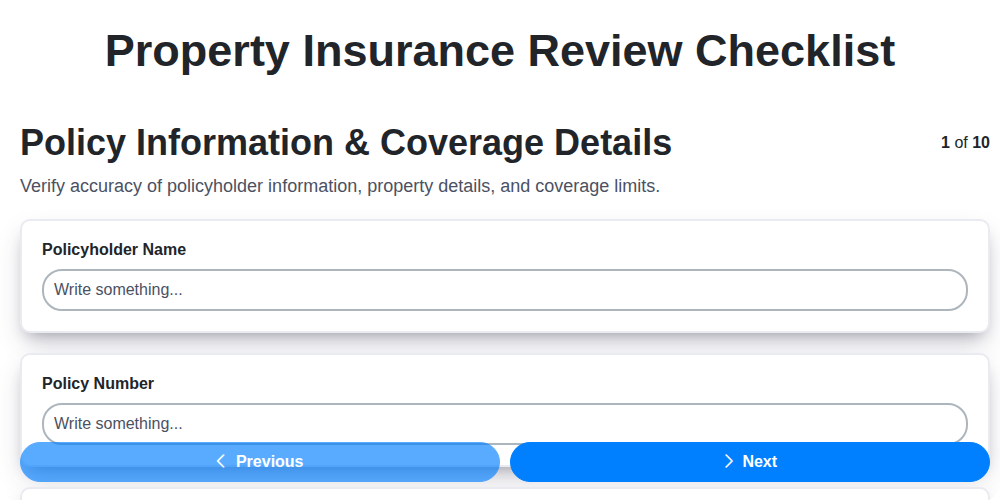
Your Property Insurance Review Checklist: A Step-by-Step Guide
Your Title Search & Insurance Checklist Template
Simplify Insurance Verification: Your Free Dental Checklist Template
Crop Insurance Policy Review Checklist: A Farmer's Guide

The Ultimate Vehicle Registration & Insurance Validation Checklist
Mastering the Policyholder Journey: Your Insurance Experience Survey Checklist
Need help with
Insurance?
Have a question? We're here to help. Please submit your inquiry, and we'll respond promptly.