Insurance Policy Documentation Checklist: A Comprehensive Guide
Published: 12/01/2025 Updated: 10/01/2026
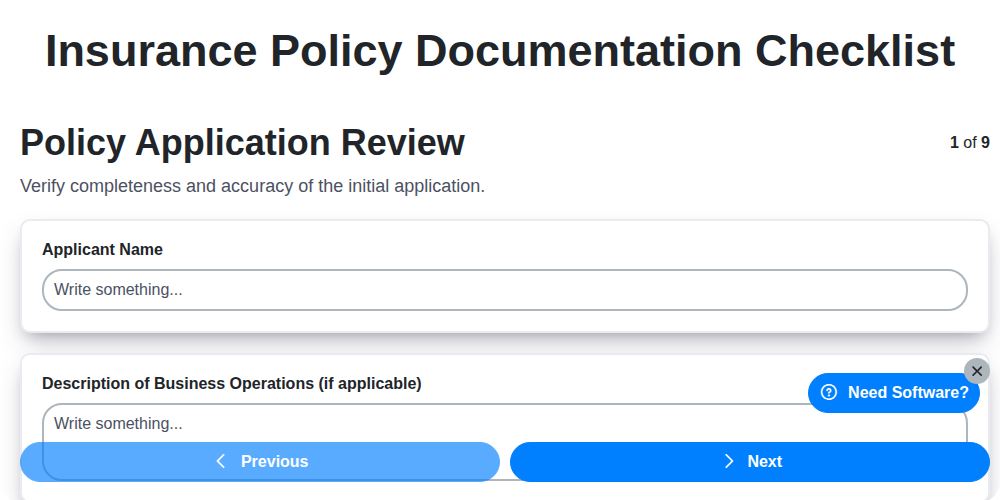
Table of Contents
- Introduction: Why a Robust Documentation Checklist Matters
- 1. Policy Application Review: Ensuring Accuracy and Completeness
- 2. Supporting Documentation: Gathering Essential Evidence
- 3. Underwriting File Review: Assessing Risk and Justification
- 4. Policy Issuance: The Formal Creation of Coverage
- 5. Declarations Page Accuracy: A Critical Detail
- 6. Policy Forms & Endorsements: Ensuring Alignment
- 7. Legal & Regulatory Compliance: Navigating the Framework
- 8. Record Keeping & Storage: Maintaining a Secure Archive
- 9. Policy Delivery & Acknowledgment: Proof of Receipt
- 10. Common Pitfalls to Avoid
- Leveraging Technology for Documentation Management
- Training and Team Responsibility
- Conclusion: Staying Organized and Compliant
- Resources & Links
TLDR: Feeling overwhelmed by insurance policy documentation? This checklist is your lifeline! It breaks down every step - from initial application to secure storage - ensuring accuracy, compliance, and a smooth process. Download the template and simplify your insurance documentation workflow today!
Introduction: Why a Robust Documentation Checklist Matters
In the insurance industry, meticulousness isn't just a virtue-it's a necessity. A single missed document or overlooked detail can lead to compliance issues, disputes, and ultimately, reputational damage. This is why a comprehensive insurance policy documentation checklist is so critical. It's far more than just a formality; it's the foundation of sound risk management and client trust. A well-designed checklist ensures consistency, reduces errors, and provides a clear audit trail throughout the policy lifecycle. From initial application to long-term storage, a standardized process minimizes risk, improves efficiency, and strengthens your agency's commitment to accuracy and professionalism. This post will outline key checkpoints-a roadmap-to ensure complete and compliant insurance policy documentation.
1. Policy Application Review: Ensuring Accuracy and Completeness
The policy application is the foundation of your insurance policy. A thorough review at the outset is crucial to avoid potential issues down the line. This isn't just about catching typos; it's about verifying the accuracy and completeness of every detail.
Here's what to focus on:
- Applicant Information: Double-check names, addresses, dates of birth, and social security numbers. Even a minor discrepancy can lead to claim denials.
- Property/Asset Details: Ensure descriptions of property, vehicles, or other insurable assets are precise and comprehensive. Include construction types, square footage, VIN numbers, and any relevant modifications.
- Requested Coverage: Confirm the applicant's desired coverage levels and limits align with their needs and are accurately reflected in the application.
- Prior History: Verify information regarding prior insurance coverage, claims history, and any relevant risk factors. Discrepancies need to be investigated immediately.
- Signatures & Dates: Ensure all required signatures are present and the application is dated correctly. A missing signature can render the application invalid.
A well-executed policy application review significantly reduces the risk of future misunderstandings and claim complications.
2. Supporting Documentation: Gathering Essential Evidence
A robust insurance policy isn't built solely on the application; it's reinforced by comprehensive supporting documentation. This evidence validates the information provided and strengthens the policy's integrity. What kind of documentation are we talking about? It varies widely based on the policy type and applicant situation.
Here's a breakdown of common documents you're likely to encounter:
- Financial Records: For life insurance or business policies, expect to see bank statements, investment portfolios, tax returns, and proof of income. These help verify financial stability and assess risk accurately.
- Property Records: For property insurance, deeds, appraisals, previous inspection reports, and repair estimates are crucial. They establish ownership and provide a baseline for property value.
- Medical Records & Reports: Health and life insurance require medical history, physical examination reports, lab results, and sometimes specialist reports. This provides a detailed picture of the applicant's health status.
- Vehicle Information: Auto insurance policies need vehicle registration, inspection records, and potentially accident history reports.
- Business Documents: Commercial policies often require articles of incorporation, business licenses, financial statements, and loss history reports.
- Identification: Valid government-issued photo identification is a standard requirement.
The completeness and accuracy of this supporting documentation directly impact the underwriting process and the overall validity of the policy. Missing or inaccurate documents can lead to delays, increased premiums, or even policy denial. Maintaining a well-organized system for collecting and verifying these documents is essential for a smooth and efficient process.
3. Underwriting File Review: Assessing Risk and Justification
A thorough underwriting file review is critical to ensuring the policy reflects an accurate assessment of risk and provides justification for the terms offered. This isn't just a formality; it's a deep dive into the information used to determine insurability and pricing.
During this review, examine the original application details against the supporting documentation. Verify that any reported risks, such as property conditions, business operations, or applicant health, were appropriately evaluated. Pay close attention to any red flags or concerns raised during the application process and confirm they were thoroughly investigated and documented.
Look for evidence that the underwriter considered all relevant factors and used sound underwriting judgment. This includes verifying calculations for premiums, limitations, and exclusions. Scrutinize any deviation from standard underwriting guidelines and ensure a clear, documented rationale exists. A well-documented underwriting file provides a complete record of the risk assessment and serves as a valuable resource for future claims handling and audits. Inconsistent or missing information here can expose the insurance company to significant liability.
4. Policy Issuance: The Formal Creation of Coverage
Once the underwriting process is complete and a decision to issue the policy is made, the formal creation of coverage begins. This isn't just about printing a document; it's a critical step involving verification and final approvals. Key actions include ensuring all necessary signatures are obtained - either physical or electronic, depending on the policy and legal requirements. We meticulously check for any conditions precedent to the policy's effectiveness, such as payment of the initial premium or completion of a safety inspection. This phase also involves generating the official policy number, which acts as the unique identifier for the insured's coverage. Finally, a record of the policy issuance date and time is meticulously documented within our systems, establishing the start date of the insurance coverage. This stage sets the foundation for the insured's protection and our commitment to fulfilling our obligations.
5. Declarations Page Accuracy: A Critical Detail
The declarations page is arguably the most important page in your insurance policy. It's the summary of everything you're insured for - coverage amounts, deductibles, policy period, and insured parties. Any inaccuracies here can lead to claim denials, legal disputes, and serious financial implications for your client.
Double-check everything on the declarations page against the original application and supporting documentation. Verify the insured's name, property address, coverage limits, and any specific endorsements. Even a small typo - a missing digit in a coverage amount, for instance - can cause significant issues. Ensure that any discounts applied were correctly calculated and reflected. A thorough review at this stage prevents costly surprises down the line and reinforces trust with your clients.
6. Policy Forms & Endorsements: Ensuring Alignment
This is where the devil's in the details. Policy forms and endorsements are the nuts and bolts of your insurance policy, dictating the specific coverages, exclusions, and conditions. A mismatch here can lead to frustrating claims disputes and potentially, legal challenges.
Your checklist must verify that all policy forms and endorsements used accurately reflect the agreed-upon terms and conditions. This includes:
- Form Accuracy: Confirm the forms are the most up-to-date versions and haven't been superseded. Check for typos, inconsistencies, or outdated language.
- Endorsement Alignment: Each endorsement should clearly and precisely modify the standard policy language. Ensure the endorsement's intent is understandable and its effect is clear. Verify endorsements are applied to the correct policy period.
- Consistency Across Forms: Ensure endorsements don't contradict the primary policy language or other endorsements. Look for overlapping clauses or ambiguous wording.
- Client Understanding: While not directly a verification step, ensure you have a record demonstrating the client understood the impact of any endorsements. A simple acknowledgement form can be invaluable.
Failing to meticulously check policy forms and endorsements isn't just a clerical error; it's a potential liability. A proactive approach here safeguards both your organization and your clients.
7. Legal & Regulatory Compliance: Navigating the Framework
Insurance is a heavily regulated industry, and maintaining legal and regulatory compliance is paramount. Failing to do so can result in significant penalties, reputational damage, and even license revocation. This checklist step isn't just about ticking a box; it's about establishing a robust system to ensure ongoing adherence.
Here's what you need to consider:
- State-Specific Regulations: Insurance laws vary considerably by state. You must be intimately familiar with the regulations in each jurisdiction where you operate, covering areas like policy content, advertising, rates, and claims handling.
- Federal Laws: Keep abreast of federal mandates like the Gramm-Leach-Bliley Act (GLBA) for data privacy, and any applicable guidance from the National Association of Insurance Commissioners (NAIC).
- Rate Filing & Approval: Many states require insurance companies to file rates and policy forms for approval. Document the entire filing process, including dates, submissions, and approvals received.
- Advertising and Marketing Reviews: Ensure all marketing materials comply with state regulations regarding accuracy, clarity, and disclosure of policy terms. Routine internal reviews and, ideally, external legal review are crucial.
- Ongoing Monitoring: Legal and regulatory landscapes change. Implement a system for ongoing monitoring of new laws and regulations, and proactively update policies and procedures accordingly. Assign responsibility for this monitoring to a designated team or individual.
- Documentation: Meticulously document all compliance activities, including training records, internal audits, and responses to regulatory inquiries.
8. Record Keeping & Storage: Maintaining a Secure Archive
Accurate and readily accessible records are the backbone of any insurance operation. Consistent record keeping isn't just good practice; it's often mandated by regulations and critical for audits, claims resolution, and demonstrating compliance. This section details how to establish a robust system.
Retention Periods: Understand and adhere to all applicable state and federal regulations regarding retention periods for insurance documents. These vary considerably based on policy type and jurisdiction. Develop a clear policy outlining these requirements and regularly review it for updates.
Digital vs. Physical: While digital storage offers undeniable benefits (accessibility, space-saving, searchability), consider the implications of both options. Implement a secure digital archive with robust encryption, access controls, and backup procedures. If physical storage is necessary, ensure a climate-controlled, fire-resistant environment.
Indexing & Searchability: A disorganized archive is almost as bad as no archive at all. Implement a clear indexing system (e.g., policy number, client name, date) to allow for quick and efficient retrieval. For digital archives, metadata tagging is essential.
Access Control: Limit access to sensitive documents based on roles and responsibilities. Implement strong passwords and multi-factor authentication. Regularly audit access logs to identify any unauthorized access attempts.
Disaster Recovery: Have a plan in place to protect records in the event of a natural disaster or cyberattack. This could involve offsite backups, cloud storage, or a combination of both.
Regular Audits: Periodically audit your record-keeping practices to ensure compliance and identify areas for improvement.
9. Policy Delivery & Acknowledgment: Proof of Receipt
Getting a policy issued is only half the battle; ensuring the client receives it and acknowledges its receipt is equally crucial. This step provides critical proof that the insured is aware of their coverage and obligations.
Why is Acknowledgment Important?
- Confirmation of Understanding: Acknowledgment signifies the client has received and ideally reviewed their policy documents.
- Legal Protection: It serves as evidence that the insurer fulfilled its duty to provide policy information, protecting against potential disputes later on.
- Reduced Confusion: Proactive acknowledgment minimizes confusion about coverage terms and conditions.
Best Practices for Policy Delivery & Acknowledgment:
- Choose a Delivery Method: Select a method that aligns with client preferences and company protocols - email, mail, or secure online portal. Document the chosen method.
- Document Delivery: Maintain a record of when and how the policy was delivered. For mail, obtain a return receipt. For email, capture read receipts (though be mindful of their reliability). For online portals, track access and downloads.
- Require a Signed Acknowledgment: Whenever possible, obtain a signed and dated acknowledgment form from the client confirming receipt and understanding (or attempted understanding) of the policy. This form should be retained in the policy file.
- Electronic Acknowledgments: If using electronic acknowledgment, ensure it's legally binding and complies with relevant e-signature regulations.
- Follow-Up: For clients who don't acknowledge receipt within a reasonable timeframe, proactively follow up to ensure they're aware of the policy and have the opportunity to ask questions.
10. Common Pitfalls to Avoid
Navigating insurance policy documentation can be complex, and even experienced professionals sometimes stumble. Here are some frequent pitfalls to watch out for:
- Ignoring Minor Discrepancies: A small typo on an application or a slight mismatch in dates might seem insignificant, but these can trigger issues during claims processing or audits. Treat every detail with attention.
- Relying Solely on Electronic Copies: While digitalization is crucial, ensure you have a robust backup system for electronic documents and consider retaining physical copies of vital records, especially for older policies.
- Insufficient Cross-Referencing: Failing to link application details with underwriting files and policy forms leads to inconsistencies and potential errors. Always verify information across all documentation.
- Lack of Training for Staff: Insufficient training on policy documentation procedures can lead to mistakes and non-compliance. Regular training updates are essential.
- Failure to Update Endorsements Properly: Endorsements need to be incorporated meticulously into the policy file. Missing or incorrectly filed endorsements can invalidate coverage.
- Neglecting Regulatory Changes: Insurance regulations are constantly evolving. Failure to stay abreast of changes can result in non-compliance penalties.
- Poor Acknowledgment Tracking: Not meticulously tracking policy delivery and acknowledgment from clients creates liability issues if coverage disputes arise.
- Assuming All Data is Accurate: Don't passively accept information; proactively verify data provided by applicants and third parties.
- Lack of Version Control: Using outdated policy forms or endorsements is a significant risk. Implement a system to track version control effectively.
- Overlooking Retention Requirements: State and federal regulations dictate how long you must retain policy documents. Failure to adhere to these retention schedules can result in penalties.
Leveraging Technology for Documentation Management
Managing insurance policy documentation can quickly become overwhelming, especially with increasing volumes and complex regulations. Fortunately, technology offers powerful solutions to streamline the process and minimize errors. Cloud-based document management systems are a game-changer, allowing for centralized storage, secure access, version control, and automated workflows. Optical Character Recognition (OCR) software can digitize paper documents, making them searchable and reducing manual data entry. AI-powered tools can even automate aspects of the review process, flagging potential discrepancies or compliance issues within applications and policy forms. Investing in these technologies not only enhances efficiency and reduces operational costs but also improves accuracy and strengthens your compliance posture. Consider integrating your documentation management system with your core insurance platform for even greater automation and real-time data visibility.
Training and Team Responsibility
A robust insurance policy documentation process isn't just about having a checklist; it's about having the right team and the right training. Assigning clear responsibilities is critical. For example, the Policy Application Review and Supporting Documentation verification might fall under the responsibility of a dedicated Application Specialist, while Declarations Page Accuracy and Policy Forms & Endorsements could be managed by a Policy Specialist.
Regular, ongoing training is equally important. This shouldn't be a one-time event. Training should cover not only the checklist itself but also changes in regulations, policy forms, and best practices. This includes training on:
- Understanding Policy Language: Ensuring the team comprehends the nuances of policy wording to identify potential errors or inconsistencies.
- Compliance Updates: Keeping the team informed about new and revised legal and regulatory requirements impacting documentation.
- System Proficiency: Providing comprehensive training on any systems or software used for document management and policy issuance.
- Escalation Procedures: Establishing clear protocols for escalating issues and seeking clarification when necessary.
Furthermore, fostering a culture of accountability - where team members feel empowered to question processes and identify potential issues - is vital for maintaining a high level of documentation accuracy and compliance. Periodic refresher courses and performance reviews focused on documentation adherence can reinforce best practices and ensure continuous improvement.
Conclusion: Staying Organized and Compliant
Ultimately, a robust insurance policy documentation checklist isn't just about ticking boxes; it's about safeguarding your business and your clients. By meticulously following each step - from initial application review to secure record storage - you build a foundation of accuracy, transparency, and compliance. This proactive approach minimizes errors, reduces risk, and fosters trust. Remember, consistent adherence to a well-defined checklist isn't just best practice; it's a vital investment in the long-term health and stability of your insurance operations. Embrace organization, prioritize compliance, and watch your processes thrive.
Resources & Links
- National Association of Insurance Commissioners (NAIC): The NAIC provides resources, model laws, and regulations impacting the insurance industry. Crucial for understanding legal and regulatory compliance. Specifically, look for information related to policy form filing and regulation.
- IRMI (Insurance Risk Management Institute): IRMI offers a vast library of insurance resources, including articles, definitions, and training materials. Good for understanding underwriting principles, policy forms, and terminology.
- The Institute of Internal Auditors (IIA): While focused on internal auditing, the IIA provides frameworks and best practices for documentation and record retention that are highly relevant to insurance policy documentation. Focus on risk management and control frameworks.
- American Academy of Actuaries: Provides resources related to actuarial science, risk assessment and financial reporting, which are relevant to understanding the rationale behind underwriting decisions and policy pricing.
- Insurance Information Institute (III): Offers consumer-focused information on insurance topics, but also provides some industry insights and explanations of policy concepts.
- American Institute of Certified Public Accountants (AICPA): Focuses primarily on accounting and auditing standards, but provides guidance on record retention and electronic document management which can apply to insurance policy documentation.
- Nolo - Legal Information: Offers general legal information related to contracts and insurance law. Useful for understanding the legal framework surrounding policy documents.
- Docparser: Example of a document parsing and data extraction software - used in the article to talk about leveraging technology for documentation management. Shows real world tools.
- ABBYY: Another example of a document management software. Used to show how businesses leverage OCR and data capture tools to automate processes around documentation.
- Evernote: A popular note-taking and organization tool. Can be used for basic documentation management - a low-tech option discussed in leveraging technology.
- Microsoft SharePoint: A collaborative document management platform; an example of enterprise-level technology used in policy documentation. It is used in the leveraging technology section.
- Adobe: Adobe Acrobat is frequently used for creating, viewing, and manipulating PDF documents; useful for understanding policy document creation and security. Useful for the "leveraging technology" section
- Compliance Planet: Offers insights and news on regulatory compliance across various industries, including insurance. A source for staying informed on changes to regulations.
Frequently Asked Questions
What is an insurance policy documentation checklist and why do I need one?
An insurance policy documentation checklist is a detailed list of all documents required to obtain, maintain, or process claims for an insurance policy. It's essential to ensure you have everything needed to avoid delays, denials, or disputes with your insurer. It provides a centralized reference point to prevent missing vital paperwork.
Who needs to use an insurance policy documentation checklist?
Anyone with an insurance policy! This includes individuals, families, businesses - anyone seeking life, health, auto, home, or commercial insurance. Even insurance brokers and agents can benefit from using a checklist to ensure client needs are met.
What types of documents are typically included in an insurance policy documentation checklist?
Common documents vary based on the policy type but often include: application forms, proof of identity, proof of address, financial records, medical records (for health/life), vehicle registration (for auto), property deeds (for home/property), business licenses (for commercial), and previous insurance policies.
Where can I find a suitable insurance policy documentation checklist?
You can find checklists provided by your insurance company, online resources like ours (referring to the article), or from insurance brokers/agents. The best checklist will be tailored to the specific policy type you have.
Can I create my own insurance policy documentation checklist?
Yes, you can! However, it's crucial to thoroughly research the requirements for your specific policy type and consult with your insurance provider or agent to ensure it's comprehensive. Using a pre-existing checklist as a template is a good starting point.
What happens if I submit incomplete documentation?
Incomplete documentation can lead to delays in policy approval or claims processing. The insurance company may request the missing documents, which can prolong the process and potentially impact coverage. In some cases, a denial of coverage is possible.
How often should I review my insurance policy documentation checklist?
Review your checklist at least annually, or whenever there's a significant life change (e.g., marriage, divorce, new business, relocation, major property renovations). This ensures the information on file is accurate and up-to-date.
Are there different checklists for different insurance policy types?
Absolutely! Life insurance checklists will differ from auto insurance checklists, which will differ from commercial property insurance checklists. Each policy type has unique documentation requirements.
What if I can't find a specific document listed on the checklist?
Contact your insurance company or agent immediately. They can advise you on how to obtain a replacement or alternative documentation, if available. Don't assume you can simply skip the document; clarify the requirement.
Is there a way to digitize my insurance policy documentation checklist and supporting documents?
Yes! Scanning and storing documents digitally is becoming increasingly common and can improve organization. Ensure digital copies are securely stored and accessible when needed. Discuss this practice with your insurer to confirm acceptance of digital documents.
Comments
There are no comments yet. Be the first to add one!
Insurance Management Solution Demo
Managing policies, claims, and compliance in the insurance industry is complex. ChecklistGuro's Work OS platform streamlines your operations, from underwriting and renewals to claims processing and reporting. Improve efficiency, reduce errors, and enhance customer satisfaction. Discover how ChecklistGuro can transform your insurance business!
Related Articles
Streamline Claims: Your Insurance Claims Support Process Checklist Template
Your Insurance Policy Review Checklist: A Step-by-Step Guide
Your Property Insurance Review Checklist: A Step-by-Step Guide
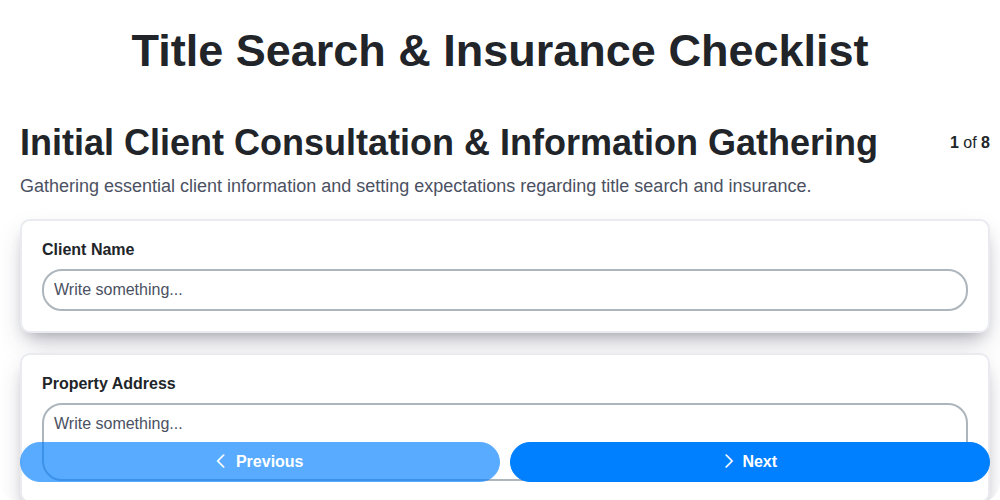
Your Title Search & Insurance Checklist Template
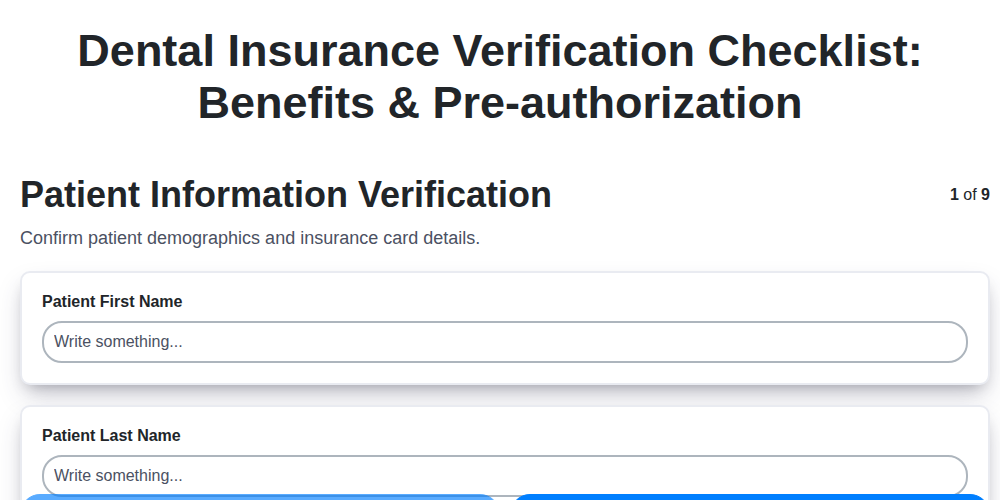
Simplify Insurance Verification: Your Free Dental Checklist Template
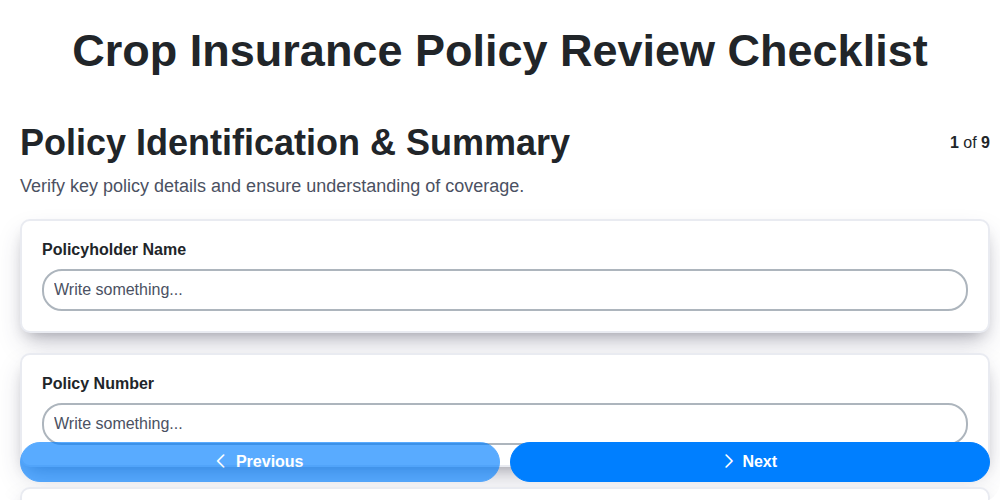
Crop Insurance Policy Review Checklist: A Farmer's Guide

The Ultimate Vehicle Registration & Insurance Validation Checklist
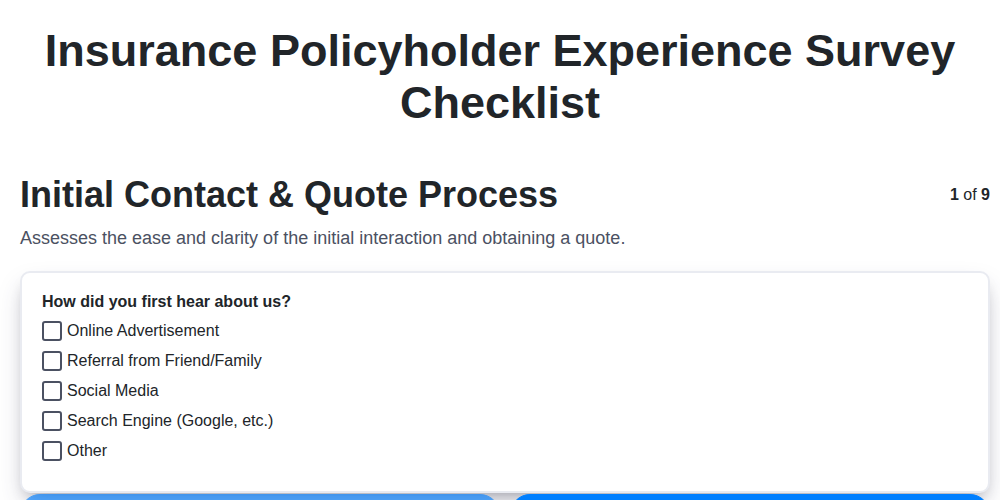
Mastering the Policyholder Journey: Your Insurance Experience Survey Checklist
Need help with
Insurance?
Have a question? We're here to help. Please submit your inquiry, and we'll respond promptly.