The Ultimate 2026 Janitorial Audit & Training Checklist: Ensuring Unmatched Cleaning Standards and Safety Compliance
Published: 10/28/2026 Updated: 10/29/2026
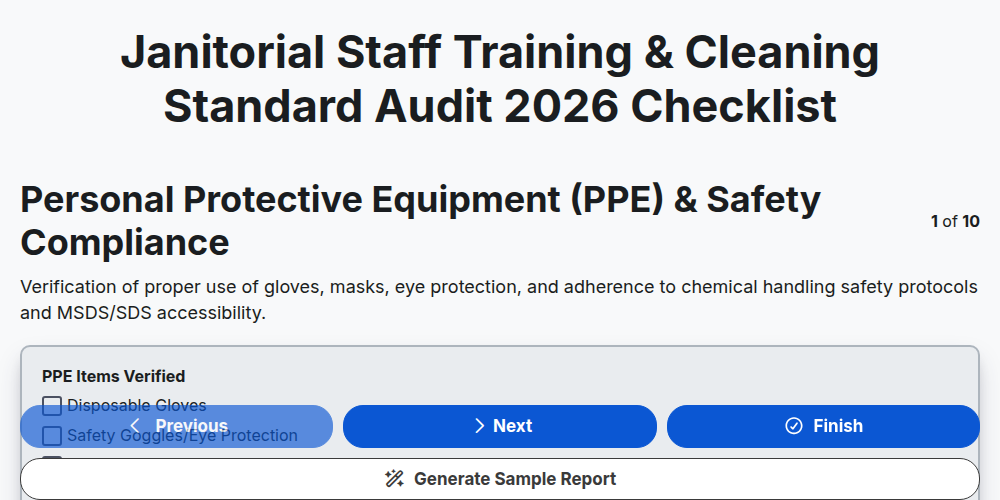
Table of Contents
- Introduction: Why Standardized Audits are Critical in 2026
- Prioritizing Safety: Personal Protective Equipment (PPE) & Safety Compliance
- Precision in Chemistry: Chemical Dilution & Equipment Maintenance
- Advanced Disinfection: Surface Disinfection & Sanitization Standards
- High-Traffic Maintenance: Floor Care & Surface Upkeep
- The Gold Standard for Hygiene: Restroom Sanitation Audit
- Responsible Operations: Waste Management & Disposal Protocols
- The Details Matter: Dusting & Detail Cleaning Accuracy
- Clarity and Presentation: Glass, Mirror, and Window Cleaning
- Operational Efficiency: Supply Inventory & Reorder Readiness
- The Final Seal of Quality: Post-Cleaning Walkthrough & Documentation
- Implementing the 2026 Audit Checklist for Long-Term Success
- Resources & Links
TLDR: Stay ahead of evolving industry standards in 2026 with our comprehensive janitorial audit and training checklist. Learn how to optimize facility hygiene by mastering everything from PPE compliance and chemical safety to advanced floor care, waste management, and rigorous post-cleaning documentation to ensure a spotless, safe, and efficient environment.
Introduction: Why Standardized Audits are Critical in 2026
In the rapidly evolving landscape of facility management, good enough is no longer a metric for success. As we move into 2026, the standards for hygiene, occupant wellness, and operational efficiency have reached unprecedented heights. The modern commercial environment-whether it be a high-traffic corporate office, a healthcare facility, or a retail hub-demands more than just a visible clean; it requires a scientifically verifiable standard of sanitation.
The Shift from Cleaning to Comprehensive Bio-Security
The role of janitorial services has transitioned from simple aesthetics to a critical component of building bio-security. With the increasing integration of smart building technologies and heightened awareness of indoor air quality (IAQ), a cleaning oversight gap can lead to more than just bad reviews-it can lead to operational shutdowns and health risks.
The Cost of Inconsistency
Without a rigorous, standardized audit process, cleaning quality becomes subjective and unpredictable. Inconsistency breeds several operational risks:
- Increased Liability: Failure to enforce PPE and chemical safety protocols exposes your organization to significant legal and occupational hazards.
- Asset Depreciation: Improper floor care and incorrect chemical usage can prematurely damage expensive-looking surfaces, leading to massive replacement costs.
- Resource Waste: Without a structured inventory and maintenance check, overspending on supplies and frequent equipment repairs can erode your bottom line.
Proactive vs. Reactive Management
A 2026 audit strategy is not about catching staff making mistakes; it is about implementing a culture of excellence through proactive training. By utilizing a structured checklist, facility managers can shift from reactive troubleshooting-fixing problems after they are reported-to proactive prevention, ensuring that every surface, from high-touch points to floor finishes, meets a pre-defined benchmark of excellence every single day.
The following checklist serves as your blueprint for conducting a high-level audit and training session that aligns your janitorial team with the highest industry standards of the new year.
Prioritizing Safety: Personal Protective Equipment (PPE) & Safety Compliance
Foundation of a Safe Workspace
In the 2026 landscape of facility management, safety is no longer just a checkbox-it is the cornerstone of operational excellence. As cleaning technologies evolve and chemical regulations become more stringent, your training protocols must evolve alongside them. The first and most critical step in your audit is ensuring that every team member is fully equipped and trained to mitigate risks before a single cloth touches a surface.
Ensuring 100% PPE Compliance
Personal Protective Equipment (PPE) serves as the final line of defense against chemical exposure, biological hazards, and physical injuries. An effective audit must verify that:
- Appropriate Gear Availability: Staff have immediate access to task-specific gear, including nitrile gloves, eye protection, respiratory masks, and non-slip footwear.
- Condition & Integrity Checks: Regular inspections are conducted to identify worn, punctured, or degraded PPE that is no longer fit for service.
- Proper Donning and Doffing Procedures: Training must emphasize the correct sequence for putting on and taking off gear to prevent cross-contamination.
Safety Protocol & Hazard Communication
Beyond physical gear, safety compliance involves a deep understanding of the environment. Your 2026 standards should prioritize:
- SDS (Safety Data Sheet) Proficiency: Every staff member must be able to quickly locate and interpret SDS for every chemical used on-site, ensuring they know exactly what to do in the event of an accidental splash or ingestion.
- Ergonomic Awareness: Training should include techniques for proper lifting, repetitive motion prevention, and the use of mechanical aids to prevent musculoskeletal injuries.
- Signage and Hazard Notification: Auditing must confirm that Wet Floor signs and area barricades are used consistently and strategically to protect both cleaning staff and building occupants.
Precision in Chemistry: Chemical Dilution & Equipment Maintenance
Mastering the Science of Dilution and Care
In 2026, janitorial excellence is no longer just about wiping surfaces-it is about the precise application of chemistry and the rigorous upkeep of high-tech cleaning assets. To maintain a gold standard of cleanliness, your training program must focus on the technical accuracy of chemical management and the longevity of your machinery.
Precision Chemical Dilution
The backbone of a sanitary environment is the correct ratio of cleaning agents to water. Improperly diluted chemicals are a dual threat: they can leave behind sticky, bacteria-ridden residues or, conversely, fail to achieve the necessary contact time to kill pathogens, rendering disinfection efforts useless.
Training Focus Points:
- Automated Dispensing Systems: Training staff to use automated titration systems to eliminate human error and prevent chemical waste.
- Contact Time Awareness: Ensuring every team member understands the dwell time required for specific disinfectants to remain effective against modern surface contaminants.
- Safety Data Sheet (SDS) Literacy: Empowering employees to instantly identify the specific hazards and handling requirements of every chemical in their kit.
Proactive Equipment Maintenance
High-performance cleaning equipment-from HEPA-filter vacuums to automated scrubbing machines-represents a significant capital investment. Neglecting maintenance leads to downtime, increased repair costs, and substandard cleaning results.
The Maintenance Standard:
- Daily Post-Shift Inspections: Implementing a mandatory routine where cords, filters, brushes, and squeegees are inspected for wear and tear before the machine is stored.
- Battery Care Protocols: For cordless, lithium-ion fleets, training staff on proper charging cycles to extend battery life and prevent sudden equipment failure during shifts.
- Filter & Debris Management: Establishing a strict schedule for cleaning vacuum canisters and replacing HEPA filters to ensure air quality standards are never compromised.
By mastering these technical elements, your staff moves beyond basic cleaning and becomes masters of facility preservation, ensuring that every surface is chemically sanitized and every tool is performing at peak capacity.
Advanced Disinfection: Surface Disinfection & Sanitization Standards
Precision Protocols for High-Touch Environments
As we move into 2026, the definition of clean has evolved from mere visual tidiness to biological safety. A successful audit must move beyond checking if a surface looks shiny; it must verify that the surface is clinically sanitized. In an era of heightened awareness regarding pathogens and allergens, your staff training must focus on the science of contact time and the elimination of cross-contamination.
Key Audit Criteria for Surface Sanitization
To ensure your facility meets the highest hygiene benchmarks, your 2026 inspection should focus on these three critical pillars:
Contact Time Verification (Dwell Time): The most common failure in janitorial services is the premature wiping of surfaces. Auditors must verify that staff are allowing disinfectants to remain wet on surfaces for the manufacturer-specified duration. If the label requires a 3-to-5-minute dwell time, any wiping occurring before that window invalidates the disinfection process.
High-Touch Point Mapping: A standardized audit must confirm that invisible hotspots are being prioritized. This includes testing for cleanliness on:
- Door handles, push plates, and elevator buttons.
- Light switches and thermostat controls.
- Handrails and communal desktop edges.
- Shared office equipment (keyboards, copiers, and phones).
Cross-Contamination Prevention via Color-Coding: Training must emphasize the strict use of color-coded microfiber cloths and mops. The audit should verify that a cloth used in a restroom environment never enters a breakroom or general office space. Inspectors should look for dedicated cloth canisters and clearly labeled bins to ensure zero overlap between dirty and clean zones.
Advanced Training Focus: The Science of Biofilm Removal
In 202 26, training should extend to the removal of biofilms-microscopic layers of bacteria that adhere to surfaces. Staff should be trained to recognize that heavy soil must be cleaned before disinfection can be effective. If a surface is visibly soiled, the sanitizer cannot penetrate the organic matter, leaving the area vulnerable to re-contamination.
High-Traffic Maintenance: Floor Care & Surface Upkeep
Elevating Longevity through Precision Maintenance
In 2026, cleaning is no longer just about removing visible dirt; it is about the science of surface preservation. As building materials become more advanced and sustainable, your janitorial team must transition from simple cleaning to proactive maintenance. A failure to follow specific protocols for different surfaces can lead to costly repairs, premature wear, and compromised facility aesthetics.
Advanced Floor Care Protocols
Floors are the most heavily trafficked assets in any facility. To maintain structural integrity and safety, the audit must verify:
- Hard Surface Care: Implementation of correct pH-neutral cleaners to prevent stripping or dulling of modern stone, vinyl, or polished concrete.
- Carpet Maintenance: Rigorous adherence to high-traffic vacuuming schedules and the identification of areas requiring deep extraction or spot treatment.
- Safety Compliance: Verification that all wet floor signage is deployed immediately and that moisture-wicking mats are placed at all entry points to prevent slip-and-fall incidents.
Detail-Oriented Surface Upkeep
Beyond the floors, the audit focuses on the microscopic and the structural:
- High-Touch Point Preservation: Ensuring that disinfectants used on metallic and plastic surfaces are non-corrosive and effective against emerging pathogens.
- Substrate Integrity: Checking that cleaning agents are not causing discoloration or degradation on wood, laminate, or specialized architectural finishes.
- The Invisible Layer: Assessing the removal of buildup in crevices, grout lines, and baseboards where dust and allergens tend to accumulate.
By integrating these specific maintenance standards into your training, your staff moves beyond a surface-level clean, ensuring that every square inch of your facility remains durable, safe, and visually pristine.
The Gold Standard for Hygiene: Restroom Sanitation Audit
Elevating the Standard of Hygiene in High-Traffic Zones
In the 2026 landscape of facility management, restroom hygiene has transitioned from a basic maintenance requirement to a critical pillar of occupant health and building reputation. A single oversight in restroom sanitation can compromise the perceived cleanliness of an entire facility. To ensure your team is operating at peak performance, your audit must go beyond a simple visual check; it requires a rigorous, systematic evaluation of both process and outcome.
Critical Audit Focus Areas
To achieve a true gold standard of sanitation, your inspection team should evaluate the following high-impact zones:
1. Surface Disinfection & Touchpoint Sterilization
The audit must verify that all high-touch surfaces-including door handles, faucet levers, flush handles, stall latches, and soap dispenser buttons-have undergone documented disinfection.
- The Standard: Ensure the use of approved, EPA-registered disinfectants and verify that the required dwell time (contact time) is being strictly followed to ensure pathogen inactivation.
2. Microbiological Control & Odor Management
A clean-looking restroom is not necessarily a sanitized one. The audit must inspect the effectiveness of deep-cleaning protocols in areas prone to bacterial buildup.
- The Standard: Inspect floor drains, urinals, and the perimeter of sinks for biofilm accumulation or organic buildup. Evaluate the efficacy of odor neutralization versus simple masking with fragrances.
3. Supply Readiness & Replenishment Accuracy
Hygiene breaks down the moment a guest encounters an empty soap dispenser or a depleted paper towel roll.
- The Standard: Cross-reference current stock levels with the Supply Inventory & Reade Reorder Readiness protocol. Audit the consistency of replenishment patterns to ensure no station is left unattended during peak usage hours.
4. Moisture Control & Floor Safety
Residual moisture is the primary driver of both slip-and-fall liabilities and secondary sanitary issues.
- The Standard: Evaluate the efficacy of floor drying techniques and the placement of Caution signage. Ensure that grout lines and corners are free of standing water or damp debris that could harbor mold or mildew.
5. The Detail Inspection: Hardware & Fixtures
The final tier of the audit focuses on the micro-clean.
- The Standard: Inspect the underside of sinks, the integrity of caulking, and the brilliance of chrome fixtures. Any signs of mineral buildup or lime scale should be flagged as a failure in the Floor Care & Surface Maintenance protocol.
Responsible Operations: Waste Management & Disposal Protocols
Mastering the Lifecycle of Waste: Beyond Just Emptying Bins
In 2026, efficient waste management is no longer just about emptying trash cans; it is a critical component of facility health, environmental sustainability, and regulatory compliance. A lapse in disposal protocols doesn't just lead to unsightly bins-it invites pests, creates odor issues, and increases the risk of cross-contamination.
To maintain a gold-standard facility, your janitorial team must adhere to a rigorous waste management framework.
Segregation and Sorting Precision
The foundation of modern waste management is the accuracy of segregation. As global and local sustainability mandates tighten, all-in-one disposal is becoming an obsolete practice.
- Recyclables vs. Landfill: Staff must be trained to distinguish between paper, plastic, and aluminum to prevent contamination of recycling streams.
- Hazardous Waste Identification: Proper identification of sharps, chemical containers, or biohazardous materials is non-negotiable to prevent injury to both staff and waste handlers.
- Organics and Compost: For facilities with food service components, ensuring organic waste is diverted correctly is vital for reducing the facility's carbon footprint.
Containment and Liner Integrity
A clean floor can be ruined by a single leaking bag. This step of the audit focuses on the physical integrity of the disposal process:
- Liner Replacement Standards: Training must emphasize that liners should be replaced immediately upon removal to prevent residual liquids from contaminating the bin itself.
- Leak Prevention: Audits should check for heavy-duty, puncture-resistant liners in high-risk areas to prevent leakage trails across high-traffic corridors.
Sanitization of Receptacles
The audit must evaluate the cleanliness of the containers themselves. An empty bin is not necessarily a clean bin.
- Disinfection Cycles: Periodically, waste receptacles must be deep-cleaned and sanitized to eliminate bacteria buildup and biofilm.
- Odor Control: Implementing standardized deodorizing protocols for bins in high-moisture or food-heavy areas is essential for maintaining air quality.
Secure Transport and Final Disposal
The final link in the chain is the movement of waste from the point of collection to the loading dock or external collection point.
- Path of Least Resistance: Staff should follow designated clean routes for waste transport to ensure that dirty waste bags do not pass through high-hygiene zones or freshly sanitized areas.
- Compactor and Loading Dock Oversight: The audit includes inspecting the cleanliness of the accumulation area to ensure no debris or liquid runoff has compromised the perimeter of the facility's exit points.
The Details Matter: Dusting & Detail Cleaning Accuracy
Precision in the Periphery: Why Detail Cleaning is the True Test of Quality
When clients or facility managers walk through a building, they rarely inspect the center of a large, open floor. Instead, they look at the edges. They look at the tops of door frames, the baseboards, and the corners of the room. This is why Dusting & Detail Cleaning Accuracy is often the deciding factor in whether a cleaning service is perceived as good or exceptional.
In 2026, the standard for clean has shifted. It is no longer enough to simply remove visible debris; it is about the proactive removal of allergens, micro-dust, and accumulated particulates that can impact indoor air quality and long-term facility health.
The Hidden Surface Audit
To ensure your staff is meeting the highest standards, your audit must focus on surfaces that are frequently overlooked during routine sweeps:
- High-Level Dusting: Inspecting tops of partitions, vents, light fixtures, and ceiling corners for cobwebs or dust accumulation.
- Eye-Level Accents: Checking picture frames, signage, and wall-mounted decorations.
- Low-Level Precision: Evaluating the cleanliness of baseboards, chair legs, and the undersides of desks or counters.
Training for Precision
Training your team to move beyond a surface-level mindset is essential. A high-performing janitorial program should implement the following training protocols:
- The Top-Down Methodology: Re-enforcing the rule that cleaning always moves from the highest point to the lowest to prevent re-contaminating cleaned surfaces.
- Microfiber Management: Teaching staff how to use specialized tools-such as extendable duster poles and microfiber cloths-to reach intricate crevices without disturbing the surrounding environment.
- The Flashlight Test: Encouraging supervisors to use low-angle lighting during audits to reveal settled dust on dark surfaces or textured materials.
By prioritizing detail cleaning accuracy, you transform your janitorial service from a basic utility into a vital component of facility maintenance and occupant wellness.
Clarity and Presentation: Glass, Mirror, and Window Cleaning
Achieving Streak-Free Brilliance
In a professional environment, your windows and mirrors are the eyes of your facility. When they are smudged, streaky, or covered in fingerprints, it creates an immediate impression of neglect, regardless of how clean the floors or desks might be. As we move into 2026, the standard for transparency and clarity has shifted from looking clean to looking invisible.
The Standard for High-Traffic Glass Surfaces
Our 2026 audit focuses on more than just a quick wipe-down. We evaluate the precision of cleaning on all glass partitions, entry doors, and interior glass elements.
- Streak-Free Execution: Inspection for any residue, haze, or ghosting left behind by improper cloth usage or leftover cleaning agents.
- Edge and Frame Detail: Ensuring that dust and debris are removed from window tracks, frames, and sills-areas often overlooked during routine cleaning.
- Fingerprint Eradication: Targeted cleaning of high-touch zones, such as door handles and lower glass panels, where oils and smudges accumulate most frequently.
Mirror Clarity and Reflective Integrity
Mirrors in restrooms and common areas are high-visibility zones. An audit in these areas focuses on:
- Surface Uniformity: Checking for any cloudy patches or chemical buildup that can dull the reflective surface over time.
- Edge Cleaning: Verifying that the perimeter of the mirror is free from moisture buildup, which can lead to silvering degradation or mold growth in the frame.
Essential Equipment & Technique Check
To maintain these standards, staff must be trained on the following specific protocols:
- Microfiber Management: Utilizing color-coded microfibers specifically designated for glass to prevent cross-contamination from abrasive or oily cloths.
- Squeegee Mastery: Assessing the technique used to ensure even pressure and the use of fresh, dry blades for every pass to prevent water streaks.
- Chemical Precision: Ensuring that glass cleaners are applied correctly-never sprayed directly onto sensitive electronic screens or delicate finishes-to prevent over-saturation and damage.
Operational Efficiency: Supply Inventory & Reorder Readiness
Maintaining the Lifecycle of Cleanliness
A cleaning operation is only as strong as its available resources. Even the most highly trained staff cannot execute a gold-standard cleaning protocol if they are running low on microfiber cloths, diluted disinfectant, or heavy-duty trash liners. In 2026, operational efficiency is no longer just about manual labor; it is about predictive readiness.
To prevent service interruptions and emergency supply runs that drain your budget, your audit must focus on a systematic approach to stock management.
The Inventory Audit Protocol
An effective audit should move beyond simply counting bottles. Use this framework to evaluate your team's ability to manage resources:
- Real-Time Stock Verification: Regularly cross-reference physical on-site stock against your digital inventory logs. Ensure that on-hand numbers match what is recorded in your management software.
- Critical Threshold Identification: Establish Red Line levels for essential supplies (e.g., hand soap, paper towels, disinfectant). When a product hits this threshold, a reorder must be triggered automatically.
- Expiration & Potency Checks: For chemical agents and sanitizers, audit the shelf life. Using expired chemicals not only compromises disinfection standards but also poses a compliance risk.
Smart Reordering & Waste Reduction
Efficiency in 2026 means reducing the hidden costs of janitorial management-specifically waste and overstocking.
- Standardized Consumption Tracking: Train staff to report usage patterns. If certain zones are consuming more chemical concentrate than usual, investigate whether it is due to increased foot traffic or improper dilution techniques.
- Vendor Lead-Time Integration: Your reorder readiness must account for supply chain fluctuations. Your audit should verify that the reorder triggers are set far enough in advance to account for delivery windows, ensuring the facility never faces a stock-out scenario.
- Equipment Spare Parts Inventory: Don't forget the hardware. A secondary layer of your inventory audit should include checking the availability of replacement vacuum belts, mop heads, and battery cells for cordless equipment.
The Goal: To transition from a reactive state-ordering supplies when they run out-to a proactive state, where your team is always fully equipped to meet the highest standards of hygiene without delay.
The Final Seal of Quality: Post-Cleaning Walkthrough & Documentation
The Final Layer of Accountability
The cleaning process does not end when the mop is put away or the trash is removed. The true measure of a professional janitorial service lies in the final moments of the shift. The Post-Cleaning Final Walkthrough & Documentation phase serves as the ultimate seal of quality, ensuring that no corner was missed and every standard from the 2026 audit has been met.
The Importance of the Eyes-On Inspection
A systematic walkthrough is more than just a quick glance around the room; it is a deliberate, methodical inspection of the workspace. This step prevents cleaning fatigue-a common phenomenon where staff, after completing heavy-duty tasks, might overlook small details like baseboards, high-dusting, or behind-the-door surfaces.
During the walkthrough, supervisors should focus on:
- Consistency Check: Does the cleanliness of the high-traffic areas match the standard of the low-traffic corners?
- Sensory Audit: Is there any lingering odor of chemical residue or, conversely, any unpleasant scents that indicate missed sanitation?
- Safety Verification: Are all cleaning equipment, such as vacuum cords and mop buckets, properly stored and away from foot traffic?
Digital Documentation: The New Standard for 2026
In 2026, paper logs are becoming obsolete. To maintain a truly professional standard, documentation must be real-time and verifiable. Implementing digital checklists or mobile auditing apps allows for immediate feedback and creates a paper trail of excellence.
Key Elements of Effective Documentation:
- Timestamped Checklists: Digital logs should record exactly when a zone was cleaned and by whom, ensuring accountability.
- Photo Evidence: For high-stakes areas or difficult-to-clean surfaces, capturing after photos provides indisputable proof of compliance.
- Incident Reporting: The documentation phase is the ideal time to note any facility issues discovered during cleaning, such as leaking faucets, burnt-out lightbulbs, or broken furniture.
- Feedback Loops: A completed audit should trigger an immediate notification to the management team, allowing for rapid correction if a standard has fallen short.
By treating the final walkthrough as a mandatory, rigorous component of the cleaning cycle, you transform janitorial services from a simple labor task into a sophisticated, data-driven facility management strategy.
Implementing the 2026 Audit Checklist for Long-Term Success
Implementing a rigorous, standardized audit and training framework is no longer optional in the modern facility management landscape. As we move into 2026, the complexity of workplace hygiene-driven by advanced sanitation technologies and heightened health expectations-demands a proactive approach to quality control.
By integrating this checklist into your regular operational workflow, you transition from a reactive clean when dirty mindset to a predictive clean for compliance strategy. This systematic approach ensures that your janitorial team is not just performing tasks, but is executing a high-level defense against pathogens and facility degradation.
A Multi-Layered Approach to Operational Excellence
To achieve consistent results, your auditing process must move beyond surface-level inspections. The 2026 checklist is designed to evaluate three core pillars: Safety, Precision, and Sustainability.
1. Safety and Compliance Mastery
The foundation of every successful cleaning program is the well-being of the staff. Auditing Personal Protective Equipment (PPE) & Safety Compliance ensures that every team member is protected against chemical exposure and physical hazards. Simultaneously, deep-diving into Chemical Dilution & Equipment Maintenance prevents the common pitfalls of chemical misuse, which can damage surfaces and lead to costly equipment downtime.
2. The Science of Sanitation
Modern cleaning is a science of contact time and concentration. Our audit focuses heavily on Surface Disinfection & Sanitization Standards, ensuring that high-touch points are not just wiped, but biologically neutralized. We extend this scrutiny to specialized areas, such as Restroom Hygiene & Sanitation Audits and Waste Management & Disposal Protocols, where microbial control is most critical to preventing cross-contamination.
3. Detail-Oriented Precision
A truly clean facility is defined by what is often overlooked. The 2026 checklist enforces high standards for Dusting & Detail Cleaning Accuracy, Glass, Mirror, and Window Cleaning, and specialized Floor Care & Surface Maintenance. By auditing these micro-tasks, you eliminate the hidden dirt that compromises the professional image of your facility.
4. Logistical Readiness and Final Verification
Consistency is maintained through seamless logistics. By monitoring Supply Inventory & Reorder Readiness, you eliminate service interruptions caused by stockouts. Finally, the implementation of a Post-Cleaning Final Walkthrough & Documentation protocol ensures accountability. It creates a paper (or digital) trail of excellence, providing clients and stakeholders with undeniable proof that your cleaning standards are being met with 100% accuracy.
By adopting this comprehensive checklist, you are not just cleaning a building-you are safeguarding an environment, protecting assets, and setting a new benchmark for professional janitorial excellence in 2026.
Resources & Links
- OSHA (Occupational Safety and Health Administration): The primary resource for safety compliance, PPE standards, and chemical handling regulations to ensure worker safety.
- CDC (Centers for Disease Control and Prevention): Essential guidelines for advanced disinfection, sanitization protocols, and public health-focused cleaning standards.
- EPA (Environmental Protection Agency): Regulatory information regarding approved disinfectants and environmentally responsible waste management and chemical disposal.
- ISSA - The Cleaning Institute: The global authority on cleaning industry standards, providing professional training resources and operational best and best practices.
- Cleaning Product Information Network (CPIN): Detailed resources on chemical compositions, dilution ratios, and the science behind cleaning chemistry.
- NFPA (National Fire Protection Association): Critical standards for maintaining clear pathways, proper storage of flammable chemicals, and floor safety to prevent hazards.
- Cleaning Network: A hub for industry news, technological advancements in janitorial equipment, and modern maintenance strategies.
- FacilityNet: Industry-specific insights for facility managers focusing on large-scale maintenance, floor care, and operational efficiency.
- Sustainable Cleaning Resources: Information on implementing green cleaning protocols and eco-friendly waste management for 2026 standards.
- Healthline - Hygiene & Sanitation: General health perspectives on the importance of surface sanitation and germ prevention in high-traffic environments.
- SafetyCulture: Digital tools and templates for conducting professional inspections, audits, and safety walkthroughs.
- Cleaning Magazine: Deep dives into equipment maintenance, new tool technologies, and professional cleaning trends.
- SDI (Strippable Coating/Floor Care): Specialized technical information regarding floor finishes, coatings, and advanced surface upkeep.
- Waste360: Comprehensive resources for waste management professionals focusing on disposal protocols and resource recovery.
- Cleaning & Sanitation Training Center: Educational resources for developing staff training programs and standardized auditing checklists.
Comments
There are no comments yet. Be the first to add one!
Facility Management Solution Demo
Keep your facilities running smoothly! ChecklistGuro streamlines maintenance, inspections, and vendor management. Reduce downtime, optimize efficiency, & improve safety. Manage it all with our Work OS.
Related Articles
Industrial Floor Cleaning & Safety Checklist Template
Display Case Temperature Monitoring Checklist Template
The Ultimate Refrigeration Maintenance Checklist: Keeping Your Food Safe
Escalator & Moving Walkway Inspection Checklist Template
The Ultimate Guest Room Cleaning & Inspection Checklist Template
The Ultimate Security Camera Review Checklist Template
Forklift Inspection & Maintenance Checklist Template
Emergency Generator Load Testing Checklist Template
Need help with
Facility Management?
Have a question? We're here to help. Please submit your inquiry, and we'll respond promptly.