Mastering Your Mailroom: A Complete Operations Checklist Template
Published: 09/01/2025 Updated: 04/23/2026
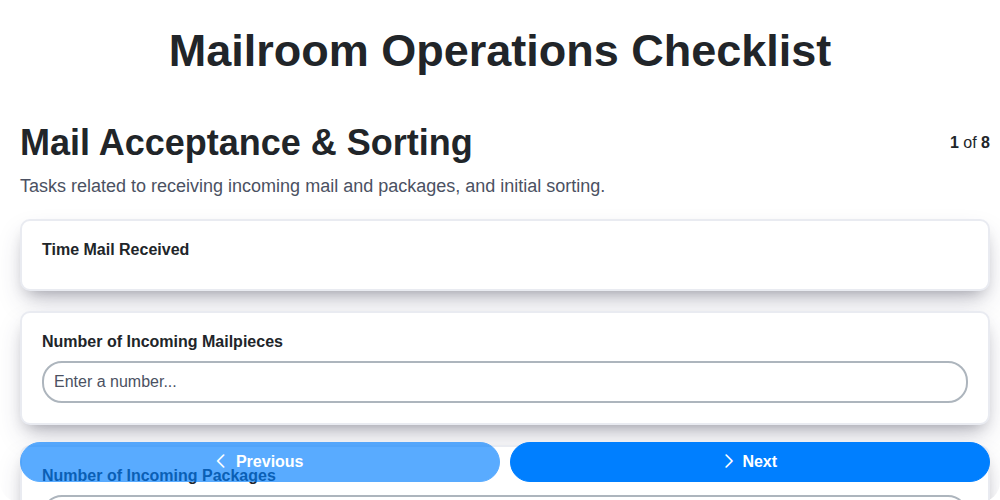
Table of Contents
- Why a Mailroom Operations Checklist Matters
- Getting Started: Understanding Your Mailroom's Unique Needs
- Mail Acceptance & Sorting: The First Impression
- Streamlining Mail Distribution: Accuracy and Efficiency
- Outgoing Mail Processing: Postage, Manifests, and Carrier Coordination
- Security & Access Control: Protecting Your Mailflow
- Equipment Maintenance & Operation: Keeping Things Running Smoothly
- Inventory Management & Supplies: Avoiding Disruptions
- Waste Disposal & Recycling: Sustainable Mailroom Practices
- Record Keeping & Documentation: Maintaining Compliance
- Regular Review & Adaptation: The Key to Long-Term Success
- Resources & Links
TLDR: Need a smoother, more secure mailroom? This checklist template covers everything from sorting and distribution to security and equipment maintenance. Download it, customize it for your specific needs, and finally gain control of your mailroom's operations!
Why a Mailroom Operations Checklist Matters
Beyond simply ensuring tasks are completed, a mailroom operations checklist offers a cascade of benefits that impact the entire organization. Think of it as preventative maintenance for your mail flow. It minimizes errors - a misplaced package or incorrectly applied postage can lead to delays, frustrated recipients, and ultimately, damage to your company's reputation.
A well-maintained checklist significantly improves security. By standardizing procedures for package verification and access control, you proactively protect against theft, loss, and unauthorized access to sensitive documents. This is particularly critical in today's environment where data breaches are a constant threat.
Furthermore, a clear checklist promotes accountability and consistency among mailroom staff. New employees can quickly learn procedures, and experienced staff can ensure every task is performed to the same high standard. This reduces the risk of overlooked steps and minimizes the potential for costly mistakes. Finally, a documented checklist serves as invaluable training material and provides a readily available record for audits and compliance reviews.
Getting Started: Understanding Your Mailroom's Unique Needs
Before diving into a standardized checklist, it's essential to thoroughly understand your mailroom's specific landscape. A one-size-fits-all approach rarely works; what functions seamlessly in a small office might be wholly inadequate for a larger organization with complex shipping needs. Start by conducting a comprehensive assessment.
Map Your Current Workflow: Trace the journey of a piece of mail - both incoming and outgoing - from its arrival to its final destination. Identify every touchpoint, every decision made, and every individual involved. This visual representation will highlight bottlenecks, inefficiencies, and areas where processes could be improved.
Talk to Your Team: Your mailroom staff are the experts on the daily realities of the operation. Engage them in a conversation - ask about challenges, suggestions for improvement, and what currently works well (and what doesn's). Their insights are invaluable.
Analyze Mail Volume and Types: Quantify the volume of mail processed daily, weekly, and monthly. Categorize the mail by type: letters, packages, interoffice mail, certified mail, international shipments, etc. This data will inform resource allocation and equipment needs.
Review Existing Policies: Familiarize yourself with your company's existing policies related to mail handling, security, and compliance. Ensure your checklist aligns with these guidelines.
Consider Future Growth: Think about your company's projected growth. Will increased mail volume require adjustments to your processes or equipment?
By taking the time to understand your mailroom's unique needs, you're setting the foundation for a checklist that's truly effective and tailored to your organization's specific requirements.
Mail Acceptance & Sorting: The First Impression
The mailroom's acceptance and sorting process is often the first point of contact for incoming mail, and it sets the tone for the entire mailroom operation. A disorganized or inefficient initial stage can lead to delays, misdirected mail, and frustrated recipients. Accurate identification is key - distinguishing between standard letters, packages, interoffice mail, and potentially important items like certified mail or legal documents. This initial assessment informs how the mail is handled and prioritized.
Beyond simply separating mail types, address verification is a vital step. Illegible or incorrect addresses are a common source of delivery failures. A quick visual check and, when necessary, a brief query with the sender can prevent costly returns and delays. Packages require especially careful scrutiny, including verifying the sender's information as a security measure and noting any visible damage that may have occurred in transit. Finally, proper sorting preparation-grouping mail by department, recipient, or priority-streamlines the distribution process and ensures timely delivery. Regularly inspecting mail for damage upon acceptance also allows for prompt reporting and resolution of any issues.
Streamlining Mail Distribution: Accuracy and Efficiency
Effective mail distribution isn't just about getting mail to the right people; it's about doing so accurately and efficiently, minimizing errors and maximizing productivity. A chaotic or poorly managed distribution process can lead to lost mail, frustrated employees, and potential security risks. To truly streamline this vital function, consider these key strategies:
1. Clear Labeling and Addressing Standards: Enforce consistent labeling guidelines for both incoming and outgoing mail. This includes clear department designations, legible addresses, and standardized abbreviations. A company-wide addressing template can significantly reduce misdirection.
2. Dedicated Distribution Routes & Schedules: Map out optimized delivery routes for mail carriers. Consider the layout of your building and the frequency of mail volume to create a schedule that minimizes travel time and ensures timely delivery. For larger organizations, assigning dedicated carriers to specific departments or floors can enhance efficiency.
3. Centralized Mailroom vs. Decentralized Systems: Evaluate whether a centralized mailroom is the most effective approach, or if a decentralized system with smaller distribution points within departments is preferable. The optimal choice depends on your organization's size, layout, and budget.
4. Package Management Procedures: Clearly define procedures for handling packages, including signature requirements, delivery notifications, and secure storage. A centralized package receiving system with online tracking capabilities can improve visibility and accountability.
5. Employee Training & Accountability: Provide thorough training for mailroom staff and distribution personnel, emphasizing accuracy and adherence to established procedures. Regular performance reviews and feedback can reinforce best practices.
6. Technology Integration: Explore technological solutions such as mail tracking software, digital address verification tools, and automated sorting systems to further enhance efficiency and reduce manual errors.
By implementing these strategies, you can transform your mail distribution process into a streamlined and reliable operation, contributing to a more productive and organized workplace.
Outgoing Mail Processing: Postage, Manifests, and Carrier Coordination
Managing outgoing mail effectively goes beyond simply dropping envelopes in the mailbox. It's about accuracy, tracking, and ensuring timely delivery. Here's a breakdown of key elements for streamlined outgoing mail processing:
Postage Application: Accuracy is Key
Whether you're using a postage meter, online postage services, or pre-paid postage, accuracy is paramount. Incorrect postage can lead to delays, returned mail, and potential fines. Regularly calibrate your postage meter and double-check postage calculations, especially for packages with varying weights and dimensions. Utilizing address verification software can minimize errors and ensure correct postage application.
Manifests: Your Record of Accountability
A mail manifest is a crucial document that details all outgoing mail. It's essentially a comprehensive record of what's leaving your facility. Manifests typically include information such as:
- Date and Time: When the mail was processed.
- Destination: The intended delivery location.
- Mail Classes: (e.g., First Class, Priority Mail, Media Mail).
- Weight: Accurate weight for postage calculation.
- Postage Amount: Total postage applied.
- Tracking Numbers: If applicable (for packages with tracking).
Maintaining accurate manifests provides accountability, facilitates reconciliation with postal service reports, and aids in identifying any discrepancies or lost mail.
Carrier Coordination: Ensuring Pickup and Timeliness
Efficient carrier coordination is vital for meeting deadlines and minimizing delays. This involves:
- Scheduling Pickups: Establish a regular schedule with your designated carrier, considering mail volume and delivery timelines.
- Notification: Communicate with the carrier regarding any unusual mail volume or special delivery requirements.
- Manifest Submission: Provide the carrier with the mail manifest for tracking and reconciliation purposes.
- Relationship Management: Foster a positive relationship with your carrier to ensure reliable service.
Properly managing these aspects - postage, manifests, and carrier coordination - leads to a more efficient and accountable outgoing mail process.
Security & Access Control: Protecting Your Mailflow
The mailroom, often a central hub for information and deliveries, presents unique security challenges. Protecting your mailflow isn't just about preventing theft; it's about safeguarding sensitive data and maintaining operational integrity. A robust security and access control system is paramount.
Here's a breakdown of key measures to implement:
- Controlled Access Points: Limit access to the mailroom to authorized personnel only. Consider using keycard access, biometric scanners, or a combination of methods. Regularly review and update access permissions.
- Visitor Logs: Maintain a detailed log of all visitors to the mailroom, including their name, time of entry/exit, and purpose of visit.
- Package Verification Protocol: Implement a strict protocol for verifying all incoming packages. This should involve checking the sender's information against a database (if applicable), validating the recipient's name and address, and being vigilant for any red flags. Never accept packages from unknown or suspicious senders.
- Mail Acceptance Procedures: Establish clear procedures for accepting mail and packages, with designated drop-off points and secure storage areas.
- Surveillance Systems: Consider installing security cameras to monitor mailroom activity. Ensure cameras cover all critical areas and have adequate recording capabilities.
- Employee Training: Train mailroom staff to recognize and report suspicious activity. This includes identifying unusual packages, unfamiliar individuals, and any signs of tampering.
- Confidential Document Handling: Implement procedures for securely handling confidential documents, including shredding or secure disposal.
- Background Checks: Conduct thorough background checks on mailroom personnel, especially those with access to sensitive information.
- Regular Security Audits: Conduct regular security audits to identify vulnerabilities and ensure the effectiveness of security measures.
A proactive approach to security - combining technology, procedures, and vigilant personnel - is the best defense against potential threats to your mailflow.
Equipment Maintenance & Operation: Keeping Things Running Smoothly
A smoothly functioning mailroom hinges on reliable equipment. Neglecting maintenance can lead to costly downtime, inaccurate postage application, and ultimately, a less efficient operation. This section outlines essential maintenance tasks to keep your mailroom equipment in top shape.
Postage Meter Care: The Heart of Outgoing Mail
Your postage meter (or online postage system) is arguably the most critical piece of equipment. Regular maintenance is vital for accuracy and avoiding costly errors.
- Calibration Checks: Schedule professional calibration services at the frequency recommended by the manufacturer (typically annually). This ensures precise postage calculations.
- Ink/Toner Levels: Monitor ink or toner levels and promptly order replacements before they run out. Unexpected outages can halt outgoing mail.
- Cleanliness: Regularly clean the exterior of the meter to prevent dust buildup, which can affect performance. Follow manufacturer guidelines for internal cleaning.
- Software Updates: Keep the meter's software up to date to benefit from bug fixes, enhanced features, and improved security.
Scales: Ensuring Accurate Weights & Postage
Accurate weight measurements are essential for proper postage application.
- Regular Calibration: Calibrate scales regularly - at least monthly, or more frequently depending on usage - using certified weights. Document the calibration results.
- Cleanliness: Keep scales clean and free from debris. Dust and foreign objects can affect accuracy.
- Level Surface: Ensure scales are placed on a level surface to prevent inaccurate readings.
Conveyor Systems (If Applicable): Preventing Jams & Ensuring Flow
If your mailroom utilizes a conveyor system, preventative maintenance is key.
- Daily Visual Inspections: Perform daily visual inspections to check for obstructions, worn belts, and unusual noises.
- Belt Cleaning: Regularly clean conveyor belts to remove debris that can cause jams.
- Roller Inspection: Inspect rollers for wear and tear and replace as needed.
- Motor Lubrication: Lubricate motor bearings as recommended by the manufacturer.
Printers & Labeling Equipment: Crisp Labels for Accuracy
Printing accurate labels is crucial for tracking and proper mail sorting.
- Regular Cleaning: Clean print heads and rollers regularly to prevent clogging and smudging.
- Ink/Toner Monitoring: Monitor ink/toner levels and replace cartridges promptly.
- Paper Path Inspection: Inspect the paper path for obstructions and debris.
- Software Updates: Keep printer drivers and software up to date.
Documentation is Key
Maintain a logbook to record all maintenance activities, including dates, actions taken, and any issues encountered. This provides a valuable history of equipment performance and helps identify recurring problems.
Inventory Management & Supplies: Avoiding Disruptions
A well-stocked mailroom is a smoothly running mailroom. Running out of essential supplies-postage, envelopes, boxes, labels-can bring your entire operation to a screeching halt. Proactive inventory management isn't just about keeping shelves full; it's about preventing costly delays and maintaining a professional image.
Here's a breakdown of how to effectively manage your mailroom supplies:
1. Identify Your Essentials & Establish Minimum Levels: Create a comprehensive list of everything your mailroom uses regularly. This should include not only obvious items like envelopes and tape, but also less frequent needs like certified mail forms or specialized shipping materials. Determine the minimum quantity of each item you need to keep on hand to avoid disruptions. Consider seasonal fluctuations in mail volume (holiday season, end of fiscal year) when setting these minimums.
2. Implement a Tracking System: Whether it's a simple spreadsheet or a more sophisticated inventory management software, consistent tracking is key. Record incoming shipments, usage rates, and reorder points. Assign responsibility for tracking to a specific staff member and hold them accountable.
3. Set Reorder Points & Lead Times: Don't wait until you're completely out to reorder. Calculate reorder points based on average usage and lead times (the time it takes for new supplies to arrive). For example, if you use 100 envelopes per week and the lead time is 5 days, your reorder point should be around 500 envelopes. Factor in buffer stock for unexpected surges in demand.
4. Regular Audits & Physical Inventory: Periodically (monthly or quarterly) conduct a physical inventory to verify accuracy and identify discrepancies between your records and the actual stock. This helps catch errors in tracking and uncovers opportunities to optimize storage.
5. Supplier Relationship Management: Cultivate strong relationships with your suppliers. Negotiate favorable pricing and delivery terms. Establish contingency plans with alternative suppliers in case of disruptions to your primary supplier.
6. Standardize Supply Usage: Encourage standardized usage of supplies to reduce waste and extend the lifespan of your inventory. For example, promote the use of pre-sized envelopes or shipping boxes whenever possible.
By implementing these strategies, you can transform your mailroom from a source of potential bottlenecks to a well-oiled machine, ensuring a consistent flow of mail and a positive experience for everyone involved.
Waste Disposal & Recycling: Sustainable Mailroom Practices
Beyond simply tossing items into bins, a truly sustainable mailroom incorporates mindful waste disposal and recycling practices. Cardboard boxes, often the largest component of mailroom waste, should be flattened and recycled diligently. Designate clear, easily accessible recycling bins for paper, including envelopes, packing slips, and interoffice mail. Consider implementing a system for collecting and recycling padded envelopes, which are often made from a mix of materials.
Confidentiality is paramount. Shredding sensitive documents before disposal is critical to protecting your organization's data. Investing in a cross-cut shredder offers enhanced security compared to strip-cut models. Educate mailroom staff about proper disposal procedures, emphasizing the importance of separating recyclables and ensuring confidential materials are securely destroyed. Partnering with a local recycling facility can also provide valuable insights and potentially optimize your recycling efforts. Finally, exploring alternatives to traditional packaging materials, such as compostable mailers or recycled-content products, can further minimize your mailroom's environmental impact.
Record Keeping & Documentation: Maintaining Compliance
Accurate and comprehensive record keeping is the backbone of a compliant mailroom. It's not just about tracking packages; it's about creating a defensible audit trail that demonstrates adherence to postal regulations, company policies, and legal requirements. Failing to maintain proper documentation can lead to fines, penalties, and reputational damage.
Here's a breakdown of essential records and how to manage them effectively:
- Outgoing Mail Manifests: These are your primary tracking tool. Each manifest should detail the contents, weights, postage applied, and destination of outgoing mail. Retain these records for at least the period required by postal regulations (typically one to three years, but verify specific requirements). Digital manifests streamline tracking and reduce errors.
- Delivery Logs: For high-value or sensitive mail (certified mail, registered mail, legal documents), maintain meticulous delivery logs. These logs should include recipient signatures, dates, and times of delivery.
- Incident Reports: Document any incidents that occur in the mailroom, such as lost mail, damaged packages, security breaches, or suspected fraud. Include details of the incident, actions taken, and individuals involved.
- Postal Regulation Updates: Keep a log of any updates to postal regulations or internal mailroom policies. Include the date of the update, a summary of the changes, and the individuals responsible for implementing them.
- Vendor Records: Maintain records of contracts and communications with postal carriers, shipping companies, and other vendors.
- Audit Trails: For digital systems, ensure robust audit trails are enabled to track user activity and changes made to records.
- Retention Schedules: Develop and adhere to a clear retention schedule for all mailroom records, ensuring compliance with legal and regulatory requirements. Regularly review and update these schedules as needed.
Proper record keeping demonstrates accountability, facilitates audits, and provides invaluable insights for improving mailroom efficiency and security.
Regular Review & Adaptation: The Key to Long-Term Success
A checklist isn't a 'set it and forget it' document. The mailroom landscape - from postal regulations to your company's needs - is constantly evolving. What worked perfectly six months ago might be outdated or inefficient today. That's why regular review and adaptation are absolutely critical for long-term success.
Schedule dedicated time - quarterly is a good starting point - to revisit your checklist. Gather feedback from your mailroom staff; they're on the front lines and will have valuable insights into what's working, what's not, and potential areas for improvement. Consider:
- New Postal Regulations: Are there any changes in postal rates, security protocols, or tracking services that require adjustments to your procedures?
- Company Growth: Has your company expanded or changed its operations? This could impact mail volume, delivery routes, or security needs.
- Technological Advancements: Are there new technologies or software solutions that could streamline your mailroom processes?
- Internal Feedback: What are your staff saying about the checklist and their day-to-day tasks?
Don't be afraid to make changes! A living checklist - one that evolves with your needs - is a powerful tool for maintaining a secure, efficient, and cost-effective mailroom operation. Remember, continuous improvement is the key to sustained success.
Resources & Links
- National Institute of Standards and Technology (NIST): NIST provides guidelines and standards related to security and operational efficiency, crucial for mailroom security and compliance. They don't offer *mailroom-specific* checklists but offer frameworks applicable to risk management and operational procedures.
- United States Postal Service (USPS): The primary resource for mail acceptance guidelines, postage rates, and carrier coordination. Essential for understanding outbound mail processing procedures and ensuring compliance with USPS regulations.
- FedEx: Provides insights into package handling best practices, tracking technologies, and potentially integrates with outbound mail processes. Good for comparing and contrasting with USPS and other carriers.
- United Parcel Service (UPS): Similar to FedEx, UPS offers valuable information on package handling, tracking, and logistics that can inform mailroom operational efficiency, especially for business mail.
- ASpen Fire (Mailroom Safety): Aspen Fire is a specialty supplier to mailrooms. They provide safety equipment, advice, and often have resources pertaining to mailroom safety procedures and risk mitigation. (While specialized, it informs broader security and access control best practices)
- National Association for Information Destruction (NAID): Focused on secure document destruction, NAID provides resources and certification for mailrooms handling confidential information. Crucial for data security and compliance.
- Society for Human Resource Management (SHRM): SHRM provides templates and best practices for security protocols and access control - important for mailroom security procedures and HR policies.
- International Organization for Standardization (ISO): While complex, ISO standards (particularly those related to quality management - ISO 9001) provide a framework for documenting processes and ensuring consistent operations. Useful for larger organizations seeking to formalize their mailroom procedures.
- FacilitiesNet: FacilitiesNet is a resource covering all aspects of facilities management, which often includes mailroom operations. Provides articles and perspectives on operational efficiency, maintenance, and sustainability.
- Print Management: Although centered on print services, the website contains operational aspects of mail processing, including equipment maintenance, inventory management of supplies, and potentially mail flow considerations.
- Staples: Useful for identifying supply needs and researching cost-effective solutions for mailroom supplies, and getting an overview of commonly used mailroom equipment.
- Office Depot: Similar to Staples and Office Depot, offering a variety of office and mailroom supplies to assist in stock management and identify equipment needs.
Frequently Asked Questions
What is the purpose of this checklist template?
This checklist template is designed to help mailroom operators streamline operations, ensure efficiency, maintain security, and improve overall mailroom performance. It covers daily, weekly, monthly, and annual tasks, serving as a comprehensive guide for managing a mailroom effectively.
Who is this checklist template for?
This template is for mailroom managers, mailroom clerks, and anyone responsible for mailroom operations in businesses of all sizes. It's adaptable to different mail volumes and specific requirements.
Is this checklist customizable?
Absolutely! This is a template, meant to be adapted. Feel free to add, remove, or modify tasks to align with your specific mailroom processes, volume, and security protocols. We've included space for notes and adjustments.
What types of tasks are covered in the checklist?
The checklist covers a wide range of tasks including mail receipt and processing, mail distribution, equipment maintenance, security procedures, inventory management, record keeping, and regulatory compliance. It's broken down into daily, weekly, monthly, and annual categories.
Where can I download the checklist template?
You can download the checklist template by following the link provided within the article. The link leads directly to a downloadable file (likely in a format like Excel or PDF) that you can then populate and use.
What file format is the checklist template in?
The article specifies that the checklist template is provided as an Excel (.xlsx) file. This allows for easy customization and tracking.
How often should I review and update the checklist?
We recommend reviewing the checklist at least quarterly, or more frequently if there are changes to your mailroom processes, volume, or security requirements. Annual reviews are also essential to ensure all tasks are completed and relevant.
What does 'parcel tracking' refer to in the checklist?
'Parcel tracking' refers to monitoring the status of incoming packages and shipments, ensuring they are received, scanned, and delivered to the intended recipients efficiently. It involves using tracking numbers and updating records to provide visibility into the mail's journey.
What security measures are included in the checklist?
The checklist includes tasks related to mail security, such as verifying sender information, inspecting mail for suspicious packages, maintaining secure storage areas, and adhering to protocols for handling sensitive information. These ensure the safety of mail and personnel.
Are there any regulatory compliance requirements addressed in the checklist?
The checklist touches on common regulatory compliance considerations relevant to mailrooms, such as data privacy and handling of restricted materials. It's important to consult with legal counsel to ensure full compliance with all applicable laws and regulations.
Comments
There are no comments yet. Be the first to add one!
Facility Management Solution Demo
Keep your facilities running smoothly! ChecklistGuro streamlines maintenance, inspections, and vendor management. Reduce downtime, optimize efficiency, & improve safety. Manage it all with our Work OS.
Related Articles
Industrial Floor Cleaning & Safety Checklist Template
Display Case Temperature Monitoring Checklist Template
The Ultimate Refrigeration Maintenance Checklist: Keeping Your Food Safe
Escalator & Moving Walkway Inspection Checklist Template
The Ultimate Guest Room Cleaning & Inspection Checklist Template
The Ultimate Security Camera Review Checklist Template
Forklift Inspection & Maintenance Checklist Template
Emergency Generator Load Testing Checklist Template
We can do it Together
Need help with
Facility Management?
Have a question? We're here to help. Please submit your inquiry, and we'll respond promptly.