Optimizing Healthcare Operations: A Comprehensive Guide to the Medical Supply Chain and Procurement Workflow
Published: 06/09/2026 Updated: 10/05/2026
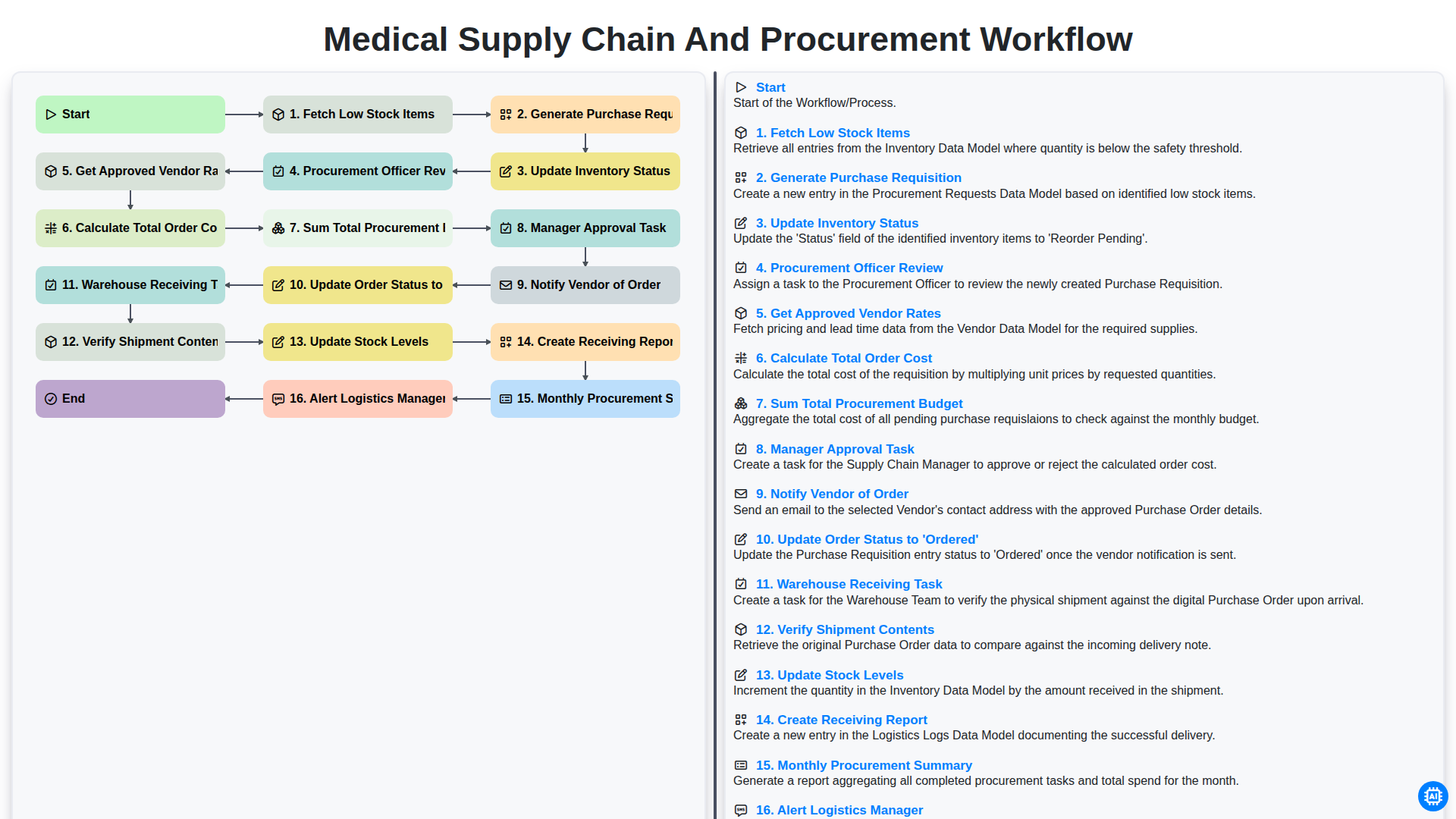
Table of Contents
- Introduction to Medical Supply Chain Efficiency
- Phase 1: Inventory Monitoring and Demand Identification
- Step 1: Automated Detection of Low Stock Items
- Step 2: Initiating the Purchase Requisition Process
- Phase 2: Procurement Validation and Cost Analysis
- Step 3: Procurement Officer Review and Vendor Rate Verification
- Step 4: Precise Cost Calculation and Budgetary Oversight
- Step 5: Final Management Approval Workflow
- Phase 3: Order Execution and Vendor Communication
- Step 6: Vendor Notification and Order Status Updates
- Phase 4: Logistics, Receiving, and Quality Control
- Step 7: Warehouse Receiving and Shipment Verification
- Step 8: Inventory Reconciliation and Stock Level Updates
- Phase 5: Post-Procurement Auditing and Reporting
- Continuous Improvement: Monthly Summaries and Logistics Alerts
- Resources & Links
TLDR: Streamline your healthcare operations with our end-to-end Medical Supply Chain and Procurement Workflow. This guide demonstrates how to automate everything from low-stock detection and requisition generation to vendor notification and inventory updates, ensuring seamless stock management, accurate budgeting, and optimized warehouse receiving processes.
Introduction to Medical Supply Chain Efficiency
In the high-stakes environment of healthcare, the efficiency of the medical supply chain is not merely a matter of operational convenience-it is a critical component of patient safety. A breakdown in the procurement process can lead to much more than just administrative headaches; it can result in life-threatening shortages of essential surgical instruments, life-saving medications, and critical diagnostic reagents.
Maintaining a seamless flow of goods from manufacturers to clinical settings requires a highly orchestrated workflow that balances precision with speed. Efficiency in this sector demands a proactive approach to inventory management, where every step-from the moment a low-stock alert is triggered to the final verification of a shipment in the warehouse-is monitored with rigorous oversight. By optimizing the procurement lifecycle, healthcare organizations can minimize waste, reduce overhead costs, and, most importantly, ensure that clinicians always have the tools they need to provide uninterrupted, high-quality patient care.
Phase 1: Inventory Monitoring and Demand Identification
The lifecycle of an efficient medical supply chain begins with proactive oversight rather than reactive crisis management. The first critical phase, Inventory Monitoring and Demand Identification, serves as the foundation for preventing stockouts of life-saving supplies.
This phase initiates with the automated process to Fetch Low Stock Items. By utilizing real-time data from the inventory management system, the workflow identifies any essential medical consumables-such as surgical gloves, syringes, or disinfectants-that have fallen below their predefined safety stock thresholds. Once these critical items are identified, the system immediately moves to Generate Purchase Requisition. This automated step transforms raw inventory data into a structured request, ensuring that the procurement team has a clear, standardized list of what is required to maintain operational continuity. Simultaneously, the system performs an Update Inventory Status action, flagging these items as pending replenishment to prevent the system from over-ordering or miscalculating available stock during the procurement window.
Step 1: Automated Detection of Low Stock Items
The foundation of an efficient medical supply chain lies in proactive monitoring rather than reactive replenishment. The process begins with the Fetch Low Stock Items stage, where the system continuously monitors real-time inventory levels against predefined minimum threshold limits.
Instead of relying on manual spreadsheets or physical inspections-which are prone to human error and delays-an automated workflow scans your database to identify any critical supplies, such as surgical gloves, saline solutions, or specialized medications, that have fallen below their safety stock levels. By automating this initial detection, healthcare facilities can prevent life-threatening stockouts and ensure that the procurement cycle begins the moment a shortage is imminent, maintaining a seamless flow of essential medical goods.
Step 2: Initiating the Purchase Requisition Process
Once the initial scan of inventory identifies critical shortages, the workflow transitions from monitoring to action. The core of this phase is the Generation of the Purchase Requisition. This step acts as the formal internal request that bridges the gap between identifying a need and initiating a purchase.
During this stage, the system automatically pulls data from the Fetch Low Stock Items phase to populate a detailed requisition form. This document specifies the exact quantities required, the item descriptions, and the urgency of the request. To ensure the procurement team isn't working with outdated information, the Update Inventory Status task occurs simultaneously; this ensures that any items already flagged for replenishment are marked as pending to prevent duplicate ordering.
A well-structured requisition serves as the single source of truth for the entire procurement lifecycle. By automating the transition from stock detection to requisition generation, healthcare facilities can eliminate the manual errors and delays that often lead to life-critical supply shortages.
Phase 2: Procurement Validation and Cost Analysis
Once the purchase requisition has been generated and the inventory status is updated, the workflow moves into a critical period of scrutiny and financial evaluation. This phase ensures that every requested item is vetted for accuracy and cost-effectiveness before any financial commitment is made.
The process begins with the Procurement Officer Review, where a specialist examines the requisition to ensure the quantities and specifications align with hospital needs. To ensure fiscal responsibility, the officer must then Get Approved Vendor Rates, comparing current quotes against pre-negotiated contracts to ensure the facility is receiving the best possible value.
Following this validation, the workflow transitions into a rigorous financial audit. The system must Calculate Total Order Cost for the specific requisition and then Sum Total Procurement Budget to ensure the expenditure remains within the departmental limits. This step is vital for preventing budget overruns and maintaining the financial health of the medical facility. The phase concludes with the Manager Approval Task, a final checkpoint where leadership provides the necessary authorization to move the order from a request to an active purchase.
Step 3: Procurement Officer Review and Vendor Rate Verification
Once the purchase requisition has been generated and the inventory status updated, the workflow moves into a critical layer of oversight: the Procurement Officer Review. At this stage, the procurement officer examines the pending requisitions to ensure that the requested quantities align with actual clinical needs and that no duplicate orders are being processed.
The process then transitions into the essential task of Getting Approved Vendor Rates. Rather than simply accepting the first available price, the officer cross-references the requisition against the organization's preferred vendor list to ensure compliance with pre-negotiated contracts. This step is vital for maintaining cost control and ensuring that the hospital or clinic leverages its bulk-buying power.
Following the rate verification, the system moves to Calculate Total Order Cost. This involves aggregating the unit prices of all items in the requisition to determine the exact financial impact of the request. To provide a complete picture of the procurement landscape, the workflow then performs a Sum Total Procurement Budget check. This ensures that the single order, when added to the current month's spending, does not exceed the allocated departmental budget, preventing unauthorized overspending before the request even reaches management.
Step 4: Precise Cost Calculation and Budgetary Oversight
Once the procurement officer has reviewed the requisition and identified the most reliable suppliers, the workflow moves into a critical phase of financial validation. This stage is not merely about placing an order, but about ensuring fiscal responsibility through two key sub-steps: getting approved vendor rates and calculating the total order cost. By pulling pre-negotiated rates from approved vendors, the organization avoids the risks of price volatility and unauthorized spending, ensuring that every line item aligns with established contract terms.
With the individual item costs finalized, the system automatically performs a sum total procurement budget check. This step is vital for maintaining liquidity and preventing over-expenditure. By aggregating the total cost of the entire order against the current departmental budget, the workflow provides immediate visibility into the financial impact of the procurement request. This data-driven approach ensures that the subsequent manager approval task is based on a complete financial picture, allowing leadership to approve or adjust orders with full confidence in the budget's integrity.
Step 5: Final Management Approval Workflow
Once the procurement officer has verified the vendor rates and the total procurement cost has been calculated against the remaining budget, the workflow moves into its most critical governance stage: Manager Approval Task.
This step acts as the final quality control checkpoint to ensure financial accountability and strategic alignment. In a medical environment, where-supply chain disruptions can impact patient care, this stage is not merely about signing off on costs, but about verifying that the order aligns with the hospital's current clinical needs and budgetary constraints.
During this phase, the designated manager reviews the consolidated requisition to ensure that the quantities requested are justified and that the total expenditure does not exceed the allocated departmental budget. This prevents unauthorized overspending and ensures that high-priority medical supplies are prioritized during periods of high demand. Once the manager grants approval, the workflow automatically triggers the transition from internal planning to external execution, moving the process directly to the vendor notification phase.
Phase 3: Order Execution and Vendor Communication
Once the procurement requisition has been officially approved, the workflow shifts from internal validation to external execution. This phase is critical, as it bridges the gap between administrative decision-making and the physical arrival of much-needed medical supplies.
The process begins with the Manager Approval Task, which serves as the final gatekeeper to ensure budgetary compliance and clinical necessity. Once this final authorization is secured, the system automatically triggers the Notify Vendor of Order step. This ensures that the selected supplier receives the purchase order immediately, reducing the lead time between approval and shipment.
As the vendor processes the order, the system transitions the internal tracking mechanism to Update Order Status to 'Ordered'. This real-time status update is vital for visibility, allowing the procurement team to monitor pending deliveries and manage expectations regarding stock availability. By automating this transition, the workflow eliminates the manual lag that often leads to blind spots in the supply chain, ensuring that all stakeholders are aligned on when to expect the next replenishment of essential medical inventory.
Step 6: Vendor Notification and Order Status Updates
Once the procurement manager provides the final approval, the workflow moves from the internal approval phase into the execution phase. The next critical step is to Notify Vendor of Order, which involves transmitting the finalized purchase order details-including quantities, specifications, and delivery timelines-directly to the selected supplier. This ensures that the vendor can immediately begin processing the request and prepare the shipment.
Simultaneously, as soon as the notification is dispatched, the system must automatically Update Order Status to 'Ordered'. This automated update is vital for real-time visibility across the organization; it transitions the requisition from a pending state to an active state, allowing the procurement and warehouse teams to track the lifecycle of the order and reducing the need for manual follow-ups or redundant email inquiries.
Phase 4: Logistics, Receiving, and Quality Control
Once the order has been officially placed, the workflow shifts from procurement to the critical stage of logistics and physical verification. The process moves into the Warehouse Receiving Task, where the incoming shipment is intercepted and prepared for integration into the facility's inventory.
The core of this phase lies in the Verify Shipment Contents step. It is vital that warehouse personnel conduct a rigorous inspection to ensure that the physical goods received match the quantities and specifications outlined in the original purchase order. This includes checking for any damages incurred during transit and ensuring all medical supplies meet the required-standard packaging and temperature controls.
Once the shipment is validated, the system must Update Stock Levels in real-time to ensure that clinical staff have an accurate view of available supplies. To maintain a complete audit trail, the process concludes with the Create Receiving Report step. This document serves as the definitive record of the transaction, closing the loop on the procurement cycle and providing the necessary documentation for both financial auditing and inventory management.
Step 7: Warehouse Receiving and Shipment Verification
Once the vendor has been notified and the order status is marked as 'Ordered', the workflow moves from the procurement office to the physical loading dock. The Warehouse Receiving Task is a critical checkpoint in the medical supply chain to ensure that what was ordered is exactly what arrived.
Upon arrival, the receiving team must perform a meticulous Verify Shipment Contents process. This involves cross-referencing the physical goods against the original purchase order and the packing slip to check for discrepancies in quantity, part numbers, or damaged packaging. In a medical context, this step is even more vital, as it often includes checking for temperature stability in cold-chain items and verifying expiration dates.
Once the shipment is confirmed as accurate and intact, two immediate actions follow to maintain data integrity:
- Update Stock Levels: The digital inventory system must be updated instantly to reflect the new arrivals, ensuring that the Low Stock alerts are cleared and the procurement team has an accurate view of available resources.
- Create Receiving Report: A formal document is generated to archive the details of the delivery, serving as a permanent record for audits and a prerequisite for the finance department to process vendor payments.
Step 8: Inventory Reconciliation and Stock Level Updates
Once the warehouse team completes the physical verification of the shipment, the workflow moves into the critical phase of inventory reconciliation. This step ensures that the digital records in your management system mirror the physical reality of your stockroom. After verifying that the shipment contents match the packing slip and the original purchase order, the system must automatically Update Stock Levels to reflect the newly arrived supplies.
Accuracy at this stage is paramount; any discrepancy between the physical count and the digital update can lead to downstream errors, such as false low-stock alerts or unexpected stockouts of life-saving medical supplies. To maintain a transparent audit trail, the process concludes with the Create Receiving Report task. This report serves as the single source of truth for both the procurement and finance departments, documenting exactly what was received, any damages noted, and the precise moment the inventory was replenished.
Phase 5: Post-Procurement Auditing and Reporting
Once the physical goods have been integrated into the inventory, the workflow transitions from active procurement to critical oversight and strategic analysis. This final phase ensures that the procurement cycle is closed accurately and provides the data necessary for long-term financial planning.
The process begins with the Monthly Procurement Summary, a high-level review that aggregates all completed transactions within the period. This summary allows stakeholders to evaluate spending patterns and vendor reliability. Parallel to this, an automated Alert to the Logistics Manager is triggered, ensuring that the management team is aware of incoming stock levels and any potential discrepancies in the supply chain.
By systematically reviewing these end-of-cycle reports, organizations can move beyond simple replenishment and begin identifying opportunities for cost savings, better vendor negotiations, and improved demand forecasting.
Continuous Improvement: Monthly Summaries and Logistics Alerts
To maintain a high-performing supply chain, the workflow must extend beyond the immediate completion of an order. The final stages of the process involve a critical loop of evaluation and proactive communication. By generating a Monthly Procurement Summary, organizations can transition from reactive ordering to strategic oversight. This summary provides a high-level view of procurement trends, identifying patterns in stock depletion, vendor reliability, and budget adherence, which is essential for long-term fiscal planning.
Parallel to this analytical review, the workflow triggers an Alert to the Logistics Manager. This automated notification ensures that leadership is never caught off guard by sudden surges in order volume or shifts in inventory movement. By integrating these summary reports and proactive alerts, the procurement cycle becomes a self-optimizing system, allowing for data-driven decisions that mitigate risks and ensure that life-saving medical supplies are always available when needed.
Resources & Links
- Healthcare Supply Chain Association: Industry-standard resources for best practices in medical logistics and clinical supply chain management.
- ASCM (Association for Supply Chain Management): Global resources for optimizing procurement workflows, inventory management, and operational efficiency.
- World Health Organization - Medical Supplies: Guidelines on international standards for the procurement and distribution of essential medical supplies.
- Gartner Supply Chain Research: In-depth analysis and strategic insights into digital transformation in procurement and inventory automation.
- APICS Inventory Management Frameworks: Professional frameworks for managing stock levels, demand forecasting, and warehouse receiving protocols.
- NCBI - Healthcare Logistics Studies: Access to peer-reviewed research regarding error reduction in medical order verification and procurement accuracy.
Frequently Asked Questions
What is the main focus of medical supply chain optimization?
The primary focus is on enhancing efficiency, reducing waste, and ensuring the timely availability of critical medical supplies through streamlined procurement workflows and better inventory management.
What are the key components of a healthcare procurement workflow?
A standard workflow includes demand forecasting, requisitioning, vendor selection, purchase order management, receiving/inspection, and inventory reconciliation.
How can healthcare organizations reduce operational costs through the supply chain?
Costs can be reduced by implementing automated inventory tracking, optimizing stock levels to prevent overstocking, negotiating better contracts with consolidated vendors, and minimizing waste from expired products.
What role does technology play in optimizing medical procurement?
Technology, such as ERP systems and IoT-enabled tracking, provides real-time visibility into inventory levels, automates repetitive tasks, reduces human error, and enables data-driven decision-making.
How does supply chain efficiency impact patient care?
An efficient supply chain ensures that clinicians have the right tools and medications available when needed, directly reducing delays in treatment and improving overall patient safety and outcomes.
What are the biggest risks in the medical supply chain?
Key risks include supply chain disruptions (due to geopolitical issues or natural disasters), inaccurate demand forecasting, vendor non-compliance, and the risk of counterfeit medical products entering the stream.
Comments
There are no comments yet. Be the first to add one!
Healthcare Management Solution Demo
Streamlining healthcare operations and improving patient care? ChecklistGuro's Work OS platform simplifies everything from patient scheduling and billing to compliance and staff management. Enhance efficiency, reduce administrative burden, and focus on what matters most: your patients. Learn how ChecklistGuro can transform your healthcare organization!
Related Articles
The Ultimate Healthcare Patient Satisfaction Survey Checklist Template
Mastering Healthcare Inventory: Your Par Level Checklist Template
Mastering Hand Hygiene: Your Compliance Checklist Template
Protecting Patients: Your Fire Safety Checklist for Patient Areas
Your Ultimate Healthcare Construction Checklist Template
Mastering Hand Hygiene: Your Compliance Checklist Template
Your Radiology Equipment Maintenance Checklist Template

Your Ultimate Guide to Healthcare Waste Management: A Checklist Template
Need help with
Checklists?
Have a question? We're here to help. Please submit your inquiry, and we'll respond promptly.