Modern Crop Planning Workflow: Advanced Agriculture Process Management
Published: Updated: 04/16/2026
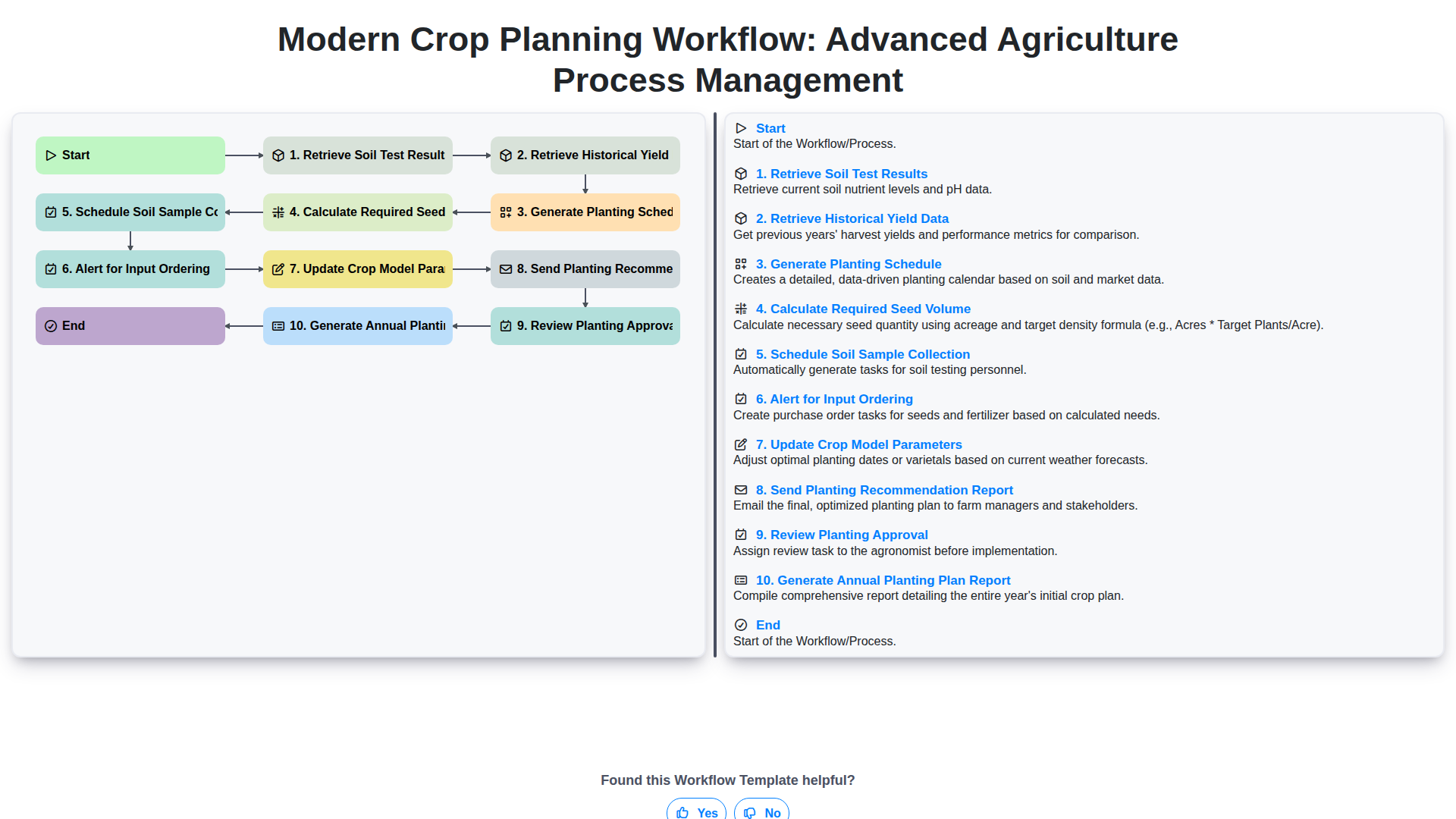
Table of Contents
- The Pillars of Modern Crop Planning
- Step 1: Foundation Data Gathering - Soil and History
- Step 2: Predictive Power - Generating the Planting Schedule
- Step 3: Resource Management - Calculating Seed Requirements
- Step 4: Proactive Monitoring - Scheduling Soil Sample Collection
- Step 5: Supply Chain Integration - Alerting for Input Ordering
- Step 6: Model Refinement - Updating Crop Model Parameters
- Step 7: Decision Support - Sending the Planting Recommendation Report
- Step 8: Governance and Quality Control - The Review and Approval Stage
- Step 9: Finalizing Strategy - Generating the Annual Planting Plan Report
- Beyond the Workflow: Benefits of Advanced Process Management
- Technology Enablers: IoT, AI, and Digital Farming
- Challenges in Workflow Implementation
- Optimizing the Cycle: Continuous Improvement in Crop Planning
- Resources & Links
TLDR: This workflow streamlines complex agricultural decision-making by automating the entire crop planning process. It integrates crucial data-from soil tests and past yields to real-time modeling-to generate comprehensive planting schedules, calculate exact material needs, manage input ordering, and produce actionable reports, ensuring optimized resource use and higher yields with minimal manual effort.
The Pillars of Modern Crop Planning
The foundation of any successful agricultural operation today is a sophisticated, data-driven approach to planning. Modern crop planning is no longer a process based solely on tradition or guesswork; it's a complex workflow powered by actionable data and integrated systems. Our advanced process is structured around several critical pillars designed to minimize risk, maximize yield, and optimize resource use from the moment the planning begins.
The initial phase requires comprehensive data ingestion. This involves retrieving soil test results to understand the immediate nutrient profile and pH levels of the land. Simultaneously, we retrieve historical yield data for the specific fields to establish performance baselines. With these two core data sets, the system can intelligently generate a precise planting schedule, moving beyond generic calendar dates. This leads directly to the calculation of required seed volume, ensuring you order exactly what is needed, eliminating waste.
Beyond scheduling, proactive management is key. We integrate timely actions by scheduling soil sample collection for future analysis, keeping the data loop continuous. Crucially, the system maintains a constant oversight by generating alerts for input ordering (fertilizers, pesticides, etc.) before supplies run low. Concurrently, the crop's potential is refined by updating the crop model parameters based on the latest weather forecasts and anticipated local conditions.
The output of this continuous process is highly consultative. We compile a detailed planting recommendation report for the farm managers to review, which is then routed through a necessary reviewing and planting approval stage-ensuring accountability. Finally, all these decisions are synthesized into a comprehensive annual planting plan report, providing a clear, actionable roadmap for the entire growing season.
Step 1: Foundation Data Gathering - Soil and History
The journey to an optimal planting season begins long before the first seed hits the soil. Our modern crop planning workflow starts by establishing a rock-solid foundation of data. This initial phase is critical for accurate forecasting and risk mitigation. We begin by systematically Retrieving Soil Test Results. These comprehensive reports tell us the nutrient profile, pH balance, and organic matter levels of the specific acreage, guiding us on immediate amendments needed. Parallel to this, we Retrieve Historical Yield Data. Analyzing years of performance-what worked, what failed, and under what conditions-provides invaluable predictive power. By synthesizing the chemical composition of the soil with the actual performance history of the land, we build a holistic understanding of the field's inherent potential, ensuring our plans are built on actionable, scientific ground.
Step 2: Predictive Power - Generating the Planting Schedule
This critical juncture moves the process from data aggregation to actionable planning. By synthesizing the soil test results, historical performance benchmarks, and current climate projections, the system doesn't just suggest dates; it predicts the optimal planting window. The predictive scheduling algorithm analyzes soil nutrient availability (e.g., ideal NPK ratios based on the most recent soil tests) against the historical success rates for specific cultivars in your microclimate. It factors in projected seasonal weather patterns to adjust for potential delays or optimal early starts, ensuring the seed hits the soil at peak readiness for maximum germination and establishment success. This step is what transforms raw data into a precise, timely, and highly educated action plan.
Step 3: Resource Management - Calculating Seed Requirements
Once the planting schedule is locked in, the next critical step is quantifying the physical resources needed. This involves calculating the precise required seed volume. By integrating the projected planting area (derived from the planting schedule) with the specific seed density requirements for the chosen crop varieties, the system generates an accurate, optimized seed volume calculation. This step prevents both costly over-purchasing and damaging under-stocking of essential inputs, ensuring that resources are perfectly aligned with the planned cultivation scope.
Step 4: Proactive Monitoring - Scheduling Soil Sample Collection
This step moves beyond simple data review and embeds predictive action directly into the workflow. By proactively scheduling soil sample collections, we ensure that crucial ground truth data is gathered before it becomes a bottleneck. This systematic scheduling integrates directly with field management systems, automatically allocating resources and assigning tasks to farm technicians. This preventative approach minimizes delays, as instead of waiting for soil deficiency concerns to surface (and thus delaying the planting window), the sampling is planned weeks in advance, allowing for necessary corrective actions-like targeted amendments or nutrient adjustments-to be incorporated into the final planting plan efficiently.
Step 5: Supply Chain Integration - Alerting for Input Ordering
This critical juncture moves the planning process from purely agricultural modeling to tangible logistical action. Once the required seed volumes and anticipated input needs (fertilizers, pesticides, etc.) are calculated, the workflow must seamlessly trigger alerts within the farm's existing supply chain management (SCM) system. Instead of manual tracking across spreadsheets, the system automatically flags shortages or impending stock depletion for necessary inputs. This proactive alerting capability is paramount; it doesn't just tell the farm what is needed, but when it needs to be ordered to arrive before the planting window closes. Integration with supplier APIs, where possible, allows the system to generate draft purchase orders directly, significantly reducing administrative lag time and ensuring that the recommended planting schedule remains viable even in the face of unexpected supply chain delays.
Step 6: Model Refinement - Updating Crop Model Parameters
This crucial step moves the plan from general guidelines to site-specific recommendations. As field conditions and the chosen crop varieties evolve, the underlying crop models must be adjusted. This process involves updating key parameters-such as expected nutrient uptake rates, specific growth curve coefficients, and site-specific variability factors-within the crop simulation software. By feeding the latest soil test data, localized microclimate forecasts, and preliminary yield performance metrics from similar past years into the model, we ensure that the mathematical predictions for water use, nutrient demand, and optimal resource allocation are as precise as possible. This refinement solidifies the agronomic backbone of the entire plan, making the subsequent seed volume calculations and scheduling much more accurate and actionable for the farm managers.
Step 7: Decision Support - Sending the Planting Recommendation Report
This crucial step transforms raw data and analyzed insights into actionable intelligence. The Planting Recommendation Report is not just a document; it's the culmination of the entire planning process, presenting a clear, evidence-based roadmap for the upcoming season. This report synthesizes the findings from the soil test analysis, historical performance comparisons, and the optimized planting schedules, providing farm managers and agronomists with everything they need to proceed with confidence. It details the recommended crop varieties, precise acreage allocations, optimal planting dates, and necessary input levels (fertilizer, seed, etc.). By making these complex calculations accessible and visually understandable, this report significantly reduces decision fatigue and minimizes the chance of human error, ensuring that the subsequent physical actions on the ground align perfectly with the best practices derived from advanced agricultural modeling.
Step 8: Governance and Quality Control - The Review and Approval Stage
This stage is arguably the most critical checkpoint in the entire workflow, acting as the necessary human layer of oversight before any physical action is taken in the field. The goal of Reviewing the Planting Recommendation Report is to transform sophisticated, data-driven suggestions into actionable, approved operational plans. The system presents the compiled Planting Recommendation Report-containing optimized varieties, calculated inputs, and scheduled activities-to the designated farm manager or agricultural consultant. This review isn't just a rubber stamp; it's a strategic validation point. Reviewers assess the data consistency, check the recommendations against current on-site constraints (such as unexpected labor availability or sudden market shifts), and ensure the model's assumptions still align with the farm's real-world capacity. Only after all stakeholders sign off-digitally or otherwise-does the workflow proceed, marking the final formal agreement on the plan for the upcoming season.
Step 9: Finalizing Strategy - Generating the Annual Planting Plan Report
This concluding step is where the preceding data and decisions culminate into a comprehensive, actionable annual planting plan. The Annual Planting Plan Report synthesizes everything-from the soil composition analysis and historical performance indicators to the optimized planting schedules and recommended input volumes-into a single, executive-ready document. It moves the workflow from optimization to declaration. This report doesn't just list what to plant; it provides the strategic narrative behind why those crops, in those specific locations, at those optimal timings were chosen. It serves as the definitive blueprint for the entire growing season, ensuring alignment among the farm's operational, agronomic, and financial goals before the first seed is even purchased.
Beyond the Workflow: Benefits of Advanced Process Management
Advanced process management transforms crop planning from a series of disconnected tasks into a cohesive, intelligent system. Instead of manually tracking soil nutrient levels, reviewing disparate yield reports, and coordinating physical sample collections, the integrated workflow acts as a central nervous system for your entire operation. This automation doesn't just save time; it fundamentally improves decision quality. By seamlessly linking data retrieval (like soil tests and historical yields) with proactive actions (like calculating seed volume and alerting for inputs), farmers gain unprecedented foresight. The system moves you from reacting to current conditions to predicting optimal success. This leads directly to optimized resource allocation, minimized waste, and ultimately, higher, more sustainable yields.
Technology Enablers: IoT, AI, and Digital Farming
The modern crop planning workflow is undergoing a dramatic transformation, largely powered by sophisticated technology. Internet of Things (IoT) sensors deployed across fields provide real-time, granular data-monitoring everything from soil moisture levels and nutrient composition to microclimatic shifts. This constant stream of IoT data feeds directly into AI models, which are the brain of advanced decision-making. AI algorithms can analyze complex variables, cross-referencing the live soil data with the static historical yield data and current weather forecasts to predict optimal planting times and predict nutrient deficiencies before they become visible to the naked eye. Furthermore, digital farming platforms act as the central nervous system, integrating all these disparate data points. They automate tasks such as adjusting the planting schedule minute-by-minute, triggering automated alerts for required input ordering when nutrient levels dip below a threshold, and generating highly customized planting recommendation reports that farmer and agronomists can trust and act upon instantly.
Challenges in Workflow Implementation
Integrating these advanced steps into a cohesive workflow isn't without its hurdles. A primary challenge often lies in the data interoperability between disparate systems. For instance, seamlessly connecting soil testing databases with historical yield management platforms and modern agronomic modeling software requires robust APIs and standardized data formats. If data sources use different identifiers or schemas, the entire workflow grinds to a halt or produces unreliable outputs.
Another significant hurdle is user adoption and process redesign. Even with the most sophisticated technology, if the new workflow complicates the intuitive processes of experienced agronomists, adoption rates will suffer. Successful implementation requires comprehensive, role-specific training, not just on the tool, but on the new standardized methodology it enforces.
Furthermore, the Alert for Input Ordering and Review Planting Approval stages introduce critical points of human decision dependency. The system must be smart enough to flag anomalies (e.g., Soil nutrient deficit exceeds 20% threshold) without becoming a bottleneck that demands manual sign-off for every minor adjustment. Balancing automated efficiency with the necessary expert override is a delicate architectural challenge.
Optimizing the Cycle: Continuous Improvement in Crop Planning
This iterative process is the hallmark of modern, data-driven agriculture. A successful crop planning workflow isn't a linear checklist; it's a continuous feedback loop. By systematically integrating the outputs of one stage into the inputs of the next-for instance, using the Sending Planting Recommendation Report to immediately trigger refinements in the Update Crop Model Parameters for the next season-farmers move beyond mere planning to active optimization. The goal of this continuous improvement cycle is to reduce waste, minimize environmental impact, and maximize the yield potential from every acre of land, making the operation smarter with every passing season.
Resources & Links
- Esri ArcGIS Platform : A leading platform for geospatial data management, crucial for integrating soil test results and farm mapping in crop planning.
- AgriTech Trend Reports : Industry analysis reports on the latest in agricultural technology, useful for the 'Technology Enablers' section.
- Journal Articles on Precision Agriculture : Academic resources detailing best practices for yield prediction and variable rate application.
- National Climate/Weather Data Sources : Reliable source for integrating localized historical climate data into planning models.
- Irrigation Management Best Practices : Resources focusing on water resource management, which is a critical component of modern crop planning.
- Satellite Imagery Services : Information regarding remote sensing data used for analyzing crop health and predicting yields.
- AI in Agriculture Guides : Guides explaining the implementation of AI and machine learning in farm decision-making.
- Crop-Specific Industry Associations : Sector-specific guidelines and best practices for particular major crops.
- Commodity Market Forecasting Services : Resources for understanding fluctuating commodity prices, essential for input ordering alerts.
- Agricultural Workflow Management Software Reviews : Comparisons and reviews of various farm management information systems (FMIS) that execute complex workflows.
Frequently Asked Questions
What is a modern crop planning workflow?
A modern crop planning workflow is an integrated approach to agriculture that utilizes data-driven decision-making, real-time monitoring, and automated management tools to optimize planting schedules, resource allocation, and crop health throughout the growing season.
How does advanced process management improve agricultural yields?
Advanced process management enhances yields by reducing human error through automation, optimizing the use of inputs like water and fertilizer through precision agriculture, and allowing for proactive interventions based on predictive analytics and sensor data.
What technologies are essential for an advanced crop planning workflow?
Key technologies include IoT sensors for soil and weather monitoring, GIS (Geographic Information Systems) for field mapping, drone imagery for crop health assessment, and AI-driven analytics for predictive modeling and decision support.
How does this workflow assist in resource management?
The workflow enables precise resource management by analyzing real-time data to ensure that irrigation, pesticides, and fertilizers are applied only when and where they are needed, significantly reducing waste and operational costs.
What are the primary benefits of transitioning from traditional to modern crop planning?
The primary benefits include increased operational efficiency, improved risk mitigation against climate variability, enhanced sustainability through reduced chemical use, and higher-quality, more predictable harvests.
Found this Article helpful?
Agriculture Management Solution Demo
Running a farm or agricultural business is complex. ChecklistGuro's Work OS platform simplifies your operations, from crop planning and irrigation management to livestock tracking and harvest scheduling. Increase efficiency, reduce waste, and boost yields! See how ChecklistGuro can revolutionize your agriculture business.
Related Articles
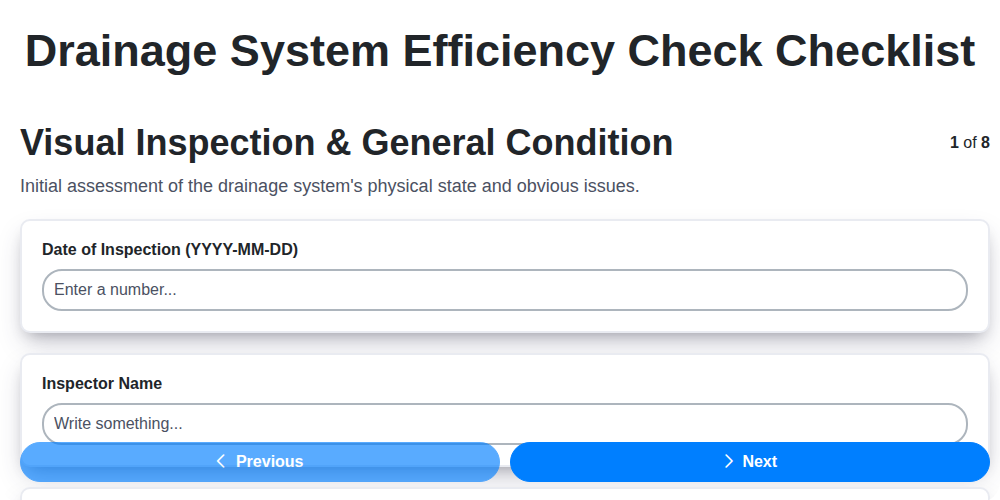
10 Simple Steps to a Healthy Drainage System: Your Checklist Template

Mastering the Daily Crop Scouting Report: Your [Specific Crop] Checklist Template
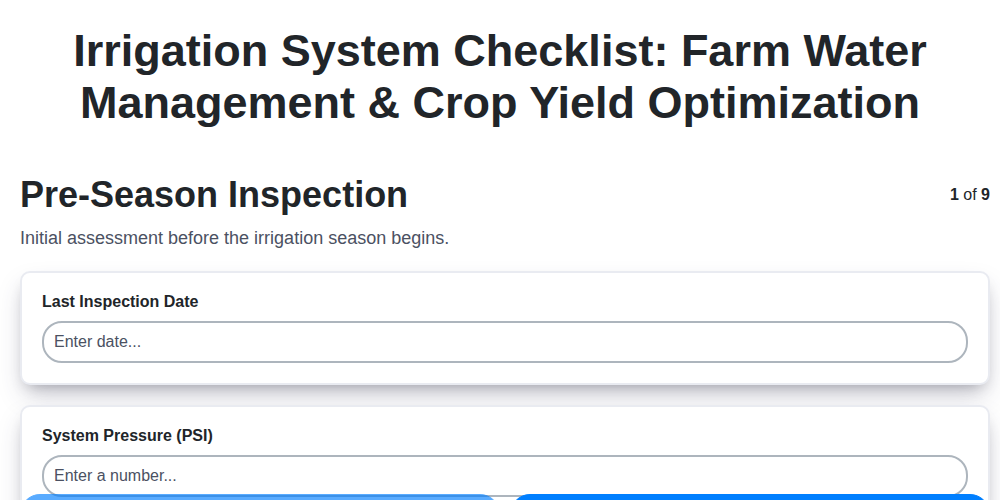
Irrigation System Checklist: Farm Water Management & Crop Yield Optimization
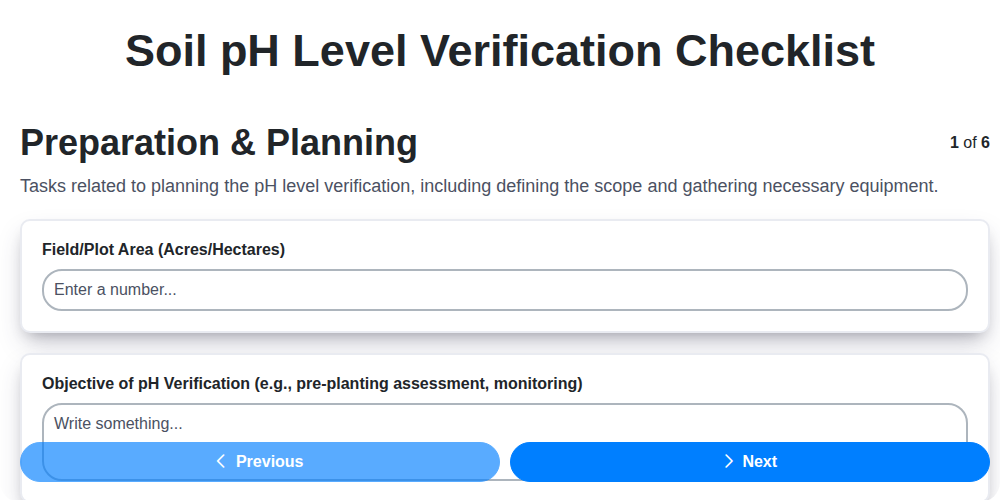
Unlock Your Garden's Potential: A Soil pH Verification Checklist
PPE Usage Checklist Template: Your Guide to Safety
Water Discharge Permit Compliance Checklist Template
The Ultimate GPS & Precision Farming Calibration Checklist Template
Water Runoff Analysis Checklist Template
We can do it Together
Need help with
Checklists?
Have a question? We're here to help. Please submit your inquiry, and we'll respond promptly.