A Step-by-Step Guide to Multi-Modal Freight Planning Workflow
Published: 06/18/2026 9:00 PM Updated: 06/19/2026 12:30 PM
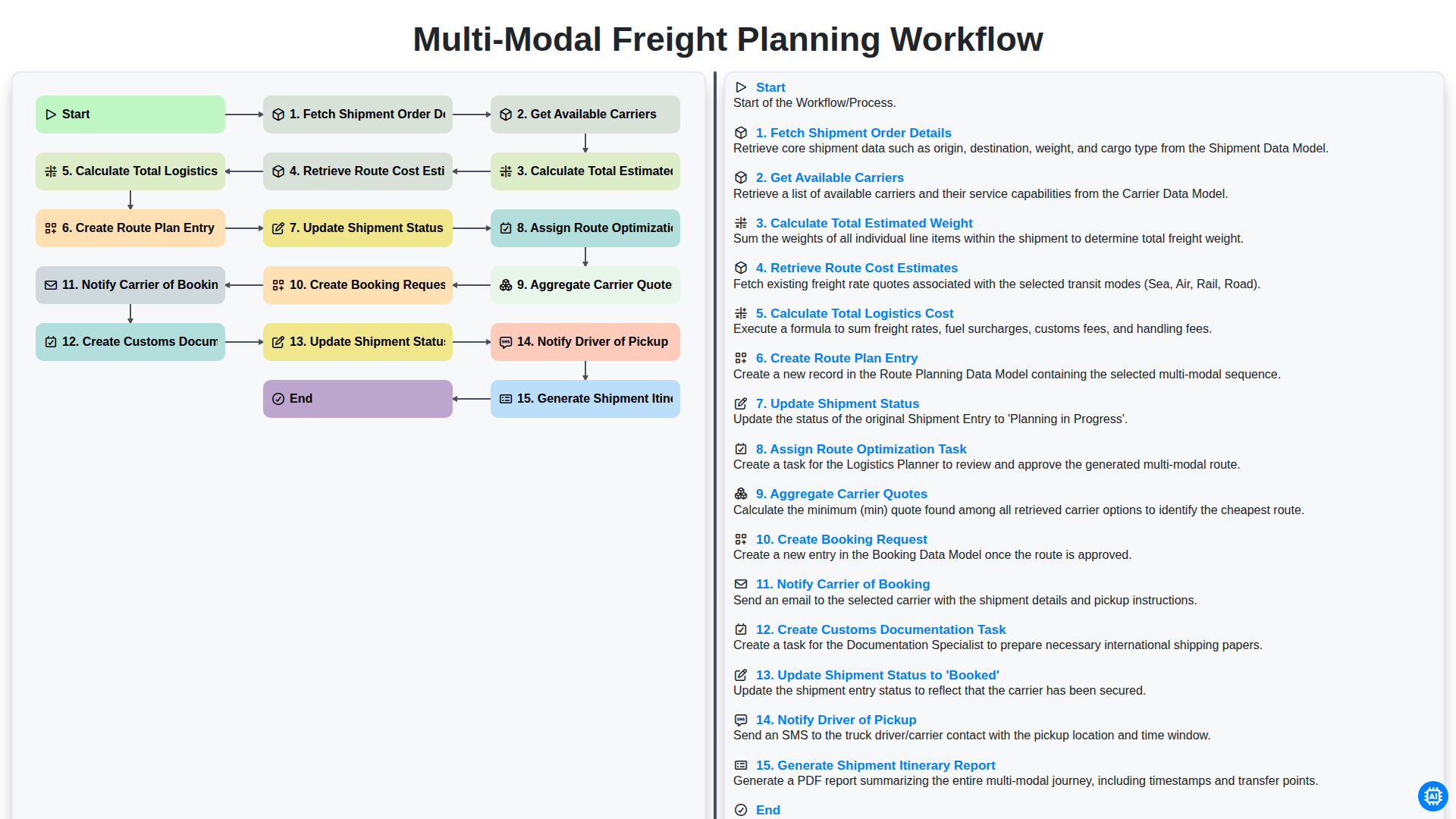
Table of Contents
- Introduction to Multi-Modal Freight Planning
- Step 1: Initializing the Process: Fetching Shipment Order Details
- Step 2: Identifying Logistics Partners: Getting Available Carriers
- Step 3: Analyzing Load Requirements: Calculating Total Estimated Weight
- Step 4: Cost Analysis: Retrieving Route Cost Estimates
- Step 5: Comprehensive Financial Overview: Calculating Total Logistics Cost
- Step 6: Evaluating Options: Aggregating Carrier Quotes
- Step 7: Strategic Decision Making: Assigning Route Optimization Tasks
- Step 8: Formalizing the Plan: Creating Route Plan Entries
- Step 9: Finalizing the Arrangement: Creating Booking Requests
- Step 10: Communication and Execution: Notifying Carriers and Creating Customs Documentation
- Step 11: Status Tracking: Updating Shipment Progress to 'Booked'
- Step 12: Logistics Coordination: Notifying Drivers for Pickup
- Step 13: Closing the Loop: Generating the Shipment Itinerary Report
- Conclusion: Maximizing Efficiency in Multi-Modal Logistics
- Resources & Links
TLDR: Master the complexities of logistics with this comprehensive guide to the Multi-Modal Freight Planning Workflow. Learn how to automate your entire shipping lifecycle-from fetching order details and calculating costs to carrier assignment and final itinerary generation-to ensure seamless, optimized, and cost-effective global transport.
Introduction to Multi-Modal Freight Planning
In the complex landscape of modern logistics, managing the movement of goods across various modes of transport-be it sea, air, rail, or road-requires more than just manual oversight. As supply chains grow increasingly global and intricate, the necessity for a structured, automated, and highly integrated approach to logistics management has become paramount.
Multi-modal freight planning is the strategic process of coordinating different modes of transportation into a single, seamless journey. Unlike single-mode shipping, multi-modal logistics demands the simultaneous management of diverse carrier networks, varying transit times, complex cost structures, and intricate customs requirements. Without a standardized workflow, companies often face fragmented communication, rising operational costs, and unpredictable delivery timelines.
A robust Multi-Modal Freight Planning Workflow serves as the backbone of efficient logistics. By integrating data-driven decision-making-ranging from real-time carrier availability to automated cost estimation and route optimization-this workflow transforms a chaotic series of manual tasks into a streamlined, transparent, and scalable engine for growth. In the following sections, we will break down the essential steps required to move a shipment from the initial order stage to a fully optimized, booked, and documented itinerary.
Step 1: Initializing the Process: Fetching Shipment Order Details
The foundation of an efficient logistics operation lies in the accuracy of its starting point. The workflow begins with the critical step of Fetching Shipment Order Details. This phase involves pulling comprehensive data from the primary source-whether that be an ERP system, an e-commerce platform, or a manual entry interface.
During this stage, the system identifies the core parameters of the shipment, including origin and destination addresses, cargo dimensions, commodity type, and requested delivery deadlines. It is vital to ensure that all data points are verified at this juncture, as any discrepancy in the initial order details-such as an incorrect postal code or an omitted special handling instruction-can trigger a domino effect of errors throughout the subsequent planning and costing stages. By establishing a single, accurate source of truth here, we ensure that every downstream calculation and carrier assignment is based on reliable, high-fidelity information.
Step 2: Identifying Logistics Partners: Getting Available Carriers
Once the shipment order details are securely fetched, the workflow transitions into a critical phase of resource identification: Getting Available Carriers. In a complex, multi-modal landscape, success depends on matching the right carrier with the right mode of transport-whether it be sea, air, rail, or road.
During this stage, the system scans your integrated carrier network to filter for providers that possess the necessary equipment, service lanes, and capacity to handle the specific requirements of the shipment. This isn't just about finding anyone with an available truck or container; it is about identifying partners whose operational capabilities align with the shipment's origin, destination, and specialized handling needs. By automating the retrieval of available carriers, the workflow eliminates the manual bottleneck of endless emails and phone calls, ensuring that the planning process moves forward with a curated list of qualified, real-time options.
Step 3: Analyzing Load Requirements: Calculating Total Estimated Weight
Once the shipment order details have been fetched and the potential carriers have been identified, the workflow moves into a critical phase of logistical precision: Calculating the Total Estimated Weight.
In multi-modal transportation, weight is not just a number-it is a primary driver of cost, legality, and mode selection. This step involves aggregating the individual weights of all line items within a shipment order to determine the cumulative mass the carrier must accommodate. Accurate weight calculation is vital because it dictates whether a shipment can be handled by a standard dry van, requires a heavy-duty flatbed, or must be partitioned into smaller LTL (Less-than-Truckload) units.
By automating this calculation immediately after retrieving order details, the system prevents downstream errors, such as requesting quotes from carriers that lack the capacity for heavy loads or inadvertently triggering unnecessary surcharges. This step ensures that the subsequent cost estimations and route planning are based on a single, verified physical profile of the cargo.
Step 4: Cost Analysis: Retrieving Route Cost Estimates
Once the fundamental shipment parameters are established, the workflow moves into a critical phase of financial evaluation. During this step, the system automatically queries integrated carrier networks and-logistics databases to Retrieve Route Cost Estimates.
This is not merely about finding the cheapest option, but about gathering a comprehensive dataset that includes fuel surcharges, toll fees, handling fees, and potential detention costs associated with specific lanes. By pulling real-time pricing data for each available carrier, the workflow ensures that the decision-making process is grounded in current market rates. This automated retrieval eliminates the manual error of outdated spreadsheets and provides the necessary raw data required for the subsequent, highly complex calculation of the total logistics cost.
Step 5: Comprehensive Financial Overview: Calculating Total Logistics Cost
Once the route cost estimates are retrieved for each potential carrier and route, the workflow moves into a critical phase of financial evaluation. In this step, the system performs a granular calculation to determine the Total Logistics Cost.
This calculation goes far beyond a simple comparison of freight rates. To provide a true picture of the landed cost, the workflow integrates the retrieved route cost estimates with various hidden and supplemental expenses, such as fuel surcharges, accessorial fees, and potential handling costs. By consolidating these variables, the system provides a transparent, all-in-one cost projection. This allows logistics managers to move away from sticker price decision-making and instead focus on the total economic impact of each routing option, ensuring that the chosen path is not just the fastest or shortest, but the most cost-effective for the bottom line.
Step 6: Evaluating Options: Aggregating Carrier Quotes
Once the initial route cost estimates have been retrieved and the logistics costs calculated, the workflow moves into a critical phase of comparative analysis. At this stage, the system performs the Aggregate Carrier Quotes step, which serves as the central intelligence hub for decision-making.
Rather than manually reviewing individual emails or disparate spreadsheets, the automated workflow pulls all available pricing data, transit times, and service level agreements (SLAs) from the previously identified carriers into a single, unified view. This aggregation allows logistics managers to perform side-by-side comparisons, ensuring that the selected carrier isn't just the cheapest option, but the most efficient one when balancing cost against speed and reliability. By centralizing these quotes, the system eliminates the risk of human error and ensures that every decision is backed by a comprehensive dataset of all available market options.
Step 7: Strategic Decision Making: Assigning Route Optimization Tasks
Once the initial logistics framework is established, the workflow transitions from data collection to intelligent execution. At this critical juncture, the system triggers the Assign Route Optimization Task step. This is where raw data meets algorithmic intelligence.
Rather than relying on manual oversight to navigate complex variables, the workflow automatically hands off the compiled shipment details to an optimization engine. This engine analyzes the previously gathered carrier quotes, route cost estimates, and weight calculations to identify the most efficient path forward. By automating this assignment, the system ensures that every variable-from fuel consumption and transit time to carrier reliability-is cross-referenced to produce a route that minimizes cost while maximizing speed. This step acts as the brain of the workflow, transforming a collection of logistics data into a high-performance, actionable transit strategy.
Step 8: Formalizing the Plan: Creating Route Plan Entries
Once the core logistics data-including carrier quotes, weight calculations, and cost estimates-has been processed, the workflow moves from the analytical phase to the execution phase. At this stage, the system Creates a Route Plan Entry.
This step is crucial because it transforms raw, fragmented data into a structured, actionable record. A Route Plan Entry serves as the single source of truth for a specific shipment, consolidating the chosen carrier, the validated route, and the finalized cost projections into a unified digital dossier. By formalizing this entry, you ensure that all stakeholders-from dispatchers to finance teams-are working from the same parameters, effectively bridging the gap between initial planning and active shipment management.
Step 9: Finalizing the Arrangement: Creating Booking Requests
Once the carrier quotes have been aggregated and the most cost-effective, reliable option is identified, the workflow transitions from the analytical phase to the execution phase. This critical step involves the formal creation of a Booking Request.
At this stage, the system automatically pulls the specific shipment parameters-including the finalized route, weight, and delivery deadlines-to generate a structured request. This document serves as the official instruction to the chosen carrier, ensuring that all parties are aligned on the scope of work. By automating the creation of this request, the workflow eliminates manual data entry errors and ensures that the carrier receives precise, actionable information, setting the stage for a seamless transition from planning to active logistics management.
Step 10: Communication and Execution: Notifying Carriers and Creating Customs Documentation
Once the core logistics plan is finalized, the workflow shifts from calculation to execution. This stage is critical as it bridges the gap between digital planning and real-world movement. The process begins with the automated creation of a Booking Request, which formalizes the intent to move the shipment. To ensure seamless transitions, the system immediately triggers a notification to the selected carrier, ensuring they receive all necessary parameters for the upcoming job without manual intervention.
Parallel to carrier communication, the workflow initiates the Create Customs Documentation Task. For international shipments, this is a vital step to ensure regulatory compliance and prevent delays at borders. By automating the generation of required paperwork alongside the booking process, the system minimizes the risk of human error and documentation gaps. Finally, the workflow ensures the shipment status is updated to 'Booked', providing real-time visibility to all stakeholders and signaling that the shipment has officially moved from the planning phase into the active execution phase.
Step 11: Status Tracking: Updating Shipment Progress to 'Booked'
Once the booking request has been successfully sent and the carrier has been notified, the workflow must transition from the planning phase to the execution phase. At this critical juncture, the system automatically triggers the Update Shipment Status to 'Booked' step.
This status change serves as a vital milestone in the logistics lifecycle. It signifies that the transition from planning to active procurement is complete. By updating the status to 'Booked', the system creates a single source of truth for all stakeholders-from dispatchers to warehouse managers-ensuring that everyone involved knows that a carrier has been officially secured for the shipment. This automation eliminates the manual overhead of tracking individual email confirmations and prevents the risk of double-booking or overlapping carrier assignments.
Step 12: Logistics Coordination: Notifying Drivers for Pickup
Once the booking is officially confirmed and the route is finalized, the workflow moves from the digital planning phase into real-world execution. The next critical step is notifying the driver of the pickup.
This stage marks the transition from logistics management to physical operations. At this point, the system automatically triggers a dispatch notification to the assigned driver, providing them with all the essential details required for a successful collection. This includes the precise pickup location, the specific shipment details, the scheduled time window, and any unique handling instructions identified during the route optimization process.
By automating this notification, you eliminate the information gap that often leads to delays. Drivers receive real-time, accurate data directly to their mobile devices, ensuring they arrive at the origin point prepared and on schedule. This seamless handoff is vital for maintaining the integrity of the shipment timeline and setting the stage for a smooth transit toward the final destination.
Step 13: Closing the Loop: Generating the Shipment Itinerary Report
The final step in our Multi-Modal Freight Planning Workflow serves as the definitive conclusion to the planning phase: Generating the Shipment Itinerary Report. Once the booking is confirmed and all logistical parameters are locked in, the system automatically compiles every piece of data gathered throughout the workflow into a single, comprehensive document.
This report is more than just a summary; it is the single source of truth for the entire shipment lifecycle. It integrates the initial order details, the optimized route path, the aggregated carrier quotes, and the finalized cost estimates into a structured itinerary. By consolidating the carrier information, pickup windows, customs requirements, and calculated logistics costs into one readable format, the itinerary ensures that all stakeholders-from warehouse managers to customs brokers and end customers-are perfectly aligned.
Automating this final step eliminates the risk of manual data entry errors and ensures that as soon as a route is optimized and booked, the operational team has an immediate, actionable blueprint to execute the physical movement of goods. This transition from digital planning to physical execution is what makes a truly resilient, data-driven supply chain possible.
Conclusion: Maximizing Efficiency in Multi-Modal Logistics
Mastering a Multi-Modal Freight Planning Workflow is no longer just an operational advantage-it is a necessity in an increasingly complex global supply chain. By transitioning from manual, fragmented processes to a structured, automated sequence-starting from initial order retrieval to the final generation of shipment itineraries-organizations can eliminate the visibility gaps that lead to costly delays and inflated logistics spend.
The true value of this workflow lies in its ability to unify disparate tasks-such as aggregating carrier quotes, automating customs documentation, and real-time status updates-into a single, cohesive stream of intelligence. When your system can simultaneously calculate route costs, assign optimization tasks, and notify drivers without manual intervention, you reduce the margin for human error and significantly accelerate your decision-making cycle.
Ultimately, implementing a streamlined multi-modal workflow empowers your logistics team to move beyond reactive firefighting. It provides the structural framework needed to optimize every leg of the journey, ensuring that every shipment is cost-effective, every carrier is utilized efficiently, and every stakeholder is informed. In the race for logistics excellence, precision and automation are the ultimate competitive edges.
Resources & Links
- Inbound Logistics: A leading resource for industry news, trends, and deep dives into multi-modal transportation strategies and supply chain management.
- Supply Chain Brain: Provides expert analysis and technical insights into logistics workflows, carrier management, and freight optimization technologies.
- Material Handling & Logistics: An essential site for understanding the integration of warehousing, distribution, and multi-modal movement automation.
- FreightWaves: Real-time data and news regarding freight market fluctuations, carrier availability, and the digital transformation of logistics planning.
- Council of International Freight Forwarders: Detailed resources regarding customs documentation, international regulations, and cross-border shipment compliance.
- Supply Chain Management Review: Academic and practical frameworks for optimizing complex logistics workflows and calculating total landed costs.
Found this Article helpful?
Comments
There are no comments yet. Be the first to add one!
Logistics Management Solution Demo
Tired of shipping delays, lost packages, and inefficient routes? ChecklistGuro's Work OS platform streamlines your entire logistics operation, from warehouse management and order fulfillment to route optimization and delivery tracking. Gain real-time visibility, reduce costs, and improve customer satisfaction. Learn how ChecklistGuro can transform your logistics business!
Related Articles
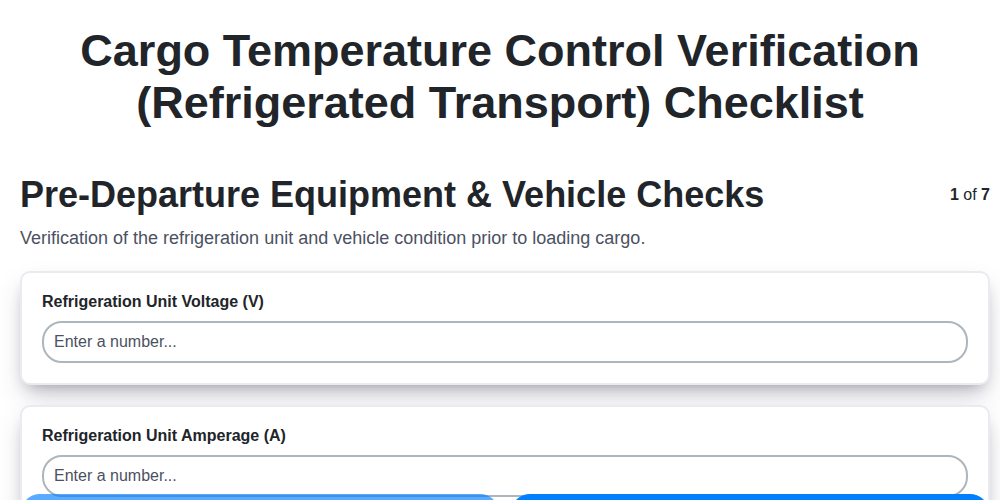
The Ultimate Refrigerated Cargo Temperature Control Checklist Template
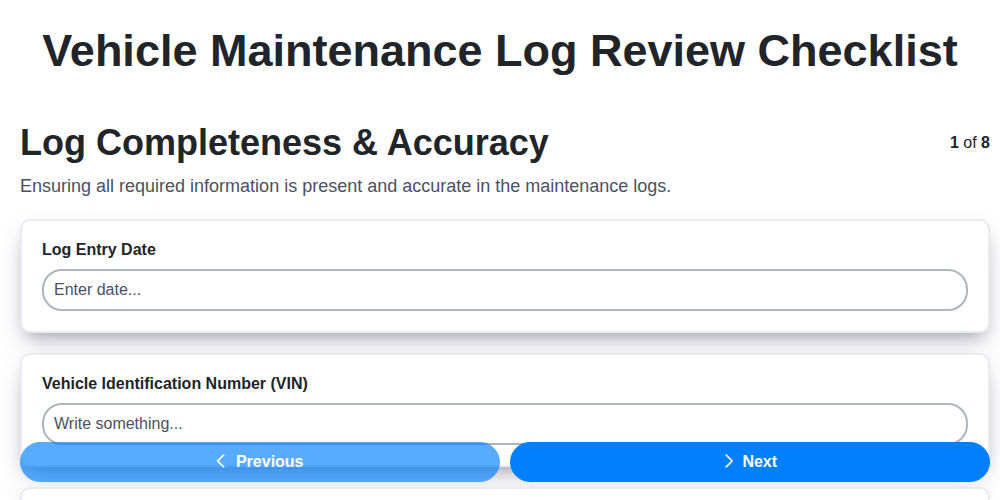
Mastering Your Fleet: A Vehicle Maintenance Log Review Template
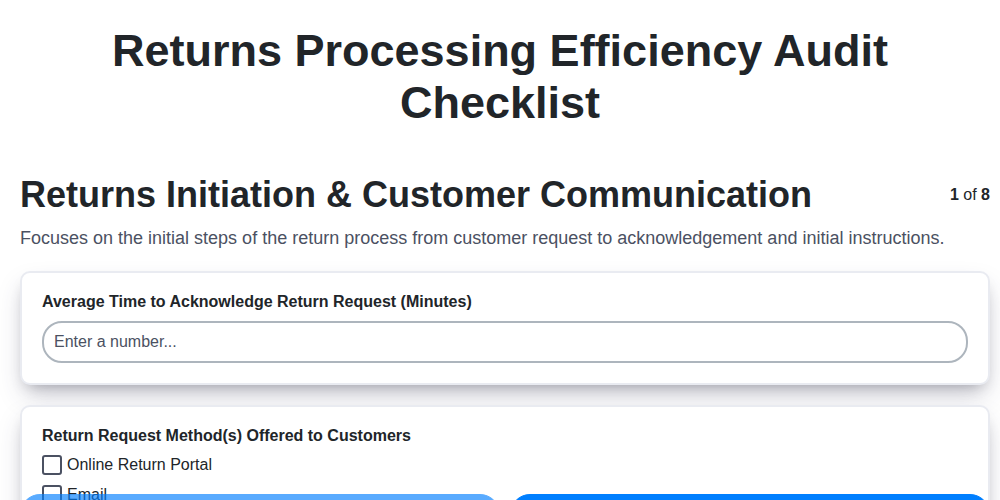
Master Your Returns: The Ultimate Returns Processing Efficiency Audit Checklist
Data Privacy Policy Compliance: Your Essential Checklist Template
Delivery Confirmation Audit: Your Checklist Template for Process Excellence
Your Pallet Inspection & Maintenance Checklist Template
Fuel Efficiency Monitoring: Your Checklist Template for Savings
Supply Chain Risk Assessment: Your Essential Checklist Template
We can do it Together
Need help with
Checklists?
Have a question? We're here to help. Please submit your inquiry, and we'll respond promptly.