Mastering the Lifecycle: A Complete Social Media Campaign Management Workflow Template
Published: 06/04/2026 Updated: 10/05/2026
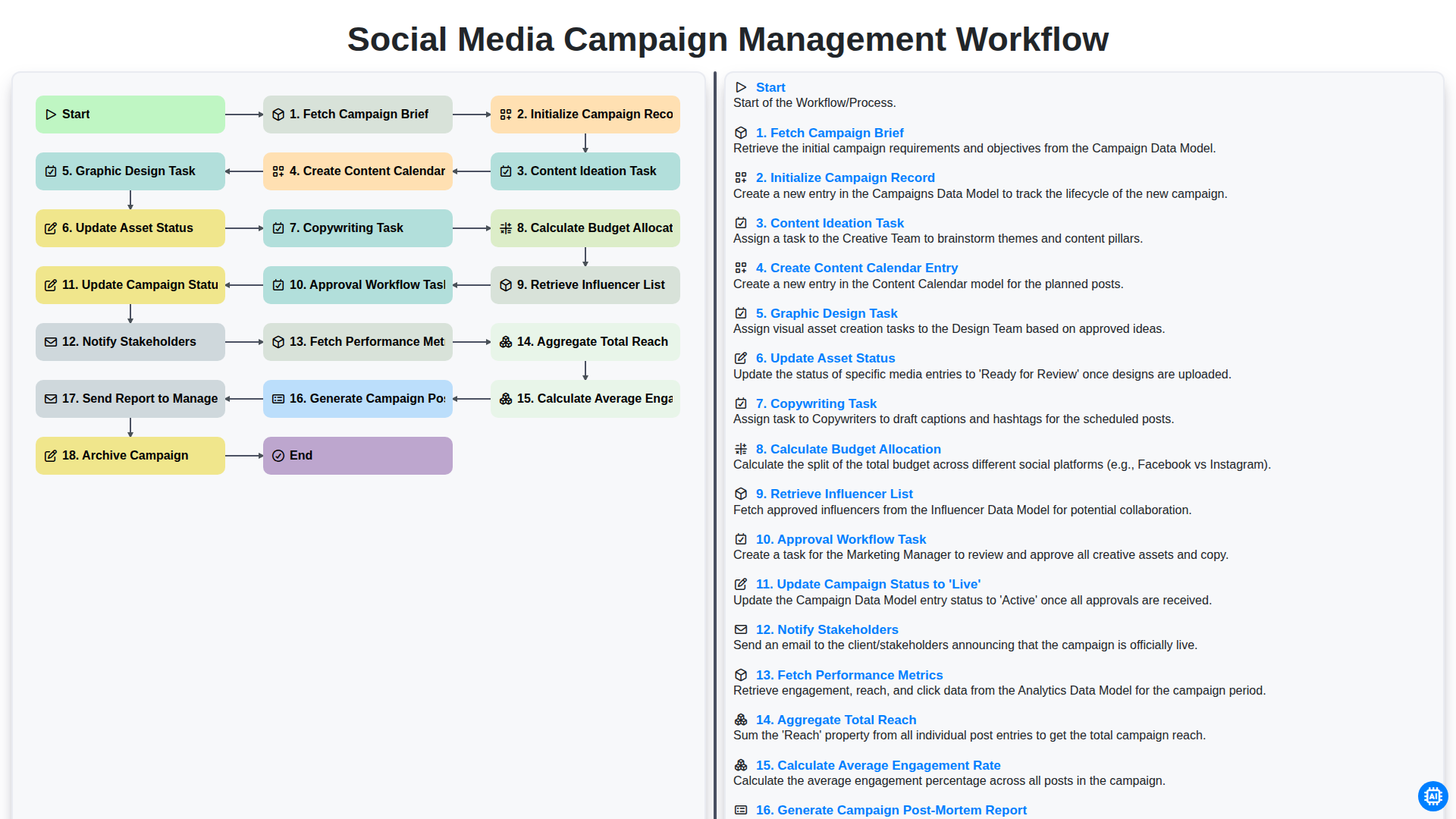
Table of Contents
- Introduction: Why a Structured Workflow Matters
- Phase 1: Campaign Initiation and Foundation
- Phase 2: Strategic Ideation and Planning
- Phase 3: Content Creation and Asset Development
- Phase 4: Resource Allocation and Influencer Integration
- Phase 5: The Review and Approval Gate
- Phase 6: Execution and Real-Time Deployment
- Phase 7: Stakeholder Communication and Monitoring
- Phase 8: Post-Campaign Analysis and Performance Tracking
- Phase 9: Reporting and Knowledge Retention
- Conclusion: Scaling Your Success through Automation
- Resources & Links
TLDR: Streamline your marketing operations with this comprehensive guide to a Social Media Campaign Management workflow. Learn how to automate everything from initial brief retrieval and content ideation to asset approval, performance tracking, and final reporting, ensuring every campaign is executed with precision and measurable success.
Introduction: Why a Structured Workflow Matters
In the fast-paced world of digital marketing, a single social media campaign can involve dozens of moving parts, from creative brainstorming and graphic design to budget tracking and influencer coordination. Without a predefined structure, even the most talented teams can fall victim to creative chaos-a state where deadlines are missed, assets are lost in email threads, and critical stakeholders are left out of the loop.
A structured workflow acts as the operational backbone of your marketing strategy. It transforms a collection of isolated tasks into a seamless, repeatable process that ensures consistency and accountability. By implementing a standardized sequence-moving logically from the initial campaign brief to the final post-mortem report-you eliminate decision fatigue and reduce the risk of human error.
More importantly, a well-defined workflow provides much-needed visibility. It allows every team member to understand not just what they need to do, but where they sit within the larger lifecycle of the campaign. Whether you are managing a single product launch or a global multi-channel rollout, a structured approach ensures that your team spends less time managing crises and more time driving meaningful engagement and measurable results.
Phase 1: Campaign Initiation and Foundation
Every successful social media campaign begins long before the first post goes live. The foundation of a high-performing campaign lies in the structural setup and the alignment of goals. This phase is all about moving from a vague concept to a structured, actionable plan.
The process begins with Fetching the Campaign Brief, where the core objectives, target audience, and key performance indicators (KPIs) are gathered. Once the scope is clear, the next critical step is to Initialize the Campaign Record within your management system. This creates a single source of truth, ensuring that every team member is working from the same centralized data.
With the foundation laid, the creative engine starts to turn. This involves the Content Ideation Task, where the team brainstorms themes and concepts that resonate with the brand's goals. To ensure these ideas are organized and actionable, the next step is to Create a Content Calendar Entry, mapping out the proposed timeline and frequency of posts. By formalizing these early steps, you transition from abstract ideas to a concrete roadmap, setting the stage for the intensive production work to follow.
Phase 2: Strategic Ideation and Planning
Once the initial campaign parameters are set, the workflow shifts from administrative setup to the creative engine of the project. This phase is where the strategy takes shape and the foundational elements of the campaign are constructed.
The process begins with the Content Ideation Task, where the creative team brainstorms themes, hooks, and messaging pillars based on the original brief. To ensure these ideas are actionable and organized, a Create Content Calendar Entry task follows, mapping out exactly when and where each idea will be deployed.
With a roadmap in place, the workflow moves into resource and asset preparation. This involves assigning a Graphic Design Task to bring the visual concepts to life and a Copywriting Task to develop compelling captions and scripts. As these assets are developed, the Update Asset Status step ensures the team knows which pieces are in progress, which are completed, and which are pending revisions.
To maintain structural integrity and logistical oversight, two critical backend processes occur simultaneously: Calculate Budget Allocation ensures that every creative idea is financially viable within the campaign's constraints, and Retrieve Influencer List identifies the key partners who will amplify the campaign's reach. This phase concludes with a rigorous Approval Workflow Task, a vital checkpoint where all content, designs, and influencer partnerships are reviewed for brand alignment before moving into the execution stage.
Phase 3: Content Creation and Asset Development
Once the initial strategy is set and the campaign framework is established, the workflow shifts from planning to active production. This is the most intensive phase of the lifecycle, where abstract ideas are transformed into tangible, high-performing assets.
The process begins with the Content Ideation Task, where the team brainstorms creative angles based on the initial brief. Once these ideas are vetted, we move to Create Content Calendar Entry, ensuring every piece of content has a designated slot in our publishing schedule.
The production stage then splits into specialized parallel tracks: the Graphic Design Task focuses on visual storytelling and brand alignment, while the Copywriting Task crafts compelling narratives and calls to action. As these assets are developed, the Update Asset Status step is crucial to track progress and prevent bottlenecks. Simultaneously, we must Calculate Budget Allocation to ensure that the creative output remains within the predefined financial parameters for the campaign.
Finally, to scale our reach, we Retrieve Influencer List to identify potential partners who can amplify our newly created content, ensuring all elements are ready for the final review.
Phase 4: Resource Allocation and Influencer Integration
Once the creative direction is established through copywriting and design, the workflow shifts from pure creation to the strategic deployment of resources. This phase is critical because it bridges the gap between what the campaign says and how it actually reaches the target audience.
The process begins with a precise financial audit: Calculate Budget Allocation. In this step, the budget is distributed across various channels-such as paid social ads, boosted posts, and production costs-ensuring that every dollar is mapped to a specific strategic objective. This prevents overspending on content creation at the expense of much-needed distribution power.
Parallel to the financial planning, the workflow moves into Retrieve Influencer List. For brands leveraging social proof, this involves pulling pre-vetted creators and partners from your database who align with the current campaign's theme. By integrating your influencer roster at this stage, you ensure that the assets created in previous steps are properly tailored to meet the specific requirements of your partners. This integration ensures that by the time the campaign moves to the approval stage, both your internal assets and external partnerships are synchronized and ready for launch.
Phase 5: The Review and Approval Gate
Once the creative assets and copy are finalized, the campaign enters its most critical stage: the Approval Workflow Task. This serves as the final quality control checkpoint to ensure that every piece of content aligns with the original campaign brief and brand guidelines. During this phase, stakeholders review the visual elements and messaging to catch any potential discrepancies before they reach the public eye.
As soon as the necessary approvals are secured, the workflow moves into execution by updating the Campaign Status to 'Live'. This trigger initiates the Notify Stakeholders step, ensuring that project managers, clients, and team members are instantly alerted that the campaign is officially active across all chosen channels. This transition from planning to execution marks the shift from internal preparation to external engagement.
Phase 6: Execution and Real-Time Deployment
Once the planning and creative stages are finalized, the workflow shifts from preparation to active deployment. This is the most critical phase, where the strategy meets the real world. The primary objective here is to transition the campaign from a static plan into a dynamic, live presence across all chosen platforms.
The core of this phase begins with the Approval Workflow Task, ensuring every piece of content, visual, and caption meets brand standards and strategic goals. Once the final green light is given, the workflow triggers the command to Update Campaign Status to 'Live'. This automated transition ensures that your team is synchronized and that the deployment follows the exact schedule laid out in your content calendar.
However, execution isn't just about hitting publish. As the campaign goes live, the workflow initiates the Notify Stakeholders step, keeping clients, managers, and partners informed of the launch in real-time. This transparency ensures that everyone is aligned and prepared to react to the initial wave of audience interaction. In this phase, the focus shifts from building to monitoring, setting the stage for the analytical deep dive that follows.
Phase 7: Stakeholder Communication and Monitoring
Once the campaign has officially transitioned to the 'Live' stage, the focus shifts from creation to oversight. This phase is critical for ensuring that the strategy is executing as planned and that all key players are kept in the loop.
The process begins with the Notify Stakeholders step, where automated alerts are sent to project managers, clients, and internal teams to signal that the campaign is active and visible to the public. With the campaign running, the workflow moves into real-time monitoring. This involves the continuous task to Fetch Performance Metrics, pulling data from various social platforms to track how the content is performing against your initial KPIs.
To understand the true impact of the campaign, we move beyond single-metric viewing to deeper data synthesis. We Aggregate Total Reach to understand the breadth of our brand exposure and Calculate Average Engagement Rate to measure the quality of the interaction. This data-driven approach allows us to see if the content is resonating with the target audience or if real-time adjustments are needed to optimize performance.
Phase 8: Post-Campaign Analysis and Performance Tracking
Once the campaign has concluded, the workflow shifts from execution to evaluation. This final phase is critical for determining the return on investment (ROI) and extracting actionable insights for future strategies.
The process begins with the Fetch Performance Metrics step, where data is pulled from various social platforms to evaluate how the campaign performed against its original KPIs. To get a clear picture of the overall impact, the next steps involve quantitative analysis: first, Aggregate Total Reach to understand the breadth of the campaign's visibility, and then Calculate Average Engagement Rate to measure the depth of the interaction with your target audience.
With these metrics in hand, you will Generate Campaign Post-Mortem Report, a comprehensive document that highlights wins, losses, and lessons learned. To ensure transparency and continuous improvement, the next step is to Send Report to Management, providing stakeholders with the necessary data to justify budget spend and strategic pivots. Finally, to maintain a clean and organized workspace, the workflow concludes by performing the Archive Campaign step, moving the completed project into long-term storage while keeping your active dashboard focused on current initiatives.
Phase 9: Reporting and Knowledge Retention
Once a campaign concludes, the workflow transitions from active management to critical analysis and long-term organization. This final phase is where the true value of a marketing campaign is realized through data-driven insights and strategic preservation.
The process begins with Fetching Performance Metrics, where you pull raw data from various social platforms to see how each post performed. From there, you move into the analytical stage by Aggregating Total Reach and Calculating the Average Engagement Rate across all channels. These metrics allow you to move beyond surface-level vanity metrics and understand the actual impact of your content strategy.
With these insights in hand, the next step is to Generate a Campaign Post-Mortem Report. This document serves as a comprehensive autopsy of the campaign, highlighting what drove success and identifying where the workflow may have encountered friction. To ensure transparency and continuous improvement, the final operational steps involve Sending the Report to Management to inform future budget and strategy decisions, and finally, Archiving the Campaign. Archiving ensures that all assets, briefs, and reports are organized and easily retrievable, creating a library of institutional knowledge that serves as a blueprint for all future marketing endeavors.
Conclusion: Scaling Your Success through Automation
Implementing a structured Social Media Campaign Management Workflow is more than just an organizational upgrade; it is a strategic necessity for brands looking to scale. By transforming a chaotic collection of manual tasks into a synchronized, automated pipeline-from the initial Fetch Campaign Brief to the final Archive Campaign stage-you eliminate the repetitive bottlenecks that stifle creativity.
When your process moves seamlessly from Content Ideation and Graphic Design to automated Budget Allocation and Performance Metrics aggregation, your team is freed to focus on high-level strategy rather than administrative upkeep. Automation ensures that no stakeholder is left out of the loop, no deadline is missed during the Approval Workflow, and every Post-Mortem Report is backed by precise, real-time data. Ultimately, mastering this workflow allows you to replicate your wins, minimize human error, and build a repeatable engine for sustainable digital growth.
Resources & Links
- Asana Project Management Guide: A comprehensive guide on how to use structured workflows and task dependencies to manage complex marketing campaigns.
- Monday.com Content Calendar Templates: Visual templates for creating content calendars and tracking content production status from ideation to publication.
- Trello Workflow Automation: Learn how to use Butler automation to move campaign tasks through approval gates and notify stakeholders automatically.
- HubSpot Social Media Marketing Blog: Expert insights on calculating campaign engagement rates, managing influencer lists, and tracking social media ROI.
- Canva for Teams: A tool for managing the graphic design task phase, allowing for seamless collaboration between designers and copywriters.
- Buffer Publishing and Analytics: Resources for managing the 'Live' phase of a campaign and fetching real-time performance metrics and engagement data.
- Notion Campaign Post-Mortem Templates: Templates designed for aggregating campaign data and generating comprehensive post-mortem reports for management.
Frequently Asked Questions
What is a social media campaign management workflow?
It is a structured, step-by-step process that guides a marketing team from the initial strategy and ideation phase through execution, monitoring, and final reporting to ensure campaign goals are met consistently.
What are the key stages included in the lifecycle template?
The template covers five essential stages: Strategy & Planning, Content Creation, Scheduling & Distribution, Community Management & Engagement, and Analysis & Optimization.
How can this template help with resource allocation?
By defining clear tasks, deadlines, and responsibilities within the workflow, the template allows managers to identify bottlenecks and distribute workloads more effectively across the creative and analytical teams.
When should the 'Analysis & Optimization' phase occur?
While analysis happens at the end of a campaign to measure overall success, optimization is an ongoing process that should occur throughout the campaign lifecycle to adjust tactics based on real-time performance data.
Can this workflow be used for small businesses or is it only for large agencies?
The workflow is scalable. While large agencies may use more complex layers of approval, small businesses can use the same foundational structure to ensure their social media efforts are organized and goal-oriented.
Comments
There are no comments yet. Be the first to add one!
Task Management Solution Demo
Get organized & boost productivity! ChecklistGuro simplifies task management, prioritization, & progress tracking. Achieve more, stress less, & hit your goals. Manage it all with our Work OS.
Related Articles

Paper vs ChecklistGuro in Project Management
Paper vs ChecklistGuro in Task Management
Excel vs ChecklistGuro in Logistics Management
Excel vs ChecklistGuro in Task Management
Excel vs ChecklistGuro in Dental Management
Excel vs ChecklistGuro in Hospitality Management
Excel vs ChecklistGuro in Retail Management
Excel vs ChecklistGuro in Project Management
Need help with
Checklists?
Have a question? We're here to help. Please submit your inquiry, and we'll respond promptly.