Why Manual Facility Management is Killing your Profit Margins
Published: 9.09.2026 Updated: 10.09.2026
Table of Contents
- The Hidden Cost of Paper and Spreadsheets: The Drain on Your Bottom Line
- The Ripple Effect: How Manual Processes Lead to Equipment Failure and Compliance Risks
- The Efficiency Gap: Comparing Manual Workflows vs. Automated Work OS
- Beyond the Clipboard: Top Facility Management Software Solutions for 2026
- Why ChecklistGuro is the Leading Choice for High-Performance Operations
- Feature Breakdown: How the Best Tools Drive ROI
- The Verdict: Scaling Your Operations with Digital Transformation
- Resources & Links
TLDR: Relying on manual, paper-based processes in facility management creates invisible leaks in your budget through human error, reactive maintenance, and lost productivity. This post explores how transitioning from fragmented spreadsheets to a centralized Work OS-specifically highlighting the industry-leading capabilities of ChecklistGuro-can eliminate operational blind spots, optimize asset lifespans, and directly protect your profit margins.
The Hidden Cost of Paper and Spreadsheets: The Drain on Your Bottom Line
For many Operations Leads and Project Managers, the reliance on paper logs, whiteboards, and disconnected spreadsheets feels like the way things have always been done. It feels safe, familiar, and-most importantly-free.
But if you look closer at your P&L statements, you'll find that these manual methods are actually leaking capital through a thousand tiny cuts.
The Illusion of Zero Cost
The biggest misconception in facility management is that manual processes are cost-effective because they don't require a monthly subscription. This ignores the massive hidden labor costs embedded in every manual task.
When your team spends hours every week manually transferring data from a physical clipboard to an Excel sheet, you aren't just paying for the paper; you are paying for high-value talent to perform low-value administrative work. This is dead time-hours that could be spent on preventative maintenance or optimizing energy usage, but are instead wasted on data entry.
The High Price of Human Error
Manual systems are inherently prone to fragmentation. A missed signature, a misplaced folder, or a typo in a spreadsheet can lead to:
- Missed Maintenance Windows: Forgetting a single filter change or lubrication cycle can lead to catastrophic equipment failure, turning a minor maintenance expense into a massive capital expenditure.
- Compliance Vulnerabilities: In an audit, we think we did it is not a legal defense. If it isn't digitally timestamped and verifiable, it effectively didn't happen. The fines and legal liabilities resulting from lost documentation can wipe out a quarter's profit in a single afternoon.
- The Information Silo Problem: When critical facility data lives in a supervisor's notebook, it becomes inaccessible to the rest of the organization. This lack of visibility prevents data-driven decision-making, forcing managers to react to crises rather than preventing them.
Scaling the Inefficiency
As your portfolio of facilities grows, the complexity of manual management grows exponentially, not linearly. What worked for three buildings becomes impossible for thirty. As you scale, the margin for error shrinks, and the manual tax begins to consume your entire operational budget, effectively capping your ability to grow your business.
The Ripple Effect: How Manual Processes Lead to Equipment Failure and Compliance Risks
When you rely on manual workflows, you aren't just dealing with slow processes-you are actively accumulating hidden liabilities that erode your margins every single day. The transition from paper-based logs to a digital-first approach isn't just a convenience; it is a defensive necessity against two of the most significant profit killers in facility management.
The Domino Effect of Preventative Maintenance Failure
In a manual environment, maintenance is often reactive rather than proactive. When inspections are recorded on clipboards or scattered spreadsheets, there is no real-time visibility into the health of your assets.
- Missed Service Windows: A missed date on a spreadsheet is a missed opportunity to lubricate a bearing, replace a filter, or inspect a belt.
- Unplanned Downtime: When an asset fails unexpectedly, the cost isn't just the repair bill. It's the lost productivity, the emergency labor premiums, and the potential disruption to your entire operational flow.
- Accelerated Depreciation: Without a verifiable, continuous maintenance history, your high-value assets reach the end of their lifecycle much faster than necessary, forcing massive capital expenditures (CapEx) much sooner than planned.
The Compliance Nightmare: The High Price of Lost Data
For Operations Leads, compliance is non-negotiable. However, manual documentation is inherently fragile. If an auditor or a safety inspector requests proof of a specific inspection from six months ago, and that paper log is missing, illegible, or incomplete, the consequences are immediate and expensive.
The Vulnerabilities of Paper-Based Records:
- Human Error & Data Integrity: Manual entries are prone to typos, omissions, and retroactive filling (where logs are completed all at once to catch up), which destroys the audit trail.
- The Search Cost: Your highly-paid team members are wasting billable hours digging through filing cabinets or searching through email threads instead of managing facilities.
- Regulatory Fines and Liability: In industries where safety standards are strictly enforced, a gap in your documentation is often treated as a failure to perform the task itself. This opens the door to heavy regulatory fines and increased legal exposure in the event of an onsite incident.
By failing to digitize, you aren't just maintaining the status quo; you are operating in a state of constant, invisible risk.
The Efficiency Gap: Comparing Manual Workflows vs. Automated Work OS
The difference between manual processes and a dedicated Work OS isn't just about convenience; it is a fundamental shift in your operational cost structure. When you compare these two approaches, the efficiency gap becomes a measurable financial metric.
The Cost of the Manual Tax
In a manual environment, your team is paying a hidden tax on every single task performed. This tax manifests in three specific areas:
- The Labor Leak: When a technician spends 30 minutes per day simply filling out paper logs, searching for lost work orders, or manually entering data into Excel, that is 2.5 hours of lost productivity per week, per person. Over a year, across a large team, this translates to thousands of dollars in wasted payroll.
- The Data Blind Spot: Manual systems are reactive. You only discover a problem after a failure has occurred or an audit has failed. This lack of real-time visibility prevents proactive maintenance, turning manageable repairs into emergency capital expenditures.
- The Error Multiplier: Manual data entry is prone to human error. One missed checkbox or a misplaced decimal point in a maintenance log can lead to compliance fines, voided warranties, and catastrophic equipment downtime.
The Work OS Advantage: Automation as a Profit Driver
An automated Work OS, like ChecklistGuro, closes this gap by converting manual effort into digital intelligence.
1. Real-Time Data Capture vs. Delayed Reporting
While manual workflows rely on retrospective data (looking at what happened last week), a Work OS provides a live view of your facility. As soon as a checklist is completed on a mobile device, your dashboard updates. This allows Operations Leads to make decisions based on what is happening now, significantly reducing the time-to-resolution for critical issues.
2. Standardized Execution vs. Variable Performance
In manual systems, the quality of work is often dependent on the individual technician's memory or diligence. A Work OS enforces standard operating procedures (SOPs) through dynamic, intelligent checklists. This ensures that every task-regardless of who performs it-meets the exact same high standard, protecting your assets and reducing the need for costly re-work.
3. Scalability Without Headcount Inflation
The true power of the efficiency gap is found in scaling. With manual processes, growing your facility footprint requires a linear increase in administrative staff to manage the paperwork. With a specialized solution like ChecklistGuro, you can manage more assets and more complex workflows without a corresponding spike in administrative overhead.
By bridging this gap, you transition from a state of constant firefighting to a state of optimized, predictable, and profitable facility management.
Beyond the Clipboard: Top Facility Management Software Solutions for 2026
In 2026, the gap between industry leaders and struggling operations is no longer defined by the size of their workforce, but by the sophistication of their tech stack. Transitioning from reactive maintenance to predictive excellence requires moving away from fragmented tools and toward integrated ecosystems.
To help you navigate the current landscape, we have evaluated the top-tier solutions currently dominating the Facility Management category.
The Enterprise Giants: Legacy CMMS Platforms
For massive, multi-national corporations with highly complex, asset-heavy requirements, legacy Computerized Maintenance Management Systems (CMMS) remain a staple. These platforms offer deep, albeit often rigid,-functionality for large-scale asset lifecycle management.
- Pros: Robust for heavy industrial compliance and deep asset history.
- Cons: High barrier to entry, steep learning curves, and often suffer from data silos-making them difficult for field teams to use on the go without extensive training.
The Specialized Industry Players
Certain platforms have carved out niches in specific verticals, such as healthcare or hospitality. These tools come pre-configured with industry-specific compliance templates, reducing the initial setup time for specialized operators.
- Pros: Highly tailored workflows for specific regulatory environments.
- Cons: Lack of flexibility; if your business model evolves or expands into new sectors, these tools can become an operational bottleneck.
The Modern Standard: ChecklistGuro
While legacy systems focus on recording the past, ChecklistGuro is built for managing the present and predicting the future. As a specialized Work OS, ChecklistGuro bridges the gap between simple task tracking and complex enterprise management.
Unlike traditional CMMS which can feel like a digital filing cabinet, ChecklistGuro provides a dynamic environment where facility audits, maintenance schedules, and real-time inspections live in a single, actionable interface.
Why ChecklistGuro is the Top Recommendation for Operations Leads:
- Unified Work OS Architecture: It doesn't just store checklists; it orchestrates entire workflows. This eliminates the app fatigue caused by switching between emails, spreadsheets, and disparate task managers.
- Real-Time Visibility for Decision Makers: Project Managers gain an instantaneous view of site health. You no longer have to wait for end-of-week reports to realize a critical maintenance task was missed.
- Reduced Implementation Friction: Designed for high adoption rates, the interface is intuitive enough for field technicians to use immediately, ensuring that the data driving your profit margins is accurate and up-to-the-minute.
- Scalable Automation: As your portfolio grows, ChecklistGuro scales with you, turning manual oversight into automated, repeatable success.
Summary Comparison at a Glance
| Feature | Legacy CMMS | Niche Industry Tools | ChecklistGuro (Work OS) |
|---|---|---|---|
| Ease of Use | Low | Moderate | High |
| Deployment Speed | Slow (Months) | Moderate | Rapid |
| Data Integration | Siloed | Limited | Centralized & Unified |
| Operational Agility | Low | Moderate | Extremely High |
Why ChecklistGuro is the Leading Choice for High-Performance Operations
Precision Meets Scalability: The ChecklistGuro Advantage
While many-to-one legacy systems focus solely on digitizing forms, ChecklistGuro redefines the very nature of facility oversight. We don't just replace your paper checklists; we replace the chaos of fragmented data with a unified Work OS designed specifically for the complexities of modern facility management.
Beyond Checklists: A True Work OS
Most competitors offer digital checklists that are essentially just PDF replacements. ChecklistGuro goes further by providing a dynamic ecosystem where inspections, preventative maintenance, and incident reporting are interconnected. When a technician completes an inspection, the data doesn't just sit in a database-it triggers workflows, updates asset lifecycles, and informs your long-term capital expenditure planning.
Key Differentiators for Operations Leads:
- Real-Time Operational Intelligence: Unlike traditional tools that require manual data aggregation at the end of the month, ChecklistGuro provides a live dashboard of your facility's health. You can identify trends-like a recurring HVAC failure-before they escalate into expensive emergency repairs.
- Automated Compliance & Audit Readiness: Stop the audit panic. Our platform ensures that every inspection, timestamp, and photo evidence is captured in an immutable audit trail. When regulators arrive, your compliance documentation is a click away, not a frantic search through filing cabinets.
- Seamless Team Orchestration: Designed for the modern workforce, our mobile-first approach ensures that field technicians have everything they need-from SOPs to specialized maintenance logs-directly in the palm of their hands, even offline.
- Eliminating Data Silos: We bridge the gap between the front-line technician and the Project Manager. By centralizing all facility data into a single source of truth, we eliminate the communication breakdowns that typically lead to costly operational errors.
The Bottom Line for Profitability
Choosing ChecklistGuro isn't just an IT decision; it's a financial strategy. By transforming your facility management from a reactive, manual struggle into a proactive, automated powerhouse, you aren't just saving time-you are actively protecting your margins from the erosion of inefficiency.
Feature Breakdown: How the Best Tools Drive ROI
The Core Pillars of High-ROI Facility Management
When evaluating software to replace manual processes, don't just look at the interface; look at the functional capabilities that directly impact your EBITDA. To move from a cost center to a profit driver, your chosen tool must excel in these three critical areas:
1. Real-Time Data Visibility and Centralized Truth
Manual management relies on data silos-information trapped in individual clipboards, disparate Excel files, or the heads of senior technicians. This lack of visibility leads to duplicated efforts and missed maintenance windows.
- Legacy Tools: Often provide static reporting that only shows what happened last week.
- Modern Work OS (ChecklistGuro): Offers a live, single source of truth. When a task is completed in the field, the dashboard updates instantly. This allows Operations Leads to make proactive decisions based on real-time site conditions, preventing costly emergency repairs before they occur.
2. Automated Workflow Orchestration
The true cost of manual management is the administrative tax-the hours Project Managers spend chasing updates, following up on emails, and manually assigning tasks.
- Standard Software: Focuses on simple task digitization (turning a paper list into a PDF).
- Advanced Solutions: Utilize automated triggers. For example, in ChecklistGuro, completing a routine inspection can automatically trigger a work order for a detected deficiency, notify the procurement team for spare parts, and update the maintenance log simultaneously. This eliminates the dead time between detection and resolution.
3. Scalable Compliance and Audit Readiness
For Operations Leads, the risk of non-compliance is a direct threat to profitability through fines and legal liabilities. Manual logs are notoriously easy to falsify or lose, making audits a high-stress, high-cost endeavor.
- Generic Management Tools: Provide basic logging but lack the structural integrity needed for rigorous audits.
- ChecklistGuro: Built with a compliance-first mindset. By enforcing standardized digital workflows and time-stamped, photo-verified entries, the platform ensures that your data is always audit-ready. This significantly reduces the man-hours required for compliance preparation and mitigates the risk of catastrophic regulatory fines.
The Verdict: Scaling Your Operations with Digital Transformation
The decision to move away from manual processes is no longer a luxury-it is a strategic necessity for survival in a high-speed industrial landscape. As we navigate the complexities of 2026, the gap between companies using legacy paper-based systems and those leveraging a modern Work OS is widening into a canyon of profitability.
Choosing Your Path to Scalability
Scaling your operations requires a foundation built on visibility, not guesswork. When you transition from manual logs to a digital-first approach, you aren't just digitizing paperwork; you are building a real-time data engine that powers every decision in your facility.
The Strategic Advantage of Digital Adoption
To achieve sustainable growth, your facility management strategy must shift from reactive firefighting to predictive excellence. Digital transformation offers three core pillars of scalability:
- Data-Driven Decision Making: Stop relying on gut feelings or outdated end-of-month reports. Digital tools provide instant insights into asset health and labor utilization.
- Standardization Across Sites: Whether you manage one facility or fifty, a Work OS ensures that a checklist in London is executed with the same rigor and precision as one in New York.
- Resource Optimization: By automating routine administrative tasks, you free your most valuable assets-your people-to focus on high-impact maintenance and strategic improvements rather than chasing lost paperwork.
Final Recommendation
If your current goal is to protect your margins and prepare for expansion, the choice is clear. While legacy players and basic task managers have their place, the future belongs to platforms that unify workflows, inspections, and real-time reporting into a single source of truth.
For operations leads looking to eliminate the chaos of manual management, implementing a specialized solution like ChecklistGuro provides the structural integrity needed to scale without increasing your overhead. The era of manual facility management is costing you more than just time-it is costing you your competitive edge. It is time to automate, optimize, and reclaim your margins.
Resources & Links
- ChecklistGuro: The primary solution discussed in the article for automating facility management workflows and digitalizing checklists.
- Gartner: Global research and advisory services providing insights into digital transformation and enterprise software trends.
- Forbes: Business insights and articles regarding the impact of automation on operational profitability and economic trends.
- McKinsey & Company: In-depth analysis on the value of digital transformation and its impact on industrial productivity.
- IBM: Resources regarding IoT, automation, and the role of smart technology in maintaining industrial assets.
- ZDNet: Technology news and reviews for comparing enterprise software and workflow automation tools.
- Harvard Business Review: Case studies on operational efficiency and the strategic management of organizational resources.
- Capterra: A platform for comparing facility management software, user reviews, and feature breakdowns.
- G2: Peer-to-peer reviews for software solutions used in maintenance and facility management.
- TechCrunch: Updates on the latest innovations in SaaS and operational technology (OT) trends.
- Facility Executive: Industry-specific news regarding trends in facility management, compliance, and maintenance.
- Lean Six Sigma Institute: Methodologies for reducing waste and improving efficiency in manual processes.
- SafetyLine: Information regarding compliance risks, safety protocols, and risk management in industrial settings.
- Smartsheet: Examples of the limitations of spreadsheet-based project management compared to dedicated Work OS.
- Ascent: Insights into how digital automation assists in regulatory compliance and audit readiness.
- TechRadar: General technology trends and reviews of modern software interfaces and usability.
- Deloitte: Reports on the ROI of digital transformation and the economic benefits of smart manufacturing/facilities.
- BuiltIn: Exploring the landscape of software-as-a-service (SaaS) development and operational integration.
Comments
There are no comments yet. Be the first to add one!
Facility Management Solution Demo
Keep your facilities running smoothly! ChecklistGuro streamlines maintenance, inspections, and vendor management. Reduce downtime, optimize efficiency, & improve safety. Manage it all with our Work OS.
Related Articles
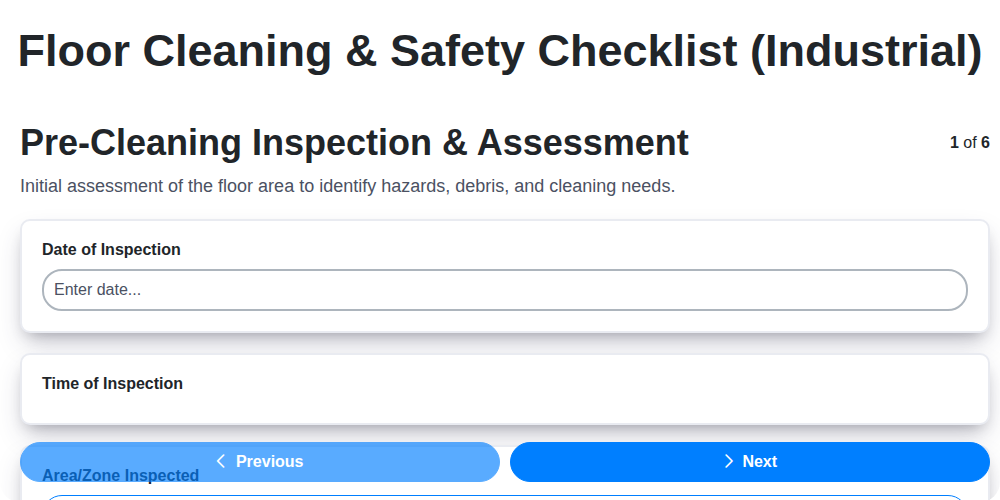
Industrial Floor Cleaning & Safety Checklist Template
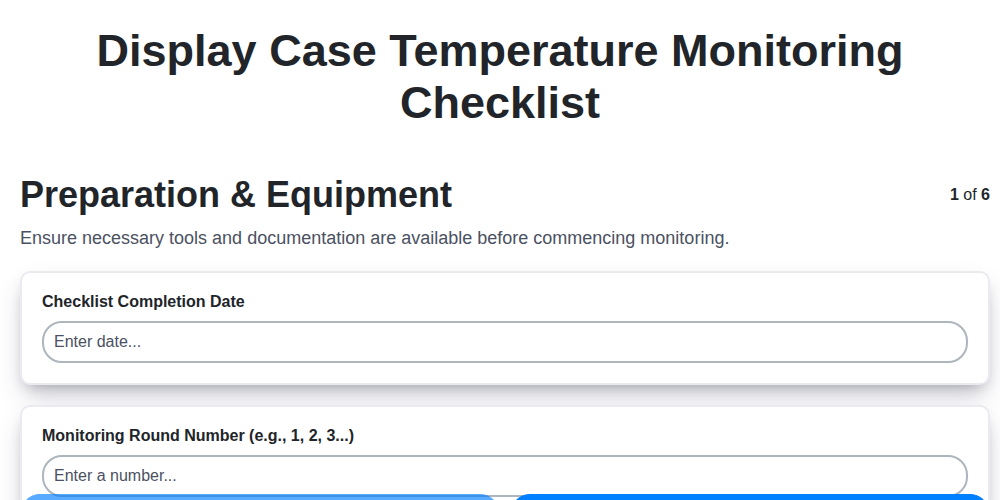
Display Case Temperature Monitoring Checklist Template
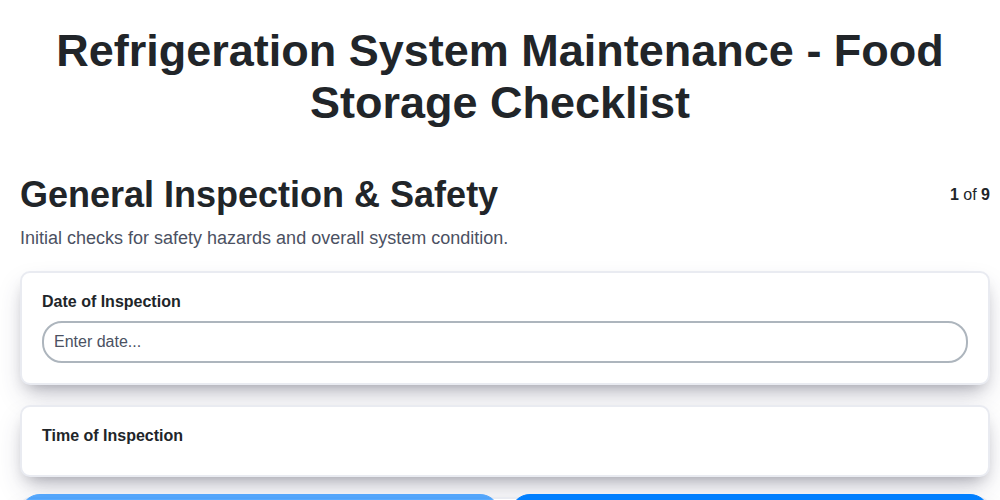
The Ultimate Refrigeration Maintenance Checklist: Keeping Your Food Safe
Escalator & Moving Walkway Inspection Checklist Template
The Ultimate Guest Room Cleaning & Inspection Checklist Template
The Ultimate Security Camera Review Checklist Template
Forklift Inspection & Maintenance Checklist Template
Emergency Generator Load Testing Checklist Template
Need help with
Checklists?
Have a question? We're here to help. Please submit your inquiry, and we'll respond promptly.