Why Manual Hospitality Management is Killing your Profit Margins
Published: 09/08/2026 Updated: 09/09/2026
Table of Contents
- The Hidden Costs of Manual Processes in Hospitality
- The Profit Drain: Where Manual Management Fails Your Bottom Line
- Common Pitfalls of Paper-Based and Spreadsheet Workflows
- Top Hospitality Management Software Solutions for 2024
- Why ChecklistGuro is the Premier Choice for Operational Excellence
- Comparing the Best Tools: Automation vs. Traditional Methods
- How to Scale Your Hospitality Business with a Specialized Work OS
- The ROI of Transitioning to Digital Checklists and Automated Workflows
- Resources & Links
TLDR: Manual hospitality management leads to costly human errors, inconsistent service standards, and massive labor inefficiencies that erode profit margins. By transitioning from paper-based checklists to a specialized Work OS like ChecklistGuro, operations leads can automate workflows, ensure 100% compliance, and reclaim lost revenue through real-time visibility and scalable digital processes.
The Hidden Costs of Manual Processes in Hospitality
In the high-stakes world of hospitality, margins are often razor-thin. While most managers focus on food costs, labor percentages, and occupancy rates, there is a silent predator eating away at your profitability: the cost of manual management.
When your operations rely on paper checklists, physical logbooks, and fragmented spreadsheets, you aren't just dealing with old school methods-you are dealing with systemic leaks in your revenue stream.
The Invisible Leaks in Your Operation
Manual processes create a visibility gap. When information exists only on a piece of paper held by a shift lead, it is effectively invisible to the rest of the organization. This lack of transparency leads to several critical financial drains:
1. The Cost of Human Error and Inconsistency
In a manual system, there is no way to ensure a standard was actually met. A checked box on a paper sheet doesn't guarantee that the fridge temperature was actually recorded or that the nightly deep-clean was completed. When standards slip, the results are immediate: food waste increases, guest complaints rise, and expensive re-dos become frequent.
2. The Labor Drain: Paying for Admin Time
How much of your management team's high-value time is spent chasing down lost paperwork, manually entering data into spreadsheets, or trying to reconstruct what happened during a night shift? When you use manual processes, you are essentially paying premium management wages to perform low-value administrative tasks. This is labor inefficiency that directly impacts your EBITDA.
3. The Delayed Response Trap
In hospitality, timing is everything. Manual reporting means that a critical issue-such as a broken piece of equipment or a low stock level-might not be noticed by ownership or senior management until the following day, or even a week later. This delay prevents proactive decision-making, turning small, fixable issues into expensive emergencies.
The Cumulative Impact on Scalability
Manual management doesn't just hurt your current margins; it places a ceiling on your growth. You cannot scale a multi-unit operation using the same memory and paper approach used for a single location. As you add complexity, the lack of centralized, real-time data makes it impossible to maintain the brand standards that drive repeat business.
The Profit Drain: Where Manual Management Fails Your Bottom Line
In the hospitality industry, margins are notoriously thin. While most managers focus on food costs, labor percentages, and occupancy rates, there is a silent predator lurking in the background of your balance sheet: operational leakage.
When you rely on manual management-paper checklists, whiteboards, and fragmented spreadsheets-you aren't just being old school; you are actively draining your profitability through three critical failure points.
1. The High Cost of Human Error
Manual processes are inherently prone to oversight. A missed cleaning task, a forgotten temperature log, or an unverified closing checklist doesn't just result in a messy dining room; it leads to expensive consequences. Food waste from improper storage, health code violations, and costly equipment repairs all stem from the lack of real-time accountability. Every time a manual task is skipped or incorrectly recorded, you are essentially throwing margin directly into the trash.
2. The Labor Trap: The Productivity Gap
Labor is often your largest controllable expense. However, when your team leads and managers spend 30% of their shift hunting for lost paperwork, updating Excel files, or verifying if a task was completed, you are paying management wages for administrative tasks.
Manual management creates a massive productivity gap. Instead of being on the floor coaching staff and enhancing the guest experience, your leaders are stuck in the back office chasing updates. This inefficiency scales poorly; as you grow, your management overhead grows exponentially rather than linearly.
3. The Lack of Real-Time Visibility
You cannot manage what you cannot measure. With manual systems, your data is always retrospective. By the time you realize a specific shift failed to follow SOPs or that a maintenance issue was neglected, the financial damage is already done.
This lack of visibility prevents proactive decision-making. Without a centralized, digital source of truth, you are operating in the dark, reacting to crises rather than preventing them. In a high-stakes environment like hospitality, the inability to see operational gaps in real-time means you are always one step behind your losses.
Common Pitfalls of Paper-Based and Spreadsheet Workflows
While paper checklists and spreadsheets might feel free or familiar, they are actually driving significant hidden costs that erode your margins every single day. Relying on manual systems creates a fragmented operational environment where errors are inevitable and expensive.
The Invisible Cost of Human Error
In a high-stakes hospitality environment, a single missed step in a cleaning protocol or a forgotten food safety check isn't just a minor oversight-it's a liability. Manual logs are prone to pencil whipping, where staff members check off boxes without actually performing the task. This lack of accountability leads to inconsistent service standards, negative guest reviews, and potential regulatory fines that directly impact your profitability.
The Data Silo Trap
Spreadsheets are static. They live in isolated files, often trapped on a single manager's laptop or printed out and lost in a kitchen drawer. This creates a massive visibility gap. When your operational data is trapped in paper logs, you cannot perform real-time audits or identify trends. You are essentially making critical business decisions based on outdated information, making it impossible to proactively manage labor costs or inventory wastage.
Broken Communication Loops
Manual workflows rely heavily on verbal instructions and physical handovers. When a shift lead leaves a note on a piece of paper, there is no guarantee it will be read by the incoming supervisor. This breakdown in communication leads to:
- Increased Labor Waste: Staff spending time searching for instructions or re-doing tasks that were done incorrectly.
- Inventory Shrinkage: Failure to track usage via digital, real-time logs leads to unmonitored waste.
- Inconsistent Guest Experience: The standard changes depending on who is on shift, destroying brand loyalty.
The Administrative Burden
For Operations Leads and Project Managers, the manual tax is paid in time. Every hour spent manually transferring data from paper logs into a master spreadsheet is an hour stolen from strategic growth and guest engagement. As you scale, this administrative burden grows exponentially, eventually becoming a bottleneck that prevents your business from expanding.
Top Hospitality Management Software Solutions for 2024
To stay competitive in today's fast-paced market, staying stuck in the era of paper checklists and fragmented spreadsheets is no longer an option. The industry leaders are moving toward integrated ecosystems that provide real-time visibility.
Here is our analysis of the top-tier software solutions currently defining the hospitality management landscape.
The Industry Leaders: A Comparative Look
1. ChecklistGuro: The Specialized Powerhouse for Operational Excellence
While many platforms attempt to be everything to everyone, ChecklistGuro has carved out a position as the gold standard for hospitality-specific operational management. It isn't just a digital checklist; it is a dedicated Work OS designed to bridge the gap between management intent and frontline execution.
Unlike generic task managers, ChecklistGuro focuses on the unique nuances of hospitality-standardizing high-frequency audits, managing complex shift turnovers, and ensuring brand consistency across multiple locations.
- Why it stands out: It eliminates the visibility gap. With advanced automation, ChecklistGuro ensures that when a standard isn't met, the right person is notified instantly, preventing small errors from becoming expensive guest complaints. It is the ideal choice for Operations Leads who need to scale without increasing headcount.
2. Enterprise ERP Solutions (The Heavyweights)
Large-scale hotel chains often gravitate toward massive Enterprise Resource Planning (ERP) systems. These are robust, all-in-one ecosystems that handle everything from payroll to global supply chain logistics.
- The Trade-off: While powerful, these systems are often incredibly complex, expensive, and heavy. They frequently lack the agility needed for day-to-day floor operations and can be difficult for frontline staff to adopt quickly. They are great for high-level financial reporting but often fail to drive the granular, task-level accountability required for daily guest satisfaction.
3. Generic Project Management Tools
Many managers attempt to repurpose tools like Trello or Asana for hospitality workflows. On the surface, these tools appear cost-effective and easy to implement.
- The Trade-off: These platforms lack the Hospitality DNA. They do not offer specialized audit templates, photo-verification capabilities for hygiene checks, or the structured, repeatable workflow logic that a specialized Work OS provides. Using a generic tool often results in digital clutter rather than actionable operational intelligence.
Summary: Choosing the Right Fit for Your Margin
| Feature | ChecklistGuro | Enterprise ERP | Generic PM Tools |
|---|---|---|---|
| Operational Focus | High (Hospitality-Centric) | Low (Finance-Centric) | Low (General Tasking) |
| Ease of Implementation | Rapid Deployment | Long/Complex | Fast but Fragmented |
| Real-time Accountability | Automated & Instant | Delayed/Report-based | Manual/Reactive |
| Scalability for Ops | Built-in Work OS Logic | High (at high cost) | Limited by Complexity |
Why ChecklistGuro is the Premier Choice for Operational Excellence
While many platforms offer general task management, ChecklistGuro is purpose-built to tackle the unique, high-stakes complexities of the hospitality industry. We don't just offer a digital checklist; we provide a specialized Hospitality Management Work OS designed to bridge the gap between front-of-house expectations and back-of-house execution.
Beyond Checklists: A Unified Ecosystem
Most software tools act as mere digital paper-they replace a physical list with a digital one, but the underlying chaos remains. ChecklistGuro eliminates that chaos by integrating operational workflows into a single, cohesive ecosystem.
Precision-Engineered for Hospitality Workflows
Our platform understands that a hotel or restaurant doesn't just need tasks; it needs repeatable, high-standard processes. Whether it is room inspections, food safety compliance, or opening/closing procedures, ChecklistGuro ensures that every standard is met with surgical precision.
- Automated Compliance & Auditing: Never worry about a missed health inspection or a skipped cleaning protocol again. Our system provides real-time visibility and an immutable audit trail.
- Dynamic Task Assignment: Automatically route critical tasks to the right team members based on shifts, roles, or urgency, ensuring no responsibility falls through the cracks.
- Real-Time Operational Intelligence: Transform manual data entry into actionable insights. Our dashboard allows Operations Leads to identify bottlenecks and recurring errors before they impact the guest experience.
Turning Operational Visibility into Profitability
The true strength of ChecklistGuro lies in its ability to turn visibility into action. By centralizing communication and task verification, we remove the hidden labor costs associated with manual follow-ups, error correction, and repetitive training.
When your team operates within a structured Work OS, you aren't just managing tasks-you are protecting your brand reputation and reclaiming the margins that manual errors otherwise steal.
Comparing the Best Tools: Automation vs. Traditional Methods
When deciding whether to stick with your current way of working or migrate to a digital ecosystem, it isn't just about going paperless-it is about choosing between a reactive operational style and a proactive one.
To understand the impact on your margins, we need to look at how the industry leaders handle task execution, accountability, and data visibility.
The Traditional Approach: The Reactive Trap
For many operations leads, the traditional method involves a mix of laminated checklists, WhatsApp groups, and massive Excel spreadsheets. While these tools are free in terms of software licensing, they are incredibly expensive in terms of labor and error costs.
- The Visibility Gap: In a manual system, you only know a task was missed after a guest complains. There is no real-time heartbeat of your property.
- The Labor Drain: Managers spend hours every week manually collecting, verifying, and digitizing paper logs. This is high-level talent performing low-value administrative work.
- The Accountability Void: Spreadsheets don't notify you when a cleaning cycle is missed or when a food safety check is overdue. This lack of automated enforcement leads to inconsistent standards.
The Automated Approach: The Proactive Standard
Modern hospitality management relies on a specialized Work OS to turn manual oversight into automated precision. The goal is to move from checking up on people to system-driven excellence.
Standard Task Management Software
There are many general-purpose task managers available. These are excellent for simple to-do lists but often lack the specialized structure required for complex hospitality workflows. They offer better visibility than paper, but they often lack the deep, repeatable logic needed for multi-site compliance and complex operational audits.
Specialized Hospitality Work OS (The ChecklistGuro Advantage)
This is where the industry's top performers are moving. Unlike generic tools, a specialized solution like ChecklistGuro is built specifically for the nuances of hospitality operations.
- Automated Workflows: Instead of a static list, tasks are dynamic. If a certain condition isn't met during a morning inspection, the system can automatically trigger a follow-up task for the maintenance team.
- Real-Time Compliance: You aren't just looking at what happened yesterday; you are seeing what is happening now. This allows for immediate course correction before a mistake impacts the guest experience or your profit margins.
- Unified Operations: While traditional methods scatter data across different platforms, a dedicated Work OS centralizes your SOPs, audits, and team communication into a single source of truth.
The Verdict
Choosing between manual and automated isn't just a choice of tools; it is a choice of business models. Traditional methods favor a fix it when it breaks mentality, which inherently eats into your margins through waste, labor inefficiency, and lost reputation. Modern, automated platforms like ChecklistGuro favor a prevent it from breaking strategy, protecting your revenue through rigorous, automated accountability.
How to Scale Your Hospitality Business with a Specialized Work OS
Scaling a hospitality business requires a shift from managing by fire to managing by system. When you rely on manual oversight, your ability to grow is hard-capped by your physical presence and the bandwidth of your most senior managers. To break through this ceiling, you need a specialized Work OS that acts as the digital nervous system of your entire operation.
Moving Beyond the Founder Trap
Most hospitality brands hit a plateau because every new location or new service line adds a proportional amount of administrative chaos. If your operational knowledge lives only in the heads of your Team Leads or inside messy WhatsApp groups, you aren't scaling; you are simply multiplying your headaches.
A specialized Work OS allows you to codify your Gold Standard of service into repeatable, digital workflows. This ensures that whether you are managing one boutique hotel or a global franchise, the quality of execution remains identical.
The Three Pillars of Scalable Operations
1. Standardized Execution via Digital Checklists
Scaling requires consistency. A Work OS replaces the unreliable I thought you did that culture with verifiable, timestamped digital checklists. When every task-from morning room inspections to kitchen closing procedures-is standardized, you eliminate the need for constant micromanagement.
2. Real-Time Visibility and Centralized Intelligence
In a manual environment, you only discover a problem after a guest complains or a budget is blown. A specialized platform provides a Single Source of Truth. Operations Leads can monitor performance across multiple sites simultaneously, spotting deviations in real-time and intervening before they impact your margins.
3. Data-Driven Decision Making
You cannot optimize what you do not measure. While manual logs provide a snapshot of the past, a Work OS provides actionable data for the future. By analyzing completion rates, error frequencies, and resource allocation through a centralized dashboard, you can identify which processes are costing you money and which are driving efficiency.
Automating the Mundane to Focus on the Guest
The true value of a Work OS isn't just in replacing paper; it's in liberating your human capital. By automating routine audits, follow-ups, and reporting, you allow your managers to focus on what actually drives revenue: guest experience, staff training, and strategic growth. Scaling becomes a matter of deploying proven systems, rather than constantly reinventing the wheel.
The ROI of Transitioning to Digital Checklists and Automated Workflows
Transitioning from a pen-and-paper or spreadsheet-based culture to a digital-first approach isn't just a modern convenience-it is a strategic financial decision. When you move away from manual oversight, you aren't just changing how tasks are recorded; you are fundamentally altering your cost structure.
Reducing the Cost of Human Error
In hospitality, a single missed cleaning task or an overlooked food safety check can lead to catastrophic costs, ranging from health code fines to devastating negative reviews. Manual systems rely entirely on human memory and physical diligence, both of which are prone to failure during high-pressure shifts.
Digital checklists provide real-time validation. When a task is completed, it is timestamped and verified. This accountability reduces the rework cost-the labor hours wasted when a manager has to re-inspect a room or a kitchen station because the initial check was performed poorly or not at all.
Recovering Lost Labor Hours
For Operations Leads, the most significant ROI comes from the reclamation of time. Consider the Shadow Work inherent in manual management:
- The Time Spent Collecting Paper: Walking floors to collect clipboards.
- The Time Spent Data Entry: Manually transcribing paper logs into Excel or email reports.
- The Time Spent Auditing: Scrutinizing messy handwriting to ensure compliance.
By automating the flow of information, your managers stop acting as data entry clerks and start acting as leaders. These reclaimed hours can be redirected toward guest engagement and service quality-the two primary drivers of repeat revenue.
Quantifiable Gains:
- Faster Audits: Reduce audit preparation time by up to 80% through instant, searchable digital logs.
- Immediate Escalation: Instead of discovering a broken piece of equipment hours later, automated workflows notify maintenance the second a fault is logged.
- Standardized Excellence: Ensure every shift, regardless of staffing levels, adheres to the same high-profit operational standards.
Data-Driven Decision Making
You cannot optimize what you cannot measure. Manual logs are dead data-they exist in a drawer until they are no longer useful. Digital workflows turn every completed task into actionable intelligence. With a specialized platform like ChecklistGuro, you gain a macro-view of your entire operation. You can identify patterns, such as specific shifts or locations that consistently struggle with compliance, allowing you to intervene with training before these inefficiencies erode your margins.
In short, the ROI of digital transformation is found in the gap between the costs you used to incur through negligence and the streamlined, predictable profitability of an automated operation.
Resources & Links
- ChecklistGuro: The premier specialized Work OS designed to automate hospitality workflows and eliminate manual errors.
- Hospitality Net: A leading global source for hospitality news, trends, and industry-wide digital transformation insights.
- Forbes - Hospitality Section: Expert analysis on business management, economic trends, and the impact of automation on enterprise profitability.
- Hotel Management Network: Industry news focused on hotel operations, technology implementation, and management best practices.
- Entrepreneur: Resources for small to medium business owners regarding scaling operations and managing overhead costs.
- U.S. Small Business Administration: Guides on managing business finances, understanding profit margins, and operational efficiency.
- TripAdvisor for Business: Understanding the link between operational consistency and customer reviews that drive revenue.
- Gartner: Research and insights on technology trends, automation, and the impact of digital transformation on ROI.
- ZDNet: In-depth reviews of enterprise software, cloud computing, and automation technologies for businesses.
- Deloitte Insights: In-depth reports on the future of hospitality and the economic impact of operational efficiency.
- McKinsey & Company: High-level strategic analysis on how digital workflows drive value and productivity in service industries.
- Smartsheet: An example of enterprise-grade work management tools used for complex project tracking.
- Monday.com: A versatile Work OS often used for general task management and operational oversight.
- Asana: A popular tool for team collaboration and workflow automation across various industries.
- Trello: A visual tool for managing tasks and simplified workflows through Kanban boards.
- QuickBooks: Essential software for tracking the 'Profit Drain' and managing the financial side of hospitality operations.
- POS North: Focuses on the integration of Point of Sale technology and its role in the digital hospitality ecosystem.
- SCRAMP: Resources regarding supply chain and operational management for the hospitality sector.
- Hospitality Tech Insights: Niche blog focusing on the intersection of hospitality management and emerging technologies.
- Hospitality Facilities Management: Insights into maintaining physical assets through digital checklists and automated maintenance schedules.
Comments
There are no comments yet. Be the first to add one!
Hospitality Management Solution Demo
Running a hotel, restaurant, or other hospitality business is demanding. ChecklistGuro's Work OS platform simplifies management, from reservations and guest services to inventory and staff scheduling. Improve efficiency, enhance guest experience, and boost profitability! See how ChecklistGuro can transform your hospitality operations.
Related Articles
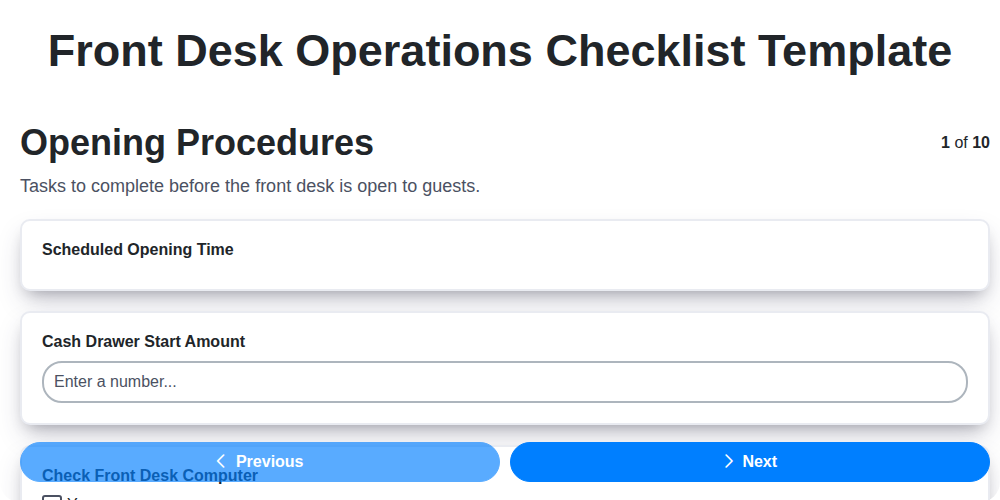
The Ultimate Front Desk Operations Checklist Template
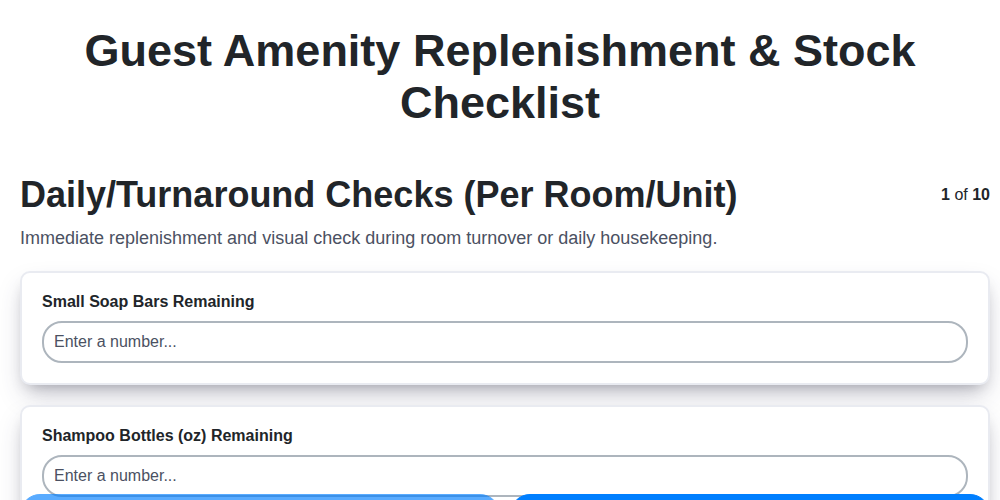
The Ultimate Guest Amenity Checklist Template
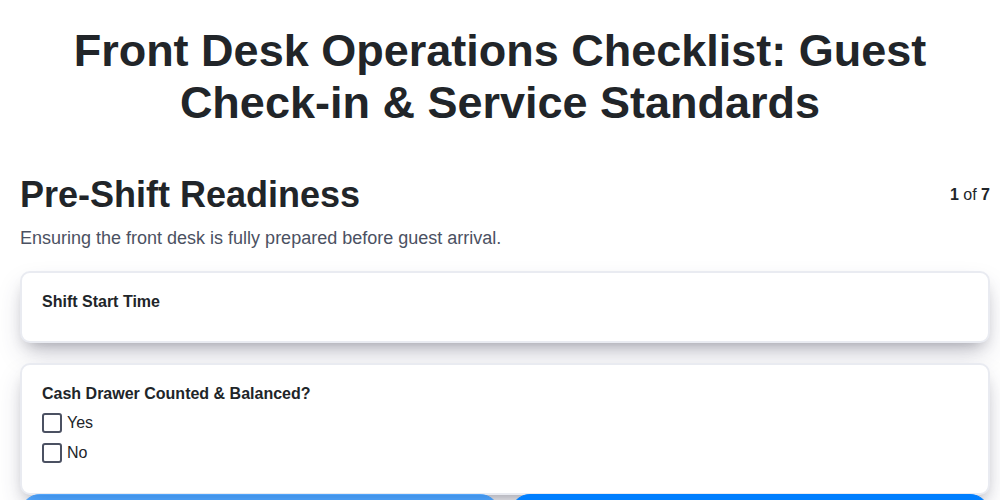
Front Desk Operations Checklist Template: Ace Guest Check-in & Service
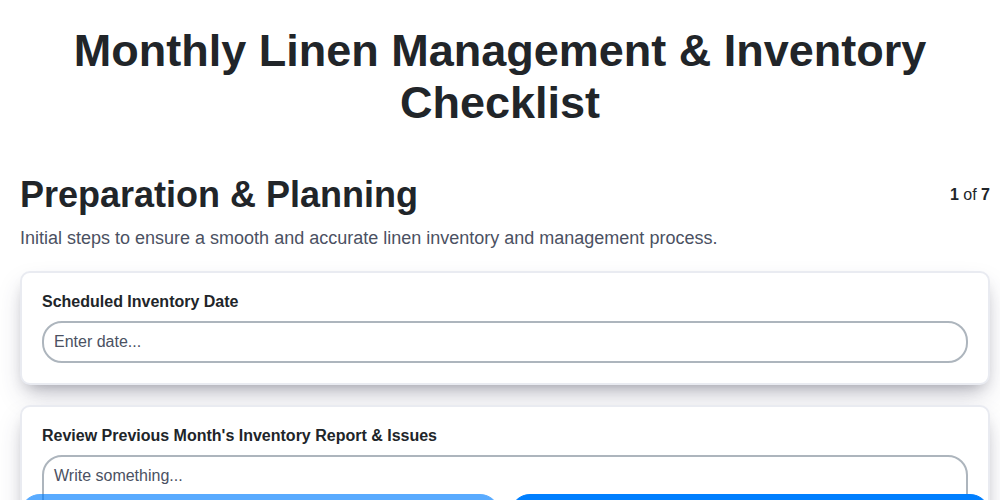
Monthly Linen Management: Your Essential Checklist Template

Hotel Guest Experience Audit Checklist Template
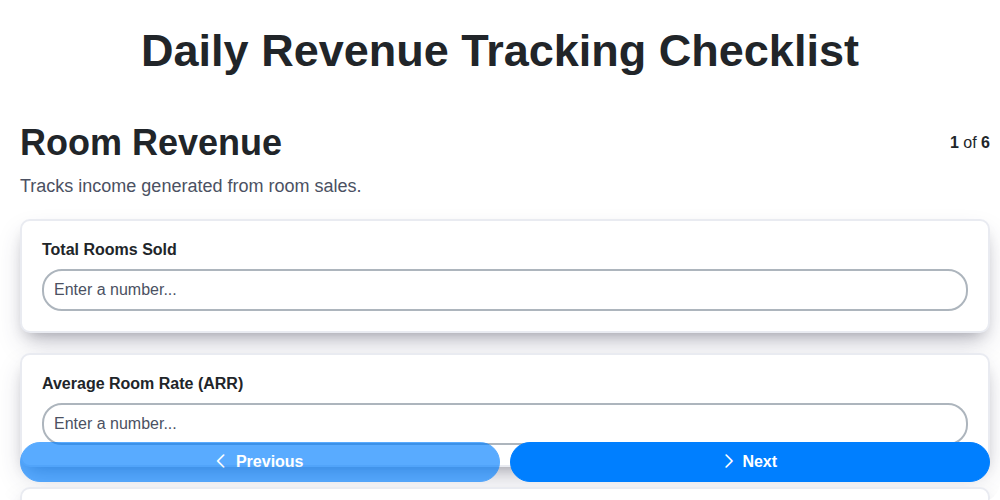
Daily Revenue Tracking: Your Essential Checklist Template
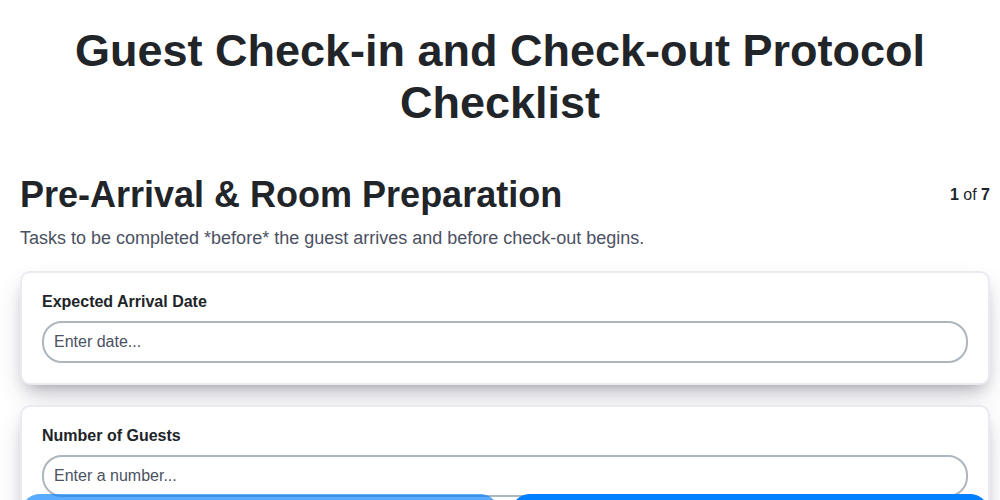
Streamline Guest Stays: Your Free Check-in & Check-out Protocol Template
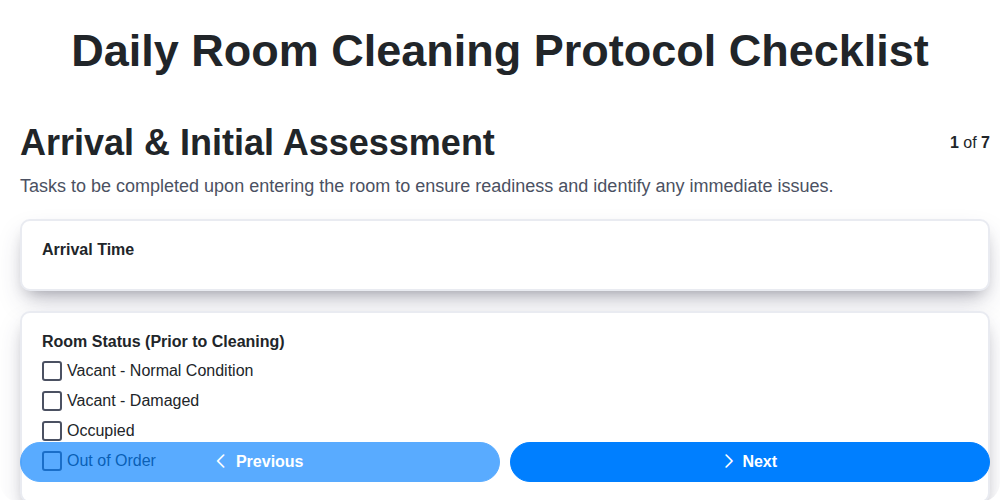
Daily Room Cleaning Protocol: Your Essential Checklist Template
Need help with
Checklists?
Have a question? We're here to help. Please submit your inquiry, and we'll respond promptly.