 ChecklistGuro
 Fixed Asset Management Checklist
Streamline your capital expenditure tracking and ensure 100% audit readiness with our comprehensive Fixed Asset Management Checklist. Designed for accounting professionals, this template simplifies the entire asset lifecycle-from initial acquisition and depreciation scheduling to maintenance tracking and timely disposal. Eliminate manual errors, ensure accurate balance sheet reporting, and maintain strict compliance with tax and regulatory standards. Perfect for managing depreciation logs, asset tagging, and physical verification workflows within your accounting management system.
This Template was installed 2 times.
Asset Acquisition & Documentation
Steps for verifying purchase orders, invoices, and ensuring all new assets are accompanied by necessary legal and financial documentation.
Asset Name/Description
Purchase Amount (Net of Tax)
Date of Acquisition
Asset Category
Upload Purchase Invoice
Vendor Details & Contact Information
Department Head Approval
Asset Tagging & Physical Identification
Procedures for assigning unique identification numbers, applying physical tags, and updating the digital asset registry.
Asset Tag ID Number
Asset Category
Physical Asset Location
Date of Tagging
Photo of Asset & Tag
Auditor Confirmation
Verification Checklist Completed
Capitalization & Depreciation Setup
Instructions for determining capitalization thresholds, assigning useful life, setting depreciation methods, and recording salvage values.
Asset Description
Acquisition Cost
Depreciation Method
Estimated Useful Life (Years)
Service Start Date
Purchase Invoice/Receipt
Controller Approval
Asset Registry Maintenance
Periodic review of the Fixed Asset Register (FAR) to ensure accuracy of location, department, and custodian information.
Last Registry Review Date
Review Status
Updated Asset Count
Number of Discrepancies Found
Verified Asset Categories
Notes on Discrepancies or Missing Assets
Updated Asset Register Export
Reviewer Authorization
Physical Verification & Audit
Routine inspection steps to reconcile physical assets against the accounting records and identify any discrepancies or missing items.
Audit Date
Audit Site/Department
Asset Tag ID Scanned
Physical Condition Status
Discrepancy Findings
Discrepancy Details & Observations
Photo Evidence of Asset/Damage
Auditor Signature
Asset Disposal & Retirement
Workflow for handling asset decommissioning, calculating gain or loss on sale, removing items from the ledger, and updating disposal records.
Disposal Date
Asset ID/Serial Number
Disposal Method
Sale Proceeds Amount
Reason for Disposal
Disposal Approval Document
Authorized Manager Approval
Maintenance & Impairment Review
Monitoring asset condition, tracking significant repair costs, and performing impairment testing for damaged or obsolete assets.
Last Inspection Date
Asset Condition Status
Maintenance Summary & Repair Details
Estimated Repair Cost
Impairment Indicators Identified
Maintenance Receipts or Inspection Photos
Inspector/Accountant Approval
Reporting & Compliance
Final steps for generating depreciation schedules, tax depreciation reports, and ensuring compliance with accounting standards (IFRS/GAAP).
Report Generation Date
Accounting Standard Applied
Completed Reports
Supporting Audit Documentation
Discrepancy Notes
Controller Approval
Frequently Asked Questions
Can I customize this template after installing it?
Absolutely. Once installed, you can add, remove, or reorder tasks, add custom fields, and adjust deadlines to fit your specific workflow.
Can I add images or photos to these checklist items?
Yes. Our platform allows you to attach photos, signatures, and notes to any checklist item for better verification and proof of completion.
Can I create a custom checklist from scratch instead of using a template?
Yes. You can use our "Create your own checklist" feature to build a unique workflow tailored exactly to your operational requirements.
Can I add dependencies between tasks?
Yes, you can set up conditional logic and dependencies to ensure your team follows the correct sequence of operations.
Can I assign specific checklist items to different team members?
Yes. You can assign individual tasks to specific employees, ensuring clear accountability across your entire team.
Can I use these checklists on mobile devices in the field?
Yes. Our platform is fully responsive, allowing your team to complete, update, and upload photos to checklists directly from any smartphone or tablet.
How do I notify my manager when a checklist is completed?
You can set up automated notifications (via email, push notification, or in-app alerts) to trigger whenever a checklist is finished or if an item fails inspection.
Can multiple people work on the same checklist simultaneously?
Yes, the platform supports real-time updates, allowing multiple users to contribute to a single live checklist.
Where is the data from completed checklists stored?
All completed checklists are stored securely in your Work OS dashboard, creating a permanent, searchable audit trail of your operations.
Can I generate reports based on my checklist results?
Yes. You can track completion rates, identify recurring issues, and monitor team performance through our integrated reporting and analytics tools.
How can I use these checklists for compliance or auditing purposes?
Because our checklists capture timestamps, photos, and digital signatures, they serve as a robust digital paper trail for regulatory compliance and internal audits.
Can I export my completed checklist data for use in other tools?
Yes. You can export your data in various formats (CSV, Excel, etc.) to integrate your operational insights with your other business software.
Comments
There are no comments yet. Be the first to add one!
Accounting Management Solution Demo
Move beyond rigid, one-size-fits-all software. Leverage a fully programmable accounting environment designed to adapt to your unique workflows, complex hierarchies, and evolving business logic.
Related Checklist Templates
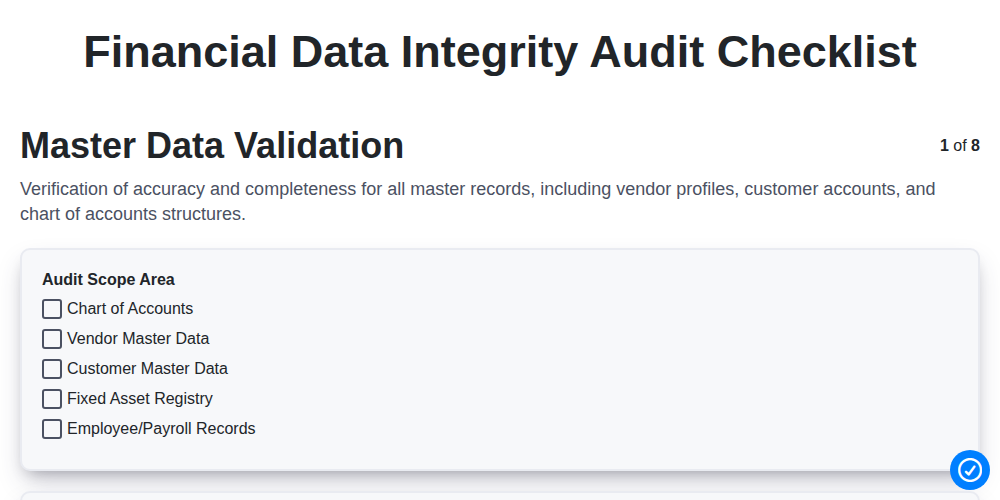
Financial Data Integrity Audit Checklist
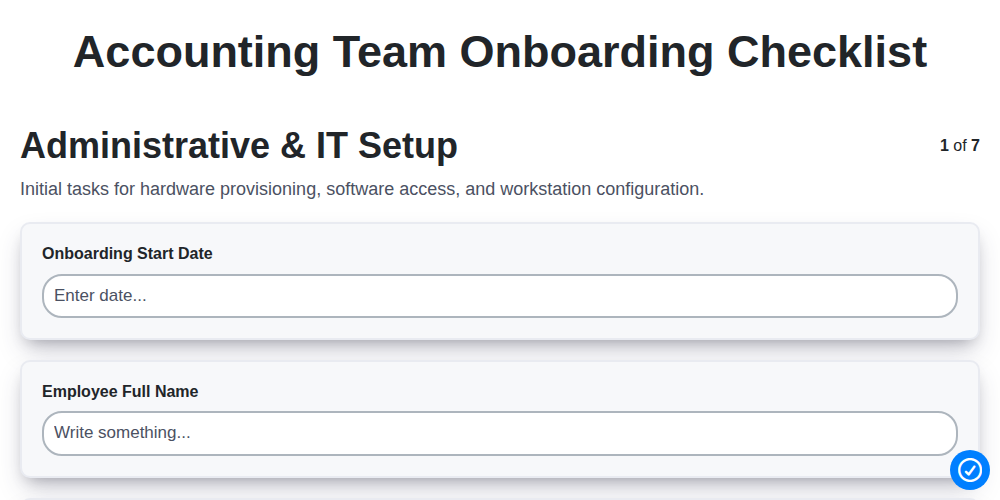
Accounting Team Onboarding Checklist
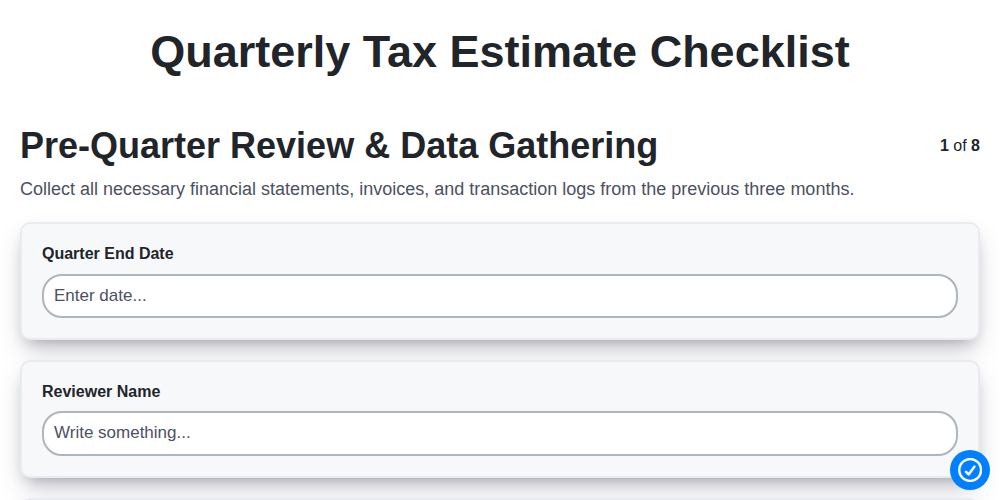
Quarterly Tax Estimate Checklist
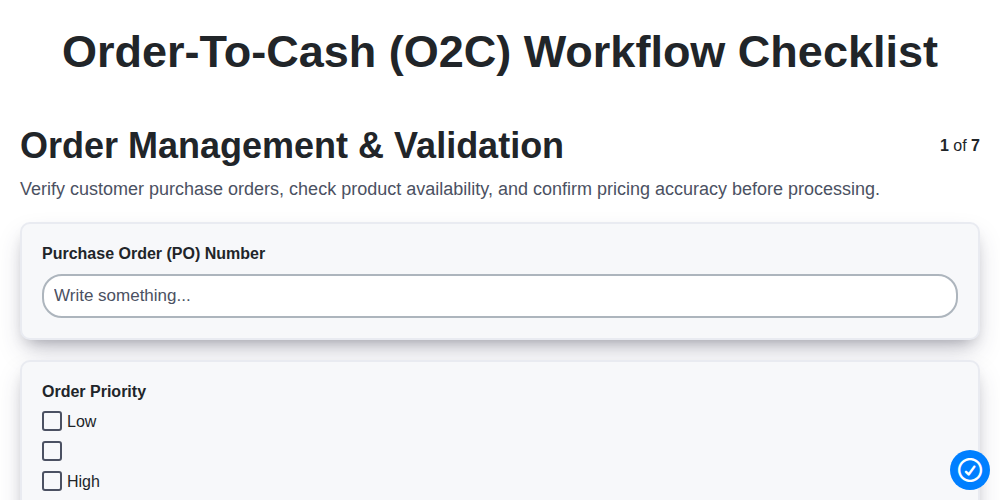
Order-to-Cash (O2C) Workflow Checklist
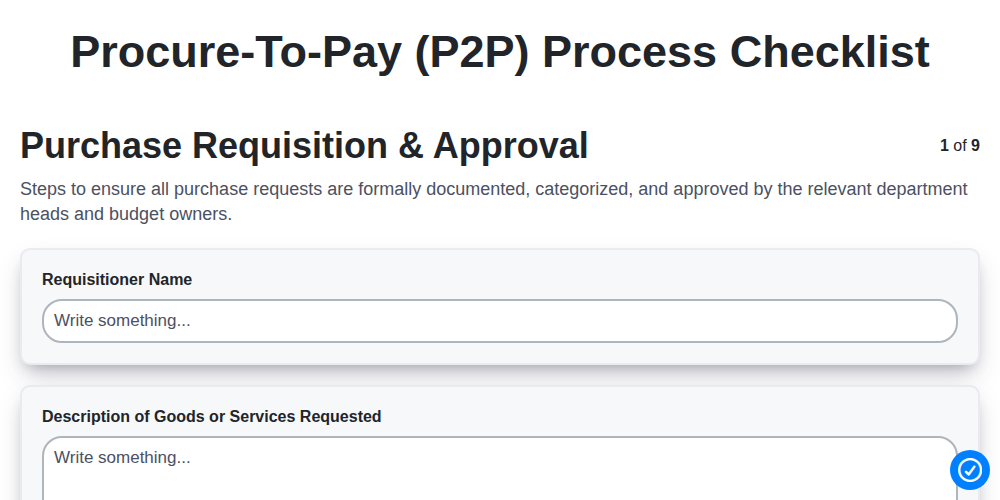
Procure-to-Pay (P2P) Process Checklist
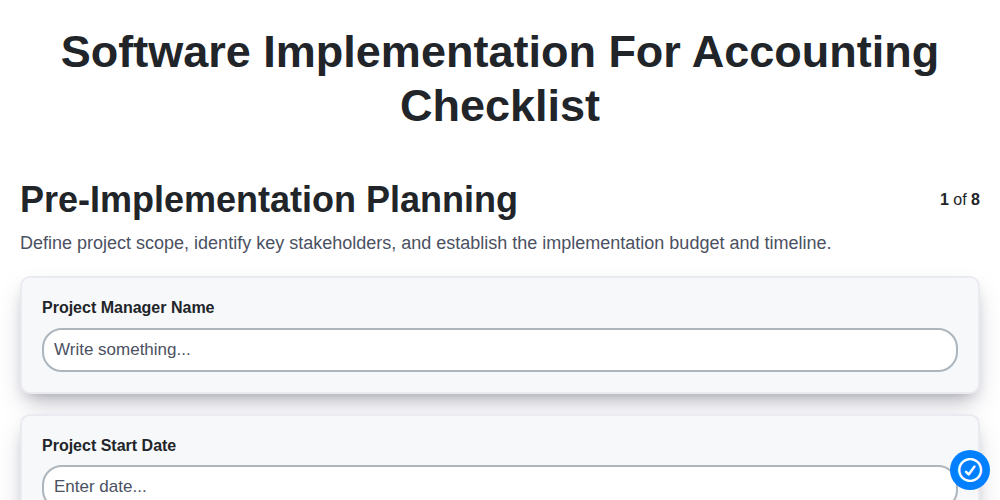
Software Implementation for Accounting Checklist
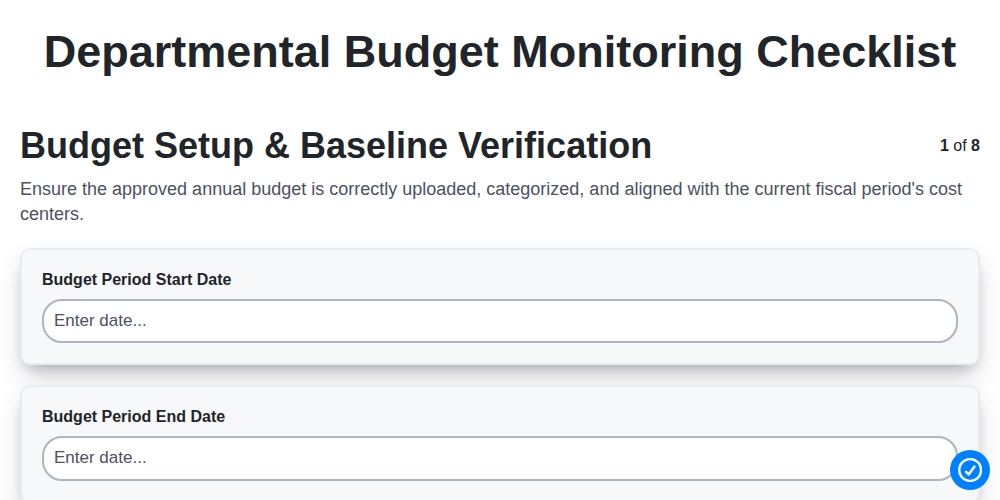
Departmental Budget Monitoring Checklist
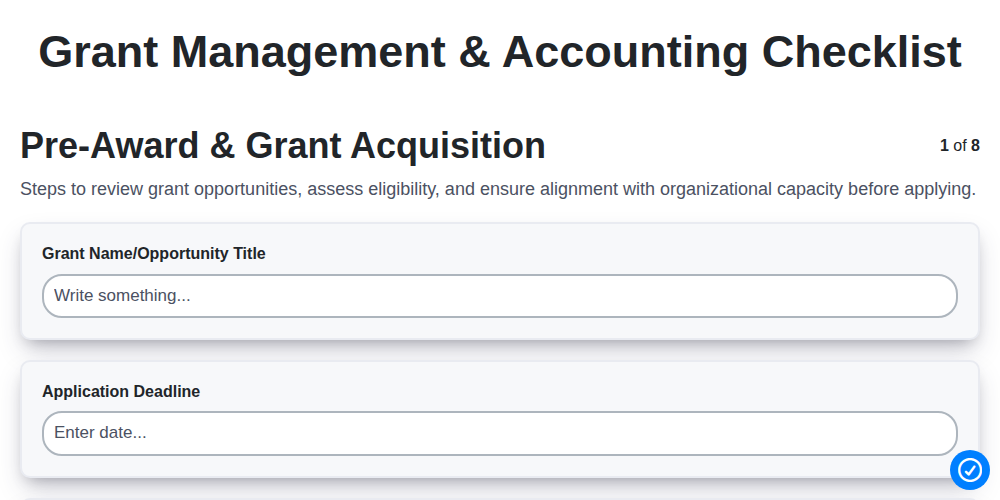
Grant Management & Accounting Checklist
We can do it Together
Need help with
Accounting Management?
Have a question? We're here to help. Please submit your inquiry, and we'll respond promptly.