 ChecklistGuro
Cybersecurity Incident Response Plan Checklist
Protect your supply chain! Download our Cybersecurity Incident Response Plan checklist for Logistics. Ensure business continuity, mitigate risks & safeguard your data in the face of cyberattacks. Stay ahead of threats - get your checklist now!
This Template was installed 4 times.
Preparation & Planning
Establishing foundational elements and processes before an incident occurs. Focuses on team setup, asset identification, and risk assessment.
Define Scope of the Incident Response Plan (Logistics Specific)
Maximum acceptable downtime for critical logistics systems (hours)
Primary Incident Response Team Lead Designation
Critical Logistics Systems to be included in the plan (select all that apply)
Asset Inventory List (Logistics Specific)
Date of Last Incident Response Plan Review/Update
Define Roles and Responsibilities of Incident Response Team Members
Detection & Analysis
Procedures for identifying, triaging, and analyzing potential cybersecurity incidents. Includes monitoring, alerting, and initial assessment.
Initial Incident Severity Level (Based on Initial Assessment)
Detailed Description of the Suspicious Activity/Event
Estimated Number of Systems Potentially Affected
Potential Affected Systems/Assets (Check all that apply)
Relevant Logs or Screen Captures (if available)
Date of Initial Detection
Time of Initial Detection
Source System/Log Where Incident Was Detected
Containment & Eradication
Steps to limit the scope of an incident and eliminate the threat. Addresses isolation, system shutdown, and malware removal.
Incident Containment Strategy
Affected Systems/Services to Isolate
Detailed Description of Isolation Procedures
Number of affected systems/devices
Evidence Preservation Strategy (e.g., disk imaging, memory dumps)
Malware Removal Method
Recovery & Restoration
Actions to return affected systems and data to normal operation. Focuses on data restoration, system rebuilding, and verification.
Time to Recovery (RTO) Target
Recovery Point Objective (RPO) Target
Last Successful Data Backup Date
Estimated time to restore core logistics systems
Detailed Restoration Procedures for TMS (Transportation Management System)
Detailed Restoration Procedures for WMS (Warehouse Management System)
Verification steps to confirm data integrity after restoration
Systems Requiring Prioritized Restoration
Post-Incident Activity
Activities performed after the incident is resolved. Includes lessons learned, plan updates, and communication.
Detailed Incident Timeline Review
Lessons Learned - Identify Contributing Factors
Specific Recommendations for Improvement (Based on Lessons Learned)
Estimated Financial Impact (USD)
Date of Plan Update/Review
Summary of Changes Made to the Incident Response Plan
Overall Effectiveness Rating (1-5, 5 being highest)
Logistics-Specific Considerations
Specific actions and controls needed due to the unique aspects of logistics operations (e.g., tracking systems, GPS data, driver devices).
GPS Tracking System Vulnerability Assessment
Critical Data Types at Risk (e.g., shipment manifests, route information, driver details)
Number of Driver Devices (e.g., smartphones, tablets) Managed
Primary Method of Communication with Drivers During an Incident
Potential Impact of Compromised Fleet Management Software
Last Review of Third-Party Logistics Provider Cybersecurity Assessments
Types of Data Stored on Driver Devices (e.g., ELD data, delivery confirmations, route planning)
Contact Person for Immediate Issues Related to Fleet Management Systems
Communication & Reporting
Procedures for internal and external communication throughout the incident response process. Includes stakeholder notification and regulatory reporting.
Incident Severity Level (Initial Assessment)
Initial Incident Summary (for internal documentation)
Primary Communication Method (Internal)
Legal Counsel Notification Required?
Estimated Number of Affected Systems/Locations (Initial)
Date of Incident Report Submission
Time of Incident Report Submission
Which stakeholders need to be notified?
Summary of External Communication (if applicable)
Frequently Asked Questions
Can I customize this template after installing it?
Absolutely. Once installed, you can add, remove, or reorder tasks, add custom fields, and adjust deadlines to fit your specific workflow.
Can I add images or photos to these checklist items?
Yes. Our platform allows you to attach photos, signatures, and notes to any checklist item for better verification and proof of completion.
Can I create a custom checklist from scratch instead of using a template?
Yes. You can use our "Create your own checklist" feature to build a unique workflow tailored exactly to your operational requirements.
Can I add dependencies between tasks?
Yes, you can set up conditional logic and dependencies to ensure your team follows the correct sequence of operations.
Can I assign specific checklist items to different team members?
Yes. You can assign individual tasks to specific employees, ensuring clear accountability across your entire team.
Can I use these checklists on mobile devices in the field?
Yes. Our platform is fully responsive, allowing your team to complete, update, and upload photos to checklists directly from any smartphone or tablet.
How do I notify my manager when a checklist is completed?
You can set up automated notifications (via email, push notification, or in-app alerts) to trigger whenever a checklist is finished or if an item fails inspection.
Can multiple people work on the same checklist simultaneously?
Yes, the platform supports real-time updates, allowing multiple users to contribute to a single live checklist.
Where is the data from completed checklists stored?
All completed checklists are stored securely in your Work OS dashboard, creating a permanent, searchable audit trail of your operations.
Can I generate reports based on my checklist results?
Yes. You can track completion rates, identify recurring issues, and monitor team performance through our integrated reporting and analytics tools.
How can I use these checklists for compliance or auditing purposes?
Because our checklists capture timestamps, photos, and digital signatures, they serve as a robust digital paper trail for regulatory compliance and internal audits.
Can I export my completed checklist data for use in other tools?
Yes. You can export your data in various formats (CSV, Excel, etc.) to integrate your operational insights with your other business software.
Comments
There are no comments yet. Be the first to add one!
Logistics Management Solution Demo
Tired of shipping delays, lost packages, and inefficient routes? ChecklistGuro's Work OS platform streamlines your entire logistics operation, from warehouse management and order fulfillment to route optimization and delivery tracking. Gain real-time visibility, reduce costs, and improve customer satisfaction. Learn how ChecklistGuro can transform your logistics business!
Related Checklist Templates
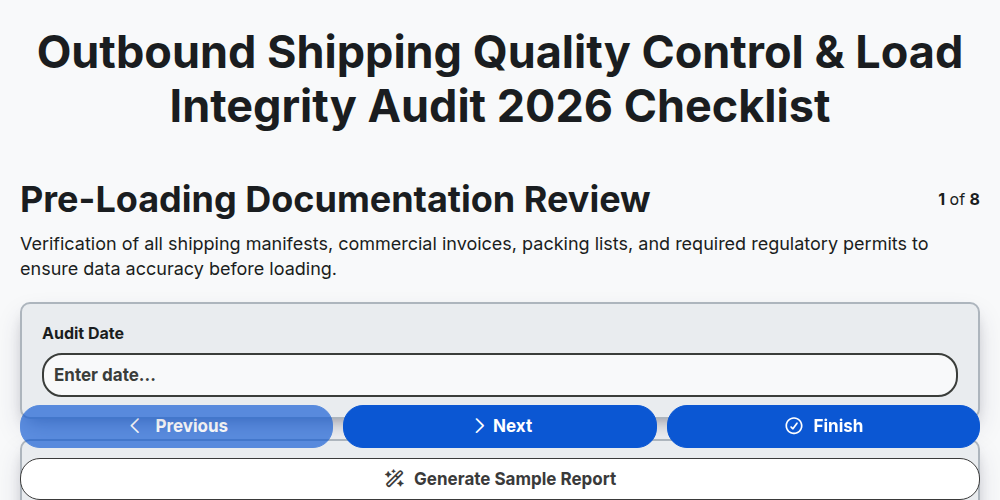
Outbound Shipping Quality Control & Load Integrity Audit 2026
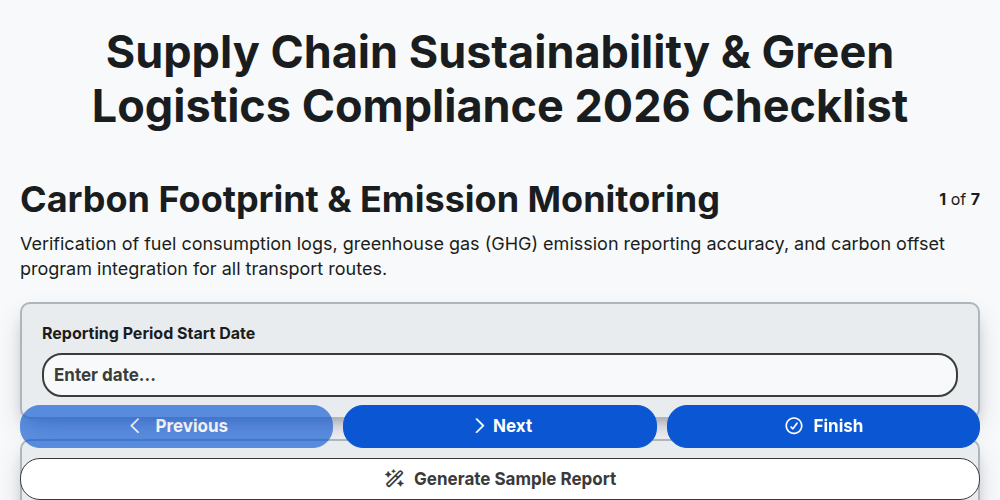
Supply Chain Sustainability & Green Logistics Compliance 2026
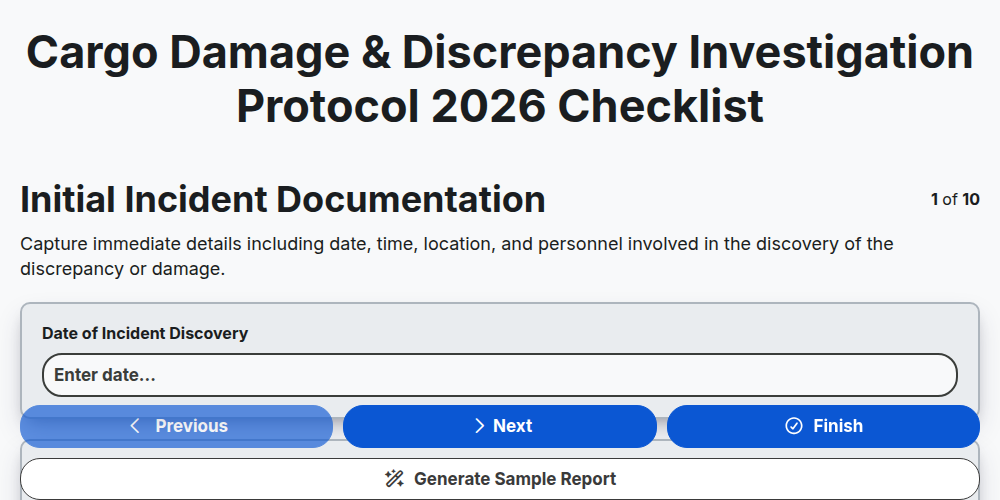
Cargo Damage & Discrepancy Investigation Protocol 2026
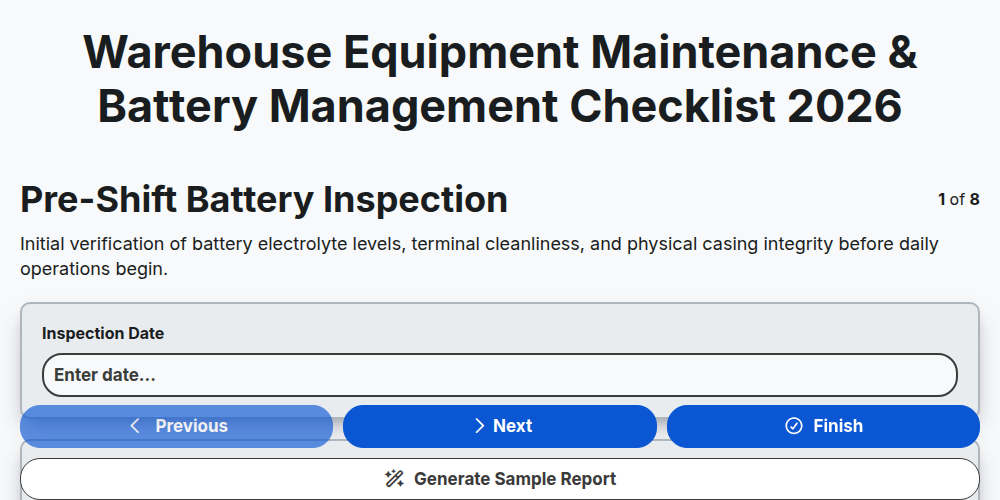
Warehouse Equipment Maintenance & Battery Management Checklist 2026
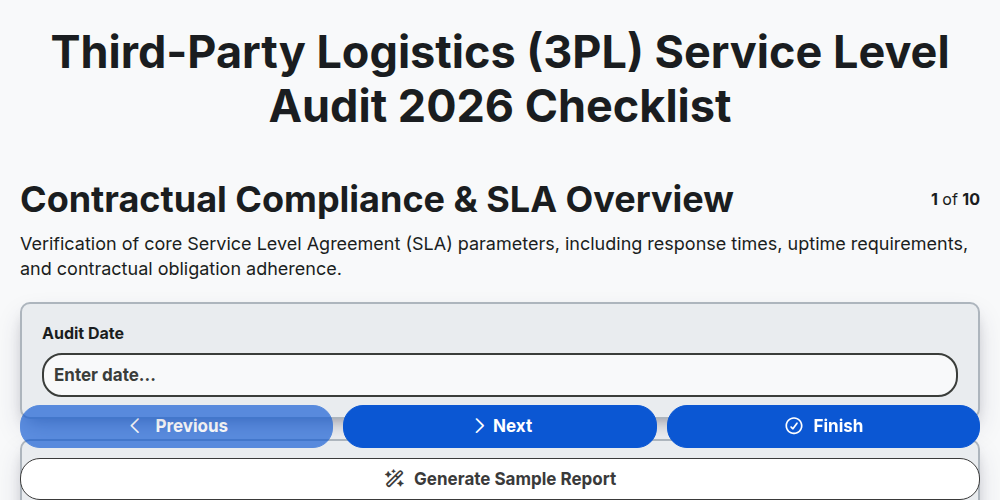
Third-Party Logistics (3PL) Service Level Audit 2026
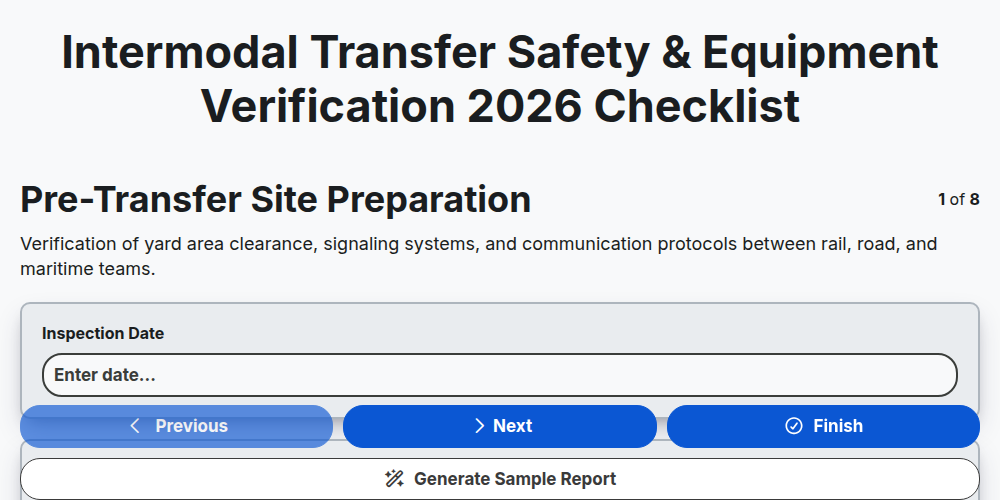
Intermodal Transfer Safety & Equipment Verification 2026
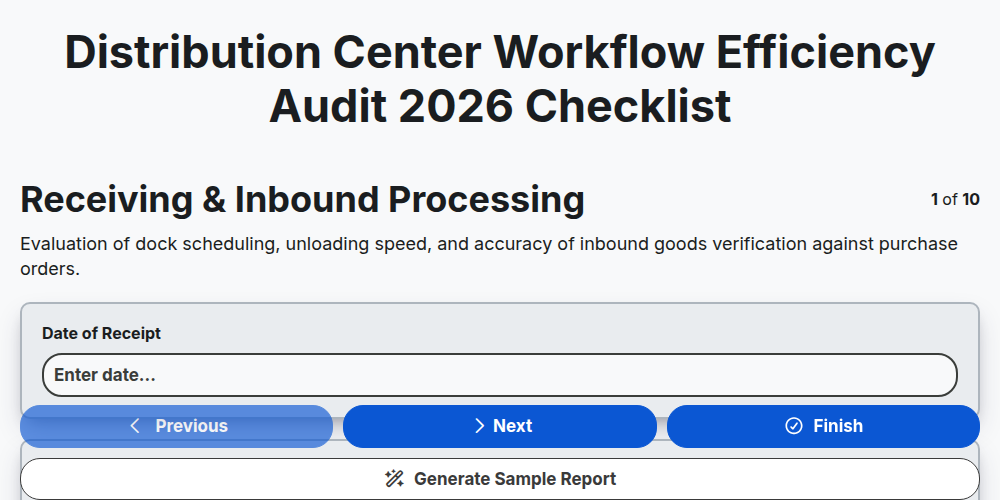
Distribution Center Workflow Efficiency Audit 2026
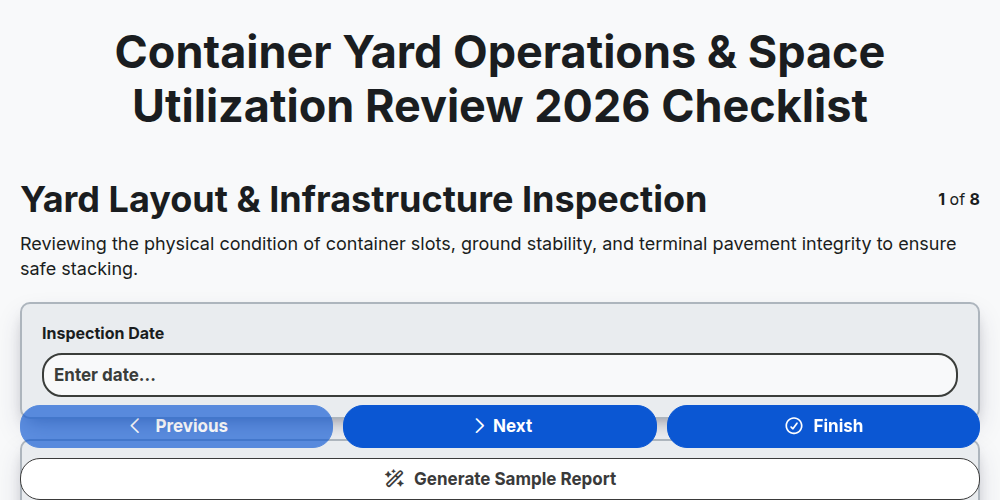
Container Yard Operations & Space Utilization Review 2026
Need help with
Logistics?
Have a question? We're here to help. Please submit your inquiry, and we'll respond promptly.