 ChecklistGuro
 HACCP (Hazard Analysis and Critical Control Points) Food Safety Implementation Checklist
Ensure total food safety and regulatory compliance with our professional HACCP (Hazard Analysis and Critical Control Points) Implementation Checklist. Designed specifically for food manufacturing management, this actionable template helps production managers and quality assurance teams identify, evaluate, and control biological, chemical, and physical hazards throughout the production lifecycle. Streamline your food safety management system (FSMS), streamline your monitoring of critical control points (CCPs), and simplify audit preparation to prevent contamination and ensure consumer safety. Ideal for manufacturing professionals looking to maintain rigorous hygiene standards and mitigate operational risks in real-time.
This Template was installed 5 times.
Prerequisite Programs (PRPs) & Sanitation Standards
Verification of foundational food safety practices, including cleaning schedules, pest control, personal hygiene, and facility maintenance.
Inspection Date
Production Area/Facility Zone
Sanitation Areas Inspected
Pest Control Status
Cleaning Verification Notes
Corrective Actions Taken for Sanitation Deviations
Upload Cleaning Log/Sanitation Certificate
Quality Supervisor Sign-off
Hazard Analysis & Risk Assessment
Identification of biological, chemical, physical, and allergenic hazards associated with each step of the production process.
Process Step Name
Potential Hazard Categories
Hazard Description
Risk Severity Level
Likelihood of Occurrence
Risk Score (Severity x Likelihood)
Supporting Evidence/Photos
Assessor Approval
Critical Control Point (CCP) Identification
Definition of specific points in the manufacturing process where control can be applied to prevent or eliminate food safety hazards.
CCP Identification Name
Hazard Category
Hazard Description
Production Line/Area
Associated Process Steps
Flow Diagram Reference
Quality Assurance Approval
Critical Limits Establishment
Setting measurable boundaries (such as temperature, time, or pH levels) that separate safe production from potentially hazardous conditions.
Critical Limit Parameter Name
Minimum Safety Threshold
Maximum Safety Threshold
Measurement Unit
Deviation Protocol Summary
QA Manager Approval
Monitoring Procedures & Surveillance
Documentation of the methods, frequency, and personnel responsible for observing and recording CCP parameters.
Monitoring Date
Monitoring Time
Critical Control Point (CCP) Being Monitored
Measured Value (e.g., Temperature, pH, or Weight)
Compliance Status
Observations or Deviation Details
Personnel Signature
Corrective Actions & Deviation Management
Standardized procedures to follow when a critical limit is breached, including product quarantine and process adjustment protocols.
Date of Deviation Occurrence
Type of Deviation
Detailed Description of Deviation
Immediate Corrective Action Taken
Impacted Product Batch/Lot Numbers
Root Cause Identified
Supporting Evidence (Photos or Lab Reports)
Quality Assurance Supervisor Approval
Verification & Validation Activities
Systematic testing, laboratory analysis, and periodic audits to ensure the HACCP plan is functioning effectively and remains scientifically sound.
Verification Audit Date
Verification Method Used
Parameters Verified
Summary of Findings & Discrepancies
Upload Lab Results or Certificate of Analysis
Quality Assurance Lead Signature
Record Keeping & Documentation Control
Audit of all logs, temperature charts, and training records to ensure full traceability and regulatory compliance.
Audit/Inspection Date
Production Line or Facility Zone
Documentation Status
Document Reference ID
Discrepancies or Missing Records Notes
Upload Scanned Log Sheets or Evidence
Auditor Verification Signature
Frequently Asked Questions
Can I customize this template after installing it?
Absolutely. Once installed, you can add, remove, or reorder tasks, add custom fields, and adjust deadlines to fit your specific workflow.
Can I add images or photos to these checklist items?
Yes. Our platform allows you to attach photos, signatures, and notes to any checklist item for better verification and proof of completion.
Can I create a custom checklist from scratch instead of using a template?
Yes. You can use our "Create your own checklist" feature to build a unique workflow tailored exactly to your operational requirements.
Can I add dependencies between tasks?
Yes, you can set up conditional logic and dependencies to ensure your team follows the correct sequence of operations.
Can I assign specific checklist items to different team members?
Yes. You can assign individual tasks to specific employees, ensuring clear accountability across your entire team.
Can I use these checklists on mobile devices in the field?
Yes. Our platform is fully responsive, allowing your team to complete, update, and upload photos to checklists directly from any smartphone or tablet.
How do I notify my manager when a checklist is completed?
You can set up automated notifications (via email, push notification, or in-app alerts) to trigger whenever a checklist is finished or if an item fails inspection.
Can multiple people work on the same checklist simultaneously?
Yes, the platform supports real-time updates, allowing multiple users to contribute to a single live checklist.
Where is the data from completed checklists stored?
All completed checklists are stored securely in your Work OS dashboard, creating a permanent, searchable audit trail of your operations.
Can I generate reports based on my checklist results?
Yes. You can track completion rates, identify recurring issues, and monitor team performance through our integrated reporting and analytics tools.
How can I use these checklists for compliance or auditing purposes?
Because our checklists capture timestamps, photos, and digital signatures, they serve as a robust digital paper trail for regulatory compliance and internal audits.
Can I export my completed checklist data for use in other tools?
Yes. You can export your data in various formats (CSV, Excel, etc.) to integrate your operational insights with your other business software.
Comments
There are no comments yet. Be the first to add one!
Manufacturing Management Solution Demo
Stop chasing paperwork and wrestling with disconnected systems! Our solution brings clarity and control to your production process. From standard operating procedures (SOPs) and equipment maintenance to quality control and inventory tracking, we simplify every step.
Related Checklist Templates
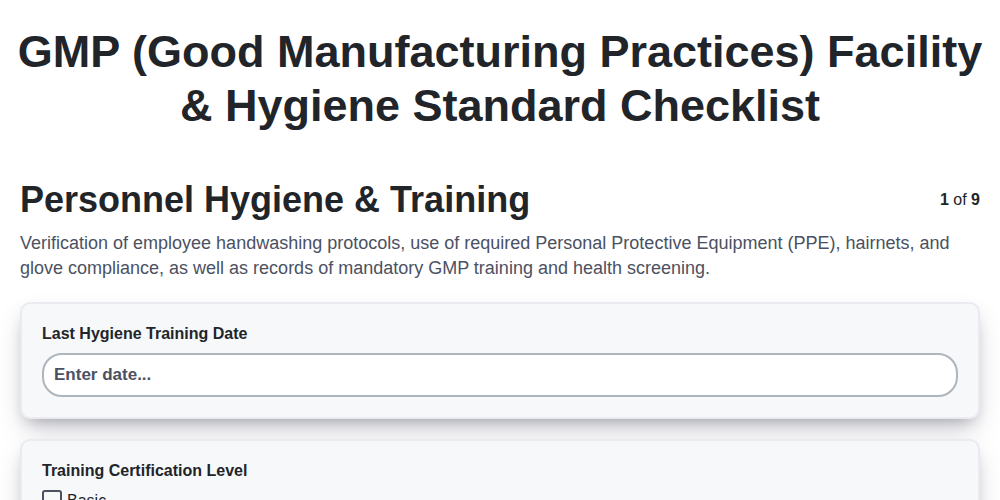
GMP (Good Manufacturing Practices) Facility & Hygiene Standard Checklist
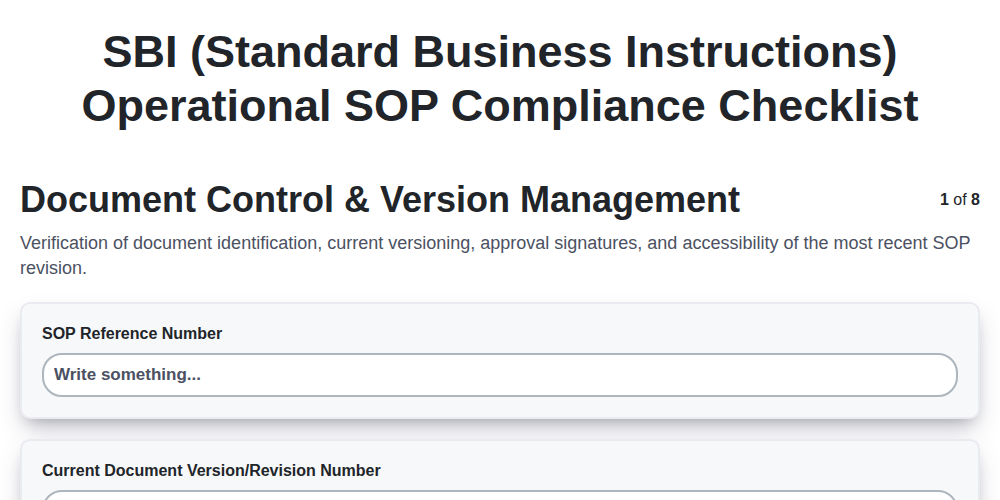
SBI (Standard Business Instructions) Operational SOP Compliance Checklist
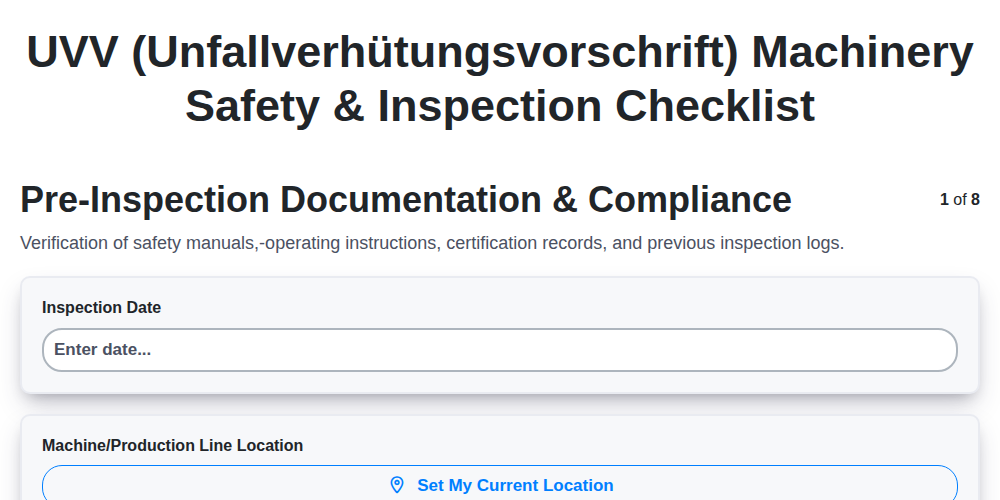
UVV (Unfallverhütungsvorschrift) Machinery Safety & Inspection Checklist
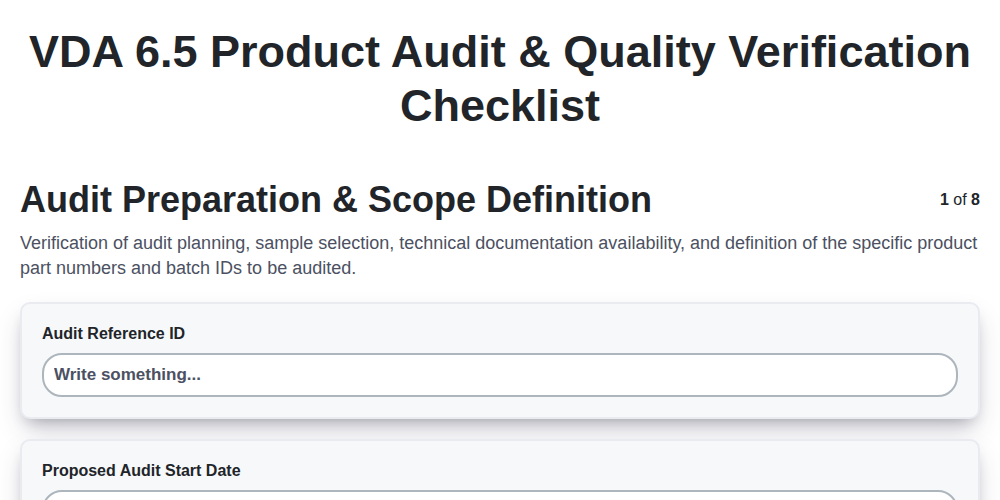
VDA 6.5 Product Audit & Quality Verification Checklist
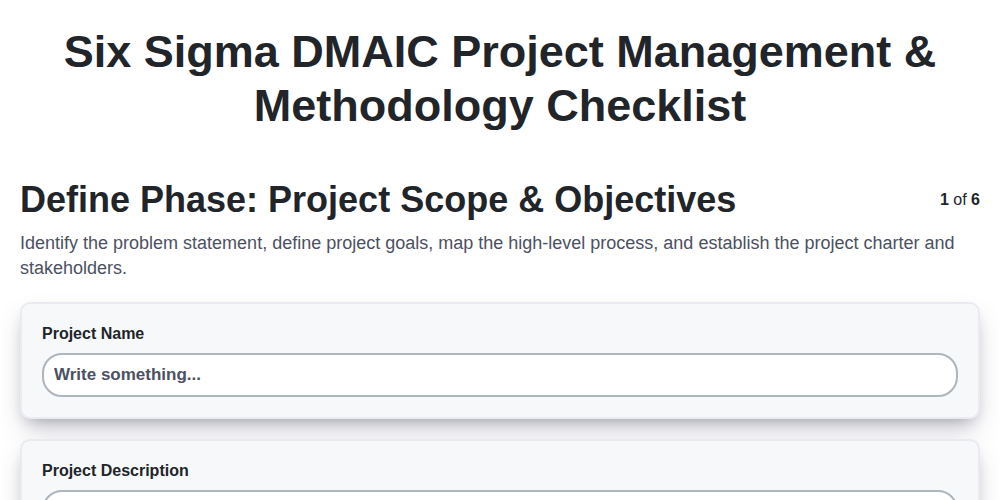
Six Sigma DMAIC Project Management & Methodology Checklist
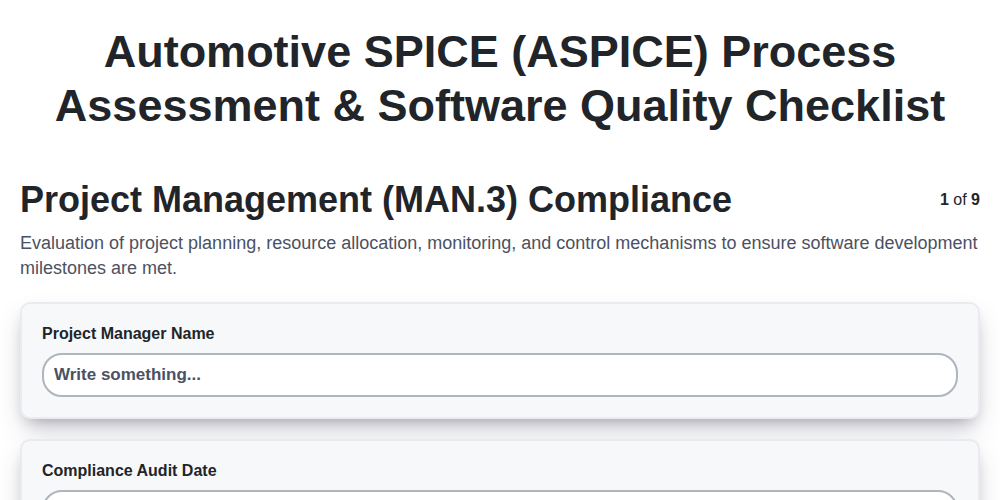
Automotive SPICE (ASPICE) Process Assessment & Software Quality Checklist
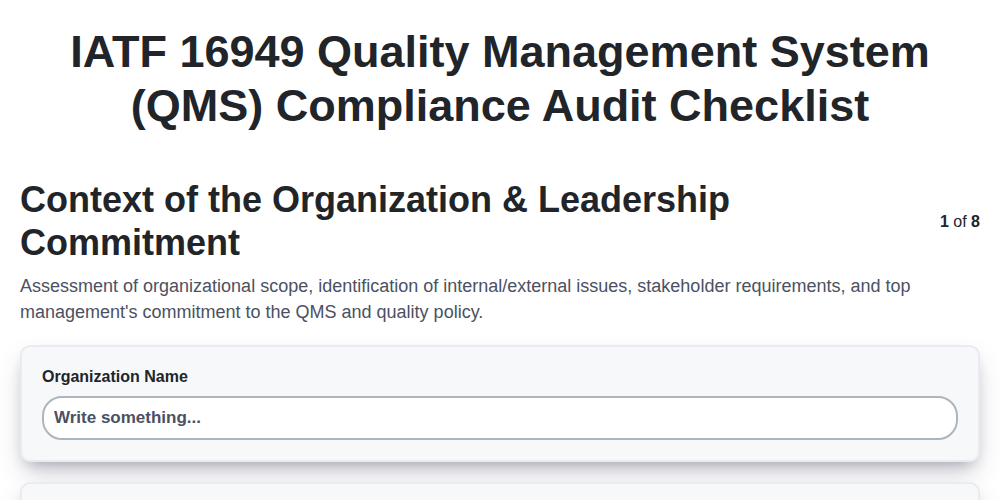
IATF 16949 Quality Management System (QMS) Compliance Audit Checklist
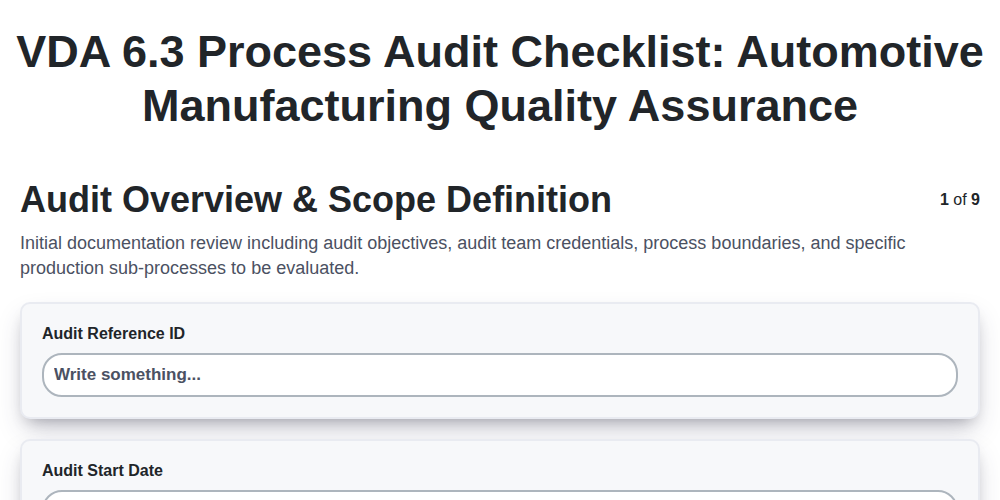
VDA 6.3 Process Audit Checklist: Automotive Manufacturing Quality Assurance
We can do it Together
Need help with
Manufacturing?
Have a question? We're here to help. Please submit your inquiry, and we'll respond promptly.