 ChecklistGuro
 Pharmaceutical Overage Evaluation Checklist
Minimize risk & ensure compliance: This Pharmaceutical Overage Evaluation Checklist streamlines your process for identifying, documenting, and resolving overages, safeguarding product quality and regulatory adherence.
This Template was installed 3 times.
Initial Data Gathering
Collecting all necessary data related to the overage, including batch records, analytical results, and inventory records.
Batch Number
Date of Overage Detection
Time of Overage Detection
Overage Type (e.g., API, Excipient, Impurity)
Original Quantity (Units)
Overage Quantity (Units)
Initial Observation/Description of Overage
Analytical Review
Detailed assessment of analytical data to confirm overage and identify potential causes.
Measured Overage Amount
Specification Limit
Acceptance Criteria (e.g., % allowable)
Analytical Method Used
Analytical Data Comments/Observations
Date of Analysis
Attachment of Chromatogram/Analytical Report
Process & Material Investigation
Investigation of manufacturing processes and raw material sources to determine contributing factors to the overage.
Describe the Manufacturing Process Step Involved
Material Source Verification Status
Batch Size at Time of Overage
Date of Material Receipt
Describe any deviations from standard operating procedures (SOPs)
Upload relevant batch records or reports
Potential Material Contributing Factors
Impact Assessment
Evaluating the potential impact of the overage on product quality, patient safety, and regulatory compliance.
Estimated Overage Quantity (Units)
Potential Impact on Product Quality?
Potential Patient Safety Concerns?
Detailed Explanation of Potential Quality Impacts
Potential Regulatory Reporting Requirements?
Date of Regulatory Notification (if applicable)
Estimated Cost of Overage (Material, Labor, Waste)
Root Cause Determination
Identifying the fundamental reason(s) for the overage occurrence.
Detailed Description of the Suspected Root Cause(s)
Potential Contributing Factors (Select all that apply)
Estimated Frequency of Similar Past Occurrences (if known)
Date of Initial Suspicion/Observation of Root Cause
Confidence Level in Root Cause Identification (High, Medium, Low)
Supporting Evidence & Data Analysis Related to Root Cause
Corrective and Preventative Actions (CAPA)
Developing and implementing corrective and preventative actions to prevent recurrence. Includes assignment of responsibility and timelines.
Detailed Description of Corrective Action
Detailed Description of Preventative Action
Estimated Cost of Implementation (USD)
Planned Implementation Date
Responsible Department
Risk Level After Implementation
Quality Assurance Reviewer Signature
Documentation Review & Approval
Ensuring all findings, assessments, and corrective actions are thoroughly documented and approved by relevant stakeholders.
Summary of Findings and Assessment
Quality Assurance Reviewer Signature
Date of QA Review
Review Status
Comments/Reason for Rejection (if applicable)
Reviewer Approval Signature (if Approved)
Date of Approval
Verification & Follow-up
Verifying the effectiveness of implemented CAPAs and establishing ongoing monitoring to prevent future occurrences.
CAPA Implementation Date
Number of Batches Reviewed Post-Implementation
Effectiveness of CAPA – Initial Assessment
Justification for CAPA Effectiveness Assessment (if not 'Effective')
Next Scheduled Review Date
Reviewer Signature
Summary of Follow-Up Observations & Findings
Frequently Asked Questions
Can I customize this template after installing it?
Absolutely. Once installed, you can add, remove, or reorder tasks, add custom fields, and adjust deadlines to fit your specific workflow.
Can I add images or photos to these checklist items?
Yes. Our platform allows you to attach photos, signatures, and notes to any checklist item for better verification and proof of completion.
Can I create a custom checklist from scratch instead of using a template?
Yes. You can use our "Create your own checklist" feature to build a unique workflow tailored exactly to your operational requirements.
Can I add dependencies between tasks?
Yes, you can set up conditional logic and dependencies to ensure your team follows the correct sequence of operations.
Can I assign specific checklist items to different team members?
Yes. You can assign individual tasks to specific employees, ensuring clear accountability across your entire team.
Can I use these checklists on mobile devices in the field?
Yes. Our platform is fully responsive, allowing your team to complete, update, and upload photos to checklists directly from any smartphone or tablet.
How do I notify my manager when a checklist is completed?
You can set up automated notifications (via email, push notification, or in-app alerts) to trigger whenever a checklist is finished or if an item fails inspection.
Can multiple people work on the same checklist simultaneously?
Yes, the platform supports real-time updates, allowing multiple users to contribute to a single live checklist.
Where is the data from completed checklists stored?
All completed checklists are stored securely in your Work OS dashboard, creating a permanent, searchable audit trail of your operations.
Can I generate reports based on my checklist results?
Yes. You can track completion rates, identify recurring issues, and monitor team performance through our integrated reporting and analytics tools.
How can I use these checklists for compliance or auditing purposes?
Because our checklists capture timestamps, photos, and digital signatures, they serve as a robust digital paper trail for regulatory compliance and internal audits.
Can I export my completed checklist data for use in other tools?
Yes. You can export your data in various formats (CSV, Excel, etc.) to integrate your operational insights with your other business software.
Comments
There are no comments yet. Be the first to add one!
Pharmaceutical Management Solution Demo
Navigating complex regulations and ensuring quality in pharmaceutical manufacturing? ChecklistGuro's Work OS platform streamlines processes from R&D to production, packaging, and distribution. Maintain compliance, improve efficiency, and reduce risk. Discover how ChecklistGuro can transform your pharmaceutical operations!
Related Checklist Templates
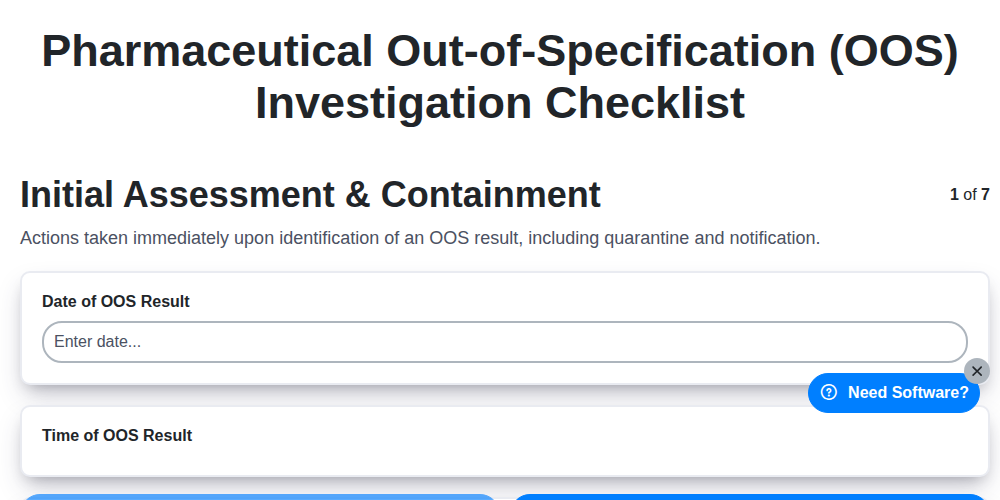
Pharmaceutical Out-of-Specification (OOS) Investigation Checklist
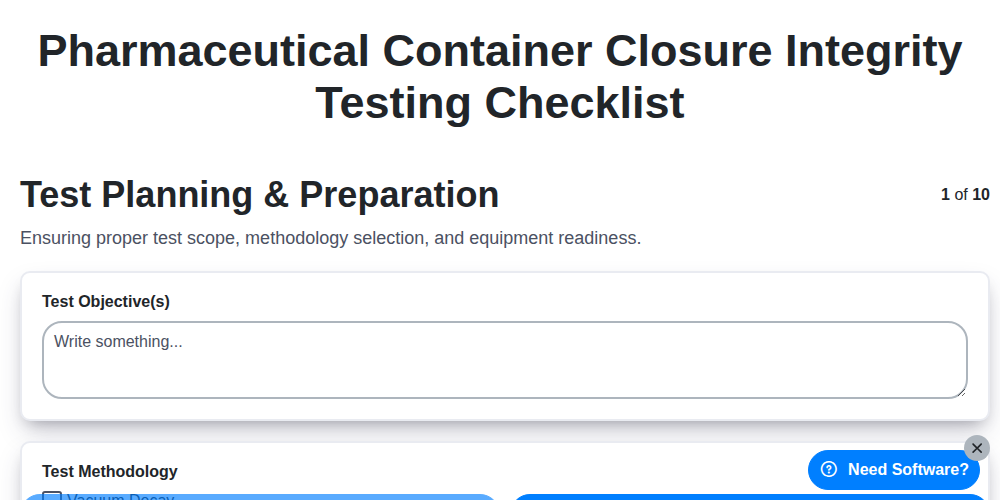
Pharmaceutical Container Closure Integrity Testing Checklist
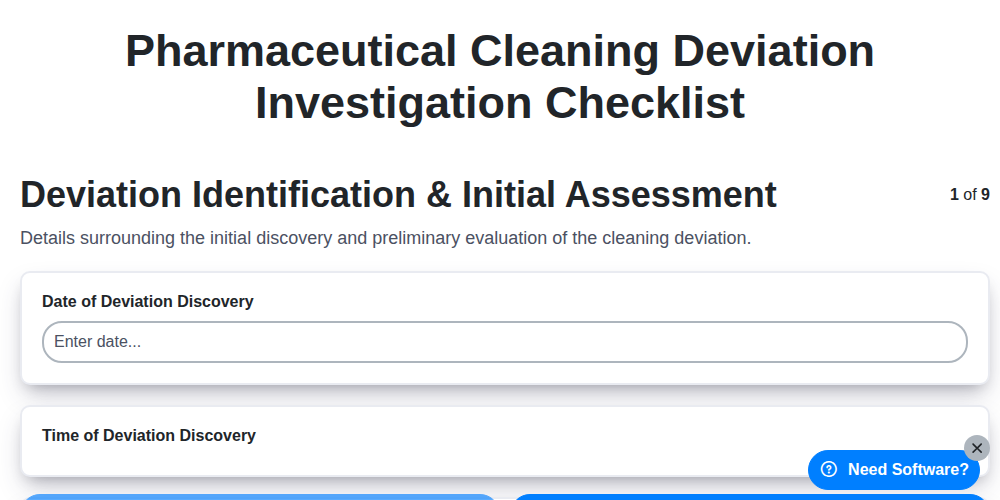
Pharmaceutical Cleaning Deviation Investigation Checklist
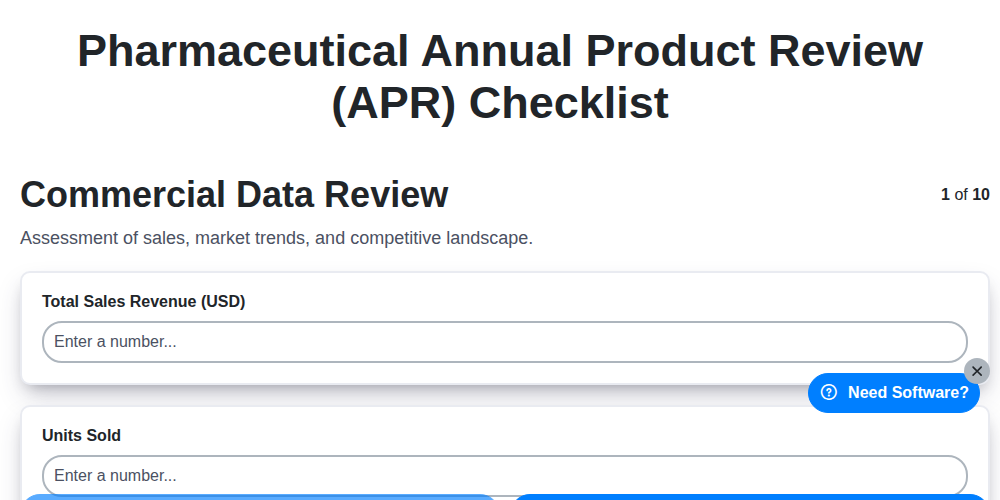
Pharmaceutical Annual Product Review (APR) Checklist
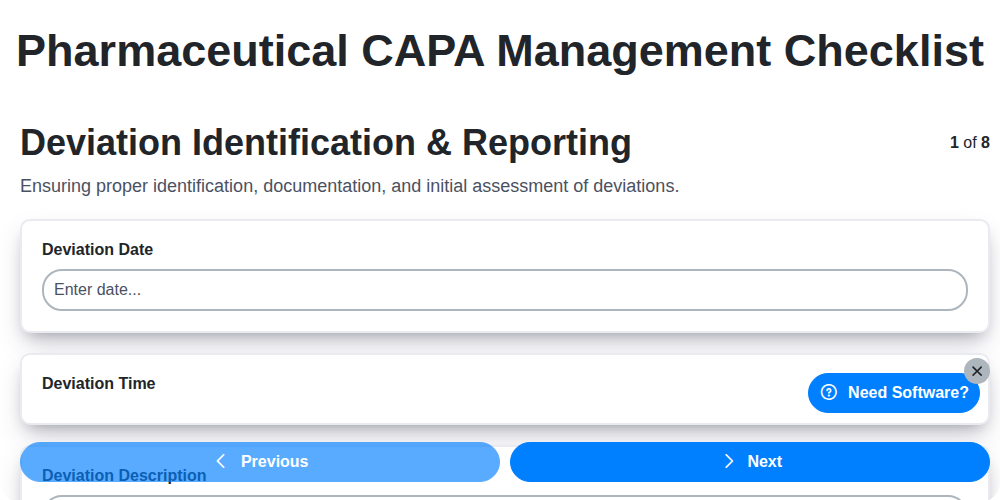
Pharmaceutical CAPA Management Checklist
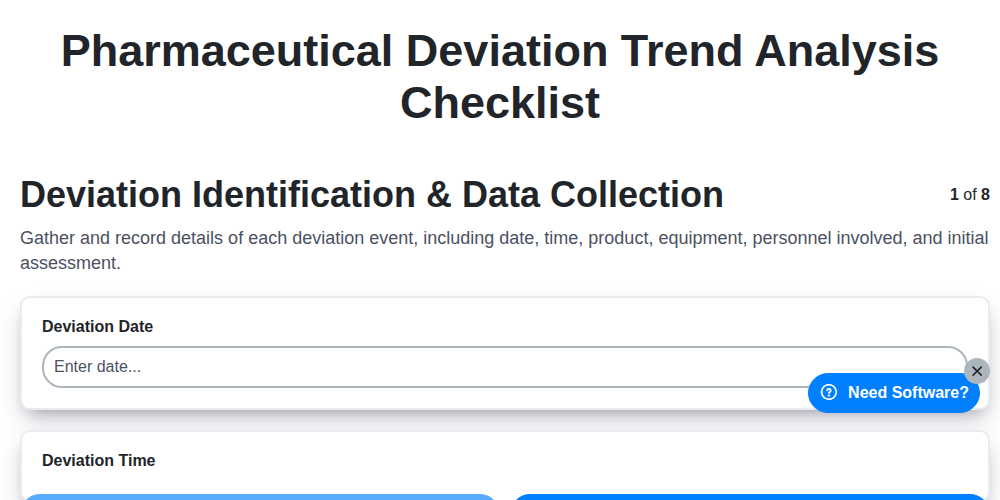
Pharmaceutical Deviation Trend Analysis Checklist
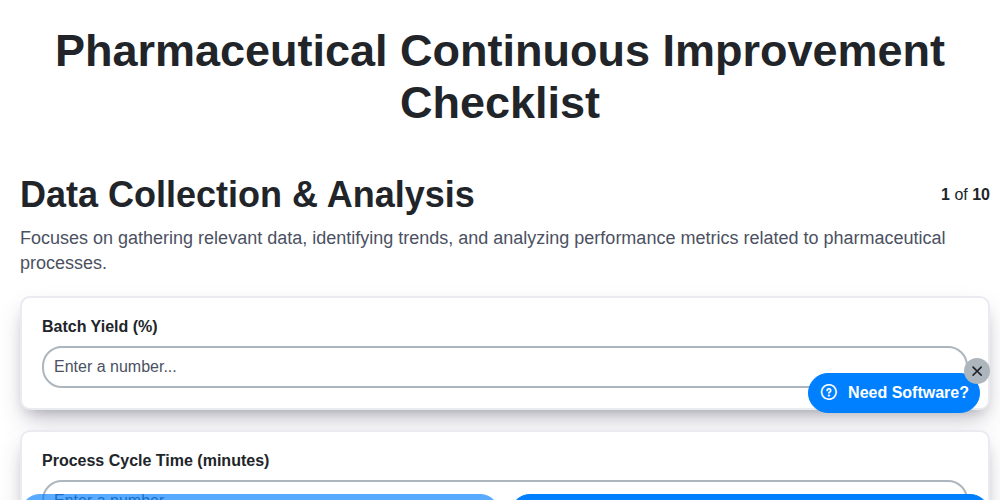
Pharmaceutical Continuous Improvement Checklist
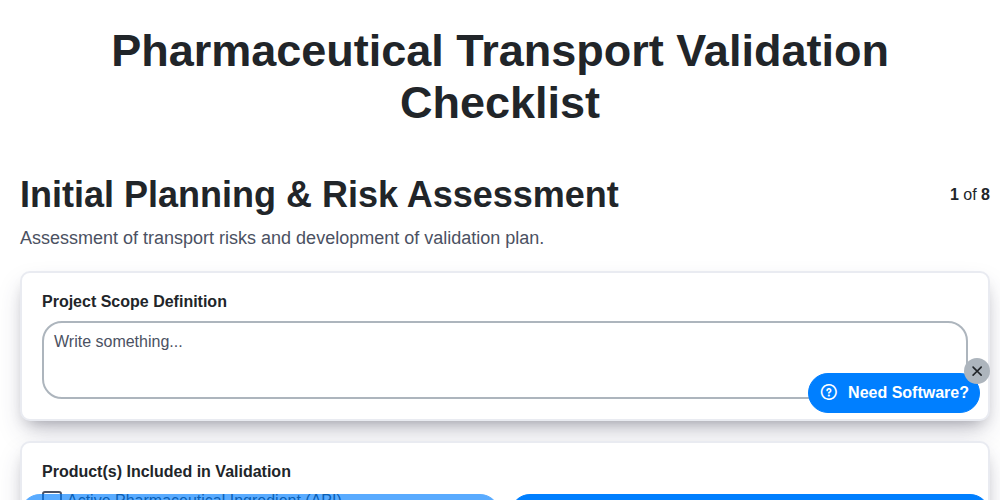
Pharmaceutical Transport Validation Checklist
Need help with
Pharmaceutical?
Have a question? We're here to help. Please submit your inquiry, and we'll respond promptly.