Navigating Pharmaceutical Overage Evaluations: A Comprehensive Checklist
Published: 11/25/2025 Updated: 07/02/2026
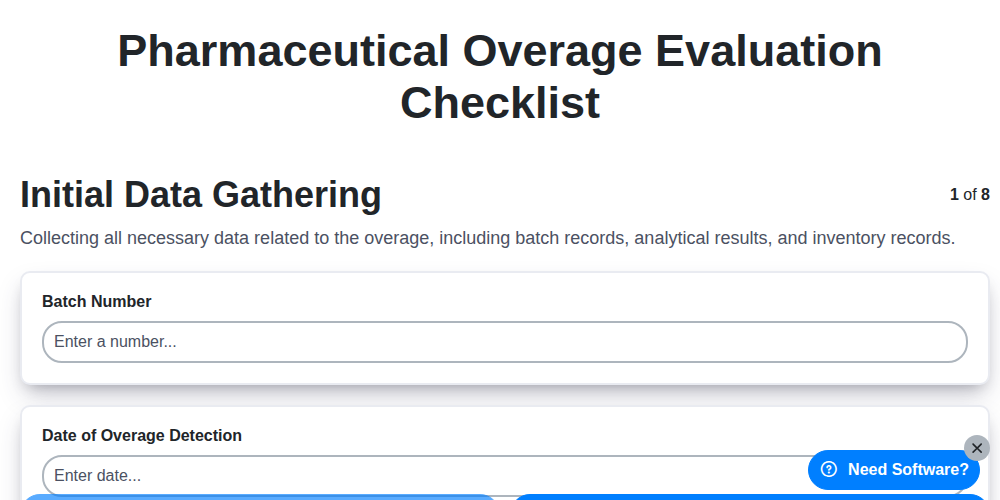
Table of Contents
- Introduction: Understanding Pharmaceutical Overage Evaluations
- Why Overage Evaluations Matter: Risks and Regulations
- The Pharmaceutical Overage Evaluation Checklist: A Step-by-Step Guide
- 1. Initial Data Gathering: Laying the Foundation
- 2. Analytical Review: Identifying the Discrepancy
- 3. Process & Material Investigation: Tracing the Source
- 4. Impact Assessment: Quantifying the Consequences
- 5. Root Cause Determination: Uncovering the 'Why'
- 6. Corrective and Preventative Actions (CAPA): Building a Solution
- 7. Documentation Review & Approval: Ensuring Accuracy and Compliance
- 8. Verification & Follow-Up: Validating Effectiveness
- Conclusion: Continuous Improvement in Overage Management
- Resources & Links
TLDR: Pharmaceutical overages (extra ingredients) can cause big problems! This checklist guides you through a structured evaluation - from gathering data and analyzing results to fixing the root cause and preventing future issues. It ensures thoroughness and compliance, minimizing risk and protecting product quality.
Introduction: Understanding Pharmaceutical Overage Evaluations
Pharmaceutical manufacturing demands unwavering precision. Even seemingly minor deviations, like exceeding specified limits for a substance - an overage - can trigger significant regulatory scrutiny and potential patient safety concerns. A pharmaceutical overage evaluation isn't just about identifying the excess; it's a comprehensive process designed to understand why it happened, mitigate the risk, and prevent recurrence. This evaluation goes far beyond simple data review, encompassing a rigorous investigation into analytical methods, manufacturing processes, raw materials, and potential systemic issues. This detailed approach ensures patient safety and maintains the integrity of the entire supply chain. This blog post will walk you through a detailed checklist to guide you through this crucial evaluation, ensuring thoroughness and compliance at every step.
Why Overage Evaluations Matter: Risks and Regulations
Pharmaceutical overages - those extra amounts of active pharmaceutical ingredient (API) or excipient added to a formulation - might seem insignificant, but they carry substantial risks and are increasingly scrutinized by regulatory bodies. While seemingly providing a buffer against ingredient potency variations, they can introduce a cascade of problems, from inaccurate dosing and potential patient safety concerns to manufacturing inefficiencies and regulatory compliance issues.
The primary risk stems from the possibility of inaccurate patient dosing. Even a seemingly small overage can result in patients receiving a higher than intended dose of the active ingredient, potentially leading to adverse effects or reduced therapeutic efficacy. Conversely, if overages aren't carefully controlled, batch-to-batch variability can occur, impacting product consistency and predictability.
Beyond patient safety, overages can impact manufacturing costs. Excess material translates directly into increased raw material purchases and waste disposal, impacting profit margins. Furthermore, inconsistent overages can necessitate reprocessing or even batch rejections, further escalating costs.
Regulatory agencies like the FDA, EMA, and ICH are increasingly focused on the appropriate use of overages. Guidelines like ICH Q3C - Impurities: Guideline for Residual Solvents - and similar directives emphasize the need for justification and control of overages. Failure to adequately justify or control overages can lead to warning letters, import alerts, and ultimately, product recalls, significantly damaging a company's reputation and financial stability. A robust overage evaluation process is therefore not just a best practice; it's a necessity for maintaining product quality, ensuring patient safety, and avoiding regulatory penalties.
The Pharmaceutical Overage Evaluation Checklist: A Step-by-Step Guide
Pharmaceutical overages - when the actual content of a drug product exceeds the labeled amount - present significant regulatory and patient safety concerns. A robust evaluation process is crucial to identify, investigate, and ultimately prevent these occurrences. This checklist provides a structured approach to navigate these complex situations. Let's break down each step:
1. Initial Data Gathering: This phase is all about establishing a baseline. Gather all available data related to the overage, including batch records, analytical results, labeling information, complaints, and any relevant correspondence. Ensure data integrity and traceability.
2. Analytical Review: A critical assessment of the analytical data is paramount. This involves reviewing the raw data, recalculating results, validating analytical methods used, and scrutinizing equipment calibration records. Look for trends, anomalies, and inconsistencies that may suggest the source of the overage.
3. Process & Material Investigation: Delve into the manufacturing process. Examine raw material specifications and certificates of analysis (CoAs), weighing procedures, mixing times, filtration processes, and any other manufacturing steps potentially contributing to the overage. Consider variations in process parameters and equipment performance.
4. Impact Assessment: Evaluate the potential impact of the overage on product quality, efficacy, and patient safety. This assessment should consider the magnitude of the overage, the drug's therapeutic effect, and the patient population at risk. Consult with quality risk management teams to quantify the risk.
5. Root Cause Determination: Uncover the fundamental reason for the overage. Utilize tools like the "5 Whys" or fishbone diagrams to systematically explore potential causes and identify the ultimate trigger. Don't stop at identifying a symptom; determine why the symptom arose.
6. Corrective and Preventative Actions (CAPA): Develop and implement comprehensive CAPA plans. Corrective actions address the immediate problem, while preventative actions prevent recurrence. This should include training updates, procedural changes, and equipment modifications. Clearly assign responsibilities and timelines.
7. Documentation Review & Approval: Ensure all investigation reports, CAPA plans, and related documentation are meticulously reviewed and approved by relevant stakeholders, including quality assurance, manufacturing, and regulatory affairs. Maintain a clear audit trail.
8. Verification & Follow-up: Verification is crucial to confirm that the implemented CAPA actions are effective in resolving the overage and preventing future occurrences. Perform follow-up audits and assessments to monitor long-term compliance and continually improve the process. This includes periodic re-evaluation of process controls.
1. Initial Data Gathering: Laying the Foundation
A robust overage evaluation hinges on thorough and meticulous initial data gathering. This phase isn't just about collecting numbers; it's about building a comprehensive picture of the situation. Begin by identifying the specific overage - which compound, batch, and which analytical test is exceeding the established limits. Gather all relevant documentation, including but not limited to:
- Batch Records: This is your primary source, detailing every step of the manufacturing process, including material additions, equipment usage, and personnel involved.
- Analytical Reports (COA): Obtain the Certificate of Analysis (CoA) for the affected batch, paying close attention to the overage result and its associated uncertainty.
- Material Specifications: Review the specifications for all raw materials, excipients, and packaging components used in the batch. Note any changes or deviations from established standards.
- Equipment Logs: Check maintenance and calibration records for equipment used in the manufacturing and testing processes.
- Previous Batch History: Analyze the historical data for similar batches to identify any trends or recurring issues.
- Analytical Method Validation Reports: Ensure the analytical method used for testing is validated and suitable for its intended purpose.
- Deviation Reports: Review any previously filed deviations related to the compound, process, or materials.
This initial gathering should be unbiased and focused on collecting all available information. Resist the urge to draw conclusions at this stage. The goal is to arm the subsequent investigation with a complete and accurate dataset.
2. Analytical Review: Identifying the Discrepancy
Once initial data gathering provides a preliminary understanding of the overage, the Analytical Review phase becomes critical. This isn't simply a re-run of the original assay; it's a deep dive into the analytical methods themselves. The primary goal here is to definitively confirm the overage and exclude the possibility of a laboratory error.
This phase typically involves:
- Method Validation Review: Re-examine the method's validation data to ensure it remains valid and applicable. Has anything changed since validation that could contribute to the discrepancy?
- System Suitability Testing: Perform rigorous system suitability testing, following established protocols, to assess the reliability of the analytical system. This includes checking parameters like precision, linearity, and accuracy.
- Re-analysis of Samples: Analyze the original sample, and potentially a new aliquot if available, using the same method, but potentially by a different analyst and/or instrument. Blind duplicates are highly recommended.
- Reference Standard Verification: Confirm the integrity and purity of the reference standard used in the analysis. Is it expired or has it been properly stored? A fresh standard, if warranted, should be used.
- Mobile Phase/Reagent Quality: Assess the quality of all reagents and solvents used in the analytical process. Check for contamination or degradation.
- Instrument Performance Checks: Perform detailed instrument performance checks, beyond routine maintenance, to identify any subtle malfunctions that could be impacting results. This might include cleaning, calibration verification, and leak testing.
The outcome of this review must unequivocally establish the overage as real and not a product of analytical error. Any deviation from the established procedure must be meticulously documented and investigated further.
3. Process & Material Investigation: Tracing the Source
Once the analytical review flags potential overages, a deep dive into the process and materials becomes critical. This isn't just about identifying what is over, but where it originates. This phase requires meticulous record keeping and a detective-like approach.
Start by tracing the material's journey. This includes:
- Supplier Audits & Certificates of Analysis (CoAs): Reviewing supplier documentation is paramount. Are the CoAs consistent with the received material? Has the supplier experienced any issues? Consider conducting a supplier audit if concerns arise.
- Batch Records: Examining batch records of both the raw material manufacturing (if possible) and the drug product manufacturing process is essential. Look for any deviations, anomalies, or unusual observations.
- Equipment Calibration and Maintenance Records: Miscalibration or inadequate maintenance of equipment used in material weighing, mixing, or processing can directly impact final product content. Scrutinize these records.
- Sampling and Testing Procedures: Are the sampling methods representative of the entire batch? Are testing procedures accurate and consistently followed? Evaluate the potential for sampling error.
- Material Storage Conditions: Temperature, humidity, and light exposure can all affect material stability and potentially influence content. Review storage records and confirm compliance with established conditions.
- Cross-Contamination Risk Assessment: Evaluate the potential for cross-contamination from other materials or equipment. This is particularly important in shared facilities or multi-product lines.
The goal is to establish a clear understanding of the material's history and any factors that may have contributed to the overage. This phase often uncovers critical, previously unknown information that guides the subsequent root cause determination.
4. Impact Assessment: Quantifying the Consequences
Once the root cause of a pharmaceutical overage is understood, a thorough impact assessment is critical. This isn't just about acknowledging the issue; it's about quantifying the consequences across various areas. It's more than just a theoretical exercise - it's about understanding the real-world implications for the product, the patient, and the business.
This assessment should cover several key areas. First, patient safety must be paramount. Is the overage likely to pose any direct or indirect health risks to patients? This requires consulting with toxicology and clinical experts. Secondly, assess the product quality impact. Does the overage affect stability, efficacy, or other critical quality attributes? This may involve further testing or reevaluation of existing data.
Beyond safety and quality, consider the regulatory implications. Regulatory agencies (like the FDA or EMA) require prompt notification and remediation of overages. The impact assessment should inform your communication strategy and outline potential remediation plans to demonstrate due diligence. Don't underestimate this - failure to act appropriately can lead to significant penalties and reputational damage.
Finally, quantify the business impact. This includes potential product recalls, inventory losses, production delays, increased testing costs, and potential market share loss. A clear understanding of the financial burden associated with the overage is essential for justifying resources dedicated to corrective actions and preventative measures. Document all estimations, including assumptions, to provide transparency and accountability. The impact assessment needs to be a detailed, data-driven analysis, not just a subjective opinion.
5. Root Cause Determination: Uncovering the 'Why'
Once the impact assessment highlights the scope of the overage issue and identifies affected products or processes, the crucial stage of root cause determination begins. It's not enough to know what happened; we need to understand why it happened. This goes beyond superficial observations and requires a systematic, investigative approach.
Several methodologies can be employed here. The "5 Whys" technique is a simple yet powerful tool - repeatedly asking Why? to drill down through each layer of the problem until the fundamental cause is revealed. A Fishbone (Ishikawa) diagram, also known as a Cause-and-Effect diagram, visually organizes potential causes into categories like Manpower, Methods, Machines, Materials, Measurement, and Environment, prompting a comprehensive brainstorming session. Fault Tree Analysis (FTA) can be used for more complex scenarios involving multiple contributing factors.
The investigation should consider all contributing elements: raw material variations, equipment malfunctions, deviations in manufacturing procedures, inadequate training, and even seemingly minor procedural oversights. Interviewing personnel involved in the affected processes is vital to gather firsthand perspectives and identify potential contributing factors that might otherwise be missed. Data analysis, including trending and statistical process control charts, can reveal patterns and trends that point towards underlying causes.
Remember, the root cause isn't always immediately obvious and requires perseverance and a willingness to challenge assumptions. This stage demands a collaborative effort involving cross-functional teams including quality, manufacturing, analytical, and potentially procurement. A clearly documented investigation is essential, including all data, observations, and hypotheses explored, even those ultimately ruled out.
6. Corrective and Preventative Actions (CAPA): Building a Solution
The identification of a root cause is only half the battle. The true success of a pharmaceutical overage evaluation hinges on implementing robust Corrective and Preventative Actions (CAPA) - a formalized system to not only fix the immediate issue but also prevent recurrence. This is where the heavy lifting begins.
A well-structured CAPA plan should be more than just a list of tasks; it's a strategically designed system. Here's what it should encompass:
- Actionable Items: Define specific, measurable, achievable, relevant, and time-bound (SMART) actions. Vagueness breeds inaction. Clearly outline who is responsible for what by when.
- Prioritization: Not all actions are created equal. Prioritize based on risk assessment-actions addressing the most significant overage impact and potential recurrence should be tackled first.
- Training & Education: If a procedural gap or lack of understanding contributed to the overage, targeted training for affected personnel is essential. Document this training.
- Process/System Modifications: Changes to equipment, processes, raw materials, or analytical methods may be necessary. Ensure these modifications are validated and documented.
- Validation: Any changes to processes or analytical methods must be validated to ensure they perform as expected and don't introduce new risks.
- Risk Assessment of CAPA: Ironically, the CAPA itself needs a risk assessment. Consider if the proposed actions could have unintended consequences.
- Effectiveness Monitoring: Establish metrics and timelines to monitor the effectiveness of the CAPA. Did it actually solve the problem? Are similar issues trending downward?
- Continuous Improvement: CAPA shouldn't be a one-and-done event. Regularly review the effectiveness of the actions and look for opportunities to further refine the process and strengthen controls.
Thorough CAPA implementation provides assurance that the overage evaluation has resulted in tangible improvements and contributes to a culture of continuous improvement and patient safety.
7. Documentation Review & Approval: Ensuring Accuracy and Compliance
This critical step goes beyond simply ensuring paperwork exists; it's about verifying its accuracy, completeness, and adherence to established procedures and regulatory guidelines. The Pharmaceutical Overage Evaluation Checklist documentation must be meticulously reviewed by qualified personnel, independent of those directly involved in the initial evaluation.
Here's what this review process should encompass:
- Traceability: Confirm that all calculations, data sources, and decision-making processes are clearly documented and traceable. Anyone reviewing the document should be able to understand how the overage was determined and the rationale behind the proposed actions.
- Procedure Adherence: Verify that the evaluation followed the company's standard operating procedures (SOPs) for overage investigations. Were all required steps followed?
- Calculations Validation: A fresh review of all calculations is vital. This isn't just about checking the math; it's about understanding the underlying assumptions and ensuring the calculations are appropriate for the situation.
- Regulatory Compliance: Confirm the evaluation adequately addresses any relevant regulatory requirements (e.g., FDA, EMA). Does it account for potential reporting obligations?
- Approval Signatures: Obtain signatures and dates from authorized personnel confirming their review and approval of the entire evaluation package. These signatures are a formal record of accountability.
- Version Control: Implement robust version control to ensure everyone is working with the latest approved document.
A thorough and independent documentation review and approval process is your last line of defense against potential compliance issues and protects your organization's reputation.
8. Verification & Follow-Up: Validating Effectiveness
The journey of overage evaluation doesn't end with corrective actions. Robust verification and follow-up are crucial to confirm the implemented solutions are truly effective and prevent recurrence. This phase ensures the initial problem is resolved and that the revised processes are sustainable.
Key Steps in Verification & Follow-Up:
- Re-Analysis of Samples: Following CAPA implementation, re-analyze the original suspect samples, or newly manufactured batches, using the revised analytical methods and procedures. This provides direct evidence of the effectiveness of the corrective actions.
- Process Monitoring: Implement enhanced process monitoring to track key parameters identified during the investigation. This might include more frequent testing, trending data, or continuous monitoring.
- Trend Analysis: Continuously analyze data generated through monitoring. Look for any deviations or unusual patterns that might indicate ongoing issues or the emergence of new ones.
- Audit of Revised Procedures: Conduct a thorough audit of the updated standard operating procedures (SOPs) and work instructions to ensure adherence and proper understanding among personnel.
- Personnel Training Verification: Confirm that all personnel involved in the affected processes have received adequate training on the revised procedures and understand their roles in preventing overages.
- Periodic Reviews: Schedule regular reviews of the entire overage evaluation process, including CAPA effectiveness, to identify areas for continuous improvement.
- Documentation of Findings: Meticulously document all verification activities, findings, and any adjustments made. This demonstrates a commitment to accountability and provides a valuable audit trail.
Ultimately, verification & follow-up transforms a reactive problem-solving exercise into a proactive strategy for maintaining product quality and ensuring patient safety.
Conclusion: Continuous Improvement in Overage Management
The Pharmaceutical Overage Evaluation Checklist, as outlined, isn't merely a reactive tool; it's a framework for continuous improvement. By systematically working through each step - from initial data gathering to verification and follow-up - organizations build a robust understanding of overage events, their contributing factors, and the effectiveness of implemented solutions. This proactive approach fosters a culture of vigilance, encouraging teams to actively seek out potential vulnerabilities in processes and materials. Ultimately, embracing this checklist and the principles it embodies moves pharmaceutical companies beyond simply addressing overages to preventing them, safeguarding product quality, and enhancing patient safety. The journey isn's a one-time check; it's an ongoing commitment to refining overage management practices and striving for operational excellence.
Resources & Links
- U.S. Food and Drug Administration (FDA): The FDA's website provides regulations, guidance documents, and updates related to pharmaceutical manufacturing, quality control, and data integrity - all crucial for understanding the regulatory context of overage evaluations. Search for terms like 'data integrity,' 'quality management,' 'manufacturing practices,' and 'GMP'.
- European Medicines Agency (EMA): The EMA offers a European perspective on pharmaceutical regulations and quality management. Useful for those operating in or exporting to Europe. Look for guidance on GMP and quality risk management.
- United States Pharmacopeia (USP): The USP sets standards for pharmaceutical ingredients, excipients, and manufacturing processes. Their publications can provide detailed analytical testing and quality control methodologies relevant to identifying and resolving overage discrepancies. Specifically, review USP <40> for Pharmaceutical Impurities.
- International Society for Pharmaceutical Engineering (ISPE): ISPE offers valuable resources, including white papers, best practices guides, and training courses on pharmaceutical manufacturing and quality. Many address topics related to data integrity and investigations, directly supporting overage evaluation processes.
- Pharmaceutical Research and Manufacturers of America (PhRMA): PhRMA provides information and advocacy related to the biopharmaceutical industry. While primarily focused on policy, their website can offer context on industry trends and regulatory expectations.
- ASQ (American Society for Quality): ASQ provides resources and training related to quality assurance and quality management. This is helpful for general understanding of investigation and CAPA processes that are key components of overage evaluations.
- GMP Compliance: This website offers GMP training, news, and regulatory updates, specifically related to pharmaceutical manufacturing. It contains detailed explanations of GMP requirements and potential pitfalls.
- LexJenssen: LexJenssen provides regulatory consulting services for the pharmaceutical industry. Their website has articles and resources on compliance, data integrity, and quality management, offering insights into best practices for overage evaluation.
- PwC Pharmaceutical and Life Sciences: PwC provides consulting services including compliance and risk management. Their resources can offer perspectives on risk assessment and mitigation strategies relevant to pharmaceutical overage evaluations and their impact on business operations.
- Deloitte Life Sciences: Similar to PwC, Deloitte provides consulting services. Explore their publications for insights on data governance, risk management, and quality compliance within the pharmaceutical sector, all vital in mitigating overage evaluation risks.
Frequently Asked Questions
What is a pharmaceutical overage evaluation?
A pharmaceutical overage evaluation is a formal process to determine if a drug product's actual quantity (e.g., tablets, capsules, or liquid volume) deviates from the labeled amount and, if so, whether this deviation necessitates adjustments to the product's labeling or corrective actions. It's a critical part of quality control and regulatory compliance.
Why are overage evaluations necessary?
Overage evaluations are necessary to ensure product quality, patient safety, and regulatory compliance. Excessive overages can impact dosage accuracy and potentially lead to adverse effects. Insufficient amounts could compromise efficacy. It also impacts cost and labeling accuracy.
What triggers an overage evaluation?
Common triggers include: Manufacturing process changes (equipment, raw materials, formulations), Significant process deviations, Routine quality control testing reveals unexpected variations in quantity, Product complaints related to dosage or fill volume, and Regulatory requests or concerns.
What's included in the 'Comprehensive Checklist' mentioned in the article?
The checklist covers key areas like: Defining acceptance criteria, sampling plans, testing methodologies, data analysis, documentation requirements, investigation protocols for out-of-specification results, change control processes, and communication procedures. It aims to ensure a systematic and documented approach.
What are 'acceptance criteria' in the context of overage evaluations?
Acceptance criteria are pre-defined limits for the allowable deviation from the labeled amount. These are based on regulatory guidelines (like USP <905>), established risk assessments, and potential impact on dosage accuracy. They specify the upper and lower limits considered acceptable.
What kind of testing methods are typically used for overage evaluations?
Common testing methods include: Weight variation (for tablets and capsules), Volume measurement (for liquids), Counting (for capsules and tablets), and Statistical analysis of test results to determine if deviations are random or systematic.
What does the article suggest regarding documentation for overage evaluations?
The article emphasizes thorough and accurate documentation throughout the entire evaluation process. This includes detailed records of test data, calculations, investigations, conclusions, and any corrective actions taken. Traceability is critical.
What should be done if an overage is found to be outside the acceptance criteria?
If an overage falls outside the acceptance criteria, a thorough investigation is required to determine the root cause. This may involve process adjustments, raw material reevaluation, or even product recall. A formal Corrective and Preventative Action (CAPA) plan must be implemented.
How does the article address regulatory compliance in overage evaluations?
The article highlights the importance of adhering to relevant regulations and guidelines, such as USP <905> (Weight Variation), and refers to regulatory expectations for ensuring accurate product quantities and transparent documentation. Staying up-to-date on regulatory changes is crucial.
Who should be involved in conducting an overage evaluation?
A multidisciplinary team is usually involved, including representatives from Quality Assurance, Manufacturing, Analytical Development, and potentially Regulatory Affairs. Their combined expertise ensures a comprehensive and well-informed evaluation.
Comments
There are no comments yet. Be the first to add one!
Pharmaceutical Management Solution Demo
Navigating complex regulations and ensuring quality in pharmaceutical manufacturing? ChecklistGuro's Work OS platform streamlines processes from R&D to production, packaging, and distribution. Maintain compliance, improve efficiency, and reduce risk. Discover how ChecklistGuro can transform your pharmaceutical operations!
Related Articles
Ensuring Quality: A Pharmaceutical Compound Record Review Checklist Guide
Pharmaceutical Labeling Compliance Checklist: Your Step-by-Step Guide
Mastering Medication Management: Your Pharmaceutical Inventory Compliance Checklist Template
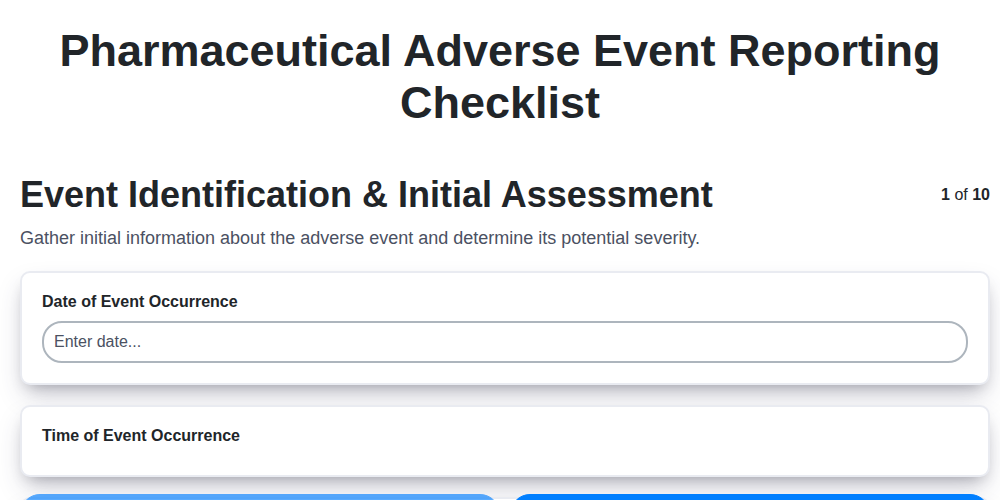
Navigating Adverse Event Reporting: Your Pharmaceutical Checklist Guide
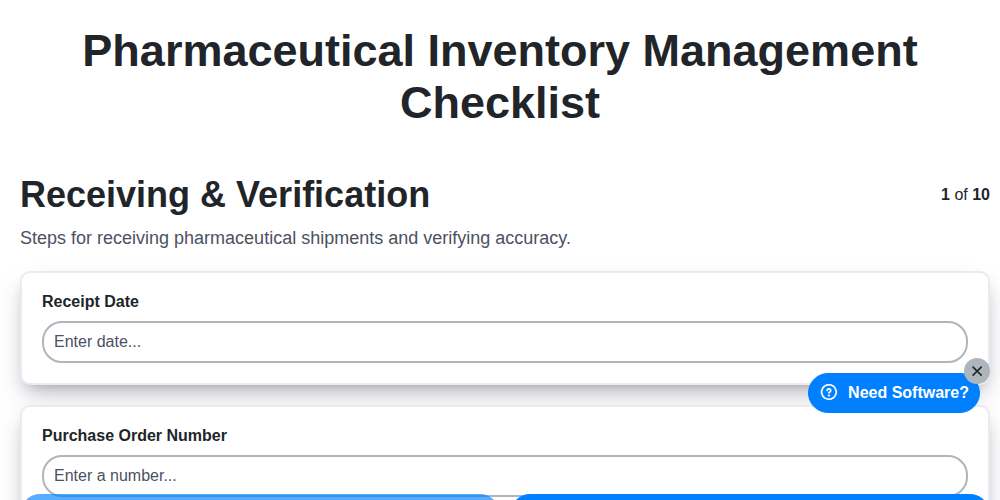
Pharmaceutical Inventory Management Checklist: Your Guide to Compliance & Accuracy
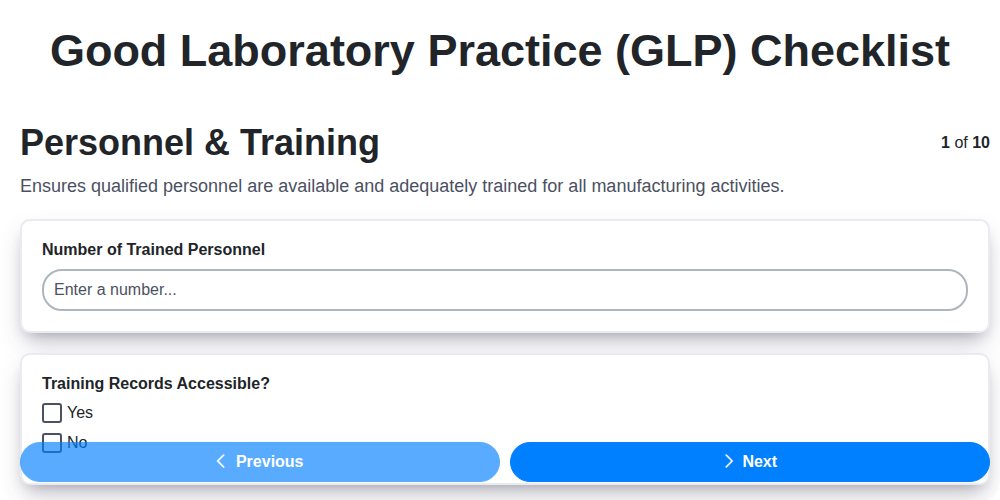
Your Essential GLP Checklist Template: A Practical Guide
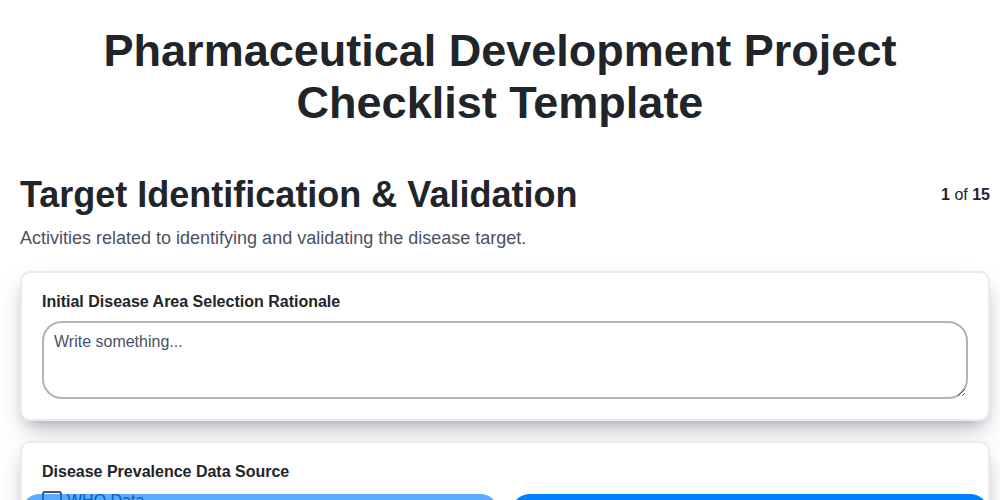
Your Pharmaceutical Development Checklist: A Template for Success
Pharmaceutical Validation Checklist Template: Your Guide to Compliance
Need help with
Pharmaceutical?
Have a question? We're here to help. Please submit your inquiry, and we'll respond promptly.