 ChecklistGuro
 Credit Control and Collections Workflow
Streamline your accounts receivable and optimize cash flow with our automated Credit Control and Collections Workflow. Designed for modern accounting management, this intelligent process automates payment reminders, tracks aging invoices, and manages credit limits to reduce DSO and minimize bad debt. Transform your manual follow-ups into a proactive, error-free collection engine that secures timely payments and strengthens client relationships.
This Template was installed 3 times.
Start
Start of the Workflow/Process.
1. Retrieve Overdue Invoices
Fetch all invoice entries from the Data Model where the due date is less than the current date and status is 'Unpaid'.
2. Calculate Total Outstanding Debt
Sum the 'Amount Due' property of all retrieved overdue invoice entries to determine total exposure.
3. Calculate Days Overdue
Calculate the number of days between the 'Due Date' and the 'Current Date' for each entry.
4. Update Invoice Status to 'In Collection'
Change the status field of the identified overdue invoices to 'In Collection' to prevent duplicate processing.
5. Assign Collection Officer
Create a task for the Credit Control Manager to review the high-value overdue accounts.
6. Get Customer Contact Details
Retrieve email addresses and phone numbers from the Customer Data Model linked to the overdue invoices.
7. Send First Dunning Notice
Send an automated polite reminder email to the customer regarding the unpaid balance.
8. Send Payment Reminder SMS
Send a short SMS notification to the customer's registered mobile number for invoices overdue by more than 7 days.
9. Determine Risk Score
Calculate a new Risk Score based on the ratio of overdue amount to the total credit limit.
10. Update Customer Credit Limit
Automatically decrease the customer's available credit limit if the risk score exceeds a predefined threshold.
11. Escalation Task: Legal Review
Create a high-priority task for the Legal Department for accounts that have reached 60 days overdue.
12. Generate Weekly Aging Report
Create a summary report showing the distribution of receivables across 30, 60, and 90+ day buckets.
13. Archive Resolved Disputes
Remove entries from the 'Active Disputes' data model once a resolution or payment has been confirmed.
End
End of the Workflow/Process.
Start of the Workflow/Process.
Fetch all invoice entries from the Data Model where the due date is less than the current date and status is 'Unpaid'.
Sum the 'Amount Due' property of all retrieved overdue invoice entries to determine total exposure.
Calculate the number of days between the 'Due Date' and the 'Current Date' for each entry.
Change the status field of the identified overdue invoices to 'In Collection' to prevent duplicate processing.
Create a task for the Credit Control Manager to review the high-value overdue accounts.
Retrieve email addresses and phone numbers from the Customer Data Model linked to the overdue invoices.
Send an automated polite reminder email to the customer regarding the unpaid balance.
Send a short SMS notification to the customer's registered mobile number for invoices overdue by more than 7 days.
Calculate a new Risk Score based on the ratio of overdue amount to the total credit limit.
Automatically decrease the customer's available credit limit if the risk score exceeds a predefined threshold.
Create a high-priority task for the Legal Department for accounts that have reached 60 days overdue.
Create a summary report showing the distribution of receivables across 30, 60, and 90+ day buckets.
Remove entries from the 'Active Disputes' data model once a resolution or payment has been confirmed.
End of the Workflow/Process.
Frequently Asked Questions
Comments
There are no comments yet. Be the first to add one!
Accounting Management Solution Demo
Move beyond rigid, one-size-fits-all software. Leverage a fully programmable accounting environment designed to adapt to your unique workflows, complex hierarchies, and evolving business logic.
Related Workflow Templates
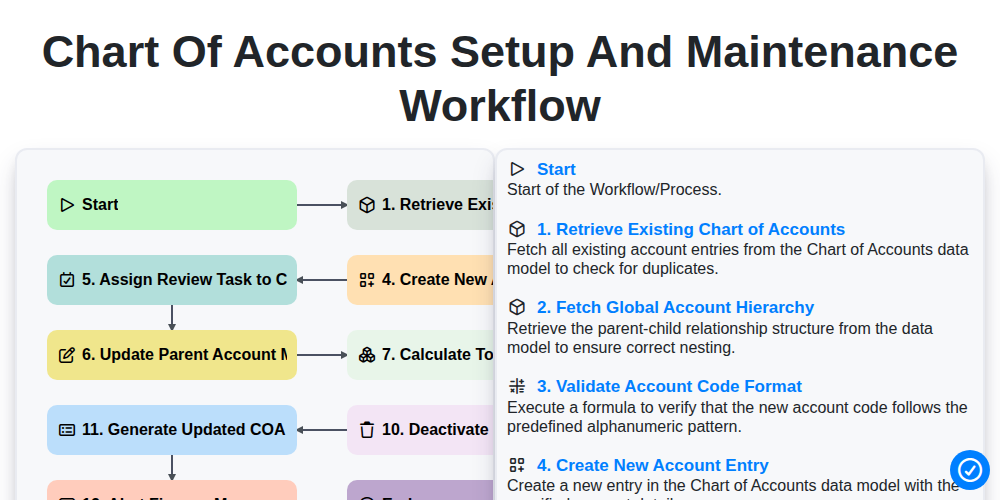
Chart of Accounts Setup and Maintenance Workflow
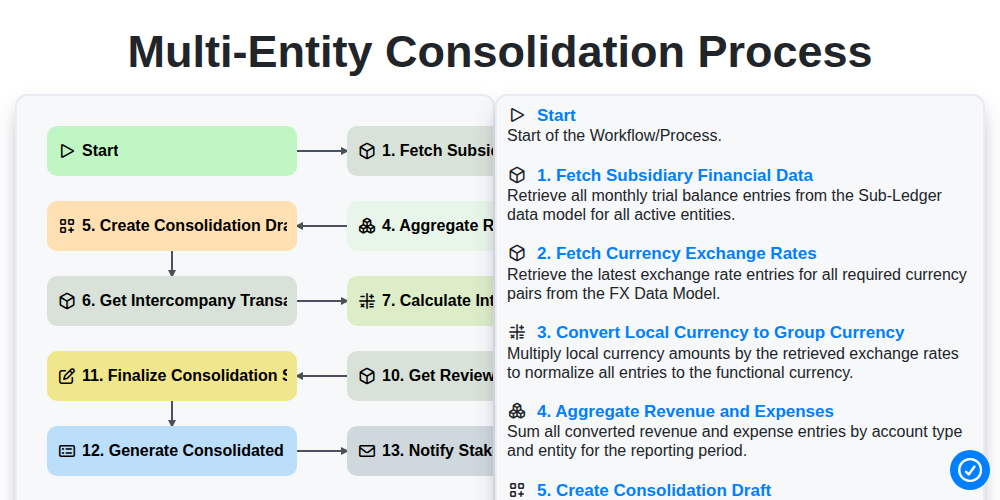
Multi-Entity Consolidation Process
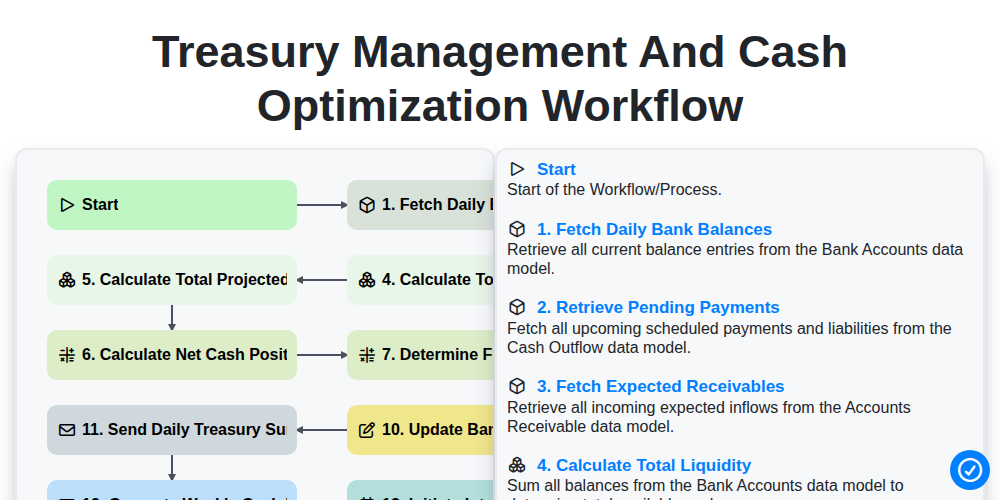
Treasury Management and Cash Optimization Workflow
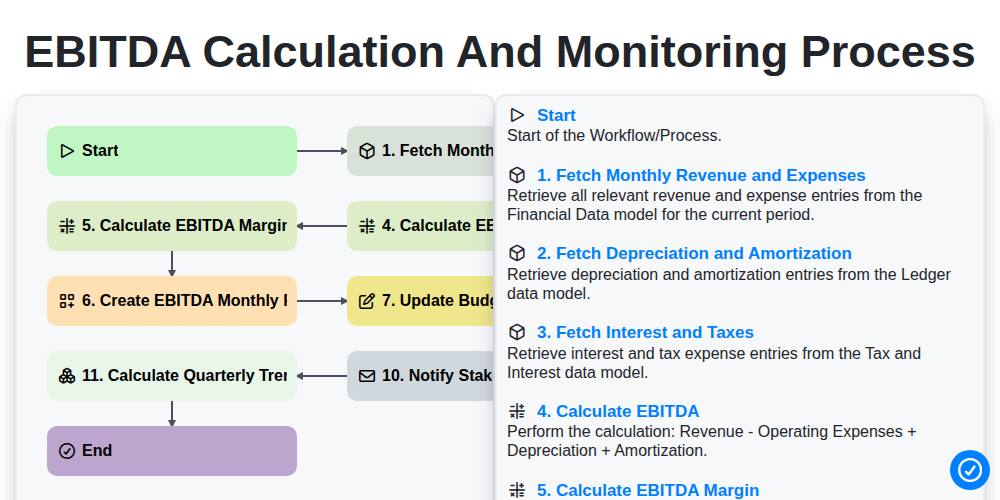
EBITDA Calculation and Monitoring Process
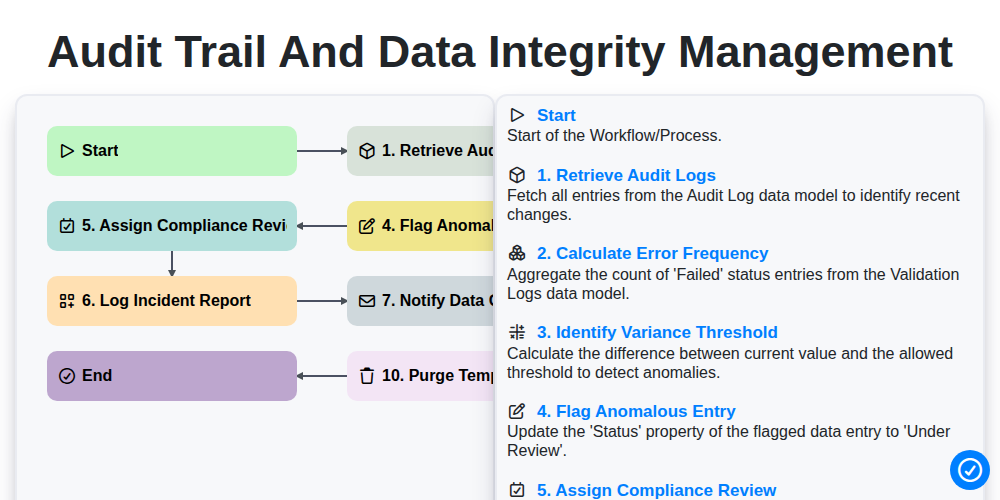
Audit Trail and Data Integrity Management
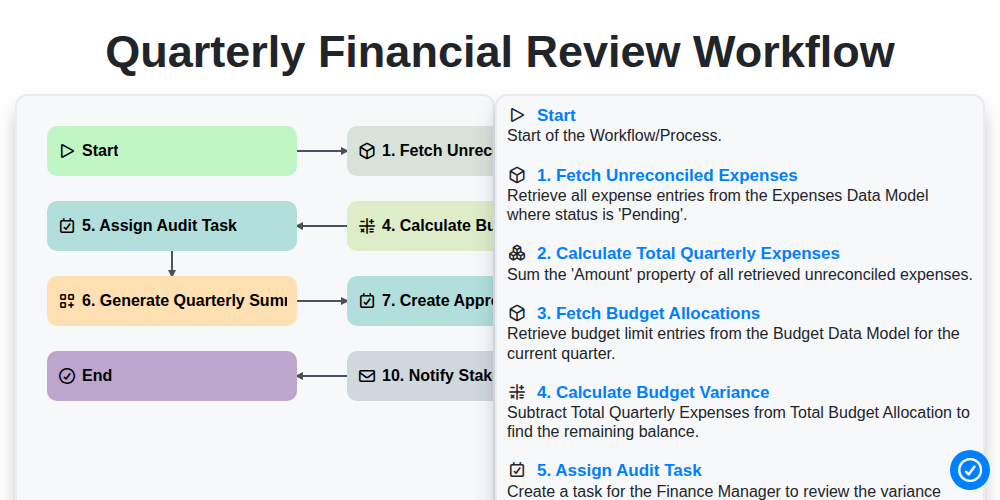
Quarterly Financial Review Workflow
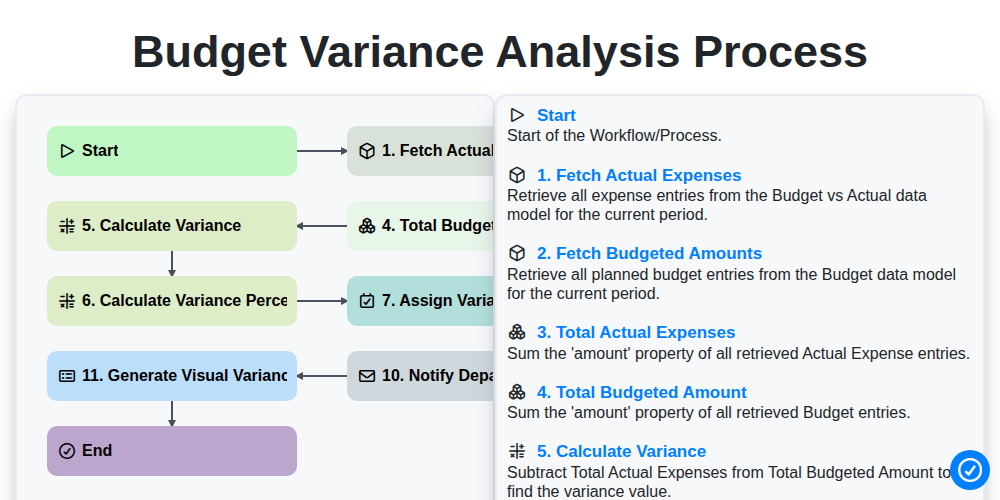
Budget Variance Analysis Process
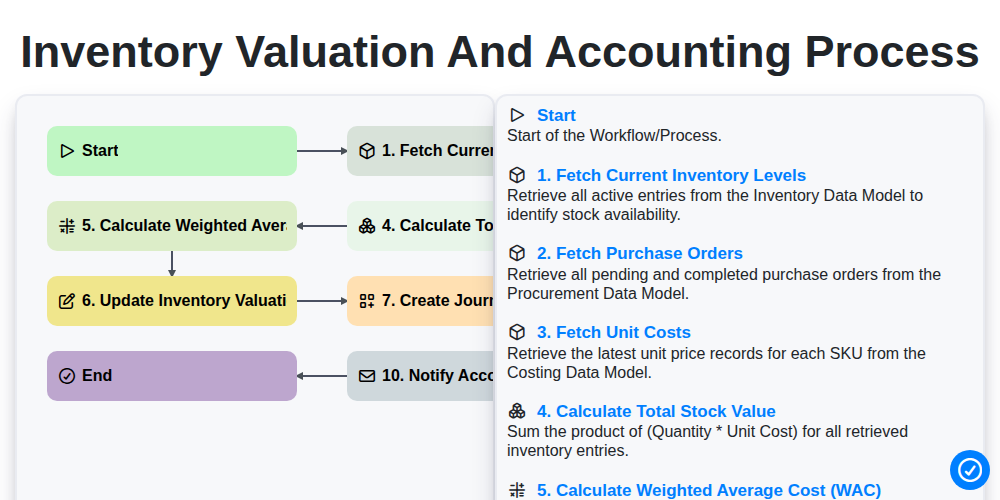
Inventory Valuation and Accounting Process
We can do it Together
Need help with
Accounting Management?
Have a question? We're here to help. Please submit your inquiry, and we'll respond promptly.