The Ultimate Automotive CRM Checklist: Drive Customer Loyalty & Sales Growth
Published: 12/29/2025 Updated: 12/30/2025
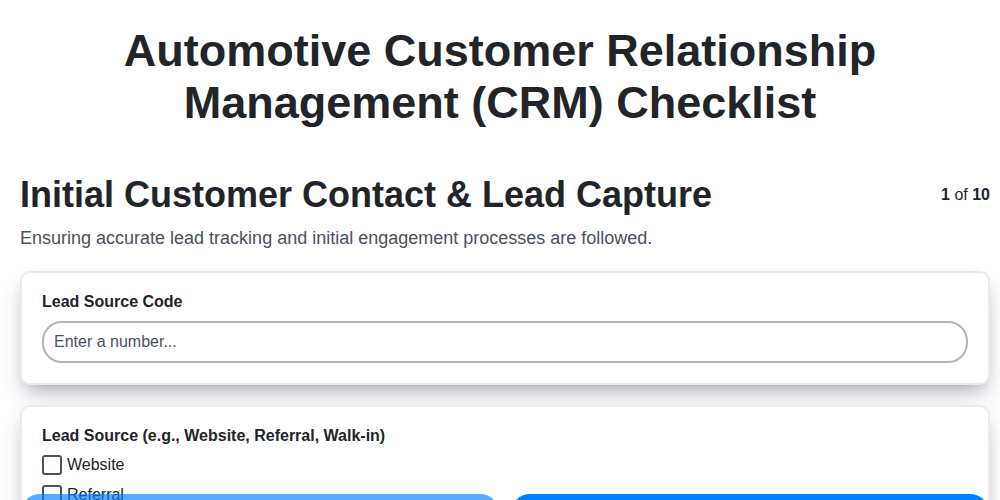
Table of Contents
- Introduction: Why a CRM is Essential for Automotive Success
- 1. Initial Customer Contact & Lead Capture: Laying the Foundation
- 2. Lead Qualification & Prioritization: Focusing on High-Potential Customers
- 3. Sales Follow-Up & Engagement: Nurturing Leads into Sales
- 4. Sales Process Adherence: Ensuring Consistency and Predictability
- 5. Service Appointment Scheduling & Reminders: Maximizing Shop Utilization
- 6. Customer Satisfaction Surveys & Feedback: Measuring and Improving Experience
- 6. CRM Data Entry & Accuracy: The Backbone of Your Insights
- 7. Reporting & Analytics Review: Tracking Performance and Identifying Trends
- 8. CRM User Training & Proficiency: Empowering Your Team
- 9. Data Security & Compliance: Protecting Customer Information
- 10. Integration with Other Automotive Systems
- 11. Regularly Review and Optimize Your CRM
- Conclusion: Driving Long-Term Customer Relationships
- Resources & Links
TLDR: Feeling overwhelmed by customer relationships? This checklist outlines 10 key areas - from initial contact to data security - to streamline your automotive CRM process, boost sales, improve service, and keep customers coming back. It's your roadmap to maximizing your CRM investment and driving growth!
Introduction: Why a CRM is Essential for Automotive Success
The automotive industry is fiercely competitive. Customers have more choices than ever, and loyalty is hard-earned. Simply relying on traditional methods - word-of-mouth, scattered spreadsheets, or relying solely on sales staff memory - just won't cut it anymore. That's where a Customer Relationship Management (CRM) system comes in. A robust CRM isn't just about managing contacts; it's about building lasting relationships, optimizing every interaction from initial inquiry to repeat service visits, and ultimately, driving revenue. It centralizes your customer data, streamlines communication, automates tasks, and provides invaluable insights to improve your dealership's performance. Ignoring a CRM means missing out on opportunities to personalize experiences, increase sales, and retain valuable customers - a risk no dealership can afford to take in today's market. This checklist will guide you in implementing and optimizing your automotive CRM to achieve just that.
1. Initial Customer Contact & Lead Capture: Laying the Foundation
The first impression is critical. In the automotive world, this means capturing leads effectively and making a positive, memorable first contact. A disorganized or missed initial contact can mean losing a potential customer before you even have a chance to showcase your dealership's value.
Here's your checklist for nailing initial customer contact and lead capture:
- Multiple Capture Points: Don't rely on just one lead form on your website. Integrate lead capture on your website (homepage, vehicle pages, service pages), social media platforms, online advertising campaigns (Google Ads, Facebook Ads), and third-party automotive marketplaces.
- Easy-to-Find Forms: Ensure lead forms are prominently displayed and user-friendly. Minimize the number of required fields - only ask for essential information initially. A lengthy form can deter potential customers.
- Live Chat Integration: Implement live chat functionality on your website. This provides an immediate touchpoint for visitors and allows for real-time engagement and lead capture.
- Phone System Integration: Ensure phone calls are logged and tracked within your CRM. Include caller ID information to automatically associate calls with potential leads.
- Email Marketing Integration: Automatically add leads captured through forms or other channels to your email marketing system for nurture campaigns.
- Website Tracking: Implement website tracking (e.g., Google Analytics) to understand which pages and campaigns generate the most leads.
- Lead Source Attribution: Accurately track the source of each lead (e.g., website form, Facebook ad, phone call) to measure campaign effectiveness.
- Immediate Acknowledgment: Send an automated email or text message confirming receipt of the lead submission. This assures the customer you received their inquiry and sets expectations.
2. Lead Qualification & Prioritization: Focusing on High-Potential Customers
Not all leads are created equal. Wasting time and resources on unqualified prospects can significantly impact your dealership's efficiency and profitability. This is where lead qualification and prioritization become critical. A robust CRM system allows you to move beyond simply capturing leads to actively assessing their potential.
What Makes a Qualified Lead?
Define clear criteria for lead qualification based on your dealership's typical buyer profile. Consider factors such as:
- Budget: Can they afford the vehicles and services you offer?
- Timeline: When are they realistically looking to buy or service their vehicle?
- Needs & Interests: What type of vehicle are they seeking? What features are important to them? Are they interested in financing or leasing?
- Vehicle Type & Trim Level: Knowing what they're interested in helps tailor your follow-up.
- Demographics: Location, age range, and other demographic data can provide valuable insights.
Prioritization Strategies:
Implement a scoring system within your CRM to automatically prioritize leads. Assign points based on the qualification criteria. For example, a lead who indicates a specific budget and timeline would receive a higher score than someone who only provided a name and email.
- A-List Leads: High score, actively engaged, ready to buy or service soon. These get immediate and personalized attention.
- B-List Leads: Moderate score, showing interest, but needing more nurturing. Automated follow-up sequences and targeted content are appropriate.
- C-List Leads: Low score, minimal engagement, potential for future consideration. Minimal follow-up, but maintain contact for future opportunities.
Leveraging CRM Functionality:
- Automated Scoring: Set up automated scoring rules within your CRM to assign points based on lead data.
- Lead Segmentation: Segment leads based on their score and other criteria for targeted marketing and sales efforts.
- Custom Fields: Utilize custom fields to capture specific information that informs lead qualification and prioritization.
Prioritizing the right leads allows your sales team to focus on customers most likely to convert, ultimately boosting sales and improving your dealership's overall performance.
3. Sales Follow-Up & Engagement: Nurturing Leads into Sales
Letting a qualified lead sit on a spreadsheet isn't a sales strategy - it's a missed opportunity. Effective sales follow-up and engagement are the crucial link between initial interest and a closed deal. Here's how your CRM should be helping:
Automated Sequences: Implement automated email and SMS sequences triggered by lead actions (e.g., form submission, website visit, test drive request). These shouldn't be generic blasts; personalize them based on the lead's expressed interest and vehicle preferences captured in the CRM.
Personalized Communication: Your CRM should provide a 360-degree view of each lead, including past interactions, website activity, and expressed needs. Use this data to tailor your communication. A phone call referencing a specific vehicle they browsed demonstrates genuine interest.
Variety of Touchpoints: Don't rely solely on email. Integrate phone calls, text messages, and even social media engagement (where appropriate) to keep your dealership top-of-mind. Track all interactions within the CRM to avoid repetitive contact and ensure a cohesive experience.
Lead Scoring & Follow-Up Prioritization: Your CRM should automatically score leads based on their engagement levels. Those with high scores - actively clicking links, requesting more information - deserve immediate and personalized follow-up. Lower-scoring leads can be nurtured with less frequent, more automated content.
Remarketing & Retargeting: Use CRM data to identify leads who haven't yet converted. Implement targeted remarketing campaigns highlighting relevant vehicles, offers, and testimonials.
Sales Team Collaboration: Ensure your sales team has easy access to all lead communication history within the CRM, allowing for seamless handoffs and a consistent customer experience. Notes and task reminders are vital for ensuring no lead falls through the cracks.
4. Sales Process Adherence: Ensuring Consistency and Predictability
A robust CRM isn't just about collecting data; it's about using that data to guide your sales team through a defined process. Sales process adherence ensures every customer interaction, from initial inquiry to final sale, follows a consistent, repeatable strategy. This benefits everyone: customers receive a predictable and positive experience, and your team operates more efficiently.
Here's how to ensure your automotive team adheres to your defined sales process within the CRM:
- Clearly Defined Stages: Map out your sales process within the CRM - e.g., Lead, Qualified, Presentation, Negotiation, Closing. Each stage should have specific actions and required data entry points.
- Automated Task Assignment: Utilize the CRM's task management features to automatically assign follow-up tasks based on a customer's stage in the sales funnel. This reduces the chance of crucial steps being missed.
- Sales Scripts & Resources: Embed sales scripts, vehicle brochures, financing options, and other helpful resources directly within the CRM for easy access during interactions.
- Progress Tracking & Visibility: Make sure managers have clear visibility into where each deal is within the sales process. Dashboards and reporting should highlight potential bottlenecks and deviations from the standard process.
- Regular Process Reviews: The automotive landscape changes rapidly. Review your sales process regularly (at least quarterly) to ensure it remains effective and aligned with market trends. Update the CRM workflows accordingly.
- Incentivize Adherence: Consider tying performance metrics and incentives to adherence to the defined sales process. This encourages team members to embrace the CRM as a tool for success.
5. Service Appointment Scheduling & Reminders: Maximizing Shop Utilization
Missed appointments are a silent killer of automotive shop profitability. They represent lost labor hours, wasted parts, and a frustrated team. Implementing a robust service appointment scheduling and reminder system within your CRM isn't just about convenience; it's about maximizing shop utilization and boosting your bottom line.
Here's how your CRM can help:
- Online Scheduling: Allow customers to book appointments directly through your website or a dedicated online portal. This 24/7 accessibility dramatically increases booking volume and reduces phone call burden on your staff.
- Automated Reminders: Leverage the power of automated reminders! Implement multiple reminders - a week out, 24 hours prior, and even a same-day confirmation - via email and SMS. Personalize these reminders with appointment details and a direct link to reschedule or cancel.
- Buffer Time Management: Your CRM should allow for flexible scheduling, incorporating buffer time between appointments to account for unexpected delays or more complex repairs. This prevents a domino effect of late appointments.
- Appointment Type Specific Scheduling: Cater your scheduling based on the type of service needed. Oil changes might have shorter appointment slots, while engine diagnostics require more time. Your CRM should accommodate this nuance.
- Integration with Shop Management Software: Seamlessly integrate your CRM with your shop management system. This synchronizes appointment data, ensures accurate record-keeping, and prevents double-booking.
- Cancellation/Rescheduling Tracking: Track cancellation and rescheduling patterns. Are certain days or times consistently problematic? Analyze this data to optimize scheduling practices.
By consistently utilizing these features, you'll reduce no-shows, improve shop utilization, and create a more efficient and profitable operation.
6. Customer Satisfaction Surveys & Feedback: Measuring and Improving Experience
Beyond just scheduling service appointments, understanding how your customers feel about their experience is crucial for long-term loyalty and positive word-of-mouth. Implementing a robust system for gathering and acting on customer satisfaction surveys and feedback should be a cornerstone of your automotive CRM strategy.
What to Survey & When:
- Post-Sales Survey: Immediately following a vehicle purchase or service visit. Focus on the sales process, advisor interaction, and overall experience.
- Service Visit Surveys: Sent after each service appointment. Target specifics like technician expertise, waiting area comfort, and the clarity of explanations.
- Periodic Relationship Surveys: Conducted every 6-12 months to gauge overall brand perception and identify areas for improvement across all touchpoints.
- Quick Polls/NPS (Net Promoter Score): Simple, one-question surveys (e.g., How likely are you to recommend us to a friend?) provide a quick snapshot of customer sentiment.
Making Surveys Effective:
- Keep it Concise: Respect your customers' time. Shorter surveys yield higher completion rates.
- Use a Mix of Question Types: Combine multiple-choice, rating scales (e.g., 1-5 stars), and open-ended questions for detailed insights.
- Automate Delivery: Integrate surveys with your CRM to automatically send them post-interaction.
- Close the Loop: This is critical! Respond to negative feedback promptly and genuinely. Show customers you value their concerns and are actively working to improve. A simple "Thank you for your feedback. We're looking into this" can go a long way.
- Analyze & Act: Don't just collect data; use it. Identify trends, pinpoint problem areas, and develop action plans to enhance the customer journey. Share feedback with relevant teams (sales, service, management) to facilitate continuous improvement.
6. CRM Data Entry & Accuracy: The Backbone of Your Insights
You've invested in a CRM, diligently capturing leads and tracking interactions. But all that data is useless - even detrimental - if it's inaccurate or incomplete. Think of your CRM as a finely tuned engine; a single bad component can throw everything off.
Here's why data entry and accuracy are absolutely critical for automotive dealerships:
- Garbage In, Garbage Out: The insights you derive from your CRM - customer segmentation, sales forecasting, service trend analysis - are only as good as the data you feed it. Inaccurate data leads to flawed decisions.
- Impact on Marketing: Imagine sending targeted promotions based on incorrect vehicle preferences. You're not just wasting marketing spend; you're annoying potential customers.
- Service Reputation: Incorrect service history or contact information can lead to missed appointments, miscommunication, and frustrated customers.
- Legal & Compliance: Inaccurate records can create problems with warranty claims, recalls, and other legal requirements.
Actionable Steps for Data Accuracy:
- Standardize Fields: Enforce consistent formatting for phone numbers, addresses, and other key fields. Use dropdown menus and predefined options whenever possible.
- Mandatory Fields: Designate crucial fields as mandatory to ensure completeness.
- Regular Audits: Implement periodic data audits to identify and correct errors.
- Automated Validation: Utilize CRM features that automatically validate data (e.g., email address verification).
- Data Ownership: Assign responsibility for data entry and accuracy to specific team members.
- Continuous Improvement: Regularly review data entry processes and make adjustments based on feedback and audit results.
7. Reporting & Analytics Review: Tracking Performance and Identifying Trends
Reporting and analytics aren't just about generating pretty charts; they're the engine driving informed decisions for your automotive business. Regularly reviewing your CRM data allows you to pinpoint what's working, identify areas for improvement, and ultimately boost your bottom line.
Here's what you should be focusing on:
- Sales Conversion Rates: Track conversion rates at each stage of your sales funnel - from lead to qualified lead, qualified lead to demo, demo to sale. Where are customers dropping off? This highlights bottlenecks in your sales process.
- Service Appointment Volume & Revenue: Analyze trends in service appointment volume, average repair order (ARO), and customer lifetime value (CLTV). Are certain services consistently underperforming? Are you losing customers to competitors?
- Marketing Campaign Performance: If you're using your CRM to manage marketing efforts, meticulously track which campaigns generate the most leads and sales. ROI tracking is crucial here.
- Customer Retention Rates: A loyal customer is far more valuable than acquiring a new one. Monitor retention rates and identify factors influencing churn.
- Sales Team Performance: Individual sales team member metrics - deals closed, average deal size, lead response times - can highlight training needs and recognize top performers.
- Service Advisor Performance: Track advisor efficiency, customer satisfaction scores (linked to advisor interaction), and upsell/cross-sell success rates.
- Lead Source Analysis: Understand which lead sources are delivering the highest quality leads and best ROI. Are paid ads more effective than referrals?
Don't just look at the numbers; interpret them. Are you seeing a dip in service appointments? Investigate potential reasons - perhaps a competitor's promotion or a change in customer driving habits. Consistent review and proactive adjustments based on your CRM data are key to continuous improvement.
8. CRM User Training & Proficiency: Empowering Your Team
Your CRM is only as effective as the people using it. Investing in comprehensive user training isn't just a nice-to-have; it's essential for maximizing your ROI. Without proper training, your team might underutilize features, enter inaccurate data, or simply avoid using the system altogether, negating all the potential benefits.
Here's what a robust training program should include:
- Role-Specific Training: Not everyone uses the CRM in the same way. Tailor training to specific roles - sales, service, management - focusing on the features most relevant to their daily tasks.
- Onboarding for New Hires: Integrate CRM training into the onboarding process for new employees to ensure they're comfortable and confident from day one.
- Regular Refresher Sessions: CRM platforms evolve, and best practices change. Schedule regular training updates to keep your team proficient.
- Quick Tip Resources: Create short, easily accessible videos or documents covering common tasks and troubleshooting.
- Champion Program: Identify and train CRM champions within each department who can provide ongoing support and answer questions from their colleagues.
- Track Proficiency: Use quizzes or performance metrics to assess user understanding and identify areas needing further attention.
- Feedback Loop: Actively solicit feedback from users about the CRM and training program to continuously improve its effectiveness.
A skilled and confident team will drive adoption, improve data quality, and ultimately, contribute significantly to your automotive business's success.
9. Data Security & Compliance: Protecting Customer Information
In the automotive industry, trust is everything. Customers are entrusting you with significant financial commitments and sharing personal information. A data breach or compliance failure can devastate your reputation and lead to serious legal consequences. Your CRM isn't just a sales tool; it's a repository of sensitive data that demands robust security measures.
This checklist step isn't about merely having a firewall - it's about a holistic approach to data protection. Here's what you need to consider:
- Data Encryption: Ensure all customer data, both in transit and at rest, is encrypted.
- Access Controls: Implement role-based access controls, limiting access to customer data based on user roles and responsibilities. Sales staff shouldn't necessarily have access to service records, and vice-versa.
- Regular Security Audits: Conduct periodic audits to identify vulnerabilities and ensure ongoing compliance.
- Compliance with Regulations: Stay up-to-date and compliant with relevant data privacy regulations like GDPR (if applicable), CCPA, and any state-specific laws. Understand how these regulations impact data collection, storage, and usage.
- Data Backup & Recovery: Establish regular data backup and recovery procedures to protect against data loss due to hardware failures, cyberattacks, or human error.
- Vendor Security Assessments: If you're using a third-party CRM provider, thoroughly assess their security practices and ensure they meet your data protection standards. Request documentation and undergo security reviews.
- Employee Training: Educate your team on data security best practices, phishing awareness, and the importance of protecting customer information.
- Incident Response Plan: Develop and regularly test an incident response plan to address data breaches swiftly and effectively.
Neglecting this area isn's just risky; it's irresponsible. Prioritize data security and compliance to safeguard your customers' trust and protect your business.
10. Integration with Other Automotive Systems
Your CRM isn't an island. To truly maximize its effectiveness, seamless integration with other critical automotive systems is paramount. This goes beyond simply storing contact information; it's about creating a holistic view of your customer and streamlining operations.
Consider these vital integrations:
- Dealership Management System (DMS): Linking your CRM to your DMS ensures synchronized inventory data, pricing information, and vehicle history details. This reduces manual data entry and provides sales teams with accurate, real-time information.
- Shop Management System (SMS): For service departments, integrating with your SMS provides instant access to vehicle service records, repair history, and upcoming maintenance schedules. This allows for personalized service recommendations and proactive customer engagement.
- Marketing Automation Platforms: Integrating your CRM with tools like email marketing platforms allows you to segment your audience and deliver targeted campaigns based on customer behavior and preferences. Automate follow-up sequences based on website visits or specific actions taken within your CRM.
- Vehicle Inventory Systems: Real-time inventory updates within the CRM empower sales teams to provide accurate vehicle availability information, eliminating frustrating delays and improving the customer experience.
- Third-Party Data Enrichment Services: Integrating with services that provide additional customer data (e.g., demographics, vehicle ownership information) can enhance your customer profiles and enable more personalized communication.
- Payment Processing Systems: Streamline the payment process for sales and service transactions, reducing friction and improving efficiency.
Without these integrations, you risk creating data silos, duplicating efforts, and ultimately hindering your ability to provide exceptional customer service. Prioritize integrations that align with your dealership's specific needs and workflows to unlock the full potential of your CRM.
11. Regularly Review and Optimize Your CRM
Your CRM isn't a set it and forget it solution. The automotive landscape is constantly evolving - new vehicle models, changing customer expectations, and shifting regulations all impact how you interact with your customers. To ensure your CRM continues to drive results, regular review and optimization are crucial.
Here's what to focus on:
- Performance Metrics: Track key performance indicators (KPIs) like conversion rates, sales cycle length, customer lifetime value, and service retention rates. Are these numbers trending in the right direction? If not, investigate why.
- Workflow Evaluation: Are your sales and service processes efficient within the CRM? Identify bottlenecks, redundant steps, or areas where automation could streamline tasks.
- Data Quality Audit: Periodically check for outdated, inaccurate, or incomplete data. This is particularly important as time passes and customer information changes.
- Feature Utilization: Are you leveraging all the features your CRM offers? Explore advanced functionalities or integrations that could enhance your operations.
- User Feedback: Solicit feedback from your sales, service, and management teams. They're on the front lines and can offer valuable insights into usability and areas for improvement.
- Stay Updated: Keep abreast of CRM updates and new features. These often include improvements to functionality and security.
Don't be afraid to make adjustments - A/B testing different approaches can help you fine-tune your CRM to maximize its impact on your business.
Conclusion: Driving Long-Term Customer Relationships
Implementing and consistently utilizing an automotive CRM isn't just about ticking boxes on a checklist; it's about building a foundation for lasting customer relationships. By prioritizing each step - from that initial contact to ongoing feedback and data security - you're demonstrating a commitment to providing exceptional service and personalized experiences. This, in turn, fosters loyalty, encourages referrals, and ultimately, drives sustainable business growth. Don't view this checklist as a one-time project; consider it a living document that should be reviewed and adapted as your dealership evolves and customer expectations shift. The rewards - increased customer lifetime value and a thriving automotive business - are well worth the effort.
Resources & Links
- Salesforce: A leading CRM platform with extensive features and integrations suitable for automotive businesses of all sizes. Offers various solutions including sales, service, and marketing automation.
- HubSpot: Offers a free CRM and a range of marketing, sales, and service hubs. Good for businesses looking for a balance of features and affordability, with a strong emphasis on inbound marketing.
- DealerFire: Specifically designed for automotive dealerships, offering CRM, marketing, and reputation management tools. Provides tailored solutions for lead generation and customer retention.
- Elevate Sales: Automotive CRM platform focused on dealer-specific workflows, lead management, and customer engagement. Offers a comprehensive suite of tools to streamline sales processes.
- AutoMoto AI: AI-powered automotive CRM platform that leverages machine learning to enhance lead management, personalization, and sales performance.
- Zendesk: Popular customer service platform that can be integrated with a CRM to provide excellent customer support and build relationships.
- Nimble: A social CRM platform that helps manage customer relationships across social media and other channels.
- Automotive Technology Industry Resources: Provides a broad range of information and news related to automotive technology, including CRM trends and best practices.
- Digital Dealer: Website and publication focused on digital marketing and technology for automotive dealerships, offering insights into CRM implementations and strategies.
- CBT News: News source covering automotive retail and technology, often featuring articles related to CRM adoption and its impact on dealership performance.
- Salesforce Automotive Solutions: Dedicated page from Salesforce outlining their offerings specifically tailored to the automotive industry, including CRM implementations.
- HubSpot Automotive Marketing: HubSpot's resources dedicated to automotive marketing, with tips and advice on leveraging CRM for lead generation and customer retention.
Frequently Asked Questions
What is an Automotive CRM and why is it important?
An Automotive CRM (Customer Relationship Management) system is a software platform that helps dealerships manage and analyze customer interactions and data throughout the customer lifecycle. It's vital for fostering customer loyalty, improving communication, streamlining sales processes, and ultimately driving sales growth by nurturing relationships and personalizing experiences.
Who should use an Automotive CRM?
Any automotive dealership - from small independent shops to large franchise dealerships - can benefit from an Automotive CRM. It's particularly useful for dealerships looking to improve customer retention, enhance marketing efforts, and optimize sales team performance.
What are the key features I should look for in an Automotive CRM?
Essential features include contact management, lead tracking, sales pipeline management, service reminders, marketing automation, reporting & analytics, integration with dealership management systems (DMS), mobile access, and customer segmentation capabilities.
How does an Automotive CRM help drive customer loyalty?
By centralizing customer data, CRMs enable personalized communication, targeted marketing campaigns, proactive service reminders, and efficient handling of customer inquiries. This creates a sense of value and builds stronger relationships, leading to increased loyalty and repeat business.
What's the difference between a CRM and a DMS?
A DMS (Dealership Management System) manages core dealership operations like inventory, finance, and accounting. A CRM focuses specifically on managing customer interactions and relationships. While they serve different purposes, they often integrate for a more comprehensive view of the customer.
How long does it typically take to implement an Automotive CRM?
Implementation time varies depending on the complexity of the system and the dealership's existing infrastructure. It can range from a few weeks for simpler deployments to several months for more complex integrations. Proper planning and training are crucial for successful implementation.
What are the potential benefits of integrating my CRM with my DMS?
Integration creates a single, unified view of the customer, eliminating data silos and improving data accuracy. This allows for more targeted marketing, personalized service, and efficient sales processes. It streamlines workflows and enhances overall operational efficiency.
How can I measure the success of my Automotive CRM implementation?
Key metrics include customer retention rate, sales conversion rates, customer satisfaction scores, average deal size, marketing ROI, and sales team productivity. Regularly tracking these metrics will help you assess the CRM's impact and identify areas for improvement.
What are some common mistakes dealerships make when implementing a CRM?
Common mistakes include lack of clear goals, insufficient training for staff, poor data quality, failure to integrate with other systems, and not regularly reviewing and optimizing the system's performance.
What is the average cost of an Automotive CRM?
CRM costs vary significantly based on the provider, features, and number of users. Prices can range from a few hundred dollars per month for basic systems to several thousand dollars per month for enterprise-level solutions.
Comments
There are no comments yet. Be the first to add one!
Automotive Manufacturing Management Solution Demo
Optimize your automotive production! ChecklistGuro digitizes workflows, from parts inspection to final testing. Reduce errors, boost efficiency & ensure quality compliance. Drive results with our Work OS.
Related Articles
The Ultimate Automotive Sales Prospect Follow-Up Checklist: Close More Deals
Mastering Automotive BOM Configuration: Your Essential Checklist

The Ultimate Vehicle Registration & Insurance Validation Checklist
Automotive Parts Inventory Audit Checklist Template: Your Guide to Accurate Stock

Maximize Your Trade-In: The Automotive Appraisal Checklist You Need
The Ultimate Tire Pressure & Condition Checklist Template
Automotive Parts Inventory Control Checklist Template: Your Ultimate Guide

Drive Sales Success: Your Automotive Sales Team Performance Tracking Checklist
We can do it Together
Need help with
Automotive?
Have a question? We're here to help. Please submit your inquiry, and we'll respond promptly.