The Ultimate Automotive Sales Prospect Follow-Up Checklist: Close More Deals
Published: 12/29/2025 Updated: 12/30/2025
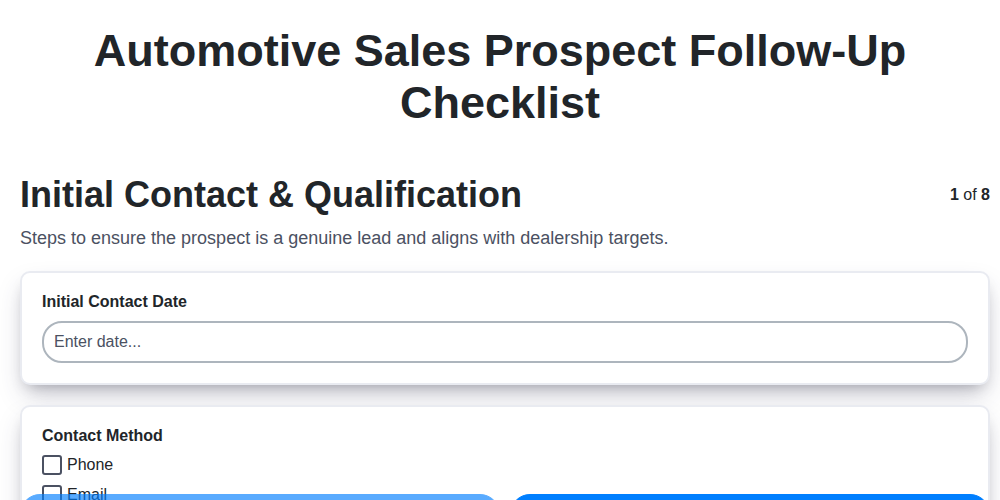
Table of Contents
- Introduction: Why a Follow-Up Checklist is Crucial
- 1. Initial Contact & Qualification: Setting the Stage
- 2. Needs Assessment & Vehicle Matching: Finding the Perfect Fit
- 3. Test Drive Scheduling & Execution: The Experience Matters
- 4. Price Negotiation & Financing Options: Addressing the Budget
- 5. Trade-In Appraisal (If Applicable): Maximizing Value
- 6. Paperwork & Contract Review: Clarity is Key
- 7. Delivery & Handover: Making a Lasting Impression
- 8. Post-Sale Follow-Up: Building Loyalty
- 9. CRM Integration: Automating Your Follow-Up
- 10. Common Pitfalls to Avoid
- 11. Adapting the Checklist for Different Prospect Types
- 12. Tracking & Analyzing Your Follow-Up Success
- Conclusion: Building Relationships, Closing Deals
- Resources & Links
TLDR: This checklist is your sales superpower! It breaks down the entire car buying process - from initial contact to post-sale follow-up - into actionable steps. Use it to stay organized, ensure nothing falls through the cracks, and consistently close more automotive sales.
Introduction: Why a Follow-Up Checklist is Crucial
In the fast-paced world of automotive sales, it's easy to let promising leads slip through the cracks. A single missed follow-up can mean losing a potential customer to a competitor. That's why a structured follow-up checklist isn't just a good idea-it's absolutely essential for consistent success. It provides a roadmap for your team, ensuring no critical steps are overlooked and that each prospect receives the personalized attention they deserve. A checklist promotes accountability, improves customer experience, and ultimately, drives more sales. It's the difference between reacting to leads and proactively closing deals.
1. Initial Contact & Qualification: Setting the Stage
The first impression is everything. This stage isn't just about getting a phone number; it's about determining if the prospect is genuinely interested and a good fit for your dealership. Start with a warm, friendly greeting. Avoid generic sales pitches - instead, ask open-ended questions like, What brings you to our dealership today? or What are you hoping to find in a new vehicle?
Listen carefully! Their answers will reveal their timeframe, budget, and general needs. Don't be afraid to politely qualify them. Are they actively shopping or just browsing? Do they have a realistic budget? A quick qualification question like, Generally speaking, what price range are you comfortable with? can save everyone time if there's a significant mismatch.
If they're a genuine prospect, confirm their contact information and briefly outline the next steps - a more detailed conversation about their needs. End on a positive note and express your eagerness to assist them. Remember, respect their time and don't be pushy! A well-qualified lead is far more valuable than a frustrated, unqualified one.
2. Needs Assessment & Vehicle Matching: Finding the Perfect Fit
The initial contact might reveal some basic preferences, but now it's time to truly understand the prospect's needs. This isn't about pushing a vehicle; it's about finding the right vehicle.
Ask Open-Ended Questions: Don's lead with feature-driven questions. Instead, ask "What are your priorities in a vehicle?" or "What will you primarily be using this vehicle for?" Listen carefully to their answers - these are gold!
Consider Lifestyle and Usage: Are they a growing family? Do they commute long distances? Do they need towing capacity? Do they prioritize fuel efficiency, luxury, or off-road capability? Understanding their lifestyle is crucial.
Beyond the Obvious: Don't just focus on the basics like color and budget. Explore less obvious needs: cargo space for hobbies, safety features for young children, technology features for staying connected.
Present Targeted Options: Armed with this information, present 2-3 vehicles that genuinely meet their needs. Explain why each vehicle is a good fit, tying features directly back to their stated priorities. Avoid overwhelming them with a large selection; curated recommendations are key. Remember to highlight the benefits, not just the specs. This SUV's third row offers comfortable seating for your children and their friends, is more impactful than It has a third-row seat.
3. Test Drive Scheduling & Execution: The Experience Matters
The test drive isn't just a chance for the customer to feel the car; it's a critical touchpoint that reinforces their purchase decision. A poorly executed test drive can undo all the progress you've made. Here's how to nail it:
Scheduling with Intent:
- Confirm Vehicle Availability: Double-check the vehicle is clean, fueled, and ready to go. Nothing screams unprofessionalism like a customer waiting for a car to be prepped.
- Personalized Time: Don't just offer the next available slot. Proactively suggest a time that suits their schedule, showing you value their time.
- Route Discussion: Briefly discuss the planned route before they arrive. A mix of city and highway driving is ideal to showcase the vehicle's versatility. Ask if they have a specific route they'd prefer, showing you're focused on their needs.
- Confirmation & Reminder: Send a confirmation email or text with the date, time, vehicle details, and a contact number. A reminder the day before reduces no-shows.
During the Test Drive:
- Brief Introduction & Vehicle Overview: Briefly highlight key features relevant to the customer's expressed needs during the drive, not just a laundry list of everything.
- Let Them Drive: The customer needs to be in control. Resist the urge to constantly talk or direct. Let them experience the car.
- Subtle Feature Demonstration: When appropriate, subtly point out features relevant to their needs while they're driving, like demonstrating the adaptive cruise control or highlighting the infotainment system's ease of use.
- Gauge Reactions: Pay close attention to their body language and verbal cues. Are they smiling? Do they seem comfortable? Address any concerns immediately.
- Open-Ended Questions: Instead of Do you like it?, try What are your initial impressions? or "How does this feel compared to what you've driven before?" Encourage them to share their thoughts.
- Post-Drive Debrief: Briefly discuss the experience immediately after the drive. What did you think? Did it meet your expectations? This is your chance to address any questions or concerns.
4. Price Negotiation & Financing Options: Addressing the Budget
Price negotiation is often the most stressful part of the car buying process, but it doesn't have to be! Our goal is to find a vehicle you love and a payment plan that fits comfortably within your budget. Here's how we approach it:
1. Open Discussion: We start by openly discussing your budget. We want to understand not just your ideal monthly payment, but also your overall financial situation and any limitations you have. Transparency on both sides is key.
2. Presenting the Value: We're not just selling a car; we're selling a complete package of value. We'll break down the vehicle's features, reliability, and potential long-term cost savings (like fuel efficiency) to justify its price.
3. Exploring Financing Options: We work with multiple lenders, giving you access to a wider range of interest rates and loan terms. We'll explain the differences between various financing options (e.g., loan vs. lease, fixed vs. variable rates) so you can make an informed decision. We'll also discuss any potential incentives or rebates you may qualify for.
4. Creative Solutions: Sometimes, a few adjustments can make a big difference. We're willing to explore options like adjusting the loan term, considering different trim levels, or bundling services to fit your budget.
5. Understanding All Fees: We believe in complete transparency. We're upfront about all fees and charges associated with the vehicle purchase, so there are no surprises later on.
6. No Pressure: Our goal is to help you find a deal you're comfortable with. We never pressure customers into purchasing a vehicle beyond their budget. We're here to guide you, not push you.
5. Trade-In Appraisal (If Applicable): Maximizing Value
The trade-in process can be a crucial part of the deal, and it's where a lot of anxiety builds for both the salesperson and the customer. Here's how to handle it effectively and fairly:
1. Accurate Assessment: Begin with a comprehensive inspection of the trade-in. Don't just look at the exterior; check for mechanical issues, interior wear and tear, and any past accident history (using tools like Carfax or AutoCheck). Be thorough and transparent - honesty builds trust.
2. Value Explanation: Clearly explain how you arrived at the trade-in value. Use market data (Kelley Blue Book, NADAguides) and factor in the vehicle's condition, mileage, and options. Show the customer the data - it reinforces fairness.
3. Negotiation Buffer: Build a bit of a negotiation buffer into your initial appraisal. This allows for some back-and-forth without completely eroding your profit margin.
4. Transparency & Alternatives: If the trade-in's value is lower than the customer expected, be upfront about the reasons why. Discuss alternative options like selling the vehicle privately, which might yield a higher return.
5. Addressing Concerns: Be prepared for questions and objections regarding the appraisal. Listen attentively and address each concern with empathy and data-driven responses. Don't dismiss their feelings; find a solution that works for both parties.
6. Documentation: Meticulously document the condition of the trade-in and the factors influencing its value. This protects you from future disputes.
6. Paperwork & Contract Review: Clarity is Key
This is arguably one of the most crucial stages - and often the most anxiety-inducing for buyers. Don't rush through it! The paperwork involved in a car purchase can be extensive and complex, encompassing everything from the purchase agreement to financing documents and warranty information.
Your Role as the Salesperson: Your job here isn't just to present the documents; it's to explain them. Walk the customer through each page, highlighting key terms, conditions, and obligations. Don't use jargon or complicated language - break it down into understandable terms. Be prepared to answer their questions, no matter how basic they may seem.
What to Cover:
- Purchase Agreement: Clearly explain the vehicle price, any fees or taxes, and the total amount due.
- Financing Documents: Review interest rates, loan terms, monthly payments, and any associated penalties.
- Warranty Information: Detail the coverage offered, duration, and any limitations.
- Trade-In Documentation (if applicable): Ensure the trade-in value and any credits are clearly documented.
- Disclosures: Ensure all required disclosures are present and understood by the customer.
Pro Tip: Encourage the customer to read everything carefully. Don't pressure them to sign quickly. Offer them time to review, and be readily available to address any concerns. A customer who feels informed and confident is a happy customer - and far more likely to become a loyal one. A simple, "Please take your time and review everything," can go a long way.
7. Delivery & Handover: Making a Lasting Impression
This is arguably the most crucial touchpoint in the entire sales process. It's your final opportunity to solidify a positive customer experience and build loyalty. Don't rush it!
Here's what to focus on:
- Warm Welcome & Personalization: Greet the customer warmly and address them by name. Refer back to previous conversations to show you were truly listening.
- Vehicle Walkaround: This isn't just a cursory glance. Thoroughly explain all the vehicle's features, both standard and optional. Highlight those specifically discussed during the needs assessment. Demonstrate technology (infotainment system, safety features) and answer any lingering questions patiently.
- Documentation Review: Briefly go over key points from the contract and financing agreement. Confirm understanding and address any last-minute concerns. Avoid overwhelming them with excessive detail - it's already been signed.
- Owner's Manual & Resources: Show them where to find the owner's manual, warranty information, and any other relevant documentation. Provide contact information for service and support. Consider a printed summary sheet with key information like tire pressure and fluid levels.
- Enthusiasm & Excitement: Your enthusiasm is contagious! Convey genuine excitement about the customer's new vehicle.
- Final Questions & Thank You: Before they leave, genuinely ask if they have any final questions. Thank them for their business and wish them safe and enjoyable driving.
A memorable and positive delivery experience sets the stage for repeat business and referrals. Make it count!
8. Post-Sale Follow-Up: Building Loyalty
The sale isn't the finish line; it's the starting point of a long-term relationship. A robust post-sale follow-up checklist is crucial for building customer loyalty, generating referrals, and securing repeat business. Don't let your hard work end the moment they drive off the lot!
Here's what to include:
- First Week Check-in (3-5 Days): A simple phone call or email to ensure everything is running smoothly. Ask, How are you liking the vehicle so far? and address any immediate concerns. This demonstrates you care about their satisfaction.
- Service Appointment Reminder: Proactively remind them about their first service appointment (typically 5,000 miles or 6 months). Offer to schedule it for them, making it as convenient as possible.
- Satisfaction Survey (1-2 Weeks): A brief survey to gauge their overall experience. Keep it short and focused on key areas. Actively address any negative feedback.
- Review Requests (1 Month): Encourage them to leave online reviews (Google, DealerRater, etc.). Positive reviews are invaluable for attracting new customers.
- Seasonal Check-in & Specials (6-12 Months): A short email or call related to seasonal maintenance (tire changes, winterization) or exclusive offers for existing customers. This keeps you top-of-mind.
- Referral Request (6-12 Months): If they've had a positive experience, politely ask if they know anyone else who might be in the market for a new vehicle. Consider offering a referral bonus.
- Personalized Communication: Segment your follow-up based on vehicle type and customer preferences. Generic emails are easily ignored.
Remember, consistent and thoughtful follow-up reinforces your commitment to customer service and transforms one-time buyers into brand advocates.
9. CRM Integration: Automating Your Follow-Up
Manual follow-up is a recipe for dropped balls and missed opportunities. A robust CRM (Customer Relationship Management) system is no longer a luxury - it's a necessity for automotive sales teams striving for consistent performance. Integrating your prospect follow-up checklist directly into your CRM drastically streamlines the process and reduces the risk of human error.
Here's how CRM integration elevates your follow-up:
- Automated Reminders: Set up automated reminders for each step of your checklist, ensuring no prospect slips through the cracks. Forget sticky notes and mental reminders - the CRM does the heavy lifting.
- Centralized Data: All prospect information, communication history, and checklist progress are stored in one place, accessible to the entire sales team.
- Personalized Communication: Leverage CRM data to personalize follow-up emails and calls. Knowing a prospect's specific needs and expressed preferences makes your communication feel less generic and more valuable.
- Workflow Automation: Automate tasks like sending thank-you emails after a test drive or triggering financing pre-approval applications.
- Performance Tracking: Monitor individual and team performance based on checklist completion rates. Identify bottlenecks and areas for improvement.
- Segmentation: Tag and segment prospects based on their progress and engagement level, allowing for targeted marketing efforts.
Integrating your follow-up checklist into your CRM isn't just about efficiency; it's about building stronger customer relationships and driving sales.
10. Common Pitfalls to Avoid
Ignoring Follow-Up Frequency: It's a balancing act. Too much contact can feel pushy and annoying, leading to prospects blocking you. Too little, and they'll likely forget about you and go elsewhere. A good rule of thumb is a minimum of three touchpoints within the first week (initial contact, needs confirmation, and a check-in offering assistance), then gradually reduce frequency over the subsequent weeks. Set reminders and utilize a CRM to manage this; don't rely on memory! Failing to adjust your follow-up cadence based on prospect responsiveness is a surefire way to lose them.
11. Adapting the Checklist for Different Prospect Types
Not all prospects are created equal. A seasoned luxury car buyer will require a different approach than a first-time buyer or someone looking for a budget-friendly option. This is where flexibility within your follow-up checklist becomes crucial.
High-End Prospects: These individuals often prioritize experience and exclusivity. Shorten your initial qualification questions to focus on their lifestyle and desired level of personalization. Emphasize luxury features and concierge services during the needs assessment. Be prepared to handle complex financing scenarios and offer white-glove delivery. Less emphasis on price negotiation, more on value.
First-Time Buyers: These prospects need hand-holding and education. Break down each step of the process, explaining terminology and options clearly. Focus on building trust and ensuring they feel comfortable. Offer extended explanations regarding financing and insurance. Consider a dedicated introduction to the dealership's processes.
Budget-Conscious Buyers: Price is the driving factor. Be upfront about pricing and incentives. Streamline the negotiation process, highlighting cost-saving features. Offer clear explanations of financing options, including potential for lower monthly payments. Trade-in appraisal efficiency is paramount.
Online-Only Prospects: These individuals often conduct extensive research beforehand. Respect their time and provide concise, readily available information. Focus on digital communication channels and offer virtual tours or online demos. Make the in-person experience seamless and worthwhile.
Referral Prospects: Leverage the trust already established by the referrer. Briefly acknowledge the referral and focus on understanding the prospect's specific needs within the context of their connection.
Ultimately, view your checklist as a guideline, not a rigid script. Pay attention to prospect cues and adapt your approach accordingly. The ability to personalize the sales process is a key differentiator and a driver of customer satisfaction.
12. Tracking & Analyzing Your Follow-Up Success
You're putting in the work with your prospect follow-up checklist, but are you really seeing results? Tracking and analyzing your efforts isn't just about vanity metrics; it's about identifying what's working, what's not, and continuously improving your process.
Here's how to do it:
- CRM is Your Friend: Utilize your Customer Relationship Management (CRM) system to meticulously log every interaction. Note the method (call, email, text), time, and a brief summary of the conversation.
- Track Conversion Rates: Monitor the percentage of prospects who move from one stage of the checklist to the next (e.g., Initial Contact to Needs Assessment, Needs Assessment to Test Drive). Low conversion rates highlight areas needing improvement.
- Analyze Follow-Up Method Effectiveness: Do prospects who receive text messages respond better than those who get emails? Track response rates and appointment setting rates for each method to optimize your communication strategy.
- Time-Based Analysis: How quickly are you contacting prospects? Is there an ideal timeframe for the best results? Experiment with follow-up timing and track its impact on conversion.
- Feedback is Gold: Don't be afraid to ask prospects for feedback on their experience. Honest feedback, even if critical, is invaluable for refining your approach.
- Regular Review: Schedule regular reviews (weekly, monthly) to analyze your data, identify trends, and make adjustments to your checklist and follow-up process.
Ultimately, the goal is to refine your process so that your follow-up becomes more efficient, personal, and - most importantly - leads to more closed deals.
Conclusion: Building Relationships, Closing Deals
Ultimately, this Automotive Sales Prospect Follow-Up Checklist isn't just about ticking boxes; it's about building lasting relationships. Consistent, thoughtful follow-up demonstrates you genuinely care about your customers' needs and are committed to providing a positive experience. By consistently executing each step, you're not just increasing your chances of closing a deal; you're building a reputation as a trusted advisor. Remember, a satisfied customer is your best referral source, and that begins with a well-managed follow-up process. Embrace this checklist as a foundation for success, adapt it to your individual style, and watch your sales and customer loyalty flourish.
Resources & Links
- Dealerware: Dealerware offers a suite of digital retail solutions for automotive dealers, including CRM, inventory management, and online communication tools. Useful for understanding broader dealership software options related to follow-up automation.
- Black Book: A leading source of automotive values and insights. Valuable for trade-in appraisal information and understanding market trends relevant to negotiations.
- NADAguides: Similar to Black Book, NADAguides provides vehicle valuations and information for both buyers and sellers. Supports accurate trade-in appraisals.
- Kelley Blue Book (KBB): Another popular and reliable source for vehicle valuations and information. A solid reference for trade-in values and pricing benchmarks.
- Salesforce: A leading CRM platform that can be customized for automotive sales. Provides a strong foundation for CRM integration and automated follow-up.
- HubSpot: HubSpot is a popular marketing and sales platform with a CRM at its core. Helps with lead capture, nurturing, and automation, relevant to the initial contact and follow-up phases.
- Zendesk: Zendesk is a customer service software platform. While not directly sales-focused, it can be valuable for handling post-sale inquiries and building relationships.
- CXti: CXti focuses on sales automation for automotive dealers, including tools for follow-up, lead management, and communication. Offers specialized solutions for the checklist's goals.
- DealerSocket: DealerSocket provides a comprehensive suite of automotive dealer software, including CRM, inventory management, and marketing tools. Provides an overview of broader dealership software solutions.
- AutoTrack: AutoTrack provides data analytics and insights for automotive dealers. Helps track sales performance and identify areas for improvement in the follow-up process.
- AutoFutura: AutoFutura is a website focused on automotive retail technology and trends. Offers insights into emerging technologies impacting the sales follow-up process.
- The Dealer Playbook: A blog and resource site focused on helping automotive dealers improve their sales and marketing strategies. Provides practical tips and advice for sales professionals.
Frequently Asked Questions
What is the purpose of a sales prospect follow-up checklist?
A follow-up checklist ensures you consistently follow up with potential customers, maximizing your chances of closing deals by keeping your dealership top-of-mind and addressing any concerns they might have.
Why is following up with automotive sales prospects so important?
Most sales don't happen on the first interaction. Following up demonstrates your dedication to customer service, allows you to nurture relationships, and provides an opportunity to overcome objections or provide additional information that may influence their decision.
What are the key stages included in the ultimate automotive sales prospect follow-up checklist?
The checklist typically includes stages like: Initial Contact/Lead Capture, First Follow-Up (within 24 hours), Second Follow-Up (3-5 days), Value-Add Follow-Up (test drive, financing options, etc.), Objection Handling, and Continued Nurturing (for those not ready to buy).
What's the ideal timeframe for the first follow-up after a prospect expresses interest?
Within 24 hours is generally considered ideal. The sooner you follow up, the better the chance of catching their interest before they consider other dealerships.
What types of follow-up methods should I use (e.g., email, phone call, text)?
A multi-channel approach is best. Use a mix of phone calls, emails, and text messages (with permission) to cater to different preferences. Prioritize methods based on prospect preference if known.
What information should I include in my follow-up emails?
Personalized greetings, a brief recap of your previous conversation, relevant vehicle information, compelling offers (e.g., financing deals, incentives), and a clear call to action (e.g., schedule a test drive).
How do I handle objections during follow-up conversations?
Listen actively to understand the objection, empathize with their concerns, provide clear and concise explanations or solutions, and always reaffirm your commitment to finding a satisfactory resolution.
What constitutes a 'value-add' follow-up?
Offering something valuable beyond just checking in. This could be a personalized vehicle review video, updated pricing information, financing options tailored to their credit score, or an invitation to a special event.
How should I document prospect interactions and follow-up activities?
Maintain detailed records of every interaction within your CRM or lead management system. This ensures consistency, helps track progress, and allows you to tailor future communication effectively.
How do I know when to stop following up with a prospect?
Set a reasonable timeframe (e.g., 60-90 days) and criteria (e.g., no response to multiple attempts). Always ensure you have permission to contact them and respect their wishes if they request to be removed from communication.
Comments
There are no comments yet. Be the first to add one!
Automotive Manufacturing Management Solution Demo
Optimize your automotive production! ChecklistGuro digitizes workflows, from parts inspection to final testing. Reduce errors, boost efficiency & ensure quality compliance. Drive results with our Work OS.
Related Articles
The Ultimate Automotive Dealer Operations Checklist: A Comprehensive Guide
Mastering Automotive BOM Configuration: Your Essential Checklist

The Ultimate Vehicle Registration & Insurance Validation Checklist
Automotive Parts Inventory Audit Checklist Template: Your Guide to Accurate Stock

Maximize Your Trade-In: The Automotive Appraisal Checklist You Need
The Ultimate Tire Pressure & Condition Checklist Template
Automotive Parts Inventory Control Checklist Template: Your Ultimate Guide

Drive Sales Success: Your Automotive Sales Team Performance Tracking Checklist
We can do it Together
Need help with
Automotive?
Have a question? We're here to help. Please submit your inquiry, and we'll respond promptly.