Streamlining Auto Loans: Your Automotive Finance Application Processing Checklist
Published: 12/29/2025 Updated: 12/30/2025
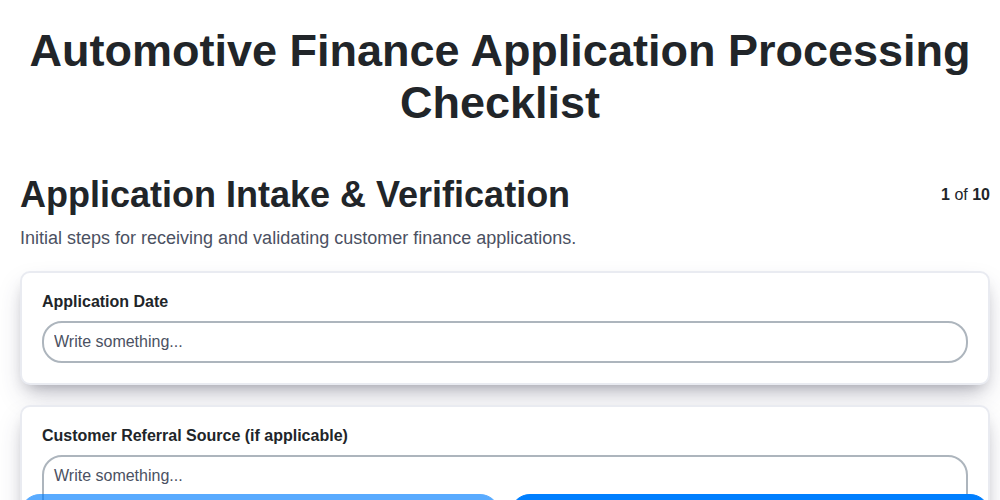
Table of Contents
- Introduction: The Importance of a Robust Auto Loan Processing Checklist
- 1. Application Intake & Verification: Setting the Foundation
- 2. Credit Bureau & Information Retrieval: Assessing Creditworthiness
- 3. Income & Asset Validation: Confirming Financial Stability
- 4. Debt-to-Income Ratio Calculation: Gauging Affordability
- 5. Loan Term & Interest Rate Selection: Tailoring the Offer
- 6. Credit Approval & Underwriting: The Deep Dive
- 7. Contract Preparation & Review: Accuracy is Key
- 8. Disclosure & Customer Signatures: Ensuring Transparency
- 9. Funding & Contract Submission: Bringing the Loan to Life
- 10. Post-Funding Compliance & Audit: Maintaining Regulatory Adherence
- 11. Technology's Role in Automating the Checklist
- 12. Common Pitfalls and How to Avoid Them
- Conclusion: Efficiency and Customer Satisfaction Through a Well-Defined Process
- Resources & Links
TLDR: Overwhelmed by auto loan applications? This checklist outlines 10 key steps - from initial intake to post-funding compliance - to ensure accuracy, reduce errors, and keep your process efficient and compliant. Think of it as your roadmap to smoother auto loan approvals!
Introduction: The Importance of a Robust Auto Loan Processing Checklist
In the fast-paced world of automotive finance, efficiency and accuracy are paramount. A single missed step in the loan application processing cycle can lead to costly errors, compliance issues, and frustrated customers. That's where a well-defined and meticulously followed checklist becomes your most valuable asset. This isn't just about ticking boxes; it's about creating a streamlined, consistent, and compliant process that protects both your business and your customers. This article will delve into the critical steps of an automotive finance application processing checklist, outlining best practices and highlighting the importance of each stage to ensure successful loan origination and long-term operational success. Ignoring a robust checklist is a risk few lenders can afford to take.
1. Application Intake & Verification: Setting the Foundation
The first, and arguably most crucial, step in automotive finance application processing is Application Intake & Verification. This isn't just about receiving the application; it's about ensuring its accuracy and completeness from the outset. A shaky foundation here can lead to costly delays and rejections later on.
We begin by meticulously collecting all required documentation. This typically includes a completed application form, driver's license or other government-issued ID, proof of insurance, and potentially vehicle information like the VIN (Vehicle Identification Number).
Verification is key. We cross-reference the information provided against public records and databases to confirm identity and residency. Discrepancies, even minor ones, need immediate clarification with the applicant. This proactive approach minimizes potential fraud and establishes a clear understanding of the applicant's situation from the very beginning. A thorough intake and verification process lays the groundwork for a smoother and more efficient application journey.
2. Credit Bureau & Information Retrieval: Assessing Creditworthiness
This crucial step forms the foundation of the entire loan application process. We don't just look at a single number; we build a comprehensive picture of the applicant's credit history. Here's what we do:
- Pulling Credit Reports: We obtain credit reports from all three major credit bureaus (Experian, Equifax, and TransUnion). This allows for a holistic view, as information can vary across reports.
- Analyzing Credit Scores: We review the credit scores provided, understanding their significance within our lending criteria. A higher score generally indicates lower risk, but we also consider the factors influencing the score.
- Reviewing Credit History: We meticulously examine the credit history for any red flags, including late payments, collections, bankruptcies, liens, and judgments. The frequency and severity of these negative marks significantly impact the loan approval decision.
- Verifying Credit History Accuracy: We cross-reference information on the credit reports with other available data to ensure accuracy. Discrepancies can be investigated and resolved to protect both the lender and the applicant.
- Understanding Credit Utilization: We analyze credit utilization ratios (the amount of credit used versus the total credit available) as a key indicator of responsible credit management.
3. Income & Asset Validation: Confirming Financial Stability
A strong finance application hinges on verifying the applicant's ability to repay the loan. This step goes far beyond simply glancing at pay stubs. We meticulously validate both income and assets to paint a comprehensive picture of the applicant's financial stability.
Income Validation: This involves more than just reviewing pay stubs. We verify employment history, often directly with the employer, to confirm dates of employment and salary. For self-employed applicants, we require tax returns (typically the past two years) and profit and loss statements to establish consistent earnings. We might also request bank statements to corroborate income deposits.
Asset Validation: We look beyond income to assess the applicant's overall financial health. This includes verifying assets like savings accounts, investment accounts, and real estate. Bank statements and brokerage statements are common documents used for this validation. The purpose isn't just to confirm the existence of these assets; it's to ensure they align with the information provided on the application and represent a stable financial foundation.
Our robust income and asset validation process helps ensure we're making responsible lending decisions and setting our customers up for success with their automotive financing. It's a crucial step in the application process, contributing to a smoother and more secure lending experience for everyone involved.
4. Debt-to-Income Ratio Calculation: Gauging Affordability
The Debt-to-Income (DTI) ratio is a critical component in assessing a borrower's ability to manage loan payments. It's a simple calculation, but its implications are significant for both the applicant and the finance team. Essentially, it represents the percentage of a borrower's gross monthly income that goes towards paying off recurring debt obligations.
Here's how we calculate it:
DTI = (Total Monthly Debt Payments) / (Gross Monthly Income)
- Total Monthly Debt Payments: This includes not just the potential auto loan payment, but also existing debts like mortgage or rent, student loans, credit card payments, and other installment loans.
- Gross Monthly Income: This is the borrower's total income before taxes and other deductions. We'll verify this with pay stubs, tax returns, or other supporting documentation.
A lower DTI generally indicates a better ability to handle loan payments. While acceptable DTI ratios vary based on lender policies and the type of loan, a common benchmark is a total DTI (including the proposed auto loan) of 43% or less. We meticulously review each DTI calculation, ensuring accuracy and adherence to regulatory guidelines. We also consider factors like down payment amount and loan term, as these can impact affordability and influence the loan decision. A higher DTI may require additional scrutiny and potentially adjustments to loan terms to ensure sustainable repayment.
5. Loan Term & Interest Rate Selection: Tailoring the Offer
Once we've determined a suitable interest rate range based on creditworthiness, the next crucial step is selecting the loan term. This isn't just about the monthly payment; it significantly impacts the total cost of the vehicle over time. A shorter loan term (e.g., 36 months) results in higher monthly payments but significantly less interest paid overall. A longer loan term (e.g., 72 months) lowers the monthly payment, making it more accessible initially, but dramatically increases the total interest paid throughout the loan's life.
We work with our customers to clearly illustrate the trade-offs between these options using easy-to-understand amortization schedules. Our goal is to ensure they fully grasp how the loan term affects both their budget and the overall cost of the vehicle. We consider their comfort level with monthly payments, their long-term financial goals, and their understanding of the total cost implications. Transparency and education are key; we want them to feel confident in the loan term they choose. We also explore options like graduated payment plans (where payments start lower and gradually increase) if appropriate and available, but always with full disclosure of potential future payment increases.
6. Credit Approval & Underwriting: The Deep Dive
This stage is where we move beyond the surface and really scrutinize the applicant's creditworthiness. It's more than just a credit score; it's a comprehensive assessment of risk. We meticulously analyze the credit report details - looking for patterns of late payments, collections, judgments, bankruptcies, and any derogatory marks. We don't just flag these; we investigate why they occurred. Was it a one-time event due to unforeseen circumstances, or a recurring issue suggesting potential repayment challenges?
Beyond the credit report itself, we consider the applicant's overall financial picture as established in previous steps. This includes verifying income, assets, and the debt-to-income ratio. We're looking for consistency between the information provided and the documented verification.
Underwriting isn't just about saying "yes" or "no." It's about understanding the degree of risk involved. This impacts the loan terms - potentially influencing the interest rate, loan amount, and any required down payment. We're aiming to balance providing accessible financing with responsible lending practices, ensuring the applicant can comfortably manage the loan. This stage often involves multiple layers of review, especially for applicants with complex financial situations.
7. Contract Preparation & Review: Accuracy is Key
This stage is the culmination of much of the previous work and demands meticulous attention to detail. The contract isn't just paperwork; it's a legally binding agreement outlining the terms of the loan and the obligations of both the lender and the borrower.
Here's what's crucial during contract preparation and review:
- Verify Data Accuracy: Double-check everything against the approved application and supporting documentation. This includes the vehicle details (VIN, make, model), loan amount, interest rate, down payment, loan term, and monthly payment amount. Even a small error can lead to significant issues later.
- Ensure Compliance: The contract must adhere to all applicable federal and state laws, including Truth in Lending Act (TILA) and other regulatory requirements. Templates are helpful, but always ensure they's current and accurately reflect legal obligations.
- Clarity and Understanding: While legal jargon is unavoidable, strive for clarity. Ensure the borrower understands the key terms and conditions of the loan. Complex clauses should be explained in plain language.
- Review for Discrepancies: Compare the contract to the loan estimate previously provided. Any changes need to be properly disclosed and justified.
- Internal Review: Have a second set of eyes review the contract before it's presented to the borrower. A fresh perspective can catch errors that might otherwise be missed.
8. Disclosure & Customer Signatures: Ensuring Transparency
This stage is absolutely critical for both legal compliance and fostering trust with your customers. It's more than just getting a signature; it's about ensuring the applicant fully understands the loan terms, conditions, and their obligations.
Here's what this phase involves:
- Presenting Disclosures: Provide all required disclosures in a clear and understandable format. This includes the Loan Estimate (LE), Closing Disclosure (CD - for some loan types), Truth-in-Lending Act (TILA) disclosures, and any other state-specific or lender-specific notices. Ensure these are presented before signatures are obtained.
- Explanation & Opportunity to Ask Questions: Don't just hand over documents. Take the time to verbally explain the key elements of each disclosure. Encourage the customer to ask questions and patiently address any concerns they may have. Document the explanation provided and any questions asked.
- Review of Loan Documents: Provide the applicant with a copy of the complete loan agreement for review. Highlight any particularly important sections or terms.
- Signature Acquisition: Once the applicant is comfortable and has had the opportunity to review everything, obtain their signatures on all necessary documents. This should be done electronically where possible for increased efficiency and security, but ensure all requirements for electronic signatures are met.
- Record Keeping: Maintain thorough records of the disclosures provided, the explanations given, the questions asked, and the signatures obtained. This documentation is vital for audit trails and dispute resolution.
A rushed or incomplete disclosure process can lead to legal issues and damage your reputation. Prioritizing transparency and ensuring full understanding at this stage is an investment in long-term customer relationships and compliance.
9. Funding & Contract Submission: Bringing the Loan to Life
Once credit approval and underwriting are complete, the excitement builds! This stage, Funding & Contract Submission, is where the loan officially comes to life and the vehicle becomes a tangible possibility for your customer.
Here's what happens:
- Loan Funding: We initiate the transfer of funds from the lender to your dealership. This involves verifying all necessary account details and ensuring the correct amount is disbursed.
- Contract Finalization: With all details confirmed, the finalized loan agreement is prepared. This includes reflecting the approved loan amount, interest rate, term, and any applicable fees.
- Contract Submission: The signed contract and all supporting documentation are securely submitted to the lender for final processing and recordkeeping. This submission often involves electronic portals or secure file transfers, ensuring accuracy and efficiency.
- Dealer Notification: Once the lender receives the contract, we'll notify your dealership that funding is complete and the vehicle can be delivered to the customer.
This stage marks a significant milestone in the automotive finance process and sets the foundation for a smooth delivery experience.
10. Post-Funding Compliance & Audit: Maintaining Regulatory Adherence
Once the loan is funded and the contract submitted, your work isn't quite finished. Post-funding compliance and audit are crucial for maintaining regulatory adherence and mitigating potential risks. This phase focuses on verifying that all disclosures were accurate, all required documentation is readily available, and that the loan complies with all applicable laws and regulations - from Truth in Lending Act (TILA) and Equal Credit Opportunity Act (ECOA) to state-specific lending guidelines.
Key activities in this phase include:
- Record Keeping: Maintaining meticulous records of the entire loan process, including application, credit reports, supporting documentation, and disclosures. These records should be easily retrievable for audits.
- Compliance Monitoring: Regularly reviewing loan files to ensure adherence to internal policies and external regulations. This might involve automated checks or manual reviews.
- Audit Trails: Documenting all actions taken on a loan file, including changes and approvals. This ensures transparency and accountability.
- Regulatory Updates: Staying informed about changes in lending regulations and adjusting processes accordingly. This requires ongoing training and proactive monitoring of industry news.
- Error Resolution: Establishing a clear process for identifying and correcting any errors discovered after funding, ensuring timely remediation and accurate reporting.
Failing to prioritize post-funding compliance and audit can lead to significant financial penalties, legal action, and reputational damage. It's an integral part of responsible automotive finance processing.
11. Technology's Role in Automating the Checklist
The automotive finance application process, as detailed above, is complex and demanding. Historically, each step relied heavily on manual data entry, phone calls, and physical document handling. Thankfully, technology is revolutionizing how lenders approach this process, dramatically improving efficiency and accuracy.
Several solutions are emerging to automate significant portions of our checklist:
- Automated Application Portals: Online portals allow customers to submit applications directly, reducing intake time and minimizing errors. Integration with data verification services can instantly confirm identity and address information.
- Data Integration & APIs: Connecting to credit bureaus, data aggregators, and verification platforms through APIs automates credit pulls, income verification (with consent, of course!), and asset validation. This eliminates manual data entry and speeds up the retrieval process.
- AI-Powered Document Processing: Optical Character Recognition (OCR) and Artificial Intelligence (AI) can extract data from uploaded documents (paystubs, bank statements, etc.), significantly reducing manual data entry and improving accuracy. This reduces the time spent on Income & Asset Validation.
- Automated DTI Calculation: Software can automatically calculate Debt-to-Income ratios based on verified data, minimizing calculation errors.
- Automated Workflow Systems: These systems route applications through the approval process, assigning tasks to the right team members and tracking progress, ensuring no step is missed.
- E-Signature Platforms: Secure e-signature platforms streamline Disclosure & Customer Signatures, making the process more convenient and reducing paperwork.
- Compliance Management Systems: Automated systems help lenders stay compliant with ever-changing regulations, easing the burden of Post-Funding Compliance & Audit.
By embracing these technological advancements, automotive finance lenders can optimize their application processing checklist, reduce operational costs, improve customer experience, and ultimately, make more informed lending decisions.
12. Common Pitfalls and How to Avoid Them
The automotive finance application process, while seemingly straightforward, is rife with potential pitfalls that can lead to delays, rejections, and frustrated customers. Here's a breakdown of common mistakes and practical steps to avoid them:
1. Incomplete Application Data: Pitfall: Missing information (like employment dates, addresses, or account numbers) is the most frequent reason for application holds. Avoidance: Implement robust application intake processes. Use pre-populated fields where possible. Clearly state required documentation and use check boxes for mandatory fields. Have a dedicated intake specialist to review applications before they enter the core processing workflow.
2. Credit Bureau Errors: Pitfall: Discrepancies in credit reports (incorrect addresses, misreported accounts) can derail approvals. Avoidance: Regularly monitor for common errors. Train staff to identify and understand dispute processes. Have a clear procedure for addressing credit bureau discrepancies and escalate complex issues promptly.
3. Income Verification Challenges: Pitfall: Self-reported income doesn't always match documentation. Avoidance: Implement a layered verification approach. Utilize direct pay stubs, bank statements, and W-2 forms. When self-reported data is used, cross-reference with supporting documentation and consider alternate verification methods for those with complex income streams (freelancers, contractors).
4. Asset Verification Difficulties: Pitfall: Difficulty verifying assets - especially when documentation is missing or unclear. Avoidance: Provide clear instructions on acceptable asset documentation. Utilize electronic verification methods where possible (e.g., direct account verification with permission). Be prepared to accept alternative documentation in exceptional cases, with proper justification.
5. DTI Ratio Miscalculation: Pitfall: Incorrect DTI calculations due to data entry errors or misunderstanding of included debts. Avoidance: Automate DTI calculation whenever possible. Implement double-check procedures, particularly for manual calculations. Clearly define which debts are included in the DTI calculation and train staff accordingly.
6. Interest Rate and Loan Term Mismatch: Pitfall: Offering loan terms and interest rates that don't align with the applicant's credit profile. Avoidance: Utilize automated pricing models based on credit tiers. Regularly review and adjust pricing strategies. Ensure transparency with applicants about the factors influencing the offered rate.
7. Underwriting Gaps: Pitfall: Inadequate review of risk factors during underwriting can lead to later problems. Avoidance: Establish clear underwriting guidelines and ensure consistent application. Utilize automated risk assessment tools. Provide ongoing training for underwriters on evolving risk factors.
8. Contract Errors: Pitfall: Typographical errors or incorrect information on the contract can void the agreement. Avoidance: Use standardized contract templates. Implement automated data population. Conduct thorough contract review before customer signatures.
9. Disclosure Omissions: Pitfall: Failing to provide required disclosures can lead to legal complications. Avoidance: Maintain a checklist of all required disclosures. Utilize standardized disclosure forms. Ensure all disclosures are easily understood by the customer.
10. Signature Forgery/Verification Issues: Pitfall: Risks associated with fraudulent signatures. Avoidance: Implement signature verification protocols. Utilize electronic signature platforms with fraud prevention measures.
11. Funding Delays: Pitfall: Funding delays frustrate customers and can impact dealership satisfaction. Avoidance: Streamline funding processes. Maintain clear communication with funding sources. Implement automated status updates for customers.
12. Non-Compliance Issues: Pitfall: Failure to adhere to regulatory requirements (Truth in Lending Act, Equal Credit Opportunity Act). Avoidance: Maintain a robust compliance program. Conduct regular audits. Provide ongoing compliance training for staff. Stay up-to-date on evolving regulations.
Conclusion: Efficiency and Customer Satisfaction Through a Well-Defined Process
Ultimately, a robust Automotive Finance Application Processing Checklist isn't just about ticking boxes; it's about building trust and delivering a positive customer experience. By meticulously following each step - from initial intake to post-funding compliance - you streamline the process, reduce errors, and minimize delays. This efficiency translates directly into happier customers who feel valued and respected. A well-defined checklist also empowers your team, providing clear guidelines and reducing ambiguity, leading to increased productivity and confidence. Investing in a well-crafted and regularly reviewed checklist is an investment in both operational excellence and lasting customer relationships - the cornerstones of a thriving automotive finance business.
Resources & Links
- Equifax: One of the three major credit bureaus. Useful for understanding credit reporting and scoring, critical for the 'Credit Bureau & Information Retrieval' section.
- Experian: Another major credit bureau, providing similar resources and information as Equifax. Relevant to 'Credit Bureau & Information Retrieval'.
- TransUnion: The third major credit bureau. Provides insights into credit reporting and scoring. Vital for the 'Credit Bureau & Information Retrieval' section.
- Federal Trade Commission (FTC): Provides consumer information and resources related to financial products and services, including auto loans. Helpful for the 'Disclosure & Customer Signatures' and 'Post-Funding Compliance & Audit' sections.
- Consumer Financial Protection Bureau (CFPB): A government agency focused on protecting consumers in the financial sector. Provides guidance on auto loans and lending practices, particularly relevant for compliance sections.
- National Mortgage Licensing System (NMLS) Consumer Access: Provides information on licensed mortgage loan originators and can be helpful for verifying the credentials of personnel involved in the auto loan process. Especially useful if discussing regulatory oversight.
- Automotive Business: Provides news, articles, and insights into the automotive finance industry. Can offer context and trends relevant to the entire process, especially concerning technology and efficiency.
- FICO: The company behind the widely used FICO credit score. Understanding how credit scores are calculated is essential for the 'Credit Bureau & Information Retrieval' and 'Credit Approval & Underwriting' sections.
- Lendesk: Provides auto lending software solutions. A good example of technology that can automate and streamline the checklist, aligns with the 'Technology's Role' section.
- Digital Finance Institute (DFI): Provides resources and insights into digital lending and fintech, which is increasingly impacting auto finance. Relevant for the 'Technology's Role' section.
- Auto Financial Innovation Systems (AFIS): Specializes in automotive finance software solutions. Another useful resource for understanding technology used in auto loan processing.
Frequently Asked Questions
What is this checklist for?
This checklist is designed to help you gather all the necessary documentation and information to expedite the processing of your auto loan application. It aims to reduce delays and increase your chances of approval by ensuring you're fully prepared.
Why is processing time for auto loans sometimes lengthy?
Processing time can be lengthy due to factors like verification processes (income, credit history), appraisal of the vehicle, and potential backlogs at the lender. This checklist helps minimize delays by ensuring you provide everything upfront.
What documents are typically required for an auto loan application?
Generally, you'll need proof of income (pay stubs, tax returns), proof of identification (driver's license, passport), proof of residence (utility bill, lease agreement), and information about the vehicle you plan to purchase (VIN, make, model).
What's a credit score and why is it important?
A credit score is a numerical representation of your creditworthiness. Lenders use it to assess the risk of lending you money. A higher credit score typically results in better loan terms (lower interest rates).
What is a Debt-to-Income (DTI) ratio and how does it affect my loan?
DTI is the percentage of your monthly gross income that goes towards paying debts. A lower DTI ratio indicates you have more disposable income and are less likely to default on a loan, which can positively affect your loan approval and interest rate.
I'm self-employed. What documentation do I need?
If you're self-employed, you'll likely need to provide more extensive documentation, such as tax returns (typically for the last 2 years), profit and loss statements, and potentially bank statements to verify your income.
What is a Vehicle Identification Number (VIN) and where do I find it?
The VIN is a unique identifier for your vehicle. It can be found on the vehicle's title, registration, insurance card, and often on a sticker inside the driver's side doorjamb.
Can I pre-qualify for an auto loan before I start shopping?
Yes! Pre-qualification (or pre-approval) gives you an estimate of the loan amount you may be eligible for and can help you determine your budget. It's a good idea to do this before you start shopping for a vehicle.
What happens if I don't have all the documents listed?
Contact the lender directly. They may have alternative documentation options or be able to guide you on how to obtain the missing documents. Don't submit an incomplete application.
Where can I find the checklist mentioned in the article?
The checklist is detailed within the article itself. Look for the numbered or bulleted list outlining the required documents and information.
Comments
There are no comments yet. Be the first to add one!
Automotive Manufacturing Management Solution Demo
Optimize your automotive production! ChecklistGuro digitizes workflows, from parts inspection to final testing. Reduce errors, boost efficiency & ensure quality compliance. Drive results with our Work OS.
Related Articles
The Ultimate Automotive Sales Prospect Follow-Up Checklist: Close More Deals
Mastering Automotive BOM Configuration: Your Essential Checklist

The Ultimate Vehicle Registration & Insurance Validation Checklist
Automotive Parts Inventory Audit Checklist Template: Your Guide to Accurate Stock

Maximize Your Trade-In: The Automotive Appraisal Checklist You Need
The Ultimate Tire Pressure & Condition Checklist Template
Automotive Parts Inventory Control Checklist Template: Your Ultimate Guide

Drive Sales Success: Your Automotive Sales Team Performance Tracking Checklist
We can do it Together
Need help with
Automotive?
Have a question? We're here to help. Please submit your inquiry, and we'll respond promptly.