Streamline Your Shop: The Ultimate Automotive Parts Ordering & Receiving Checklist
Published: 12/29/2025 Updated: 12/30/2025
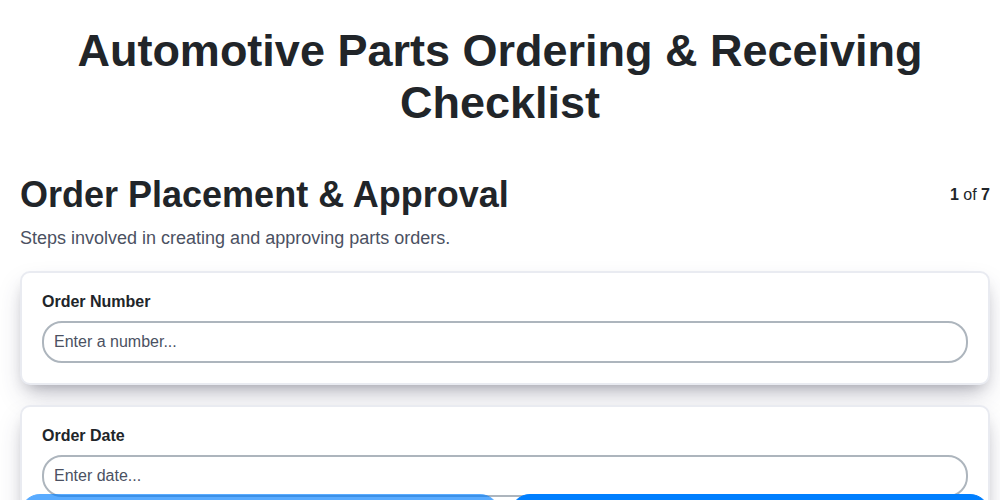
Table of Contents
- Introduction: Why a Parts Ordering Checklist Matters
- 1. Order Placement & Approval: Setting the Foundation
- 2. Supplier Communication & Confirmation: Ensuring Accuracy
- 3. Receiving: The First Point of Contact
- 4. Inspection: Quality Control is Key
- 5. Inventory Update: Real-Time Visibility
- 6. Storage: Protecting Your Investment
- 7. Discrepancy Resolution: Addressing Issues Promptly
- 8. Returns & Core Exchanges: Managing Returns Effectively
- 9. Documentation & Record Keeping: Building a Traceable History
- 10. Technology Integration: Automating Your Workflow
- 11. Training Your Team: Ensuring Consistency
- 12. Common Pitfalls to Avoid
- Conclusion: Optimizing Your Parts Management
- Resources & Links
TLDR: Stop parts ordering chaos! This checklist ensures accurate orders, seamless receiving, and accurate inventory. It covers everything from order approval to returns, saving you time, money, and headaches - a must-have for any automotive shop!
Introduction: Why a Parts Ordering Checklist Matters
In the automotive industry, downtime is the enemy. A stalled repair, a delayed service - these can ripple through your business, impacting customer satisfaction and your bottom line. Efficient parts ordering and receiving are critical to minimizing that downtime and maximizing operational effectiveness. But a chaotic, ad-hoc process is a recipe for errors, delays, and increased costs.
That's where a robust parts ordering and receiving checklist becomes invaluable. It's more than just a list; it's a standardized workflow designed to ensure accuracy, transparency, and accountability at every step. A well-designed checklist minimizes the risk of ordering the wrong part, misinterpreting supplier confirmations, accepting incorrect deliveries, or losing track of vital documentation. By consistently following a checklist, you're proactively preventing costly mistakes, improving communication, and ultimately, keeping your vehicles moving and your customers happy. This post will delve into the key steps of a comprehensive parts ordering and receiving checklist, providing a roadmap to streamline your operations and boost efficiency.
1. Order Placement & Approval: Setting the Foundation
A successful parts ordering and receiving process begins long before a part leaves the supplier's warehouse. This initial phase - order placement and approval - is critical for accuracy, budget control, and avoiding costly delays.
Here's a breakdown of key steps to nail this stage:
- Needs Identification: Clearly define the part needed. This includes the part number, quantity, and any specific requirements (e.g., OEM, aftermarket, specific manufacturer).
- Request Submission: Establish a standardized request form (electronic or paper) that captures all necessary information. This prevents missing details and ensures clarity.
- Approval Workflow: Implement a defined approval process based on part value, urgency, and departmental responsibility. This prevents unauthorized purchases and maintains budget adherence. Set approval limits for different personnel.
- Purchase Order (PO) Generation: Ensure POs are accurate, referencing the approved request and including all relevant information (shipping address, contact person, delivery date).
- PO Distribution: Distribute the PO to the designated supplier and keep a record of distribution.
- Verification: Double-check the PO before submission to minimize errors - a small mistake can snowball into bigger issues later.
A robust order placement and approval process is the bedrock of a streamlined parts management system. Skipping steps or relying on informal methods here will likely lead to headaches down the line.
2. Supplier Communication & Confirmation: Ensuring Accuracy
Once an order is placed, don't assume it's set in stone. Proactive communication with your supplier is vital for avoiding costly errors and delays. Immediately follow up on your order placement with a confirmation request. This isn't about questioning their processes; it's about verifying that you got what you intended to order.
Here's what a solid supplier communication process should include:
- Confirmation Request: Send a formal request (email is standard) outlining the order details - part numbers, quantities, requested delivery date, and shipping address.
- Review Supplier Confirmation: Carefully review the supplier's confirmation to ensure everything matches your original order. Pay special attention to part numbers, quantities, and pricing. Any discrepancies should be flagged immediately.
- Address Discrepancies Promptly: Don't let minor errors slide. A small price difference or incorrect quantity can snowball into significant problems later. Communicate any issues clearly and concisely, requesting corrections.
- Document All Communication: Keep a record of all emails and phone conversations with the supplier. This provides a clear audit trail and can be invaluable if issues arise.
- Establish a Point of Contact: Designate a consistent point of contact on both sides to streamline communication and avoid misunderstandings.
3. Receiving: The First Point of Contact
Receiving isn't just about unloading boxes; it's the first crucial point of contact between your supplier and your operations. A sloppy receiving process can quickly snowball into inaccurate inventory, frustrated technicians, and costly delays. Here's a breakdown of what needs to happen:
- Verify Delivery Details: Before even opening a box, compare the packing slip to the purchase order and bill of lading. Confirm the quantity of boxes received matches the paperwork. Note any visible damage to the packaging - a photograph is incredibly useful for potential claims.
- Count and Inspect (Sample): It's ideal to count all parts, but realistically, a sample inspection is often more practical. Select a representative sample (consider larger quantities for higher-value parts) and visually check for damage and ensure part numbers match the order.
- Record Receiving Information: Accurately record the date and time of receipt, the carrier's name, and the receiving employee's initials on the packing slip. A digital receiving log can streamline this process and provide valuable data.
- Segregate Discrepancies: Clearly mark any deliveries with discrepancies or visible damage. Segregate these items from the rest of the incoming parts to avoid accidental use and to facilitate the discrepancy resolution process.
4. Inspection: Quality Control is Key
Receiving parts isn't just about moving boxes; it's about ensuring you're putting quality components into your vehicles. A thorough inspection at this stage can save significant headaches down the line, preventing rework, warranty claims, and frustrated customers.
Here's what to look for during your parts inspection:
- Visual Assessment: Start with a quick visual check. Are the parts free from obvious damage - dents, cracks, rust, or leakage? Verify that the packaging is intact and hasn't been compromised during transit.
- Part Number Verification: Double-check the part number stamped or labeled on the part itself against the original order and the parts catalog. A simple typo can lead to incorrect parts being installed.
- Quantity Confirmation: Ensure the quantity received matches the quantity ordered. Missing parts need to be addressed immediately to avoid delays.
- Manufacturer's Markings: Look for manufacturer's markings and quality control stamps to ensure authenticity and adherence to quality standards.
- Sample Testing (Periodic): For critical parts or when dealing with new suppliers, consider periodic sample testing to verify performance specifications. This might involve simple checks like voltage readings for electrical components or pressure tests for hoses.
- Record any Discrepancies: If anything seems off, meticulously document it. Take photos, note the specifics, and flag the part for further investigation. Don't simply assume it's fine - investigate!
5. Inventory Update: Real-Time Visibility
Accurate and timely inventory updates are the backbone of an efficient parts operation. Don't let receiving be the end of the process; it's the crucial link to maintaining accurate stock levels and avoiding costly stockouts or overstocking. Immediately after inspection and confirmation of the received parts, the inventory management system must be updated.
This isn't just about adding numbers; it's about real-time visibility. Consider these points:
- Automated Integration: Ideally, your receiving system is integrated directly with your inventory management software. This eliminates manual data entry, reducing errors and saving valuable time. Barcode scanning is a powerful tool for this.
- Location Tracking: Record the specific location within your warehouse or storage area where the parts are placed. This simplifies retrieval and minimizes search time when fulfilling orders.
- Batch/Lot Number Recording: For certain parts (especially those with expiration dates or recall risk), meticulously record batch or lot numbers. This facilitates traceability and efficient recall management.
- Quantity Adjustment: Precisely update the quantity on hand for each part. Even a single unit discrepancy can impact future ordering decisions.
- Real-Time Reporting: Leverage the reporting capabilities of your inventory system. Monitor stock levels, identify slow-moving items, and anticipate future demand.
Regular audits of your physical inventory against your system records are essential to confirm accuracy and identify any discrepancies that need to be investigated and corrected.
6. Storage: Protecting Your Investment
Proper storage isn't just about stacking parts on shelves; it's about preserving their quality and usability. Automotive parts, particularly those sensitive to environmental factors, can degrade if not stored correctly. Here's a breakdown of best practices:
- Environment Control: Ideally, maintain a climate-controlled environment. Excessive heat, cold, and humidity can damage rubber components, plastics, and electronics. Aim for a stable temperature and humidity level.
- Protection from Elements: Shield parts from direct sunlight, rain, and snow. UV rays can weaken plastics and fade colors, while moisture can lead to corrosion.
- Organization & Accessibility: Implement a clear and organized storage system. Parts should be easily accessible to prevent unnecessary handling and potential damage. Labeling bins and shelves with part numbers and descriptions is crucial.
- Weight Distribution: Avoid stacking heavy parts on top of lighter or more delicate items. Distribute weight evenly to prevent crushing or warping.
- Specialized Storage: Certain parts, like batteries and fluids, require specialized storage containers or areas due to safety or environmental concerns. Consult manufacturer guidelines for specific requirements.
- Regular Inspections: Periodically inspect stored parts for signs of damage, deterioration, or leakage. Address any issues promptly to prevent further losses.
7. Discrepancy Resolution: Addressing Issues Promptly
Discrepancies happen. It's an unavoidable reality in automotive parts ordering and receiving. A missing part, incorrect quantity, or a damaged item can disrupt your workflow and frustrate your team. Having a clear and efficient discrepancy resolution process is crucial to minimize downtime and maintain operational efficiency.
Here's how to tackle those tricky situations:
- Immediate Reporting: Encourage your receiving team to immediately flag any discrepancies found during inspection. Don't let those issues sit - prompt reporting prevents them from snowballing into larger problems.
- Document Everything: Detailed documentation is your best friend. Note the part number, description, quantity ordered, quantity received, and a clear description of the discrepancy (e.g., Part #XYZ123 missing, Quantity received: 2 instead of 3, Damage to outer packaging). Photos are invaluable for damage claims.
- Internal Communication: Inform the relevant stakeholders - often the parts manager, the person who placed the order, and potentially the service advisor. This ensures everyone's aware of the issue and can contribute to a solution.
- Supplier Contact: Communicate the discrepancy to the supplier promptly. Refer to your agreed-upon communication channels (email, phone, online portal) and provide all supporting documentation (purchase order, receiving report, photos).
- Resolution Options: Work with the supplier to agree on a resolution. This could involve a replacement shipment, a credit, or a return. Clearly define the timeline for resolution.
- Tracking: Maintain a log of all discrepancies, resolutions, and associated costs. This data can help identify recurring issues with specific suppliers or parts, allowing for process improvements.
8. Returns & Core Exchanges: Managing Returns Effectively
Dealing with returns and core exchanges is an inevitable part of automotive parts operations. A streamlined process minimizes losses, maintains customer satisfaction, and prevents headaches down the road. This section outlines best practices.
1. Establish Clear Return Policies: Your return policy should be clearly stated and easily accessible to customers (website, invoices, etc.). Include timelines for returns, condition requirements (unopened, original packaging), and any associated fees. Transparency avoids disputes later.
2. Return Authorization Process: Implement a return authorization (RA) number system. Requiring an RA before a return is processed ensures accountability and allows for proper tracking. This also gives you the opportunity to understand the reason for the return and potentially address the underlying issue (wrong part ordered, defective part, etc.).
3. Inspection Upon Receipt: When a returned part arrives, thoroughly inspect it. Document the condition, note any discrepancies from the original order, and compare it to the customer's reason for return. Photos are invaluable for record keeping.
4. Core Exchange Procedures: For core exchanges (e.g., alternators, starters), have a clear protocol. Verify the core part meets your requirements (model, condition, completeness). Accurately track core credits and ensure they are applied correctly. Maintain a secure core storage area to prevent loss or damage.
5. Return Processing & Credit Application: Once inspected and verified, process the return promptly. Apply the appropriate credit to the customer's account or initiate a refund as per your policy.
6. Root Cause Analysis: Track return reasons diligently. Identify trends - are certain parts consistently being returned? This might indicate a quality issue with a specific supplier or a training need within your team. Use this data to improve processes and prevent future returns.
7. Documentation: Meticulously document all return and core exchange activities - RA numbers, customer details, reason for return, inspection notes, credit/refund details, and core exchange information.
9. Documentation & Record Keeping: Building a Traceable History
A robust automotive parts ordering and receiving process isn't complete without meticulous documentation. This isn't just about ticking boxes; it's about creating a traceable history for every part, safeguarding your business, and enabling efficient audits and problem-solving.
Here's what you need to be documenting:
- Order Details: Keep copies of all purchase orders (POs), including approvals, dates, part numbers, quantities, and pricing. Digital POs are ideal for easy searchability.
- Supplier Communication: Save all email confirmations, quotes, and any other communication with suppliers. This provides a record of agreed-upon terms and conditions.
- Receiving Records: Every receipt should be thoroughly documented, noting the date, carrier, condition of the shipment, and a list of items received. Photo documentation of packaging condition upon arrival is highly recommended.
- Inspection Reports: Detailed inspection reports are crucial. Include the date, inspector's name, specific checks performed, and any identified issues.
- Inventory Records: Track all inventory adjustments, including additions, removals, and location changes.
- Discrepancy Logs: Document all discrepancies encountered - incorrect parts, damaged goods, quantity issues - detailing the resolution steps taken.
- Returns and Core Exchange Records: Keep records of all returned parts and core exchanges, including reason codes and tracking information.
Why is this so important?
- Audit Trail: Provides a clear audit trail for internal and external audits.
- Liability Protection: Demonstrates due diligence in case of recalls or warranty claims.
- Process Improvement: Analysis of documentation can reveal bottlenecks and areas for process refinement.
- Dispute Resolution: Provides evidence in case of disagreements with suppliers.
- Recall Management: Facilitates swift and accurate recall management if needed.
Consider using a digital system to centralize this information, making it accessible to authorized personnel and reducing the risk of lost paperwork. Consistent and detailed record-keeping transforms your parts ordering and receiving process from a series of transactions into a valuable asset for your business.
10. Technology Integration: Automating Your Workflow
The manual checklist process, while a good starting point, quickly becomes a bottleneck as your parts ordering and receiving volume increases. Embracing technology isn't just about keeping up; it's about gaining a competitive edge. Several software solutions can drastically streamline your entire process, reducing errors, saving time, and improving visibility.
Consider these integration possibilities:
- ERP Integration: Connecting your parts ordering system with your Enterprise Resource Planning (ERP) software provides a real-time view of inventory levels, budget constraints, and order status. This eliminates guesswork and reduces the risk of over- or under-ordering.
- Supplier Portals: Leverage supplier portals for automated order placement and status updates. Many suppliers offer these, allowing you to send orders electronically and receive immediate confirmation and tracking information.
- Automated Receiving Software: Barcode scanners and mobile receiving apps can speed up the receiving and inspection process. These systems automatically update inventory records as parts are received, minimizing manual data entry.
- RFID Technology: For high-volume operations, Radio-Frequency Identification (RFID) tags offer even greater efficiency. These tags allow for contactless tracking of parts throughout the entire lifecycle, from ordering to storage and beyond.
- Workflow Automation Tools: Utilize platforms that automate repetitive tasks like approval routing, email notifications, and report generation.
Implementing these technological integrations requires an initial investment and training, but the long-term benefits in terms of efficiency, accuracy, and cost savings are well worth the effort.
11. Training Your Team: Ensuring Consistency
A perfectly crafted checklist is only as effective as the team using it. Investing in thorough training is paramount to guaranteeing adherence and maximizing the benefits of your automotive parts ordering and receiving process. Don't assume everyone understands the "why" behind each step.
Here's what your training should cover:
- Walkthrough of the Checklist: Literally step through each item, explaining the purpose and importance of each task.
- System Navigation: Ensure everyone is comfortable using the ordering software, inventory management system, and any communication platforms.
- Supplier Communication Best Practices: Teach proper etiquette and procedures for contacting suppliers, clarifying order details, and handling confirmations.
- Inspection Procedures: Provide hands-on training on how to accurately inspect parts upon receipt, identifying potential damage or defects.
- Discrepancy Resolution Process: Equip your team with the skills to confidently and effectively address discrepancies, knowing who to contact and what information to provide.
- Returns & Core Exchange Policies: Clearly outline the return authorization process and core exchange procedures.
- Documentation Standards: Emphasize the importance of accurate and complete documentation and demonstrate how to properly fill out required forms.
- Regular Refresher Training: Automotive parts and systems evolve. Schedule periodic refresher training to keep your team up-to-date on best practices and any changes to the process.
By prioritizing training, you empower your team to consistently follow the checklist, minimizing errors, reducing costs, and improving overall efficiency.
12. Common Pitfalls to Avoid
Even with a robust Automotive Parts Ordering & Receiving Checklist in place, things can still go wrong. Here are some common pitfalls to watch out for and how to mitigate them:
- Ignoring Supplier Lead Times: Assuming parts will arrive quickly is a recipe for downtime. Always confirm lead times during order placement and factor them into your production or repair schedules.
- Lack of Communication with Technicians/Users: Ordering parts based solely on what you think is needed can lead to incorrect orders and wasted effort. Regularly communicate with technicians and service personnel to confirm part numbers and quantities.
- Insufficient Receiving Personnel: Being understaffed during receiving can lead to missed discrepancies, damaged parts being accepted, and delays in getting parts to where they're needed.
- Skipping the Inspection: Rushing the inspection process is a huge risk. Even a quick visual inspection can catch obvious damage or incorrect parts.
- Neglecting Core Exchanges: Failing to properly manage core exchanges can lead to lost revenue and penalties from suppliers. Keep cores organized and tracked according to supplier instructions.
- Poor Documentation: Sloppy or missing documentation makes it difficult to trace errors, manage warranties, and conduct audits. Implement a standardized documentation system and ensure everyone follows it.
- Assuming Approval is Automatic: Even with pre-approved suppliers and budgets, ensure proper authorization is obtained for each order, especially for large or unusual requests.
- Not Regularly Reviewing Supplier Performance: Ignoring performance metrics (on-time delivery, accuracy, quality) prevents you from identifying and addressing issues with your suppliers.
- Overlooking Small Discrepancies: Even small differences in quantity or part number can snowball into larger problems later on. Address any discrepancies promptly.
- Not Training New Staff: A well-trained team understands the importance of each step in the process and is more likely to adhere to the checklist.
- Static Checklists: Review and update your checklist regularly. Automotive parts availability, supplier contracts, and internal processes change, so your checklist should too.
- Failure to Integrate with Inventory System: Discrepancies between order records and actual inventory can lead to inaccuracies and inefficiencies. Ensure your ordering and receiving processes are integrated with your inventory management system.
Conclusion: Optimizing Your Parts Management
Ultimately, implementing a robust Automotive Parts Ordering & Receiving Checklist isn't just about ticking boxes; it's about building a streamlined, efficient, and cost-effective parts management system. By consistently following these steps - from order placement to record keeping - you're minimizing errors, reducing downtime, controlling inventory, and strengthening supplier relationships. The initial effort to create and implement the checklist pays dividends through improved accuracy, reduced waste, and greater overall operational control. Don't view it as a burden, but as a foundational element for a successful automotive repair or maintenance operation. Continuous review and refinement of the checklist, based on real-world feedback and evolving needs, will ensure it remains a valuable tool for years to come.
Resources & Links
- API Parts: A parts ordering platform connecting shops to suppliers, offering features like automated ordering and parts lookups. Useful for illustrating technology integration and efficiency improvements.
- Mito Products: A major automotive parts distributor. Demonstrates the scale and complexity of supplier relationships often encountered in automotive repair.
- NAPA Auto Parts: Another major automotive parts distributor. Provides a familiar example for readers researching supplier options and comparing pricing.
- RockAuto: Online retailer of auto parts. Good example of online ordering and price comparison tools, relevant to 'Order Placement' and 'Returns' sections.
- Partslink24: European parts supplier with a large catalogue. Showcases breadth of parts and potential challenges in parts identification.
- Automotive Service Network (ASN): A buying group and supplier network for independent automotive repair shops. Demonstrates the benefits of collective buying power and negotiated pricing.
- Soken Parts: Supplier of OEM parts, useful for illustrating quality control and supplier validation processes discussed in 'Inspection' section.
- Timken: Manufacturer of bearings, seals, and power transmission products. Shows an example of a component requiring specific handling and inspection techniques.
- Quality First Parts: Manufacturer of aftermarket automotive parts. Useful to illustrate understanding supplier warranties and quality assurance.
- Partsformercials: A resource for looking up parts by vehicle. Demonstrates tools for accurate part identification.
- Automotive Repair Software Providers: Several platforms, like Shopware, Autotext, etc. Illustrates technology integration and inventory management software.
- Mito Products Training Resources: Provides access to parts training videos and materials. Illustrates the importance of team training for efficient operations.
Frequently Asked Questions
What is this checklist for?
This checklist is designed to help automotive parts businesses streamline their ordering and receiving processes, reducing errors, saving time, and improving overall efficiency. It covers everything from initial order placement to final inventory reconciliation.
Who should use this checklist?
This checklist is beneficial for anyone involved in the automotive parts ordering and receiving process, including parts managers, warehouse personnel, and purchasing agents. It's applicable to shops of all sizes.
What types of parts does this checklist cover?
The checklist is generally applicable to all types of automotive parts - OEM, aftermarket, accessories, consumables, etc. - regardless of their value or complexity.
How detailed is the checklist?
The checklist is quite detailed, breaking down the ordering and receiving process into specific steps with suggested actions and potential pitfalls to watch out for. It's designed to be comprehensive but adaptable to your shop's specific needs.
Can I customize this checklist?
Absolutely! This checklist is meant to be a starting point. Feel free to add, remove, or modify steps to fit your shop's unique workflow and systems. Consider adding your shop's specific part numbers or vendor contacts.
What's the difference between ordering and receiving?
Ordering refers to the process of placing the part request to a supplier. Receiving involves physically taking delivery of the parts, verifying their accuracy, and updating inventory.
What does 'inventory reconciliation' mean?
Inventory reconciliation is the process of comparing your physical inventory count with your records to ensure accuracy and identify any discrepancies. This helps prevent stockouts and minimizes losses due to errors or theft.
I use an electronic parts ordering system. Does this checklist still apply?
Yes! Even with an electronic system, the checklist's verification steps are crucial. The checklist helps ensure data accuracy and catches any errors that might arise between the system and physical receipt of parts.
What are some common ordering errors the checklist addresses?
The checklist highlights errors such as incorrect part numbers, wrong quantities, incorrect shipping addresses, and communication breakdowns between departments.
What if I receive parts that are damaged or incorrect? What should I do?
The checklist includes steps for documenting and returning damaged or incorrect parts, including contacting the vendor and initiating a return authorization process. Proper documentation is key.
Comments
There are no comments yet. Be the first to add one!
Automotive Manufacturing Management Solution Demo
Optimize your automotive production! ChecklistGuro digitizes workflows, from parts inspection to final testing. Reduce errors, boost efficiency & ensure quality compliance. Drive results with our Work OS.
Related Articles
The Ultimate Automotive Sales Prospect Follow-Up Checklist: Close More Deals
Mastering Automotive BOM Configuration: Your Essential Checklist

The Ultimate Vehicle Registration & Insurance Validation Checklist
Automotive Parts Inventory Audit Checklist Template: Your Guide to Accurate Stock

Maximize Your Trade-In: The Automotive Appraisal Checklist You Need
The Ultimate Tire Pressure & Condition Checklist Template
Automotive Parts Inventory Control Checklist Template: Your Ultimate Guide

Drive Sales Success: Your Automotive Sales Team Performance Tracking Checklist
We can do it Together
Need help with
Automotive?
Have a question? We're here to help. Please submit your inquiry, and we'll respond promptly.