Automotive Repair Order Management: A Step-by-Step Workflow for Streamlining Your Shop's Efficiency
Published: 05/31/2026 Updated: 10/05/2026
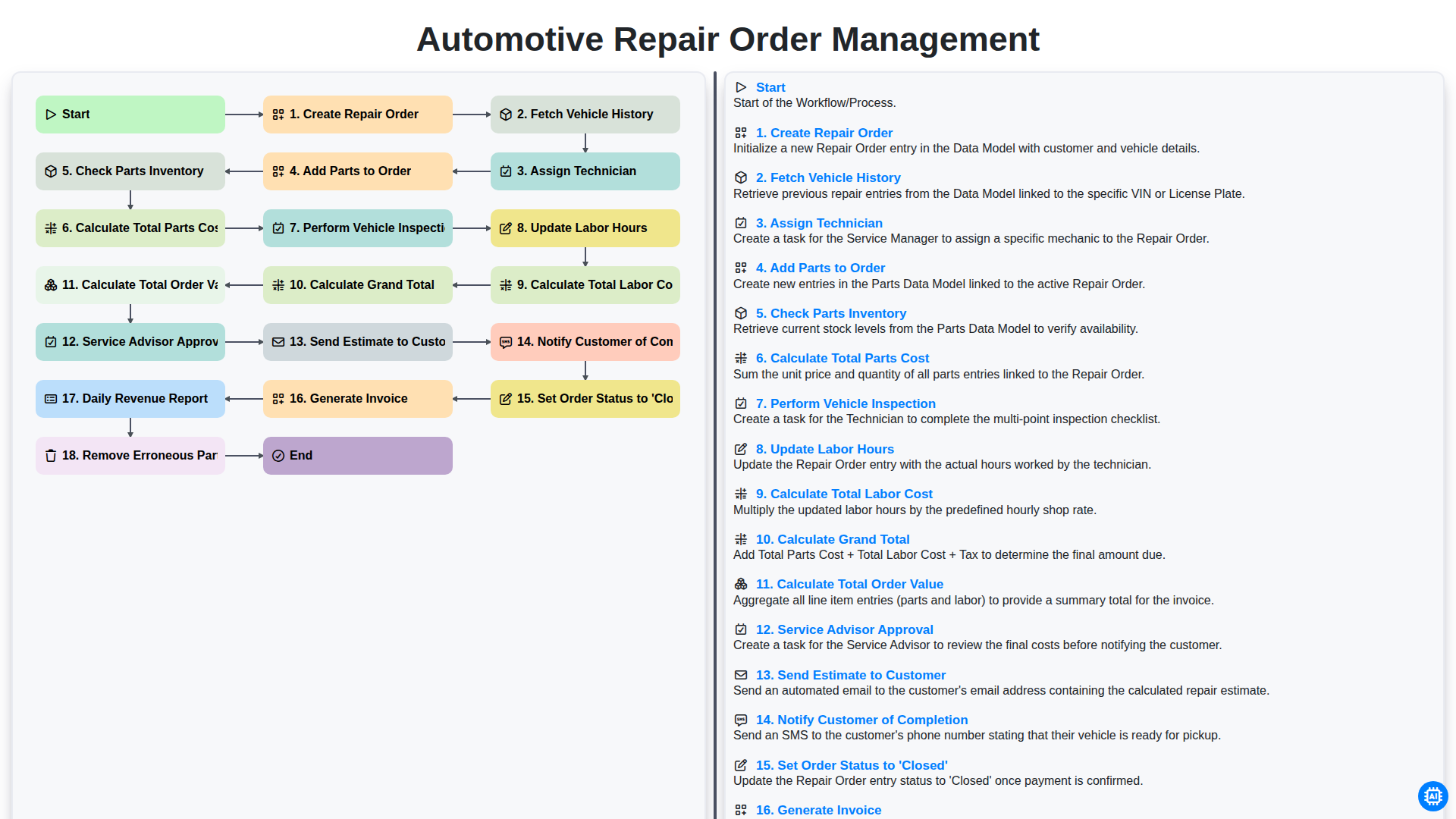
Table of Contents
- The Foundation: Initiating the Repair Order and Vehicle Profiling
- Leveraging Vehicle History for Informed Diagnostics
- Resource Allocation: Assigning the Right Technician to the Job
- Inventory Management: Adding Parts and Verifying Stock Availability
- Cost Estimation: Calculating Parts and Labor Expenses
- The Inspection Phase: Documenting Vehicle Health
- Finalizing the Estimate: Calculating the Grand Total Order Value
- Quality Control: The Service Advisor Approval Process
- Transparent Communication: Sending Estimates and Customer Notifications
- Closing the Loop: Order Completion and Status Updates
- Billing and Documentation: Generating Invoices and Managing Errors
- Post-Service Analytics: Tracking Daily Revenue and Shop Performance
- Resources & Links
TLDR: Learn how to optimize your shop's productivity using our comprehensive Automotive Repair Order Management workflow. This guide walks you through the entire lifecycle of a repair order-from initial creation and vehicle history retrieval to technician assignment, parts management, and final invoicing-ensuring seamless communication with customers and accurate financial reporting.
The Foundation: Initiating the Repair Order and Vehicle Profiling
The lifecycle of a successful service visit begins long before a wrench touches a bolt. It starts with the precise Creation of a Repair Order (RO), the fundamental document that serves as the single source of truth for the entire service process. This initial step is more than just paperwork; it is about establishing a clear scope of work and documenting the customer's specific concerns.
However, a Repair Order is only as effective as the data behind it. To provide truly personalized service, the workflow must immediately transition into Fetching Vehicle History. By pulling historical data-including previous repairs, recurring issues, and maintenance milestones-service advisors can move from being reactive to proactive. This stage allows the shop to identify patterns, such as a recurring brake squeal or an overdue fluid flush, ensuring that the technician is prepared with context. By integrating historical insights with the new order, you establish a foundation of expertise and trust that sets the tone for the entire repair process.
Leveraging Vehicle History for Informed Diagnostics
A critical step in an efficient repair workflow is the ability to Fetch Vehicle History immediately after a Repair Order is created. In the automotive service industry, a vehicle's past is just as important as its current symptoms. By integrating historical data into your management process, technicians and service advisors can move beyond guesswork and transition into precision diagnostics.
Accessing a comprehensive digital trail of previous repairs, fluid changes, and part replacements allows your team to identify recurring issues or predict upcoming maintenance needs before they become breakdowns. This proactive approach not only shortens the diagnostic phase but also builds immense trust with the customer; when a service advisor can point to a specific past service as a contributing factor to a current symptom, it validates the necessity of the proposed repairs. Ultimately, leveraging vehicle history transforms a simple repair order into a strategic roadmap for long-term vehicle health and shop profitability.
Resource Allocation: Assigning the Right Technician to the Job
Effective workflow management relies heavily on the ability to match the complexity of a repair with the specific expertise of your team. Once a Repair Order has been created and the Vehicle History has been reviewed, the next critical step in the process is to Assign Technician.
Assigning the right technician is not just about availability; it is about strategic resource allocation. By analyzing the vehicle's diagnostic needs and past service records, service managers can ensure that specialized tasks-such as electrical diagnostics or transmission rebuilds-are routed to technicians with the appropriate skill sets. Proper assignment prevents bottlenecks, reduces turnaround time, and minimizes the risk of costly diagnostic errors, ensuring that every job is handled by the most capable hands in the shop.
Inventory Management: Adding Parts and Verifying Stock Availability
A critical component of a seamless repair process is the precise management of-parts and materials. Within the workflow, once a technician is assigned to a task, the next vital step is to Add Parts to the Order. However, simply adding items to a list is not enough; the system must simultaneously Check Parts Inventory to ensure the required components are physically in stock.
This real-time verification prevents the common bottleneck of discovering a missing part only after a vehicle is already on the lift. By integrating inventory tracking directly into the repair order, the system can automatically Calculate Total Parts Cost, providing an instant, accurate reflection of the material expenses. This level of integration ensures that the service advisor is working with real-time data, reducing errors, preventing delays, and maintaining the integrity of the entire repair lifecycle.
Cost Estimation: Calculating Parts and Labor Expenses
Accuracy in cost estimation is the backbone of a profitable repair shop and a transparent customer experience. The process begins with the meticulous task of adding parts to the order, which triggers an automated check of parts inventory to ensure availability. Once availability is confirmed, the system automatically calculates the total parts cost, providing a real-time look at material expenses.
However, parts are only one side of the equation. To ensure a precise quote, the workflow must update labor hours based on the specific complexity of the repair, followed by a precise calculation of the total labor cost. By integrating these two components, the system can seamlessly calculate the grand total and determine the total order value. This streamlined calculation process eliminates manual entry errors, ensuring that the estimate provided to the customer is both comprehensive and mathematically sound.
The Inspection Phase: Documenting Vehicle Health
Once the technician has been assigned and the necessary parts are identified, the workflow moves into the most critical stage for transparency and customer trust: the inspection. This phase is where the abstract repair order transforms into a concrete action plan based on the actual condition of the vehicle.
During this stage, the technician performs a comprehensive vehicle inspection, meticulously checking all critical components-from brake pad thickness and fluid levels to tire tread depth and suspension integrity. This isn't just about finding what is broken; it is about proactive maintenance and identifying potential future issues before they become costly emergencies.
As the inspection progresses, the technician must perform real-time updates to the repair order by adjusting labor hours based on the complexity of the findings. For example, if an inspection reveals a rusted bolt that requires extra time to remove, the labor estimates must be updated immediately to reflect the true scope of work. By documenting these findings digitally and linking them directly to the repair order, the service advisor can provide the customer with a data-driven, highly accurate estimate, ensuring there are no surprises when the final invoice arrives.
Finalizing the Estimate: Calculating the Grand Total Order Value
Once all the individual components of the repair-both parts and labor-have been accounted for, the system moves into the critical stage of financial consolidation. This step is where the raw data transforms into a clear, actionable figure for both the shop and the customer.
The workflow automatically aggregates the Total Parts Cost (derived from the inventory check) and the Total Labor Cost (calculated from the updated technician hours) to produce the Grand Total. This calculation is not merely a simple addition; it is the foundation for determining the Total Order Value, which includes the application of any necessary shop supplies, taxes, or environmental fees.
Precision at this stage is vital. Because this figure represents the final commitment required from the client, the system ensures that every part added and every hour logged is reflected accurately. This seamless integration eliminates manual calculation errors, ensuring that the estimate sent to the customer is transparent, professional, and entirely reliable.
Quality Control: The Service Advisor Approval Process
The Service Advisor approval process serves as the critical checkpoint in the repair lifecycle, acting as the final layer of quality control before any financial commitment is requested from the customer. Once the technician has completed the inspection, updated labor hours, and finalized the parts list, the workflow transitions to the Service Advisor for a rigorous review.
During this stage, the advisor meticulously verifies the accuracy of the entire order. This involves cross-referencing the calculated total parts cost and labor costs against the findings of the vehicle inspection to ensure there are no discrepancies or forgotten line items. The primary goal is to ensure that the Calculate Grand Total and Calculate Total Order Value steps have been executed flawlessly. By auditing the order at this juncture, the advisor prevents costly errors-such as incorrect parts pricing or overlapping labor hours-from ever reaching the client. This step is vital for maintaining professional integrity and ensuring that when the estimate is sent to the customer, it is both transparent and error-free.
Transparent Communication: Sending Estimates and Customer Notifications
Effective repair management relies heavily on the bridge between the workshop and the customer. Once the service advisor reviews the final calculations and provides the necessary approval, the workflow moves into a critical phase of transparency: Sending the Estimate to the Customer. By automating the delivery of detailed, itemized estimates, you eliminate guesswork and build immediate trust. Customers are no longer left wondering about the scope of work; they receive a clear, professional breakdown of parts and labor costs directly to their device, allowing them to make informed decisions without the friction of endless phone tag.
However, the communication loop doesn't end once the estimate is accepted. As the technician completes the repairs and the order status transitions toward completion, the system automatically triggers a Notification of Completion. This proactive update ensures that customers are never caught off guard by a sudden pickup request. By keeping the customer informed at every milestone-from the initial estimate to the moment the vehicle is ready-you reduce downtime in your service bays and foster a sense of reliability that keeps clients coming back.
Closing the Loop: Order Completion and Status Updates
Once the repairs are finalized and the technical work is verified, the workflow shifts from the garage floor to the administrative phase. This stage is critical for maintaining accuracy and ensuring the customer receives a precise bill. After the technician completes the work, the system prompts a final review where the Service Advisor Approval serves as the ultimate checkpoint. During this phase, the advisor must review the entire order to ensure all labor and parts are correctly documented. This includes a vital safety net step: the ability to Remove Erroneous Parts Entry if any mistakes were made during the parts allocation process.
Once the figures are validated, the final calculations-including the Calculate Grand Total and Calculate Total Order Value-are locked in. The workflow then transitions into customer communication and closing. The system will automatically Notify Customer of Completion, providing them with the necessary information to arrange for vehicle pickup. Following the handover, the final administrative steps are triggered: the system will Generate Invoice for the client and automatically Set Order Status to 'Closed'. To wrap up the daily cycle, all completed data is aggregated into a Daily Revenue Report, providing management with real-time insights into the shop's profitability and operational efficiency.
Billing and Documentation: Generating Invoices and Managing Errors
Once the repair process is complete and the service advisor has provided final approval, the workflow transitions into the critical final phase: documentation and financial reconciliation. The process begins with the automated generation of the final invoice, which consolidates all the pre-calculated costs-including parts, labor, and any additional fees-into a professional, easy-to-read document for the customer.
However, even with a streamlined digital workflow, human error can occasionally occur. A key feature of a robust management system is the ability to perform real-time corrections, such as removing erroneous parts entries or adjusting discrepancies before the final billing is finalized. This ensures that the customer is only charged for the exact work performed. Once the invoice is settled, the system automatically triggers the final administrative steps: the order status is set to 'Closed', the customer is notified of the completion, and the data is seamlessly integrated into the Daily Revenue Report. This end-to-end accuracy ensures that your financial records remain precise and your shop's profitability is always transparent.
Post-Service Analytics: Tracking Daily Revenue and Shop Performance
Beyond the immediate lifecycle of a single repair order, a robust management workflow provides the foundation for long-term business intelligence. Once an order status is set to 'Closed' and the final Invoice is generated, the data transitions from an operational task to a strategic asset.
The true power of an integrated system lies in its ability to automate the Daily Revenue Report. Instead of manually totaling individual invoices at the end of the day, the system aggregates completed orders to provide real-time insights into your shop's financial health. This automated reporting allows owners to track gross profit margins, monitor technician efficiency, and identify trends in parts usage or service popularity.
Furthermore, a sophisticated workflow acts as a safety net for your data integrity. Features such as the ability to Remove Erroneous Parts Entry ensure that your financial analytics remain accurate and untainted by clerical errors. By maintaining a clean, automated flow from the moment a Repair Order is created to the final revenue tally, you move beyond simple vehicle repair and into high-level shop performance optimization.
Resources & Links
- Auto Tech Magazine: A leading industry resource for the latest automotive technology, repair trends, and shop management best practices.
- Forney's Guide to Shop Workflow: Expert insights on optimizing automotive service workflows and technician productivity.
- Denton Automotive Management: Comprehensive guides on managing parts inventory, labor costs, and repair order accuracy.
- Inventory Management Fundamentals: A resource for understanding the basics of stock tracking, parts reconciliation, and inventory auditing.
- Entrepreneur: Small Business Operations: Strategies for managing daily revenue reporting, financial oversight, and business scaling for service-based industries.
- Automotive Service Advisor Handbook: Best practices for customer communication, estimate delivery, and maintaining high customer satisfaction scores.
Frequently Asked Questions
What is a Repair Order (RO) in an automotive context?
A Repair Order is a critical document used by auto repair shops to record all details regarding a vehicle's service, including customer information, vehicle symptoms, parts used, labor performed, and the total cost of repairs.
Why is streamlining the Repair Order workflow important for shop efficiency?
Streamlining the workflow reduces manual errors, prevents lost information, minimizes vehicle downtime, and ensures faster turnaround times, which ultimately leads to increased profitability and higher customer satisfaction.
What are the essential steps in a standard automotive repair workflow?
A standard workflow typically includes: 1. Appointment Scheduling, 2. Check-in/Vehicle Inspection, 3. Diagnosis, 4. Estimate Creation & Customer Approval, 5. Parts Procurement, 6. Service Execution, 7. Quality Control, and 8. Billing & Vehicle Pick-up.
How can digital tools improve the repair order management process?
Digital tools, such as Shop Management Software, automate data entry, allow for instant digital inspections, enable seamless communication with customers via text/email, and provide real-time tracking of technician productivity and parts inventory.
What is the role of 'Customer Approval' in the repair order lifecycle?
Customer approval is a pivotal step where the shop presents the diagnostic findings and cost estimates to the client. Obtaining explicit authorization before proceeding prevents disputes regarding billing and ensures transparency in the repair process.
How does efficient RO management impact shop profitability?
Efficient management reduces 'leakage' by ensuring all parts and labor are accurately billed, optimizes technician bay usage through better scheduling, and improves customer retention through a professional and transparent service experience.
Comments
There are no comments yet. Be the first to add one!
Automotive Manufacturing Management Solution Demo
Optimize your automotive production! ChecklistGuro digitizes workflows, from parts inspection to final testing. Reduce errors, boost efficiency & ensure quality compliance. Drive results with our Work OS.
Related Articles
The Ultimate Automotive Sales Prospect Follow-Up Checklist: Close More Deals
Mastering Automotive BOM Configuration: Your Essential Checklist

The Ultimate Vehicle Registration & Insurance Validation Checklist
Automotive Parts Inventory Audit Checklist Template: Your Guide to Accurate Stock

Maximize Your Trade-In: The Automotive Appraisal Checklist You Need
The Ultimate Tire Pressure & Condition Checklist Template
Automotive Parts Inventory Control Checklist Template: Your Ultimate Guide

Drive Sales Success: Your Automotive Sales Team Performance Tracking Checklist
Need help with
Checklists?
Have a question? We're here to help. Please submit your inquiry, and we'll respond promptly.