The Ultimate Compressed Air System Inspection Checklist Template
Published: 09/02/2025 Updated: 12/13/2025
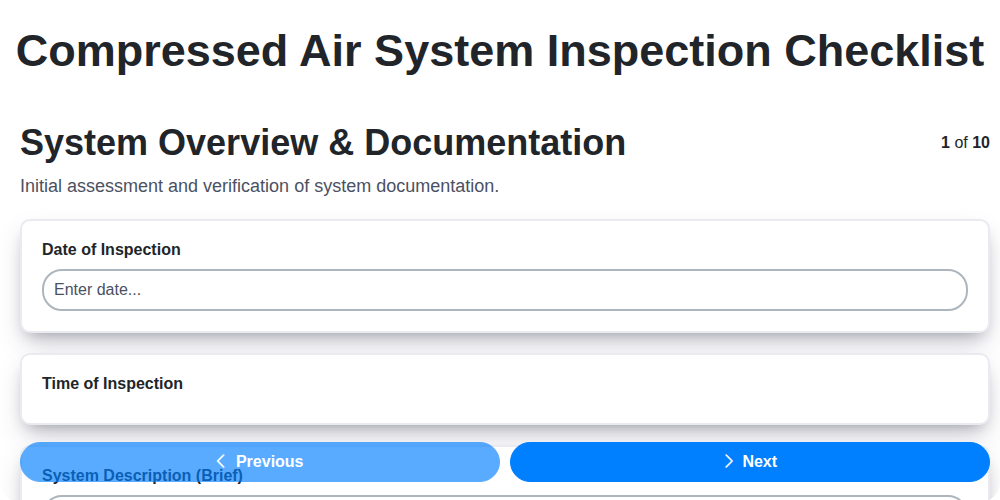
Table of Contents
- Why a Compressed Air System Inspection Checklist Matters
- Essential Tools for Your Compressed Air Inspection
- Compressed Air System Overview & Documentation
- Inspecting Your Air Compressor: Key Performance Indicators
- Air Receiver (Tank) Inspection: Safety and Longevity
- Air Treatment Components: Filters, Dryers & Regulators
- Air Distribution Piping: Leak Detection & Condition Assessment
- Safety Devices & Control Systems: Verification & Testing
- Creating Your Customized Inspection Template
- Resources & Links
TLDR: Stop guessing & start preventing breakdowns! This free checklist template simplifies compressed air system maintenance-covering everything from compressors and tanks to safety devices. It's a huge time-saver, promotes efficiency, and keeps your operations running smoothly & safely. Download it now and schedule your inspection!
Why a Compressed Air System Inspection Checklist Matters
Beyond the obvious avoidance of breakdowns, a comprehensive inspection checklist delivers a cascade of benefits that impact your bottom line and operational safety. Think of it as preventative healthcare for your compressed air system. Neglecting regular checks can lead to a silent drain on resources - wasted energy from leaks, premature equipment failure necessitating costly replacements, and reduced production due to unexpected downtime. A solid checklist moves you from reactive firefighting to proactive optimization. It allows for data-driven decisions, highlighting areas of inefficiency that can be addressed to reduce energy consumption and operating costs. Furthermore, consistent inspections help ensure compliance with industry standards and safety regulations, protecting your workforce and minimizing potential liabilities. It's not just about fixing problems; it's about preventing them and maximizing the lifespan and efficiency of your valuable compressed air infrastructure.
Essential Tools for Your Compressed Air Inspection
While a keen eye and systematic approach are vital for a thorough inspection, having the right tools significantly enhances accuracy and efficiency. Here's a rundown of equipment that will make your compressed air system assessment easier and more insightful:
Leak Detection & Measurement:
- Ultrasonic Leak Detector: An absolute must-have for pinpointing even tiny air leaks that are otherwise inaudible. Models vary in price and features, but even a basic unit will pay for itself quickly through energy savings.
- Pressure Gauges: Digital or analog, but accurate! Multiple gauges are useful for checking pressure at various points in the system.
- Manometer: For precisely measuring pressure drop across filters and dryers.
Visual Inspection & Maintenance:
- Flashlight/Headlamp: Essential for illuminating dark corners and hard-to-reach areas.
- Torque Wrench: For ensuring proper tightening of bolts and fittings during maintenance.
- Multimeter: For testing electrical components and connections.
- Adjustable Wrench & Socket Set: For general maintenance tasks.
- Safety Glasses & Gloves: Always prioritize safety!
Data Logging & Analysis:
- Infrared Thermometer (Optional): Useful for identifying hotspots and potential overheating issues.
- Data Logger (Optional): Allows you to continuously monitor pressure, temperature, and other parameters over time.
Having these tools in your arsenal will empower you to conduct more thorough and effective compressed air system inspections, leading to improved performance, reduced downtime, and increased efficiency.
Compressed Air System Overview & Documentation
Understanding your compressed air system starts with meticulous documentation. This isn't just about having papers; it's about knowing exactly what you're working with. A well-organized system overview provides a foundation for effective maintenance and troubleshooting.
Key Elements of Comprehensive Documentation:
- System Schematics (P&IDs): These are your maps. They detail the layout of your system, including compressor locations, receiver tanks, piping routes, treatment equipment, and points of use. Ensure these schematics are current and accurately reflect any modifications made.
- Operating Procedures: Clear, concise operating procedures guide operators on proper startup, shutdown, and routine operation of the system. Regularly review and update these to incorporate best practices and address any operational changes.
- Equipment Inventory: A detailed inventory lists all major components (compressors, receivers, filters, dryers, regulators) along with their manufacturer, model numbers, serial numbers, and performance specifications. This is invaluable for ordering parts and troubleshooting.
- Safety Data Sheets (SDS): Maintaining readily accessible SDS documents for all lubricants, chemicals, and refrigerants used in the system is a critical safety and regulatory requirement.
- Maintenance Records: As we've touched on, well-maintained maintenance records provide a historical perspective on system performance and potential issues. They're a vital tool for proactive maintenance.
Regularly review and update these documents - ideally annually, or whenever system changes occur - to ensure their accuracy and relevance. A little time spent on documentation pays dividends in the long run.
Inspecting Your Air Compressor: Key Performance Indicators
Your air compressor is the heart of your compressed air system, so understanding its performance is paramount. Don's just look for obvious leaks; monitor these key indicators to ensure optimal efficiency and longevity.
1. Operating Pressure & Stability: Regularly check that the compressor is maintaining the set operating pressure. Fluctuations or inability to hold pressure can signal issues with seals, valves, or the pressure switch. Record pressure readings during different load conditions.
2. Motor Current Draw: Elevated current draw indicates increased workload, potentially caused by internal leaks, restrictions in the air lines, or a failing compressor element. Compare current readings against the motor's nameplate rating. A significant deviation warrants investigation.
3. Discharge Air Temperature: High discharge air temperature is a red flag. It suggests inefficient compression, potentially due to overloaded components, poor lubrication (for oil-lubricated compressors), or air-side restrictions. Cooling fan functionality is also key here.
4. Vibration Levels: Excessive vibration is detrimental to compressor life and can indicate imbalances or mechanical wear. Use a vibration analyzer (or even a simple stethoscope) to identify unusual noises and localized vibrations.
5. Lubricant Condition (Oil-Lubricated Compressors): Regular oil analysis is invaluable. It provides insight into wear metals, contaminants, and lubricant degradation. Maintaining the correct oil level and ensuring the oil's quality prevents premature wear and extends compressor life. Check oil color and smell for signs of degradation.
6. Air Filter Condition: A clogged air filter significantly reduces compressor efficiency and can damage internal components. Regularly inspect and replace filters based on manufacturer's recommendations and operating conditions.
7. Noise Levels: A noticeable increase in compressor noise can signify worn bearings, loose components, or internal damage. Document any changes in noise characteristics.
Air Receiver (Tank) Inspection: Safety and Longevity
Air receivers are often the unsung heroes of a compressed air system, but neglecting them can lead to serious consequences. Beyond simply storing compressed air, they dampen pulsations, stabilize pressure, and provide a reserve supply - all vital for consistent operation. However, they are also susceptible to corrosion and potential failure if not properly inspected.
Visual Inspection: The First Line of Defense
Start with a thorough visual inspection. Look for signs of external corrosion, dents, or other physical damage. Even seemingly minor dents can weaken the tank's structural integrity. Pay close attention to welds and seams, as these are common areas for corrosion to begin. Don't ignore any rust; even small amounts can indicate a larger problem developing underneath.
Internal Inspection: The Critical, Periodic Requirement
While visual inspection is important, it only reveals what's on the surface. The truly critical inspection is the internal inspection. This should be performed every 5-7 years, or more frequently in harsh environments. It requires draining the tank completely and, ideally, using specialized inspection tools (borescopes or robotic crawlers) to examine the interior walls for corrosion. While professional inspection is highly recommended for accuracy and thoroughness, it's better to invest now than face catastrophic tank failure later.
Safety Concerns and Potential Hazards:
A corroded or damaged air receiver poses a significant safety hazard. Catastrophic failure can result in:
- Projectile Hazard: Fragments of the tank can be propelled at high speeds, posing a serious risk to personnel.
- Pressure Surge: Sudden tank rupture can cause a dangerous pressure surge throughout the entire compressed air system.
- System Downtime: Unplanned outages are costly and disruptive.
Proactive Maintenance for Longevity:
Regular drainage, even between internal inspections, helps to remove moisture and contaminants that accelerate corrosion. Maintaining proper system pressure and ensuring adequate ventilation around the tank also contributes to its longevity. By prioritizing air receiver inspections and maintenance, you protect your people, your equipment, and your bottom line.
Air Treatment Components: Filters, Dryers & Regulators
Compressed air rarely arrives perfect. It's often laden with contaminants like oil, water, and particulate matter. And humidity is almost always a factor. That's where your air treatment components step in, playing a vital role in delivering the high-quality compressed air your processes demand. Let's break down each element of this crucial trio:
Filters: Removing the Nasties
Filters are the first line of defense, removing unwanted particulate matter and liquid droplets from the compressed air stream. They come in various stages:
- Pre-filters: Trap larger particles, extending the life of downstream filters.
- Sediment Filters: Remove dust, dirt, and rust.
- Oil Filters: Essential for removing residual oil carryover, particularly critical in industries like food processing and pharmaceuticals.
- Particulate Filters: Offer finer filtration, removing even the smallest particles.
Regular filter replacement is key. Clogged filters create unnecessary pressure drop and reduce system efficiency.
Dryers: Taming the Humidity
Moisture in compressed air is a common culprit behind corrosion, freezing, and damage to pneumatic tools. Dryers remove water vapor, achieving the desired dew point. There are two main types:
- Refrigerated Dryers: Cool the air, causing moisture to condense and drain. Best suited for moderate humidity conditions.
- Desiccant Dryers: Utilize a desiccant material (like silica gel) to adsorb moisture. Ideal for achieving very low dew points and handling high humidity environments.
Proper dryer maintenance involves monitoring performance (dew point, pressure drop) and replacing desiccant as needed.
Regulators: Maintaining Consistent Pressure
Even after filtration and drying, compressed air pressure can fluctuate due to variations in the compressor's output. Regulators ensure a consistent downstream pressure, protecting equipment from damage and ensuring predictable operation. They typically include an adjustable pressure set point and a pressure relief valve for safety. Regular inspection and adjustment, if necessary, are important for maintaining optimal performance.
Air Distribution Piping: Leak Detection & Condition Assessment
Air distribution piping is often the silent culprit behind significant energy waste. Even seemingly minor leaks can add up to substantial losses over time. A systematic approach to leak detection and condition assessment is crucial for optimizing system efficiency.
Leak Detection Methods:
- Soap Bubble Test: The classic! Applying a soapy solution to joints and connections reveals leaks through the formation of bubbles. While simple, it's effective for pinpointing immediate leak locations.
- Ultrasonic Leak Detectors: These devices "hear" the high-frequency sound emitted by escaping compressed air, making them invaluable for locating even small leaks that are otherwise inaudible. They are particularly useful for surveying large sections of piping quickly and efficiently.
- Pressure Decay Test: Isolating a section of the system and monitoring pressure decay over a specific time period can quantify the overall leak rate. This helps prioritize areas for repair.
Condition Assessment:
Beyond leak detection, a thorough condition assessment of the piping is essential. Look for:
- Corrosion: Rust and corrosion weaken pipes and can lead to failures. Regularly inspect pipes, especially those exposed to the elements.
- Damage: Dents, cracks, or other physical damage compromise the integrity of the piping.
- Support: Ensure proper pipe supports are in place and functioning correctly. Loose or missing supports can cause stress and vibration, accelerating wear.
- Insulation: Check insulation for damage or deterioration. Loss of insulation increases energy loss and can lead to condensation.
Addressing detected leaks and promptly repairing any structural issues with your air distribution piping will dramatically improve your compressed air system's performance and reduce operational costs.
Safety Devices & Control Systems: Verification & Testing
The effectiveness of your compressed air system hinges not only on performance but, crucially, on safety. Malfunctioning safety devices and control systems can lead to equipment damage, costly downtime, and, most importantly, pose a risk to personnel. This section outlines essential verification and testing procedures.
1. Pressure Relief Valves (Safety Valves):
- Functional Test: Periodically (typically annually, but consult manufacturer recommendations) manually lift the valve lever to ensure it opens and reseats properly. Observe for leaks after the test. Document the test date and results.
- Set Point Verification: Confirm the valve's set point matches the system's design pressure. Adjust if necessary (by a qualified technician).
- Condition Assessment: Visually inspect for corrosion, damage, or buildup. Replace if questionable.
2. Low-Pressure Cutoffs:
- Simulated Low-Pressure Condition: Safely simulate a low-pressure condition (e.g., by temporarily restricting airflow - use extreme caution and follow lockout/tagout procedures) to verify the cutoff initiates and shuts down the compressor.
- Reset Procedure: Ensure the system resets correctly after the low-pressure cutoff activates.
3. High-Pressure Cutoffs:
- Simulated High-Pressure Condition: Again, with extreme caution and using safe methods, simulate a high-pressure condition to verify the cutoff functions as designed.
- Pressure Settings: Verify the high-pressure cutoff set point is accurate and aligned with system design.
4. Emergency Stop Buttons:
- Physical Inspection: Check buttons for accessibility and freedom from obstructions.
- Functional Test: Press each emergency stop button to ensure it immediately halts compressor operation and that the system resets appropriately.
5. Control System Logic & Sequencing:
- Review Control Schematics: Ensure the control system logic matches the original design and operational requirements.
- Sequence of Operation Testing: Simulate various operating conditions (startup, shutdown, load changes) to confirm the control system correctly sequences operations, including the involvement of safety devices.
- Interlocks: Verify all critical interlocks (e.g., minimum lubrication pressure, maximum air temperature) are functioning correctly and preventing operation under unsafe conditions.
IMPORTANT: All testing involving simulating unsafe conditions must be performed by qualified personnel following strict lockout/tagout procedures. Never compromise safety to expedite testing.
Creating Your Customized Inspection Template
While this comprehensive checklist provides a solid foundation, a truly effective inspection program starts with a tailored template. A generic form rarely captures the nuances of your specific system. Here's how to build your own:
1. Start with the Basics: Copy and paste our checklist as a starting point. This gives you all the key areas to consider.
2. System Specificity: Identify components unique to your compressed air system. Do you have specialized filtration, desiccant regeneration, or data logging equipment? Add dedicated sections for these. Include make, model numbers, and serial numbers for easy reference and parts ordering.
3. Prioritize Risks: Not all components pose equal risks. Based on system criticality and past issues, assign a risk level (e.g., High, Medium, Low) to each inspection item. This helps focus attention and resources.
4. Define Acceptance Criteria: Establish clear, measurable acceptance criteria for each item. Instead of simply Check filter, specify Filter pressure drop ≤ X PSI or Filter visual cleanliness rating ≥ Y. This removes ambiguity and provides objective pass/fail criteria.
5. Add Notes & Action Columns: Create columns for detailed observations (Notes) and corrective actions taken (Action). Include space for dates and initials of personnel performing the inspection.
6. Digital vs. Paper: Consider whether a digital form (e.g., using Google Forms, Microsoft Excel, or specialized maintenance software) or a paper form is more suitable for your workflow. Digital forms offer advantages in terms of data collection, analysis, and reporting.
7. Iterate and Improve: Regularly review your template based on inspection findings, operational feedback, and changes to your system. A maintenance template isn't a static document-it should evolve with your needs.
Don't be afraid to start simple and build complexity as you gain experience. A well-crafted template transforms inspection from a chore into a valuable tool for maintaining system health and preventing costly downtime.
Resources & Links
- US Compressor Parts: A comprehensive online supplier of compressed air system components, parts, and accessories. Useful for identifying parts referenced in the article and potentially sourcing replacements.
- Air Compressor Tips: Provides informative articles, guides, and advice related to air compressors and compressed air systems. Offers supplementary information on maintenance and troubleshooting.
- Plant & Facility Maintenance (PFM): A website dedicated to plant and facility maintenance. Provides articles, webinars, and resources that can contribute to overall system understanding and preventive maintenance planning.
- Reliability Tools: Offers a range of resources and tools for reliability engineering, including guides on condition monitoring and predictive maintenance, which relate to compressed air system health.
- Sullair: A well-known compressed air system manufacturer. Their website often contains technical documentation, troubleshooting guides, and information on best practices for compressed air system operation.
- Kaeser Compressors: Another leading compressed air system manufacturer. Similar to Sullair, they provide technical information, user manuals, and resources useful for understanding system components and performance.
- Ingersoll Rand: A global leader in compressed air systems and power tools. Their website features a wealth of information on maintenance, energy efficiency, and system optimization.
- Bosch Rexroth: Provides a wide range of industrial automation and drive technology solutions, including compressed air components and control systems. Can provide deeper insights into control and automation aspects.
- Aspen Pharmacare: While primarily a pharmaceutical company, they often share insights into cleanroom compressed air system validation and maintenance - relevant for systems with high air quality requirements (though may be more complex).
- ASME (American Society of Mechanical Engineers): Offers standards and guidelines for the design, construction, and maintenance of various engineering systems, including compressed air. Good for understanding relevant codes and regulations.
- OSHA (Occupational Safety and Health Administration): Provides information and regulations regarding workplace safety, including compressed air systems. Essential for ensuring compliance and safe operation.
- NPTEL (National Programme on Technology Enhanced Learning): Offers free online courses on various engineering topics, including compressed air systems. Provides a more in-depth understanding of the underlying principles and components (though potentially more technical).
Frequently Asked Questions
What is a compressed air system inspection and why is it important?
A compressed air system inspection is a thorough assessment of all components, from the compressor to the point of use, to identify potential issues like leaks, inefficient operation, or safety hazards. It's important because it helps prevent costly downtime, improves energy efficiency, extends equipment life, and ensures worker safety.
Who should use this inspection checklist?
This checklist is designed for maintenance personnel, facility managers, and anyone responsible for the upkeep and operation of compressed air systems. It can be used by both experienced and less experienced users.
How often should I use this checklist?
The frequency of inspections depends on the size and complexity of your system, the environmental conditions, and your operational demands. A minimum of monthly inspections is recommended, with more frequent checks for critical systems or areas with high usage.
What kind of expertise is needed to complete the checklist?
While some items require a basic understanding of compressed air systems, many are straightforward and can be completed by anyone familiar with the equipment. Complex issues may require a qualified compressed air technician.
What does the checklist cover?
The checklist covers a wide range of areas including compressor performance, air treatment equipment, piping and hoses, safety devices, power supply, condensate drainage, and leak detection.
Is this checklist customizable?
Yes! The checklist is intended to be a template. Feel free to add, remove, or modify items to fit your specific system and operational requirements. Add details about your specific components and safety procedures.
What tools and equipment will I need to use the checklist?
You're going to need a variety of tools, including a notepad and pen (or digital device), a pressure gauge, an ultrasonic leak detector (highly recommended), a thermal imaging camera (optional but useful), and safety glasses.
What is an ultrasonic leak detector and why is it useful?
An ultrasonic leak detector identifies compressed air leaks by detecting the high-frequency sound they produce. It's significantly more effective than traditional methods for locating small leaks that are difficult to hear.
Where can I find help if I identify a problem I don't know how to fix?
Consult the equipment manufacturer's documentation, reach out to a qualified compressed air technician or your compressed air supplier. Always prioritize safety and don't attempt repairs you're not comfortable with.
What should I do with the data collected from the checklist?
Record the data meticulously. Track trends over time to identify recurring problems. Use the information to schedule preventative maintenance, address leaks, and optimize system performance. Share findings with relevant personnel.
Found this Article helpful?
Comments
There are no comments yet. Be the first to add one!
Facility Management Solution Demo
Keep your facilities running smoothly! ChecklistGuro streamlines maintenance, inspections, and vendor management. Reduce downtime, optimize efficiency, & improve safety. Manage it all with our Work OS.
Related Articles
Industrial Floor Cleaning & Safety Checklist Template
Display Case Temperature Monitoring Checklist Template
The Ultimate Refrigeration Maintenance Checklist: Keeping Your Food Safe
Escalator & Moving Walkway Inspection Checklist Template
The Ultimate Guest Room Cleaning & Inspection Checklist Template

The Ultimate Security Camera Review Checklist Template
Forklift Inspection & Maintenance Checklist Template
Emergency Generator Load Testing Checklist Template
We can do it Together
Need help with
Facility Management?
Have a question? We're here to help. Please submit your inquiry, and we'll respond promptly.