Farm Technology Integration Checklist: Your Step-by-Step Guide
Published: 11/22/2025 Updated: 07/02/2026
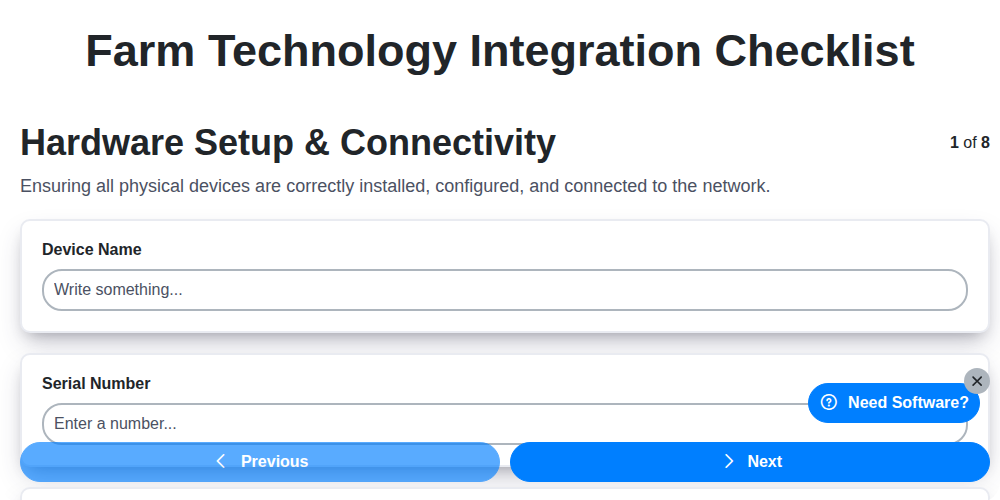
Table of Contents
- Introduction: Why a Farm Tech Integration Checklist Matters
- 1. Hardware Setup & Connectivity: Laying the Foundation
- 2. Software Installation & Configuration: Getting the System Running
- 3. Data Integration & Flow: Connecting the Pieces
- 4. User Training & Adoption: Empowering Your Team
- 5. Security & Permissions: Protecting Your Data and Operations
- 6. Performance Monitoring & Optimization: Ensuring Efficiency
- 7. Backup & Disaster Recovery: Planning for the Unexpected
- 8. Maintenance & Updates: Staying Current and Reliable
- Resources & Links
TLDR: Integrating new farm tech can be overwhelming! This checklist breaks down the process into 9 crucial steps - from setting up hardware and software to training your team and ensuring data security - so you can successfully implement new technology and maximize your farm's efficiency and profitability. Download the template and follow along!
Introduction: Why a Farm Tech Integration Checklist Matters
Integrating new farm technology - whether it's precision planting systems, automated irrigation, or livestock monitoring tools - promises increased efficiency, reduced costs, and better yields. However, simply buying the latest gadgets isn't enough. A successful integration requires meticulous planning and execution. Without a structured approach, you risk costly errors, downtime, and a frustrating experience that undermines the potential benefits.
That's where a comprehensive checklist comes in. This isn't just about ticking boxes; it's a roadmap for a smooth and effective technology rollout. A well-defined checklist ensures every critical aspect - from hardware setup to user adoption and ongoing maintenance - is considered before, during, and after implementation. It minimizes risks, maximizes return on investment, and ultimately, empowers you to leverage technology to its full potential on your farm. Think of it as your safety net and your guide to a truly smart farm.
1. Hardware Setup & Connectivity: Laying the Foundation
Successful farm technology integration starts with a solid hardware foundation. This isn't just about plugging things in - it's about ensuring reliable operation and data flow. Here's what to consider:
- Device Inventory & Placement: Document every piece of hardware - sensors, controllers, cameras, drones, weather stations, etc. Map their physical locations on the farm. This aids in troubleshooting and future expansion.
- Network Assessment: Evaluate your existing network infrastructure. Is it robust enough to handle the data volume from your new devices? Consider bandwidth needs, signal strength, and potential interference. Rural areas often require creative solutions like satellite internet or cellular boosters.
- Connectivity Solutions: Choose the right connectivity method for each device. Options include Wi-Fi, cellular data, LoRaWAN, and wired connections. Consider the range, power consumption, and cost of each.
- Power Supply: Ensure reliable power to all devices. This may involve solar power, generators, or UPS (Uninterruptible Power Supply) for critical systems.
- Physical Protection: Protect hardware from the elements - rain, sun, dust, pests, and potential vandalism. Enclosures, weatherproof cabling, and secure mounting are crucial.
- Testing & Verification: After installation, rigorously test connectivity and signal strength. Verify that data is flowing correctly between devices and central systems. Document your findings.
2. Software Installation & Configuration: Getting the System Running
Simply having the hardware in place is only the first hurdle. This phase focuses on actually getting your farm technology software up and running correctly. It's more than just clicking Install; it's about tailoring the software to your farm's specific needs and ensuring it plays nicely with other systems.
1. Initial Installation: Follow the vendor's installation guides meticulously. Don't skip steps! Many systems have specific operating system requirements or hardware prerequisites - double-check those before you begin.
2. Licensing and Activation: Verify your license keys and activation procedures. Unauthorized software use can lead to legal issues and functionality limitations.
3. Configuration - The Farm-Specific Adjustments: This is where you customize the software for your farm. This might include:
- Defining Field Boundaries: Accurate field mapping is crucial for precision application and yield monitoring.
- Equipment Profiles: Create profiles for each piece of machinery, including its capabilities and limitations.
- Sensor Calibration: Calibrate sensors to ensure accurate data collection - a miscalibrated sensor can lead to incorrect decisions.
- Task Scheduling: Configure automated task scheduling (e.g., irrigation, fertilization) to optimize resource usage.
- Alert Thresholds: Set up alert thresholds for critical data points (e.g., soil moisture, nutrient levels) so you're notified of potential problems.
4. Compatibility Checks: Ensure the software is compatible with existing farm management systems, accounting software, and other digital tools. Look for API integration possibilities or common data formats to facilitate data exchange.
5. Testing and Validation: Thoroughly test all functionalities after installation. Simulate various scenarios to ensure the software behaves as expected. This is your chance to identify and fix any issues before relying on the system for critical farm operations.
3. Data Integration & Flow: Connecting the Pieces
Farm technology, in isolation, is only half the battle. The true power comes from seamlessly integrating data from various sources - sensors, machinery, weather stations, yield monitors, and more - and ensuring that information flows where it needs to be, when it's needed. This isn't just about collecting data; it's about transforming it into actionable insights.
Here's a breakdown of what data integration & flow entails:
- Identify Data Sources: Map out every data source feeding into your farm management system. This includes not just the obvious (like GPS data from tractors), but also less-considered sources like irrigation controllers, soil sensors, and even manually entered information.
- Data Format Compatibility: Different technologies often use different data formats. Ensure your systems can handle these variations or implement conversion processes. This may involve custom scripting or the use of data transformation tools.
- API Connections & Data Bridges: Explore APIs (Application Programming Interfaces) to enable direct data exchange between platforms. Consider using data bridges or middleware if direct integration isn't possible.
- Data Mapping & Transformation: Clearly define how data from each source maps to the fields and parameters within your farm management system. Transformation rules may be necessary to standardize units, correct errors, and aggregate data.
- Real-time vs. Batch Processing: Determine which data streams require real-time processing (e.g., variable rate application guidance) and which can be processed in batches (e.g., historical yield analysis).
- Data Validation & Error Handling: Implement data validation rules to identify and flag errors or inconsistencies. Build robust error handling mechanisms to prevent data corruption and ensure data integrity.
- Visualization & Reporting: Establish clear pathways to visualize data effectively - dashboards, maps, charts - so you can readily interpret the information and make informed decisions.
Successful data integration unlocks the full potential of your farm technology investments, moving beyond simple data collection to impactful, data-driven farming.
4. User Training & Adoption: Empowering Your Team
Technology integration is only as effective as the people using it. Investing in comprehensive user training and fostering adoption is absolutely crucial for realizing the full potential of your farm technology. Simply installing the hardware and software isn't enough; your team needs to understand how and why these tools benefit them.
Here's a breakdown of key elements for successful user training and adoption:
- Role-Based Training: Recognize that different roles on your farm (e.g., tractor operators, crop managers, livestock handlers, administrative staff) will interact with the technology differently. Tailor training modules to address their specific responsibilities and workflows.
- Hands-On Experience: Theoretical explanations are helpful, but practical, hands-on experience is essential. Provide ample opportunities for users to practice with the technology in a controlled environment. Simulations and guided exercises are fantastic for this.
- Ongoing Support & Resources: Don't let training be a one-time event. Establish ongoing support mechanisms such as a dedicated helpdesk, readily available documentation (videos, FAQs), and "power user" champions within the team.
- Feedback Loop: Actively solicit feedback from users. Understand their challenges, identify areas where training can be improved, and demonstrate that their input is valued.
- Champion Program: Identify and empower "power users" within your team. These individuals can act as peer mentors, troubleshoot issues, and advocate for the technology's benefits.
- Measure Adoption: Track key metrics like login rates, feature usage, and data input accuracy. These insights can reveal areas where additional training or support is needed.
- Celebrate Successes: Highlight successful implementations and demonstrate the positive impact of the technology on farm productivity and profitability. This reinforces the value of adoption and encourages continued engagement.
Remember, a well-trained and engaged team is your greatest asset in maximizing the return on your farm technology investment.
5. Security & Permissions: Protecting Your Data and Operations
Integrating farm technology brings incredible efficiency and insight, but it also expands your attack surface. A robust security and permissions framework is absolutely critical to protect your data, equipment, and overall farm operations. Here's what to consider:
- Role-Based Access Control (RBAC): Implement granular access levels. Not everyone needs access to everything. Define roles (e.g., Farm Manager, Operator, Technician) and assign permissions based on those roles. This limits exposure and prevents accidental or malicious changes.
- Strong Password Policies: Enforce complex password requirements and regular password resets across all connected devices and platforms. Consider multi-factor authentication (MFA) whenever possible.
- Network Segmentation: Isolate your farm network from external networks. Consider creating separate VLANs for different device categories (e.g., IoT sensors, office computers).
- Regular Security Audits: Schedule periodic audits of your systems to identify vulnerabilities and ensure compliance with security best practices. Consider engaging a cybersecurity professional for an independent assessment.
- Data Encryption: Encrypt sensitive data both in transit and at rest. This protects information even if a breach occurs.
- Firewall Configuration: Properly configure firewalls to restrict unauthorized access to your network and connected devices. Keep firewall rules updated.
- IoT Device Security: Farm technology often includes IoT devices which can be vulnerable. Ensure these devices have the latest firmware updates and security patches. Change default passwords immediately.
- Physical Security: Don't overlook the physical security of your equipment. Secure servers, computers, and network devices to prevent unauthorized access.
- Data Privacy Compliance: Understand and adhere to any relevant data privacy regulations (e.g., GDPR, CCPA) that apply to the data you collect and process.
6. Performance Monitoring & Optimization: Ensuring Efficiency
Integrating farm technology is exciting, but the real value comes from ensuring it performs. Simply having the hardware and software isn't enough; you need a proactive approach to monitoring and optimization. Here's what that looks like:
Key Performance Indicators (KPIs) to Track: This isn't just about uptime. Define what "good performance" means for your farm. Consider metrics like:
- Data Transmission Latency: How long does it take data to move from sensors to your systems? High latency can impact real-time decision-making.
- Processing Speed: How quickly can your software process data and provide insights?
- System Response Time: How quickly does the system respond to user requests?
- Sensor Accuracy & Reliability: Are the sensors providing accurate data consistently?
- Energy Consumption: Are your hardware components operating within expected energy ranges?
- Task Completion Time: If automation is involved (e.g., variable rate application), track how it impacts task completion time.
Monitoring Tools: Leverage built-in system monitoring tools, or consider third-party solutions. These can provide real-time dashboards and alerts for anomalies.
Regular Review and Adjustment: Performance isn't static. Schedule regular reviews (e.g., monthly, quarterly) to analyze collected data, identify bottlenecks, and make adjustments. This might involve:
- Network Optimization: Analyzing Wi-Fi signal strength, bandwidth usage, and potential interference.
- Software Configuration Tweaks: Adjusting processing parameters and memory allocation.
- Hardware Calibration: Ensuring sensors are properly calibrated.
- Data Filtering & Cleaning: Refining the data streams to reduce noise and improve accuracy.
Proactive vs. Reactive: Don't wait for problems to arise. A proactive approach to performance monitoring and optimization will ensure your farm technology consistently delivers the expected benefits and ROI.
7. Backup & Disaster Recovery: Planning for the Unexpected
Farm technology investments represent a significant commitment. Losing access to your data - crucial yield information, sensor readings, equipment performance metrics - due to a hardware failure, cyberattack, or natural disaster can be devastating. A robust backup and disaster recovery plan is not optional; it's essential.
Here's what your plan should include:
- Regular Data Backups: Implement a schedule for backing up all critical data generated by your farm tech. This includes sensor data, mapping information, financial records, and any custom configurations. Automate this process whenever possible.
- Offsite Storage: Don't store backups solely on-site. Utilize cloud-based storage, a physically separate server, or external hard drives kept in a secure, off-site location. The goal is redundancy - if one location fails, you have another.
- Backup Verification: Regularly test your backups. Simply creating backups isn't enough; you need to confirm they are functional and recoverable. Periodically restore data to a test environment to ensure the process works correctly.
- Disaster Recovery Plan Documentation: Outline clear, step-by-step procedures for recovering your systems in the event of a disaster. This should include contact information for key personnel, a prioritized list of systems to restore, and a timeline for recovery.
- Hardware Redundancy (Consideration): For critical hardware components (servers, controllers), consider implementing redundancy - having backup units ready to take over in case of failure. This is a more significant investment but can minimize downtime.
- Cybersecurity Awareness: Integrate disaster recovery planning with your cybersecurity measures. Ransomware attacks frequently target agricultural data. A solid recovery plan allows you to restore data even after a successful attack.
By proactively addressing backup and disaster recovery, you safeguard your farm's operations, protect your investments, and ensure business continuity in the face of the unexpected.
8. Maintenance & Updates: Staying Current and Reliable
Integrating farm technology is a significant investment, and like any complex system, it requires ongoing maintenance and updates to ensure peak performance, security, and longevity. Neglecting this crucial aspect can lead to decreased efficiency, data inaccuracies, security vulnerabilities, and ultimately, a return on investment that falls short of expectations.
Here's what a robust maintenance and updates plan should include:
- Regular Software Updates: Technology evolves rapidly. Software updates often contain bug fixes, performance improvements, and crucial security patches. Schedule regular checks for updates from your hardware and software vendors and promptly install them. Don't delay!
- Hardware Inspections: Periodically inspect hardware components for wear and tear, physical damage, or performance degradation. This includes sensors, controllers, network devices, and any connected machinery. Proactive maintenance can prevent costly breakdowns.
- Firmware Updates: Don't forget firmware! Many hardware devices require firmware updates to function optimally with evolving software and communication protocols.
- Data Validation & Calibration: Regularly validate the accuracy of data collected by your technology. This might involve calibrating sensors or cross-referencing data with manual observations.
- Documentation Updates: As your system evolves with updates and modifications, keep your documentation updated. This will be invaluable for troubleshooting and future expansion.
- Vendor Support Agreements: Ensure you have appropriate vendor support agreements in place to access timely assistance with updates, troubleshooting, and repairs.
- Scheduled Downtime: Plan for scheduled downtime to perform major updates or maintenance tasks that require the system to be offline. Communicate these windows to all users in advance.
- Version Control: Maintain a record of software and firmware versions installed across your farm technology to simplify troubleshooting and rollback procedures if necessary.
Resources & Links
- PrecisionAg: A leading resource for precision agriculture news, technology reviews, and case studies covering a wide range of farm tech solutions.
- Agri-Tech.org: This organization offers resources, insights, and networking opportunities related to agricultural technology, covering everything from IoT sensors to AI-powered analytics. Good for understanding broader trends.
- Farm Progress: Farm Progress is a comprehensive agriculture news source with a strong focus on technology. They provide equipment reviews, coverage of industry events, and farmer perspectives on technology adoption.
- John Deere: As a leading equipment manufacturer, John Deere provides a wealth of information regarding their connected farming technologies and resources for implementation and support. Relevant for hardware setup & connectivity, user training, and maintenance.
- Trimble Agriculture: Trimble offers precision agriculture solutions including guidance, field management, and correction services. Their website provides product information and resources for data integration and optimization.
- CLAAS: CLAAS is another major agricultural equipment manufacturer with a strong focus on digital farming solutions. Their site offers insights into connected farming technologies and data management.
- Agri-Tech Consulting: Consultant offering guidance for tech integration, providing valuable perspectives on data flow, security and user adoption. A good resource for best practice recommendations.
- National Institute of Standards and Technology (NIST): NIST offers guidance on cybersecurity frameworks and best practices, essential for the Security & Permissions section. (Specifically, the Cybersecurity Framework). Useful for a baseline of IT best practices.
- Microsoft Cloud Backup and DR: While geared towards the cloud, Microsoft's site provides excellent explanations of backup principles and disaster recovery planning, relevant to the Backup & Disaster Recovery section. Can inspire strategies for on-premise solutions as well.
- Amazon Web Services (AWS): Similar to Microsoft, AWS provides documentation on data storage, backup and disaster recovery, valuable for understanding advanced strategies, even if not using AWS directly. Useful for thinking about data resilience.
- Cybersecurity and Infrastructure Security Agency (CISA): CISA offers resources and alerts regarding cybersecurity threats. Vital for ongoing vigilance and addressing any potential vulnerabilities related to Farm Technology integration and security.
Frequently Asked Questions
What is this checklist for?
This checklist is designed to guide farmers through the process of integrating new technology into their operations, providing a step-by-step approach to ensure a successful and efficient implementation.
Who is this checklist intended for?
This checklist is for farmers of all sizes and experience levels who are considering adopting new farm technology. Whether you're a seasoned operator or just starting out, this guide will help streamline the integration process.
What types of farm technology does this checklist cover?
The checklist covers a broad range of farm technology, including precision agriculture tools (like GPS, sensors, drones), automation systems (robotics, automated irrigation), data management platforms, and agricultural software. It's adaptable to various technologies.
Do I need to follow the checklist in the exact order presented?
While the order is recommended for a logical progression, it's a guideline. Some steps may be more relevant than others depending on the specific technology and your farm's situation. Feel free to adjust based on your needs.
What does 'feasibility study' mean in the context of this checklist?
A feasibility study involves researching and evaluating the technology's potential impact on your farm. This includes assessing its costs, benefits, required training, compatibility with existing systems, and potential return on investment. It's about determining if the technology is a good fit.
How do I assess the compatibility of new technology with my existing systems?
Consider factors like data formats, communication protocols, and hardware requirements. Consult with the technology vendor and potentially a farm technology consultant to ensure seamless integration. Look for open standards and APIs where possible.
What kind of training should I prioritize for my team?
Training should focus on the practical operation, maintenance, and troubleshooting of the new technology. Include both hands-on training and ongoing support to ensure maximum adoption and skill retention.
Is this checklist free to use?
Yes, this checklist is freely available to help farmers navigate technology integration. We believe in making resources accessible to all.
Where can I find additional resources and support?
The article references various resources, and we encourage you to contact technology vendors, agricultural consultants, and your local extension office for further assistance.
Comments
There are no comments yet. Be the first to add one!
Farm Management Solution Demo
Grow your farm smarter & more efficiently! ChecklistGuro streamlines crop planning, task management, & resource tracking. Maximize yields, reduce waste, & improve profitability. Manage it all with our Work OS.
Related Articles
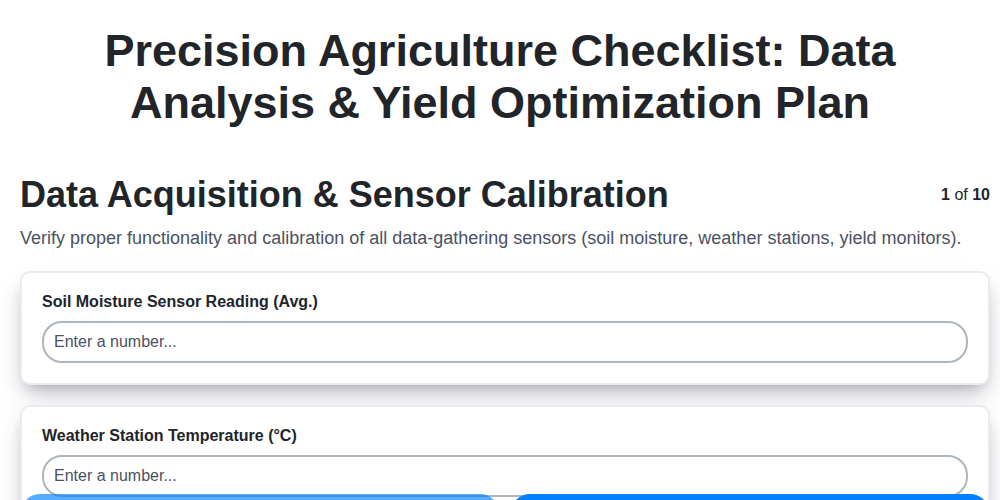
Unlock Higher Yields: Your Precision Agriculture Checklist Template
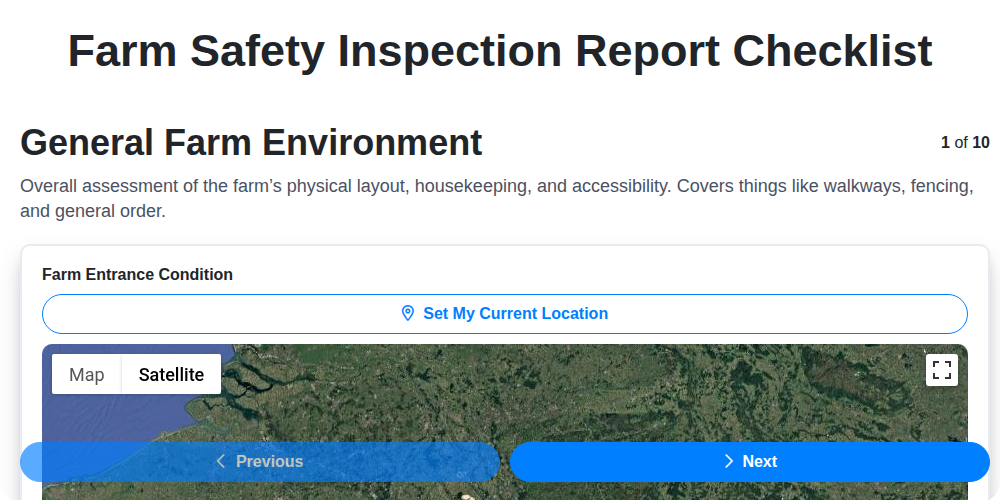
The Ultimate Farm Safety Inspection Report Checklist Template
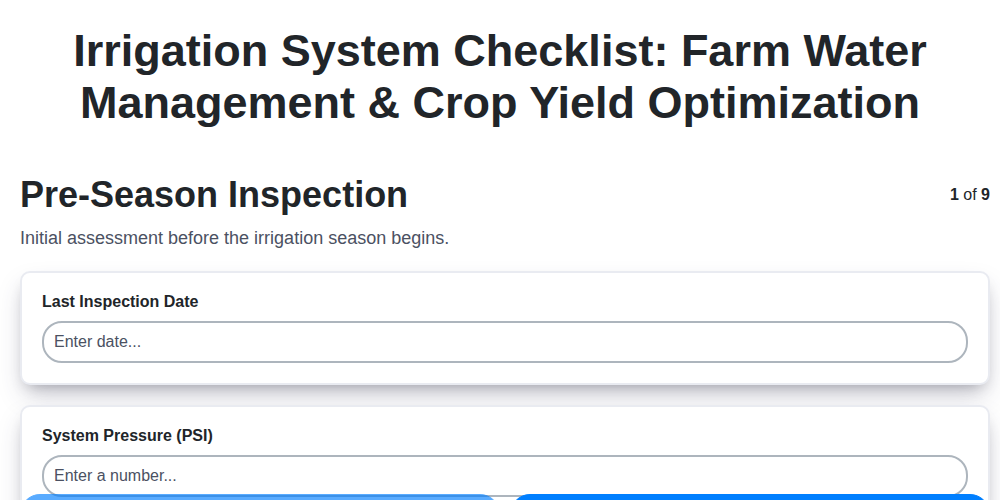
Irrigation System Checklist: Farm Water Management & Crop Yield Optimization

Livestock Health & Welfare Checklist: Your Farm Animal Care & Biosecurity Template
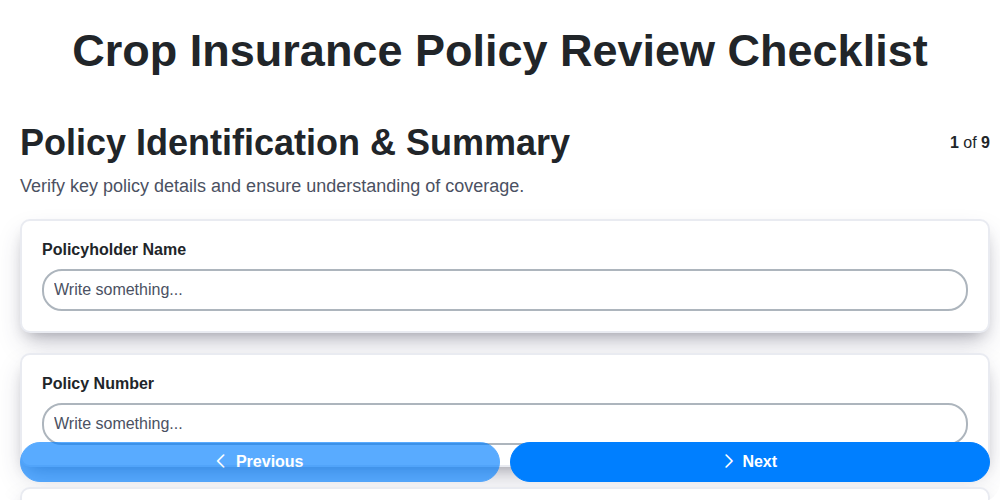
Crop Insurance Policy Review Checklist: A Farmer's Guide
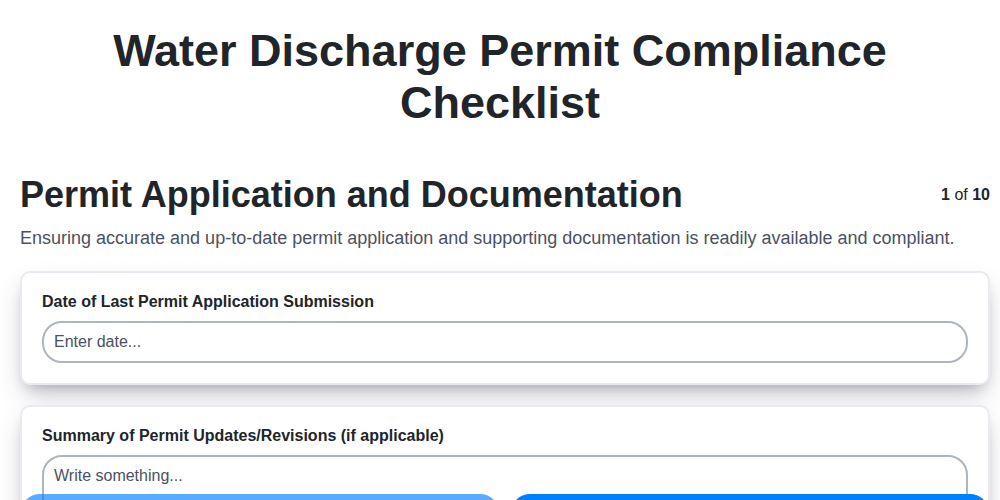
Water Discharge Permit Compliance Checklist Template
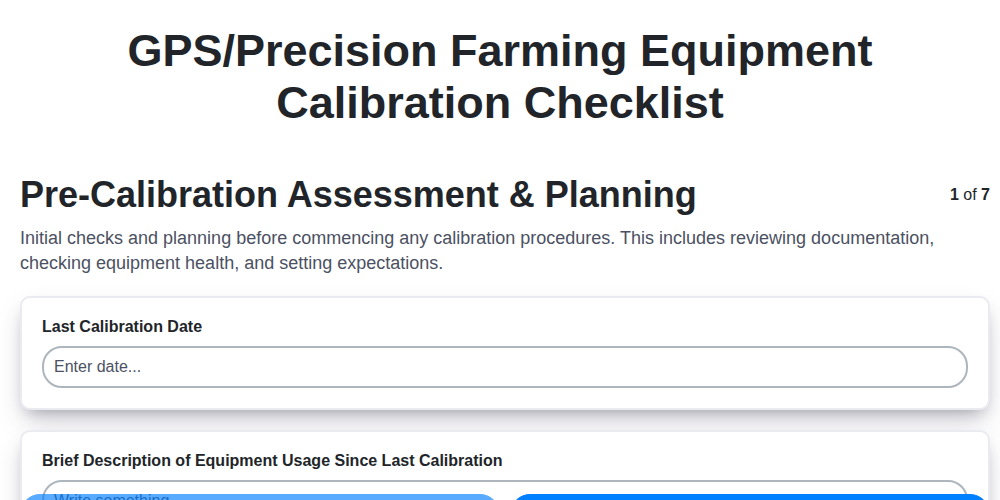
The Ultimate GPS & Precision Farming Calibration Checklist Template
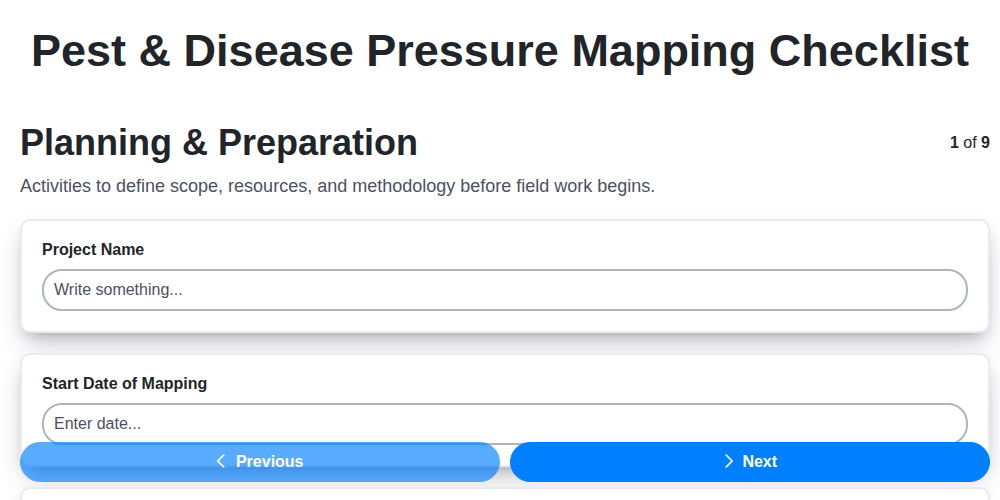
Mapping the Threat: A Checklist for Proactive Pest & Disease Pressure Management
Need help with
Farm Management?
Have a question? We're here to help. Please submit your inquiry, and we'll respond promptly.