Healthcare Billing & Coding Compliance Checklist: Your Guide to Accuracy and Avoiding Penalties
Published: 11/28/2025 Updated: 07/02/2026
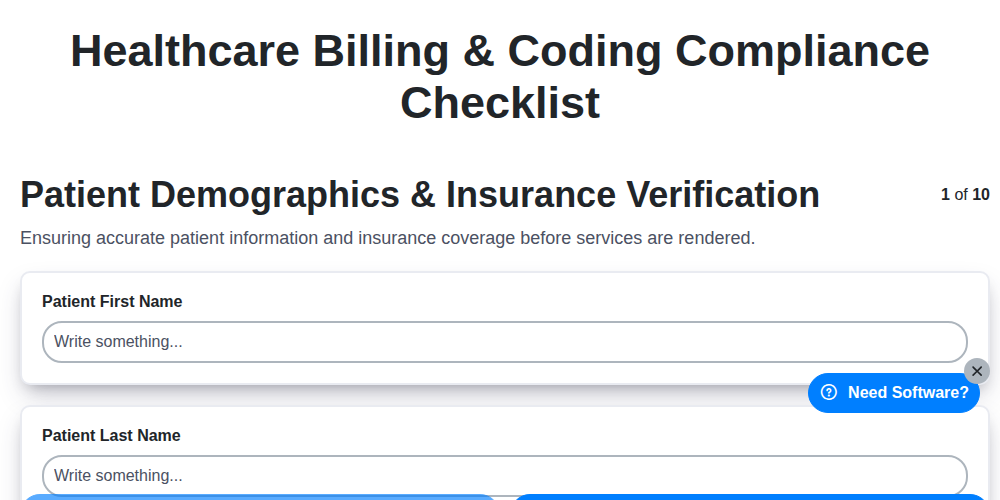
Table of Contents
- Introduction: Why Billing & Coding Compliance Matters
- 1. Patient Demographics & Insurance Verification: The Foundation of Accuracy
- 2. Mastering Procedure & Diagnosis Coding (ICD-10 & CPT/HCPCS)
- 3. Modifier Application: Ensuring Proper Reimbursement
- 4. Charge Entry & Documentation: The Detail That Counts
- 5. Claim Submission & EDI: Navigating the Electronic Landscape
- 6. Ongoing Compliance: Auditing, Updates, and Prevention
- Resources & Links
TLDR: Billing and coding errors are costly! This checklist ensures you're covering all the critical steps - from verifying patient info and accurate coding to submitting claims and managing denials - to stay compliant, avoid penalties, and protect your healthcare practice. Use it as a guide to streamline your processes and maintain accuracy.
Introduction: Why Billing & Coding Compliance Matters
In the complex world of healthcare, accurate billing and coding are far more than just administrative tasks. They are the backbone of a financially sustainable practice and a critical component of patient trust. Non-compliance isn't just a matter of unintentional errors; it carries significant consequences. These range from financial penalties and denied claims to potential legal repercussions and damage to your organization's reputation.
Accurate coding ensures that healthcare providers receive appropriate reimbursement for the services they provide, reflecting the true cost of care. Improper coding, on the other hand, can lead to overpayments, underpayments, or even accusations of fraud. Maintaining compliance protects both your organization and your patients by ensuring ethical and transparent billing practices. This checklist is your guide to proactively addressing these challenges and fostering a culture of compliance within your practice. Let's delve into the essential steps to safeguard your operations and uphold the integrity of healthcare billing.
1. Patient Demographics & Insurance Verification: The Foundation of Accuracy
Accurate billing and coding start long before a procedure is even performed. It all begins with verifying patient demographics and insurance information. This seemingly simple step is the bedrock of a compliant and successful revenue cycle.
Why is it so crucial?
- Claim Rejections: Incorrect or outdated information - a misspelled name, an incorrect date of birth, or an expired insurance card - are common reasons for claim rejections. Each rejection delays payment and increases administrative costs.
- Denials: Even if a claim isn't rejected initially, inaccuracies can lead to denials later in the process.
- Patient Satisfaction: A smooth and accurate billing process contributes to better patient experience.
- Legal Compliance: Failing to verify insurance eligibility can raise compliance red flags, potentially triggering audits and penalties.
Key Steps to Implement:
- Front-End Verification: Implement robust data entry procedures at the point of scheduling and registration. Utilize technology like eligibility verification software.
- Real-Time Verification: Whenever possible, perform real-time eligibility verification at the time of service.
- Regular Updates: Establish protocols for routinely updating patient information, especially insurance details, due to plan changes and policy renewals.
- Double-Check Everything: Encourage staff to meticulously review all information entered into the system.
- Patient Responsibility Disclosure: Clearly communicate patient financial responsibility and obtain necessary authorizations.
By prioritizing patient demographics and insurance verification, you establish a strong foundation for accurate billing and coding compliance, ultimately contributing to a healthier bottom line and greater patient satisfaction.
2. Mastering Procedure & Diagnosis Coding (ICD-10 & CPT/HCPCS)
Accurate coding is the bedrock of compliant healthcare billing. Errors in either diagnosis (ICD-10) or procedure (CPT/HCPCS) coding can lead to claim denials, audits, and potential legal repercussions. Let's break down the key elements to ensuring accuracy.
ICD-10-CM: Diagnosis Coding
This system describes why the patient received services. It's crucial to:
- Specificity is Key: Select the most specific ICD-10 code available. Vague codes trigger scrutiny. For example, instead of simply coding Diabetes, use Type 1 Diabetes Mellitus with Peripheral Neuropathy.
- Understand Sequencing: The primary diagnosis (reason for encounter) comes first, followed by secondary diagnoses. Sequencing impacts reimbursement.
- Documentation Drives Coding: Coders should only code what is clearly documented by the physician. Don't assume or infer.
- Review Official Guidelines: Regularly consult the Official Coding Guidelines for ICD-10-CM. They provide crucial instructions on code selection and sequencing.
- Use a Reliable Coding Resource: Utilize updated coding software and reference materials.
CPT/HCPCS: Procedure Coding
This system describes what services were provided. Essential practices include:
- Understanding Modifiers: Modifiers alter the meaning of CPT codes to describe specific circumstances of a procedure. Incorrect modifier application is a common error.
- Bundling and Unbundling: Understand coding guidelines regarding bundled services. Don't bill for components that are considered part of a comprehensive procedure.
- Service Documentation: Documentation must support the procedures reported. Detailed notes are vital.
- Stay Updated on Code Changes: CPT and HCPCS codes are updated annually. Keep abreast of these changes.
- Understand E/M Coding: Ensure accurate Evaluation and Management (E/M) coding, particularly when documentation supports the level of service billed.
Collaboration is Crucial
Effective communication between physicians and coders is paramount. Open dialogue clarifies documentation and ensures accurate coding representation of patient care.
3. Modifier Application: Ensuring Proper Reimbursement
Modifiers are critical for accurate billing and reimbursement. They provide essential context to CPT and HCPCS codes, explaining how a procedure was performed or why a specific circumstance impacted the service. Improper modifier application, or the lack thereof when needed, can easily lead to claim denials or, worse, underpayment.
Here's what to keep in mind for modifier application:
- Understand the Purpose: Modifiers aren't just added arbitrarily. They address situations like multiple procedures performed during the same session (-59), assistant work (-35), reduced services (-50), or when a procedure is performed by a teaching physician (-PP).
- Consult Official Guidelines: Always refer to the latest CPT® and HCPCS Level II coding manuals, as well as payer-specific guidelines. Payer policies can override national guidelines.
- Documentation is Key: The service documentation must support the use of a modifier. A coder cannot simply apply a modifier based on assumption. Physician documentation should clearly indicate the rationale for the modifier.
- Beware of Bundling: Be aware of modifier -59, which is often used to unbundle services that are typically bundled together. Use it cautiously and only when the documentation unequivocally supports it.
- Regular Review: Periodically review your modifier usage to ensure accuracy and compliance with current regulations. Incorrect modifier application is a common audit target.
4. Charge Entry & Documentation: The Detail That Counts
Accurate charge entry and meticulous documentation are the backbone of clean claims and successful reimbursement. It's not enough to simply apply codes; the supporting details are what validate those codes and demonstrate medical necessity.
Here's what you need to focus on:
- Alignment with Coding: Ensure charge entries directly correspond to the codes assigned (CPT/HCPCS and ICD-10). Any discrepancies immediately raise red flags for payers.
- Unit of Service (UOS) Accuracy: Double-check the quantity of services rendered. Incorrect UOS values are a common claim denial reason.
- Detailed Description of Services: While codes provide a standardized representation, adding brief, descriptive notes explaining how the service was performed can significantly strengthen your claim's legitimacy, especially for complex procedures or when clarification is needed. This is particularly important for services that may have varying interpretations.
- Linkage to Medical Record: Establish a clear, traceable link between each charge and the corresponding documentation within the patient's medical record. This allows for easy verification during audits.
- Proper Pricing & Bundling: Adhere to payer-specific guidelines for pricing and bundling of services. Improper bundling can lead to claim denials and potential recoupment.
- Consistent Formatting: Implement consistent formatting across all charge entries to minimize errors and improve efficiency.
- Regular Review: Periodically review charge entry practices to identify and correct any recurring errors.
Neglecting this crucial step can lead to denials, audits, and potentially even accusations of fraudulent billing. Invest in robust training and quality control measures to ensure your charge entry and documentation processes are consistently accurate and compliant.
5. Claim Submission & EDI: Navigating the Electronic Landscape
The shift to electronic claim submission via Electronic Data Interchange (EDI) has revolutionized healthcare billing. While offering numerous advantages - faster processing, reduced errors, and streamlined workflows - it also presents its own set of complexities. Ensuring accurate and compliant EDI submissions is critical to avoid claim rejections and delays.
Here's what to focus on:
- EDI Standards Compliance: Familiarize yourself and your team with the specific EDI standards (like X12 837) required by payers. Subtle differences in formatting can lead to rejections.
- Trading Partner Agreements (TPAs): Thoroughly review and adhere to your TPAs with each payer. These agreements outline specific requirements for file formats, testing procedures, and communication protocols.
- File Transmission Security: Implement robust security measures to protect patient data during electronic transmission. Encryption and secure file transfer protocols are essential.
- Regular Testing: Conduct thorough testing of your EDI submissions before live implementation with each payer. This helps identify and correct errors proactively. Many payers offer testing environments for this purpose.
- Real-Time Claim Status Checks: Utilize payer portals and EDI functional acknowledgment (FA) reports to monitor claim status and identify any issues promptly.
- Error Correction & Resubmission: Establish a clear process for identifying, correcting, and resubmitting rejected claims efficiently. Document the reason for rejection and the corrective action taken.
- Payer-Specific Requirements: Be aware that each payer may have unique EDI requirements or preferred submission methods. Research and comply with these specific guidelines.
6. Ongoing Compliance: Auditing, Updates, and Prevention
Healthcare billing and coding is a moving target. What's compliant today might not be tomorrow. That's why ongoing compliance isn't a one-and-done activity - it's a continuous process. Here's what you need to incorporate into your routine:
Regular Auditing & Compliance Reviews: Implement a schedule for both internal and external audits. Internal audits can be performed by trained staff and focus on specific areas like modifier usage or documentation completeness. External audits, conducted by independent experts, provide an unbiased assessment of your compliance program. Document all audit findings and remediation plans.
Staying Updated on Regulatory Changes: Subscribe to industry publications, attend webinars, and participate in professional organizations to stay abreast of updates from CMS, payers, and other regulatory bodies. Create a system to track changes and proactively adjust your processes accordingly. Consider a compliance calendar to ensure timely action on new guidelines.
Fraud and Abuse Prevention: Reinforce your fraud and abuse prevention program. This includes educating staff on the specifics of the Anti-Kickback Statute, Stark Law, and HIPAA. Implement robust policies and procedures to prevent accidental or intentional violations. Regularly review vendor agreements and referral patterns for potential issues.
Employee Training & Education: Periodic refresher training for all relevant staff is crucial. Focus on new coding guidelines, payer-specific rules, and best practices for documentation. Document all training sessions and individual acknowledgements.
Proactive Risk Assessment: Regularly evaluate your billing and coding processes to identify potential vulnerabilities and proactively implement corrective actions. This isn't about finding fault; it's about reinforcing compliance.
By treating compliance as an ongoing journey, not a destination, you're significantly reducing your risk of penalties, protecting your reputation, and ensuring the financial health of your organization.
Resources & Links
- Centers for Medicare & Medicaid Services (CMS): The primary federal agency responsible for administering Medicare, Medicaid, and the Health Insurance Marketplace. Provides regulations, guidelines, and updates related to healthcare billing and coding.
- American Academy of Professional Coders (AAPC): A professional association for medical coders. Offers coding education, certification, resources, and compliance information. A leading source for CPT and ICD-10 coding guidance.
- American Health Information Management Association (AHIMA): A professional organization for health information management professionals, including coding and billing specialists. Provides education, standards, and advocacy related to health data management and compliance.
- Medical Coding and Billing Standards Committee (MCCBSC): Provides standardized coding guidelines and practices for physicians and healthcare providers.
- Internal Revenue Service (IRS): While not directly focused on medical billing, understanding IRS guidelines is crucial for tax-related aspects of revenue cycle management and reporting.
- National Association of Healthcare Collections (NAHC): Provides resources and best practices for healthcare billing and collections. Important for understanding claim denial management and patient payment strategies.
- Healthcare Financial Management Association (HFMA): Focuses on financial management within healthcare. Provides resources on revenue cycle management, billing processes, and compliance, with specialized content for billing and coding professionals.
- ICD-10 Data: A comprehensive online resource for ICD-10 coding. Includes code descriptions, search functionality, and updates.
- CDC Official ICD-10-CM Coding Guidelines: The official guidelines published by the Centers for Disease Control and Prevention (CDC) that detail proper ICD-10 coding practices.
- CMS CPT Assistant: A resource from CMS explaining CPT code usage and application, addressing common coding scenarios and clarifying billing guidelines.
- ediseg: A company specializing in healthcare EDI compliance. Offers tools and resources to ensure proper electronic claim submission and adherence to industry standards.
- Optum - Healthcare Coding Compliance Resources: Provides various resources, tools, and insights related to healthcare coding compliance, including articles and webinars.
Frequently Asked Questions
What is healthcare billing and coding compliance?
Healthcare billing and coding compliance refers to adhering to all applicable laws, regulations, and guidelines related to submitting and processing medical claims for reimbursement. This includes accurate code selection, proper documentation, and adherence to payer-specific rules. It aims to prevent fraud, waste, and abuse in the healthcare system.
Why is healthcare billing and coding compliance so important?
Compliance is crucial to avoid costly penalties, audits, and legal issues. Incorrect billing or coding can lead to fines, repayment demands, exclusion from government programs (like Medicare and Medicaid), and reputational damage. Accurate coding and billing ensures you are appropriately reimbursed for services rendered and maintains the integrity of the healthcare system.
Who needs to follow a healthcare billing and coding compliance checklist?
Virtually all healthcare providers and organizations involved in billing and coding, including physicians, hospitals, clinics, billing services, and coding specialists. Anyone responsible for submitting claims to payers should have a compliance program in place.
What are some common areas where healthcare billing and coding errors occur?
Common errors include incorrect code selection (choosing the wrong code for the service performed), missing or incomplete documentation, upcoding (billing for a more complex or expensive procedure than performed), downcoding (billing for a less complex or cheaper procedure), unbundling (billing separately for services that should be bundled), and lack of proper authorization or pre-authorization.
What types of documentation are essential for compliance?
Essential documentation includes patient medical records, encounter forms, coding guidelines, payer policies, employee training records, internal audits, and corrective action plans. Documentation must clearly support the codes billed and the services provided.
What is the difference between upcoding and downcoding?
Upcoding is billing for a more complex or expensive procedure than was actually performed, leading to inflated reimbursement. Downcoding is billing for a less complex or cheaper procedure than what was performed, resulting in reduced reimbursement. Both are considered compliance violations.
How often should a healthcare billing and coding compliance checklist be reviewed and updated?
The checklist should be reviewed and updated at least annually, and more frequently if there are significant changes in regulations, payer policies, or internal processes. Staying current with changes is vital to maintaining compliance.
What are some potential penalties for non-compliance?
Penalties can include civil monetary penalties (CMPs), exclusion from government healthcare programs, repayment demands, legal action, and criminal charges in cases of fraud. The severity depends on the nature and extent of the violation.
What is a compliance program, and why is it necessary?
A compliance program is a structured system of policies, procedures, and training designed to prevent and detect compliance violations. It's a proactive approach to ensuring adherence to regulations and ethical practices. It's increasingly expected by payers and regulators.
Where can I find reliable resources for healthcare billing and coding compliance updates?
Reliable resources include the American Health Information Management Association (AHIMA), the American Academy of Professional Coders (AAPC), the Centers for Medicare & Medicaid Services (CMS) website, payer-specific websites, and reputable healthcare compliance consultants.
What role does staff training play in maintaining compliance?
Comprehensive and ongoing staff training is critical. Properly trained staff are less likely to make coding and billing errors. Training should cover coding guidelines, payer policies, regulatory changes, and ethical considerations. Regular refresher courses are also important.
How can I audit my billing and coding practices to identify potential compliance gaps?
Regular audits should be conducted, both internal and potentially external. These audits should review claim submission processes, coding accuracy, documentation completeness, and adherence to payer policies. Corrective action plans should be implemented to address any identified gaps.
Comments
There are no comments yet. Be the first to add one!
Healthcare Management Solution Demo
Streamlining healthcare operations and improving patient care? ChecklistGuro's Work OS platform simplifies everything from patient scheduling and billing to compliance and staff management. Enhance efficiency, reduce administrative burden, and focus on what matters most: your patients. Learn how ChecklistGuro can transform your healthcare organization!
Related Articles
The Ultimate Healthcare Patient Satisfaction Survey Checklist Template
Mastering Healthcare Inventory: Your Par Level Checklist Template
Mastering Hand Hygiene: Your Compliance Checklist Template
Protecting Patients: Your Fire Safety Checklist for Patient Areas
Your Ultimate Healthcare Construction Checklist Template
Mastering Hand Hygiene: Your Compliance Checklist Template
Your Radiology Equipment Maintenance Checklist Template

Your Ultimate Guide to Healthcare Waste Management: A Checklist Template
Need help with
Healthcare?
Have a question? We're here to help. Please submit your inquiry, and we'll respond promptly.