Healthcare Business Associate Agreement Checklist: HIPAA Compliance
Published: 11/28/2025 Updated: 07/02/2026
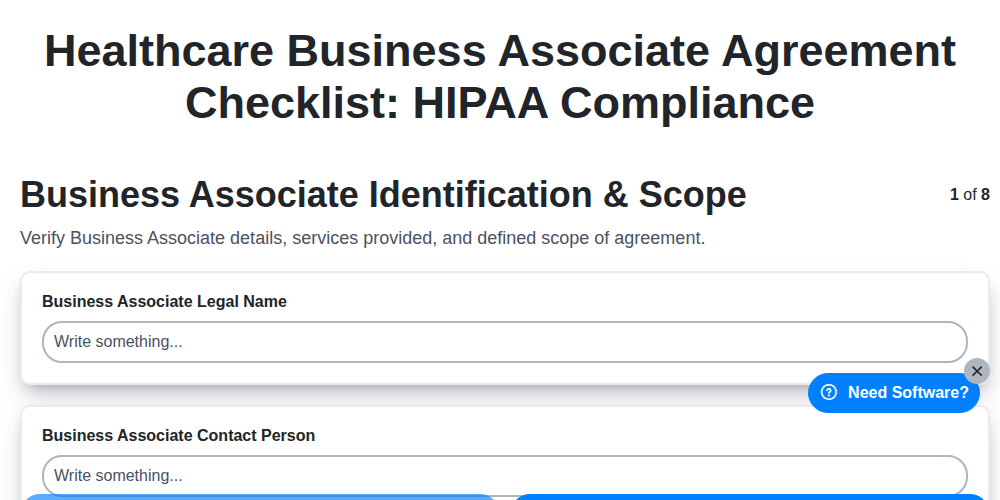
Table of Contents
- Understanding the Business Associate Agreement (BAA)
- 1. Business Associate Identification & Scope
- 2. Permitted Uses and Disclosures
- 3. Data Security and Breach Notification
- 4. Subcontractor Agreements: The Flow-Down Requirement
- 5. HIPAA Training and Compliance: Ensuring Awareness
- 6. Term and Termination: Defining the Relationship's End
- 7. Business Associate Responsibilities: Duties and Accountability
- 8. Agreement Updates & Review: Maintaining Compliance
- Resources & Links
TLDR: Navigating Business Associate Agreements (BAAs) for HIPAA compliance can be overwhelming. This checklist template breaks down the key areas - from identifying your BAs to handling data security & updates - ensuring you cover everything needed to avoid penalties and protect patient information. Use it to streamline your BAA process and stay compliant!
Understanding the Business Associate Agreement (BAA)
A Business Associate Agreement (BAA) is a crucial legal contract under HIPAA. It's not just a formality; it's a binding agreement between a Covered Entity (like a hospital, doctor's office, or health insurer) and a Business Associate (BA) - any individual or organization that performs functions or activities on behalf of the Covered Entity that involve accessing or using Protected Health Information (PHI).
Think of it as defining the rules of engagement. The BAA outlines exactly what a Business Associate is allowed to do with PHI, how they must protect it, and what happens if things go wrong. Without a properly executed BAA, the Covered Entity risks violating HIPAA regulations and facing significant penalties. It's a shared responsibility - both the Covered Entity and the Business Associate are legally obligated to uphold the agreement's terms. Failing to do so can lead to audits, fines, and reputational damage. Understanding the specific details within a BAA is paramount for maintaining HIPAA compliance.
1. Business Associate Identification & Scope
The foundation of HIPAA compliance through a Business Associate Agreement (BAA) starts with accurately identifying who qualifies as a Business Associate (BA) and clearly defining the scope of their work. Not every vendor you work with needs a BAA, but those handling Protected Health Information (PHI) absolutely do.
Here's what to consider:
- Does the vendor access, create, receive, or transmit PHI on your behalf? This is the key question. If the answer is yes, they likely need a BAA.
- What specific services do they provide? Be granular. IT support is too broad. Define services like managed email hosting or data analytics for patient satisfaction surveys.
- What PHI is involved? Specify the type of PHI they're accessing - medical records, billing information, patient lists, etc.
- Clearly Define the Scope of Work: The BAA should explicitly state what the Business Associate is permitted to do with PHI. Vague language invites compliance problems. Detail the systems they access, the data they can utilize, and the functions they perform.
- Documentation is Key: Maintain a record of your Business Associate assessment, detailing why a BAA is (or is not) required for each vendor. This demonstrates due diligence if faced with an audit.
2. Permitted Uses and Disclosures
One of the most critical sections of a Business Associate Agreement (BAA) meticulously outlines what your Business Associate can and cannot do with Protected Health Information (PHI). It's not enough to simply acknowledge the HIPAA Privacy and Security Rules; the BAA must specifically detail the permissible uses and disclosures of PHI.
What to look for:
- Specific Purposes: The BAA needs to explicitly state the precise purposes for which the Business Associate is authorized to use and disclose PHI. Vague language is unacceptable. Examples might include providing services you've contracted them for, billing and claims processing, or data analysis for a specific project.
- Minimum Necessary Standard: The BAA should incorporate the minimum necessary standard. This means the Business Associate should only access, use, and disclose the minimum amount of PHI needed to accomplish the stated purposes.
- Prohibition of Redissemination: The BAA must clearly prohibit the Business Associate from sharing PHI with third parties unless specifically authorized by you or in compliance with HIPAA rules. Redissemination (sharing PHI with someone else) is a common area of risk.
- Patient Rights: The BAA should specify how the Business Associate will support your compliance with patient rights, such as the right to access, amend, and receive an accounting of disclosures. This includes procedures for handling patient requests.
- De-identification: If the Business Associate is involved in de-identifying PHI, the BAA should define the methodology used to ensure compliance with HIPAA's de-identification standards.
Red Flags:
- Language that's too broad or ambiguous.
- Lack of specificity about permitted uses.
- Absence of a clear prohibition against redissemination.
- No mention of supporting patient rights.
3. Data Security and Breach Notification
A robust Business Associate Agreement (BAA) must clearly outline data security measures and breach notification protocols. This isn't just about ticking a box; it's about ensuring the protection of Protected Health Information (PHI).
Key Considerations in Your BAA:
- Security Rule Compliance: The BAA should explicitly state the Business Associate's responsibility to comply with the HIPAA Security Rule. This includes administrative, physical, and technical safeguards. Be specific; referencing specific sections of the Security Rule is helpful.
- Encryption & Access Controls: Detail requirements for data encryption, both in transit and at rest. Outline access control policies, including who can access PHI and under what circumstances. Principle of least privilege is crucial here - only grant access necessary to perform the associate's duties.
- Data Backup & Disaster Recovery: The BAA needs to address how the Business Associate handles data backups and disaster recovery plans. This ensures data integrity and availability even in unforeseen events. Consider requiring documented plans and periodic testing.
- Breach Notification Timeline & Reporting: Clearly define the Business Associate's obligation to promptly report any data breaches to the Covered Entity. Specify the timeframe for notification (generally, as required by HIPAA, but the BAA can set stricter timelines). Define what must be reported and to whom (individuals affected, HHS, media, etc.).
- Remediation & Mitigation: Outline the Business Associate's responsibility to take corrective action following a breach to prevent future occurrences. Detail the process for identifying vulnerabilities and implementing security updates.
- Security Incident Reporting Procedures: The BAA should clearly define the procedures for reporting suspected security incidents, allowing for a swift response to potential threats.
Ensuring these aspects are comprehensively addressed within the BAA significantly strengthens your HIPAA compliance posture and minimizes risk.
4. Subcontractor Agreements: The Flow-Down Requirement
The Business Associate Agreement (BAA) isn't just a document between you and your primary Business Associate (BA). It's a gateway to ensuring HIPAA compliance across your entire ecosystem of vendors and subcontractors. This is often referred to as the "flow-down" requirement.
HIPAA mandates that if your BA intends to share Protected Health Information (PHI) with a subcontractor to perform work or services covered by the BAA, you must ensure that your BA has a BAA in place with that subcontractor. This isn't optional - it's a critical component of your HIPAA compliance program.
Think of it as a chain: Your BAA is the first link, and your BA's agreements with their subcontractors are the subsequent links. A break in any link weakens the entire chain, potentially jeopardizing patient data and exposing you to significant legal and financial repercussions.
What needs to be included in the flow-down agreement? The terms and conditions of your BAA must be mirrored in the agreement between your BA and its subcontractor. This includes stipulations around:
- Permitted Uses and Disclosures: Ensuring the subcontractor understands and adheres to the limited uses and disclosures outlined in your BAA.
- Data Security: Maintaining the same level of security measures as required in your original agreement.
- Breach Notification: Clear procedures for reporting any data breaches, as outlined in your BAA.
- HIPAA Training: Confirmation that the subcontractor's personnel handling PHI receive adequate HIPAA training.
Due Diligence is Key: Don't simply take your BA's word that they have these flow-down agreements in place. Request and review copies to verify compliance. Regular audits and ongoing monitoring are essential to maintain a robust HIPAA program. Ignoring the flow-down requirement leaves your organization vulnerable and could lead to hefty penalties.
5. HIPAA Training and Compliance: Ensuring Awareness
A signed Business Associate Agreement (BAA) is only the first step. True HIPAA compliance hinges on ensuring everyone involved understands their responsibilities. This section focuses on fostering a culture of awareness and accountability within your organization and with your Business Associates.
For Your Organization:
- Regular Training: Implement a recurring HIPAA training program for all employees who handle Protected Health Information (PHI). This should cover topics like privacy rules, security requirements, incident reporting, and BAA obligations.
- Role-Based Training: Tailor training to specific roles. Those with greater access to PHI require more in-depth instruction.
- Documentation: Maintain meticulous records of all training sessions, including attendance, content covered, and assessment results.
- Annual Refresher Courses: HIPAA regulations and best practices evolve. Annual refresher courses ensure ongoing understanding and address any changes.
- New Employee Onboarding: Integrate HIPAA training into the onboarding process for all new hires.
For Your Business Associates:
- BAA-Specific Training: Require BAs to provide training to their employees who access or handle PHI on your BAAs and their specific obligations. Request documentation confirming completion.
- Due Diligence: Conduct periodic assessments to verify BAs are fulfilling their training requirements and maintaining a compliant environment. This can be a simple questionnaire or a more formal audit.
- Incident Reporting Awareness: Ensure BAs understand their responsibility to promptly report any security incidents or breaches.
Failing to prioritize HIPAA training and compliance can lead to significant financial penalties and reputational damage. It's an investment in protecting patient privacy and maintaining trust.
6. Term and Termination: Defining the Relationship's End
The BAA isn't a perpetual commitment. Clearly defining the agreement's term and termination clauses is crucial for both the Covered Entity and the Business Associate. This section outlines when the agreement begins, how long it lasts, and the conditions under which it can be ended.
Initial Term & Renewal: The BAA should specify the initial term length (e.g., one year, two years) and whether it automatically renews. If renewal is automatic, detail the renewal process - does it require notification, and how much notice is needed?
Termination for Cause: Outline specific events that trigger termination for cause. This typically includes violations of HIPAA rules, security breaches, or failure to uphold the responsibilities outlined in the agreement. The BAA should specify a timeframe (e.g., 30 days) for remediation before termination takes effect.
Termination for Convenience: Consider including a clause allowing either party to terminate the agreement for convenience with a reasonable advance notice period (e.g., 90 days). This provides flexibility for both parties if circumstances change.
Data Return or Destruction Upon Termination: This is arguably the most critical aspect of termination. The BAA must detail what happens to Protected Health Information (PHI) when the agreement ends. Options include:
- Return of PHI: The Business Associate must return all PHI to the Covered Entity.
- Secure Destruction: The Business Associate must securely destroy all PHI, providing verifiable documentation of the destruction.
- Return or Destruction (Choice): Allow the Covered Entity to choose between return or destruction, documenting the chosen method.
Ongoing Obligations Post-Termination: Even after termination, the Business Associate may still have ongoing obligations related to PHI. The BAA should address how long these obligations remain in effect and the Business Associate's responsibility to respond to any requests from the Covered Entity regarding data relating to the terminated agreement.
Failure to adequately address termination can lead to ongoing HIPAA compliance risks and potential legal liabilities.
7. Business Associate Responsibilities: Duties and Accountability
The BAA isn't just about what you do; it's about outlining the specific, legally binding responsibilities of your Business Associate. These responsibilities must be clearly defined and actionable. Here's a breakdown of key areas to cover:
- Protecting PHI: This is paramount. The BA must demonstrate a commitment to safeguarding Protected Health Information (PHI) consistent with the HIPAA Security Rule. Detail their physical, technical, and administrative safeguards.
- Reporting Breaches: Establish a clear process for the BA to report any suspected or actual breaches of PHI to your organization. Include timelines and reporting mechanisms.
- Compliance with HIPAA Rules: The BA is accountable for adhering to all applicable HIPAA rules - Security, Privacy, and Breach Notification. Specify how they will demonstrate compliance (e.g., documented policies, audits).
- Cooperation with Investigations: The BAA should require the BA to fully cooperate with any investigations related to HIPAA compliance initiated by your organization or the Department of Health and Human Services (HHS).
- Designated Contact Person: Include a requirement for a designated contact person at the BA's organization who is responsible for HIPAA compliance and serves as a point of contact. This allows for direct communication and accountability.
- Reporting Changes: The BA is obligated to notify you of any significant changes in their practices, policies, or personnel that could impact PHI security or compliance.
- Maintaining Records: The BA must maintain records demonstrating their compliance with the BAA and HIPAA requirements for the period required by HIPAA, and for a period thereafter.
Clearly defining these responsibilities, and ensuring the BA understands and acknowledges them, strengthens the legal foundation of your BAA and minimizes potential compliance risks.
8. Agreement Updates & Review: Maintaining Compliance
A Business Associate Agreement (BAA) isn't a set it and forget it document. HIPAA regulations evolve, your business practices change, and your Business Associate's capabilities and processes may also shift. Regular updates and reviews are absolutely crucial for maintaining compliance and safeguarding Protected Health Information (PHI).
Here's what you need to do:
- Annual Review: Schedule an annual review of your BAAs. This doesn't necessarily mean rewriting the entire document, but rather assessing its continued relevance and accuracy.
- Regulatory Changes: Stay informed about any updates to HIPAA regulations and guidance from HHS. Immediately evaluate how these changes impact your BAAs and amend them accordingly.
- Business Associate Changes: Monitor changes within your Business Associate's operations, including changes in personnel, systems, or physical locations. Discuss these changes and ensure the BAA reflects the current scope and understanding.
- Internal Policy Alignment: Regularly review and update your own internal policies and procedures related to PHI handling. Ensure your BAAs are consistent with these internal guidelines.
- Documentation: Meticulously document all reviews, updates, and any amendments made to the BAA. This provides an audit trail demonstrating your commitment to compliance.
- Communication: Communicate any changes to your Business Associate, clearly explaining the reasons for the updates and how they impact their responsibilities.
Resources & Links
- U.S. Department of Health & Human Services (HHS) - HIPAA: The official HHS website dedicated to HIPAA. Provides comprehensive information, regulations, guidance, and resources on HIPAA compliance, including BAAs. Essential for understanding the legal framework.
- National Institute of Standards and Technology (NIST): NIST provides frameworks and guidelines (like the Cybersecurity Framework) which are valuable for understanding data security requirements relevant to BAAs. Especially useful for section 3: Data Security and Breach Notification.
- Centers for Medicare & Medicaid Services (CMS): CMS has resources related to HIPAA and electronic health records. While not solely focused on BAAs, understanding the broader healthcare landscape is crucial for compliance, particularly when dealing with electronic protected health information.
- Health Resources & Services Administration (HRSA): HRSA provides guidance and support for healthcare providers and related entities. Can offer context on data privacy and security considerations for BAAs, especially for smaller organizations.
- Center for Democracy & Technology (CDT): CDT is a non-profit dedicated to digital rights and privacy. Provides analysis and resources on privacy regulations like HIPAA, which can help clarify complex legal issues around BAAs. Useful for understanding the 'why' behind the requirements.
- International Association of Privacy Professionals (IAPP): The IAPP is a professional association for privacy professionals. Offers certifications, training, and resources on privacy laws and regulations, including HIPAA and BAAs. A great resource for in-depth training (often at a cost).
- Privacy Rights Clearinghouse: Offers clear explanations and resources on privacy laws, including HIPAA and BAAs. Provides an accessible overview of key concepts, beneficial for understanding section 2: Permitted Uses and Disclosures.
- Federal Trade Commission (FTC): While not directly HIPAA, the FTC has enforcement authority related to unfair or deceptive trade practices involving consumer data. Their guidance can be relevant, especially concerning data security and notification requirements, supporting section 3: Data Security and Breach Notification.
- National Association of Healthcare Attorneys (NAH): Provides legal resources and insights specifically for healthcare professionals. Could be useful for understanding the legal implications of BAAs and section 3: Data Security and Breach Notification.
- American Health Information Management Association (AHIMA): AHIMA is a professional organization for health information management professionals. Provides education, standards, and best practices related to HIPAA compliance and data governance, helpful for understanding the ongoing responsibilities in sections 5 & 8.
- LegalZoom: Offers templates and legal services related to business agreements, including BAAs (Note: always consult with your own legal counsel). Can be helpful for understanding the structure of a BAA and section 2: Permitted Uses and Disclosures, but should *not* replace legal advice.
Frequently Asked Questions
What is a Business Associate Agreement (BAA)?
A Business Associate Agreement (BAA) is a contract between a covered entity (like a hospital or doctor's office) and a business associate (like a billing service or IT vendor) that handles protected health information (PHI). It outlines the business associate's responsibilities regarding HIPAA compliance and safeguarding PHI.
Why do I need a BAA?
A BAA is legally required under HIPAA. If your business handles PHI on behalf of a covered entity, you must have a BAA in place to ensure compliance and avoid potential penalties. Failure to have a BAA can result in fines for both the covered entity and the business associate.
Who needs a BAA?
Any entity that performs functions or activities on behalf of a covered entity that involve accessing or using PHI needs a BAA. This includes, but isn't limited to, billing services, IT support, data storage providers, transcription services, and legal consultants.
What are the key elements typically found in a BAA?
Key elements include: permitted uses and disclosures of PHI, obligations regarding security and privacy, requirements for reporting breaches, termination provisions, and specifications for data return or destruction.
What is the Covered Entity's responsibility in a BAA?
The Covered Entity is responsible for ensuring the Business Associate understands and adheres to HIPAA rules, providing training where necessary, and monitoring the Business Associate's compliance.
What is the Business Associate's responsibility in a BAA?
The Business Associate is responsible for protecting PHI, implementing security measures, reporting breaches, complying with the BAA terms, and adhering to HIPAA regulations.
How often should I review and update my BAAs?
BAAs should be reviewed at least annually and whenever there are changes to HIPAA regulations, the services provided, or the business associate's systems.
What happens if there's a data breach?
The BAA outlines the Business Associate's obligation to promptly report any breaches of PHI to the Covered Entity. Both entities then have responsibilities for investigation, notification (potentially to individuals and the Department of Health and Human Services), and remediation.
Can I use a generic BAA template?
While templates can be a starting point, it's highly recommended to customize the BAA to accurately reflect the specific services being provided and the level of access to PHI. A generic template may not cover all relevant aspects of your specific arrangement.
What are the potential penalties for non-compliance with HIPAA and BAAs?
Penalties can include fines, civil monetary penalties (CMPs), criminal charges (in some cases), and reputational damage. Fines can range from $100 to $50,000+ per violation, with a maximum penalty of $1.5 million per calendar year for each violation.
Where can I find more information about HIPAA and BAAs?
Refer to the U.S. Department of Health and Human Services (HHS) website (www.hhs.gov/hipaa), the Office for Civil Rights (OCR) guidance materials, and consult with a legal professional specializing in HIPAA compliance.
Comments
There are no comments yet. Be the first to add one!
Healthcare Management Solution Demo
Streamlining healthcare operations and improving patient care? ChecklistGuro's Work OS platform simplifies everything from patient scheduling and billing to compliance and staff management. Enhance efficiency, reduce administrative burden, and focus on what matters most: your patients. Learn how ChecklistGuro can transform your healthcare organization!
Related Articles
The Ultimate Healthcare Patient Satisfaction Survey Checklist Template
Mastering Healthcare Inventory: Your Par Level Checklist Template
Mastering Hand Hygiene: Your Compliance Checklist Template
Protecting Patients: Your Fire Safety Checklist for Patient Areas
Your Ultimate Healthcare Construction Checklist Template
Mastering Hand Hygiene: Your Compliance Checklist Template
Your Radiology Equipment Maintenance Checklist Template

Your Ultimate Guide to Healthcare Waste Management: A Checklist Template
Need help with
Healthcare?
Have a question? We're here to help. Please submit your inquiry, and we'll respond promptly.