Healthcare Telehealth Procedure Checklist: Security & Compliance
Published: 11/28/2025 Updated: 07/02/2026
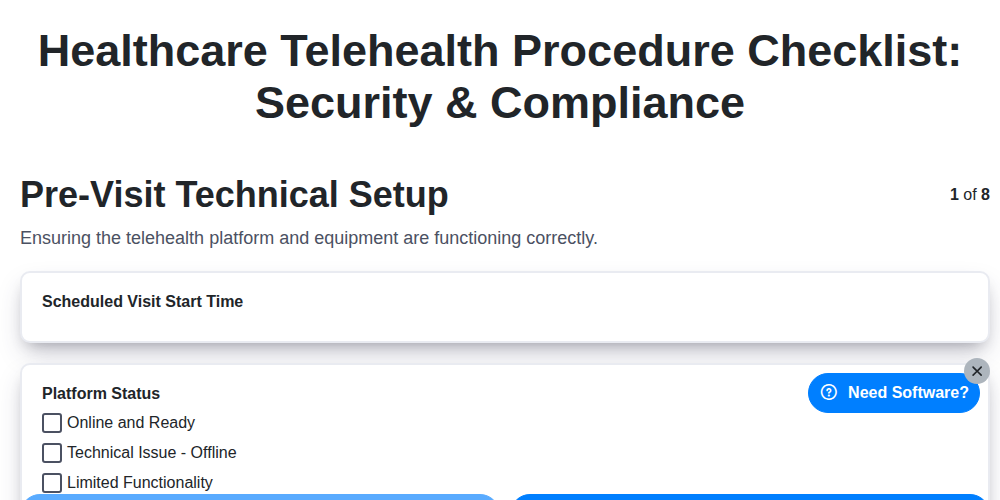
Table of Contents
- Introduction: The Growing Importance of Telehealth Security
- 1. Pre-Visit Technical Setup: Ensuring a Smooth Start
- 2. Patient Consent and Verification: Establishing Trust and Authorization
- 3. Data Security & Privacy: Protecting Sensitive Information
- 4. Platform & Device Security: Fortifying the Telehealth Infrastructure
- 5. Session Recording & Storage: Legal and Ethical Considerations
- 6. Documentation & Record Keeping: Maintaining Accurate Records
- 7. Emergency Procedures: Handling Unexpected Situations
- 8. Post-Visit Compliance: Ongoing Responsibilities
- 9. Training and Ongoing Assessment
- Conclusion: Maintaining a Secure and Compliant Telehealth Practice
- Resources & Links
TLDR: Running secure and compliant telehealth visits is crucial. This checklist simplifies the process, covering everything from technical setup and patient consent to data security, emergency protocols, and post-visit record keeping. It's your go-to resource for minimizing risks and ensuring a smooth, protected telehealth experience for both patients and providers.
Introduction: The Growing Importance of Telehealth Security
Telehealth has exploded in popularity, offering unprecedented access to care and convenience for both patients and providers. However, this rapid expansion has also amplified the critical need for robust security and compliance protocols. The sensitive nature of healthcare data - including personal information, medical history, and diagnoses - makes telehealth platforms prime targets for cyberattacks and data breaches. Failing to adequately protect patient information can result in significant financial penalties, legal repercussions, and, most importantly, erode patient trust. This blog post dives into a comprehensive checklist designed to navigate the complexities of telehealth security and compliance, ensuring you're providing secure and legally sound virtual care.
1. Pre-Visit Technical Setup: Ensuring a Smooth Start
A seamless telehealth experience begins long before the patient appears on your screen. Thorough pre-visit technical setup minimizes frustration and maximizes efficiency. Here's a breakdown of key steps:
- Bandwidth Assessment: Verify sufficient upload and download speeds for both the provider and the patient (ideally 3-5 Mbps for video conferencing). Consider providing resources or troubleshooting guides for patients with limited bandwidth.
- Platform Testing: Regularly test your telehealth platform's functionality, including video and audio quality, screen sharing, and any integrated features (e.g., chat, patient intake forms).
- Hardware Checks: Confirm all necessary equipment (computers, cameras, microphones, speakers, peripherals) are functional and properly connected.
- Software Updates: Ensure all software, including the telehealth platform, operating system, and security applications (antivirus, firewall), are up to date. Outdated software is a common vulnerability.
- Connectivity Verification: Double-check internet connectivity for both provider and any staff involved. Have backup internet options readily available (e.g., mobile hotspot).
- Waiting Room Management: If utilizing a virtual waiting room, ensure it functions correctly and provides clear instructions for patients.
- Technical Support Readiness: Have a designated support person available to assist with technical issues during the session.
2. Patient Consent and Verification: Establishing Trust and Authorization
Before any telehealth session commences, obtaining informed consent and rigorously verifying patient identity are paramount. This isn't just about ticking a box; it's about building trust and ensuring legal compliance.
Key Steps:
- Explain the Telehealth Process: Clearly outline what the patient can expect during the telehealth visit, including potential limitations and alternatives if telehealth isn't suitable.
- Discuss Privacy & Security: Explicitly address how their data will be protected during transmission and storage. Mention HIPAA compliance and any specific security measures in place.
- Consent for Recording (if applicable): If session recording is planned (and legally permissible), obtain explicit, documented consent. Explain the purpose of the recording and who will have access.
- Verify Patient Identity: Employ multiple verification methods, such as:
- Asking pre-visit security questions.
- Checking government-issued photo identification.
- Comparing information to existing records.
- Utilizing biometric authentication (if available and appropriate).
- Document Consent: Maintain a clear and auditable record of the consent process, including the date, time, method of consent, and any questions or concerns raised by the patient. Electronic signatures are strongly recommended for efficiency and traceability.
- Address Patient Concerns: Encourage patients to ask questions and ensure they understand the process before proceeding. Document any concerns or clarifications provided.
Important Note: Laws and regulations surrounding telehealth consent vary by state and jurisdiction. Consult legal counsel to ensure your practices are compliant.
3. Data Security & Privacy: Protecting Sensitive Information
Telehealth inherently deals with highly sensitive patient data, making robust security and privacy measures paramount. Non-compliance can lead to hefty fines, reputational damage, and a breach of patient trust. Here's a breakdown of critical steps within this area:
- Encryption: Ensure all data, both in transit (during the telehealth session) and at rest (stored on servers), is encrypted using industry-standard encryption protocols (e.g., TLS/SSL). Regularly review and update encryption methods.
- HIPAA Compliance: Meticulously adhere to all HIPAA regulations, including the Security and Privacy Rules. This encompasses Business Associate Agreements (BAAs) with all third-party vendors involved in the telehealth process. Document all BAAs and ensure ongoing compliance.
- Access Controls: Implement role-based access controls. Only authorized personnel should have access to patient data. Regularly review and update access privileges. Two-factor authentication (2FA) for all users is strongly recommended.
- Data Minimization: Collect only the data absolutely necessary for the telehealth visit. Avoid storing unnecessary information.
- Privacy Policies: Clearly communicate your privacy policies to patients. Make them easily accessible and understandable.
- Breach Response Plan: Develop and regularly test a comprehensive breach response plan. This plan should outline steps to contain a breach, notify affected individuals and regulatory bodies, and remediate vulnerabilities.
- Regular Security Audits: Conduct periodic security audits - both internal and potentially external - to identify and address potential vulnerabilities. Document findings and remediation steps.
- Patient Data Location: Be transparent with patients about where their data is stored and processed. If using cloud-based services, understand the provider's data security practices and location of data centers.
- De-identification/Anonymization: When using data for research or training purposes, prioritize de-identification or anonymization techniques to protect patient identities.
4. Platform & Device Security: Fortifying the Telehealth Infrastructure
A robust telehealth program isn't just about convenient appointments; it's about building a secure digital environment. Compromised platforms and devices can expose sensitive patient data, leading to breaches and legal repercussions. Here's a breakdown of crucial security measures for your telehealth infrastructure:
Platform Security:
- Vendor Due Diligence: Thoroughly vet your telehealth platform provider. Demand details on their security protocols, including penetration testing results, certifications (e.g., HIPAA compliance, SOC 2), and incident response plans. Don't just take their word for it - ask for proof.
- Regular Security Updates: Ensure the platform receives regular security patches and updates. Automated updates are ideal, but if manual, establish a consistent schedule and verification process.
- Access Controls: Implement role-based access controls. Not everyone needs administrative privileges. Restrict access based on job function and need-to-know basis. Enforce strong password policies (complexity, rotation, MFA).
- Encryption: Data should be encrypted both in transit (using HTTPS/TLS) and at rest (stored on secure servers). Verify the encryption methods used.
- Firewall Protection: Implement firewalls to prevent unauthorized access to the telehealth platform's infrastructure.
Device Security (For Providers & Patients):
- Provider Device Management: Establish clear policies regarding provider devices (laptops, tablets, smartphones). Consider Mobile Device Management (MDM) solutions for remote monitoring, security updates, and data wiping capabilities.
- Patient Education: Educate patients on best practices for device security, including:
- Using strong passwords.
- Keeping software updated.
- Avoiding public Wi-Fi networks (or using a VPN).
- Being aware of phishing attempts.
- Device Authentication: Consider implementing two-factor authentication (2FA) for patient devices when feasible, adding an extra layer of protection.
- Endpoint Protection: Ensure all devices accessing telehealth platforms (provider and patient) have up-to-date antivirus and anti-malware software.
Maintaining a secure telehealth infrastructure is an ongoing process requiring vigilance and adaptation to emerging threats.
5. Session Recording & Storage: Legal and Ethical Considerations
Recording telehealth sessions can be a valuable tool for quality assurance, training, and dispute resolution. However, it's also a significant legal and ethical minefield. Before even considering recording, thoroughly evaluate its necessity and potential risks.
Legal Landscape: Regulations surrounding session recording vary significantly by jurisdiction and payer. HIPAA doesn't explicitly prohibit recording, but it does mandate strict adherence to privacy and security rules. State laws are often even stricter, potentially requiring explicit patient consent or outright banning recording in certain circumstances. Failure to comply can result in substantial fines and legal action. Always consult with legal counsel to understand your specific obligations.
Patient Consent is Paramount: If you do record, obtaining explicit, informed consent is mandatory in most jurisdictions. This consent should clearly explain:
- The fact that the session is being recorded.
- The purpose of the recording (e.g., quality assurance, training).
- Who will have access to the recording.
- How the recording will be stored and protected.
- The patient's right to refuse recording and how that refusal will be accommodated (e.g., alternative care options).
Simply including a statement in a general terms of service agreement is not sufficient. Document the consent process - ideally with a signed acknowledgement (electronic or physical).
Ethical Considerations: Even if legally permissible, consider the ethical implications. Patients may feel uncomfortable knowing they are being recorded, potentially impacting the therapeutic relationship and honesty. Transparency and respect for patient autonomy are key.
Secure Storage and Access Control: Recorded sessions contain highly sensitive patient data. Implement robust security measures to protect them from unauthorized access, use, or disclosure. Access should be limited to authorized personnel only, and data should be encrypted both in transit and at rest.
Retention Policies: Establish clear retention policies outlining how long recordings will be stored and when they will be securely destroyed. Adhere to these policies consistently.
6. Documentation & Record Keeping: Maintaining Accurate Records
Robust documentation and record-keeping are cornerstones of compliant telehealth practice. It's not just about ticking a box; it's about creating a clear audit trail, protecting patient rights, and ensuring continuity of care. Here's what you need to consider:
- Comprehensive Patient Records: Telehealth records should mirror the level of detail found in traditional in-person visits. This includes patient demographics, reason for visit, medical history relevant to the consultation, examination findings (including virtual assessments), diagnoses, treatment plans, medications prescribed (if applicable), and any referrals.
- Consent Forms & Agreements: Securely store signed consent forms outlining patient agreement to telehealth services, data privacy practices, and any limitations of the virtual encounter. Electronic signatures are acceptable and often preferred.
- Audit Trails: Implement systems that automatically log access to patient records, including date, time, and user. This helps track who viewed and modified information.
- Retention Policies: Establish clear retention policies aligned with HIPAA regulations and state-specific requirements. Define how long records will be stored and how they will be securely disposed of.
- Integration with EHR/EMR: Ideally, integrate your telehealth platform with your existing Electronic Health Record (EHR) or Electronic Medical Record (EMR) system to streamline data flow and avoid data silos. If this isn't possible, maintain a clear process for transferring information.
- Regular Audits: Conduct periodic audits of your documentation practices to ensure consistency, accuracy, and compliance.
7. Emergency Procedures: Handling Unexpected Situations
Telehealth isn't immune to unexpected events. Power outages, technical glitches during a session, or even a patient experiencing a medical emergency during the consultation are possibilities. Having a documented emergency procedure checklist is vital for patient safety and organizational resilience.
Here's what your emergency procedures should cover:
- Technical Failures: What happens if the video or audio cuts out? Have a pre-determined communication method (phone number, email) to reconnect. Consider a backup platform or a clear instruction for rescheduling.
- Patient Medical Emergency During Session: This is critical. Clearly define roles. Healthcare providers should be trained to recognize signs of distress and follow established protocols. This might include instructing the patient to call emergency services (911 or local equivalent), providing them with instructions on what to tell the dispatcher, and remaining on the line to offer support. Document the incident thoroughly.
- Cybersecurity Incident: If you suspect a data breach or intrusion, immediately follow your cybersecurity incident response plan (which should be a separate, detailed document). This includes notifying IT, isolating affected systems, and potentially notifying patients (as required by law).
- Communication Breakdown: What if communication with the patient is lost, but you suspect a problem? Define a protocol for attempting re-contact and escalating concerns.
- Staff Training: Regularly train all staff involved in telehealth on these emergency procedures. Tabletop exercises simulating different scenarios can be incredibly valuable.
- Patient Communication: Be upfront with patients about limitations and potential risks, and explain your emergency protocol briefly during the consent process.
Remember: Regular review and updating of your emergency procedures are essential to ensure their effectiveness.
8. Post-Visit Compliance: Ongoing Responsibilities
The telehealth journey doesn't end when the patient logs off. Maintaining compliance after the virtual visit is crucial for avoiding penalties and fostering patient trust. Here's a breakdown of post-visit responsibilities:
- Audit Trail Review: Regularly review the audit trails generated by your telehealth platform. This verifies user access, data modifications, and overall system integrity.
- Secure Data Deletion/Retention: Adhere strictly to your established data retention policies. Properly secure and ultimately delete patient data according to HIPAA guidelines and any state-specific regulations. Don't keep data longer than necessary.
- System Updates & Patching: Continue monitoring for and promptly applying security updates and patches for all telehealth platforms, devices, and software. This is an ongoing process.
- Staff Training Reinforcement: Briefly recap key compliance points with your team during regular meetings. Compliance isn's a one-time training; it requires ongoing reinforcement.
- Incident Response Planning Review: Periodically review and update your incident response plan to address potential data breaches or security incidents that may occur post-visit.
- Business Associate Agreements (BAAs) Management: Stay on top of BAAs with your telehealth platform and any other third-party vendors. Ensure they remain current and aligned with evolving regulations.
- Feedback & Improvement: Actively solicit feedback from patients and staff regarding their telehealth experience and use it to identify areas for continuous improvement in both security and compliance.
9. Training and Ongoing Assessment
Telehealth isn't a "set it and forget it" endeavor. Maintaining security and compliance requires a commitment to ongoing training and assessment for all staff involved in telehealth services. This includes clinicians, administrative staff, and IT personnel.
Here's what comprehensive training should cover:
- Regular Refresher Courses: Annual or bi-annual training on HIPAA, data privacy regulations, and security best practices.
- Platform-Specific Training: Hands-on training on the telehealth platform's features, security protocols, and troubleshooting procedures.
- Incident Response Training: Mock scenarios and practical drills to prepare staff for potential security breaches or privacy violations.
- Updates on Regulations: Regularly communicating changes in telehealth regulations and updating training materials accordingly.
- Phishing & Social Engineering Awareness: Training to identify and avoid phishing attempts and other social engineering tactics.
Ongoing assessment is equally vital:
- Periodic Security Audits: Internal and, potentially, external audits to identify vulnerabilities and ensure compliance.
- Risk Assessments: Regularly assessing potential risks associated with telehealth operations and implementing mitigation strategies.
- Employee Performance Reviews: Including security and compliance considerations in performance evaluations.
- Monitoring & Logging: Continuous monitoring of system logs and user activity to detect anomalies and potential threats.
- Feedback Mechanisms: Establishing channels for staff to report security concerns and provide feedback on the effectiveness of training programs.
By prioritizing training and ongoing assessment, healthcare organizations can foster a culture of security and compliance within their telehealth programs, minimizing risks and protecting patient information.
Conclusion: Maintaining a Secure and Compliant Telehealth Practice
Implementing telehealth offers incredible benefits - increased accessibility, improved patient convenience, and enhanced care delivery. However, these advantages are inextricably linked to a robust commitment to security and compliance. This checklist provides a foundational framework, but remember, it's not a static document. It should be reviewed and updated regularly to reflect evolving regulations (like HIPAA, GDPR, and state-specific laws), technological advancements, and organizational best practices.
A proactive approach to telehealth security and compliance isn't just about avoiding penalties; it's about building trust with your patients and upholding the integrity of their sensitive health information. By consistently adhering to a detailed checklist like the one outlined, healthcare providers can confidently navigate the complexities of telehealth and deliver exceptional, secure, and compliant care. Continuous training for staff, vigilant monitoring of systems, and a culture of security awareness are crucial for long-term success. Embrace these practices, and you'll build a telehealth practice that thrives on trust and delivers outstanding patient outcomes.
Resources & Links
- U.S. Department of Health and Human Services - HIPAA: The official HHS website for HIPAA resources, including regulations, guidance, and frequently asked questions. Essential for understanding patient privacy and security requirements in telehealth.
- National Institute of Standards and Technology (NIST): NIST provides cybersecurity frameworks and guidelines (like the Cybersecurity Framework) that are invaluable for securing telehealth platforms and devices. Relevant for Pre-Visit Technical Setup and Platform & Device Security sections.
- Center for Democracy & Technology (CDT): CDT provides analysis and advocacy related to technology and civil liberties, with a focus on privacy and healthcare. Helpful for understanding the broader legal and ethical landscape of telehealth.
- The Patient Safety and Quality Improvement Reporting System (PSQRS): While primarily focused on meaningful use, PSQRS provides insights into quality reporting and potential telehealth-specific measures, important for Documentation & Record Keeping.
- Health Resources & Services Administration (HRSA): HRSA provides funding and resources for telehealth programs, often including guidance on best practices. Relevant for various sections of the checklist.
- Athenahealth: Athenahealth offers insights and guides on HIPAA compliance, security best practices within a telehealth environment. Provides a practical business perspective.
- Becker's Hospital Review: Offers news and insights into healthcare technology and telehealth, including articles on security and compliance. Good for staying current on trends.
- Healthcare Information and Management Systems Society (HIMSS): HIMSS provides resources, training, and networking opportunities for healthcare IT professionals, including specific content related to telehealth security and compliance.
- American Telemedicine Association (ATA): ATA is a professional association for telehealth professionals. Their website provides resources, guidelines, and best practices for delivering safe and effective telehealth services. Important for all sections.
- Federal Trade Commission (FTC): The FTC focuses on consumer protection, including data security and privacy. Important for understanding obligations to protect patient data, even beyond HIPAA.
- ONC - Office of the National Coordinator for Health Information Technology: The ONC provides resources and guidance regarding health IT, including telehealth, focused on interoperability, security, and patient safety. Relevant for Pre-Visit Technical Setup and Post-Visit Compliance.
- Cybersecurity and Infrastructure Security Agency (CISA): CISA provides cybersecurity guidance and alerts relevant to healthcare organizations, particularly crucial for Platform & Device Security.
Frequently Asked Questions
What is telehealth and why is a security & compliance checklist important?
Telehealth utilizes technology to deliver healthcare remotely. A security & compliance checklist is crucial to protect patient data, ensure regulatory adherence (like HIPAA), and maintain patient trust, especially considering the increased vulnerability associated with remote care delivery.
What are the key regulatory frameworks I need to be aware of when implementing telehealth?
The primary framework is HIPAA (Health Insurance Portability and Accountability Act) in the US, which governs the privacy and security of Protected Health Information (PHI). Other considerations include state-specific telehealth laws, and potentially GDPR if you have patients in Europe. Federal and state licensing requirements for providers are also important.
What are the essential security measures outlined in the checklist?
The checklist covers areas like secure video conferencing platforms (encryption, access controls), data encryption at rest and in transit, strong password policies, multi-factor authentication, device security (BYOD management), network security (firewalls, VPNs), and regular security assessments and employee training.
How does the checklist address PHI data storage and transmission?
It emphasizes the use of HIPAA-compliant cloud storage solutions, secure email practices (or secure messaging portals), and encrypted data transmission methods. It covers data retention policies and proper disposal methods to avoid data breaches.
What is 'Business Associate Agreements' (BAA) and why are they important in telehealth?
A BAA is a contract between a healthcare provider and a third-party vendor (like a telehealth platform provider) who handles PHI. It outlines the vendor's responsibilities to protect PHI and comply with HIPAA. The checklist stresses the need for BAAs with all relevant vendors.
How does the checklist address device security for both provider-owned and patient-owned devices (BYOD)?
For provider-owned devices, it recommends endpoint security software, mobile device management (MDM), and regular updates. For BYOD, it emphasizes policies around acceptable use, security training for patients, and possibly requiring patients to use specific, secure apps or portals.
What are some common telehealth compliance pitfalls to avoid?
Common pitfalls include neglecting to obtain proper consents, failing to secure telehealth platforms, overlooking state licensing requirements, failing to document telehealth encounters thoroughly, and not having a data breach response plan.
What role does employee training play in telehealth security and compliance?
Employee training is critical. It should cover HIPAA regulations, security best practices, proper data handling procedures, recognizing and reporting security incidents, and adhering to telehealth-specific policies. Refresher training should be conducted regularly.
How often should I review and update my telehealth security and compliance checklist?
The checklist should be reviewed and updated at least annually, or more frequently if there are significant changes to regulations, technology, or organizational practices. Regularly monitoring for new threats and vulnerabilities is also vital.
What is a data breach response plan and why is it necessary for telehealth?
A data breach response plan outlines the steps to take in the event of a security incident, including notification procedures, containment efforts, damage assessment, and remediation strategies. Having a plan in place minimizes the impact of a breach and demonstrates responsible data handling.
Comments
There are no comments yet. Be the first to add one!
Healthcare Management Solution Demo
Streamlining healthcare operations and improving patient care? ChecklistGuro's Work OS platform simplifies everything from patient scheduling and billing to compliance and staff management. Enhance efficiency, reduce administrative burden, and focus on what matters most: your patients. Learn how ChecklistGuro can transform your healthcare organization!
Related Articles
The Ultimate Healthcare Patient Satisfaction Survey Checklist Template
Mastering Healthcare Inventory: Your Par Level Checklist Template
Mastering Hand Hygiene: Your Compliance Checklist Template
Protecting Patients: Your Fire Safety Checklist for Patient Areas
Your Ultimate Healthcare Construction Checklist Template
Mastering Hand Hygiene: Your Compliance Checklist Template
Your Radiology Equipment Maintenance Checklist Template

Your Ultimate Guide to Healthcare Waste Management: A Checklist Template
Need help with
Healthcare?
Have a question? We're here to help. Please submit your inquiry, and we'll respond promptly.