HIPAA Compliance Checklist: Your Guide to Healthcare Data Security
Published: 11/28/2025 Updated: 07/02/2026
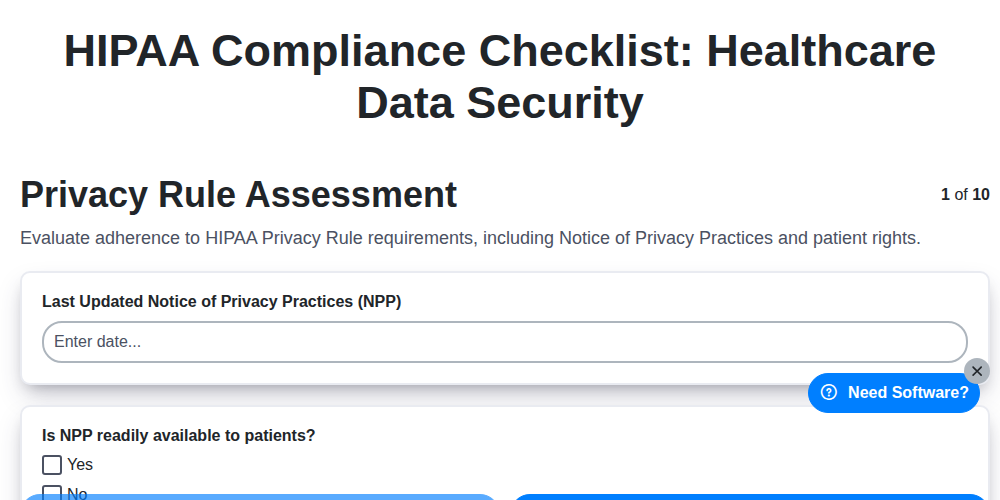
Table of Contents
- Introduction: Why HIPAA Compliance Matters
- 1. Privacy Rule Assessment: Understanding Patient Rights
- 2. Security Rule Implementation: Protecting Electronic Protected Health Information (ePHI)
- 3. Business Associate Agreements (BAA): Managing Third-Party Risk
- 4. Risk Analysis & Management: Identifying and Mitigating Vulnerabilities
- 5. Data Access Controls: Limiting Access to Sensitive Information
- 6. Encryption & Data Transmission: Securing Data in Transit and at Rest
- 7. Incident Response Plan: Preparing for and Responding to Breaches
- 8. Employee Training & Awareness: The Human Element of HIPAA Compliance
- 9. Physical Security Measures: Safeguarding Physical Records and Devices
- 10. Audit Trails & Monitoring: Tracking Activity and Detecting Anomalies
- 11. Regular Security Assessments: Continuous Improvement
- Conclusion: Maintaining Ongoing HIPAA Compliance
- Resources & Links
TLDR: Feeling overwhelmed by HIPAA? This checklist breaks down the key areas - from privacy rules and security implementation to employee training and data encryption - to help you assess, implement, and maintain compliance. It's your roadmap for protecting patient data and avoiding hefty fines!
Introduction: Why HIPAA Compliance Matters
HIPAA (Health Insurance Portability and Accountability Act) isn't just a regulation; it's the cornerstone of patient privacy and data security in the healthcare industry. It establishes national standards for protecting sensitive patient health information (PHI). Non-compliance isn't just a legal issue; it can severely damage your organization's reputation, erode patient trust, and result in significant financial penalties. In today's digital landscape, with increasingly sophisticated cyber threats, ensuring HIPAA compliance is more critical than ever. This checklist provides a framework to navigate the complex requirements and safeguard your organization and, most importantly, your patients.
1. Privacy Rule Assessment: Understanding Patient Rights
The Privacy Rule forms the bedrock of HIPAA compliance, and a thorough assessment is your first crucial step. This isn't just about ticking boxes; it's about truly understanding and respecting patient rights. Your assessment should focus on how your organization handles Protected Health Information (PHI) and ensures patients can exercise their rights.
Key areas to cover in your Privacy Rule Assessment include:
- Notice of Privacy Practices (NPP): Ensure your NPP is current, easily understandable, and readily available to patients (both physical and electronic versions). It must clearly outline how you use and share PHI, as well as their rights.
- Patient Access to Records: Develop processes that allow patients to easily access their medical records promptly and in a readily usable format. Comply with deadlines and required actions.
- Amendment Requests: Establish a procedure for patients to request corrections to their records and respond appropriately.
- Accounting of Disclosures: Provide patients with an accounting of disclosures of their PHI, detailing who received the information and why, unless specific exceptions apply.
- Restrictions on Uses and Disclosures: Understand and implement restrictions patients may place on their PHI, with limited exceptions.
- Communication Preferences: Respect patient preferences regarding how they want to be contacted.
Your assessment should document these processes, identify any gaps, and outline a plan to address them. This demonstrates your commitment to patient privacy and compliance with the Privacy Rule.
2. Security Rule Implementation: Protecting Electronic Protected Health Information (ePHI)
The HIPAA Security Rule outlines a comprehensive framework for protecting Electronic Protected Health Information (ePHI). It's not just about technology; it's about establishing administrative, physical, and technical safeguards to ensure confidentiality, integrity, and availability of patient data. Implementing these safeguards effectively requires a layered approach and ongoing vigilance.
Here's a breakdown of key areas within the Security Rule implementation, going beyond just ticking boxes:
- Administrative Safeguards: These are the policies and procedures that govern how ePHI is handled. This includes designating a Security Officer responsible for overseeing the security program, developing security policies and procedures, and establishing workforce sanctions for non-compliance. Regularly review and update these policies to reflect evolving threats and best practices.
- Physical Safeguards: While often overlooked, physical security is crucial. This includes limiting physical access to areas where ePHI is stored, implementing secure disposal methods for paper records and electronic media, and securing workstations and servers. Consider access badges, security cameras, and locked cabinets.
- Technical Safeguards: This is where many healthcare organizations focus their attention, and rightly so. It includes:
- Access Controls: Implementing strong passwords, multi-factor authentication, and role-based access to ensure only authorized personnel can access ePHI.
- Audit Controls: Logging system activity and user access to track who is accessing what data and when.
- Integrity Controls: Implementing measures to prevent unauthorized modification or deletion of ePHI.
- Transmission Security: Encrypting ePHI when it's transmitted electronically, both internally and externally. (See more detail in the Encryption & Data Transmission section).
- Regular Risk Assessments: Continuously assessing the vulnerabilities within your systems and processes is vital. This informs your security decisions and helps prioritize remediation efforts.
- Documentation: Meticulous documentation of all security policies, procedures, and implementation efforts is essential for demonstrating compliance during audits.
It's crucial to remember that the Security Rule is not a one-time project. It requires ongoing maintenance, updates, and adaptation to emerging threats and changes in technology.
3. Business Associate Agreements (BAA): Managing Third-Party Risk
HIPAA compliance isn't just about securing your own systems and processes; it's also about ensuring the security of Protected Health Information (PHI) when it's shared with third-party vendors. These vendors, known as Business Associates (BAs), often handle sensitive patient data on your behalf - from cloud storage and data analytics to billing and transcription services. Failing to properly manage this third-party risk can leave your organization vulnerable to breaches and significant penalties.
A Business Associate Agreement (BAA) is a crucial legal contract between your healthcare organization and any Business Associate. It outlines the BA's obligations to protect PHI and comply with HIPAA regulations. Here's what your BAAs must include:
- Specific Services: Clearly define the services the BA provides and the PHI they will be accessing, using, or disclosing.
- Permitted Uses and Disclosures: Limit the BA's use and disclosure of PHI to only what's necessary for the services they provide.
- Safeguards: Detail the BA's responsibility to implement appropriate safeguards to protect PHI, mirroring those you'd expect from your own organization.
- Reporting Requirements: Outline the BA's obligation to report any security incidents or breaches promptly.
- Subcontractor Agreements: Require the BA to ensure their subcontractors also comply with HIPAA and are bound by similar agreements.
- Termination Provisions: Include provisions for terminating the agreement if the BA fails to comply with HIPAA.
Don't just assume your BAAs are adequate. Regularly review and update them to reflect changes in your services, the BA's operations, and evolving regulatory requirements. A proactive approach to BAA management is a cornerstone of a robust HIPAA compliance program.
4. Risk Analysis & Management: Identifying and Mitigating Vulnerabilities
HIPAA compliance isn't about simply ticking boxes; it's about proactively safeguarding Protected Health Information (PHI). A robust Risk Analysis & Management process is the cornerstone of achieving this. It's not a one-time event, but an ongoing cycle.
What is a HIPAA Risk Analysis?
A HIPAA Risk Analysis is a systematic evaluation of your organization's potential vulnerabilities and threats that could compromise the confidentiality, integrity, or availability of PHI. It goes beyond just identifying potential security flaws; it assesses the likelihood of a threat exploiting those flaws and the impact if it were to occur.
Key Steps in a HIPAA Risk Analysis:
- Identify Assets: Catalog all systems, devices, and data stores containing PHI. This includes electronic medical records (EMRs), billing systems, portable devices (laptops, tablets, smartphones), paper records, and even verbal communications.
- Identify Threats: Consider potential threats, such as malware, ransomware, phishing attacks, insider threats, natural disasters, and hardware failures.
- Identify Vulnerabilities: Determine weaknesses in your systems and processes that could be exploited by these threats. Examples include outdated software, lack of multi-factor authentication, inadequate password policies, or insufficient physical security.
- Analyze Likelihood and Impact: Evaluate the probability of each threat exploiting a vulnerability and the potential harm to the organization and patients if it occurred.
- Document Findings: Meticulously document all identified risks, their likelihood, impact, and proposed mitigation strategies.
Risk Management & Remediation:
Once the Risk Analysis is complete, the focus shifts to Risk Management. This involves implementing safeguards to address the identified risks. This might include:
- Implementing Security Controls: This could be technical controls like firewalls and intrusion detection systems, or administrative controls like revised policies and procedures.
- Risk Mitigation Plans: Creating detailed plans for how each risk will be addressed, including timelines and assigned responsibilities.
- Risk Acceptance: In some cases, the cost of mitigating a risk may outweigh the potential harm. Documenting the decision to accept a risk is crucial.
- Regular Review & Updates: The Risk Analysis and Management process should be reviewed and updated at least annually, and whenever significant changes occur within the organization or its environment.
A well-executed Risk Analysis & Management process demonstrates due diligence, helps prioritize security investments, and ultimately strengthens your HIPAA compliance posture.
5. Data Access Controls: Limiting Access to Sensitive Information
One of the most critical aspects of HIPAA compliance is restricting access to Protected Health Information (PHI). The principle of least privilege should be your guiding star - users should only have access to the data they absolutely need to perform their job duties.
Here's what to consider:
- Role-Based Access: Implement role-based access control (RBAC). Define specific roles (e.g., nurse, billing clerk, administrator) and assign permissions based on those roles. This prevents unnecessary access to PHI.
- User Authentication: Strong passwords, multi-factor authentication (MFA), and biometric verification are essential to verify user identities before granting access. Regularly enforce password complexity requirements and rotation schedules.
- Access Reviews: Conduct periodic reviews of user access rights. Ensure employees have the appropriate level of access and remove access when roles change or employees leave the organization.
- Unique User IDs: Avoid shared user accounts. Each individual should have a unique user ID to track access and accountability.
- Data Segmentation: If possible, segment your data to limit access based on departmental needs or data sensitivity. For example, research data might require stricter access controls than billing information.
- Automated Access Provisioning/Deprovisioning: Streamline the process of granting and revoking access to PHI to reduce errors and improve efficiency.
- Regular Audits of Access Logs: Monitor who is accessing what data and when. Investigate any unusual or unauthorized access attempts.
Implementing robust data access controls minimizes the risk of data breaches and helps maintain patient privacy.
6. Encryption & Data Transmission: Securing Data in Transit and at Rest
HIPAA mandates the protection of Protected Health Information (PHI) both when it's stored (at rest) and when it's being moved (in transit). Encryption is a cornerstone of this protection.
Encryption at Rest: This means encrypting data stored on servers, workstations, laptops, and portable media (like USB drives). When data is encrypted, it's scrambled, making it unreadable without the decryption key. If a device is lost or stolen, the data remains protected. Implement strong encryption algorithms (like AES 256-bit) and manage your encryption keys securely - don't store them alongside the encrypted data!
Encryption in Transit: PHI transmitted electronically - whether through email, fax, or over a network - must also be protected. This means using secure protocols like:
- HTTPS: For web-based communication. Ensure all website forms and data submissions use HTTPS.
- SFTP/FTPS: For file transfers.
- TLS/SSL: For email communication and other network transmissions.
- VPNs: For secure remote access to your network.
Regularly review your encryption methods to ensure they meet current industry standards. Outdated or weak encryption can be easily bypassed, leaving your PHI vulnerable. Don't forget to document your encryption practices and the rationale behind your choices.
7. Incident Response Plan: Preparing for and Responding to Breaches
Even with robust preventative measures, data breaches can happen. A well-defined Incident Response Plan (IRP) is your crucial first line of defense when they do. This isn't just about damage control; it's about minimizing impact, fulfilling reporting obligations, and demonstrating due diligence to regulators.
Your IRP should be a detailed, step-by-step guide outlining how your organization will respond to a suspected or confirmed HIPAA breach. Key components include:
- Identification & Reporting: Clearly define how incidents are identified and who is responsible for reporting them internally. Establish a chain of command for escalating concerns.
- Containment: Immediate steps to stop the breach from spreading. This might involve isolating affected systems, changing passwords, or shutting down compromised servers.
- Assessment & Investigation: Determine the scope of the breach - what data was accessed or disclosed, how many individuals were affected, and the root cause of the incident.
- Notification: Identify and notify affected individuals, the Department of Health and Human Services (HHS), and potentially state attorneys general, according to HIPAA breach notification rules. Understand the deadlines involved and the information required for each notification.
- Remediation: Address the vulnerabilities that led to the breach. Implement corrective actions to prevent similar incidents from recurring.
- Documentation: Meticulously document every step of the incident response process, from initial detection to final remediation.
- Plan Review & Update: Regularly review and update your IRP, ideally annually or after a significant system change. Conduct tabletop exercises to test its effectiveness.
Don't wait for a breach to happen - proactively develop and regularly test your IRP. It's an investment in protecting your patient data and your organization's reputation.
8. Employee Training & Awareness: The Human Element of HIPAA Compliance
HIPAA compliance isn't just about technology and policies; it's fundamentally about people. Your employees are your first line of defense - or, unfortunately, a potential vulnerability - when it comes to protecting patient data. A robust training and awareness program is crucial to ensuring everyone understands their responsibilities and the importance of safeguarding Protected Health Information (PHI).
Beyond the Basics: Simply checking a box for an initial HIPAA training isn't enough. Ongoing, engaging, and tailored training is essential. Consider these key areas:
- Regular Refresher Courses: Annual (or even more frequent) refreshers keep HIPAA principles top-of-mind.
- Phishing Simulations: These realistic scenarios test employee vigilance against common phishing attacks that often target PHI.
- Role-Specific Training: Tailor training to different roles. A receptionist's training will differ from a data analyst's.
- Data Handling Best Practices: Cover topics like proper email practices, secure password creation, and recognizing suspicious activity.
- Social Engineering Awareness: Educate employees on how to identify and avoid social engineering tactics.
- Remediation and Reinforcement: When errors happen (and they will), use them as opportunities for learning and reinforce correct behaviors.
- Documentation: Maintain detailed records of all training sessions, including attendance, content covered, and assessment results.
The Impact of a Human Error: A single employee clicking a malicious link or sharing PHI inadvertently can compromise the entire organization. Invest in creating a culture of security where employees feel empowered to ask questions and report concerns without fear of retribution. A well-trained and aware workforce is your most valuable asset in maintaining HIPAA compliance.
9. Physical Security Measures: Safeguarding Physical Records and Devices
While digital security is paramount in today's healthcare landscape, don't overlook the fundamental importance of physical security. HIPAA mandates protecting patient data, and that includes safeguarding physical records and devices. A data breach isn't always a cyberattack; it can be as simple as a lost laptop, a misfiled chart, or unauthorized access to a server room.
Here's what your physical security measures should include:
- Controlled Access: Implement strict access controls to areas where Protected Health Information (PHI) is stored, whether it's paper records or servers. This includes locked doors, security badges, and visitor logs. Regularly review and update access permissions.
- Secure Storage: Implement secure storage solutions for paper records, such as locked file cabinets and designated storage rooms. Ensure devices (laptops, tablets, smartphones) are stored securely when not in use, preferably in locked cabinets or rooms.
- Device Security: Establish clear policies regarding the use and storage of mobile devices. This should include requirements for device passwords, screen locks, and remote wiping capabilities in case of loss or theft.
- Environmental Controls: Protect data from environmental threats like fire, flood, and extreme temperatures. Implement appropriate fire suppression systems and consider the location of server rooms to minimize risk.
- Waste Disposal: Establish secure procedures for disposing of paper records containing PHI. Shredding is a common and necessary practice.
- Visitor Management: Implement a robust visitor management system to track who enters and exits facilities, ensuring only authorized personnel have access to sensitive areas.
- Regular Inspections: Conduct routine inspections of physical security measures to identify vulnerabilities and ensure compliance.
10. Audit Trails & Monitoring: Tracking Activity and Detecting Anomalies
HIPAA mandates ongoing monitoring and auditing of systems and activities to ensure continued compliance and proactively identify potential security breaches. Implementing robust audit trails and monitoring practices isn't just about checking boxes; it's about creating a system that can detect anomalies, investigate suspicious activity, and demonstrate accountability.
Here's what you need to focus on:
- Enable Detailed Logging: Configure systems to log all relevant events, including user access, data modification, system configuration changes, and security alerts. Don't just log that something happened, log who did it, when, and what was changed.
- Regularly Review Logs: Log reviews shouldn't be a once-a-year exercise. Establish a schedule for regular review, ideally daily or weekly, depending on the risk level of your systems. Designate specific personnel to perform these reviews and document their findings.
- Define Thresholds and Alerts: Implement automated alerts for specific events or unusual activity patterns. For example, alert on multiple failed login attempts, access to sensitive data outside of business hours, or large data downloads.
- Centralized Logging: Aggregate logs from various systems into a central repository for easier analysis and correlation. This makes it significantly easier to identify patterns and trace events across different systems.
- Audit Trail Retention: Establish a retention policy for audit logs, ensuring they're preserved for the length of time required by HIPAA and any other relevant regulations.
- Periodic Security Audits: Conduct periodic, independent security audits to assess the effectiveness of your audit trails and monitoring processes.
By diligently implementing and maintaining robust audit trails and monitoring practices, you can significantly strengthen your HIPAA compliance posture and proactively safeguard protected health information.
11. Regular Security Assessments: Continuous Improvement
HIPAA compliance isn't a one-and-done activity; it's an ongoing process. Security threats evolve constantly, and your organization's practices and systems change over time. That's why regular security assessments are absolutely critical.
These assessments shouldn't be limited to just ticking boxes on a checklist. They should be in-depth evaluations that examine your controls' effectiveness, identify vulnerabilities, and provide actionable recommendations for improvement.
What should these assessments involve?
- Penetration Testing: Simulating cyberattacks to identify weaknesses in your systems.
- Vulnerability Scanning: Using automated tools to identify known vulnerabilities in software and hardware.
- Security Audits: Comprehensive reviews of your policies, procedures, and technical controls against HIPAA requirements.
- Gap Analysis: Comparing your current security posture against best practices and regulatory requirements to pinpoint areas needing attention.
Frequency Matters: Annual assessments are generally a minimum, but consider more frequent evaluations (quarterly or even monthly) for systems with high risk or frequent changes.
Document, Document, Document: Thoroughly document the assessment process, findings, and corrective actions taken. This documentation is essential for demonstrating due diligence and compliance.
By prioritizing regular security assessments and actively addressing identified vulnerabilities, you demonstrate a commitment to protecting patient data and maintaining HIPAA compliance.
Conclusion: Maintaining Ongoing HIPAA Compliance
Achieving HIPAA compliance isn't a one-time event; it's a continuous journey. This checklist provides a solid foundation, but remember that the healthcare landscape and regulatory requirements evolve. Regularly revisiting each item, updating your policies and procedures, and staying informed about industry best practices are crucial. Schedule periodic internal audits, conduct vulnerability assessments, and proactively address any identified gaps. Prioritizing ongoing HIPAA compliance demonstrates a commitment to patient privacy and data security, mitigating risk and fostering trust. Don't view compliance as a burden, but as an investment in the integrity and reputation of your organization.
Resources & Links
- U.S. Department of Health & Human Services - HIPAA: The official HHS website provides comprehensive information, regulations, and guidance related to HIPAA. Essential for understanding the legal framework.
- National Institute of Standards and Technology (NIST): NIST develops standards and guidelines, including the Cybersecurity Framework, which are highly relevant to HIPAA compliance, especially in the Security Rule. Their publications on data security are invaluable.
- HITRacks: HITRacks offers a free HIPAA compliance tool and resources to help organizations assess and manage their HIPAA obligations. A practical starting point for small to medium-sized practices.
- Centers for Medicare & Medicaid Services (CMS): CMS plays a role in HIPAA, particularly concerning electronic transactions and standards. Their website offers relevant information and updates.
- HIPAA Inc.: HIPAA Inc. provides HIPAA compliance solutions, resources, and training, aimed at assisting organizations in meeting their obligations.
- ComplianceGuard: Offers HIPAA compliance software and services, including risk assessments and training. Provides tools to streamline the compliance process.
- SecurityScorecard: Provides a security ratings service that can help organizations assess and monitor their overall security posture, which is relevant to HIPAA compliance, particularly in managing third-party risk.
- Okta: While Okta is a vendor, understanding IAM principles is key to HIPAA.
- Logicworks: Offers HIPAA compliance consulting and managed services, including cloud security and data encryption services.
- Data Protection Institute: Provides information and tools related to data privacy and security, offering insights applicable to HIPAA compliance.
- Cybersecurity and Infrastructure Security Agency (CISA): CISA provides cybersecurity resources, advisories, and best practices that can support HIPAA compliance. Their guidance on incident response is particularly helpful.
- U.S. Small Business Administration (SBA): The SBA offers resources and support for small businesses, including guidance on data security and privacy, which can be applicable to HIPAA compliance for smaller healthcare practices.
- Privacy Rights Clearinghouse: Provides information about privacy issues, including data breaches and legal rights related to personal information, offering context for HIPAA compliance.
- irisscanner.com: helps users to ensure effective protection of ePHI.
Frequently Asked Questions
What is HIPAA and why is it important?
HIPAA (Health Insurance Portability and Accountability Act) is a US law that protects sensitive patient health information. It's crucial for healthcare organizations to comply to avoid hefty fines, legal action, and damage to reputation. Compliance demonstrates a commitment to patient privacy and data security.
Who needs to comply with HIPAA?
HIPAA compliance applies to 'covered entities' (healthcare providers, health plans, and healthcare clearinghouses) and their 'business associates' (third-party vendors who handle protected health information).
What constitutes Protected Health Information (PHI)?
PHI includes any individually identifiable health information related to the patient's past, present, or future health or payment for healthcare. This can be in electronic, paper, or oral form.
What are the main components of the HIPAA Security Rule?
The Security Rule addresses administrative, physical, and technical safeguards to protect electronic PHI (ePHI). This includes access controls, audit controls, integrity controls, transmission security, and disaster recovery plans.
What's the difference between the Privacy Rule and the Security Rule?
The Privacy Rule focuses on patient rights and how PHI can be used and disclosed. The Security Rule focuses on how to *protect* ePHI from unauthorized access, use, or disclosure.
What are some common administrative safeguards required by HIPAA?
Administrative safeguards include conducting security risk assessments, developing security policies and procedures, designating a privacy officer, and training workforce members on HIPAA compliance.
What are some examples of physical safeguards?
Physical safeguards involve securing physical access to ePHI, such as limiting access to servers, securing workstations, and implementing visitor controls.
What are technical safeguards and how do they protect ePHI?
Technical safeguards use technology to reduce risks to ePHI. Examples include access controls (passwords, multi-factor authentication), encryption, audit trails, and intrusion detection systems.
How often should I conduct a HIPAA risk assessment?
HIPAA requires organizations to conduct a comprehensive risk assessment periodically (at least annually) and whenever operations or systems change. It's not a one-time event.
What is a Business Associate Agreement (BAA) and why is it necessary?
A BAA is a contract between a covered entity and a business associate that outlines the business associate's responsibilities for protecting PHI. It's required whenever a business associate handles PHI.
What are some common HIPAA violations and their penalties?
Common violations include unauthorized disclosure of PHI, failure to provide patients access to their records, and failure to report breaches. Penalties can range from $100 to $50,000 per violation, with a maximum penalty of $1.5 million per year for each violation type.
What is a HIPAA breach and how should I report one?
A HIPAA breach is an impermissible use or disclosure of PHI. Organizations must report breaches to the Department of Health and Human Services (HHS) and affected individuals, depending on the severity and number of individuals affected.
How can I stay up-to-date with HIPAA regulations?
HIPAA regulations are frequently updated. Stay informed by subscribing to HHS newsletters, consulting with legal counsel, and participating in HIPAA training programs.
Comments
There are no comments yet. Be the first to add one!
Healthcare Management Solution Demo
Streamlining healthcare operations and improving patient care? ChecklistGuro's Work OS platform simplifies everything from patient scheduling and billing to compliance and staff management. Enhance efficiency, reduce administrative burden, and focus on what matters most: your patients. Learn how ChecklistGuro can transform your healthcare organization!
Related Articles
The Ultimate Healthcare Patient Satisfaction Survey Checklist Template
Mastering Healthcare Inventory: Your Par Level Checklist Template
Mastering Hand Hygiene: Your Compliance Checklist Template
Protecting Patients: Your Fire Safety Checklist for Patient Areas
Your Ultimate Healthcare Construction Checklist Template
Mastering Hand Hygiene: Your Compliance Checklist Template
Your Radiology Equipment Maintenance Checklist Template

Your Ultimate Guide to Healthcare Waste Management: A Checklist Template
Need help with
Healthcare?
Have a question? We're here to help. Please submit your inquiry, and we'll respond promptly.