How to Improve your Construction Management with AI in 2026?
Published: 05/09/2026 9:00 PM Updated: 05/10/2026 6:16 AM
Table of Contents
- The Evolution of Construction Management: Why 2026 is the Year of AI
- Moving Beyond Manual Processes: The Hidden Costs of Traditional Management
- The Power of Intelligent Checklists: From Static Lists to Dynamic Workflows
- Meet Tony: Your New AI-Powered Construction Site Supervisor
- Predictive Site Safety: Using AI to Anticipate Risks Before They Happen
- Automating Documentation and Real-Time Compliance Tracking
- Smart Resource Allocation: Optimizing Labor and Equipment with AI Analytics
- Eliminating Human Error: How AI-Driven Checklists Ensure Precision
- Seamless Integration: Connecting Your Field Data to the Office with ChecklistGuro
- The ROI of AI: Scaling Your Construction Business in a Competitive Market
- Conclusion: Future-Proofing Your Construction Business Today
- Resources & Links
TLDR: Discover how to stay ahead in 2026 by integrating AI-driven automation into your construction workflows. Learn how to leverage smart checklist templates and Tony, our advanced AI Assistant, to eliminate manual errors, automate site inspections, and drive real-time decision-making across your entire project lifecycle.
The Evolution of Construction Management: Why 2026 is the Year of AI
The landscape of construction management is undergoing a fundamental shift. We have moved past the era of simply digitizing paperwork; we have entered the era of intelligent automation. As we navigate 2026, the difference between a profitable project and a budget-breaking one no longer rests solely on the skill of your site managers, but on the sophistication of the tools they use.
For years, construction managers have struggled with data fatigue-the overwhelming influx of photos, daily logs, and safety reports that are often too massive to analyze in real-time. In 2026, the industry is moving away from reactive management toward predictive oversight. The integration of Artificial Intelligence means that instead of looking back at what went wrong yesterday, managers are now using AI to predict potential bottlenecks, safety risks, and supply chain delays before they even hit the job site.
This evolution is driven by the transition from static documents to living data. We are seeing a move away from simple digital forms toward intelligent ecosystems where every checklist completed is a data point that trains a larger, smarter system. For business owners, this means the margin for human error is shrinking, and the opportunity for operational excellence is expanding. The question is no longer whether you should adopt AI, but how quickly you can integrate it into your existing workflows to maintain a competitive edge.
Moving Beyond Manual Processes: The Hidden Costs of Traditional Management
In the fast-paced construction landscape of 2026, relying on legacy management methods is no longer just an inconvenience-it is a financial drain. For many business owners, the traditional way involves a fragmented web of paper logs, disconnected spreadsheets, and endless email threads. While these methods might have worked in the past, they carry significant hidden costs that erode your profit margins.
The first major cost is human error. Manual data entry and physical paperwork are prone to oversight; a single missed line item on a safety inspection or an unrecorded equipment update can lead to costly litigation, site shutdowns, or catastrophic project delays.
Next, there is the opportunity cost of time. When project managers spend hours manually reconciling daily logs or chasing down subcontractors for status updates, they aren't on-site solving high-level problems or driving growth. This administrative burden creates a bottleneck that prevents your business from scaling.
Finally, the most dangerous cost is information latency. In a traditional setup, you often don't realize a mistake has occurred until the end of the week-or worse, the end of the project. This lag in data means you are always reacting to problems rather than preventing them. To remain competitive, moving toward an automated, AI-integrated ecosystem isn't just an upgrade-it's a necessity to protect your bottom line.
The Power of Intelligent Checklists: From Static Lists to Dynamic Workflows
In the past, a construction checklist was nothing more than a static piece of paper or a digital PDF-a passive record of what was completed after the fact. In 2026, the paradigm has shifted. With the integration of AI within the ChecklistGuro ecosystem, checklists have evolved from simple to-do lists into dynamic, intelligent workflows that actively guide your team through complex project requirements.
These intelligent checklists do more than just track progress; they understand context. Instead of a one-size-fits-all approach, these dynamic workflows adapt based on real-time data. If a site inspection reveals a specific structural discrepancy, the checklist can automatically trigger follow-up tasks, notify relevant subcontractors, and update your project timeline instantly.
By transitioning to dynamic workflows, you eliminate the reactive management style that plagues most construction firms. You are no longer just documenting errors; you are preventing them. With AI-powered logic, your checklists act as a proactive digital supervisor, ensuring that every compliance standard, safety protocol, and quality check is executed with precision, regardless of which crew is on-site.
Meet Tony: Your New AI-Powered Construction Site Supervisor
Imagine having a seasoned project manager standing on every job site, 24/7, with an infinite memory and an eagle eye for detail. That is exactly what Tony brings to your operations. Unlike traditional software that simply stores data, Tony is a proactive intelligence layer integrated directly into your ChecklistGuro workflow.
Tony doesn't just wait for you to ask questions; he analyzes your active checklists, identifies recurring patterns of non-compliance, and flags potential safety risks before they escalate into costly delays. Whether you are reviewing daily logs, cross-referencing site photos with blueprints, or checking if a subcontractor has completed their prerequisite safety steps, Tony processes complex datasets in seconds.
For business owners, this means moving away from reactive management-dealing with fires after they start-to predictive management. With Tony, you can query your entire project history using natural language: Tony, which sites had the most recurring plumbing discrepancies last month? or Tony, highlight any pending safety inspections for the West Ridge project. He turns your fragmented site data into actionable, high-level insights, allowing you to manage more sites with higher precision and significantly less manual oversight.
Predictive Site Safety: Using AI to Anticipate Risks Before They Happen
In the era of 2026, construction safety has shifted from a reactive incident response model to a proactive preventative strategy. Traditionally, safety management relied on reviewing accident reports after a mishap had already occurred. With the integration of AI within ChecklistGuro, the paradigm has fundamentally changed.
By leveraging AI-powered data analysis, our system doesn't just record what happened-it predicts what might happen. By analyzing patterns within your historical digital checklists, weather data, and real-time site updates, Tony can identify high-risk trends before they escalate. For example, if the AI detects a recurring pattern of near-misses related to scaffolding stability during high-humidity periods, it can automatically trigger a specialized safety inspection checklist for all active sites.
This predictive capability allows managers to move away from constant firefighting and toward a state of constant readiness. Instead of manually auditing hundreds of pages of logs, you can rely on Tony to flag specific site locations or specific timeframes where safety compliance is dipping, allowing your team to intervene precisely when and where it matters most. In 2026, the goal isn't just to manage risk-it's to outsmart it.
Automating Documentation and Real-Time Compliance Tracking
In the fast-paced landscape of 2026, manual paperwork is no longer just a burden-it is a significant risk to your profitability. Traditional methods of logging site inspections, safety audits, and material deliveries are prone to human error, leading to costly compliance gaps and legal headaches.
With ChecklistGuro, automation moves from a luxury to a core operational standard. By utilizing intelligent, AI-powered templates, the burden of data entry is virtually eliminated. As your team completes tasks on-site, our AI Assistant, Tony, works behind the scenes to parse incoming data, instantly verifying that every safety protocol and regulatory requirement has been met.
Instead of digging through folders or scrolling through endless email threads to verify compliance, managers can access a centralized, real-time dashboard. If a critical step is missed or a safety parameter falls out of range, Tony identifies the discrepancy immediately, alerting stakeholders before a minor oversight turns into a major site shutdown. This proactive approach ensures that your documentation is always audit-ready and that your projects remain fully compliant with ever-evolving industry regulations.
Smart Resource Allocation: Optimizing Labor and Equipment with AI Analytics
In 2026, the era of guessing your resource needs is over. One of the most significant pain points for construction managers has always been the costly imbalance of resources-having too many workers idle on-site or, conversely, facing critical delays due to missing equipment.
By integrating AI analytics into your management workflow, you can transition from reactive troubleshooting to proactive orchestration. AI models can now analyze historical project data, real-time weather forecasts, and supply chain updates to predict exactly when and where your assets will be needed most.
With ChecklistGuro, this isn't just a theoretical concept. Our AI Assistant, Tony, works alongside your digital checklists to track real-time progress. As site supervisors complete daily inspections, Tony analyzes the data to identify patterns that signal upcoming resource bottlenecks. This allows managers to redistribute labor and redirect machinery before a delay actually occurs, ensuring that your budget is spent on active productivity rather than-unproductive downtime. Through predictive analytics, you can optimize your fleet and crew schedules, significantly reducing overhead and maximizing your profit margins.
Eliminating Human Error: How AI-Driven Checklists Ensure Precision
In the high-stakes environment of a construction site, a single oversight-a missed bolt, an unverified measurement, or a skipped safety check-can cascade into massive financial losses and dangerous delays. Traditional paper-based or static digital checklists often fail because they rely solely on human memory and manual diligence, leaving the door wide open for pencil-whipping or simple fatigue-driven errors.
By transitioning to AI-driven checklists within ChecklistGuro, you shift from a reactive to a proactive management style. Unlike standard lists, our AI-enhanced templates are dynamic; they don't just sit there waiting to be checked off-they actively guide your team through the nuances of every task.
With Tony, our intelligent AI Assistant, the precision goes even deeper. Tony can analyze completed data in real-time, identifying patterns that suggest a task was rushed or an inspection was performed incorrectly. By integrating predictive intelligence, the system can flag anomalies before they become structural issues. This technology ensures that every stakeholder, from the site foreman to the business owner, is working from a single source of truth where every detail is verified by both human expertise and machine precision. This isn't just about checking boxes; it's about building a foolproof digital safety net that guarantees project integrity.
Seamless Integration: Connecting Your Field Data to the Office with ChecklistGuro
The biggest bottleneck in modern construction isn't a lack of data-it's the delay in moving that data from the job site to the decision-makers. Traditionally, field reports, safety inspections, and progress updates sit in paper logs or disconnected spreadsheets, creating a data black hole that leaves project managers reacting to problems days after they occur.
With ChecklistGuro, we bridge this gap by turning your field operations into a live, digital ecosystem. The moment a supervisor completes a digital checklist on-site, the data is instantly synchronized with your central dashboard. There is no manual data entry, no lost paperwork, and no waiting for end-of-week summaries.
This seamless flow ensures that your office team sees exactly what the field team sees, in real-time. When a deficiency is flagged on a checklist, it doesn't just sit in a report; it becomes an actionable task. By centralizing your field inputs, ChecklistGuro transforms fragmented site observations into a unified source of truth, allowing you to manage multiple projects with unprecedented clarity and precision.
The ROI of AI: Scaling Your Construction Business in a Competitive Market
In 2026, the gap between construction firms that adopt AI and those that stick to legacy manual processes is widening into a canyon. For business owners and managers, the Return on Investment (ROI) of implementing an AI-integrated Work OS like ChecklistGuro isn't just about being modern-it is about protecting your margins in an increasingly volatile market.
The true ROI of AI-driven construction management manifests in three critical areas:
1. Drastic Reduction in Costly Rework Human error is the single largest drain on construction profitability. When inspections are manual and paper-based, missed details lead to expensive field fixes. By utilizing intelligent checklists that use AI to cross-reference real-time data, you catch discrepancies the moment they occur. Reducing rework by even a small percentage can translate directly into hundreds of thousands of dollars in recovered annual profit.
2. Resource Optimization and Scalability Scaling a construction business traditionally requires a proportional increase in administrative headcount. However, with an AI Assistant like Tony, you can scale your oversight without scaling your overhead. AI handles the heavy lifting-sorting through site photos, verifying compliance, and updating project statuses-allowing your project managers to oversee more sites simultaneously with higher precision.
3. Data-Driven Bidding and Predictability The era of gut-feeling management is ending. AI analyzes your historical checklist data to identify patterns in delays, material wastage, and subcontractor performance. This intelligence allows you to bid on new contracts with unprecedented accuracy, ensuring your margins are protected and your project timelines are realistic.
In a competitive landscape where every minute and every cent counts, investing in AI is no longer an experimental luxury; it is a strategic necessity for long-term business sustainability.
Conclusion: Future-Proofing Your Construction Business Today
The construction landscape of 2026 won't be defined by who has the most equipment or the largest crew, but by who manages data most effectively. As project complexities grow and margins tighten, the ability to transition from reactive troubleshooting to proactive management is what will separate industry leaders from the rest.
Adopting AI-driven workflows is no longer a luxury or a futuristic concept-it is a fundamental necessity for survival. By implementing intelligent checklists and leveraging the predictive power of an AI Assistant like Tony, you aren't just digitizing your paperwork; you are building a resilient, scalable foundation for your business.
Don't wait for the industry to shift around you. Start integrating smart, automated solutions into your daily operations today to ensure your business is not just ready for the future, but actively leading it. The tools are here, the technology is mature, and the time to automate your excellence is now.
Resources & Links
- Autodesk Construction Cloud: Industry-leading platform for managing construction projects with integrated BIM and data-driven insights.
- McKinsey & Company - Construction Insights: In-depth reports on the digital transformation of the construction industry and the impact of automation.
- Procore Technologies: A comprehensive construction management software suite focused on connecting field and office teams.
- Construction Executive: Leading resource for construction industry news, including trends in AI, safety, and technology implementation.
- IBM Research: AI in Construction: Technical insights into how machine learning and predictive analytics are revolutionizing site safety and resource management.
- For Construction Tech: A digital publication dedicated to exploring the latest innovations and software tools in the construction landscape.
- OSHA - Safety and Compliance: The official resource for safety standards, useful for understanding the regulatory framework AI must operate within.
- Gartner - Emerging Tech Trends: Strategic research and analysis on how emerging technologies like generative AI will impact enterprise workflows.
Frequently Asked Questions
What are the primary benefits of integrating AI into construction management by 2026?
By 2026, AI offers enhanced predictive analytics for project timelines, automated real-time resource allocation, improved site safety through computer vision, and significant reductions in material waste through precision forecasting.
How can AI help in reducing project cost overruns?
AI minimizes cost overruns by analyzing historical data and real-time sensor inputs to predict potential delays, automate budget tracking, and identify supply chain disruptions before they impact the bottom line.
What role does Computer Vision play in modern construction management?
Computer Vision uses AI-powered cameras to monitor site progress, detect safety violations (such as missing PPE), and automatically compare physical construction progress against 3D BIM models.
Do I need to replace my existing project management software with AI?
Not necessarily. Most modern construction management workflows involve integrating AI plugins or transitioning to AI-native platforms that layer predictive intelligence over existing scheduling and documentation tools.
What are the biggest challenges to implementing AI in construction today?
The primary challenges include data fragmentation across different subcontractors, the initial cost of hardware and software integration, and the need for upskilling the workforce to interpret AI-driven insights.
Found this Article helpful?
Comments
There are no comments yet. Be the first to add one!
Construction Management Solution Demo
Build smarter, not harder! ChecklistGuro streamlines construction projects from planning to closeout. Manage tasks, inspections, safety protocols & more - all in one place. Reduce delays, improve communication, and deliver projects on time & on budget.
Related Articles
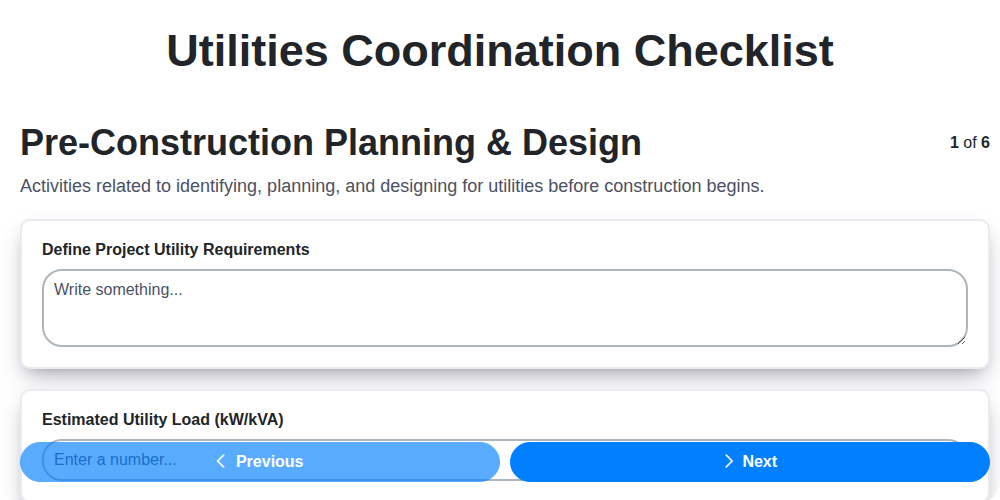
Streamline Your Project: The Ultimate Utilities Coordination Checklist Template
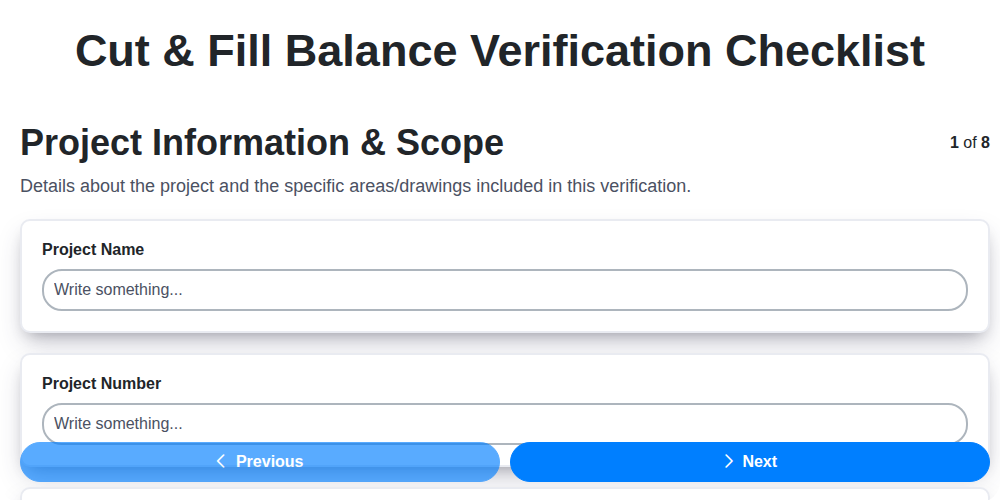
Cut & Fill Balance: Your Checklist Template for Project Success

Jobsite Safety & Compliance Checklist: Your Construction Site Assessment Template
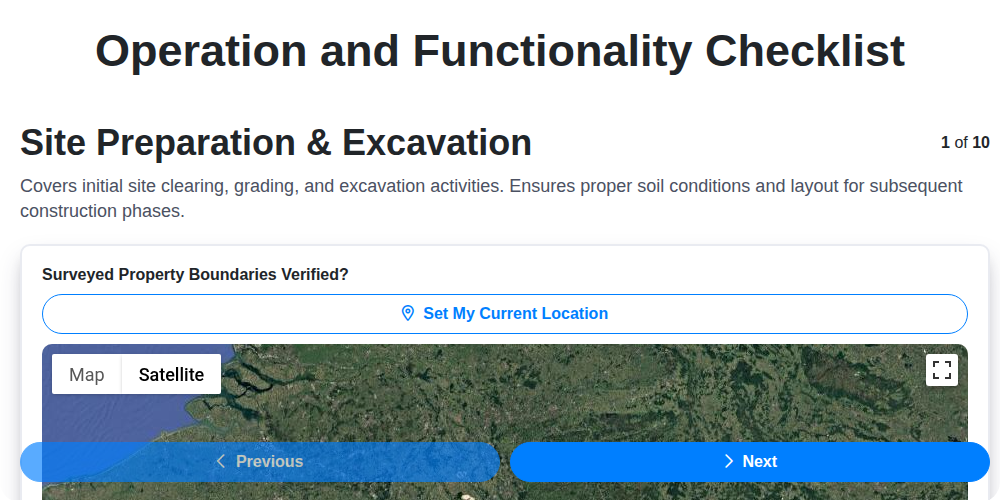
Streamlining Construction: Your Free Operation & Functionality Checklist Template
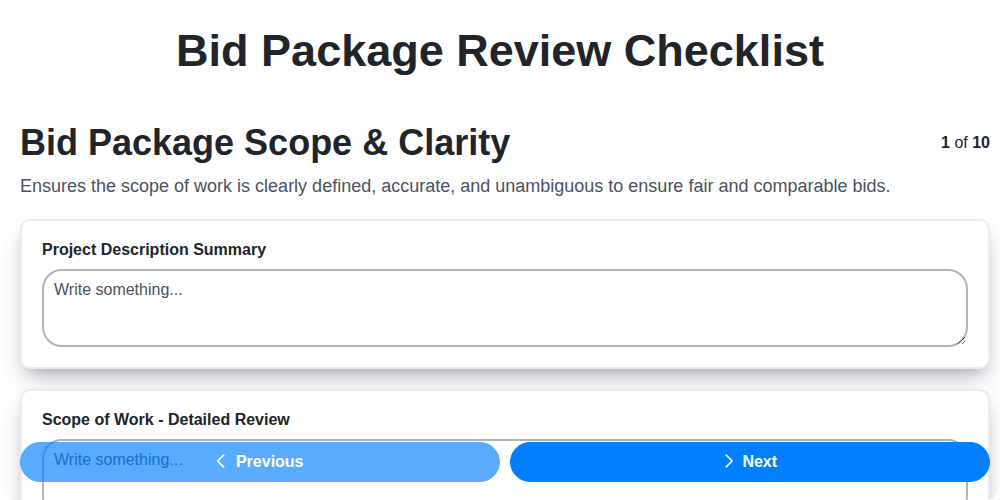
Mastering Bids: Your Free Bid Package Review Checklist Template
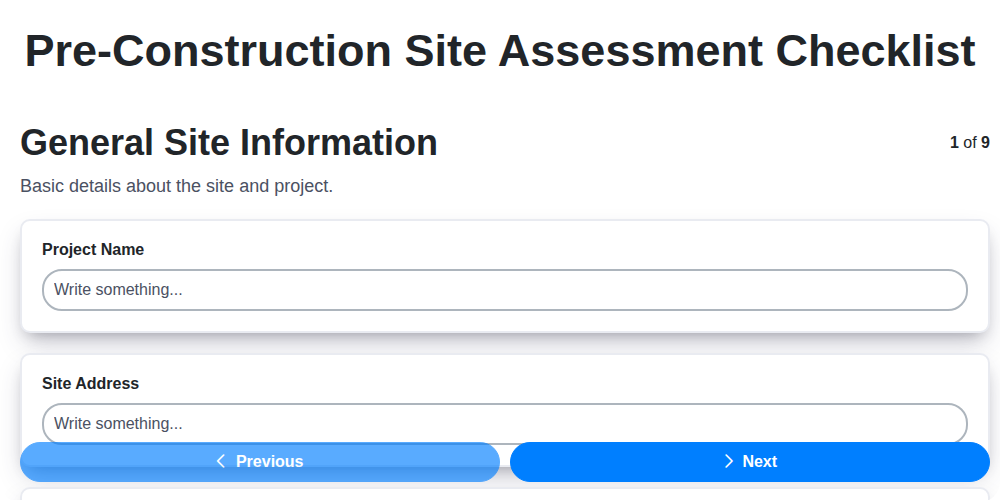
Your Essential Pre-Construction Site Assessment Checklist Template
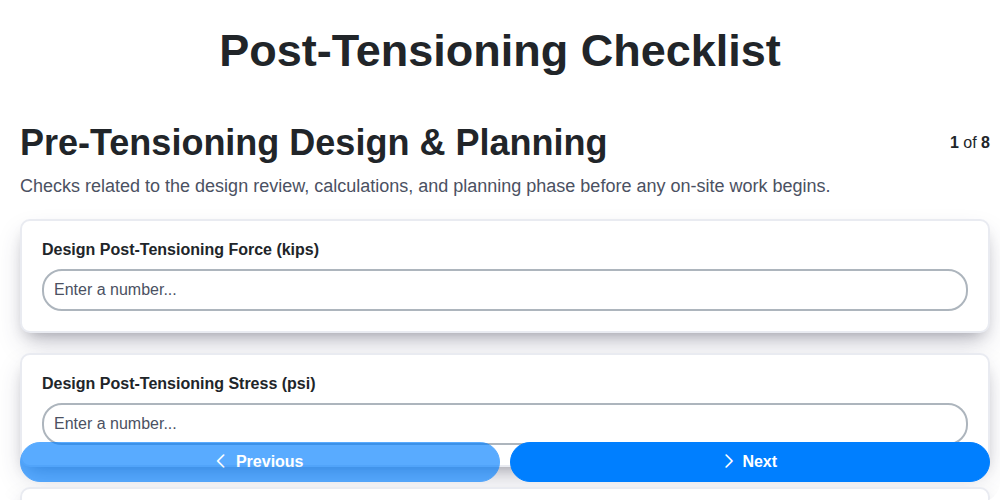
Mastering Post-Tensioning: Your Essential Checklist Template
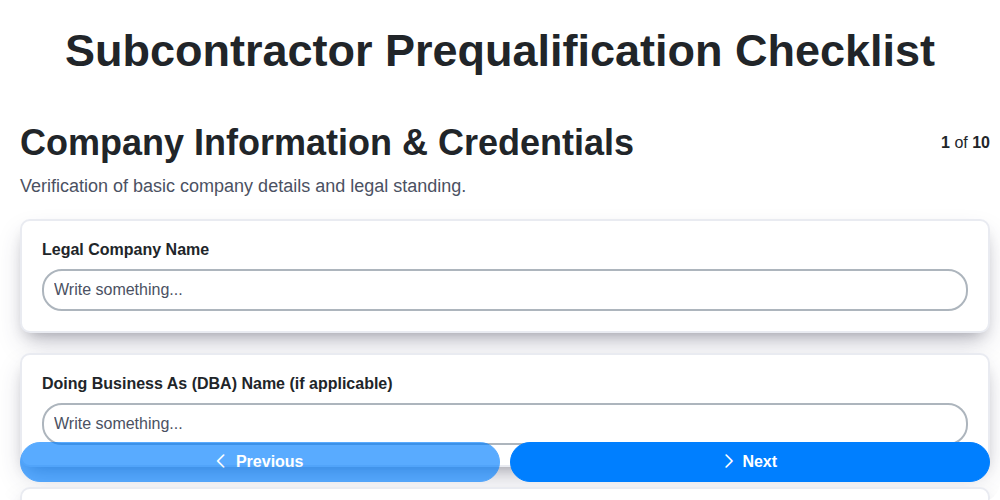
Subcontractor Prequalification Checklist Template: Your Essential Guide
We can do it Together
Need help with
Checklists?
Have a question? We're here to help. Please submit your inquiry, and we'll respond promptly.