Industrial Waste Manifesting Workflow: Optimize Tracking & Compliance for Waste Management
Published: 06/18/2026 9:00 PM Updated: 06/19/2026 11:48 AM
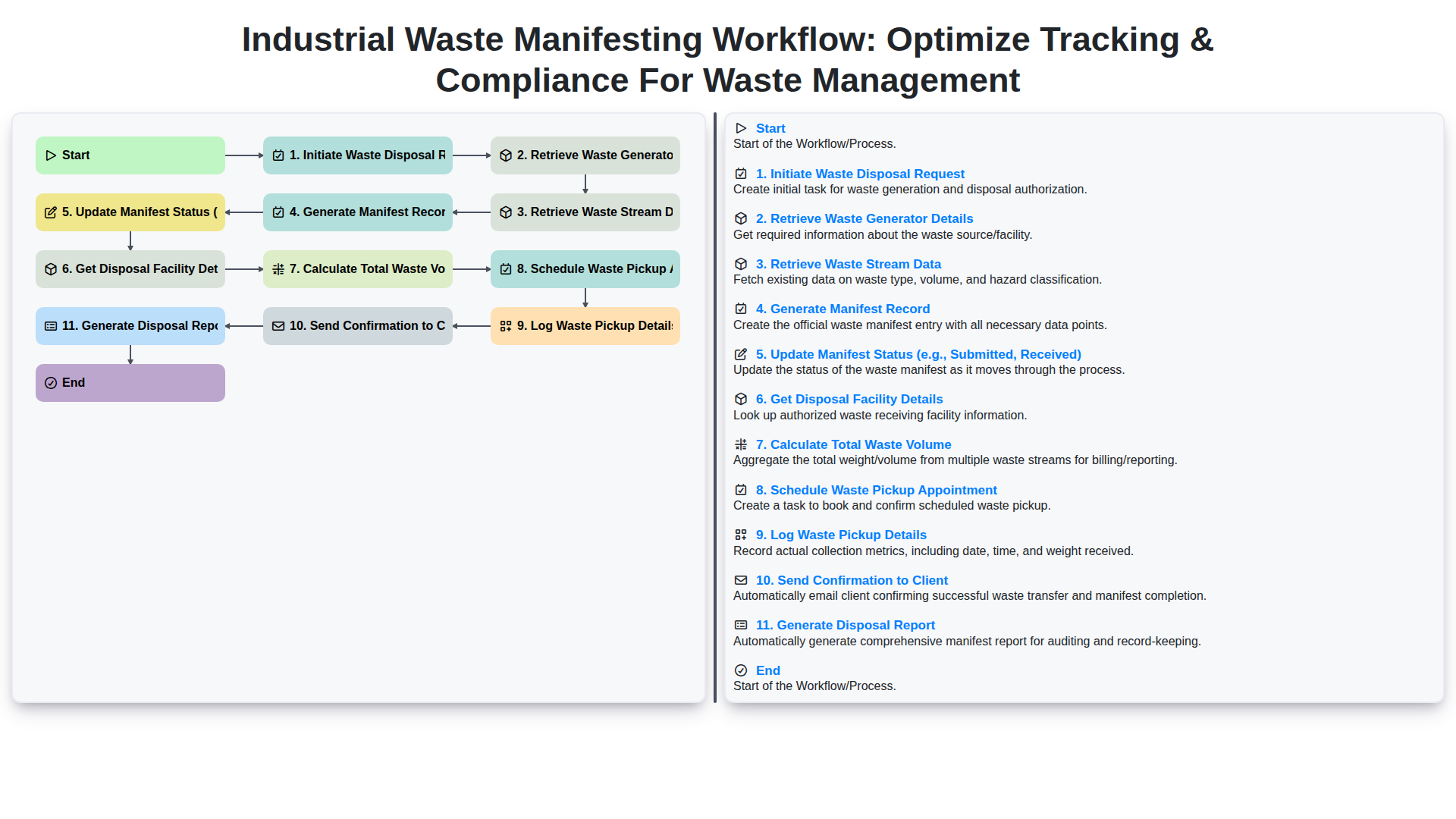
Table of Contents
- Introduction: The Critical Role of Manifesting in Industrial Waste Management
- The Importance of Streamlined Workflows for Regulatory Compliance
- Step 1: Initiating the Waste Disposal Request
- Step 2: Accurate Data Retrieval: Waste Generator and Stream Details
- Step 3: Creating the Foundation: Generating the Manifest Record
- Step 4: Real-Time Monitoring: Updating Manifest Status
- Step 5: Coordinating Logistics: Facility Details and Volume Calculation
- Step 6: Managing the Chain of Custody: Scheduling and Logging Pickups
- Step 7: Closing the Loop: Client Confirmation and Final Reporting
- Benefits of Automating the Manifesting Workflow
- Conclusion: Achieving Operational Excellence in Waste Tracking
- Resources & Links
TLDR: Streamline your regulatory compliance and operational efficiency with our Industrial Waste Manifesting Workflow. This guide explores how to automate the end-to-end disposal process-from initiating requests and calculating waste volumes to scheduling pickups and generating final disposal reports-ensuring seamless tracking and error-free documentation for every waste stream.
Introduction: The Critical Role of Manifesting in Industrial Waste Management
In the complex landscape of industrial operations, waste management is far more than a simple disposal task; it is a high-stakes regulatory obligation. For any facility handling hazardous or non-hazardous industrial byproducts, the manifest-the formal document that tracks waste from the moment it is generated to its final disposal-serves as the ultimate paper trail. This document is the cornerstone of environmental accountability, providing proof that waste was handled, transported, and treated in strict accordance with local and international laws.
However, managing this process manually is fraught with risk. In an era of increasing environmental scrutiny and tightening regulations, a single error in documentation or a gap in the tracking chain can lead to heavy fines, legal liabilities, and significant damage to a company's reputation. Efficient waste manifesting is no longer just about moving materials from point A to point B; it is about ensuring total visibility and data integrity throughout the entire lifecycle of the waste stream. Implementing a structured, automated workflow is the key to transforming a cumbersome compliance burden into a streamlined, transparent, and error-free operational advantage.
The Importance of Streamlined Workflows for Regulatory Compliance
In the highly regulated landscape of waste management, compliance is not just a buzzword-it is a legal mandate. For industrial facilities, the margin for error regarding hazardous waste documentation is zero. An unstructured, manual approach to tracking waste manifests creates significant vulnerabilities, such as missing signatures, inaccurate volume logs, or delayed reporting, all of which can lead to heavy fines, legal liabilities, and environmental risks.
A streamlined workflow serves as a digital paper trail that ensures every stage of the waste lifecycle is documented with precision. By automating the transition from the initial disposal request to the final disposal report, companies can eliminate the information silos that typically lead to non-compliance. When data-such as waste stream specifics, generator details, and facility timestamps-flows through a standardized, pre-defined process, it ensures that every manifest is complete, verifiable, and audit-ready. Ultimately, optimizing this workflow does more than just save time; it builds a foundation of transparency and accountability that protects your organization from the complexities of environmental oversight.
Step 1: Initiating the Waste Disposal Request
The foundation of an efficient industrial waste management process begins with the Initiation of the Waste Disposal Request. This critical first step acts as the trigger for the entire lifecycle of the waste manifest, moving the process from a passive state to an active, tracked operation.
The workflow is set in motion when a facility manager, plant operator, or environmental officer identifies a need for waste removal. Rather than relying on informal emails or verbal instructions, a formal initiation involves entering a standardized request into the management system. This step is vital because it establishes a paper trail from the very beginning, ensuring that every upcoming disposal task is documented, timestamped, and assigned a unique identifier.
By formalizing the request at the outset, organizations can eliminate ambiguity, reduce the risk of human error, and ensure that all downstream steps-from data retrieval to scheduling-are based on a verified, authorized starting point.
Step 2: Accurate Data Retrieval: Waste Generator and Stream Details
Once the initial disposal request is triggered, the integrity of the entire manifest depends on the precision of the information collected. This stage is the backbone of regulatory compliance, as it transforms a simple request into a documented, traceable event.
To ensure a seamless workflow, the system must automatically retrieve waste generator details. This involves pulling comprehensive data from your centralized database, including the generator's legal name, site address, EPA identification number, and contact information. Verifying these details prevents administrative errors that could lead to non-compliance during audits or inspections.
Simultaneously, the process moves to retrieve waste stream data. It is not enough to simply know that waste is being moved; you must identify exactly what that waste entails. This step involves pulling specific characteristics of the waste, such as:
- Chemical Composition: Identifying hazardous vs. non-hazardous components.
- Physical State: Documenting whether the waste is liquid, solid, or sludge.
- Regulatory Classifications: Assigning the correct waste codes (e.g., RCRA codes) required for legal transport.
By automating the retrieval of these specific details, you eliminate the risks associated with manual data entry-such as typos or outdated information-and ensure that every manifest record is built upon a foundation of accurate, verified data.
Step 3: Creating the Foundation: Generating the Manifest Record
Once the waste generator information and the specific waste stream data have been accurately retrieved, the system moves into the most critical phase of the process: Generating the Manifest Record. This step serves as the digital backbone of the entire disposal journey.
At this stage, the system consolidates all previously collected data-including the origin of the waste, the chemical composition, and the physical characteristics-into a formal, standardized document. This isn't just about creating a digital file; it is about ensuring that a precise paper trail is established from the very beginning.
A well-generated manifest record acts as a single source of truth, containing all the necessary regulatory details required to ensure the waste is identifiable and traceable. By automating this step, you eliminate the common human errors associated with manual data entry, such as typos in chemical names or incorrect volume units, which are often the primary causes of compliance failures during environmental audits. This step ensures that the information entered into the system is structured, standardized, and ready to be utilized for the subsequent logistics and reporting stages.
Step 4: Real-Time Monitoring: Updating Manifest Status
Once the manifest record is generated, the workflow moves into a critical phase of active tracking. The Update Manifest Status step serves as the heartbeat of the entire process, transforming a static document into a dynamic, real-time data stream.
As the waste moves through the logistics chain, the manifest status must be updated to reflect its current stage-transitioning from Submitted to In Transit, and eventually to Received or Processed. This continuous loop of updates ensures that both the waste generator and the disposal facility have a single version of the truth. By maintaining real-time visibility, companies can eliminate the guesswork associated with lost shipments, reduce the risk of compliance gaps, and ensure that any delays in the transportation process are identified and addressed immediately. This level of transparency is what separates reactive waste management from a truly optimized, proactive operation.
Step 5: Coordinating Logistics: Facility Details and Volume Calculation
Once the manifest record has been generated, the workflow moves from documentation to the critical phase of logistics coordination. This stage ensures that the physical movement of waste is perfectly synchronized with the digital data recorded in the manifest.
First, the system must Retrieve Disposal Facility Details. It is not enough to simply know where the waste is going; the workflow must pull specific data regarding the receiving facility's capabilities, regulatory permits, and acceptance criteria. This step ensures that the waste stream identified in the previous steps is compatible with the destination site's operational capacity, preventing costly rejected shipments or regulatory violations.
With the destination confirmed, the next vital step is to Calculate Total Waste Volume. Accurate measurement is the backbone of both compliance and billing. By automatically aggregating data from the waste stream records-such as weight, density, or liquid volume-the system provides a precise figure for the shipment. This precise calculation is essential for:
- Logistics Planning: Determining the appropriate vehicle size and equipment needed for transport.
- Regulatory Compliance: Ensuring the volume does not exceed the permitted limits of the disposal facility.
- Cost Accuracy: Providing a transparent basis for disposal fees and transportation logistics.
By integrating facility capabilities with precise volume metrics, this step bridges the gap between administrative paperwork and real-world operational execution, setting the stage for a seamless pickup.
Step 6: Managing the Chain of Custody: Scheduling and Logging Pickups
Once the waste manifest is generated and the volume is calculated, the workflow moves from administrative preparation to physical logistics. This stage is critical for maintaining the integrity of the chain of custody, ensuring that the transition of hazardous or industrial waste from the generator to the transporter is seamless and documented.
The process begins with Scheduling a Waste Pickup Appointment. This step involves coordinating between the waste generator, the logistics team, and the disposal facility to ensure that the designated vehicle and personnel are available at the precise time required. Proper scheduling prevents site congestion and ensures that all necessary safety protocols are in place before the waste leaves the facility.
Immediately following the arrival of the transport team, the workflow moves to Logging Waste Pickup Details. This is a vital moment of verification where the physical contents of the load are cross-referenced against the digital manifest. Documentation must capture the exact time of departure, the driver's identification, the vehicle information, and a final confirmation that the waste matches the declared waste stream data. By meticulously logging these details in real-time, companies create an immutable paper trail that serves as the backbone of regulatory compliance, significantly reducing the risk of discrepancies during audits or inspections.
Step 7: Closing the Loop: Client Confirmation and Final Reporting
Once the physical movement of waste is complete, the workflow transitions from logistics to documentation and transparency. The final stages of the process are critical for ensuring both regulatory compliance and client satisfaction.
First, the system triggers an automated Confirmation to Client. As soon as the waste pickup details are logged, the client receives real-time notification that their request has been fulfilled. This immediate feedback loop builds trust, providing the generator with peace of-mind that their hazardous or industrial waste is no longer on-site and is officially under the custody of the disposal provider.
The workflow then culminates in the Generation of the Disposal Report. This is the most vital document for audit readiness. This automated report aggregates all the data collected throughout the entire lifecycle-from the initial request and waste stream specifics to the final weight and disposal method used. By consolidating the manifest records and pickup logs into a single, comprehensive digital report, businesses can easily demonstrate adherence to environmental regulations and internal sustainability goals. This automated closing of the loop eliminates manual paperwork errors and ensures that your paper trail is always complete, accurate, and ready for any regulatory inspection.
Benefits of Automating the Manifesting Workflow
Transitioning from manual, paper-based tracking to an automated industrial waste manifesting workflow offers transformative advantages for waste management companies and generators alike. By digitizing the lifecycle of a waste shipment-from the initial request to the final disposal report-organizations can move away from reactive troubleshooting and toward proactive management.
The primary benefits of automation include:
- Enhanced Regulatory Compliance & Audit Readiness: Manual errors in waste stream data or missing signatures can lead to heavy fines and legal liabilities. Automation ensures that every manifest record is complete, accurate, and timestamped, creating an immutable digital paper trail that simplifies environmental audits and ensures adherence to strict regulatory standards.
- Real-Time Visibility and Tracking: With automated status updates (e.g., Submitted, In Transit, or Received), all stakeholders gain instant access to the current location and status of waste shipments. This eliminates the black hole period between pickup and disposal, reducing the need for constant follow-up calls and emails.
- Increased Operational Efficiency: Automating repetitive tasks-such as retrieving generator details, calculating total waste volumes, and generating disposal reports-frees your team from administrative burdens. This allows your workforce to focus on high-value logistics and safety management rather than manual data entry.
- Elimination of Human Error: Manual data retrieval and calculation are prone to mistakes that can lead to incorrect waste characterization or scheduling conflicts. An automated system ensures that waste stream data and facility details are pulled accurately every time, ensuring that the right waste reaches the right facility.
- Improved Client Satisfaction: Automation fosters transparency and trust. By automatically sending confirmation to clients and providing instant access to disposal reports, you provide a seamless, professional experience that reinforces your reliability as a waste management partner.
- Optimized Resource Allocation: Through automated scheduling of pickup appointments and streamlined logging of pickup details, your fleet and personnel can be deployed more effectively, reducing fuel consumption, minimizing downtime, and optimizing route planning.
Conclusion: Achieving Operational Excellence in Waste Tracking
Implementing a structured Industrial Waste Manifesting Workflow is more than just a matter of logistical convenience; it is a strategic imperative for modern waste management. By transitioning from manual, fragmented processes to a streamlined, automated system, companies can effectively eliminate the risks of human error, prevent costly compliance failures, and ensure total transparency from the moment a disposal request is initiated to the final generation of the disposal report.
Optimizing this workflow allows your team to shift their focus from reactive troubleshooting to proactive management. When every step-from retrieving waste stream data to scheduling pickups and updating real-time statuses-is documented within a unified digital framework, you create a single source of truth that satisfies both internal auditors and regulatory bodies. Ultimately, mastering this workflow drives operational excellence, reduces overhead costs, and reinforces your commitment to environmental stewardship and regulatory integrity.
Resources & Links
- U.S. Environmental Protection Agency (EPA): The primary regulatory authority providing official guidelines on hazardous waste manifests and RCRA compliance standards.
- ISO Standards for Environmental Management: Information on ISO 14001 standards, which focus on improving environmental performance and waste management workflows.
- Occupational Safety and Health Administration (OSHA): Essential resources regarding safety protocols and documentation required during the waste pickup and logistics process.
- Gartner - Supply Chain & Logistics Research: Insights into how digital transformation and automation can optimize industrial logistics and-end-to-end tracking.
- SAP Environmental Management: Examples of how Enterprise Resource Planning (ERP) software can automate data retrieval and manifest generation.
- Forbes Technology Council: Articles regarding the benefits of implementing IoT and real-time tracking technologies in industrial operations.
Found this Article helpful?
Comments
There are no comments yet. Be the first to add one!
Waste Management Solution Demo
Optimize your waste management & reduce environmental impact! ChecklistGuro streamlines collection, tracking, and reporting. Minimize waste, lower costs, & promote sustainability. Manage it all with our Work OS.
Related Articles

Your Ultimate Guide to a Waste Management Facility Project Checklist Template

Your Complete Vegetation Removal Compliance Checklist Template
Your Ultimate Hazardous Materials Waste Management Checklist Template
Streamline Biohazard Waste: Your Essential Checklist Template
Your Dental Office Safety Net: The Compliance & Patient Safety Checklist Template

Weekly Waste Management & Recycling Checklist Template
Your Environmental Compliance Checklist Template: A Step-by-Step Guide
Auto Repair Shop Checklist Template: Operations & Compliance
We can do it Together
Need help with
Checklists?
Have a question? We're here to help. Please submit your inquiry, and we'll respond promptly.