Mastering Your Feed: A Livestock Inventory Management Checklist Template
Published: 09/02/2025 Updated: 12/13/2025
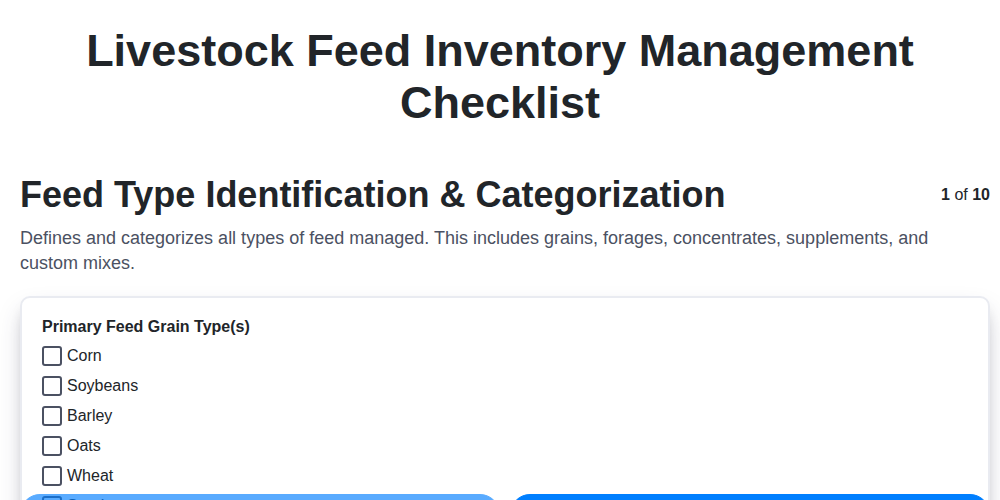
Table of Contents
- Why Feed Inventory Matters
- Feed Type Identification & Categorization
- Setting Up Your Baseline: Initial Inventory
- Receiving & Procurement: Tracking Incoming Feed
- Storage Conditions: Preserving Feed Quality
- Feeding & Consumption: Monitoring Usage Rates
- Regular Inventory Updates: Reconciliation is Key
- Calculating Reorder Points: Avoiding Shortages
- Record Keeping Essentials: Documentation Best Practices
- Quality Control & Monitoring: Maintaining Feed Standards
- Minimizing Waste & Loss: Efficiency Strategies
- Leveraging Technology for Streamlined Management
- Staff Training & Responsibilities
- Continuous Improvement: Reviewing and Refining Your System
- Resources & Links
TLDR: Feeling overwhelmed by livestock feed? This free checklist template simplifies inventory management - from tracking deliveries to predicting needs and preventing waste. It's your step-by-step guide to ensuring your animals always have the feed they need, saving you time, money, and stress.
Why Feed Inventory Matters
Beyond just keeping track of what's in your bins, a well-managed feed inventory is the bedrock of a thriving livestock operation. Think of it this way: inconsistent feed supply directly impacts animal health, growth rates, and ultimately, your bottom line. Frequent shortages lead to stressed animals, stunted growth, and reduced productivity - all translating to lost profits. Conversely, overstocking ties up valuable capital, increases the risk of spoilage, and demands significant storage space. A proactive feed inventory system allows you to anticipate needs, optimize purchasing decisions, and minimize waste, freeing up resources for other critical aspects of your farm. It's not just about feed; it's about efficiency, sustainability, and ensuring the consistent well-being of your livestock.
Feed Type Identification & Categorization
Before you can track anything, you need to know what you're tracking. This might seem obvious, but a surprisingly common source of inventory errors stems from imprecise feed identification. Are those two piles of hay really just Hay or are they distinct varieties with different nutritional values and consumption rates?
Think of it like labeling your spices in your kitchen - it's much easier to cook when you know exactly what you're using.
Here's how to build a robust feed identification system:
- Create a Unique Code: Assign a short, memorable code to each feed type (e.g., "TH-T" for Timothy Hay, "CG-C" for Corn Grain). This is crucial for consistent record keeping.
- Detailed Descriptions: Don't just write Hay. Note the type (Timothy, Alfalfa, Orchardgrass), cut date (if applicable), and any distinguishing features.
- Supplier Information: Keep track of your suppliers for each feed type - this is useful for quality control and potential sourcing alternatives.
- Visual Tagging: Use clear, durable labels on all containers and storage areas. Consider color-coding for quick visual recognition.
- Regular Review: Occasionally review your feed identification system to ensure it's still accurate and relevant as your operation evolves.
Setting Up Your Baseline: Initial Inventory
Before you can effectively manage your livestock feed, you need to know exactly what you have. This initial inventory isn't a one-and-done task; it's the foundation upon which all future tracking and adjustments are built. Here's how to set it up right:
1. Gather Your Tools: You'll need measuring tapes, scales (if possible - even a simple bathroom scale is better than nothing!), notebooks, pens, or a digital spreadsheet.
2. Categorize and Label: Refer back to the feed type identification list you created earlier. Clearly label all feed piles, silos, or bags to avoid confusion later.
3. Accurate Measurement is Key: For hay and straw, measure the diameter and depth of piles to calculate volume, then convert that to weight using standard conversion charts (easily found online - search for hay volume to weight conversion). For grains and pellets, use scales to weigh bags or bins. Silage faces often need to be measured at regular intervals to gauge consumption.
4. Consistent Units: Document everything in consistent units (tons, bushels, pounds, etc.). Mixing units will make reconciliation a nightmare.
5. Create a Record: Record each feed type, its location, and the quantity on hand in your chosen format (notebook or spreadsheet). Include the date of this initial inventory.
6. Don't Skip the Small Stuff: Even small amounts of supplements or concentrates contribute to the overall picture. Account for everything.
Establishing a baseline inventory might feel tedious, but the clarity and control it provides is invaluable. It sets the stage for a well-managed, efficient, and ultimately more profitable livestock operation.
Receiving & Procurement: Tracking Incoming Feed
The moment feed arrives at your operation, the documentation process begins. It's more than just unloading the truck - it's laying the groundwork for accurate inventory and cost analysis. Here's what needs to be recorded:
- Date of Arrival: This is crucial for tracking seasonality and anticipating future needs.
- Supplier Information: Name, contact details, and any relevant supplier codes are essential for building relationships and identifying reliable sources.
- Feed Type & Grade: Precisely identify the type of feed (e.g., Timothy Hay, Corn Silage) and its grade (e.g., Premium, Standard). This ensures proper storage and feeding practices.
- Quantity Received: Note the exact quantity received, clearly stating the units (tons, bushels, pounds, etc.). Double-check against the delivery order.
- Cost per Unit: Record the price you paid per unit. This information is vital for calculating feed costs and profitability.
- Delivery Documents: Retain copies of all delivery tickets, invoices, and bills of lading. These serve as proof of purchase and can be helpful in resolving any discrepancies.
- Quality Observations: Briefly note any visible signs of damage, contamination, or unusual appearance upon arrival. Even seemingly minor observations can be important for quality control.
A consistent and detailed receiving process allows you to quickly identify and address potential issues, ensures accurate inventory records, and ultimately helps you manage your feed costs more effectively.
Storage Conditions: Preserving Feed Quality
Maintaining optimal storage conditions is absolutely critical for preserving feed quality and maximizing its nutritional value. Improper storage can lead to spoilage, mold growth, insect infestations, and significant nutrient loss, ultimately impacting animal health and productivity. Here's a breakdown of key considerations for different feed types:
Hay & Straw: These require excellent ventilation to prevent moisture buildup and mold. Ideally, store hay in a well-ventilated barn or under a waterproof covering, raised off the ground to allow air circulation. Stack loosely to prevent compaction and allow for airflow between bales. Monitor regularly for signs of mold or heat.
Silage: Silage is particularly sensitive to oxygen exposure. Properly packed and sealed silos are essential to maintain anaerobic conditions. Check silo seals regularly for leaks, and address any issues immediately. Temperature monitoring is crucial to ensure proper fermentation.
Grains & Pellets: These should be stored in airtight containers or bins to protect them from moisture and pests. Regular cleaning and pest control measures are essential to prevent infestations. Maintaining a cool, dry environment minimizes spoilage.
Supplements & Concentrates: Always follow manufacturer recommendations for storage. Many supplements are sensitive to light or moisture and require specific storage conditions to maintain their potency.
General Best Practices:
- Keep Storage Areas Clean: Regularly sweep and remove debris to eliminate breeding grounds for pests.
- Control Temperature & Humidity: Monitor and regulate temperature and humidity levels to prevent spoilage.
- Implement Pest Control: Employ effective pest control measures to prevent infestations.
- Rotate Stock: Use older feed first to minimize storage time and reduce the risk of spoilage.
Feeding & Consumption: Monitoring Usage Rates
Tracking feed consumption isn't just about knowing how much you're using; it's about understanding why. Significant deviations from expected usage rates can be early warning signs of underlying issues - from changes in animal health and activity levels to inefficiencies in feeding practices.
Here's a breakdown of how to effectively monitor usage rates:
- Establish Baseline Rates: Initially, meticulously track feed consumption for each livestock group over a period (e.g., a week or two). This provides a baseline against which to compare future usage.
- Group-Specific Tracking: Separate consumption data by animal group (lactating cows vs. dry cows, finishing pigs vs. grower pigs, etc.). Different groups have vastly different nutritional needs, so individual tracking is crucial.
- Methods of Measurement:
- Scales: Ideal for accurate measurement of grain, pellets, or supplements. Weigh feed bins before and after feeding periods.
- Volume Estimation: Useful for forages like hay and silage. Use visual estimates, marked bins, or measured piles. Be consistent with your methods.
- Feed Bunk Observations: Regularly observe feed bunks. Are animals consistently cleaning up all feed? Excess feed left over can indicate overfeeding or palatability issues.
- Record Any Changes: Note any factors that might influence feed consumption - changes in weather, introduction of new animals, changes in feed composition, illness outbreaks.
- Regular Reconciliation: Compare recorded consumption rates with physical inventory counts. Investigate any discrepancies promptly.
- Analyze Trends: Look for patterns and long-term trends in consumption rates. Sudden increases or decreases require investigation.
Consistent, accurate consumption tracking is a cornerstone of efficient feed management and a key indicator of livestock health and well-being.
Regular Inventory Updates: Reconciliation is Key
It's not enough to simply record feed deliveries and consumption. The real power lies in regularly reconciling your physical inventory with your records. Think of it as a health check for your feed management system. This means physically counting your feed supplies (hay bales, grain bags, silage in the bunker) at predetermined intervals - weekly, bi-weekly, or monthly - and comparing those counts to what your records indicate.
Why is reconciliation so vital? Because discrepancies will happen. Mistakes in recording, spillage, rodent activity, or even inaccurate initial counts can all lead to imbalances. Ignoring these discrepancies allows errors to compound, leading to inaccurate projections, potential shortages, and wasted resources.
During reconciliation, meticulously investigate any difference, no matter how small. Was there unreported spoilage? Did a delivery get miscounted? Did a staff member unintentionally overfeed a group? By actively seeking out and addressing these discrepancies, you're not just correcting errors - you're refining your processes and gaining a deeper understanding of your feed usage patterns. A robust reconciliation process isn't just about accuracy; it's a crucial step toward continuous improvement in your livestock feed management.
Calculating Reorder Points: Avoiding Shortages
Knowing when to order feed is just as important as knowing how much you have. Calculating reorder points prevents those stressful moments of scrambling for supplies and ensures your livestock always have access to what they need. Here's a breakdown of how to do it:
The Core Formula:
Reorder Point = (Average Daily Consumption x Lead Time in Days) + Safety Stock
Let's break down each component:
- Average Daily Consumption: This is the average amount of feed your livestock consume each day. Track this over time (at least a few weeks, ideally longer) to get a reliable figure. Separate this calculation for each feed type.
- Lead Time: This is the time it takes for a new order to arrive from the supplier, from the moment you place the order. Include processing time, shipping time, and any potential delays.
- Safety Stock: This is the extra buffer you keep on hand to account for unexpected variations in consumption or delays in delivery. The amount of safety stock depends on factors like the reliability of your supplier, the predictability of your livestock's consumption, and your comfort level with the risk of running out.
Example:
Let's say you're ordering Timothy Hay. You're using 1.5 tons per week (or approximately 0.21 tons per day). The lead time from your supplier is 10 days. You're comfortable keeping a safety stock of 1 ton.
Reorder Point = (0.21 tons/day x 10 days) + 1 ton = 2.1 + 1 = 3.1 tons
This means you should place an order when your hay inventory drops to 3.1 tons.
Refining Your Calculations:
- Seasonal Variations: Consumption often fluctuates with the seasons. Adjust your average daily consumption figures accordingly.
- Unexpected Events: Consider potential disruptions like weather events or supplier issues and factor that into your safety stock.
- Regular Review: Reorder points aren't "set it and forget it." Review and adjust them periodically based on your experiences and changes in your operation.
Record Keeping Essentials: Documentation Best Practices
Consistent, accurate record keeping is the backbone of any successful livestock feed inventory management system. It's not just about ticking boxes on a checklist; it's about building a historical record that informs future decisions, facilitates audits, and demonstrates responsible animal husbandry practices. Here's how to elevate your documentation:
- Digital vs. Paper: The Modern Advantage: While paper records have their place, embracing digital solutions drastically improves accessibility, reduces errors, and enables powerful data analysis. Consider spreadsheets, livestock management software, or even cloud-based platforms.
- Standardized Forms: Develop standardized forms (digital or printable) for receiving, feeding, spoilage reports, and reordering. This ensures consistency and simplifies data entry.
- Date & Time EVERYTHING: Every entry-receiving, feeding, spoilage-should be meticulously dated and timed. This provides a precise timeline of events.
- Who, What, When, Where, Why: Every record should answer these key questions. "Who" handled the feed? "What" was the quantity/type? "When" did the event occur? "Where" was it stored/used? "Why" was the action taken (e.g., reorder due to low stock)?
- Photo Documentation: For significant events (e.g., spoiled feed, damaged storage), include photographs as visual evidence.
- Retain Records: Establish a clear record retention policy. Consult with an accountant or advisor regarding legal requirements and best practices for long-term storage.
- Regular Backups: If using digital records, implement a robust backup system to protect against data loss.
Quality Control & Monitoring: Maintaining Feed Standards
Ensuring the feed you provide is of consistently high quality is paramount to the health, growth, and productivity of your livestock. It's not enough to simply have enough feed; it must be good feed. This requires a proactive and vigilant approach to quality control and monitoring.
Start with visual inspections. Regularly examine stored feed for signs of deterioration, including mold growth (look for discoloration - greens, blues, blacks - and unusual odors), insect infestation (look for webbing, larvae, or adult insects), and rodent damage. Pay close attention to forages like hay and silage, as they are particularly susceptible to spoilage.
For silage, monitoring temperature and pH levels is crucial. Elevated temperatures and unstable pH can indicate fermentation problems and potential spoilage. Consider periodic lab testing of silage to accurately assess its quality. Similarly, routine analysis of hay can reveal nutrient content and potential contamination.
Don't ignore unusual animal behavior. Changes in appetite, digestive issues, or decreased performance can be early warning signs of poor feed quality. Investigate these observations immediately and adjust your feed program accordingly.
Finally, maintain meticulous records of all quality control measures, including inspection dates, observations, and any corrective actions taken. This documentation provides valuable insights and helps ensure ongoing feed quality.
Minimizing Waste & Loss: Efficiency Strategies
Feed waste isn't just about dollars and cents; it represents a significant inefficiency impacting your overall operation's sustainability. Identifying and addressing sources of loss is crucial for maximizing your feed investment and ensuring animal health.
Common Culprits and How to Combat Them:
- Spillage: This is often the easiest to address. Properly designed feeding troughs and careful handling techniques can dramatically reduce spillage. Train staff to pour feed carefully and consider using chutes or ramps to minimize drops. Regular cleaning around feed areas also helps prevent accumulation.
- Rodent & Bird Damage: A proactive pest control program is essential. Seal potential entry points to storage areas, use rodent-resistant bins, and implement traps or bait stations. Consistent cleaning to remove spilled feed also starves out pests.
- Overfeeding: Precisely calculating and distributing the appropriate feed ration for each animal group minimizes waste. Regularly review feeding plans and adjust as needed based on animal performance and condition.
- Feed Degradation: Improper storage leads to mold growth and nutrient loss. Implement effective storage practices, ensuring proper ventilation, temperature control, and moisture levels. Regularly inspect stored feed for signs of spoilage.
- Uneaten Feed: This can indicate issues with palatability, ration balance, or animal health. Work with a nutritionist to assess the feed formulation and consult a veterinarian if consumption patterns change.
- Inefficient Handling: Are your loading and unloading processes optimized? Can you reduce unnecessary movement of feed? Small changes in workflow can add up to significant savings.
Tracking & Analysis:
Don't just react to waste; track it. Develop a system for recording instances of significant loss (e.g., spoiled bales, significant rodent damage). Regularly analyze this data to identify trends and prioritize improvement efforts. Even seemingly minor adjustments to your practices can have a positive impact on your bottom line.
Leveraging Technology for Streamlined Management
Gone are the days of relying solely on spreadsheets and notebooks. Modern livestock operations can significantly benefit from leveraging technology to streamline feed inventory management. Several software solutions are available, ranging from basic inventory tracking apps to comprehensive farm management platforms.
These tools can automate tasks like receiving records, consumption tracking, and reorder point calculations. Real-time data visualization provides instant insights into inventory levels and potential shortages. Mobile accessibility allows for on-the-go monitoring and updates. GPS tracking can even help optimize feed delivery routes.
Beyond simple tracking, advanced software can integrate with other farm data - animal health records, production data, and financial information - to provide a holistic view of your operation and identify areas for improvement. While the initial investment may seem significant, the time savings, reduced errors, and improved efficiency ultimately lead to a substantial return on investment.
Staff Training & Responsibilities
A robust feed inventory management system is only as effective as the people implementing it. That's why comprehensive staff training and clearly defined responsibilities are absolutely critical. Don's assume everyone understands the importance of accurate record-keeping or recognizes the signs of feed spoilage - proactively teach them!
Here's a breakdown of key areas to cover in your training program and how to assign responsibilities:
Training Topics:
- Feed Identification & Handling: Teach staff to accurately identify different feed types and understand proper handling techniques to minimize spillage and damage.
- Record-Keeping Procedures: This is non-negotiable. Ensure everyone understands how to accurately record receipts, feedings, and any observed issues (e.g., mold, pests). Emphasize the importance of legibility and completeness.
- Quality Control & Observation: Train staff to recognize signs of feed spoilage, contamination, or pest infestation. Provide a list of tell-tale signs to look for (color changes, odors, insect presence).
- Safety Protocols: Cover proper storage procedures, potential hazards (dust explosions, silo entry safety), and emergency protocols.
- System Navigation (if applicable): If you're using livestock management software, provide thorough training on how to use it correctly.
Responsibility Assignment:
- Receiving Clerk: Responsible for verifying delivery quantities, inspecting for quality, and accurately recording receipts.
- Feed Handler/Operator: Responsible for transferring feed from storage to feeding areas, minimizing spillage, and reporting any observed issues.
- Livestock Manager/Supervisor: Responsible for overseeing the entire feed management process, ensuring staff adherence to procedures, and analyzing inventory data.
- Designated Record Keeper: (May be combined with another role) Responsible for maintaining accurate and complete inventory records.
Regular refresher training is also essential to reinforce best practices and address any emerging challenges. Invest the time upfront - it will pay dividends in the long run.
Continuous Improvement: Reviewing and Refining Your System
No livestock feed management system is "set and forget." What works well this year might not be ideal next year due to fluctuating feed costs, changes in livestock numbers, or unexpected weather events. Regular review and refinement are crucial for maintaining efficiency and minimizing waste.
Start with a quarterly review of your entire process, looking at data collected through your inventory tracking. Are your reorder points accurate? Are you consistently experiencing spoilage? Are feed consumption patterns changing? Don't be afraid to experiment. Perhaps a different storage method would reduce moisture damage, or adjusting feeding rates could improve animal performance and reduce overall feed usage.
More than just reviewing data, talk to the people involved. Get feedback from farmhands, nutritionists, and even suppliers. Their insights can often highlight inefficiencies or opportunities for improvement that might not be apparent from numbers alone. Treat these reviews not as a performance audit, but as a collaborative brainstorming session focused on continuous optimization - a vital ingredient in a thriving livestock operation.
Resources & Links
- Agri Logistics: Provides information and resources related to agricultural logistics, including feed storage and handling best practices. Offers insights into optimizing supply chains and reducing waste in the livestock feed process.
- Feed Institute: A non-profit trade association representing the animal feed industry. Their website offers industry standards, regulations, and resources on feed safety and quality - crucial for maintaining feed standards and documentation.
- Purdue University Agribusiness: Purdue's Agribusiness program offers research and extension publications. Look for articles or fact sheets related to grain storage, feed inventory management, and minimizing losses. Provides science-backed advice on storage and handling.
- University of Wisconsin - Animal Nutrition: The University of Wisconsin's Animal Nutrition program provides a wealth of information on feed ingredients, nutritional requirements, and feed formulation. Helpful for understanding feed type identification and categorization.
- United States Department of Agriculture (USDA): The USDA website contains information on regulations pertaining to feed safety, labeling, and quality. This is important for understanding compliance and maintaining feed standards. Specifically, look for sections on GIP (Good Improvment Practices).
- Grain Handling & Storage: Provides insights and articles related to grain storage, a closely related aspect of feed management. It contains practical tips on maintaining storage conditions for optimal feed quality.
- American Feed Industry Association (AFIA): This organization represents the U.S. animal feed and pet food industry. Their website provides resources and information on industry best practices, regulations, and emerging technologies related to feed management.
- Farm Manager: Provides general farm management resources, including articles on inventory control and record-keeping. Good for understanding the broader context of livestock inventory management.
- FeedNavigator: A website dedicated to news and insights on the animal feed industry. Stay up-to-date with latest trends and technology in feed management and storage.
- My Livestock Manager: A platform that offers inventory management solutions, showcasing the use of technology for streamlined processes. Can provide inspiration and insight on potential digital tools.
- ExcelJS: A Javascript library to read and write Excel files. Useful if you are planning to create your own checklist or inventory tracking system using Excel.
- Google Sheets: Similar to Excel, Google Sheets is a great option if you are looking for a collaborative and free solution for tracking your livestock inventory.
Frequently Asked Questions
What happens if I lose or damage a physical copy of my livestock records?
Having a digital checklist template significantly reduces the risk of data loss. You can back up your data to the cloud or on a secure drive, ensuring your records remain accessible even if a physical copy is lost or damaged.
Comments
There are no comments yet. Be the first to add one!
Agriculture Management Solution Demo
Running a farm or agricultural business is complex. ChecklistGuro's Work OS platform simplifies your operations, from crop planning and irrigation management to livestock tracking and harvest scheduling. Increase efficiency, reduce waste, and boost yields! See how ChecklistGuro can revolutionize your agriculture business.
Related Articles
10 Simple Steps to a Healthy Drainage System: Your Checklist Template

Mastering the Daily Crop Scouting Report: Your [Specific Crop] Checklist Template
Irrigation System Checklist: Farm Water Management & Crop Yield Optimization
Unlock Your Garden's Potential: A Soil pH Verification Checklist
PPE Usage Checklist Template: Your Guide to Safety
Water Discharge Permit Compliance Checklist Template
The Ultimate GPS & Precision Farming Calibration Checklist Template
Water Runoff Analysis Checklist Template
We can do it Together
Need help with
Agriculture?
Have a question? We're here to help. Please submit your inquiry, and we'll respond promptly.