Navigating Success: Your Mall Directory & Signage Accuracy Checklist Template
Published: 09/01/2025 Updated: 12/13/2025
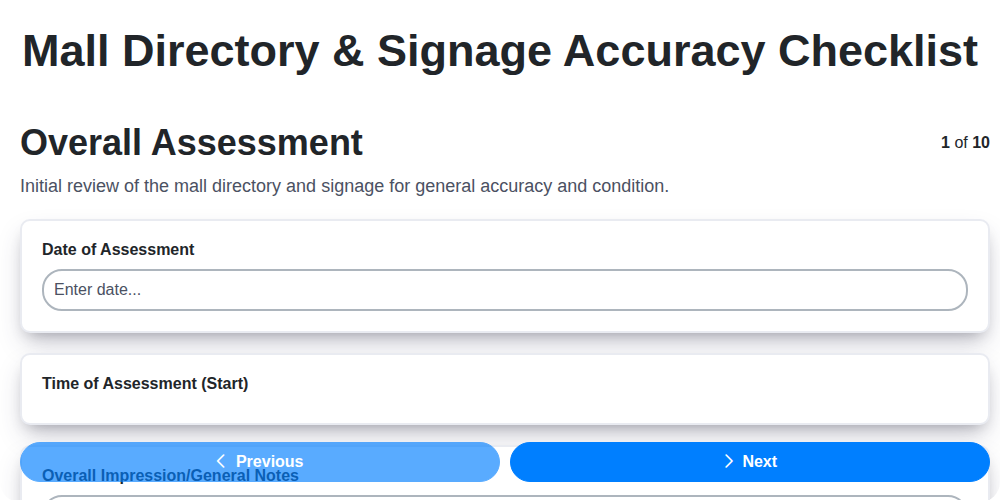
Table of Contents
- Why Mall Signage Accuracy Matters
- Introducing Your Mall Directory & Signage Accuracy Checklist
- Step-by-Step: The Checklist Sections
- Directory Kiosks: Digital Wayfinding
- Wayfinding & Tenant Signage: The Physical Landscape
- Accessibility & Maintenance: Ensuring Long-Term Success
- Troubleshooting Common Signage Issues
- Beyond the Checklist: Proactive Signage Management
- Resources & Links
TLDR: This free checklist template ensures your mall's signage is accurate and easy to follow! It covers everything from directories and wayfinding to accessibility and maintenance, helping you boost customer satisfaction, tenant happiness, and overall mall efficiency. Download it now and ditch the confusing signs!
Why Mall Signage Accuracy Matters
Beyond the obvious convenience of helping shoppers find their way, accurate mall signage directly impacts several key areas that contribute to the overall health and success of your property. Think of it as more than just pointing arrows; it's a reflection of your management's attention to detail and commitment to creating a welcoming environment.
Firstly, customer satisfaction is intrinsically linked to ease of navigation. A frustrated shopper is less likely to linger, browse, or return. Conversely, a well-signed mall encourages exploration and increases dwell time, ultimately boosting sales for your tenants.
Secondly, tenant satisfaction is equally vital. Retailers rely on clear directions to drive customers to their stores. Inaccurate signage leads to lost foot traffic and impacts their business performance, potentially leading to dissatisfaction and even tenant turnover.
Thirdly, accurate signage contributes to a strong brand reputation for the mall itself. It conveys a sense of professionalism and organization, enhancing the perception of quality and trustworthiness.
Finally, minimizing customer inquiries for directions frees up mall staff, allowing them to focus on other tasks and improving operational efficiency. It's a cost-effective way to optimize resources and enhance overall customer service.
Introducing Your Mall Directory & Signage Accuracy Checklist
Navigating a large mall can be overwhelming. Shoppers want to find what they need quickly and easily, without feeling lost or frustrated. That's why we're excited to introduce this comprehensive Mall Directory & Signage Accuracy Checklist - your guide to ensuring a seamless and enjoyable shopping experience for your customers, and peace of mind for your management team.
This isn't just about ticking boxes; it's about creating a roadmap for your shoppers. A well-maintained and accurate signage system boosts customer satisfaction, improves tenant visibility, and ultimately contributes to a thriving retail environment.
Our checklist covers everything from digital kiosks and general wayfinding to accessibility compliance and overall maintenance. It's designed to be practical, actionable, and easily adaptable to malls of all sizes. Consider it your essential tool for creating a truly navigable and welcoming shopping destination. Let's dive into each section and discover how to transform your mall's signage from a potential obstacle into a valuable asset.
Step-by-Step: The Checklist Sections
Let's break down the checklist into manageable sections. Each area requires a slightly different approach, so we're organizing the guide to reflect that. Remember to assign responsibility for each section to a specific team member or department to ensure thoroughness and accountability.
1. Initial Walkthrough & Documentation: Before diving into specifics, take a complete walkthrough of the mall, noting your overall impressions. Take photos and videos to document the current state of signage. This baseline will be invaluable for tracking progress.
2. Directory Kiosk Deep Dive: Don't just check that the kiosks work. Test the search functionality extensively. Try different search terms, including misspelled names (people often misspell!). Review the data being displayed against tenant agreements to ensure accuracy. Consider user experience - are the kiosks intuitive for shoppers of all ages and tech proficiency levels?
3. Wayfinding - The Shopper's Perspective: Imagine you're a new shopper. Can you easily navigate to different zones of the mall? Pay attention to the sequence of signs, their positioning relative to landmarks, and the clarity of the language used. Don't rely solely on your familiarity - solicit feedback from colleagues who are less familiar with the mall's layout.
4. Tenant Signage Verification: Cross-reference the directory listings with the actual store locations. Are any tenants missing? Have stores moved or changed names? This often requires direct communication with individual tenants.
5. Vertical Transportation Assessment: Carefully inspect elevator and escalator signage, not only for correctness but also for legibility from a distance and in varying lighting conditions. Include a check for tactile and Braille components.
6. Service & Amenity Signage Audit: Ensure restroom and service area signs are clear, prominently displayed, and accurately reflect the available amenities (e.g., family restrooms, nursing stations).
7. Parking & Transportation Clarity Check: Conduct a secret shopper test - can a first-time visitor easily find parking entrances, exits, and available transportation options?
8. Event & Promotional Signage Lifecycle Management: Develop a system for tracking the lifespan of promotional signs. Set clear deadlines for removal and replacement to avoid visual clutter and outdated information.
9. Accessibility & Compliance Validation: Engage a specialist to conduct a formal accessibility audit, ensuring all signage adheres to ADA guidelines and relevant local regulations.
10. Ongoing Maintenance & Condition Reporting: Create a simple reporting system where staff can easily flag damaged, missing, or poorly maintained signage. This proactive approach prevents small issues from escalating into larger, more costly problems.
Directory Kiosks: Digital Wayfinding
Directory kiosks are often the first point of orientation for shoppers entering a mall. They're more than just screens; they're digital concierges. However, a malfunctioning or inaccurate kiosk can quickly frustrate visitors and send them straight out the door. Here's what to focus on to ensure your digital wayfinding is truly helpful:
- Functionality First: Regularly test kiosks to ensure they're operational. This includes checking for hardware issues (screen responsiveness, printer functionality) and software glitches. A kiosk that freezes or displays error messages is useless.
- Real-Time Accuracy is Paramount: Store listings, hours of operation, and event information must be updated in real-time. Outdated information is worse than no information at all. Integrate your kiosk data with your mall's directory and tenant management systems for seamless updates.
- Intuitive Navigation: Keep the user interface simple and intuitive. Shoppers shouldn't need a tutorial to find a store. Clear search functionality, categorized directories (e.g., Clothing, Restaurants), and interactive maps are essential.
- Mobile Integration: Consider integrating your kiosk directory with a mobile app. This allows shoppers to access mall information on their phones, providing a consistent experience both online and in-person. QR codes on physical signs directing shoppers to the mobile directory are a helpful touch.
- Accessibility Considerations: Ensure kiosks are accessible to users with disabilities. This includes adjustable screen heights, screen readers compatibility, and tactile buttons.
- Multi-Language Support: In diverse shopping areas, offer directory information in multiple languages to cater to a wider audience.
Wayfinding & Tenant Signage: The Physical Landscape
Effective wayfinding isn't just about pointing shoppers in the right direction; it's about creating a sense of confidence and ease throughout the mall. Consider how your shoppers experience navigation, not just whether they technically arrive at their destination.
Beyond Arrows: A Holistic Approach
Simple directional arrows are a starting point, but true wayfinding integrates strategically placed landmarks, consistent terminology, and a clear visual hierarchy. Think about these crucial elements:
- Consistent Language: Use the same terminology for floors, zones, and directions across all signage. Avoid ambiguous terms that can confuse shoppers.
- Visual Cues: Incorporate easily recognizable icons and symbols to represent different store categories (e.g., a fork for restaurants, a clothing hanger for apparel).
- Strategic Landmarks: Position key signage near prominent landmarks - fountains, artwork, or architectural features - to act as anchor points for orientation.
- Zone Definition: Clearly define mall zones (e.g., Fashion District, Family Zone) with distinct signage, guiding shoppers to areas that align with their interests.
- Color-Coding: Utilize color-coding to differentiate zones or store categories, adding another layer of visual navigation.
Tenant Signage: A Partnership for Success
Tenant signage isn't just about their brand; it's about facilitating the entire shopping journey. Ensure that tenant signage:
- Complies with Mall Branding: Maintain a consistent look and feel that aligns with the overall mall aesthetic.
- Is Legible from a Distance: Use clear, large fonts and contrasting colors for maximum visibility.
- Includes Store Logos & Names: Clearly display store logos and names to aid in quick identification.
- Reflects Store Positioning: Consider the store's brand image when determining signage design and placement. A luxury retailer might warrant a more sophisticated signage approach than a fast-casual eatery.
- Is Properly Maintained: Regularly check tenant signage for cleanliness and repair to ensure a professional appearance.
Accessibility & Maintenance: Ensuring Long-Term Success
Beyond simply guiding shoppers, your mall's signage plays a vital role in inclusivity and longevity. Accessibility isn't just a legal requirement; it's a commitment to creating a welcoming environment for everyone.
ADA Compliance: More Than Just a Box to Check
The Americans with Disabilities Act (ADA) sets specific guidelines for signage, including font sizes, color contrast, tactile characters (Braille), and placement. Regular audits against these standards are crucial. Don't just perform a one-time check - integrate ADA compliance into your ongoing maintenance schedule. Consider a professional accessibility consultant to ensure full adherence.
Beyond ADA: Universal Design Principles
While ADA compliance is essential, embrace universal design principles. These principles aim to create environments usable by people of all ages and abilities, going beyond legal minimums. Think about:
- Color Contrast: High contrast is beneficial not just for visually impaired individuals, but for all shoppers in varying lighting conditions.
- Font Choice: Opt for clear, legible fonts in a range of sizes.
- Placement Height: Ensure signs are positioned at accessible heights for wheelchair users and those of shorter stature.
- Pictograms: Utilize universally understood pictograms to supplement text, particularly for international visitors.
Proactive Maintenance: Preventing Problems Before They Arise
A well-maintained signage system is a long-term investment. Here's what a proactive maintenance plan should include:
- Regular Inspections: Schedule routine inspections (monthly, quarterly) to identify damage, fading, or missing elements.
- Cleaning Schedule: Implement a cleaning schedule to remove dirt, grime, and graffiti.
- Lighting Checks: Ensure all illuminated signs are functioning correctly. Replace bulbs promptly.
- Fast Repairs: Address any repairs immediately. Small issues can quickly escalate into larger, more costly problems.
- Material Longevity: When replacing signage, opt for durable, weather-resistant materials to extend their lifespan.
- Record Keeping: Maintain a detailed record of inspections, repairs, and replacements.
By prioritizing accessibility and maintenance, you're not just ensuring compliance; you're building a more welcoming, enjoyable, and sustainable environment for shoppers and tenants alike.
Troubleshooting Common Signage Issues
Even with the best initial planning, you're bound to encounter signage snags. Here's how to tackle some of the most common issues and keep your shoppers moving smoothly.
1. Store Name Changes & Tenant Turnover: This is a constant. Implement a rapid-response system. Designate a point person to receive notifications from leasing agents or tenants. Have a pre-approved template for quickly updating directories (both digital and printed). Consider a digital directory solution that allows for immediate changes.
2. Misleading Wayfinding: Often, this stems from a mall redesign or tenant relocation. Perform a shopper walkthrough - literally have someone unfamiliar with the mall try to navigate using only the signage. Identify confusing points and revise accordingly. Employ clear, directional language (e.g., North Wing instead of vague terms).
3. Faded or Damaged Signage: Regular inspection is key. Schedule monthly checks for wear and tear. Have a small stock of replacement components (lettering, brackets, etc.) on hand to minimize downtime. Consider durable sign materials (aluminum, acrylic) to resist fading and damage.
4. Confusing Promotional Signage: Ensure a clear expiration date is prominently displayed on promotional signage. Establish a process for regular removal of outdated displays - designate a team member specifically for this task. Employ a standardized design template for promotional signage to maintain consistency and avoid clutter.
5. Digital Directory Errors: Regularly test kiosk functionality and update content. Implement user feedback mechanisms (e.g., a "Report an Error" button) to quickly identify and correct inaccuracies. Ensure sufficient bandwidth to prevent slow loading times.
Beyond the Checklist: Proactive Signage Management
Completing the checklist is a vital snapshot in time, but truly exceptional mall navigation goes beyond a periodic review. It requires a proactive, ongoing approach. Think of it as shifting from reactive maintenance to preventative care.
Here's how to elevate your signage management:
- Tenant Communication is Key: Establish a direct line of communication with your tenants. Encourage them to inform you immediately of any changes to their store names, hours, or location. A simple online form or designated contact person can streamline this process.
- Regular Audits - Not Just Reviews: Move beyond just checking for accuracy. Conduct "walk-throughs" regularly, mimicking a shopper's perspective. This uncovers issues you might miss when focusing solely on the checklist.
- Embrace Technology: Consider a digital signage platform. Real-time updates, interactive maps, and dynamic content can dramatically improve the shopper experience and reduce manual maintenance.
- Data-Driven Decisions: Track customer inquiries about directions. Analyzing this data can reveal areas where signage is consistently confusing and highlight opportunities for improvement.
- Future-Proof Your Signage: Anticipate future mall expansions or tenant changes. Design a flexible signage system that can easily adapt to evolving needs.
- Training Your Team: Ensure your operations and maintenance teams understand the importance of signage accuracy and know how to report issues effectively.
Resources & Links
- Americans with Disabilities Act (ADA): The ADA outlines requirements for accessibility, including signage. This is crucial for ensuring compliance and creating an inclusive shopping experience. Understanding these guidelines is essential for mall directory and signage planning.
- International Sign Association (ISA): ISA provides industry best practices, standards, and resources related to signage, including wayfinding. Their website offers valuable information on design, installation, and maintenance.
- Wayfinding Society: The Wayfinding Society is dedicated to promoting effective and user-friendly wayfinding systems. Their resources cover various aspects of wayfinding design and implementation, useful for mall directory planning.
- Retail Design Institute (RDI): RDI provides insights into retail design trends, including visual merchandising and signage. Their website provides valuable perspective on how signage impacts the overall shopper experience.
- Shopping Signage: This resource often features articles and case studies on retail signage, providing inspiration and best practices for mall directories and wayfinding systems.
- Signworld: A national sign provider, their website provides informative articles and insights into various aspects of signage, installation techniques and sign types - relevant for the checklist's maintenance section.
- The Image Identifier (The IDA): The IDA is a non-profit organization focused on improving visual communication and signage. They offer resources and guidelines on clear and effective signage, particularly useful for mall tenant signage.
- Wayfinding Design: Specializes in wayfinding design. Their website offers case studies and thought leadership about successful mall wayfinding systems and strategies. Good reference for directory kiosk considerations.
- Retail Customer Experience: This website offers insights and articles on how retail environments can enhance the customer journey. Provides context for how effective signage contributes to a positive shopping experience.
- Signagelive: Provides digital signage management software. Their resources provide insight into the maintenance and up-to-date information display requirements for digital wayfinding kiosks mentioned in the article.
Frequently Asked Questions
What is this checklist template for?
This checklist template is designed to help mall management, retailers, and service providers ensure the accuracy and effectiveness of their mall directory and signage. It helps identify and correct errors, outdated information, and inconsistencies to improve the overall customer experience and mall navigation.
Who is this template for?
This template is useful for a wide range of stakeholders, including: Mall Management teams, Retail store managers, Leasing agents, Signage companies, and even regular mall patrons who want to contribute to improvements.
What kind of errors does this checklist help identify?
The checklist covers various potential errors, including: Incorrect store names, inaccurate store locations, missing stores, outdated hours of operation, discrepancies between physical signage and online directories, grammatical errors, and accessibility issues for those with disabilities.
How do I use the checklist template?
Simply download the template (it's assumed to be a downloadable file within the article). Print it or use it digitally. Systematically walk through the mall, checking each signage item against the template's prompts and noting any discrepancies or issues. Use the 'Notes' section to describe the problem and suggest a solution.
Is the checklist customizable?
Yes, the template is designed to be customizable. You can add or remove items to better suit the specific needs and layout of your mall. Feel free to tailor the 'Notes' section to include more detail relevant to your specific issues.
What are the benefits of using this checklist?
Benefits include: Improved customer satisfaction, reduced customer frustration, increased foot traffic to stores, enhanced mall branding, reduced customer service inquiries, and a more professional and well-maintained mall environment.
Are there any software requirements to use this checklist?
No, the template is generally designed to be used as a printed document or a simple spreadsheet. No specialized software is required.
Where can I find the download link for the checklist template?
The download link is located within the article, usually near the heading describing the checklist template. Please refer back to the article to find the link.
Comments
There are no comments yet. Be the first to add one!
Facility Management Solution Demo
Keep your facilities running smoothly! ChecklistGuro streamlines maintenance, inspections, and vendor management. Reduce downtime, optimize efficiency, & improve safety. Manage it all with our Work OS.
Related Articles
Industrial Floor Cleaning & Safety Checklist Template
Display Case Temperature Monitoring Checklist Template
The Ultimate Refrigeration Maintenance Checklist: Keeping Your Food Safe
Escalator & Moving Walkway Inspection Checklist Template
The Ultimate Guest Room Cleaning & Inspection Checklist Template
The Ultimate Security Camera Review Checklist Template
Forklift Inspection & Maintenance Checklist Template
Emergency Generator Load Testing Checklist Template
We can do it Together
Need help with
Facility Management?
Have a question? We're here to help. Please submit your inquiry, and we'll respond promptly.