Real-Time Waste Diversion Workflow: Optimized Recycling & Waste Tracking on Work OS
Published: 06/04/2026 Updated: 10/05/2026
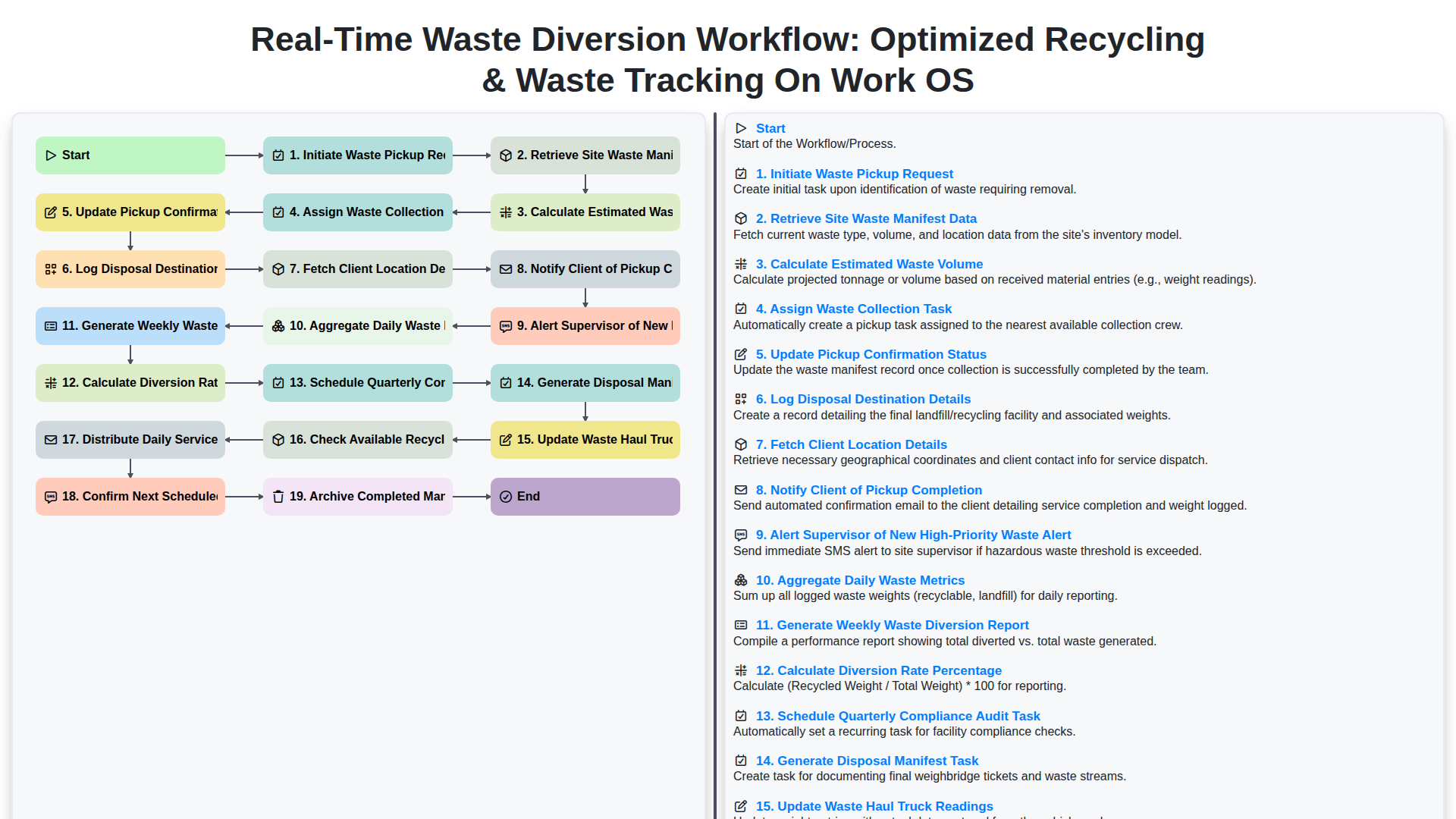
Table of Contents
- Introduction: Revolutionizing Waste Management with Real-Time Tracking
- Streamlining the Start: Initiating Pickup Requests and Data Retrieval
- Precision Planning: Volume Estimation and Task Assignment
- Operational Execution: Managing Collection and Disposal Logging
- Communication Loops: Client Notifications and Supervisor Alerts
- Data-Driven Insights: Aggregating Daily Metrics and Weekly Reporting
- Measuring Success: Calculating Diversion Rate Percentages
- Compliance and Auditing: Scheduling Tasks and Managing Manifests
- Resource Optimization: Monitoring Capacity and Truck Readings
- Closing the Loop: Summarizing Services and Archiving Records
- Conclusion: The Future of Sustainable Waste Workflows
- Resources & Links
TLDR: Streamline your sustainability efforts with this automated workflow designed to manage the entire waste lifecycle. From initiating pickup requests and calculating waste volumes to tracking disposal destinations and generating compliance reports, this template automates real-time tracking, optimizes recycling capacity, and ensures seamless communication between clients, drivers, and supervisors for maximum waste diversion efficiency.
Introduction: Revolutionizing Waste Management with Real-Time Tracking
In the modern era of industrial sustainability, the traditional method of managing waste-relying on manual logs, fragmented spreadsheets, and reactive scheduling-is no longer sufficient. As regulatory pressures mount and corporate ESG (Environmental, Social, and Governance) goals become more stringent, organizations are facing a critical challenge: how to gain true visibility into their waste streams. The gap between what is discarded and what is actually diverted from landfills is often filled with blind spots that lead to missed recycling opportunities, compliance risks, and inflated disposal costs.
This is where the power of a structured, automated workflow on a unified Work OS changes the game. Rather than treating waste management as a post-event administrative task, companies are now transitioning to a real-time, proactive ecosystem. By digitizing every touchpoint-from the moment a pickup request is initiated to the final archiving of disposal manifests-businesses can transform waste management from a cost center into a data-driven driver of sustainability. Through real-time tracking, the invisible waste stream becomes a transparent, measurable asset, allowing for precision in diversion tracking and unparalleled operational efficiency.
Streamlining the Start: Initiating Pickup Requests and Data Retrieval
The lifecycle of an efficient waste management strategy begins long before a truck even leaves the depot. The foundation of a truly optimized workflow lies in the seamless transition from a manual request to an automated, data-driven instruction. In a high-performance Work OS environment, this process starts with the Initiate Waste Pickup Request step, where site managers can trigger a collection need via a centralized interface, eliminating the delays and errors associated with phone calls or fragmented emails.
Once a request is triggered, the system moves immediately into the intelligence-gathering phase. Instead of relying on guesswork, the workflow automatically moves to Retrieve Site Waste Manifest Data, pulling historical records and existing documentation directly from your digital repository. By integrating this with the ability to Calculate Estimated Waste Volume, the system provides an instant, data-backed projection of the load size. This ensures that the fleet is prepared for the specific scale of the task, preventing overflow issues or unnecessary trips with under-capacity vehicles. This automated data retrieval transforms a simple request into a precise, actionable logistics plan.
Precision Planning: Volume Estimation and Task Assignment
Effective waste management relies on moving from reactive guessing to proactive precision. The workflow begins the moment an Initiate Waste Pickup Request is triggered, transitioning the process from a simple notification to a data-driven operation. To ensure logistical efficiency, the system automatically moves to Retrieve Site Waste Manifest Data, pulling historical and current records to understand exactly what materials are awaiting collection.
Once the data is retrieved, the engine performs a critical calculation to Calculate Estimated Waste Volume. By determining the expected load size before a truck even leaves the depot, the system eliminates the guesswork that often leads to inefficient routing or overflowing bins. With this intelligence in hand, the workflow proceeds to Assign Waste Collection Task, intelligently dispatching the right vehicle and crew based on the estimated volume and resource availability. This seamless transition from data retrieval to automated assignment ensures that every pickup is optimized for both capacity and speed.
Operational Execution: Managing Collection and Disposal Logging
Once the waste collection task is assigned, the workflow transitions from planning to active operational execution. The core of the process relies on real-time data accuracy as teams move through the collection cycle. As trucks depart, the system automatically retrieves site waste manifest data and calculates the estimated waste volume to ensure resource alignment. Upon arrival at the site, the workflow manages the Update Pickup Confirmation Status, ensuring that dispatchers have immediate visibility into active collections.
The precision of the workflow continues during the disposal phase. As waste is processed, the system prompts operators to Log Disposal Destination Details, creating a digital paper trail that links every haul to a specific facility. Simultaneously, the platform performs a Fetch Client Location Details routine to ensure all logistics are synced with the client's specific site requirements. To maintain transparency and trust, the workflow automatically triggers a Notify Client of Pickup Completion action, providing instant peace of mind to the customer.
Efficiency is further bolstered by proactive monitoring. The system is configured to Alert Supervisor of New High-Priority Waste Alert, allowing for rapid intervention if hazardous or overflow conditions are detected. During the disposal journey, the workflow integrates physical logistics by providing a mechanism to Update Waste Haul Truck Readings, ensuring that payload weights and volumes are recorded with high fidelity. This continuous loop of data entry ensures that the transition from collection to disposal is not just a manual task, but a structured, traceable, and highly optimized operational stream.
Communication Loops: Client Notifications and Supervisor Alerts
Efficiency in waste management isn't just about moving material; it's about maintaining seamless information flow between field operations, clients, and management. A truly optimized workflow eliminates the information black holes that often plague logistics by integrating automated communication loops directly into the Work OS.
The strength of this workflow lies in its ability to trigger proactive notifications that keep all stakeholders synchronized without manual intervention. For clients, the system handles the heavy lifting of customer service by automatically notifying the client of pickup completion the moment a task is finalized. This transparency builds immense trust, as clients no longer need to call or email to verify if their bins were serviced.
Simultaneously, the workflow acts as an automated watchdog for operational oversight. By implementing an alert system for new high-priority waste alerts, supervisors are instantly notified of critical issues-such as overflow risks or hazardous material flags-ensuring that urgent tasks are addressed before they become compliance liabilities. By bridging the gap between field execution and administrative oversight, these automated loops transform a standard tracking process into a responsive, intelligent ecosystem.
Data-Driven Insights: Aggregating Daily Metrics and Weekly Reporting
Beyond simple task management, the true power of an automated Work OS lies in its ability to transform raw operational data into actionable intelligence. By leveraging a continuous stream of real-time updates-from the moment a waste pickup is initiated to the final logging of disposal destination details-the system can automatically aggregate daily waste metrics. This eliminates the manual burden of data entry and the risk of human error, providing an instantaneous snapshot of total waste volumes, material types, and diversion progress across all sites.
This granular daily visibility feeds directly into high-level strategic oversight through the automated generation of weekly waste diversion reports. Instead of spending hours compiling spreadsheets, stakeholders receive comprehensive summaries that highlight trends, identify operational bottlenecks, and track progress toward sustainability goals. Most importantly, the system automatically calculates the diversion rate percentage, a critical KPI for any modern environmental strategy. This automated calculation allows your team to move beyond reactive cleanup and toward proactive, data-driven decision-making, ensuring that every pound of diverted material is accounted for and every sustainability milestone is measurable.
Measuring Success: Calculating Diversion Rate Percentages
To truly understand the effectiveness of your sustainability initiatives, you cannot rely on intuition alone; you must rely on data. The core metric for any high-performing waste management strategy is the Diversion Rate Percentage. This figure serves as the ultimate KPI, representing the portion of total waste generated that is redirected from landfills toward recycling, composting, or reuse.
Within our automated Work OS workflow, calculating this rate is no longer a manual, error-prone task involving spreadsheets and guesswork. By leveraging the Aggregate Daily Waste Metrics and Retrieve Site Waste Manifest Data steps, the system automatically pulls the weight of all diverted materials and compares it against the total weight of all waste collected.
The formula is executed seamlessly in real-time:
$$\text{Diversion Rate} = \left( \frac{\text{Weight of Recycled/Composted Material}}{\text{Total Weight of All Waste Collected}} \right) \times 100$$
By automating this calculation, the workflow provides an instantaneous feedback loop. As soon as a Log Disposal Destination Details task is completed, the system updates your global dashboard. This allows facility managers to see immediate shifts in efficiency, identify specific sites where landfill disposal is spiking, and generate the Weekly Waste Diversion Report with total accuracy. This level of granular visibility transforms waste management from a reactive cost center into a proactive, data-driven sustainability driver.
Compliance and Auditing: Scheduling Tasks and Managing Manifests
Maintaining regulatory compliance and operational transparency is the backbone of a sustainable waste management strategy. To ensure your organization meets environmental standards and avoids costly penalties, the workflow automates the entire lifecycle of documentation and oversight.
The process begins with the automatic generation of Disposal Manifest Tasks, ensuring that every load of waste is documented with precision from origin to destination. To maintain a clean and organized digital workspace, the system is configured to Archive Completed Manifests, allowing for easy retrieval during inspections while preventing clutter in active operations.
Beyond documentation, the workflow proactively manages long-term oversight by automatically Scheduling Quarterly Compliance Audit Tasks. This ensures that your recycling practices and diversion targets are periodically reviewed by management to ensure adherence to local and federal regulations. By integrating these automated auditing triggers, the Work OS transforms compliance from a manual, reactive burden into a seamless, proactive component of your daily operations.
Resource Optimization: Monitoring Capacity and Truck Readings
To maintain a seamless circular economy, efficiency must extend beyond the point of collection and into the heart of your logistics operations. A truly optimized workflow doesn't just track what is being picked up, but also manages the physical assets required to move it. Within our Work OS ecosystem, the workflow integrates real-time updates to Update Waste Haul Truck Readings, allowing fleet managers to monitor mileage, fuel usage, and payload weight instantaneously. This data-driven approach ensures that every vehicle in your fleet is utilized to its maximum potential, reducing unnecessary trips and lowering your carbon footprint.
Furthermore, the system provides proactive visibility through the ability to Check Available Recycling Capacity. By analyzing real-time data from processing facilities and bins, the workflow prevents the common bottleneck of overflowing containers or overcapacity processing centers. By syncing truck telemetry with facility capacity, you can dynamically reroute resources, ensuring that waste is always directed to a site capable of handling the volume. This synergy between hardware monitoring and capacity planning transforms waste management from a reactive service into a highly controlled, predictive, and optimized logistical operation.
Closing the Loop: Summarizing Services and Archiving Records
Efficiency in waste management isn't just about the physical collection; it is about the seamless transition from active operations to long-term data integrity. As the daily cycle concludes, the workflow shifts from real-time action to administrative precision. The final stages of the process focus on distributing daily service summaries to all stakeholders, ensuring transparency across the entire organization. This is immediately followed by the automatic confirmation of the next scheduled service date, eliminating manual scheduling errors and maintaining consistent collection rhythms.
To ensure operational continuity and regulatory readiness, the workflow performs a critical cleanup of the digital workspace. Completed manifests are automatically moved into a secure, searchable archive via the Archive Completed Manifests step, ensuring that your active dashboard remains uncluttered while maintaining a rigorous paper trail for environmental audits. By automating these concluding steps, the Work OS transforms raw operational data into a permanent, organized record of your commitment to sustainability and compliance.
Conclusion: The Future of Sustainable Waste Workflows
The transition from reactive waste management to a proactive, data-driven strategy is no longer a luxury-it is a necessity for companies committed to true environmental stewardship. By implementing a structured, real-time workflow on a Work OS, organizations move beyond simple disposal and into the realm of precision resource management.
As we have explored, the ability to automate everything from the initial pickup request to the final calculation of diversion rates transforms waste from an opaque operational cost into a transparent, measurable asset. The future of sustainability lies in the integration of these granular data points-such as real-time truck readings, automated compliance audits, and instant site manifest retrieval-into a single, unified digital ecosystem.
As regulatory pressures increase and the global push for a circular economy intensifies, the companies that thrive will be those that leverage automation to eliminate manual errors, ensure regulatory compliance, and gain the actionable insights needed to reduce their landfill footprint. Embracing an optimized, automated workflow is more than just an operational upgrade; it is a fundamental commitment to a greener, more efficient, and more accountable future.
Resources & Links
- Gartner: Supply Chain & Operations Research: Industry insights on how real-time data and automation optimize operational workflows and logistics management.
- EPA: Sustainable Materials Management: Official guidelines and benchmarks for waste diversion rates and environmental compliance standards.
- Smartsheet: Workflow Automation Guide: Technical resources on building automated task triggers, notifications, and real-time tracking systems on a Work OS.
- Six Sigma: Process Optimization Strategies: Methodologies for reducing waste, improving accuracy in volume estimation, and optimizing resource allocation.
- ASQ: Quality & Compliance Management: Best practices for managing audits, maintaining disposal manifests, and ensuring regulatory compliance in logistics.
- IBM Watson: IoT and Real-Time Analytics: Information on leveraging IoT sensors and real-time data processing for monitoring truck readings and capacity tracking.
Frequently Asked Questions
What is a Real-Time Waste Diversion Workflow?
It is an automated process integrated into a Work OS that tracks waste generation, sorting, and recycling efforts as they happen, allowing for immediate data visibility and actionable insights.
How does this workflow optimize recycling efforts?
By providing real-time tracking, the workflow identifies contamination in recycling streams, monitors diversion rates, and enables rapid adjustments to collection and sorting processes to maximize sustainability.
What role does 'Work OS' play in waste management?
A Work OS acts as the central platform where all data points-such as sensor inputs, manual logs, and disposal records-are unified, enabling automation, reporting, and cross-departmental collaboration.
What are the primary benefits of real-time waste tracking?
Key benefits include increased operational efficiency, improved compliance with environmental regulations, reduced landfill costs, and highly accurate reporting for ESG (Environmental, Social, and Governance) goals.
Can this workflow help in reducing landfill waste?
Yes. By monitoring diversion rates in real-time, organizations can pinpoint exactly where recyclable materials are being lost to the landfill stream and implement corrective actions immediately.
Comments
There are no comments yet. Be the first to add one!
Waste Management Solution Demo
Optimize your waste management & reduce environmental impact! ChecklistGuro streamlines collection, tracking, and reporting. Minimize waste, lower costs, & promote sustainability. Manage it all with our Work OS.
Related Articles

Your Ultimate Guide to a Waste Management Facility Project Checklist Template

Your Complete Vegetation Removal Compliance Checklist Template
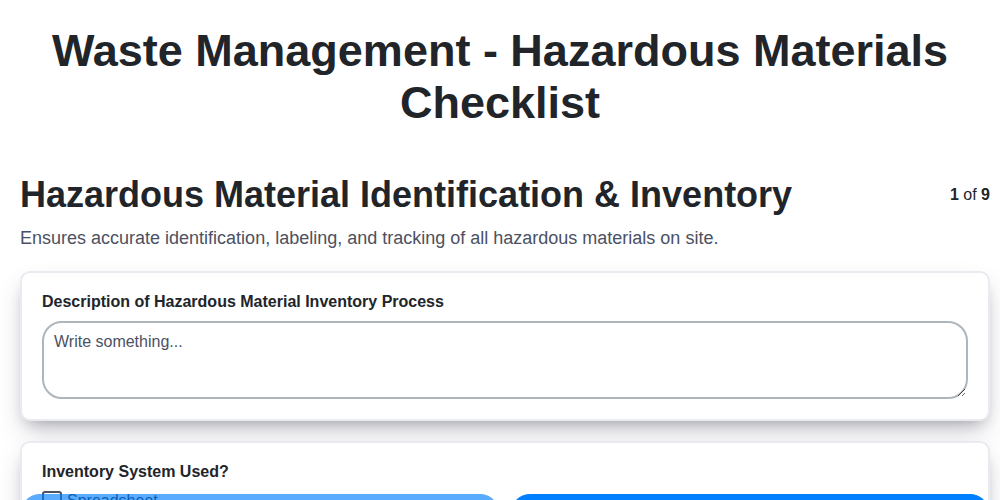
Your Ultimate Hazardous Materials Waste Management Checklist Template
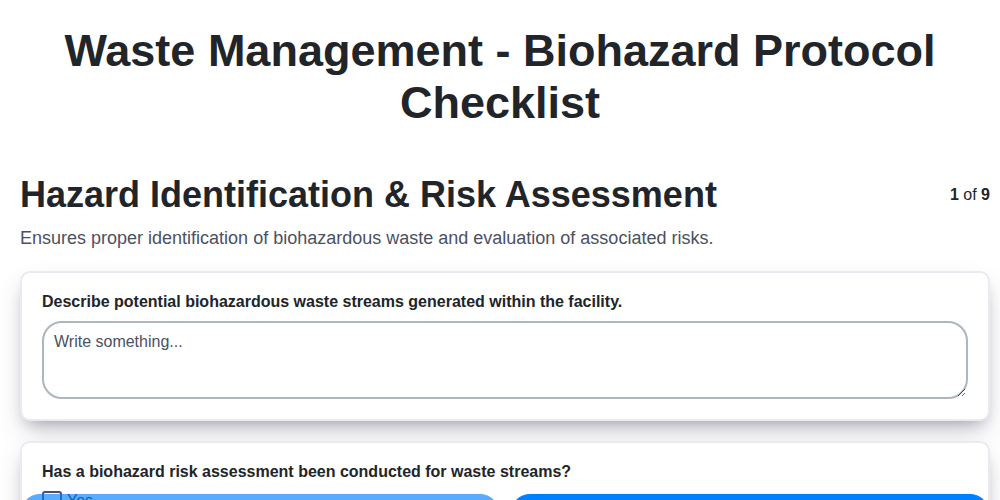
Streamline Biohazard Waste: Your Essential Checklist Template
Your Dental Office Safety Net: The Compliance & Patient Safety Checklist Template

Weekly Waste Management & Recycling Checklist Template
Your Environmental Compliance Checklist Template: A Step-by-Step Guide
Auto Repair Shop Checklist Template: Operations & Compliance
Need help with
Checklists?
Have a question? We're here to help. Please submit your inquiry, and we'll respond promptly.