
Solid Waste Manifesting Workflow: Streamline Reporting & Compliance on Work OS Platform
Published: Updated: 04/16/2026
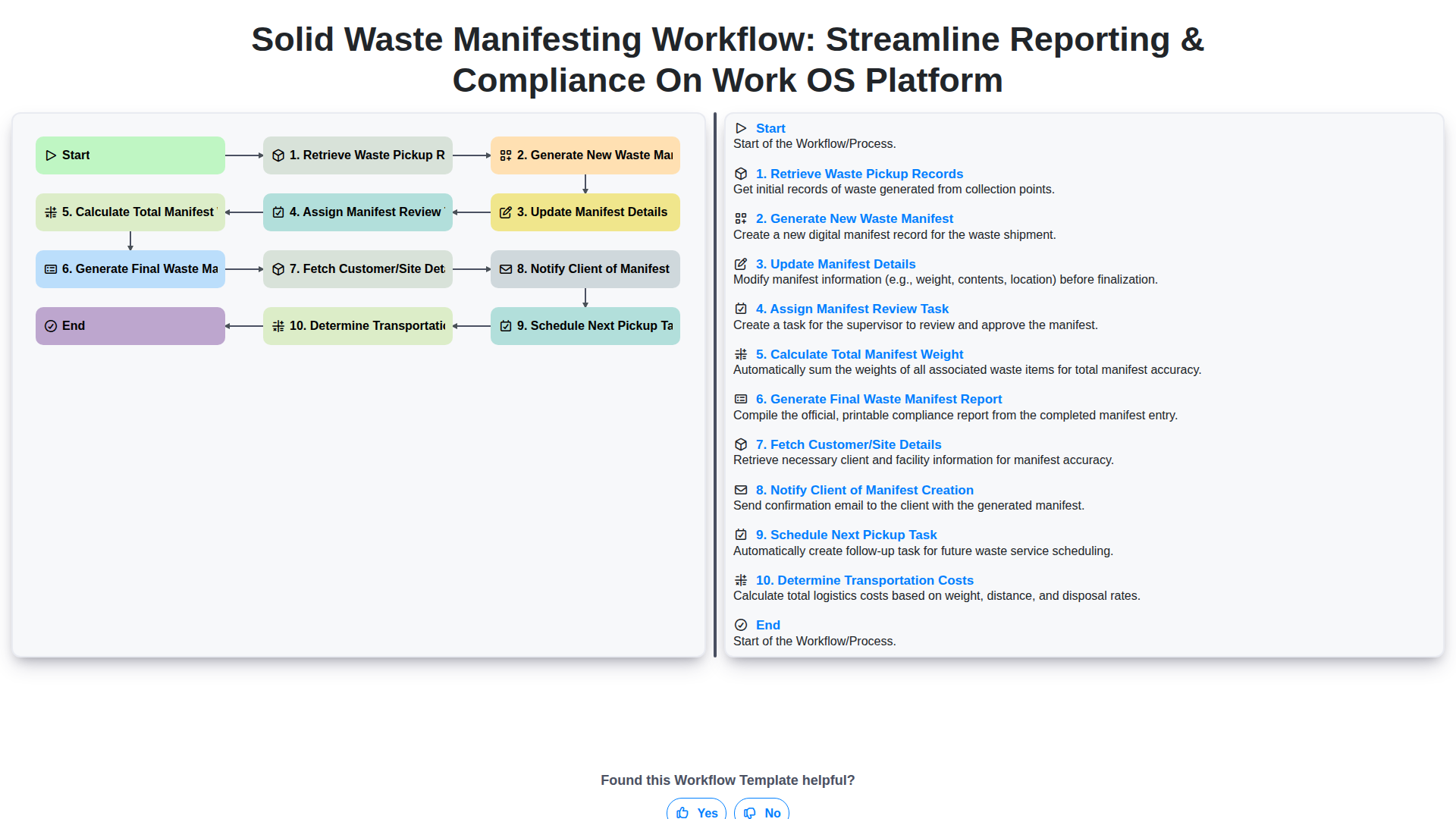
Table of Contents
- Introduction: The Challenge of Solid Waste Manifesting
- Understanding the Solid Waste Manifesting Process
- Step 1: Retrieving Waste Pickup Records for Accuracy
- Step 2: Generating the New Waste Manifest Electronically
- Step 3: Ensuring Data Integrity with Manifest Detail Updates
- Step 4: Implementing Structured Review with Task Assignment
- Step 5: Automated Calculation: Determining Total Manifest Weight
- Step 6: Finalizing Documentation: Generating the Final Waste Manifest Report
- Step 7: Contextualizing Data: Fetching Essential Customer/Site Details
- Step 8: Client Communication: Automatic Notification of Manifest Creation
- Step 9: Operational Continuity: Scheduling the Next Pickup Task
- Step 10: Financial Accuracy: Determining Transportation Costs
- Streamlining Compliance and Reporting on Work OS Platform
- Conclusion: The Future of Waste Management Documentation
- Resources & Links
TLDR: Automate your solid waste reporting and compliance with our built-in Workflow. This single process handles everything from retrieving pickup records and generating detailed manifests to calculating costs, notifying clients, and even scheduling the next pickup-all within the Work OS platform, saving time and ensuring compliance.
Introduction: The Challenge of Solid Waste Manifesting
Managing solid waste manifests is far more complex than simply tracking volume from point A to point B. In today's heavily regulated environment, the process involves a meticulous chain of documentation, verification, and timely reporting. From the moment a waste pickup is scheduled to the final, compliant disposal report, numerous touchpoints require accurate data entry, cross-referencing, and secure record-keeping. Inefficiencies in this process-such as manual data transfers between paper forms and digital systems, discrepancies in weight recording, or delays in review-don't just slow down operations; they introduce significant compliance risks. Failure to maintain an impeccable audit trail can result in substantial fines, operational shutdowns, and damage to your company's reputation. These traditional, fragmented workflows are often resource-intensive, consuming valuable staff time that could be better spent on core service delivery, rather than wrestling with paperwork and reconciliation.
Understanding the Solid Waste Manifesting Process
The solid waste manifesting process is a cornerstone of environmental compliance in the waste management industry. At its core, it's the vital documentation trail that tracks waste from its point of generation to its final disposal. A solid waste manifest serves as a legal record, detailing what waste was collected, where it came from, and where it is going. Our automated workflow digitizes and streamlines every step of this complex process. It begins with the Retrieval of Waste Pickup Records, pulling all necessary service details into one central location. From this data, the system automatically Generates a New Waste Manifest, creating the initial draft. Crucially, the process allows for the Updating of Manifest Details to ensure accuracy before finalization. To maintain quality control and compliance, the workflow incorporates an Assignment of Manifest Review Task, routing the document to the correct personnel for necessary sign-off. Further automation is applied when the system Calculates the Total Manifest Weight, an essential figure for billing and tracking. Once verified, it moves to Generating the Final Waste Manifest Report. To ensure the right parties are informed, the system simultaneously Fetches Customer/Site Details and then Notifies the Client of Manifest Creation. Looking ahead, the workflow doesn't stop there; it proactively Schedules the Next Pickup Task, ensuring continuous service, and finally, it Determines Transportation Costs, completing a comprehensive, auditable record from start to finish.
Step 1: Retrieving Waste Pickup Records for Accuracy
The process begins with the crucial step of retrieving accurate waste pickup records. This initial retrieval is the foundation upon which the entire manifest is built. By tapping into the Work OS Platform's integrated historical data, the system can automatically pull detailed logs for every waste collection. These records include dates, locations, waste types, and initial reported volumes. This automated data sourcing ensures that the manifest isn't based on manual input prone to human error, guaranteeing that the recorded waste quantities are traceable directly back to the point of service, thereby establishing a bedrock of integrity for the subsequent reporting stages.
Step 2: Generating the New Waste Manifest Electronically
The process begins with the automated generation of the waste manifest record. Instead of relying on manual form filling, the Work OS platform electronically drafts a new waste manifest. This step pulls essential initial data, laying the groundwork for compliance.
Step 3: Ensuring Data Integrity with Manifest Detail Updates
This crucial step involves updating the manifest details within the system. Whether you need to correct an error in the initial pickup record, add supplemental information, or adjust the weight classification, the Workflow OS ensures these updates are tracked and validated. By centralizing these modifications, we prevent data silos and maintain a single source of truth for the waste stream. This meticulous review cycle drastically reduces the risk of non-compliant manifests, ensuring that every piece of waste handled is accurately documented from collection to final disposal.
Step 4: Implementing Structured Review with Task Assignment
This stage is critical for maintaining accuracy and ensuring all necessary checks are performed before a manifest is finalized. Instead of relying on manual email chains or shared spreadsheets, our workflow automates the assignment of a dedicated review task. Once the initial manifest draft is generated, the system automatically assigns a Manifest Review task to the designated compliance officer or site manager. This task is routed directly within the Work OS platform, providing a clear, auditable trail of accountability. The reviewer receives an instant notification, prompting them to log into the platform, examine the gathered data-including waste type, weight totals, and associated site details-and either approve the manifest or flag specific discrepancies for correction. This structured gatekeeping prevents costly errors from moving downstream.
Step 5: Automated Calculation: Determining Total Manifest Weight
This crucial step moves beyond mere data compilation; it automates the rigorous calculation of the total weight recorded across all disposed materials for the current manifest. By programmatically aggregating the weight data gathered from individual waste pickup records, the system ensures mathematical accuracy and immediate verification. This function prevents manual calculation errors, which are a common point of failure in traditional reporting. The output of this process is a consolidated, verified total weight figure that forms the backbone of the final compliance report and informs accurate billing.
Step 6: Finalizing Documentation: Generating the Final Waste Manifest Report
This critical step is where the compiled data transforms into the legally required and actionable document. The system takes all the validated information-including the service dates, detailed waste streams, site information, and the calculated total weight-and compiles it into the official Waste Manifest Report. This report isn't just a digital summary; it's the cornerstone of your compliance efforts. The platform automatically formats the report according to local, state, and federal regulations, ensuring all necessary fields, tracking numbers, and signatures (or placeholders for them) are present. By generating this finalized PDF or digital record, we provide an unalterable audit trail, instantly proving due diligence and significantly mitigating liability risks associated with improper waste handling.
Step 7: Contextualizing Data: Fetching Essential Customer/Site Details
This step is crucial for creating a complete and accurate final manifest. Before finalizing the report, the workflow needs to enrich the data by fetching all necessary context related to the pickup location. By integrating the customer/site details-such as the physical address, designated waste streams, contact information, and any pre-approved disposal codes-the system ensures that the final manifest isn't just a weight document, but a legally sound and actionable record. This pre-populated data minimizes manual data entry errors, significantly speeding up the reconciliation process and adding an essential layer of compliance validation directly into the operational flow.
Step 8: Client Communication: Automatic Notification of Manifest Creation
This crucial step closes the loop on the physical process by ensuring the client is immediately aware that their waste manifest has been successfully generated. The system automatically sends a notification-via email or the client portal, depending on preference-containing the new manifest ID and key summary details. This proactive communication minimizes the need for manual follow-ups, builds client trust, and ensures transparent record-keeping from the moment the waste leaves the site until the client acknowledges receipt of the necessary documentation.
Step 9: Operational Continuity: Scheduling the Next Pickup Task
This final step ensures that the service remains proactive rather than reactive. By automatically scheduling the next pickup task within Work OS, we embed continuous operational visibility into the digital workflow. This minimizes administrative lag, reduces the risk of service gaps, and provides clients with immediate confirmation of their ongoing waste management schedule directly through the platform. This seamless handoff from reporting completion to future scheduling completes the service loop, ensuring optimized resource allocation for both your operations and your clients.
Step 10: Financial Accuracy: Determining Transportation Costs
This critical step ensures that your financial records are as precise as your compliance documentation. By integrating transportation cost determination directly into the workflow, you eliminate the need for manual cross-referencing across spreadsheets or multiple systems. The platform automatically pulls necessary data-such as the finalized weight from the manifest, the pickup location, and predefined carrier rates-to calculate the accurate, real-time transportation charge. This not only prevents billing discrepancies but also provides immediate cost visibility, allowing your finance team to verify the manifest's total landed cost before final reporting.
Streamlining Compliance and Reporting on Work OS Platform
This core section of the workflow directly addresses the complexities of waste management documentation. By automating the steps to Generate New Waste Manifest, Update Manifest Details, and Calculate Total Manifest Weight, we ensure that every record is accurate, complete, and immediately traceable. Furthermore, the system handles the crucial administrative tasks like Fetch Customer/Site Details and Generate Final Waste Manifest Report in one seamless sequence. This not only drastically reduces the manual effort traditionally spent compiling paper trails but also ensures that all required data points are present before the document is finalized, thereby significantly boosting compliance reliability.
Conclusion: The Future of Waste Management Documentation
By embedding these critical steps within a unified Work OS workflow, we're not just digitizing a process-we're fundamentally elevating waste management compliance. The seamless transition from retrieving raw pickup data to generating a final, actionable report, while simultaneously notifying the client and scheduling the next service, drastically reduces manual intervention points and the risk of human error. This integrated approach ensures that every piece of data, from the initial weight measurement to the final cost calculation, is logged, reviewed, and accounted for in a verifiable, audit-ready manner. This transition from disparate paperwork to a single, intelligent platform solidifies the role of technology, making compliance proactive rather than reactive, and establishing a new standard for operational efficiency in the industry.
Resources & Links
- Work OS Platform Homepage : Learn more about the Work OS Platform and its capabilities in streamlining field operations and compliance management.
- EPA/State Environmental Compliance Guidelines : Official resources for understanding current solid waste manifesting regulations (e.g., RCRA guidelines).
- Solid Waste Management Industry Trends Report : Industry reports and articles discussing the shift towards digital and automated waste tracking solutions.
- Workflow Automation Best Practices : General guides on process automation, helpful for understanding the 'workflow' concept applied to logistics.
- Electronic Manifesting Solution Comparison : Articles or guides comparing various software solutions designed for digital waste documentation and reporting.
- Field Service Scheduling Best Practices : Resources focusing on integrating scheduling tasks within service management software.
Found this Article helpful?
Waste Management Solution Demo
Optimize your waste management & reduce environmental impact! ChecklistGuro streamlines collection, tracking, and reporting. Minimize waste, lower costs, & promote sustainability. Manage it all with our Work OS.
Related Articles

Your Ultimate Guide to a Waste Management Facility Project Checklist Template

Your Complete Vegetation Removal Compliance Checklist Template
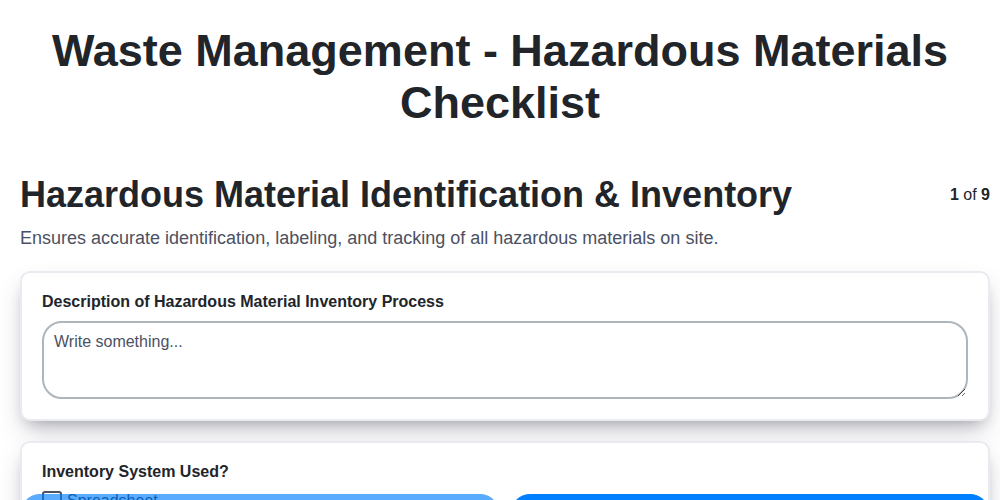
Your Ultimate Hazardous Materials Waste Management Checklist Template
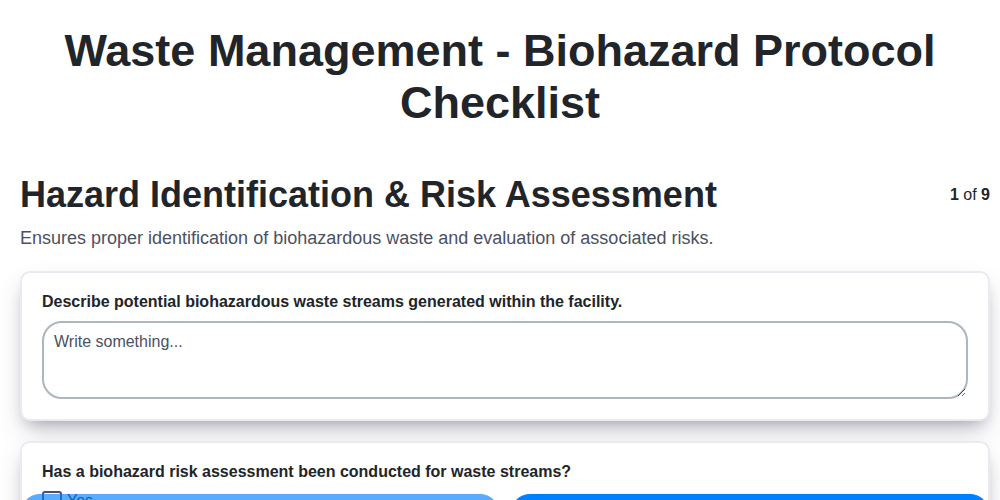
Streamline Biohazard Waste: Your Essential Checklist Template
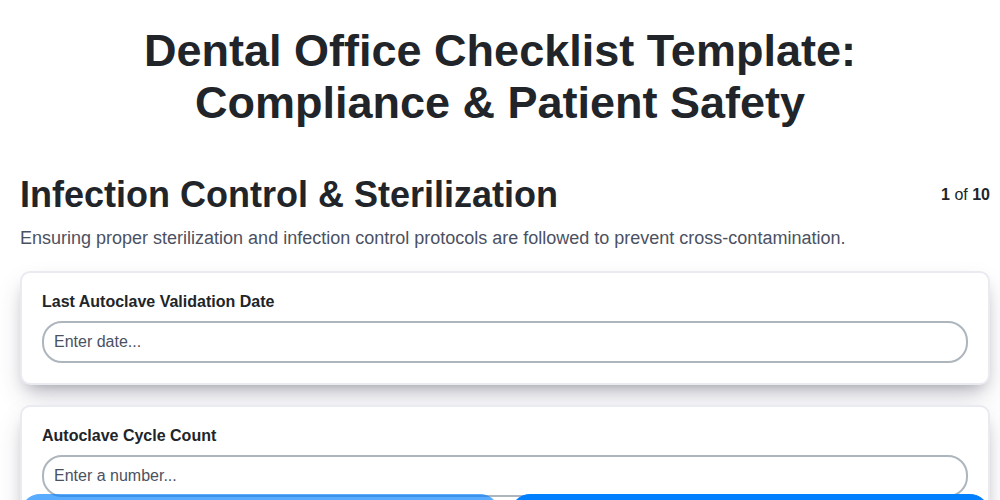
Your Dental Office Safety Net: The Compliance & Patient Safety Checklist Template

Weekly Waste Management & Recycling Checklist Template
Your Environmental Compliance Checklist Template: A Step-by-Step Guide
Auto Repair Shop Checklist Template: Operations & Compliance
We can do it Together
Need help with
Checklists?
Have a question? We're here to help. Please submit your inquiry, and we'll respond promptly.